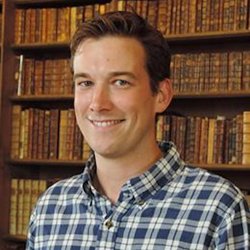
Jake Soloff is an Assistant Professor of Statistics at the University of Michigan. He earned his Ph.D. in Statistics from UC Berkeley in 2022 under advisors Adityanand Guntuboyina and Michael Jordan, followed by a postdoctoral fellowship at the University of Chicago with Rina Foygel Barber and Rebecca Willett. Research Focus: Statistical machine learning, algorithmic stability, empirical Bayes methods, and theoretical analysis of calibration and false discovery rate control. Key Contributions: Developed the Inflated Argmax for stable classification, proposed Cutoff Calibration Error metrics, analyzed distribution-free properties of isotonic regression, and created resampling techniques for stability guarantees. Publication Trends : Recent work emphasizes stability in machine learning pipelines, empirical Bayes optimization for high-dimensional problems, and novel approaches to hypothesis testing with stochastic monotonicity constraints. Software Development : Maintains the NPEB Python package for nonparametric empirical Bayes estimation.
Professor David Johnstone is a Senior Professor at the School of Business within the Faculty of Business and Law at the University of Wollongong since 2017. He holds a PhD from the University of Sydney. His research focuses on evaluating probability forecasts, statistical information theory in accounting, asset pricing, cost of capital, and energy regulation. He has supervised doctoral research on corporate governance and partnership structures. Key research interests include: Probability forecasting methodologies Accounting theory and statistical rigor Energy market regulation and infrastructure valuation Asset pricing under CAPM and ESG frameworks Recent funding includes an internal grant exploring Natural Language Processing techniques to measure economic sentiment (2023). His work bridges finance theory with practical applications in regulatory frameworks and market analysis. Teaching focuses on advanced topics in finance including capital budgeting, risk assessment, and regulatory economics. He is available for PhD supervision in his core research areas.
Dr. Jinzhu Yu is an Assistant Professor at the University of Texas at Arlington, holding primary affiliation in Civil Engineering and a secondary appointment in Industrial, Manufacturing, and Systems Engineering. He earned his Ph.D. in Interdisciplinary Systems Engineering from Vanderbilt University and conducted postdoctoral research at Rensselaer Polytechnic Institute. His work focuses on resilient urban systems through network science, operations research, and AI/ML. Research interests include infrastructure resilience, disaster management, transportation networks, and decision-making under uncertainty. Education: PhD, Interdisciplinary Systems Engineering, Vanderbilt University (2020) MS, Civil Engineering, Tongji University (2016) BS, Civil Engineering, Tongji University (2013) Research Highlights: Dr. Yu develops models for infrastructure resilience, climate adaptation, and equity. Recent projects include TxDOT-funded work on transportation asset management and crowd-sourced bicycle/pedestrian safety data. His lab integrates data science and network analytics to enhance urban systems. Awards: Urban Resilience Fellow (2024) STARs Award (2022) Student Merit Award (2017) Grants & Advising: Active projects include $319K TxDOT grant (2024) and leadership in NSF reviews. Supervises interdisciplinary students in civil engineering, systems engineering, and computer science.
Murat GÜLBAY serves as an Assistant Professor at Gaziantep University's Naci Topçuoglu Vocational School within the Department of Machine and Metal Technologies. With continuous academic service at Gaziantep University since 1996 (interrupted only by a 2000-2007 appointment at Istanbul Technical University), he has progressed from Research Assistant to his current rank, while also holding administrative roles as Department Chair during 2011-2022. His educational trajectory features: PhD in Industrial Engineering (2003-2007), Istanbul Technical University MSc in Industrial Engineering (1997-1998), Gaziantep University BSc in Mechanical Engineering (1991-1996), Gaziantep University Bachelor's in Public Administration (2018-2020), Anadolu University (Open Education) Associate's in Justice (2016-2018), Anadolu University (Open Education) Dr. GÜLBAY's research centers on fuzzy logic applications in industrial systems, with foundational work in fuzzy statistical process control evolving into broader implementations across quality management, supply chain optimization, and multi-criteria decision making. His methodology integrates linguistic variables and advanced fuzzy sets to address uncertainty in industrial contexts, bridging theoretical frameworks with practical engineering solutions. Publication trends reveal consistent scholarly output from 2004-2020, with early contributions establishing fuzzy control chart methodologies (2004-2007) expanding into logistics, robotics, and sustainable energy systems. This progression demonstrates adaptive application of fuzzy mathematics to increasingly complex industrial challenges, particularly in multi-attribute decision environments under uncertainty. He has supervised one Master's student (Mehmet Pekmezci, 2015) on fuzzy modeling of logistics problems, while maintaining professional relevance through Hazardous Materials Safety Consultant (TMGD) and Class A Occupational Safety Expert certifications that directly inform his research in industrial risk management and supply chain safety.
Mark W. Watson is the Howard Harrison and Gabrielle Snyder Beck Professor of Economics and Public Affairs at the Princeton University Department of Economics . His research focuses on macroeconomic time series analysis , with particular emphasis on dynamic factor models , inflation forecasting , and structural vector autoregression methods. Research Interests : Watson's work addresses fundamental econometric challenges in Time series modeling under structural instability Robust inference for nonstationary data Macroeconomic forecasting techniques Analysis of business cycle dynamics Cointegration and unit root testing Monetary policy and inflation relationships Publication Trends show expertise in high-dimensional forecasting , factor models , and robust statistical methods applied to macroeconomic data. His collaborative work with James H. Stock has become foundational in modern econometric practice. Technical Contributions include development of New index construction for economic indicators Software tools for cointegration analysis Replication frameworks for empirical research Available through Princeton University servers.
Jürgen Landes is a Postdoctoral Fellow at Ludwig Maximilian University of Munich (LMU) within the Faculty of Philosophy, Theory of Science, and Religious Studies , specifically in the Department of Philosophy of Science . He serves as the Principal Investigator (PI) of his research project on Evidence and Objective Bayesian Epistemology , focusing on formal epistemology, uncertainty, and rational belief formation. Landes' work bridges philosophy, statistics, and computer science, particularly in Bayesian epistemology and inductive logic. His research interests include uncertainty quantification, philosophy of probability and statistics, inductive logic, Bayesian epistemology, scoring rules, accuracy-first epistemology, maximum entropy methods, decision theory, mechanism design, negotiations, and multi-agent systems. He has taught courses such as Environmental Philosophy, Philosophy of Probability and Statistics, and Rational Choice Theory at LMU. Landes actively contributes to academic conferences and organizations, including co-organizing the 2020 Bayesian Epistemology workshop and the Foundations, Applications & Theory of Inductive Logic (FATIL) network. His research emphasizes applying formal methods to address challenges in evidence aggregation, causal assessment, and scientific reasoning. Landes has published extensively on topics such as imprecise probabilities, evidence-based medicine, and the foundations of Bayesian epistemology. His work integrates interdisciplinary approaches to advance methodologies in data-driven science and decision-making under uncertainty.
Thomas Augustin is a Professor at the Department of Statistics, Faculty of Mathematics, Computer Science and Statistics, Ludwig-Maximilians-Universität München. He serves as Dean of Studies and Program Coordinator, with contact details at Ludwigstr. 33, Munich. Research Interests Augustin specializes in methodological foundations of statistics and their applications, particularly focusing on imprecise probability theory, Bayesian inference under epistemic uncertainty, and machine learning under complex uncertainty scenarios. His work addresses statistical modeling, robust regression analysis, and decision-making with non-randomly coarsened observations. Publications & Research Trends Recent publications highlight advancements in imprecise Bayesian optimization, human-AI collaboration frameworks, and statistical methods for handling undecided voter data. Key themes include robust machine learning, survival analysis with frailty models, and multi-criteria benchmarking techniques. Contact & Affiliation Email: thomas.augustin@stat.uni-muenchen.de | Office: Room L250 | Phone: +49 89 2180 3520
Professor Robin Thompson is a faculty member at the University of Oxford's Mathematical Institute, specializing in infectious disease modeling within the Wolfson Centre for Mathematical Biology. Based at the Andrew Wiles Building in Oxford, Thompson leads research in infectious disease outbreak modeling and teaches applied mathematics courses at St Hilda's College. Thompson's research focuses on mathematical modeling of infectious disease outbreaks, with particular expertise in outbreak prediction, transmission dynamics, and end-of-outbreak declaration. Their work spans multiple disease systems including Ebola, mpox, and SARS-CoV-2, addressing critical public health challenges through mathematical frameworks. Research projects are organized around four key phases of outbreak management: before an outbreak, early in an outbreak, during an outbreak, and at the end of an outbreak. Recent publications demonstrate Thompson's leadership in developing methods for estimating time-dependent reproduction numbers, addressing reporting delays and under-reporting in outbreak data, and creating practical tools for public health decision-making. Their work frequently appears in top journals including Lancet , Nature Communications , and PLoS Computational Biology . Developed frameworks for real-time outbreak risk assessment Advanced methods for end-of-outbreak declaration Created models for vaccine prioritization strategies Studied transmission dynamics of multiple pathogens including Ebola and mpox As an educator, Thompson teaches Probability, Calculus, Differential Equations, Fourier Series, Mathematical Biology, and other applied mathematics courses at St Hilda's College. Within the Mathematical Institute, they organize Mathematical Modelling Case Study projects for the MSc in Mathematical Modelling and Scientific Computing and supervise fourth-year dissertations.
Dr. Simone Cenci is a Lecturer in Economics and Finance of Sustainability at the Institute for Sustainable Resources , part of the Bartlett School of Environment, Energy & Resources at University College London (UCL). His research focuses on corporate decarbonization strategies, climate risk management, and data-driven insights for sustainable investment and policy design. Education: PhD in Applied Statistics, Massachusetts Institute of Technology (2019) MSc in Physics, University of Pisa (2015) BSc in Physics and Astrophysics, Sapienza University of Rome (2012) His work bridges empirical analysis with sustainability finance, particularly in energy and energy-intensive sectors. Recent publications examine corporate environmental actions, greenhouse gas reporting gaps, and nonlinear dynamics in ecological systems. Scientific Awards: Rising Leaders Fellow, Aspen Institute UK He previously held academic positions as an Advanced Research Fellow at Imperial College Business School (2021-2024) and a postdoctoral research associate at Blackstone Credit (formerly DCI, LLC) in San Francisco (2019-2021). He welcomes collaborations with industry, government, and NGOs in climate finance and policy.
Dr Alex Gibberd is a Senior Lecturer (equivalent to Associate Professor) in Statistics within the School of Mathematical Sciences at Lancaster University. He has been a faculty member since 2018, following postdoctoral research at Imperial College London and a PhD in Statistics from University College London (UCL) in 2017. He also holds an MPhys in Astrophysics from the University of St Andrews (2012). Education: PhD in Statistics, University College London (2017) MPhys in Astrophysics, University of St Andrews (2012) Research Interests: Dr Gibberd's research focuses on high-dimensional time-series analysis, with methodological contributions in statistical modeling under non-stationarity and high-dimensionality. His work spans both theoretical developments and practical applications, particularly in neuroscience and finance. Key areas include: Sparse dynamic factor models and regularized estimation techniques Spectral analysis and locally-stationary wavelet models Optimization algorithms for model selection in high-dimensional settings Applications in brain connectivity analysis and economic forecasting Research Themes: His recent publications demonstrate a strong focus on developing interpretable statistical methods for complex systems. These include advances in principal component analysis with joint rank and covariance estimation, sparse dynamic factor models, and regularized spectral estimation for high-dimensional point processes. The applications range from neural connectivity modeling to energy efficiency policy analysis. Grants & Funding: Research in Paris Grant (2024) Support of Collaborative Research with Dr S. Roy at University of Bath (2021) Model Selection for High-Dimensional Temporal Disaggregation in Official Statistics (2021-2023) Reducing End Use Energy Demand in Commercial Settings Through Digital Innovation (2021-2025) Wavelet Methods for Dependency Analysis in Multivariate Time Series (2020) STOR-i: Information Fusion for Non-homogeneous Panel and Time-series Data (2019-2025) PhD Supervision & Students: Dr Gibberd supervises PhD students at the intersection of high-dimensional statistics and time-series analysis. Current students include Carla Pinkney (STOR-i CDT), Ziyan Zhao, and Kai Zheng (Centre for Marketing Analytics & Forecasting). Research Affiliations: STOR-i Centre for Doctoral Training Centre for Marketing Analytics & Forecasting Changepoints and Time Series Research Group Data Science Institute - Foundations Social and Economic Statistics Group
Amanda Coston is an Assistant Professor in the Department of Statistics at the University of California, Berkeley. Her research focuses on addressing challenges in algorithmic decision support systems and data-driven policy-making, emphasizing equity, validity, and reliability. She earned her PhD in Machine Learning and Public Policy from Carnegie Mellon University, advised by Alexandra Chouldechova and Edward H. Kennedy, and completed a postdoc at Microsoft Research's Machine Learning and Statistics Team. Her work spans causal inference, machine learning, and nonparametric statistics, with applications in criminal justice, healthcare, and public policy. Education: PhD in Machine Learning and Public Policy, Carnegie Mellon University (2019-2022) MS in Machine Learning, Carnegie Mellon University (2019) Bachelor of Science in Computer Science, Princeton University (2013) Research Interests: Her research investigates how algorithms and data systems can perpetuate or mitigate disparities in high-stakes domains. Key areas include counterfactual audits of racial bias in policing, fairness in predictive models, and validity in algorithmic decision-making. She develops methodologies to ensure equitable outcomes in applications like healthcare resource allocation and criminal justice risk assessments. Awards & Honors: 2024 Schmidt Sciences AI 2050 Early Career Fellowship 2023 FAccT Best Paper Award (Counterfactual Prediction Under Outcome Measurement Error) 2023 SaTML Best Paper Award (A Validity Perspective on Evaluating the Justified Use of Algorithms) 2022 Meta Research PhD Fellowship Teaching & Mentorship: She teaches Causal Inference (STAT 156/256) at Berkeley and has mentored students through programs like AI4ALL. Her teaching emphasizes ethics, fairness, and societal impacts of AI. Service: Referee for journals including Nature Human Behaviour, JASA, and Transactions on Machine Learning Research Steering Committee Member for ML4D Workshop (NeurIPS) Program Committee Member for FAccT and AAAI Labs & Collaborations: Amanda collaborates with interdisciplinary teams on projects involving policy design, algorithmic fairness, and healthcare equity. She co-organized the ML4D workshops at NeurIPS 2018-2019 and leads the FEAT reading group at CMU.
Nikita Zhivotovskiy is a tenure-track Assistant Professor in the Department of Statistics at the University of California, Berkeley. He previously held postdoctoral positions at ETH Zürich and Google Research, Zürich, and was affiliated with the Technion I.I.T. His academic background includes a PhD from the Moscow Institute of Physics and Technology, with affiliations during his studies at the Institute for Information Transmission Problems, Higher School of Economics, and Skoltech. His research lies at the intersection of mathematical statistics, probability theory, and learning theory . Key areas include robust estimation, online learning, statistical learning theory, algorithmic stability, and high-dimensional statistics. His work emphasizes theoretical foundations of machine learning, with a focus on generalization, risk bounds, and learning under non-standard assumptions. The recent publications reflect a strong trend in theoretical machine learning , particularly in understanding the limits and optimality of learning algorithms. Topics span PAC learning, online classification, private estimation, and clustering, often achieving dimension-free or high-probability guarantees. His work frequently appears in top venues such as NeurIPS, COLT, and FOCS, indicating significant impact in the field. Scientific Awards: Best Paper Award at Conference on Learning Theory (COLT), 2020 Nikita Zhivotovskiy has served as a reviewer for leading journals including Annals of Statistics , Probability Theory and Related Fields , and IEEE Transactions on Information Theory , and as a senior program committee member for COLT and ALT. He has co-taught courses at ETH Zürich and has advised or collaborated with numerous researchers, though formal students are not listed. His research has been supported through academic and industrial collaborations, including at Google Research. His work is embedded within the theoretical machine learning community, with active participation in workshops such as those at BIRS, and a growing body of work that bridges statistical theory and algorithmic design. While no formal lab is mentioned, his research group at UC Berkeley likely focuses on foundational aspects of learning and inference.
Joseph Simmons is the Dorothy Silberberg Professor of Applied Statistics and Professor of Operations, Information, and Decisions at the Wharton School , University of Pennsylvania. His research focuses on improving research credibility through methodological innovation and combating biases in judgment and decision-making. Education: Not explicitly mentioned Research Interests include research methods , judgment and decision-making , and consumer behavior . He investigates biases in human decisions (e.g., anchoring effects, optimistic biases) and advocates for practices like pre-registration to enhance scientific rigor. Recent Articles highlight his work on confidence intervals in advice-taking, overconfidence in belief distributions, and methodological tools like specification curve analysis to address analytical bias. Scientific Awards: MBA Excellence in Teaching Award (2019, 2014, 2013, 2012) Helen Kardon Moss Anvil Award for outstanding teaching (2013) Advising: Mentors students in judgment and decision-making research through Wharton courses. Labs: Co-founded the Wharton Credibility Lab , which develops tools (e.g., AsPredicted.org, ResearchBox) to promote research transparency.
Tomás Del Barrio Castro is a University Professor in the Department of Economics at the University of the Balearic Islands (UIB). He has been a faculty member at UIB since 2007, previously serving as a professor at the University of Barcelona from 1993 to 2007. His academic career includes positions as assistant professor (1993-1995), full professor at university school (1995-2001), and full professor at university (2001-2007) at the University of Barcelona. Dr. Del Barrio Castro was born in Madrid in 1968. He received his Bachelor's degree in Economics and Business Administration from the Autonomous University of Madrid in 1992 and completed his PhD in Economics from the University of Barcelona in 1998. He has also been a visiting researcher at the University of Manchester (UK, 2003) and Banco de Portugal (Portugal, 2013). His primary research interests focus on Time Series Analysis (Econometric), Seasonality Modeling, and Applied Econometrics. Dr. Del Barrio Castro has made significant contributions to the understanding of seasonal unit roots, periodic integration, and time series econometrics. His work has advanced methodologies for analyzing economic data with seasonal patterns and has provided new insights into the properties of various econometric tests under different data generating processes. Dr. Del Barrio Castro's publication record demonstrates a consistent focus on time series econometrics, particularly in the areas of seasonal unit root testing, periodic integration, and the properties of econometric tests in the presence of various data characteristics. His work spans theoretical developments and practical applications, with publications in top econometrics journals including Econometric Theory, Journal of Time Series Analysis, and Econometric Reviews. Among his notable achievements is the Econometric Theory Fine Scripsit Award received in 2014. Additionally, he has earned recognition for 4 research sections by CNEAI. These honors reflect the high quality and impact of his research contributions to the field of econometrics. Dr. Del Barrio Castro has served as principal investigator for Competitive Research Projects since 2007. He is currently the principal investigator of the "Econometría y Ciencia de Datos (ECD)" consolidated R&D group at UIB. His teaching portfolio includes courses such as Macroeconometrics, Time Series Analysis, and Economics Thesis supervision for both undergraduate and graduate programs at UIB. He is actively involved in the "Econometría y Ciencia de Datos (ECD)" research group, where he leads research efforts in econometrics and data science. This group focuses on advancing methodologies in time series analysis, econometric modeling, and the application of these techniques to economic and business problems.
Dr. Avi H. Giloni serves as Associate Dean, Chair of the Information and Decision Sciences Department, and Associate Professor of Operations Management and Statistics at Yeshiva University's Sy Syms School of Business. He holds a PhD in Statistics and Operations Research from New York University's Stern School of Business (2000), along with prior degrees from NYU. His research focuses on robust forecasting, optimization, stochastic systems, and their applications to supply chain management. He teaches courses emphasizing randomness modeling and risk analysis in Operations Management and Statistics. His work bridges theoretical advancements in robust statistical methods (e.g., LAD regression) with practical challenges in supply chain coordination, inventory management, and demand forecasting. Notable contributions include analyzing ARMA demand models, information sharing mechanisms, and inventory policy optimization. He has published extensively on topics like cluster analysis for aggregated demand forecasting and the impact of exponential smoothing techniques. Dr. Giloni's recent research trends highlight advancements in supply chain transparency through information sharing, minimizing forecasting errors via clustering methodologies, and evaluating robust statistical techniques under varying conditions. His articles often address the interplay between operational decisions and systemic risks in dynamic environments. He advises on graduate studies as the school's area coordinator for Information and Decision Sciences, fostering academic-industry collaboration through Yeshiva University's multi-campus presence (Wilf and Beren). His offices are located at both campuses, reflecting his active role in campus administration and pedagogy.