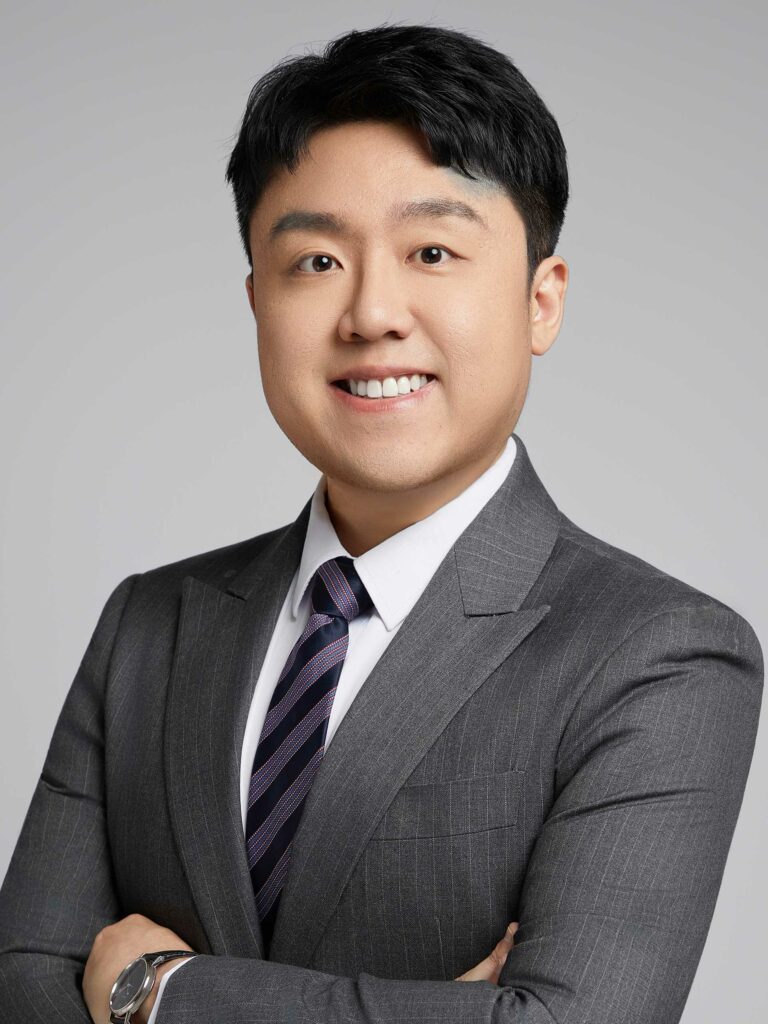
Prof. Dr. Matthias Weidlich is a faculty member at Humboldt University of Berlin within the Institute of Computer Science under the Faculty of Mathematics and Natural Sciences . His research focuses on Process Mining , Complex Event Processing , and Data Privacy with applications in Business Process Management and Scientific Workflows . Research Interests: Business Process Management and Process Mining Complex Event Processing and Stream Data Analysis Data Privacy and Security in Process Systems Scientific Workflow Systems and User Behavior Heterogeneous Network Embeddings Algorithm Design and Optimization Recent Publications (2023-2025) demonstrate expertise in: Efficient stream processing techniques Privacy-preserving process mining frameworks Scientific workflow analysis tools Graph neural network applications Multi-modal data integration Adaptive querying systems Contact: Office: Unter den Linden 6, 10099 Berlin Phone: 030 2093-41277 Email: matthias.weidlich@hu-berlin.de Web: hu.berlin/data
Maryam Aliakbarpour is the Michael B. Yuen and Sandra A. Tsai Assistant Professor in the Department of Computer Science at Rice University, affiliated with the Ken Kennedy Institute. She holds a Ph.D. and M.S. from MIT (2020 and 2015) and a B.S. from Sharif University of Technology (2013). Her research focuses on theoretical computer science, statistical inference, learning theory, differential privacy, and hypothesis testing, with an emphasis on algorithm design under computational and privacy constraints. She has held postdoctoral positions at Boston University, Northeastern University, and UMass Amherst, and participated in the Simons Institute's 2020 program on high-dimensional computation. Her work bridges foundational theory and practical applications, particularly in designing efficient algorithms for distribution testing, privacy-preserving machine learning, and hypothesis selection. Notable contributions include optimal algorithms for distribution testing under memory constraints and advancements in differential privacy for metalearning. She has received the Rising Stars in EECS (2018) and MIT’s Neekeyfar Award. Teaching includes graduate courses on learning theory and probabilistic methods, emphasizing algorithmic tools for modern computational challenges. Her publications span top conferences like COLT, NeurIPS, and ICML, addressing topics such as privacy-aware learning, efficient entropy estimation, and robust statistical methods. She advises on research projects requiring strong algorithmic foundations and mentors students in theoretical computer science and data privacy.
Anson Kahng is an Assistant Professor in the Department of Computer Science and the Goergen Institute of Data Science at the University of Rochester. He previously held postdoctoral positions at the University of Toronto and completed his PhD at Carnegie Mellon University under the supervision of Ariel Procaccia, focusing on computational social choice. PhD, Computer Science, Carnegie Mellon University Undergraduate degree, Computer Science, Harvard College His research explores the intersection of computer science and democracy, developing frameworks like virtual democracy and liquid democracy while analyzing fairness in participatory budgeting and voting systems. He combines theoretical analysis with empirical methods, emphasizing interdisciplinary collaboration. Recent work includes advancements in ranked choice voting optimization, fairness metrics for elections, and structural analysis in cryo-electron tomography. He has published in top venues such as IJCAI, AAAI, NeurIPS, and ACM Transactions on Economics and Computation. NeurIPS 2019 Spotlight Presentation (top 2.5% of submissions) Kahng advises PhD students Alina Chadwick and Joe Saber, and has mentored multiple undergraduate researchers. He teaches courses on algorithmic game theory and computational statistics at the University of Rochester.
Michael Knaus is a Junior Professor (Assistant Professor) in the Department of Economics within the Faculty of Economics and Social Sciences at the University of Tübingen, Germany. His office is located at Mohlstraße 36, 4th floor, room 415. He teaches graduate-level courses on causal inference and causal machine learning. Dr. Knaus specializes in the intersection of causal inference and machine learning, with particular expertise in Double Machine Learning methods. His research focuses on developing advanced statistical techniques to estimate treatment effects across various economic contexts including labor markets, finance, education, and health economics. His work bridges theoretical econometrics with practical applications, emphasizing methodological rigor and real-world relevance. His recent publications demonstrate a clear progression toward increasingly sophisticated methods for handling heterogeneous treatment effects and complex causal structures. His research shows strong integration of machine learning algorithms with causal inference frameworks to address challenging policy questions across multiple domains. Double Machine Learning based Program Evaluation under Unconfoundedness (The Econometrics Journal, 2022) Heterogeneous Employment Effects of Job Search Programmes: A Machine Learning Approach (Journal of Human Resources, 2022) How Does Post-Earnings Announcement Sentiment Affect Firms' Dynamics? (Journal of Financial Econometrics, 2024) Effect or Treatment Heterogeneity? Policy Evaluation with Aggregated and Disaggregated Treatments (2021) Dr. Knaus has made significant methodological contributions through his development of the causalDML R package, which implements Double Machine Learning methods for binary and multiple treatment effect estimation. His work has been published in top econometrics and economics journals and has gained recognition in the research community, with his GitHub repository accumulating 36 stars. He frequently collaborates with Michael Lechner, a leading researcher in causal inference and program evaluation. His teaching includes E464 Causal Inference and E463 Causal Machine Learning, both graduate courses that combine theoretical foundations with practical implementation using R. These courses prepare students for advanced research and data science roles requiring sophisticated causal reasoning skills, emphasizing hands-on application of methods to real-world problems.
Dr. Liyang Sun is a Lecturer in Economics and Deputy Graduate Tutor at the University of College London's Department of Economics, and an Untenured Associate Professor (on leave) at CEMFI in Madrid. She holds a PhD in Economics and Statistics from MIT (2021) and a BA in Economics and Mathematics from Wellesley College (2014). Her research focuses on causal inference methodologies under treatment effect heterogeneity and weak identification with many instruments. Prior to her current roles, she was a Postdoctoral Research Fellow at UC Berkeley. Her academic positions include: Lecturer in Economics, University College London (current) Untenured Associate Professor, CEMFI, Madrid (on leave) Postdoctoral Research Fellow, UC Berkeley (previous) Research interests span econometric method development, applied economics, and policy analysis. Her work emphasizes improving causal inference techniques in realistic economic settings. Recent publications explore synthetic control methods, instrumental variables with many weak instruments, and machine learning applications in structural reforms analysis. Her scholarly contributions address core econometric challenges such as: Policy learning and confidence estimation Temporal aggregation in synthetic control frameworks Adaptive methods for model misspecification No specific grants or advising activities are documented here. She contributes to the department's teaching and graduate training programs as Deputy Graduate Tutor.
Matias D. Cattaneo is a Professor in the Department of Operations Research and Financial Engineering at Princeton University , with affiliated roles in the School of Public and International Affairs , Economics Department , Latin American Studies Program , Data-Driven Social Science , AI at Princeton , and Center for Statistics and Machine Learning . He serves as an Amazon Scholar and collaborates with global organizations. Education : Ph.D. in Economics (2008) and M.A. in Statistics (2005) from UC Berkeley, Master in Economics (2003) from Universidad Torcuato Di Tella, Licentiate in Economics (2000) from Universidad de Buenos Aires. Research focuses on interdisciplinary challenges in social, behavioral, and biomedical sciences, combining econometrics, statistics, data science, and causal inference. His methodological work includes regression discontinuity designs, synthetic control methods, and local polynomial estimation, with applications to decision-making under uncertainty. Scientific recognition : Elected Fellow of the American Statistical Association Elected Fellow of the Institute of Mathematical Statistics Elected Fellow of the International Association for Applied Econometrics Elected Member of the International Statistical Institute Software contributions include R packages rdhte , scpi , and lpcde , freely available on GitHub. His GitHub activity includes 344 contributions in the last year, with active repositories on regression discontinuity and synthetic control methods.
Pierre Bellec is an Associate Professor in the Department of Statistics at Rutgers University, where he has been a faculty member since 2016 and was promoted to Associate Professor with tenure in 2021. His office is located in Hill Center 406 at 110 Frelinghuysen Road, Piscataway, NJ 08854. Dr. Bellec received his PhD from ENSAE ParisTech, France in 2016 under the supervision of Alexandre Tsybakov. Prior to that, he completed a Part III (MASt) at the University of Cambridge, UK in 2012 and earned his Diplôme d'Ingénieur from Ecole Polytechnique, France in 2011. Dr. Bellec's research focuses on high-dimensional statistics, aggregation of estimators, shape constrained problems in statistics, and probability theory. His work has significant implications for machine learning and statistical inference in high-dimensional settings. He has made important contributions to regularization methods, M-estimators, and uncertainty quantification in complex statistical models. His recent publications show a strong focus on asymptotic theory, robust statistics, and high-dimensional inference, with novel methods for error estimation, adaptive tuning, and bias correction in regularized estimators. Dr. Bellec has received several prestigious awards and honors, including: IMS Fellow (2023) NSF CAREER award DMS 1945428: "Post-Differentiation Inference" (2020-2024, $400,000) NSF award DMS 2413679: "Uncertainty quantification for iterative algorithms" (2024-2027, $225,000) NSF award DMS 1811976: "Uncertainty Quantification in High-Dimensional Structured Regression Problems" (2018-2022, $180,000) Blaise Pascal PhD Award (2017) Dr. Bellec has advised several graduate students, including Takuya Koriyama (now at Chicago Booth), Yiwei Shen (now at Meta/Facebook), and Kai Tan (current PhD student). He has also mentored numerous undergraduate students through REU programs. He serves as an Associate Editor for the Annals of Statistics and has been involved in program committees for major conferences including the Conference on Learning Theory (COLT) and the Conference on Neural Information Processing Systems (NeurIPS).
Mostafa Milani is an Assistant Professor in the Department of Computer Science at Western University. His research focuses on data management, databases, and their applications in data cleaning, privacy, provenance, and fairness. Before joining Western, he held postdoctoral positions at the University of British Columbia and McMaster University, and earned his Ph.D. from Carleton University under Dr. Leopoldo Bertossi. Education: Ph.D. in Computer Science from Carleton University (supervised by Leopoldo Bertossi), Postdoctoral Fellowships at University of British Columbia and McMaster University. Research Interests: Data Quality, Privacy, Provenance, Fairness, Entity Matching, Query Optimization, and Database Systems. His work emphasizes ethical data practices and integrates machine learning for improved database interactions. He has contributed to projects like Building Trust in Data (privacy/fairness integration) and Unified Data Exploration (provenance and query recommendations). Courses taught include Databases I/II, Applied Logic, and Web Systems. Current advisees include 7 MSc and 1 PhD student. Former students have graduated across MSc and undergraduate programs. His research is supported by grants and collaborations, and he actively participates in program committees for top conferences like SIGMOD and VLDB.
Anuran Makur is an active Assistant Professor at Purdue University with dual appointments in the Department of Computer Science (College of Science) and the Elmore Family School of Electrical and Computer Engineering (College of Engineering). He is affiliated with the Institute for Control, Optimization and Networks (ICON) and teaches foundational courses in machine learning and data science. His educational background includes a B.S. in Electrical Engineering and Computer Sciences from UC Berkeley (2013, summa cum laude), an S.M. in Electrical Engineering and Computer Science from MIT (2015), and a Sc.D. from MIT (2019). B.S., UC Berkeley, 2013 S.M., MIT, 2015 Sc.D., MIT, 2019 Makur's research bridges theoretical machine learning, information theory, and applied probability. Key interests include ranking/preference learning, optimization for ML, non-parametric inference, information measures, permutation channel limits, broadcasting on graphs, and reliable computation. His work emphasizes fundamental theoretical limits and mathematical rigor in complex systems. Recent publications reveal strong trends in statistical learning theory (40%), information-theoretic methods (35%), and networked systems (25%), with growing emphasis on privacy-aware inference and high-dimensional statistics. His scientific achievements are recognized by prestigious awards: Arthur M. Hopkin Award (UC Berkeley, 2013) Ernst A. Guillemin Master's Thesis Award (MIT, 2015) Jin Au Kong Doctoral Thesis Award (MIT, 2020) Thomas M. Cover Dissertation Award (IEEE, 2021) NSF CAREER Award (2023) While specific advising details aren't public, his research leadership is evident through ICON affiliation and collaborations with MIT's LIDS/IDSS groups. The NSF CAREER grant supports his work on information-theoretic foundations of machine learning. He maintains active roles in theoretical computer science and information theory communities through conference organization and editorial work. Makur leads research within ICON, focusing on control-theoretic approaches to networked learning systems. His work integrates probabilistic modeling with optimization theory, particularly for distributed inference and networked decision-making under uncertainty.
Sylvain Arlot is a Professor at the Mathematics Department of Université Paris-Saclay, affiliated with the Probability and Statistics team at Laboratoire de Mathématiques d'Orsay. He leads the Celeste INRIA Saclay project-team and is a junior member of the Institut Universitaire de France (IUF) since 2020. His research focuses on statistical learning theory, non-parametric methods, model selection, and change-point detection. Arlot has contributed to foundational work on cross-validation, penalization techniques, and random forests. He co-organizes the Séminaire Palaisien and serves as an associate editor for the Annales de l'Institut Henri Poincaré B. Education: PhD in Mathematics from Université Paris-Sud (2007), HDR (Habilitation) from Université Paris Diderot (2014). Research Interests: Core areas include statistical learning theory, resampling methods (e.g., cross-validation and bootstrap), and applications in high-dimensional data analysis. His work bridges theoretical guarantees with practical algorithm design, emphasizing data-driven model selection and robust estimation techniques. Grants & Projects: Leads the PEPR IA Project Causali-t-AI (2023–2028) and was a member of the ANR Fast-Big project (2018–2023). He coordinates the math-AI program under Labex Mathématique Hadamard. Awards: Junior IUF membership (2020–2025). Labs/Teams: Heads the Celeste team at INRIA Saclay, collaborating on statistical machine learning and data science challenges.
Mengyan Zhang is a Researcher at the Department of Computer Science, University of Oxford. Their work focuses on advancing artificial intelligence and machine learning techniques, particularly in applications such as epidemiological modeling, causal inference, and optimization. Mengyan's research bridges theoretical foundations with practical challenges in public health, remote sensing, and synthetic biology. Key research interests include developing AI-driven frameworks for disease surveillance, Bayesian optimization methods with integrated feedback, and uncertainty-aware regression for socio-economic estimation. Their contributions span graph-based algorithms, transformer neural processes, and adaptive recommendation systems with bandit feedback mechanisms. Mengyan’s publications explore cutting-edge topics like causal Bayesian optimization, Gaussian process bandits, and personalized news recommendation. Their work emphasizes interdisciplinary applications, from healthcare analytics to genetic sequence design. While no specific awards or grants are listed, Mengyan’s research demonstrates a strong focus on addressing real-world challenges through innovative machine learning approaches. The lack of student or lab affiliations suggests a primary focus on independent research contributions.
Xubo Yue is an Assistant Professor in the Department of Mechanical and Industrial Engineering at Northeastern University. His research focuses on federated data analytics, Bayesian optimization, continuous optimization, Gaussian processes, and deep learning. He holds a PhD in Industrial & Operations Engineering from the University of Michigan, Ann Arbor (2023). His work bridges theoretical advancements with practical applications in advanced manufacturing, predictive maintenance, and sustainable materials discovery. Key affiliations include the Institute of Industrial and Systems Engineers (IISE), INFORMS, and the American Statistical Association (ASA). Recent research emphasizes scalable federated learning frameworks for distributed systems, causal inference in sensor networks, and sharpness-aware optimization techniques to enhance generalization. His methodologies are applied to interdisciplinary domains such as materials science, IoT systems, and renewable energy simulations. Research trends reveal a focus on: Federated learning architectures for privacy-preserving analytics Bayesian optimization for high-dimensional design spaces Integration of causal reasoning with machine learning systems Autonomous experimentation for accelerated materials discovery No scientific awards are explicitly listed in the provided information. His academic advising and grant activities are not detailed in the current data.
Christopher Brown serves as a Clark Scholar and instructor in the Department of Neurology at the University of Pennsylvania, where he conducts clinical training at the Penn Memory Center under Dr. Dave Wolk's mentorship. His work bridges neurology, imaging science, and neurodegenerative disease research within Penn's academic medical ecosystem. His educational trajectory includes a bachelor's degree in biology and philosophy-neuroscience-psychology from Washington University in St. Louis, followed by dual MD/PhD training at the University of Kentucky. His doctoral research focused on multimodal imaging in aging and preclinical Alzheimer's disease, specifically examining executive function decline. Dr. Brown's research centers on multimodal neuroimaging approaches to map neurodegenerative pathology propagation through white matter networks. His work integrates advanced MRI techniques with computational analysis to understand Alzheimer's disease mechanisms, emphasizing the structural connectivity basis of cognitive decline. This focus positions him at the intersection of clinical neurology and cutting-edge imaging methodology development. Analysis of his 2024-2025 publications reveals dominant themes in Alzheimer's disease genetics (particularly variant-to-function mapping in microglial models), high-resolution neuroimaging segmentation, and white matter microstructure analysis. His work consistently connects molecular mechanisms with structural brain changes, using techniques ranging from 7T MRI to multi-ancestry genetic studies. His scientific recognition includes: Clark Scholar award As a Penn Memory Center researcher, Dr. Brown contributes to collaborative projects investigating early Alzheimer's detection biomarkers. His current work extends into glymphatic system research and vascular contributions to neurodegeneration, supported by institutional resources within Penn's neuroscience infrastructure. He operates within the Penn Memory Center's research ecosystem, which integrates clinical care with translational neuroscience to advance dementia diagnosis and treatment through multidisciplinary team science.
Helen Thompson is an Associate Professor of Statistics in the School of Mathematical Sciences at Queensland University of Technology (QUT), with a joint affiliation at the Centre for Data Science. Her work bridges statistical theory and real-world applications in health, environment, and social sciences through advanced modeling and machine learning techniques. Education: Doctor of Philosophy, University of Glasgow BSc (Hons), University of Queensland Bachelor of Science, University of Queensland Helen's research focuses on statistical modeling, particularly in Bayesian methods, spatial and spatio-temporal modeling, optimal experimental design, and copula modeling. Her expertise enables robust analysis of complex, high-dimensional datasets, with applications such as cancer survival modeling, air pollution exposure assessment, and early childhood developmental surveillance. She has led projects in collaboration with BHP, Queensland Health, and the Australian Cancer Atlas. Her recent publications demonstrate a strong trend in Bayesian spatial modeling, model-robust experimental design, and the integration of machine learning for environmental and health data. These works often involve interdisciplinary teams and emphasize decision-making under uncertainty. Professional Memberships: Royal Statistical Society Statistical Society of Australia Institute of Mathematical Statistics International Society for Bayesian Analysis Helen has supervised multiple PhD and Master’s students, both as principal and associate supervisor, in areas including spatial statistics, clinical trial design, and machine learning. She has also secured competitive research funding, such as an Australian Competitive Grant for Bayesian methods in pharmaceutical development. Her teaching spans introductory statistics, mathematical modeling, and advanced applied statistics. Research Centers: Centre for Data Science, QUT Mathematical Sciences Research, QUT
Giulia Fanti is an academic researcher affiliated with Carnegie Mellon University in the Computer Science Department . Her research focuses on privacy-preserving technologies, blockchain systems, and machine learning mechanisms, with significant contributions to federated learning, differential privacy, and cryptocurrency network design. Key Research Areas : Privacy in blockchain, Generative Adversarial Networks (GANs), Federated Learning, Game Theory applications to decentralized systems. Recent Publications : Her work explores liquidity provisioning in decentralized finance, truncated consistency models for image generation, and private data valuation frameworks. She has contributed to venues like NeurIPS, ICLR, and SIGMETRICS, often addressing privacy-utility tradeoffs.