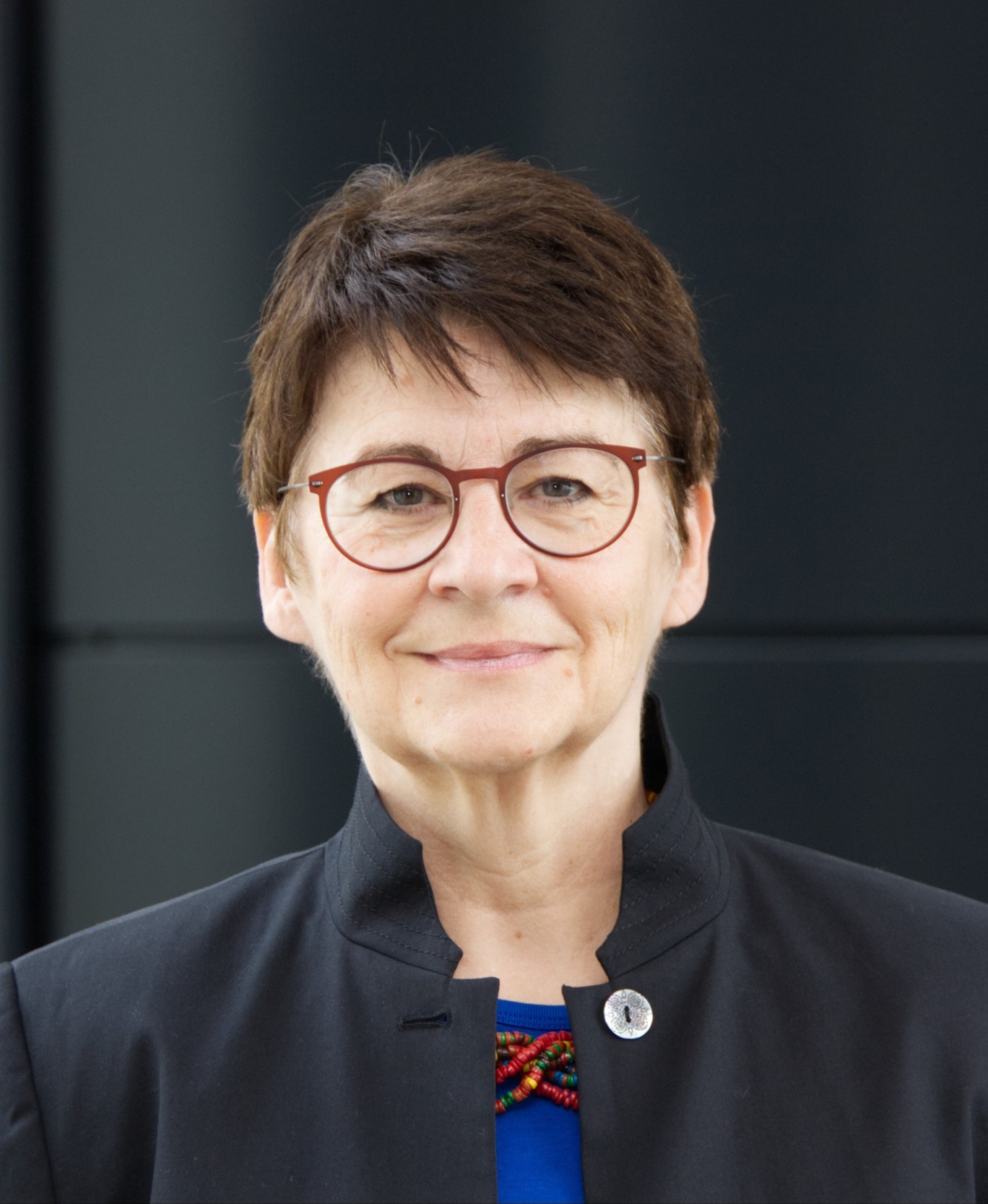
Sabine Fischer is a Professor for Supramolecular and Cellular Simulations at the University of Würzburg’s Center for Computational and Theoretical Biology (CCTB). She holds a PhD in Mathematics from the University of Nottingham (2009) and completed postdoctoral research at the University of Cambridge (2009-2011) and the University of Frankfurt (2011-2017). Her work focuses on mathematical modeling and data-driven simulations of biological processes across subcellular, multicellular, and multi-tissue scales. Key research areas include agent-based modeling of parasite collective behavior (e.g., Project 7 of SPP 2332 PoP), cell-cell interactions, and morphological modeling with Blender. Her group develops tools for image analysis and applies methods ranging from classical statistics to machine learning. Education: Diploma in Mathematics, University of Würzburg PhD in Mathematical Biology, University of Nottingham (2009) Professional Experience: Postdoc, University of Cambridge (2009-2011) Postdoc, University of Frankfurt (2011-2017) Development Engineer, h.a.l.m. Elektronik GmbH (2017-2018) Professor, University of Würzburg (since 2018) Her research integrates experimental data with computational models to study processes like mouse blastocyst differentiation, tissue-level organization, and parasitic locomotion. Current projects emphasize agent-based modeling of Trypanosoma collective behavior and the development of open-source tools like VESNA for 3D vessel analysis.
Jutta Gampe serves as Head of the Laboratory of Statistical Demography at the Max Planck Institute for Demographic Research (MPIDR) in Rostock, Germany. Her position places her at the forefront of advanced demographic methodology development, with particular expertise in survival analysis and statistical modeling of mortality patterns. As a research leader at one of the world's premier demographic research institutions, she contributes significantly to methodological innovation in demography. Dr. Gampe's research interests center on statistical demography with specific focus on survival analysis with multiple time scales, mortality at extreme ages, and cognitive functioning in aging populations. Her work bridges theoretical statistical development with practical demographic applications, particularly in the context of human longevity and aging processes. She has made substantial contributions to methods for analyzing interval-censored data and developing smooth hazard functions for complex demographic phenomena. Analysis of her recent publications reveals a strong methodological focus with increasing sophistication in handling multiple time scales in survival models. Her research demonstrates a consistent trajectory from foundational work on mortality at extreme ages toward more complex statistical frameworks that can accommodate multiple dimensions of time in demographic processes. The interdisciplinary nature of her work is evident in collaborations spanning statistics, demography, epidemiology, and even ecological applications. Dr. Gampe leads several significant research projects including Cognitive Functioning in Middle- and High-Income Countries, Estimating Smooth Rates from Interval-Censored Data, Mortality at Extreme Ages and Potential Limits to Human Lifespan, and Multiple Time Scales in Survival and Event-History Models. Her laboratory serves as a hub for advanced statistical methodology development in demographic research, attracting numerous collaborators from around the world.
Dominik Deffner serves as a Qualifikationsprofessur (W1, Tenure Track W2) for Computational Modeling of Behavior at the Department of Psychology, Philipps University of Marburg. His research group, Computational Modeling of Behavior (AG Deffner), is housed in the Institute Building at Gutenbergstraße 18 in Marburg. Deffner's work bridges cognitive science, evolutionary anthropology, and social psychology through interdisciplinary approaches combining dynamic group experiments, cultural evolution studies, and computational modeling. Deffner's educational background includes a PhD (Dr.rer.nat.) from the Max-Planck-Institute for Evolutionary Anthropology in Leipzig (2018-2021), an MSc in Evolutionary and Comparative Psychology from the University of St Andrews, UK (2016-2017), and dual undergraduate degrees in Psychology and Comparative Cultural and Religious Studies, Philosophy from Philipps-University Marburg (2012-2016). Prior to his current position, he worked as a postdoc at the Max-Planck-Institute for Human Development and Science of Intelligence Cluster in Berlin (2021-2024). His research interests focus on understanding how individuals and collectives adapt to changing and uncertain environments through cognitive processes and social/cultural dynamics. Deffner's work primarily investigates collective dynamics and cultural evolution, cognitive modeling and Bayesian statistics, causal inference, cross-cultural comparative methods, and collective foraging. He combines immersive computer games, field research, and statistical modeling to study social cognition in naturalistic groups, particularly examining how visual-spatial dynamics drive adaptive social learning in complex environments. Analysis of Deffner's recent publications reveals a strong emphasis on interdisciplinary research that bridges theoretical frameworks with empirical data. His work spans computational approaches to cultural evolution, collective decision-making processes, risk-sensitive learning strategies, and causal inference methodologies. A notable trend is his integration of Bayesian statistics with agent-based modeling to understand social learning dynamics across different contexts, from human groups to animal behavior studies. His research increasingly focuses on developing statistical workflows that enable robust causal inferences in cross-cultural research. As an academic advisor, Deffner offers thesis opportunities in both empirical work (interactive group experiments, data analysis) and statistical/theoretical modeling (cognitive modeling, collective behavior, cultural evolution). His research group welcomes students interested in social learning, decision research, cultural evolution, group processes, and advanced Bayesian data analysis methods. While specific grant information isn't detailed in the provided texts, his affiliation with the Max Planck Society and publication in high-impact journals suggest successful funding acquisition for his research program. Deffner leads the Computational Modeling of Behavior research group, which investigates cognitive decision-making processes in groups interacting in natural and complex environments. The group combines immersive computer games and field research with statistical modeling to better understand collective dynamics in real-world contexts. Current research directions include social cognition in naturalistic groups, social learning and cultural evolution, causal inference and statistical workflows, and flexibility and adaptation in both human and non-human animals.
Professor Peter Grassberger is a distinguished researcher at the Jülich Supercomputing Centre (JSC) within the Jülich Research Centre, one of Germany's leading national research institutions. His work spans multiple decades in theoretical physics and computational science, with a particular focus on complex systems and statistical mechanics. His research has significantly advanced our understanding of critical phenomena and phase transitions in various physical systems. Grassberger's research interests center around statistical physics and complex systems, with specializations in percolation theory, self-organized criticality, and random walk models. His work explores the universal properties of phase transitions, critical phenomena, and the behavior of complex networks. His theoretical contributions have provided fundamental insights into how simple local rules can lead to complex global behavior in physical systems. His recent work continues to push boundaries in understanding extreme-value statistics, entropy estimation methods, and the dynamics of interface models. Through his extensive publication record spanning over 40 years, Grassberger has established himself as a leading authority in computational statistical physics. His work shows consistent focus on understanding universal properties of critical systems while developing innovative computational methods to analyze complex phenomena. His research bridges theoretical physics with practical computational approaches, making significant contributions to both fundamental understanding and methodological development in the field. Grassberger's scientific impact is evident through his numerous influential publications and his development of important computational techniques like the Grassberger-Procaccia algorithm for estimating fractal dimensions. His work on self-organized criticality, particularly his 2022 review "Self-Organized Criticality, Three Decades Later," demonstrates his enduring contribution to this important field. His recent publications continue to explore cutting-edge questions in statistical physics, showing active engagement with contemporary research challenges.
Dr. Nicole Hufnagel is affiliated with the Chair of Financial and Actuarial Mathematics at Heinrich Heine University Düsseldorf. Her research focuses on Machine Learning applications in finance, stochastic processes (including self-similar and interacting particle systems), and statistical inference for stochastic processes. She holds a PhD in Mathematics from TU Dortmund (2022), where she also conducted teaching activities during her studies. At Heinrich Heine University, she has taught courses including Game Theory, Financial Mathematics, Markov Chains, and Probability Theory. Her recent publications address topics like collision dynamics in stochastic systems, Bessel processes, and statistical methodologies for financial modeling. Teaching Roles: Heinrich Heine University: Seminar in Game Theory (2024), Tutorials in Financial Mathematics I/II, Markov Chains, and Probability Theory. Technical University of Dortmund (past roles): Tutorials in Analysis, Stochastic Processes, and Financial Mathematics-related courses. Research Contributions: Her work bridges theoretical stochastic analysis with practical applications in finance. Key areas include the statistical analysis of Bessel and Dunkl processes, ergodic diffusions, and log-gas collision dynamics. She co-authored papers in journals such as AIP Advances and Statistical Inference for Stochastic Processes .
Seba Contreras is a Postdoctoral Researcher in the Physics of Disease Spread at the Max Planck Institute for Dynamics and Self-Organization . His work bridges mathematical modelling , dynamical systems , and infectious disease epidemiology to uncover principles in outbreak controllability and disease dynamics. Dr. rer. nat. (Physics of Biological and Complex Systems, 2023) - Georg-August-Universität Göttingen MSc (Extractive Metallurgy, 2019) - Universidad de Chile BEng & Dipl.-Eng. (Civil Engineering, 2017) - Universidad de Chile His research integrates complex systems and infectious diseases with a focus on: Non-pharmaceutical interventions during pandemics Competition and co-infection dynamics between diseases Information-disease feedback loops Statistical methods for epidemiological data correction Parameter inference from limited medical datasets Machine learning applications in protein engineering Recent publications demonstrate expertise in machine learning for biological datasets, epidemic models with heterogeneous populations, and data-driven public health policy . Collaborations span human genetics , theoretical ecology , protein engineering , and social sciences across institutions in Chile and Germany.
Prof. Dr. Yarema Okhrin serves as Full Professor at the Department of Statistics and Data Science within the Faculty of Economics at the University of Augsburg. He leads the Chair of Statistics and Data Science, which is part of the Business Analytics & Operations and Finance, Accounting, Controlling & Taxation clusters. His research group includes Dr. Sebastian Heiden, Dr. Rui Ren, and several research assistants working on advanced statistical methods and their applications in business and economics. Professor Okhrin's research spans mathematical and statistical models for data-driven problems in business and economics, with particular expertise in statistics, data science, and machine learning. His work focuses on developing methodologies for time series analysis, portfolio optimization, risk management, and statistical process control. Recent research has expanded into high-dimensional statistics, image analysis, and network monitoring applications. Analysis of his recent publications (2023-2025) reveals a strong trend toward interdisciplinary applications of statistical methods, particularly in finance and process monitoring. His work demonstrates increasing integration of machine learning techniques with traditional statistical approaches, especially in portfolio optimization and risk assessment. A notable pattern is the development of specialized statistical methods for high-dimensional data analysis across multiple domains. Professor Okhrin supervises bachelor's and master's theses at the Department of Statistics, with research topics including data mining, time series modeling, forecasting methods, regression analysis, and statistical data analysis. His department offers thesis opportunities in specialized areas such as asymmetric dependencies in financial markets, forecasting, investor sentiment analysis, medical statistics, volatility modeling, multivariate distributions, sustainable investing, and portfolio optimization. The Chair of Statistics maintains active research collaborations and offers academic consulting on statistical issues and data analysis. The department hosts regular research seminars to facilitate exchange of ongoing research projects and maintains connections with industry partners for practical applications of statistical methods.
Yannan Su is a Researcher in Computational Neuroscience at the Faculty of Biology, Ludwig-Maximilians-Universität München. Their work focuses on visual perception mechanisms, particularly integrating Bayesian models to understand color vision and neural processing biases. Su collaborates closely with Prof. Thomas Wachtler and Dr. Zhuanghua Shi on projects analyzing natural daylight priors and late visual processing dynamics. Key contributions include studies on hue perception using observer models and investigations into how contextual references influence neural coding at late processing stages. Publications appear in Scientific Reports and Vision Research . Current research explores perceptual biases and computational frameworks for sensory integration.
Dr. Shinichi Nakajima is a Senior Research Lead at the Technical University of Berlin, affiliated with the BIFOLD (Berlin Institute for the Foundations of Learning and Data) and the AIP – RIKEN Center of Advanced Intelligence Project . He leads the research group “Probabilistic Modeling and Inference” at BIFOLD. His academic journey includes a Master’s in Physics from Kobe University (1995) and a PhD in Computer Science from Tokyo Institute of Technology (2006). Prior to academia, he worked at Nikon Corporation (1995–2014) on statistical analysis, image processing, and machine learning. His research focuses on Bayesian inference , generative modeling , explainable AI , and quantum computing , with applications in computer vision, natural language processing, and scientific computing. Notable projects include developing NeuLat (a neural sampling toolbox for lattice field theories) and advancing techniques for symbolic XAI to enhance AI transparency. Dr. Nakajima has published extensively on topics such as diffusion models, federated learning, and physics-informed neural networks. His work bridges theoretical foundations (e.g., Bayesian learning) with practical applications in quantum computing and biomedical imaging. He actively contributes to open-source tools and collaborates with industry and academic institutions globally. Key technical achievements include improving sampling efficiency in quantum eigensolvers, enhancing brain source reconstruction via 3D neural networks, and developing anomaly detection systems using self-supervised autoencoders. His research emphasizes computational efficiency and robustness against adversarial attacks, leveraging Langevin dynamics and gradient-based optimization methods.
Dr. Ricardo Martinez Garcia is a researcher affiliated with the CASUS - Center for Advanced Systems Understanding at the Helmholtz Center Dresden-Rossendorf (HZDR) . His work focuses on spatial ecology, population dynamics, and theoretical biology, addressing pattern formation in ecosystems and animal movement behaviors. Specialization: Spatial ecology, mathematical modeling, and eco-evolutionary dynamics Key Contributions: Frameworks for wildlife-vehicle collision risk, nonlocal interaction models, vegetation pattern analysis, and ecosystem resilience studies Contact: Email | Phone: +49 3581 37523 105 | Office: Conrad-Schiedt-Straße 20, Görlitz His recent research emphasizes spatial heterogeneity in ecological systems, with publications analyzing wildlife-vehicle collisions, vegetation patterns, and movement dynamics across fragmented landscapes. He bridges individual-level mechanisms with ecosystem-scale outcomes using computational and mathematical models.
Prof. Dr. Florian Steinke is a Professor and Head of the Energy Information Networks and Systems Department at Technische Universität Darmstadt. His academic career spans roles at Siemens Corporate Technology (2009–2016) and a PhD in machine learning at the Max Planck Institute for Intelligent Systems (2006–2008). His research focuses on algorithmic energy management, distributed control systems, machine learning applications in energy grids, and resilient smart grid design. Education: PhD in Machine Learning (Max Planck Institute for Intelligent Systems, 2006–2008) Diplom in Computational Physics (University of Tübingen & University of Washington, 1999–2005) Research Interests: Development of cyber-physical systems for energy grids Optimization of thermal-electric systems using game theory and stochastic control Integration of social media data for demand forecasting Cybersecurity measures against adversarial attacks on grids Recent work emphasizes probabilistic grid modeling, resilient energy market design, and AI-driven control strategies for Fourth Generation district heating grids. His platform ecosystem research aims to support the energy transition through data-driven solutions. Labs/Teams: Leads the Energy Information Networks and Systems research group, focusing on interdisciplinary projects combining automation, data science, and energy systems engineering.
Herbert H. Clark is the Albert Ray Lang Professor of Psychology at Stanford University. His research focuses on communication processes in everyday language use, particularly the mechanisms of conversational grounding, common ground establishment, and the interplay between speech and non-verbal cues. He has authored seminal works like Psychology and Language and Using Language , critically analyzing statistical methodologies in psycholinguistics and exploring discourse dynamics. Affiliations: Stanford University (Psychology Department), Former FRIAS Fellow (Oct-Dec 2012). Clark's research interests span psycholinguistics, pragmatics, and social cognition. He pioneered studies on 'grounding theory'—how conversational participants establish shared understanding—and investigated phenomena like indirect speech acts, quotation, and speech disfluencies. His FRIAS project explores performative depictions in discourse, analyzing how gestures, demonstrations, and other embodied actions contribute to communication beyond verbal speech. Honors include Guggenheim Fellowship, membership in the American and Royal Dutch Academies of Arts and Sciences, and a lifetime achievement award from the Society for Text and Discourse. His work bridges psychology and linguistics, emphasizing collaborative aspects of communication.
Cameron Freer is a Research Scientist in the MIT Probabilistic Computing Project , with prior roles including Instructor in Pure Mathematics at MIT, Postdoctoral Fellow at CSAIL, and Project Associate Professor at Keio University. His work bridges probabilistic computing, logic, and theoretical computer science. Education PhD in Mathematics, Harvard University, 2008 (Thesis: Models with High Scott Rank ) Research Interests Freer's research explores the deep interplay between randomness and computation , focusing on: Foundations of probabilistic programming languages and systems Efficient samplers for discrete and continuous distributions Mathematics of random structures like graphons and exchangeable processes Computability in measure theory and probabilistic inference Publications Overview His recent work (2020–2024) advances probabilistic programming systems (e.g., GenSQL), theoretical frameworks for random graphs via Markov categories, and computable approaches to PAC learning. Earlier contributions include exact sampling algorithms, computable exchangeability, and algorithmic barriers in conditional probability. Academic Service Steering Committee Member, LAFI (formerly PPS) workshop series (2017–2025) Program Committee Chair/Co-chair, PPS 2017–2018 Session Chair, POPL 2017 (PPS track) Industry & Visiting Roles Chief Scientist, Remine (2017–2018) Research Scientist, Gamalon Labs (2013–2016) Lyric Labs Visiting Fellow, Analog Devices (2013–2014) Project Associate Professor, Keio University (2021–2024) Labs & Collaborations Freer collaborates extensively with the MIT Probabilistic Computing Project, Harvard Logic Group, and international partners in Oxford, CMU, and Keio University. His work integrates theoretical insights with practical systems in AI and probabilistic inference.
Li Haitao serves as Dean, Dean's Distinguished Chair Professor of Finance, and Director of the Family Business Research Center at Cheung Kong Graduate School of Business (CKGSB). Holding a PhD from Yale University, he previously held faculty positions at the University of Michigan's Stephen M. Ross School of Business and Cornell University's Johnson Graduate School of Management. His academic leadership extends to editorial roles at Management Science and the International Review of Finance . Education: PhD in Finance, Yale University Professor Li's research spans quantitative finance with emphasis on asset pricing anomalies, derivative securities valuation, and fixed income modeling. His work integrates advanced mathematical techniques including Lévy processes and Bayesian analysis to address complex market phenomena. Key contributions examine volatility smiles in interest rate caps, survival bias in equity returns, and nonparametric estimation of state-price densities. His expertise bridges theoretical finance with practical applications in hedge fund performance evaluation and corporate risk management. His publication record reveals consistent contributions to top finance journals including the Journal of Finance , Review of Financial Studies , and Journal of Financial Economics , with research evolving from foundational term structure modeling toward contemporary challenges in liquidity risk and machine learning applications in finance. Scientific Awards: Sanford R. Robertson Professorship, University of Michigan (2007-2008) NTT Research Fellowship, University of Michigan (2006-2007) Q-Group Research Grant (2004) Best Student Paper Award, Eastern Finance Association (1997) Trefftz Award, Western Finance Association (1996) Sterling Prize Fellowship, Yale University (1991-1993) Professor Li actively contributes to academic governance through editorial board service while directing CKGSB's Family Business Research Center. His current research agenda focuses on AI applications in financial markets and China's evolving role in global finance, evidenced by recent speaking engagements at the 2025 Summer Davos and Boao Forum for Asia. He serves on the editorial boards of Management Science (Finance Department) and the International Review of Finance . As Director of the Family Business Research Center, he leads initiatives examining succession planning in Chinese family enterprises and cross-border investment patterns, with recent projects analyzing Macau's casino industry leadership transitions and China-Africa economic relationships.
Bin Gu is a professor at Mohamed bin Zayed University of Artificial Intelligence (MBZUAI), specializing in machine learning and artificial intelligence. Previously affiliated with institutions including Nanjing University of Information Science and Technology (former position) and Nanjing University of Aeronautics and Astronautics (PhD 2011). His research focuses on optimization algorithms, spiking neural networks, federated learning, kernel methods, adversarial robustness, and neuromorphic computing. Education: PhD in Computer Science (2011) from Nanjing University of Aeronautics and Astronautics. Prior affiliations include Tianjin University, Boston University, University of Science and Technology of China, and Southeast University. Research Interests: Extensive work on machine learning theory and applications, including robust learning, federated systems, neural architecture design, and privacy-preserving techniques. Over 200 publications in top venues such as AAAI, NeurIPS, ICLR, ICML, KDD, and IEEE journals. Publications Trends: Recent focus on spiking neural networks (SNNs), federated learning frameworks, and optimization methods for handling adversarial attacks and privacy constraints. Notable contributions include scalable algorithms for kernel-based learning, robust SVM formulations, and neuromorphic computing architectures. Labs/Teams: Active in AI research groups focused on neural networks, optimization, and distributed learning systems. Collaborates with industry and academic partners on applied AI solutions.