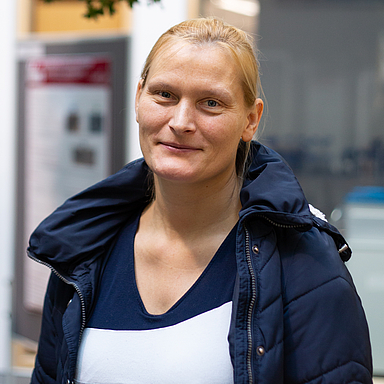
Dr. Michiel Renger is a researcher at the Department of Mathematics, Technische Universität München (TUM), within the School of Computation, Information and Technology. His research focuses on variational calculus, partial differential equations, large deviations theory, non-equilibrium thermodynamics, and chemical reaction networks. He has contributed to advancing the understanding of macroscopic fluctuation theory, gradient flows, and their applications in stochastic systems. Teaching responsibilities include courses on higher mathematics for engineering students at TUM and specialized lectures on large deviations and convex analysis at TU Berlin. His work bridges theoretical mathematics with applications in physics and engineering, emphasizing interdisciplinary approaches. Renger’s publications span peer-reviewed journals in mathematics and physics, with a focus on rigorous probabilistic and analytical methods. He holds a PhD in Mathematics from Technische Universiteit Eindhoven (2013) and has collaborated on projects in collaboration engineering, addressing challenges in collaborative modeling and organizational design. His research also extends to applied problems like node counting in wireless networks and statistical consulting for industry.
Prof. Dr. Göran Kauermann is a Full Professor of Statistics at the Ludwig-Maximilians-University Munich , holding the Chair of Applied Statistics in Social Sciences, Economics and Business . His research spans nonparametric models, generalized linear models, and network data analysis, with applications in economics, epidemiology, and data science. Education: Diplom in Economic Mathematics (1991, TU Berlin), PhD in Statistics (1994), Habilitation (Venia Legendi) in Statistics (2000) Kauermann’s research interests focus on penalized regression , network analysis , and statistical modeling in economics, social sciences, and public health. Recent work explores label uncertainty in machine learning , spatio-temporal conflict diffusion , and dynamic network models for economic and social data. Scientific trends in his publications include penalized splines for nonlinear modeling, network flow estimation in social and economic contexts, and label variation analysis in machine learning. His collaborations span climate zone classification , Covid-19 mortality modeling , and smart city parking analytics . Scientific Awards: Bruce Russett Award (2020) for political network research Leadership Roles: He served as Dean of the Faculty of Mathematics, Informatics and Statistics (2019–2021), Speaker of the Elite Master Program in Data Science (2016–2026), and Chair of the German Statistical Society (2005–2013). He also held editorial roles in journals like AStA Advances in Statistical Analysis and Statistical Modelling .
Isabel Valera Martínez is a full Professor of Machine Learning at the Department of Computer Science, Saarland University, and an Adjunct Faculty at the Max Planck Institute for Software Systems (MPI-SWS). She holds a PhD in Machine Learning from the University Carlos III of Madrid and has held prestigious fellowships including the Humboldt Postdoctoral Fellowship and the Minerva Fast Track Fellowship from the Max Planck Society. Her research focuses on developing interpretable, robust, and fair machine learning methods, with applications in healthcare, social systems, and consequential decision-making like hiring and loan approvals. Education: PhD in Machine Learning (2014) and MSc in Multimedia and Communications (2012) from University Carlos III of Madrid; Master’s work at Leibniz University Hannover (2009); Telecommunications Engineering from the Technical University of Cartagena (2009). Research Interests: Fairness in AI, Bayesian nonparametric models, robust machine learning, and applications in healthcare and social systems. She co-leads the ELLIS Robust Machine Learning program and the Saarbrücken AI & Machine Learning (SAM) Unit. Key Publications: Contributions to fair classification frameworks, automatic discovery of data types, and modeling psychiatric comorbidity. Notable venues include AAAI, NIPS/NeurIPS, JMLR, and ICML. Awards: Humboldt Fellowship, Minerva Fellowship, Best Paper Honorable Mention at WWW 2017. Labs & Collaborations: Active in the ELLIS Society and MPI-SWS, focusing on interdisciplinary AI applications.
Professor Angela D. Friederici is a leading cognitive neuroscientist and Director of the Max Planck Institute for Human Cognitive and Brain Sciences in Leipzig, Germany. She holds honorary professorships at the University of Leipzig, University of Potsdam, and Charité University Medicine Berlin. Her work focuses on the neural basis of language processing, syntax, and developmental cognitive neuroscience. Friederici has published over 500 peer-reviewed papers and received numerous accolades, including the APS William James Fellow Award (2023) and the Huttenlocher Award (2021). Education: PhD in Linguistics (1976, University of Bonn), Habilitation in Psychology (1986, Justus Liebig University Giessen). Affiliations: Founding Director of the Max Planck Institute for Human Cognitive and Brain Sciences since 1994. Served as Vice-President of the Max Planck Society (2014–2020). Research Interests: Evolution of language networks, syntax processing, neuroanatomical correlates of language, and developmental trajectories of cognitive abilities. Awards: Includes Leibniz Prize (1997), Wilhelm Wundt Medal (2018), and Gauss Medal (2011). Her recent work explores the neural underpinnings of syntax in humans and primates, with studies on chimpanzee communication and cross-linguistic brain plasticity. Friederici has pioneered methods in neuroimaging and electrophysiology to dissect language networks.
Dr. Setareh Maghsudi is a Professor in the Learning Technical Systems group at the Faculty of Electrical Engineering and Information Technology at Ruhr-University Bochum. She joined Ruhr-University Bochum in August 2023 after serving as an Assistant Professor at the University of Tübingen (2020-2023) and at the Technical University of Berlin (2017-2020). Her academic journey began with an M.Sc. from Kiel University (2008-2010), followed by her Ph.D. and postdoctoral work at Technical University of Berlin (2011-2015), Yale University (2016-2017), University of Manitoba (2015-2016), and Kyushu University (2019). Dr. Maghsudi's research focuses on the application of machine learning to communication networks and distributed systems, with particular emphasis on bandit algorithms, federated learning, and resource allocation in dynamic environments. Her work bridges theoretical machine learning with practical networking challenges, developing algorithms that can adapt to non-stationary environments with partial information. She has made significant contributions to multi-armed bandit frameworks for wireless communications, edge computing, and network optimization. Her recent publications (2023-2025) demonstrate a strong trend toward addressing challenges in integrated sensing and communication (ISAC), federated learning for edge networks, and non-stationary decision-making problems. The publications show expertise spanning theoretical machine learning foundations, wireless communications engineering, and practical implementation for real-world networked systems. Her work increasingly incorporates causal reasoning and robustness considerations into learning frameworks for communication systems. Dr. Maghsudi leads the Learning Technical Systems research group at Ruhr-University Bochum, where she supervises PhD students and postdoctoral researchers working at the intersection of machine learning and communication systems. Her research is supported by various grants focusing on AI for future communication networks. Current projects include developing AI-driven solutions for next-generation communication systems with emphasis on robustness, efficiency, and adaptability in dynamic environments.
Christin Schulze serves as Senior Research Scientist at the Max Planck Institute for Human Development and Adjunct Associate Professor at The Arctic University of Norway since 2019. Her work bridges cognitive psychology and decision science, focusing on how humans develop and execute choices under uncertainty across individual and social contexts. Education Ph.D. Psychology, University of New South Wales (2015) M.Sc. Psychology (Dipl. Psych.), Friedrich-Schiller University Jena (2011) Research Focus : Schulze leads the “Development of Decision Making” research area within the Adaptive Rationality group. Her investigations span experience-based decisions under uncertainty , childhood development of decision strategies , cognitive modeling of judgment , and social/group decision dynamics . She employs experimental paradigms and computational models to dissect how environmental structure, cognitive constraints, and social interactions shape choices from infancy through adulthood. Publication Trends : Her 2015-2021 corpus reveals consistent exploration of probability matching phenomena, social sampling mechanisms, and description-experience gaps. Key contributions demonstrate how group contexts eliminate individual decision biases (Schulze & Newell, 2016) and how bounded rationality governs social information acquisition (Schulze et al., 2021), bridging cognitive, developmental, and social psychology. Scientific Awards Advising & Grants : While specific students and funding sources aren’t detailed in available materials, her leadership of a Max Planck research area implies significant mentorship responsibilities and grant management for decision-science projects. Research Infrastructure : Schulze heads the “Development of Decision Making” unit within the Adaptive Rationality department at Max Planck, directing a team investigating cognitive architectures of choice through behavioral experiments and mathematical modeling.
Michel Besserve is a Senior Research Scientist in the Empirical Inference department at the Max Planck Institute for Intelligent Systems in Tübingen, Germany. His research bridges machine learning theory with applications in neuroscience and complex systems analysis. He leads a research group focused on developing causal machine learning tools to uncover the internal structure and transformations of complex artificial, physical, and socioeconomic systems. Dr. Besserve's primary research interests center on causal machine learning and its applications to understanding complex systems. His work investigates how causality can provide principled ways to study and improve AI algorithms, particularly focusing on the identifiability of causal models and the principle of Independence of Causal Mechanisms (ICM). He develops theoretical frameworks and practical tools for causal inference in complex equilibrium systems, neural circuits, and socioeconomic contexts. His research has significant implications for building trustworthy and interpretable AI systems that can reliably handle real-world complexity. Analysis of Dr. Besserve's recent publications reveals a strong focus on causal representation learning, with significant contributions to independent mechanism analysis and the identifiability of nonlinear generative models. His work spans both theoretical foundations and practical applications, connecting machine learning with neuroscience to understand brain function through causal inference. The interdisciplinary nature of his research is evident in publications spanning top machine learning conferences (NeurIPS, ICML, ICLR) and leading neuroscience journals (Nature, PLOS Biology). Dr. Besserve has established productive collaborations across multiple institutions, particularly with researchers at the Max Planck Institute and ETH Zurich. His work demonstrates how integrating causal principles with machine learning can address fundamental challenges in AI robustness and interpretability, with applications ranging from brain network analysis to economic modeling. His research group focuses on developing the Causal Computational Model (CCM) framework, which aims to create digital representations of real-world systems that integrate data, domain knowledge, and interpretable causal structure. This work has potential applications in climate modeling, industrial digital twins, and economic simulation.
Prof. Azzurra Ruggeri is a Professor in the Professorship for Cognitive and Developmental Psychology at Technical University of Munich (TUM). Her research focuses on understanding how children and adults strategically gather information, make decisions, and learn through embodied and active processes. She leads the iSearch Lab (https://isearchlab.org) and explores topics such as active learning, embodied cognition, and social-cognitive development. Her academic background includes a Dr. rer. nat. (PhD) in Psychology. She is based in Munich, coordinating research on developmental trajectories of learning, exploration strategies, and the interplay between motor skills and cognitive planning. Key areas of investigation include children's decision-making in uncertain environments, the impact of active learning on memory, and the role of embodiment in cognitive development. Recent work emphasizes adaptive information search behaviors, the effectiveness of question-asking strategies, and the application of embodied cognition principles to training interventions. Her studies often employ experimental paradigms involving climbing and spatial navigation to explore motor-cognitive interactions.
Prof. Dr. Peter Sollich is a Professor of Theoretical Physics at Georg-August-Universität Göttingen, affiliated with the Institute for Theoretical Physics. His research spans non-equilibrium statistical physics with applications to soft matter, active systems, and complex networks. He maintains a small part-time appointment at King's College London. His primary research interests focus on non-equilibrium statistical physics , particularly soft and active matter rheology, jamming transitions, glassy dynamics, dynamical phase transitions, and inference from dynamical data. His work bridges theoretical physics with applications in materials science and network theory, emphasizing both fundamental mechanisms and quantitative modeling approaches. Analysis of his recent publications reveals strong thematic consistency in studying glassy dynamics and active matter systems , with increasing integration of machine learning techniques for network analysis. Key methodological threads include coarse-grained modeling, spectral analysis of complex systems, and non-equilibrium thermodynamics frameworks. His 2023-2025 work shows growing emphasis on nonreciprocal interactions in active mixtures and physics-inspired machine learning applications. Prof. Sollich actively supervises Bachelor's, Master's, and PhD students, welcoming thesis inquiries in theoretical physics. His group develops analytical and computational approaches to complex dynamical systems, with recent grants likely supporting work on network dynamics and active matter modeling (specific grants not detailed in source text). His research group operates within the Institute for Theoretical Physics at Göttingen, focusing on computational and analytical modeling of disordered systems. Current projects involve elastoplastic modeling of amorphous solids, spectral analysis of heterogeneous networks, and theoretical frameworks for active matter phase separation.
Prof. Dr. Tobias Windisch is a Professor at the University of Applied Sciences Kempten, where he serves as head of the Institute for Machine Vision within the Faculty of Mechanical Engineering. He leads the Optical 3D Measurement and Computer Vision Laboratory (3D visionlab) and oversees research activities focused on machine learning applications for industrial automation. Dr. Windisch received his PhD in mathematics from OvGU Magdeburg under the supervision of Thomas Kahle, and holds an Honors Master's degree in mathematics from TU Munich within the elite TopMath program. Prior to his academic career, he worked on machine learning projects for Robert Bosch GmbH and Daimler TSS GmbH (now Mercedes-Benz Tech Innovation). His research spans machine learning, computer vision, and optical sensing with a strong focus on industrial applications. Windisch's work primarily explores how reinforcement learning can be combined with optical sensing to develop intelligent control strategies for manufacturing processes. His team develops mechanical processes built around machine learning models to further automate industrial applications using data from optical sensors. The research has practical applications in automotive production, quality control, and precision manufacturing. Analysis of his recent publications reveals a strong trend toward practical implementations of machine learning in industrial settings, with particular emphasis on reinforcement learning for process optimization, drift detection in high-dimensional data, and causal structure learning for manufacturing analytics. His work bridges theoretical machine learning with real-world industrial challenges. As a dedicated educator and research leader, Windisch maintains high standards for academic integrity and excellence. He believes in creating an environment where students can focus deeply, think boldly, and innovate through meaningful research. Dr. Windisch leads a dynamic research group with numerous Master's and Bachelor's students working on cutting-edge projects including reinforcement learning for active alignment, drift detection in sensory data, latent drift detection with Autoencoders, and representation learning for industrial processes. His laboratory, the 3D visionlab, serves as the physical hub for this research. The Institute for Machine Vision under his leadership develops practical tools and frameworks such as relign, lineflow, and driftbench that are openly available on GitHub, demonstrating his commitment to reproducible research and practical applications.
Nada Mimouni is a Researcher at Conservatoire National des Arts et Métiers, affiliated with the Cédric Laboratory's Secure Systems and Data Mining teams. She has authored 15+ peer-reviewed publications across 2012–2025, focusing on knowledge graphs, legal informatics, and cybersecurity. Her Contextual cybersecurity Semantic knowledge representation Legal information systems Ontology engineering Medical system protection Policy analysis research spans interdisciplinary applications including EU regulatory frameworks and healthcare infrastructure security. Recent publications demonstrate expertise in contextual knowledge graphs, analogical reasoning, and cyber-physical incident management. Notable recognition includes the Most Inspiring Managerial Implications Award (2019).
Dr. Philip Bittihn serves as Group Leader and Scientist at the Max Planck Institute for Dynamics and Self-Organization in Göttingen, Germany, heading the Emergent Dynamics in Living Systems research group within the Department of Living Matter Physics. His work bridges physics and biology to decipher complex emergent behaviors in biological systems through innovative interdisciplinary approaches. His research spans nonlinear dynamics in biological systems , initially focusing on cardiac arrhythmia mechanisms where he identified novel termination strategies for life-threatening rhythms through topological defect analysis. Current work centers on growth-driven phenomena in cellular active matter , investigating mechanical interactions, expansion flows, orientational order, and shape development coupled with gene regulation and metabolism. He employs reaction-diffusion modeling, synthetic biology, and microfluidic experimentation to study pattern formation in microbial colonies and cardiac tissue. Analysis of recent publications reveals a dominant trend toward active matter physics in multicellular systems , particularly geometry-induced nematic order, phase separation in proliferating matter, and nutrient-mediated antibiotic responses. His group consistently explores how non-equilibrium growth processes generate complex patterns, with increasing emphasis on mechanical stress anisotropy and motility-induced transitions in confined cellular environments. The Emergent Dynamics in Living Systems group operates at the physics-biology interface, utilizing genetically engineered E. coli models (as demonstrated in their Nature Microbiology 2020 work on oscillating growth patterns), advanced microfluidic chambers, and computational frameworks to investigate fundamental principles of biological organization with potential biomedical applications.
Benedikt Ehinger is a Tenure-Track Professor for Computational Cognitive Science at the Stuttgart Center for Simulation Science (SC SimTech) and the Institute for Visualization and Interactive Systems (VIS) at the University of Stuttgart. His research bridges cognitive neuroscience, computational modeling, and visualization techniques to understand visual perception and decision-making processes. Education 2018: PhD in Cognitive Science from University of Osnabrück with thesis "Predictions, Decisions and Learning in the visual sense" 2013: Master of Science in Cognitive Science from University of Osnabrück with thesis "Filling in Blind-Spots: A psychophysical and an EEG study" 2011: Bachelor of Science in Cognitive Science from University of Osnabrück with thesis "Electrophysiological Correlates of Category Learning" Research Interests Ehinger's research focuses on the intersection of visual cognitive science, computational modeling, and neuroimaging techniques. His work primarily investigates predictive coding mechanisms in visual perception, statistical learning in visual scenes, eye movement control, method development for combined EEG and eye-tracking analyses, visual completion phenomena like the blind spot, and category learning and neural plasticity. His approach combines behavioral experiments, EEG recordings, eye-tracking, and advanced statistical modeling to uncover the computational principles underlying human visual cognition. Publication Trends Ehinger's publication record shows a clear evolution from foundational work on visual perception and category learning toward methodological innovations in neuroimaging analysis. His early work focused on visual completion phenomena, category learning, and melanopsin modeling. More recently, he has pioneered techniques for analyzing combined EEG and eye-tracking data, developing toolboxes like "unfold" that address critical challenges in temporal overlap correction and regression-based analysis. His research demonstrates a consistent thread of applying computational approaches to understand visual cognition while simultaneously advancing the methodological toolkit of cognitive neuroscience. Scientific Contributions Development of the "unfold" toolbox for overlap correction and regression-based EEG analysis Creation of the EEGVIS toolbox for EEG visualization Establishment of comprehensive eye-tracking test batteries for validating mobile eye-tracking devices Innovative approaches to modeling fixation durations and eye movement patterns Research Environment Ehinger leads the Computational Cognitive Science group within the Institute for Visualization and Interactive Systems at the University of Stuttgart. His work is situated at the intersection of cognitive science, neuroscience, and computer science, collaborating with researchers across these disciplines. His lab utilizes behavioral experiments, EEG, eye-tracking, and computational modeling to investigate visual cognition, with emphasis on open science practices and methodological transparency.
Susanne Gerber is a Professor at iDNA and Adjunct Director at the Institute of Molecular Biology (IMB), Johannes Gutenberg University Mainz (JGU), affiliated with the Faculty of Biology's Bioinformatics department. Her academic journey includes an Assistant Professorship in Bioinformatics at JGU (2015-2020) and postdoctoral research at Università della Svizzera italiana. Her educational background comprises a PhD in Biophysics from Humboldt University of Berlin (2011), an M.Sc. in Bioinformatics from Free University of Berlin and Konrad Zuse Institute (2007), and a B.Sc. in Bioinformatics from Free University of Berlin and Max Planck Institute (2004). Dr. Gerber's research spans Bioinformatics, Computational Genomics, Systems Biology, Molecular Evolution, and Neuroinformatics , focusing on developing computational frameworks for genomic analysis, neurodegenerative disease modeling, and microbiome interactions. Her work integrates machine learning with multi-omics data to address complex biological questions in molecular evolution and neural systems. Analysis of her 15 most recent publications (2024-2025) reveals a strong emphasis on nanopore sequencing applications for RNA modification detection, deep learning frameworks for genomic data enhancement, and neurobehavioral modeling using AI-driven approaches. Key thematic clusters include epitranscriptomics, chromatin dynamics, and computational psychiatry with ethical AI considerations. Her methodological innovations include tools like COMET for network analysis, CCUT for chromatin data enhancement, and ModiDeC for RNA modification classification, demonstrating translational impact across genomics and neuroscience. Dr. Gerber leads research groups at IMB and iDNA focusing on computational genomics, advising students in bioinformatics and securing grants for AI-driven genomic analysis. Her labs develop open-source tools for nanopore data processing and neuroimaging analysis, fostering collaboration between computational and experimental biologists.
Prof. Dr. Uwe Schlink is a leading Professor at the Institute of Meteorology, University of Leipzig, and Senior Researcher at the Department of Urban & Environmental Sociology, Helmholtz Centre for Environmental Research - UFZ. His work focuses on urban climate research , thermal comfort , urban air quality , and statistical modelling with Bayesian inference. He leads the working group on urban climate and personal exposure, bridging environmental science with societal resilience. Affiliation: University of Leipzig (since 2009) and UFZ (since 2013) Research Themes: Urban heat islands, personal exposure to environmental stressors, statistical climate models, and health impacts of air pollution His research spans environmental health , urban climatology , and resilient city planning , with significant contributions to understanding thermodynamic interactions between urban structures and climate. He has pioneered methods for high-resolution land surface temperature analysis and green infrastructure performance in mitigating heat stress. Recent publications (2023-2025) highlight his work on PM2.5-bound PAH exposure , anthropogenic heat impacts in Beijing, and Asian plateau climate dynamics . Collaborative projects address urban heat stress , green roofs , and health-focused urban planning .