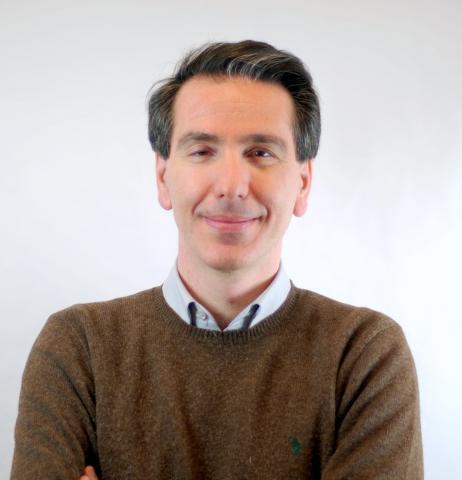
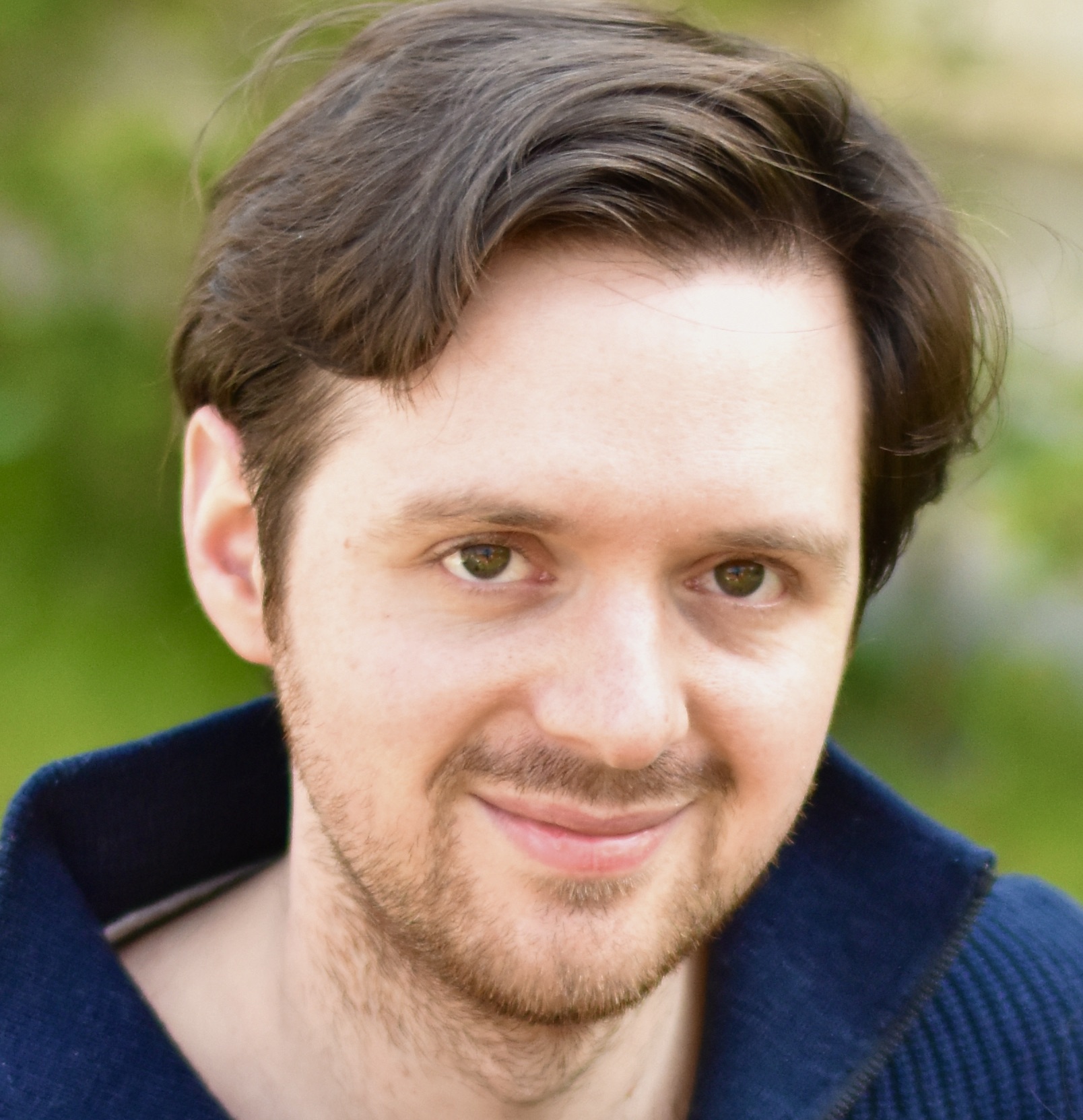
Maarten De Vos is a Professor at the Department of Electrical Engineering (ESAT) , KU Leuven , with dual appointments in the Faculty of Medicine and Faculty of Engineering Science . He leads interdisciplinary research at the intersection of artificial intelligence and biomedical signal processing.
Daniela M Witten is a Professor of Statistics and Biostatistics at the University of Washington, holding the Dorothy Gilford Endowed Chair in Mathematical Statistics. Her research focuses on developing statistical machine learning methods for high-dimensional data, with a particular emphasis on unsupervised learning and theoretical foundations. Witten earned her BS in Math and Biology with Honors and Distinction from Stanford University in 2005 and her PhD in Statistics from Stanford University in 2010 under Robert Tibshirani. Her academic journey established her expertise in bridging mathematical theory with biological applications. Her research program centers on high-dimensional statistical learning , where she develops methods for unsupervised learning and graphical modeling when features outnumber observations. She pioneers statistical models for neural activity through collaborations with the Allen Institute for Brain Science and Princeton University, addressing functional connectivity and neuron sub-population identification. Her groundbreaking work on selective inference solves the "double-dipping" problem in hypothesis generation and testing, enabling valid inference after hierarchical clustering and regression trees. Additionally, she advances multi-view data analysis to integrate complementary data sources like clinical and genomic measurements. Applications span genomics, neuroscience, microbial ecology, and pathology, demonstrating her commitment to solving real-world biomedical challenges. Her 2025 publications reveal a cohesive trend toward developing theoretically rigorous inference frameworks for high-dimensional settings, with emphasis on linear regression validity, semi-supervised efficiency, Gaussian decomposition, and PCA variance quantification—showcasing her signature blend of methodological innovation and practical applicability. Witten's exceptional contributions are recognized through extensive honors: Presidents’ Award, Committee of Presidents of Statistical Societies (COPSS) (2022) Mortimer Spiegelman Award, American Public Health Association (2019) Simons Investigator Award (2018-2023) Sloan Research Fellowship (2013-2015) NSF CAREER Award (2013-2018) NIH Director’s Early Independence Award (2011-2016) 23 major awards including named lectureships, fellowships, and editorial leadership As a dedicated mentor, she has guided students like Olivia McGough (NSF GRFP winner), Dwight (Zichun) Xu (ASA Nonparametrics Student Paper Award winner), Yiqun Chen (Hopkins Biostat faculty), and Anna Neufeld (Williams College faculty). Her research is sustained by major grants from NIH, NSF, and Simons Foundation. Witten co-authored the seminal textbook "Introduction to Statistical Learning" and currently serves as Joint Editor of the Journal of the Royal Statistical Society, Series B (2023-2025), shaping the field through both scholarship and community leadership.
Prosper Dovonon serves as a Full Professor in the Department of Economics at Concordia University in Montreal, Canada, where he holds a prestigious Concordia University Research Chair, Tier 1, in Econometrics of Large Datasets. He previously held positions as Associate Professor (2015-2023) and Assistant Professor (2010-2015) at the same institution. Additionally, he maintains an adjunct professorship at the University of Adelaide's School of Economics since 2021 and previously served as a Visiting Professor at HEC Montreal's Department of Finance (2017-2018). His educational background includes a PhD in Economics from Universite de Montreal (2007), an MSc in Statistics and Economics from ENSEA, Abidjan, Cote d'Ivoire (2000), and an MSc in Mathematics from Universite Nationale du Benin, Abomey-Calavi, Benin (1996). Dovonon's research focuses on advanced econometric methodologies, particularly in time series analysis and financial econometrics. His work addresses complex identification issues, develops robust estimation techniques, and creates innovative testing procedures for economic models. He specializes in moment condition models, GMM estimation, volatility modeling, and handling identification failures in econometric frameworks. His publication record shows a consistent focus on theoretical econometrics with practical applications in finance. Recent work emphasizes mixed identification strength scenarios, instrument exogeneity testing, and specification testing under challenging identification conditions. His research demonstrates increasing sophistication in handling complex econometric problems with real-world financial data applications. His notable recognition includes the Concordia University Research Chair, Tier 1, in Econometrics of Large Datasets, highlighting his significant contributions to the field. Dovonon has supervised numerous graduate students and collaborated extensively with leading econometricians worldwide. His research has been supported by institutional funding through his Research Chair position, enabling significant contributions to econometric theory and methodology. He maintains active research collaborations across international institutions and continues to push the boundaries of econometric theory with applications to financial markets and economic modeling.
Kathi Wilson is a Professor at the Department of Geography, Geomatics and Environment at the University of Toronto Mississauga. Her research examines how urban environments (social, built, physical) influence health outcomes among immigrant, Indigenous, and racialized populations. She collaborates extensively with community partners in the Region of Peel and leads the CHANGE Lab, which supports student research in a MAC/PC environment. Research Clusters: Urbanization, Transportation & Health Contact: DV3294, University of Toronto Mississauga, 3359 Mississauga Road, Mississauga, ON L5L 1C6 Her work employs mixed-methods approaches, including participatory mapping and culturally adapted surveys, to address health inequities and urban walkability. Current projects focus on Arab communities' perceptions of walkability in Toronto and the health impacts of the COVID-19 pandemic in Peel Region. Professor Wilson has published extensively on immigrant health, Indigenous health rights, and spatial health disparities, with a focus on methodological rigor in geocoding and accessibility studies. She mentors graduate students in topics related to immigration, healthcare access, and Indigenous wellbeing.
Marie-Colette van Lieshout is a Professor of Spatial Stochastics at the Faculty of Electrical Engineering, Mathematics and Computer Science, University of Twente, and a Scientific Staff Member in the Stochastics group at Centrum Wiskunde & Informatica (CWI), Amsterdam. She has been active in research since 1997 and is a leading expert in stochastic geometry, spatial statistics, and image analysis. Her educational and professional background includes positions at the University of Warwick and the Free University Amsterdam. She is currently engaged in advanced research on point processes, random fields, and tessellation models, with applications in seismic hazard, fire risk, and machine learning. Her research interests include: Stochastic Geometry Spatial Statistics Image Analysis Point Process Modeling Seismic Risk Assessment Machine Learning for Spatial Data Her recent publications (2023–2025) focus on spatial intensity estimation, marked point processes, and data-driven risk modeling, showing a strong integration of classical spatial statistics with modern computational and machine learning techniques. Key themes include adaptive kernel smoothing, infill asymptotics, and applications in environmental and public safety domains. She has received significant recognition, including: Elected Fellow, International Statistical Institute (ISI) She has been awarded multiple research grants from NWO and other agencies, including the KLEIN grant for fire risk management and the DeepNL grant for seismicity prediction in Groningen. She has supervised or collaborated with researchers such as C. Lu, Z. Baki, and R. Markwitz. She is also active in academic service, serving on editorial boards (e.g., Methodology and Computing in Applied Probability), advisory boards (InHolland University), and councils of learned societies (Bernoulli Society, KWG). She leads and participates in research clusters such as STAR and contributes to outreach and education through courses and public lectures on earthquake modeling and spatial statistics.
Erhan Bayraktar is a Professor of Mathematics at the University of Michigan, holding the Susan Smith Chair. He serves as Director of the Quantitative Finance and Risk Management Masters Program, which he established in 2015. His academic career at the University of Michigan spans since 2004, progressing from T. H. Hildebrandt Research Assistant Professor to his current full professorship. Professor Bayraktar earned his Ph.D. from Princeton University in 2004, following dual Bachelor's degrees in Electrical Engineering and Mathematics from Middle East Technical University in Turkey. His academic journey reflects a strong foundation in both theoretical and applied mathematical disciplines. Bayraktar's research focuses on mathematical finance, applied probability, machine learning, mean field games, stochastic analysis, stochastic control, and optimal stopping. His work bridges theoretical mathematics with practical applications in finance and risk management. He has developed sophisticated mathematical frameworks for analyzing complex financial systems, market behaviors, and optimal decision-making under uncertainty. His contributions to mean field games have provided new insights into large-scale interacting systems, while his work on stochastic control has advanced methodologies for optimal decision processes. His publication record demonstrates a consistent trajectory of high-impact research, with recent work focusing on Wasserstein space analysis, graphon particle systems, and applications of machine learning to financial mathematics. His research shows increasing interdisciplinary connections between traditional mathematical finance and modern computational approaches. Susan M. Smith Professorship (2010-present) National Science Foundation CAREER Grant (2010-2016) SIAM Activity Group on Financial Mathematics and Engineering Early Career Prize (2010) Professor Bayraktar has mentored 14 Ph.D. students (13 graduated) and approximately 40 post-doctoral researchers. His students hold prestigious positions in academia and industry, including tenure-track positions at Boston University, University of Colorado, University of Sydney, and University of Toronto. He has secured continuous funding from the National Science Foundation, including the current grant DMS-2507940 (2025-2028) and previous grants totaling over 15 years of continuous NSF support. As Director of the Quantitative Finance and Risk Management Masters Program, Bayraktar has built a robust academic community through the Financial/Actuarial Math seminar series, which hosts about 10 outside speakers annually, and by organizing international workshops in stochastic analysis for finance and insurance in Ann Arbor.
Susan Anenberg is a Professor and Chair of the Environmental and Occupational Health department at the George Washington University Milken Institute School of Public Health. She directs the GW Climate and Health Institute and serves as President of the AGU GeoHealth Section (2023-2024). Her research integrates epidemiology, atmospheric modeling, and policy analysis to quantify health impacts of air pollution and climate change. PhD in Environmental Science and Engineering from UNC (2011) Former EPA environmental scientist and U.S. Chemical Safety Board deputy director Key research themes include: Global air pollution burden of disease estimation Climate change health co-benefits analysis Satellite remote sensing for exposure assessment Environmental justice and exposure disparities GeoHealth policy frameworks Her recent work leverages geospatial datasets to reveal racial/ethnic disparities in NO2 exposure and develops decision-support tools for urban climate action plans. She has contributed to major publications in Lancet Planetary Health , Science , and Nature , and serves on advisory boards for EPA, WHO, and the U.S. National Academy of Sciences. Scientific engagement includes: Co-founding Environmental Health Analytics, LLC Technical advisory roles for Clean Air Act and climate policy Development of multi-modal vehicle electrification health impact models
Dr. Diana Tunaru is a Lecturer in Finance at Kent Business School , University of Kent, with expertise in empirical finance and quantitative methods. Her research focuses on dynamic financial modeling and forecasting, particularly in interest rate structures and volatility spillover effects. Education: Diploma in Mathematics (University of Craiova), Master in Banking and Finance (Middlesex University), PhD in Finance (University of Westminster) Research Interests include multi-factor continuous-time models, Gaussian estimation techniques, and the analysis of financial variables like interest rates, equities, and derivatives during economic distress. She applies her industry experience in investment banking to bridge theoretical and practical finance. In publications , Diana has explored topics ranging from agricultural commodity forecasting to green finance, with recent work emphasizing sustainability-driven portfolio performance and market interconnectedness. Her methodological focus on statistical accuracy tests and spillover effects reflects her commitment to advancing financial modeling. Teaching: Quantitative Methods for Finance, Introduction to Econometrics, Financial Investments, Economics of Financial Markets Diana serves as Senior Tutor at Kent Business School (Medway campus) and contributes to postgraduate education through her supervision of undergraduate dissertations on empirical finance and financial time series analysis.
Cynthia D. Rudin is the Gilbert, Louis, and Edward Lehrman Distinguished Professor of Computer Science at Duke University, with joint appointments in the Departments of Electrical and Computer Engineering, Statistical Science, Mathematics, and Biostatistics & Bioinformatics. She directs the Interpretable Machine Learning Lab and has held previous positions at MIT, Columbia, and NYU. Her educational background includes: Undergraduate degree from the University at Buffalo PhD from Princeton University (2004) Research Interests: Dr. Rudin's research focuses on interpretable machine learning and its applications across multiple domains. Her work emphasizes creating machine learning models whose reasoning processes people can understand, which includes algorithms for extremely sparse models, interpretable neural networks, interpretable matching methods for causal inference, and dimension reduction for data visualization. She applies these techniques to critical societal problems in healthcare, criminal justice, materials science, and other domains. Her lab has developed practical code for sparse models such as decision lists, decision trees, and additive models that provably optimize accuracy and sparsity. Dr. Rudin's recent publications (2024-2025) demonstrate a strong focus on interpretable AI applications across diverse fields including healthcare (mortality risk scores, breast cancer prediction), materials science (metamaterials design), and environmental justice (location-based health analysis). Her work consistently emphasizes practical implementations with real-world impact, particularly in high-stakes decision-making domains where model transparency is critical. Scientific Awards: Squirrel AI Award for Artificial Intelligence for the Benefit of Humanity (2022) - often described as the "Nobel Prize of AI" INFORMS Society on Data Mining Prize (2024) Guggenheim Fellowship (2022) Three-time winner of the INFORMS Innovative Applications in Analytics Award (2013, 2016, 2019) Winner of the 2023 John M. Chambers Statistical Software Award for PaCMAP Winner of the 2024 Award for Innovation in Statistical Programming and Analytics Dr. Rudin has advised numerous PhD students and postdocs who have co-authored significant publications with her. Her lab has received substantial funding for projects applying interpretable machine learning to healthcare (seizure prediction in ICU patients), criminal justice (crime series analysis), and energy infrastructure (underground electrical distribution networks). Her work on the Series Finder algorithm has been adapted by the NYPD and has been running live in NYC since 2016. She directs the Interpretable Machine Learning Lab at Duke, which includes the Almost-Matching-Exactly Lab focused on interpretable causal inference. Her team develops practical code implementations for all their research, emphasizing usability and real-world application in critical domains.
Dr Yvo Pokern is an Associate Professor in Statistics at University College London since 2018. His research focuses on computational statistics and machine learning, with expertise in diffusion processes and Bayesian methodology. He earned his PhD in mathematics under Andrew Stuart, a Masters at Paris XI with a dissertation at the Max-Planck-Institute in Leipzig, and was a postdoctoral researcher at Warwick University with Gareth Roberts and Wilfrid Kendall. His primary research interests include statistical inference for diffusion processes (particularly hypoelliptic diffusions and diffusions on manifolds), Bayesian methods such as Markov chain Monte Carlo, and statistical applications in spectroscopy (ENDOR). His work combines theoretical rigor with practical applications in diverse scientific domains. Analysis of his recent publications reveals a consistent theme of developing and applying advanced statistical techniques to complex real-world problems, including traffic flow, fingerprint analysis, and magnetic resonance spectroscopy. Dr Pokern has supervised numerous PhD students, several of whom have gone on to academic careers. Notable former students include Mai Ngoc Bui (now lecturer at the British University Vietnam) and Tjun Yee Hoh (now lecturer at UCL School of Management).
Georg Stadler is a Professor of Mathematics and Computer Science at New York University's Courant Institute. His research focuses on computational inverse problems, uncertainty quantification, and PDE-constrained optimization, driven by applications in climate modeling, geophysics, and plasma physics. He holds a PhD from the University of Graz (2004) and has been recognized with awards including the Gordon Bell Prize (2015) and the SIAM Computational Science & Engineering Best Paper Prize (2019). Education: Ph.D. (Dr.), Mathematics, University of Graz, Austria, 2004. M.S. (Mag.), Mathematics, University of Graz, Austria, 2001. M.S., Mathematics and Geometry Education, Graz University of Technology and University of Graz, 2001. Research Interests: Large-scale PDE solvers, Bayesian inverse problems, extreme event probability estimation, and optimization under uncertainty. Applications in climate (sea/land ice, tsunamis), plasma physics (fusion), and computational earth science (mantle flow, plate tectonics). Recent Research Trends: His work emphasizes scalable algorithms for high-dimensional Bayesian inverse problems, with applications to tsunamis, stellarator coil design, and ice sheet dynamics. Recent articles highlight advancements in extreme event probability estimation and robust multigrid solvers for incompressible Stokes equations. Awards: Gordon Bell Prize (2015) for extreme scalability of implicit solvers. SIAM Best Paper Prize (2019) for computational science contributions. Young Scientist ASCINA Award and Springer CSE Prize (2011). Advising & Grants: Current PhD student Sonia Reilly and former advisees include Chen Li and Shanyin Tong. His research is supported by NSF, ONR MURI, and the Simons Foundation. He co-leads the Computational Mathematics and Scientific Computing Seminar at Courant. Labs & Collaborations: Active in Courant’s interdisciplinary groups, focusing on high-performance computing and inverse problems. Collaborates with institutions like UT Austin on mantle dynamics and fusion energy projects.
Salvatore Ruggieri is a Full Professor in the Department of Computer Science at the University of Pisa, where he teaches in the Master Programme in Data Science and Business Informatics. He is affiliated with the KDD LAB, a joint research group of ISTI-CNR and the University of Pisa, and actively contributes to national and European AI initiatives such as XAI, NoBIAS, TAILOR, and SoBigData.eu. His research focuses on data mining and knowledge discovery, with a strong emphasis on ethical AI. Key areas include discrimination discovery and prevention, fairness, privacy, explainable AI (XAI), causal inference, and classification algorithms. He has led significant projects such as ENFORCE, a national FIRB project on legal and computational enforcement of non-discrimination and privacy rights in ICT systems (2010–2014), and has served as program chair for the XIII Italian Symposium on Artificial Intelligence (2014). The recent publications (2018–2023) highlight a consistent trend in interpretable and fair machine learning, including selective classification, stability of interpretable models, and causal reasoning for fairness. His work often involves collaboration with leading researchers like Dino Pedreschi and Riccardo Guidotti, and appears in top venues such as AAAI, IEEE TKDE, and WIREs. His scientific honors include the award for the best Ph.D. thesis in Theoretical Computer Science from the Italian Chapter of EATCS. Best Ph.D. Thesis in Theoretical Computer Science, Italian Chapter of EATCS He advises and collaborates with numerous researchers in the KDD LAB and has contributed to major grants and research initiatives in AI and data science. He is involved in educational programs, including the National Ph.D. in Artificial Intelligence - Society, and promotes interdisciplinary research at the intersection of computer science, law, and ethics. Ruggieri is a member of the KDD LAB, where he leads research in ethical and transparent AI. He is also part of large collaborative networks such as SoBigData.eu and HumanE-AI-Net, which aim to build socially responsible and human-centered AI systems.
Geoffroy Couteau is a CNRS research scientist at IRIF (Institut de Recherche en Informatique Fondamentale), Université Paris Cité, where he conducts research in theoretical and applied cryptography. He obtained his PhD from École Normale Supérieure de Paris in 2017 under the supervision of David Pointcheval and Hoeteck Wee, followed by a postdoctoral position at Karlsruhe Institute of Technology (KIT) from 2017 to 2019. His primary research interests include secure multiparty computation, zero-knowledge proofs, and the theoretical foundations of cryptography, with a particular emphasis on pseudorandom correlation generators and efficiency improvements in cryptographic protocols. He has made significant contributions to fine-grained cryptography, non-interactive zero-knowledge proofs, and post-quantum secure computation. The recent publications reflect a strong trend toward foundational advances in secure computation, with increasing focus on efficiency, practicality, and connections to complexity theory and learning theory. His work often bridges theoretical hardness assumptions with practical protocol design. ERC Starting Grant (2023) for project OBELiSC (Overcoming Barriers and Efficiency Limitations in Secure Computation) Geoffroy Couteau has advised numerous PhD and master’s students, including Dung Bui, Clément Ducros, Eliana Carozza, and Ulysse Léchine. He has also hosted many visiting students and postdocs, fostering a vibrant research group. He has served on the program committees of major conferences such as EUROCRYPT, CRYPTO, TCC, and PKC. He is currently leading research in cryptography at IRIF and is involved in postdoctoral hiring for projects in advanced cryptographic primitives. He maintains a research blog and resource collection for students, including LaTeX templates, a probability cheat sheet, and curated answers to common cryptography questions.
Ivana Nikoloska is an Assistant Professor at the Department of Electrical Engineering, Eindhoven University of Technology (TU/e). She is affiliated with the Center for Quantum Materials and Technology Eindhoven and BIASlab (Bayesian Intelligence and Stochastic Agents Lab). Her academic career includes prior roles as a Research Associate at King’s College London and a Visiting Researcher at Aalborg University. PhD: Monash University, Australia (2023) MSc & Dipl.-Ing.: University of Ss. Cyril and Methodius, North Macedonia Research Interests span foundational and applied machine learning, quantum computing, and information/communication engineering. Her work focuses on integrating Bayesian inference, variational methods, and quantum technologies for tasks like signal processing, channel estimation, and power control optimization. Quantum Machine Learning Bayesian Simulation-Based Inference Meta-learning for Wireless Systems Hybrid Quantum-Classical Architectures Stochastic Signal Processing Quantum Sensing & Metrology Notable Trends in Publications include quantum recurrent neural networks with adaptive gating, Bayesian frameworks for quantum sensing, and meta-learning applications in communication systems. She explores variational inference for planning and robust algorithms for channel estimation under non-ideal conditions.
Elisa Perrone is an Assistant Professor in the Department of Mathematics and Computer Science at Eindhoven University of Technology. Her research focuses on dependence modeling, copula theory, and their applications in fields such as public transport analysis, environmental risk assessment, and renewable energy forecasting. Academic Rank: Assistant Professor University: Eindhoven University of Technology (TU/e) Department: Mathematics and Computer Science Elisa’s work explores discrete copulas, zero-inflated data, optimal experimental design, and uncertainty quantification. She has contributed to modeling dependence structures in complex datasets, particularly in transportation systems and climate science. Recent research outputs highlight copula-based statistical post-processing for weather forecasts, analysis of multi-way contingency tables, and uncertainty reduction in LED health management. Her publications span top-tier journals and conferences in statistics and applied mathematics. Scientific Award : Second Best Poster Presentation Award (2015) Elisa actively organizes workshops like the Eurandom Workshop on Dependence Modeling and contributes to editorial activities. She teaches courses on linear statistical models, regression models, and dependence modeling.