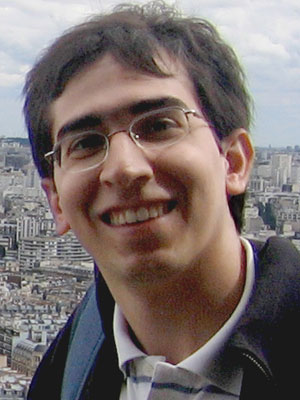
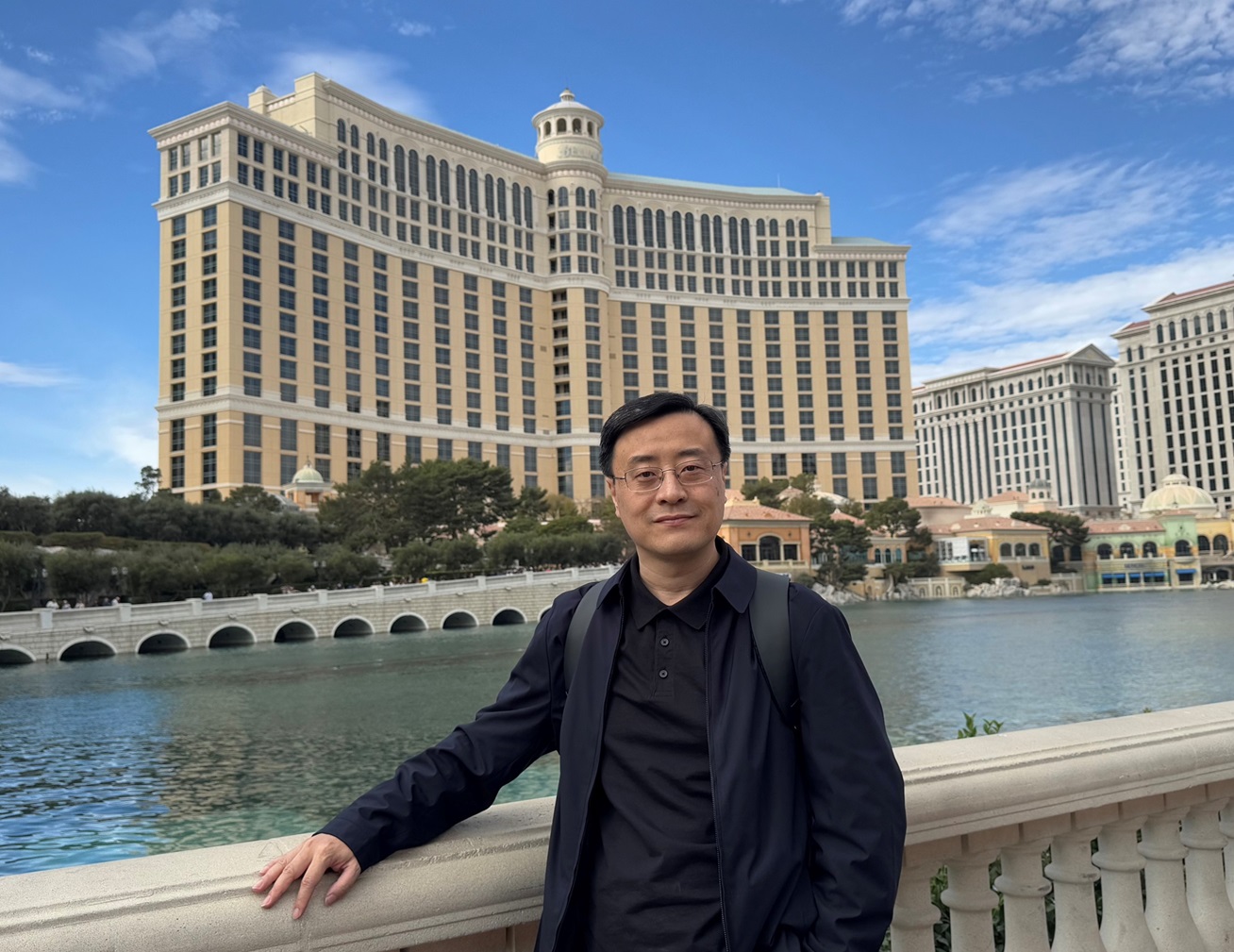
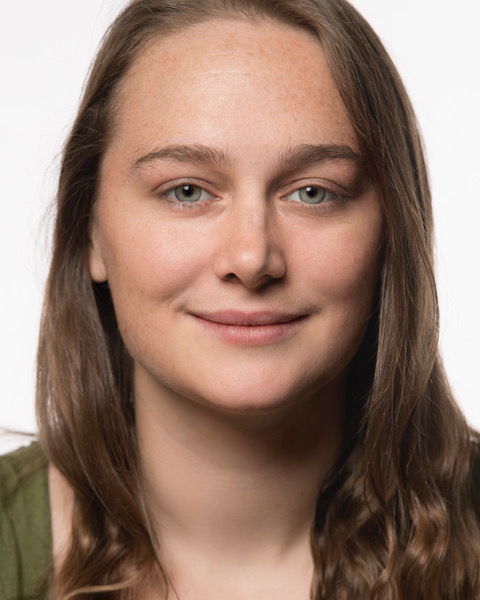
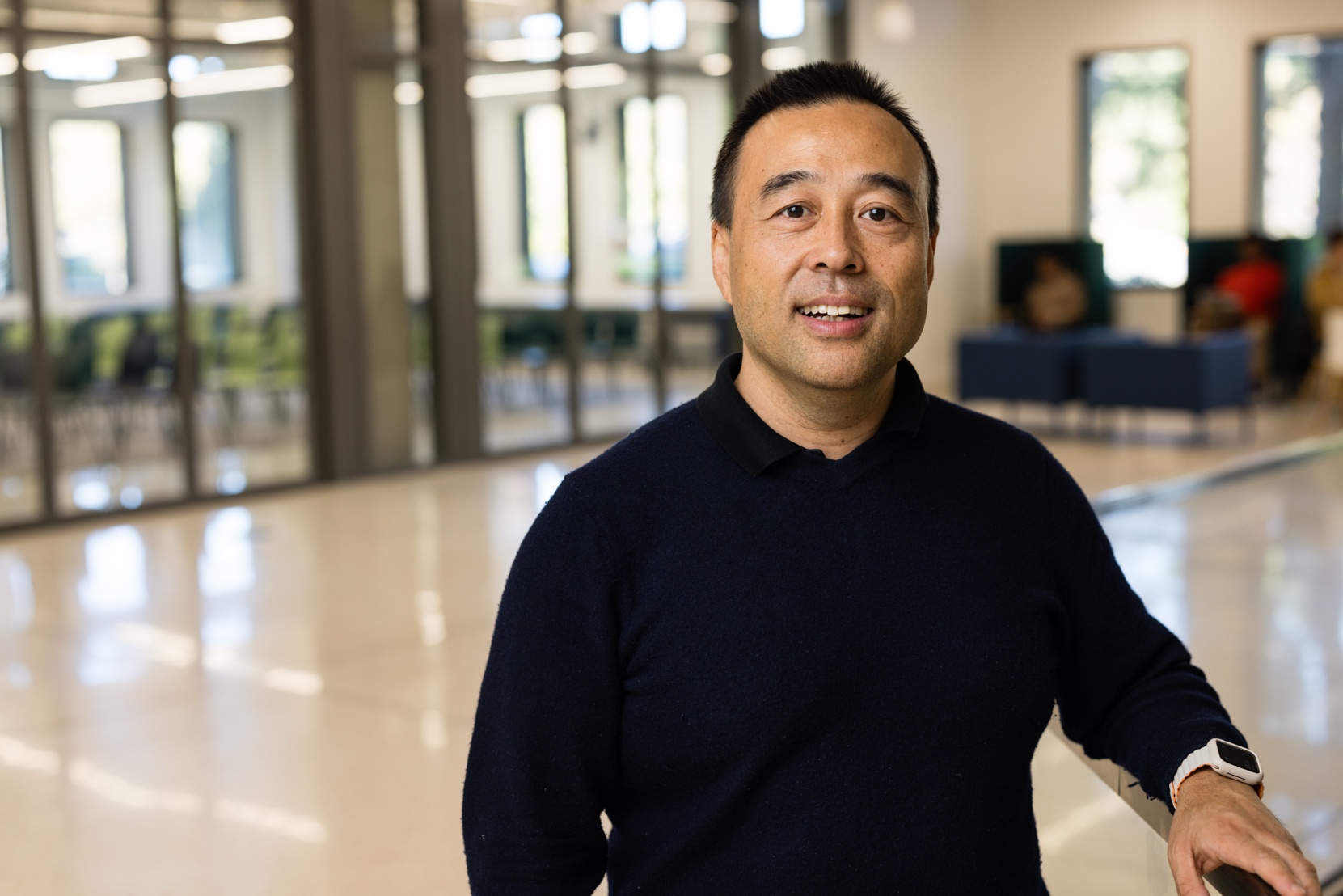
Arian Maleki is an Associate Professor in the Department of Statistics at Columbia University, affiliated with the Faculty of Arts and Sciences and the Foundations of Data Science Center. He holds a PhD from Stanford University (2010) and previously served as a postdoctoral scholar at Rice University. His research focuses on statistical inference, signal processing, and machine learning, with particular emphasis on compressed sensing, high-dimensional statistics, and algorithm design. Key areas include noise mitigation, image reconstruction, and the theoretical analysis of algorithms for inverse problems. Recent work highlights include studies on speckle noise challenges, phase transitions in compressed sensing, and certified data removal techniques. His contributions bridge theory and application, often addressing practical computational and statistical challenges in imaging and signal processing. No scientific awards are explicitly listed. Research outputs emphasize foundational advancements in statistical methodologies and algorithmic frameworks for high-dimensional data analysis. Labs/teams: Active involvement in the Foundations of Data Science Center at Columbia University.
Karel Keesman is an Associate Professor at Wageningen University & Research, specializing in mathematical and statistical methods applied to environmental engineering and biotechnology. He leads research in aquaponics, wastewater treatment, and sustainable energy systems, focusing on optimizing resource use and environmental impact. His work integrates advanced modelling techniques with real-world applications, such as bioreactor stability, nutrient cycling in aquaculture, and renewable energy storage. His research interests span aquaponics system design, desulfurization processes, and sensor-based monitoring in water networks. He actively contributes to interdisciplinary projects, including the development of off-river pumped hydro energy storage and nutrient recovery from biofloc systems. Keesman supervises multiple PhD candidates exploring topics like aquaponics sustainability, anaerobic digestion, and energy mixes in Indonesia. He has authored over 300 publications and datasets, emphasizing open-access research. His work bridges theoretical models with practical solutions for environmental challenges.
Alicia L Carriquiry is a Distinguished Professor and President's Chair at Iowa State University, serving as Director of the Center for Statistics and Applications in Forensic Evidence (CSAFE). She holds a PhD in Statistics from Iowa State University (1989), an MS from the University of Illinois at Urbana-Champaign/ISU (1985/1986), and a BS from Universidad de la Republica in Uruguay (1981). Her research focuses on applying statistical methods to forensic science, nutrition epidemiology, and plant and animal breeding, with a particular emphasis on Bayesian frameworks. Recent research emphasizes forensic evidence analysis, including footwear impression algorithms, handwriting software development, and probabilistic evidence assessment tools. She also explores dietary intake patterns in populations across Latin America and Southeast Asia, addressing nutrient deficiencies and public health interventions. Her work bridges statistical rigor with practical applications in criminal justice, improving forensic methodologies through algorithmic innovation and interdisciplinary collaboration. As CSAFE Director, she leads initiatives to enhance statistical foundations in forensic disciplines, train practitioners, and develop open-source datasets. Notable contributions include database search methodologies, error rate analyses, and software tools like handwriter for handwriting analysis. Her research underscores the importance of probabilistic reasoning in legal contexts and addresses challenges in multi-camera source identification and nonlinear image distortion correction. Carriquiry’s leadership extends to editorial roles and professional service, advancing statistical standards in forensic science. She remains active in training programs and collaborative research projects, fostering reproducibility and relevance in scientific inquiry.
Lu Su is an Associate Professor at the School of Electrical and Computer Engineering , Purdue University , with prior appointments at SUNY Buffalo . His research spans Internet of Things , cyber-physical systems , mmWave sensing , and crowd-sourced data validation , focusing on quality-of-information aware distributed sensing and security in autonomous systems . Ph.D. in Computer Science (2013) and M.S. in Statistics (2012) from University of Illinois at Urbana-Champaign M.E. and B.E. from Harbin Institute of Technology Research Interests: IoT , cyber-physical systems , crowd sensing , security and privacy , and machine learning for sensor networks. His work addresses quality-aware information integration , adversarial attacks in autonomous vehicles , and privacy-preserving crowd-sourced systems . Recent publications focus on mmWave-based sensing (e.g., 3D pose reconstruction), federated learning (driver monitoring), and data poisoning attacks in crowd-sourced systems. His research also extends to traffic optimization and human activity recognition using wireless networks. Professional Roles: Workshop Chair (INFOCOM 2023, 2022) TPC Vice Chair (INFOCOM 2021) Program Committee Member for top conferences Editorial Board, ACM Transactions on Sensor Networks Teaching: Courses on Embedded Systems , Internet of Things , and Network Concepts at both undergraduate and graduate levels.
Olga Vitek is a Professor at Northeastern University's Khoury College of Computer Sciences, with affiliated faculty status in the Department of Chemistry and Chemical Biology. Her research bridges statistical science and machine learning with mass spectrometry-based proteomics and systems biology, focusing on developing open-source software tools like MSstats and Cardinal for quantitative proteomic analyses and imaging. Education: PhD in Statistics (Purdue University), Postdoc at the Ruedi Aebersold Lab (Institute for Systems Biology) Leadership: Director of the Barnett Institute for Chemical and Biological Analysis Her work emphasizes: Statistical experimental design Signal detection in complex mass spectrometry data Causal inference in biomolecular networks Reproducible computational infrastructure Recent publications highlight advancements in quantitative proteomics , mass spectrometry imaging , and causal modeling , with applications spanning cancer research, immunology, and clinical diagnostics. Notable trends include deep learning integration for image analysis and open-source tool development for scalable, transparent workflows. Scientific accolades: Elected Fellow of the American Statistical Association 2021 Gilbert S. Omenn Computational Proteomics Award NSF CAREER award Chan-Zuckerberg Essential Open-source Software award Senior Member, International Society for Computational Biology
Jonathan Huggins is an Assistant Professor at Boston University, affiliated with the Department of Mathematics & Statistics and the Faculty of Computing & Data Sciences. He holds a Ph.D. in Computer Science from MIT (2018) and a B.A. in Mathematics from Columbia University (2012). His research focuses on developing fast, trustworthy machine learning and Bayesian methods that balance computational efficiency and statistical optimality, with applications in ecological forecasting and genomic data analysis. Education: Ph.D. in Computer Science, Massachusetts Institute of Technology (2018) B.A. in Mathematics, Columbia University (2012) Research Interests: Large-scale machine learning and Bayesian computation Robust statistical inference Applications in genomics and ecological modeling Algorithmic development for scalable inference Key Projects: Stochastic Methods for Data Science: A book on stochastic processes and algorithms VIABEL: A Python package for variational inference and diagnostics ShorTeX: A LaTeX package for mathematical writing Recent Articles: Focus on scalable Bayesian methods, error bounds for iterative algorithms, and mutational signature discovery. His work emphasizes reproducibility and robustness in statistical inference. Awards: Blackwell–Rosenbluth Award (Outstanding Junior Bayesian Researcher) Grants & Funding: Supported by NIH, NSF, and the Department of Defense. Active in advising students across multiple BU programs. Labs/Teams: Affiliated with the BU URBAN Program, Program in Bioinformatics, and Department of Computer Science.
Jiannan Wang is an Associate Professor in the School of Computing Science at Simon Fraser University (SFU). He holds a Ph.D. from Tsinghua University (2013) and a B.Sc. from Harbin Institute of Technology (2008). His research focuses on database systems, data management, and data science, with particular emphasis on data cleaning, crowdsourcing, and big data technologies. He leads the SFU Data Science Research Group, aiming to accelerate data science workflows through innovative tools like DataPrep and ConnectorX. Education: Ph.D. in Computer Science and Technology, Tsinghua University, China (2013) B.Sc. in Computer Science and Technology, Harbin Institute of Technology, China (2008) Research Interests: Dr. Wang's work spans database systems, data cleaning, crowdsourcing, and big data education. He develops open-source tools for data scientists to streamline data preparation and analysis. His lab's mission is to make data science more efficient through technologies like DataPrep and ConnectorX . Awards: IEEE TCDE Rising Star Award (2018) CS-Can|Info-Can Outstanding Early Career Researcher Award (2020) VLDB Best Experiments, Analysis & Benchmark Paper Award (2021) PVLDB Distinguished Review Board Member Award (2020) Advising & Leadership: Director of SFU's Professional Master's Program in Big Data and Visual Computing. Supervised over 20 graduate and undergraduate students, many of whom have gone on to roles at top companies like Google, Amazon, and Huawei. Lab & Teams: Part of the SFU Data Science Research Group and the SFU Big Data Academic Advisory Committee. His lab collaborates with industry partners and contributes to open-source projects in data management and machine learning.
Frédéric Vrins is a Professor at the Louvain School of Management (LSM) , UCLouvain , affiliated with the Louvain Institute of Data Analysis and Modeling in economics and statistics (LIDAM) and Louvain Finance (LFIN). His work bridges theoretical and applied finance, with a focus on risk modeling, portfolio optimization, and machine learning applications. His research interests include: Quantitative Finance: Derivatives pricing, stochastic processes, and model calibration. Risk Management: Credit concentration risk, recovery rates, and wrong-way risk in financial markets. Portfolio Optimization: Mean-variance strategies, diversification metrics, and robustness under parameter uncertainty. Machine Learning in Finance: Applications to recovery rate prediction and option pricing frameworks. Recent publications highlight trends in: Credit risk modeling for Collateralized Loan Obligations (CLOs) and consumer credit. Machine learning integration in derivatives pricing and portfolio construction. Stochastic methods for Brownian bridges, CDS spreads, and recovery rates. Empirical studies on Loan-to-Value policies and business cycle impacts. Affiliations and locations: Louvain School of Management (LSM) - Building B, Chaussée de Binche 151, 7000 Mons Louvain Finance (LFIN) - Traverse d'Esope 1, 1348 Louvain-la-Neuve Louvain School of Management (LSM) - BATA Building, Chaussée de Binche 151, 7000 Mons
Joseph Alejandro Gallego Mejia is an Assistant Teaching Professor in the Department of Computer Science at Drexel University's College of Computing and Informatics. He holds a PhD with meritorious distinction in Systems and Computing Engineering from the National University of Colombia, along with a Master’s and dual Bachelor’s degrees in Systems and Computing Engineering and Industrial Engineering. PhD in Systems and Computing Engineering, National University of Colombia (Meritorious Distinction) Master of Systems and Computing Engineering, National University of Colombia Bachelor of Engineering in Systems and Computing Engineering, National University of Colombia Bachelor of Engineering in Industrial Engineering, National University of Colombia His research focuses on artificial intelligence, machine learning, computer vision, quantum machine learning, natural language processing, and cybersecurity. He explores robustness estimation, anomaly detection, incremental learning, and scalable software architectures for AI systems. His work bridges theoretical foundations and practical applications in health, remote sensing, and edge computing. The recent publications reflect a strong trend in interdisciplinary AI research, combining machine learning with quantum computing, cybersecurity, and natural language understanding. His work spans domains such as satellite imagery analysis, medical diagnostics, IoT security, and conversational AI, demonstrating a commitment to scalable and robust intelligent systems. Keywords across publications include Computer Science, Machine Learning, Quantum Computing, and Cybersecurity, with subfields ranging from adversarial robustness to hybrid quantum-classical models. Scientific distinctions include: PhD with meritorious distinction, National University of Colombia Postdoctoral fellow, Frontier Development Lab (Trillium), supported by NASA and ESA He has served as a reviewer for top-tier journals and conferences including Neurocomputing, IEEE Access, Radioscience, NeurIPS, and NLDL. Though no formal grants are listed, his postdoc was funded by NASA and ESA, indicating significant external support. He teaches courses in programming, data science, machine learning, deep learning, NLP, and software engineering. He founded the tech company Sammu and mentors students through instruction and research supervision. He is actively involved in research and teaching, contributing to innovative programs in AI and computing education. His lab and team affiliations are not explicitly stated, but his work suggests collaboration with AI, quantum computing, and cybersecurity research groups.
Nicola McConkey is an Ernest Rutherford Fellow and Lecturer in Particle Physics at the School of Physical and Chemical Sciences, Queen Mary University of London. She joined the Particle Physics Research Centre in 2024 and leads experimental work in neutrino interactions and detector development. Her affiliations include the Centre for Fundamental Physics and Centre for Experimental and Applied Physics. McConkey is an active member of international collaborations including SBND, DUNE, and MicroBooNE, where she contributed to the assembly of SBND and pioneered high-statistics measurements of electron-neutrino interactions using liquid argon detectors. Her research focuses on three primary domains: neutrino physics (particularly neutrino-argon scattering cross-sections), quantum technology applications for neutrino mass measurement, and liquid argon time projection chamber (LArTPC) detector development. McConkey's investigations aim to advance fundamental particle physics through precision measurements and technological innovation, with emphasis on improving detection capabilities for next-generation neutrino experiments. Publications predominantly explore neutrino interaction dynamics, cross-section measurements, and detector performance optimizations across MicroBooNE, SBND, and DUNE collaborations. Research trends demonstrate consistent focus on refining LArTPC technologies, developing machine learning applications for particle reconstruction, and probing beyond-Standard-Model physics through neutrino interactions. Scientific Awards: Ernest Rutherford Fellowship (2022) McConkey advises two PhD students (Oscar Chow, Yoshita Dabburi) and leads significant research funding including: STFC Grant: 'Piecing together the neutrino mass puzzle' (£431,666; 2024-2027) STFC Outreach Grant: 'Quantum Technologies for Neutrino Mass' (£99,999; 2024-2025) She coordinates research within the Particle Physics Research Centre laboratory and collaborates extensively within the SBND, DUNE, and MicroBooNE international teams, alongside leading the Quantum Technologies for Neutrino Mass collaboration developing novel measurement techniques.
Guang Lin is the Associate Dean for Research and Innovation in the College of Science and a Full Professor in the School of Mechanical Engineering and Department of Mathematics at Purdue University. He leads the Data Science Consulting Services and has dual appointments in Statistics and Earth, Atmospheric, and Planetary Sciences. His research focuses on AI, machine learning, uncertainty quantification, and computational science, with applications in fluid mechanics, materials science, and healthcare. Lin holds a Ph.D. from Brown University (2007) and has received numerous awards, including the NSF CAREER Award and Purdue’s University Faculty Scholar distinction. He has authored over 250 publications and secured grants totaling millions, including DOE and NIH funding. His interdisciplinary work bridges academia and industry, emphasizing AI-driven solutions for complex systems. Education: Ph.D. Applied Mathematics (Brown, 2007), M.S. Applied Mathematics (Brown, 2004), M.S. Mechanics (Peking University, 2000), B.S. Mechanics (Zhejiang University, 1997). Research Grants: Includes DOE-funded projects on machine learning for plasma-wall interactions and NSF grants for multiscale modeling. Service: Editorships in SIAM MMS, ASME Journal, and leadership in Purdue’s AI initiatives. Teaching: Courses on Uncertainty Quantification, Fluid Mechanics, and Data Science.
Maarten De Vos is a Professor at the Department of Electrical Engineering (ESAT) , KU Leuven , with dual appointments in the Faculty of Medicine and Faculty of Engineering Science . He leads interdisciplinary research at the intersection of artificial intelligence and biomedical signal processing.
Daniela M Witten is a Professor of Statistics and Biostatistics at the University of Washington, holding the Dorothy Gilford Endowed Chair in Mathematical Statistics. Her research focuses on developing statistical machine learning methods for high-dimensional data, with a particular emphasis on unsupervised learning and theoretical foundations. Witten earned her BS in Math and Biology with Honors and Distinction from Stanford University in 2005 and her PhD in Statistics from Stanford University in 2010 under Robert Tibshirani. Her academic journey established her expertise in bridging mathematical theory with biological applications. Her research program centers on high-dimensional statistical learning , where she develops methods for unsupervised learning and graphical modeling when features outnumber observations. She pioneers statistical models for neural activity through collaborations with the Allen Institute for Brain Science and Princeton University, addressing functional connectivity and neuron sub-population identification. Her groundbreaking work on selective inference solves the "double-dipping" problem in hypothesis generation and testing, enabling valid inference after hierarchical clustering and regression trees. Additionally, she advances multi-view data analysis to integrate complementary data sources like clinical and genomic measurements. Applications span genomics, neuroscience, microbial ecology, and pathology, demonstrating her commitment to solving real-world biomedical challenges. Her 2025 publications reveal a cohesive trend toward developing theoretically rigorous inference frameworks for high-dimensional settings, with emphasis on linear regression validity, semi-supervised efficiency, Gaussian decomposition, and PCA variance quantification—showcasing her signature blend of methodological innovation and practical applicability. Witten's exceptional contributions are recognized through extensive honors: Presidents’ Award, Committee of Presidents of Statistical Societies (COPSS) (2022) Mortimer Spiegelman Award, American Public Health Association (2019) Simons Investigator Award (2018-2023) Sloan Research Fellowship (2013-2015) NSF CAREER Award (2013-2018) NIH Director’s Early Independence Award (2011-2016) 23 major awards including named lectureships, fellowships, and editorial leadership As a dedicated mentor, she has guided students like Olivia McGough (NSF GRFP winner), Dwight (Zichun) Xu (ASA Nonparametrics Student Paper Award winner), Yiqun Chen (Hopkins Biostat faculty), and Anna Neufeld (Williams College faculty). Her research is sustained by major grants from NIH, NSF, and Simons Foundation. Witten co-authored the seminal textbook "Introduction to Statistical Learning" and currently serves as Joint Editor of the Journal of the Royal Statistical Society, Series B (2023-2025), shaping the field through both scholarship and community leadership.
Prosper Dovonon serves as a Full Professor in the Department of Economics at Concordia University in Montreal, Canada, where he holds a prestigious Concordia University Research Chair, Tier 1, in Econometrics of Large Datasets. He previously held positions as Associate Professor (2015-2023) and Assistant Professor (2010-2015) at the same institution. Additionally, he maintains an adjunct professorship at the University of Adelaide's School of Economics since 2021 and previously served as a Visiting Professor at HEC Montreal's Department of Finance (2017-2018). His educational background includes a PhD in Economics from Universite de Montreal (2007), an MSc in Statistics and Economics from ENSEA, Abidjan, Cote d'Ivoire (2000), and an MSc in Mathematics from Universite Nationale du Benin, Abomey-Calavi, Benin (1996). Dovonon's research focuses on advanced econometric methodologies, particularly in time series analysis and financial econometrics. His work addresses complex identification issues, develops robust estimation techniques, and creates innovative testing procedures for economic models. He specializes in moment condition models, GMM estimation, volatility modeling, and handling identification failures in econometric frameworks. His publication record shows a consistent focus on theoretical econometrics with practical applications in finance. Recent work emphasizes mixed identification strength scenarios, instrument exogeneity testing, and specification testing under challenging identification conditions. His research demonstrates increasing sophistication in handling complex econometric problems with real-world financial data applications. His notable recognition includes the Concordia University Research Chair, Tier 1, in Econometrics of Large Datasets, highlighting his significant contributions to the field. Dovonon has supervised numerous graduate students and collaborated extensively with leading econometricians worldwide. His research has been supported by institutional funding through his Research Chair position, enabling significant contributions to econometric theory and methodology. He maintains active research collaborations across international institutions and continues to push the boundaries of econometric theory with applications to financial markets and economic modeling.
Kathi Wilson is a Professor at the Department of Geography, Geomatics and Environment at the University of Toronto Mississauga. Her research examines how urban environments (social, built, physical) influence health outcomes among immigrant, Indigenous, and racialized populations. She collaborates extensively with community partners in the Region of Peel and leads the CHANGE Lab, which supports student research in a MAC/PC environment. Research Clusters: Urbanization, Transportation & Health Contact: DV3294, University of Toronto Mississauga, 3359 Mississauga Road, Mississauga, ON L5L 1C6 Her work employs mixed-methods approaches, including participatory mapping and culturally adapted surveys, to address health inequities and urban walkability. Current projects focus on Arab communities' perceptions of walkability in Toronto and the health impacts of the COVID-19 pandemic in Peel Region. Professor Wilson has published extensively on immigrant health, Indigenous health rights, and spatial health disparities, with a focus on methodological rigor in geocoding and accessibility studies. She mentors graduate students in topics related to immigration, healthcare access, and Indigenous wellbeing.