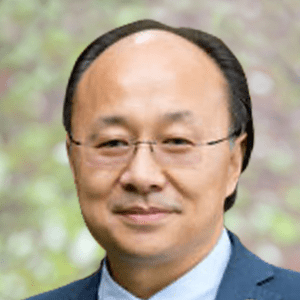
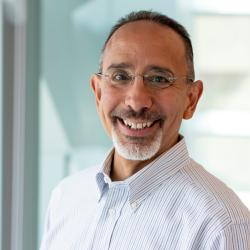
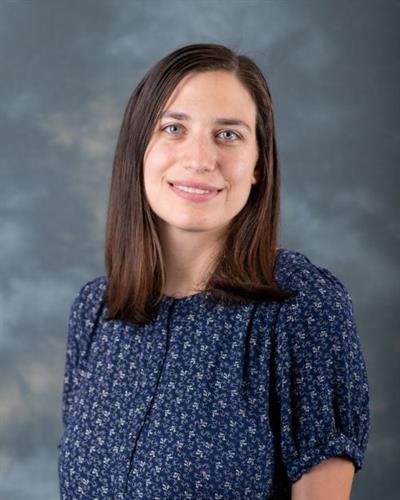
Krish Muralidhar is the Baldwin Chair and Professor of Marketing & Supply Chain Management at the University of Oklahoma's Price College of Business. He holds a Ph.D. from Texas A&M University, an MBA from Sam Houston State University, and a B.Sc. from the University of Madras, India. His research centers on data privacy , developing techniques for secure data analysis, sharing, and dissemination. Key areas include statistical disclosure limitation, differential privacy, database reconstruction risks, and perturbation methods. He patented the Data Shuffling technique for secure data release. Recent publications (2022–2025) focus on census data privacy, reidentification vulnerabilities, and critiques of differential privacy in machine learning. Trends highlight rigorous evaluations of privacy risks in statistical databases and policy-relevant solutions. Awards: Distinguished Doctoral Alumni Award (Texas A&M, 2006) Teaching Incentive Program Award (1994) Excellence in Research Award (1995) Best Inter-disciplinary Paper Award (2002) Best Paper Award (2005) No advising, grant, lab, or team details were provided.
Ninghui Li is the Samuel D. Conte Professor and Associate Department Head in the Department of Computer Science at Purdue University. He holds a B.S. from the University of Science and Technology of China and a Ph.D. from New York University. His research focuses on information security, privacy, and database systems, with notable contributions to differential privacy and secure data publishing. He has authored over 200 papers, including influential works like the 2007 t-Closeness paper, and has received multiple awards, including being named an ACM and IEEE Fellow. Li’s academic roles include Editor-in-Chief of ACM Transactions on Privacy and Security (TOPS) and leadership in organizations like ACM SIGSAC. He advises over 30 graduate students and has been instrumental in coaching Purdue’s ICPC teams to top global rankings. His current projects include NSF-funded initiatives like the Center for Distributed Confidential Computing (CDCC) and privacy-focused AI research. Key contributions span privacy-preserving data synthesis, federated learning security, and cybersecurity for IoT systems. He actively contributes to conferences as a program chair and through editorial roles, ensuring advancements in both theoretical and applied security domains.
Xiao-Li Meng is the Whipple V. N. Jones Professor of Statistics at Harvard University and Founding Editor-in-Chief of the Harvard Data Science Review. He has held leadership roles including Chair of Harvard's Department of Statistics (2004-2012) and Dean of the Graduate School of Arts and Sciences (2012-2017). A globally recognized statistician, he was awarded the COPSS President’s Award (2001) as the best statistician under 40. His research spans foundational statistical theory, computational methods (e.g., EM algorithm, MCMC), and interdisciplinary applications in astronomy, public health, and engineering. Meng earned his BS in Mathematics from Fudan University (1982) and PhD in Statistics from Harvard (1990), with a faculty tenure at the University of Chicago before returning to Harvard in 2001. His work emphasizes bridging theoretical and applied statistics, with notable contributions to Bayesian inference, differential privacy, and astrostatistics. He authored the influential column The XL-Files in the IMS Bulletin, blending technical insight with accessible commentary. Meng advocates for data science education and ethical AI, emphasizing collaboration across disciplines and societal sectors. His leadership has shaped Harvard’s graduate programs and data science initiatives, while his over 150 publications and 400+ presentations reflect a prolific career at the intersection of academia and public impact. Awardees include the IMS Fellowship, ASA Founders Award, and NSF CAREER Award. His current projects explore generative AI ethics, data democratization, and statistical paradigms in big data environments. Meng’s vision prioritizes ‘conducting principled data science’ through rigorous methodological development and societal accountability.
Christopher P. Agoglia is the Richard Simpson Endowed Professor of Accounting at the Isenberg School of Management, University of Massachusetts Amherst. He holds a PhD in Accounting from the University of Massachusetts Amherst (1999) and a BS in Accounting from Florida Atlantic University (1989). His research focuses on decision-making in accounting and auditing contexts using behavioral decision theory, with notable contributions to audit processes, regulatory compliance, and organizational dynamics. Academic roles include Department Chair of Accounting (2013–2017), and editorial roles such as Senior Editor for Auditing: A Journal of Practice & Theory (2017–2020) and Consulting Editor (2020–present). He has received prestigious awards, including the Auditing Section’s Notable Contribution Award (2019) and recognition in global audit research rankings (2004–2010). Professional experience includes roles in non-profit governance, such as Treasurer of the Abington Monthly Meeting Trustees (2009–present) and Audit Committee Chair (2005–2011). His grants include a Center for Audit Quality award (2015) for research on audit controls and client cooperation.
Natasha Fernandes is a Senior Lecturer in the School of Computing at Macquarie University. She holds a PhD in Computing from Macquarie University and École Polytechnique (France), and an undergraduate degree in Pure Mathematics and Computer Science from the University of Sydney. Her roles include involvement in the Data Horizons Research Centre and Future Communications Research Centre, alongside professional casual appointments in academic computing. Her research focuses on the mathematical foundations of data privacy, particularly differential privacy and its applications in natural language processing and machine learning. She develops privacy-preserving systems and tools using quantitative information flow techniques rooted in information theory. Key areas include privacy analyses for financial systems (e.g., Open Banking), API privacy, and optimizing utility in privacy pipelines. Fernandes has led or contributed to five research projects, including work on privacy analyses for financial transaction protocols and UAV-based machine learning systems. She received the 2021 John Makpeace Bennett Award for her doctoral research on differential privacy in metric spaces. Her academic journey combines industry experience as a backend software engineer with rigorous academic contributions, spanning over 21 peer-reviewed publications and collaborations across cybersecurity and privacy engineering domains.
Peter A. Wyman, PhD is a Professor at the University of Rochester School of Medicine and Dentistry, Department of Psychiatry, Child and Adolescent Services. He serves as Director of the Network Health and Prevention Program and Co-Director of the Center for Study and Prevention of Suicide. Dr. Wyman's research focuses on using natural social networks to deliver interventions for suicide, depression, and substance use prevention. His Connect Program suite of interventions has been implemented in diverse settings including the US Air Force (Wingman-Connect), police departments (Police-Connect), and predominantly Black churches (HAVEN-Connect). Columbia University - A.B. in Psychology, 1982 University of Rochester - M.A. in Clinical Psychology, 1984 University of Rochester - Ph.D. in Clinical Psychology, 1987 University of Rochester - Postdoctoral Fellowship, University Health Service, 1986-1988 Dr. Wyman's research centers on developing and implementing network-based suicide prevention interventions. His work examines how natural social networks can be leveraged to build social bonds and shared healthy norms to sustain intervention impacts. His research spans multiple settings including schools, military contexts, workplaces, and community organizations. He investigates how peer leadership, social integration, and network structure influence mental health outcomes, particularly among adolescents and high-risk populations. His work integrates implementation science, social network analysis, and prevention research to develop scalable, evidence-based interventions. His recent publications demonstrate a consistent focus on suicide prevention through social networks, with increasing emphasis on digital health approaches, implementation science methodology, and attention to equity in suicide risk screening. His work spans multiple disciplines including psychiatry, public health, social network analysis, and implementation science, reflecting the interdisciplinary nature of modern prevention research. Action Partner Award, National Association of School Psychologists (NASP). 2016 Excellence in Suicide Prevention Award, Suicide Prevention Center of New York State. 2012 Distinction for Ph.D. Comprehensive Examinations, University of Rochester. 1985 NIMH Research Fellowship (merit-based). 1982 - 1983 Magna Cum Laude, Columbia College, Columbia University, New York, NY. 1982 Cleveland Foundation Research Award (merit based). 1979 Dr. Wyman's research has been funded by major national agencies including the National Institutes of Health, Department of Defense, and Centers for Disease Control and Prevention. He has led significant clinical trials, including a current study testing peer-led network interventions to prevent adolescent vaping. Beyond his research, he has held influential policy positions, having co-chaired the New York State Governor's Task Force on Suicide (2017-2019) and serving as a member of the Community Prevention Services Task Force, an independent advisory group appointed by the CDC Director. Dr. Wyman leads the Network Health and Prevention Program, which develops and tests network-based interventions across multiple settings. His Connect Program suite represents a significant contribution to suicide prevention, with adaptations for military personnel, police officers, and faith communities. His work bridges research and practice, translating scientific findings into real-world interventions that address critical public health challenges.
Ashwin Machanavajjhala is a Professor in the Department of Computer Science at Duke University's Pratt School of Engineering. With over 166 publications spanning from 2001 to 2025, his research has significantly impacted the fields of differential privacy, database systems, and data security. His recent work focuses on practical applications of differential privacy for government data releases, particularly for the US Census Bureau. Machanavajjhala's research primarily centers on differential privacy, with significant contributions to database systems, privacy-preserving data analysis, and statistical disclosure control. His work bridges theoretical foundations with real-world applications, particularly in government statistics and census data protection. He has developed numerous frameworks and algorithms including DPXPlain for explaining differentially private query results, PreFair for generating fair synthetic data, and various components of the US Census Bureau's disclosure avoidance system. His research demonstrates a consistent trajectory from theoretical privacy mechanisms toward practical implementations that balance privacy guarantees with data utility. His recent publications reveal a strong focus on applying differential privacy to census data (SafeTab, PHSafe), developing methods for explaining private query results (DPXPlain), addressing fairness in private data analysis (PreFair), and exploring privacy applications in blockchain technology. His work shows increasing engagement with government agencies, particularly the US Census Bureau, where his research has directly informed disclosure avoidance systems for the 2020 Census. Machanavajjhala has advised numerous PhD students who have become prominent researchers in privacy and databases, including Ryan McKenna, Xi He, Yuchao Tao, and David Pujol. His collaborative network includes leading researchers from major institutions, with frequent collaborations with Gerome Miklau, Michael Hay, and Daniel Kifer. His research has been consistently funded by major grants supporting privacy-preserving data analysis. He leads research on the Tumult Analytics framework, a robust and scalable differential privacy system, and has been instrumental in developing privacy technologies for the US Census Bureau's 2020 data release. His work demonstrates a commitment to making differential privacy practical for real-world statistical agencies and data providers.
Jonathan Cook is an Associate Professor in the Department of Psychology at Pennsylvania State University, affiliated with the College of Liberal Arts. His research focuses on social identity threat processes and their impacts on cognitive, emotional, and physiological outcomes. Education: Ph.D. from University of Oregon (2007) Research Interests: Explores how societal threats to identity (based on race, gender, chronic illness) undermine psychological needs for belonging and control. Develops interventions to mitigate these effects and investigates technology's psychological implications. Methodology: Uses experimental designs (lab/field), longitudinal assessments, and advanced statistical modeling to analyze complex social dynamics. Labs: Leads the Group Identity and Social Perception Lab, focusing on social power, stigma, and identity concealment mechanisms.
Mário Boto Ferreira serves as Full Professor at the University of Lisbon's Faculty of Psychology, holding key leadership positions including Director of the Experimental Psychology Laboratories, President of the School Council, and Coordinator of CICPSI research center. His work bridges experimental cognitive psychology with societal applications, particularly in consumer decision-making and forensic contexts. His research centers on Judgment and Decision Making with emphasis on dual-process models, Social Cognition regarding impression formation, and Memory mechanisms including false memories. Ferreira actively investigates how cognitive biases manifest in real-world scenarios like financial scarcity, misinformation susceptibility, and moral judgment, aiming to translate laboratory findings into interventions for societal issues such as over-indebtedness. Recent publications demonstrate growing focus on societal applications of cognitive science, particularly through meta-analyses on financial scarcity effects and experimental studies on moral intuition. His work increasingly examines how social contexts amplify cognitive distortions in ratio perception and moral reasoning, while maintaining strong methodological rigor in experimental design. Scientific Awards: No awards were documented in the source materials. Advising and Grants: The provided texts contain no information about graduate students, postdoctoral mentees, or funded research grants. Ferreira directs the Experimental Psychology Laboratories where cognitive experiments on judgment and memory are conducted, and coordinates CICPSI (Centro de Investigação em Psicologia Social e das Organizações), fostering interdisciplinary research on social cognition and organizational behavior within the University of Lisbon's research ecosystem.
Hong Yu is an Adjunct Professor at the University of Massachusetts Amherst, affiliated with the Center for Intelligent Information Retrieval and the Biomedical Informatics Natural Language Processing (BioNLP) Laboratory. Her research focuses on computational biology, bioinformatics, and biomedical applications of information retrieval, natural language processing, and human-computer interaction. She has developed systems like AskHERMES (a biomedical Q&A tool) and NoteAid (to aid patient comprehension of medical records). Education includes a PhD in Biomedical Informatics from Columbia University, M.Ph. in Physiology and Cellular Biophysics, and degrees in Physiology and Biomedical Engineering from institutions in China. She has led NIH-funded projects and serves on the editorial board of the Journal of Biomedical Informatics. Research awards include the NLM predoctoral training grant and recognition as one of six 'Star Trainees' for NLM's 175th anniversary. Her work has been featured in Science, Nature, and the Pulitzer-winning Milwaukee Journal Sentinel. Current interests emphasize privacy in geospatial data, ethical AI, and reimagining GIScience education. Grants: Multiple NIH-funded projects. Labs: Center for Intelligent Information Retrieval, BioNLP Lab. Service: Co-chair of biomedical NLP sections at major conferences.
Samantha Petti is an Assistant Professor in both the Department of Mathematics (School of Arts and Sciences) and the Department of Computer Science (School of Engineering) at Tufts University. She is based at 177 College Avenue, Medford, MA. Her research focuses on computational biology, bioinformatics, and machine learning, with particular emphasis on protein structure analysis, genotype-phenotype mapping, and algorithm design for biological sequence analysis. She teaches courses such as Master's Thesis supervision, PhD Thesis guidance, and specialized topics in mathematics and computer science. Her work integrates interdisciplinary approaches, combining statistical methods, deep learning, and probabilistic models to address challenges in genomics, structural biology, and network science. Recent projects include developing end-to-end protein alignment tools and exploring sparse graph models for biological systems. Teaching: Supervises graduate thesis work (Master’s/PhD) and advanced courses in mathematics and computer science at Tufts. Lab/Team: Engages in collaborative research at the intersection of computational methods and biological systems.
Laura Abrardi is an Associate Professor (L. 240) at the Department of Management and Production Engineering (DIGEP) of Politecnico di Torino. She serves as Academic Advisor for the Master of Science in Industrial Engineering and Management and as a member of the Energy Center Lab (Ec-L). Research interests: Competition, Consumer behavior, Data privacy, Digital economics, Market regulations Scientific branch: ECON-04/A - Applied Economics (Area 0013 - Economic and statistical sciences) Teaching roles: Course Lecturer for Economic Systems Analysis and Corporate Economics and Finance in Management Engineering programs Research projects: DIRES (2024-2025), CyberResilience (2023-2025), and commercial contracts on ultra-broadband impacts (2021) Her recent publications focus on data markets, digital economics, and pandemic-related organizational behavior. She supervises PhD student Sasha Grassini in Management, Production, and Design.
Heemin Lee is an Assistant Professor in the Stan Ross Department of Accountancy at the Zicklin School of Business, City University of New York (CUNY). His academic appointment focuses on accounting disciplines, and he teaches Cost Accounting (ACC 3200) across multiple semesters from 2018 to 2025. He actively contributes to departmental governance as ACC 3200 Course Coordinator and Workshop Organizer. Dr. Lee's educational background includes: PhD in Accounting from the University of Chicago, Booth School of Business (2017) MS in Statistics from Yonsei University (2011) BBA in Statistics from Yonsei University (2009) His research critically examines regulatory frameworks and corporate behavior, with emphasis on financial reporting quality, internal controls, and whistleblowing mechanisms. He investigates how media freedom shapes corporate information environments and how anti-corruption laws impact geographic disclosure transparency. His work bridges academic rigor with real-world regulatory challenges, particularly in SEC rulemaking processes and corporate governance structures. Recent publications (2021-2024) reveal a cohesive research trajectory centered on regulatory impacts in capital markets. Key themes include the unintended consequences of anti-corruption legislation on corporate transparency, institutional investors' role as information intermediaries, and the efficacy of whistleblower provisions in fraud deterrence. His work consistently applies empirical methods to evaluate how legal frameworks influence corporate disclosure practices and market efficiency. Dr. Lee has received significant recognition including: Eugene M. Lang Junior Faculty Research Fellowship Award (2023) Irving Weinstein Distinguished Scholar Award (2021) Curriculum Innovation Award from EY (2021) Best Conference Paper at the 2019 MIT Asia Conference in Accounting Multiple University of Chicago PhD fellowships (2012-2015) Best Master's Dissertation Award from Yonsei University (2011) As a doctoral faculty member, he mentors PhD students through pre-workshops and course coordination. His research is funded by competitive grants including: Media freedom and the corporate information environment (PSC-CUNY, $3,283.38, 2019-2022) Academic Research in SEC Rulemaking (PSC-CUNY, $3,384, 2018-2019) Institutional Investors as Information Suppliers (Eugene Lang Fellowship, $7,489, 2023) Dr. Lee actively shapes the accounting discipline through service as journal reviewer (Journal of Accounting Research, Management Science), conference track organizer (AAA Annual Meeting), and committee member for sustainability curriculum development. His collaborations span institutions including the University of Chicago and international research partners.
Dr. Xiaobai (Bob) Li is a Professor in the Department of Operations and Information Systems at the Manning School of Business, University of Massachusetts Lowell. His work bridges data science, machine learning, and business analytics with specialized focus on data privacy and information economics. Ph.D. in Management Science, University of South Carolina MBA, University of New Hampshire BS in Civil Engineering, Chongqing University Research Interests span data science, machine learning, business analytics, and data privacy. His work explores Privacy-preserving analytics Healthcare data anonymization Information economics Optimization techniques Big Data applications Text analytics with particular emphasis on balancing data utility and privacy protection. Scientific Awards include: Manning Research Excellence Award (2023) Best Associate Editor Award (2021) Best Paper Awards at NEAIS, WITS, and ICIS Teaching Excellence Awards Grants from NIH and NSF supported his work on Consumer Electronic Privacy Protection and New Technology to Preserve Patient Privacy . He has served as Associate Editor for journals like Information Systems Research and Decision Support Systems .
Eric Green serves as Director of Undergraduate Studies and Associate Professor of the Practice of Global Health at Duke Global Health Institute, Duke University. His research focuses on leveraging technology to improve health systems in low-income settings across Kenya, Zimbabwe, Liberia, Rwanda, Nepal, and Nigeria. Education: Doctorate in Clinical-Community Psychology, University of South Carolina Research Interests: Digital health HIV/AIDS Maternal, adolescent and child health Pediatrics Mental health Health systems in low-income settings Human centered design His work spans formative human-centered design research to rigorous impact evaluations of digital health interventions. Recent publications (2024-2025) demonstrate a strong focus on mental health screening tool validation and digital interventions in global contexts, particularly examining depression detection methods and social determinants of mental health. Teaching and Projects: Courses: AI in Global Health, Research Methods in Global Health, Data Science with R, Global Mental Health, Global Health Research Projects: mPango contraceptive use study (Kenya), HIV serostatus disclosure readiness measure (Zimbabwe/United States)