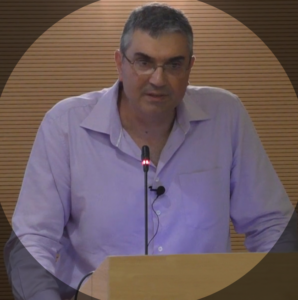
Trivellore Raghunathan is a Professor of Biostatistics and Director of the Survey Research Center at the University of Michigan Institute for Social Research. He holds a secondary appointment as Research Professor in the Joint Program in Survey Methodology at the University of Maryland. His work focuses on collaborative and methodological research across public health, social sciences, and clinical research. Education PhD in Statistics, Harvard University (1987) MS in Statistics, Miami University (1983) MSc in Statistics, Nagpur University (1979) BSc in Mathematics/Physics/Statistics, Nagpur University (1977) Research Interests include missing data analysis, multiple imputation, Bayesian methods, longitudinal studies, small area estimation, and confidentiality in survey data. He developed the IVEware software for multiple imputation analysis. His applied work spans cardiovascular epidemiology, health disparities, and social science research. Affiliations encompass the Center for Research on Ethnicity, Culture and Health (CRECH), Center of Social Epidemiology and Population Health (CSEPH), and University of Michigan Transportation Research Institute (UMTRI). He actively collaborates with institutions like the Cardiovascular Health Research Unit at the University of Washington.
Andrzej T Galecki is a Research Professor in both the Department of Internal Medicine, Geriatric and Palliative Medicine and the Department of Biostatistics at the University of Michigan. He serves as the Director of the Design, Data and Biostatistics Core of the Older Americans Independence Center at the University of Michigan. His academic credentials include an MD from the Medical Academy of Warsaw (1981), a PhD from the Institute of Mother and Child Care in Warsaw (1987), and an MS in Applied Mathematics from the Technical University of Warsaw (1977). Dr. Galecki's research focuses on the application of modern statistical methods to studies in geriatrics and gerontology. His expertise spans nonlinear mixed effects models, population pharmacokinetics and pharmacodynamics analysis, modeling of covariance structure in longitudinal data analysis, and generalized linear models for categorical data. He has developed computational methods for analyzing correlated and overdispersed data, with applications across pharmacokinetic and pharmacodynamic studies, longitudinal research, survey sampling, and genetic studies. His work with mixed-effects models has led to significant methodological advancements, including extensions that allow between-subject variation to be modeled as mixtures of underlying distributions. He developed the SAS/IML NLMEM for computational methods in PK/PD population studies and contributed to the implementation of covariance structure modeling in PROC MIXED. His recent publications demonstrate a strong focus on aging research, particularly examining cognitive impairment in older adults, kidney function in diabetes, and interventions in nursing home settings. His work often involves complex statistical modeling of longitudinal data and has been applied to important clinical questions in geriatrics and chronic disease management. Dr. Galecki has published influential methodological books including 'Linear Mixed-Effects Models Using R. A Step-by-Step Approach' (2013) and the third edition of 'Linear Mixed Models: A Practical Guide Using Statistical Software' (2022), which have become standard references in the field. As Director of the Design, Data and Biostatistics Core of the Older Americans Independence Center, Dr. Galecki leads a team providing statistical expertise for aging research. His work involves both methodological development and collaborative research across multiple disciplines, particularly in geriatrics, diabetes, and kidney disease. Through his leadership, he has secured NIH funding for multiple projects focused on aging and independence in older adults. His research has been widely cited and has influenced statistical practice in biomedical research, particularly in the analysis of longitudinal data in geriatric and clinical studies.
Christos Chalkias serves as Professor and Vice-Rector for Research, Development and Lifelong Learning at Harokopio University's Department of Geography. Based in Athens, Greece, his academic office is located in the Library Building (Office 4.5). His educational background includes a Degree in Geology (1991) and PhD in Physical Geography & Geoinformatics (1996), both completed at the National and Kapodistrian University of Athens. His research encompasses diverse geospatial domains with particular emphasis on: Geographic Information Systems & Science – Developing spatial analysis methodologies Applied Geography – Solving real-world environmental and societal challenges Spatial Analysis – Examining geographic patterns and processes Environmental Modeling – Simulating physical phenomena Health Geography – Analyzing spatial health disparities Digital Cartography – Innovating map visualization techniques Recent publications (2023-2025) demonstrate strong focus on geospatial applications in health epidemiology, environmental monitoring, and disaster management. His work frequently employs remote sensing, spatial statistics, and GIS technologies to address Mediterranean-region challenges including cardiovascular disease patterns, light pollution, soil degradation, and earthquake impacts. Distinct research trends include historical geospatial reconstruction, nocturnal earth observation, and community-engaged environmental sensing.
Elisa Bertino is the Samuel D. Conte Professor of Computer Science at Purdue University, where she also directs the Purdue Cyberspace Security Lab (Cyber2Slab) and serves as Research Director at CERIAS. Since joining Purdue in January 2004, her work has integrated rigorous theory with practical solutions across information security, database systems, and emerging cyber-physical domains. Education Ph.D. in Computer Science, University of Pisa (1980) Research Interests Professor Bertino’s research portfolio is exceptionally broad, spanning information security and assurance , database and data mining technologies , and AI-driven cybersecurity . She pursues foundational advances in access-control models (RBAC, ABAC, trust negotiation), secure data publishing and broadcast protocols for XML and streaming data, privacy-preserving analytics through differential privacy and secure multi-party computation, and zero-trust architectures for 5G/6G and software-defined networks. Application domains include secure mobile and IoT ecosystems, medical informatics, and humanities data. Recent Publication Trends Her 2024–2025 publications reveal a strategic pivot toward next-generation network security (5G/6G, SDN/NFV), trustworthy AI (federated learning, transformer-based malware analysis), and privacy technologies (differential privacy, homomorphic encryption). A recurring theme is the rigorous integration of AI techniques with cryptographic and systems-level defenses to achieve scalable, privacy-preserving security solutions. Scientific Awards & Honors IEEE Fellow ACM Fellow IEEE Computer Society Technical Achievement Award (2002) IEEE Tsutomu Kanai Award (2005) ACM Athena Lecturer Award (2019) Kristian Beckman Award (2020) IEEE 2021 Innovation in Societal Infrastructure Award Advising & Grants Professor Bertino has mentored a large cohort of doctoral students and post-doctoral researchers. Recent externally funded projects include NSF “Privacy-Enhanced Secure Data Provenance” (2011-2016), NIST “Advancing Commercial Participation in the NSTIC Ecosystem” (2012-2013), and Sypris Electronics “Security Techniques for Smart Mobile Devices” (2012). Laboratories & Teams She leads the Cyber2Slab (Cyber Space Security Lab), a vibrant research group investigating insider-threat mitigation, IoT and drone security, digital identity management, cloud data protection, and AI-assisted defense mechanisms. The lab collaborates extensively with federal agencies, industry partners, and international research consortia such as the Data Analytics and Information Science International Technology Alliance (DAIS ITA).
Dr. Ben Derrick serves as a Senior Lecturer in Statistics within the School of Computing and Creative Technologies at the University of the West of England (UWE Bristol), where he has been employed since 2014. His multifaceted roles include Placements Lead for 10 undergraduate programs, Programme Lead for the MSc Data Science [online], and active membership in both the Mathematics and Statistics Research Group and UWE Bristol's AI Community of Practice. Leveraging prior industry experience in business intelligence and statistical programming, he bridges academic theory with practical applications across teaching and consultancy domains. His research program centers on artificial intelligence integration in educational assessment, simulation-based statistical methodology development, and statistical disclosure control applications. Dr. Derrick actively explores how project-based learning frameworks and AI-enhanced e-assessment systems can transform statistics pedagogy, with particular emphasis on real-world implementation across diverse academic contexts including educational interventions and environmental monitoring systems. As an educator, he supervises final-year Mathematics and Data Science master's projects—many resulting in publications—and delivers statistics modules across multiple degree programs. His consultancy portfolio encompasses UWE Bristol initiatives like BoostingReading@Primary and espressomaths, the Centre for Appearance Research, and Environment Agency air quality networks, while his professional training in SPSS and R serves both Consumer Intelligence and UWE's Graduate School, demonstrating comprehensive application of statistical expertise.
Tobias Gebel serves as Deputy Head of the IT and Research Infrastructure Department at the German Institute for Economic Research (DIW Berlin), where he leads initiatives in research data systems and infrastructure. His role centers on advancing data management practices for economic and social research. His educational background includes: Doctorate in Sociology from Bielefeld University Studies in Sociology at Chemnitz University of Technology Gebel's research integrates technical and social science methodologies, with primary expertise in research data management, qualitative secondary analysis, and labor market dynamics. He pioneers frameworks for anonymizing survey data, developing digital repositories for historical economic archives, and enabling sustainable reuse of qualitative organizational data. His work bridges data science with labor economics, emphasizing ethical data sharing and infrastructure innovation to address challenges in employment research and organizational studies. Recent publications reveal a cohesive trajectory: advancing data anonymization protocols for large-scale surveys (e.g., LINOS and SOEP projects), establishing digital archives for historical economic documents (WBdigital), and applying qualitative secondary analysis to labor market phenomena like job recalls. These efforts demonstrate an interdisciplinary fusion of data engineering, labor economics, and organizational theory, with consistent focus on methodological rigor and practical applicability in real-world policy contexts. No scientific awards are documented in the provided information. Gebel actively leads grant-funded projects including the current QualiDataNet initiative—a federated infrastructure for archiving qualitative research data—and previously contributed to CoyPu (resilience platforms for economic ecosystems), eLabour II (IT-based labor sociology research), and WBdigital (digitization of DIW's historical publications). These projects underscore his strategic role in securing and executing research funding to build national data ecosystems. He co-develops critical research infrastructures including the Research Data Center for Business and Organizational Data (FDZ-BO) and QualiDataNet, which standardize data curation, anonymization, and access protocols for qualitative datasets. These teams collaborate with federal agencies and academic networks to promote FAIR data principles across German social science research.
Professor Yuliya Yurova serves as Professor of Research Methods and Decision Sciences at Nova Southeastern University's H. Wayne Huizenga College of Business & Entrepreneurship. She teaches graduate courses including QNT 5160 Analytical Modeling for Decision Making and QNT 5485 Data Mining and Predictive Analytics Fundamentals, leveraging her expertise in quantitative methodologies to prepare students for data-driven business environments. Her educational background includes a Ph.D. in Business Administration/Statistics from University of Illinois-Chicago, an M.S. in Computer Information Systems from Eastern Michigan University, and a B.A. in Mathematical Economics from Novosibirsky State University. This interdisciplinary foundation supports her integrative research approach spanning business analytics, marketing, and organizational behavior. Professor Yurova's research examines critical intersections of technology and human behavior in business contexts. She investigates how HR professionals adopt analytics, how mobile devices reshape retail experiences, and how organizational justice affects employee satisfaction - often through cross-cultural comparisons between US and Russian business environments. Her work consistently addresses practical challenges while employing rigorous quantitative methods. Her publication record demonstrates sustained scholarly impact with recent articles in journals including International Journal of Information Systems and Supply Chain Management (2022), Management Decision (2021), and Journal of Marketing Education (2021). Her research trajectory shows increasing focus on pandemic-era business adaptations and ambidextrous organizational learning. Best Paper in Track, Southwest Academy of Management 2017 Consistent publication in top-tier business journals since 2006 Research cited for practical HR analytics implementation frameworks Methodologically rigorous quantitative studies with real-world applications Professor Yurova actively bridges academic research and industry practice through studies of actual job market requirements, corporate technology adoption barriers, and retail consumer behavior. Her international collaborations, particularly with Russian institutions, provide unique comparative perspectives on business practices across different institutional environments. Students benefit from her practitioner-relevant research through coursework emphasizing analytical modeling and data mining applications.
Alexandre Hervé is a Professor of Finance at Paris Dauphine University, where he directs the Master 224 Banking and Finance program and created/directs the Fintech Chair. He regularly lectures at Tsinghua University in Beijing, demonstrating his international academic engagement. Professor Hervé holds a PhD in management science and is a graduate in econometrics and management science. His educational background provides a strong foundation for his research and teaching in quantitative finance and banking. His research spans multiple areas of finance with particular focus on banking risk, financial intermediation, and fintech innovation. Over his career, Professor Hervé has examined banking regulation, corporate governance in financial institutions, sovereign debt crises, and the impact of accounting standards on banking practices. His work demonstrates a clear evolution from traditional banking research toward emerging fintech topics, culminating in his recent case study of Ant Finance's innovation journey from a platform economy perspective. Professor Hervé's publication record reveals a methodical progression from foundational finance topics toward contemporary digital finance challenges. His early work focused on market efficiency and privatization, while his mid-career research addressed banking transparency during crises, and his current work explores platform economics and digital transformation in banking. This trajectory mirrors the broader industry shift from traditional banking models to technology-driven financial services. Journal of Corporate Finance Quarterly Review of Economics and Finance Journal of Financial Services Research Review of Financial Economics As director of the Master 224 Banking and Finance program and the Fintech Chair at Paris Dauphine, Professor Hervé oversees substantial academic programs and research initiatives. His leadership in creating the Fintech Chair demonstrates forward-thinking engagement with emerging trends in financial technology and its impact on traditional banking systems.
Prof. Dr. A. Stefan Kirsten serves as an Honorary Professor at the School of Business, Westphalian University of Applied Sciences. His academic role complements an extensive executive career in corporate finance, including leadership positions at ThyssenKrupp AG and EMI Music across Europe. His academic credentials include: Doctorate (Dr. rer. pol.) from University of Lüneburg (1991) Diplom in Business Administration from Georg-August University of Göttingen (1986) Studies in Economics and Statistics at Fernuniversität Hagen (1981-1982) Research focuses on the intersection of corporate finance and practical business challenges, with expertise in pension schemes, risk management, and corporate governance frameworks. His work examines how financial regulations like IFRS impact real-world corporate decision-making and capital market dynamics. Publications from 2003-2006 reveal consistent themes in financial standardization, board effectiveness, and value creation strategies within multinational corporations. Key contributions address the tension between standardized reporting requirements and tailored investor communication in global capital markets.
Leila Zbib is an Assistant Professor of Finance at Bryant University. She holds a Ph.D. from Washington State University and a BBA from Lebanese International University. Her research spans corporate finance, mergers, ESG reporting, and CEO impact, with publications in journals like Small Business Economics and Finance Research Letters . Research interests include: Corporate governance and executive decision-making ESG metrics and sustainable investing Earnings management strategies Diversity in entrepreneurial funding Her recent work analyzes gender disparities in startups, CEO competency during acquisitions, and pandemic-era firm resilience. Publications show strong emphasis on empirical methods and practical financial applications. Awards: Merit Award (2025) Merit Award (2022) No information is available regarding grants, lab affiliations, or supervised students at this time.
Prof. Dr. Gertraud Stadler serves as Professor for Gender-Sensitive Prevention Research and Director of the Institute of Gender in Medicine (GiM) at Charité - Universitätsmedizin Berlin. She also holds an Honorary Senior Lecturer position in Health Psychology at the University of Aberdeen's School of Medicine. Her academic journey includes significant roles at Columbia University, where she served as Postdoctoral Research Fellow and Managing Director of the Columbia Couples Lab, and later as Associate Research Scientist at the Mailman School of Public Health. Dr. Stadler's educational background includes a Diploma in Psychology from the University of Eichstätt-Ingolstadt (2000) and a Doctorate Summa Cum Laude from the University of Hamburg (2006), where she researched self-regulation of health behavior in collaboration with a major health insurance company. Her early career included research positions at the Max Planck Institute for Human Development in Berlin. Her research focuses on personalized prevention interventions and how individuals and couples can modify daily behaviors to maintain lifelong health and better manage illness. Three core research questions drive her work: strategies for sustainable health behavior change among women, men, and couples; the influence of social networks on health and well-being; and methods for valid and reliable reporting of behavior changes. Her work is characterized by interdisciplinary collaboration spanning medicine, nutritional sciences, nursing sciences, sports sciences, statistics, and technology. Analysis of her 15 most recent publications reveals a strong emphasis on couples-based health interventions, mobile health technologies, and longitudinal assessment methods. Her research consistently applies intensive longitudinal methodologies to understand health behavior change in real-world contexts, with particular attention to gender differences and dyadic processes. Key thematic areas include smoking cessation, physical activity promotion, medication adherence, and coping with chronic conditions. 2014 Early Career Award, Department of Health Psychology, International Association for Applied Psychology 2003-2004 Scholarship Abroad, German Academic Exchange Service (DAAD) 2002-2005 Scholarship for Graduate Studies, German Research Foundation (DFG) Dr. Stadler has secured significant research funding including a National Institute on Alcohol Abuse and Alcoholism grant (2017-2022) for 'Tailored Adaptive Mobile Messaging to Reduce Problem Drinking,' an NIHR Public Health Research Programme grant (2018-2020) for alcohol intervention in prison settings, and a Columbia University pilot grant (2014-2015) for medication adherence research in epilepsy patients. Her collaborative approach spans multiple institutions and disciplines, reflecting her commitment to translational research that bridges theory and practice. As Director of the Institute of Gender in Medicine at Charité, Dr. Stadler leads a research environment focused on understanding gender differences in health and disease. Her work with the Columbia Couples Lab established foundational methodologies for studying dyadic health processes, and she continues to advance these approaches through interdisciplinary collaborations across Europe and North America.
Maximilian Jakob Schirl serves as a Junior Researcher at the Centre for Secure Energy Informatics within the Department of Computer Science, Faculty of Natural and Mathematical Sciences at Paris Lodron University of Salzburg. His work focuses on cybersecurity, energy informatics, and data-driven solutions for smart energy systems, contributing to multiple funded research projects including FTZ CyberSec and ECOSINT. His research spans cybersecurity in energy infrastructure, smart meter data analytics, industry 4.0 adoption, and digital readiness assessment. He employs advanced techniques like reinforcement learning and privacy-preserving algorithms to address challenges in local energy communities, supply chain resilience, and sociodemographic profiling from energy consumption patterns. Key methodologies include microaggregation for data anonymization, load profile analysis, and interoperability frameworks for Austrian energy systems. Recent publications demonstrate a strong trend toward machine learning applications in energy informatics, particularly reinforcement learning for production systems and privacy risk assessment in smart grids. His work bridges theoretical algorithms with practical industrial implementations, emphasizing data-driven optimization of low-voltage networks and secure energy community integration. Dr. Schirl actively participates in major funded projects including FTZ CyberSec (2025-2028) for cybersecurity evaluation, DAWN (2025-2026) for data-driven network optimization, ECOSINT (2021-2024) for energy community integration, and DIH West (2019-2023) supporting SME digitalization. These initiatives involve cross-institutional collaborations with researchers like G. Eibl and D. Radovanovic across Austria. As a core member of the Centre for Secure Energy Informatics, he contributes to developing secure, interoperable energy community frameworks through the ECOSINT project and advances privacy-preserving techniques for smart meter data within the FTZ CyberSec initiative.