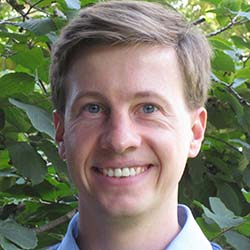
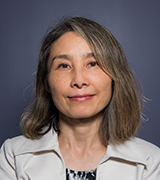
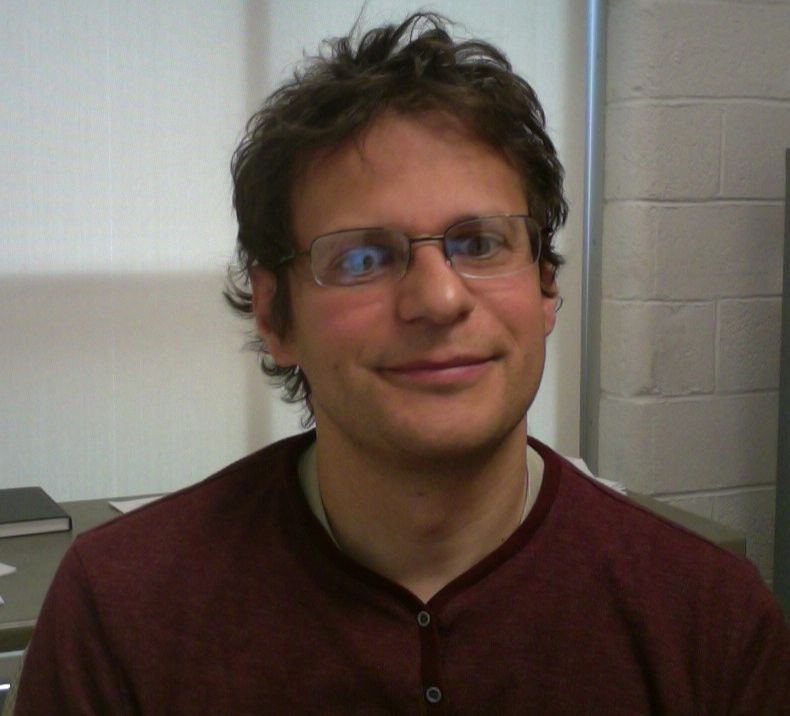
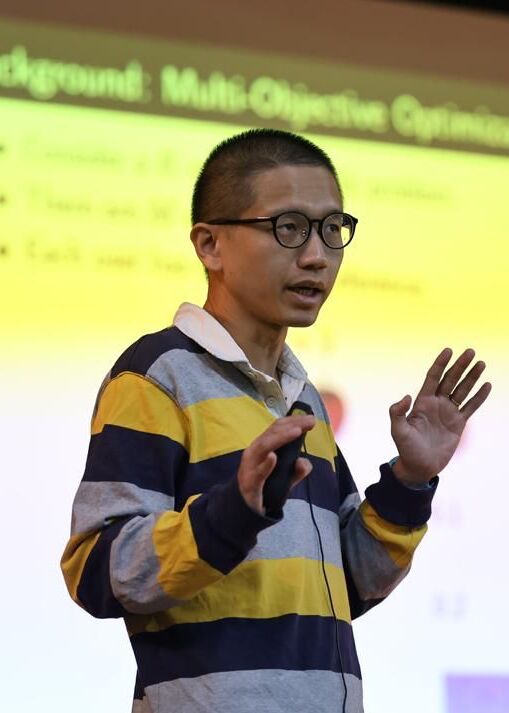
Miklos Z. Racz is an Assistant Professor at Northwestern University with a joint appointment in the Department of Computer Science and the Department of Statistics and Data Science. He is affiliated with the IDEAL Institute. Previously, he was an Assistant Professor at Princeton University (ORFE Department) and a postdoc at Microsoft Research. His research focuses on probability, statistics, computer science, and information theory, with emphasis on combinatorial statistics, discrete probability, and applied probability. Key interests include statistical inference on random discrete structures like random graphs, community detection, latent geometry inference, and DNA data storage. He has advised numerous PhD and undergraduate students. Education: PhD in Statistics (UC Berkeley, 2015), MS in Computer Science (UC Berkeley), MS in Mathematics (Budapest University of Technology and Economics). Research interests span random graph theory, network analysis, information cascades, and computational biology. He teaches courses like Mathematical Foundations of Computer Science and Probability for Statistical Inference. His work has been published in top venues like Annals of Applied Probability, NeurIPS, and IEEE journals. Notable contributions include breakthroughs in graph matching algorithms for stochastic block models, community recovery, and DNA synthesis optimization. His research has practical applications in data storage and network science.
Dr. Robert Lieck is an Assistant Professor in the Department of Computer Science at Durham University. His research focuses on interdisciplinary applications of machine learning (ML) and artificial intelligence (AI), emphasizing interpretability, robustness, and ethical considerations. He explores computational models in music cognition, communication dynamics, and medical image analysis, aiming to bridge theory and practical tools for domain experts. Before Durham, he was a postdoctoral researcher at EPFL's Digital and Cognitive Musicology Lab (2018–2021) and earned his PhD from the Learning and Intelligent Systems Lab in Stuttgart/Berlin (2012–2017). His work combines probabilistic modelling, neuro-symbolic systems, and reinforcement learning to address challenges in music analysis, autonomous decision-making, and medical robotics. Key research themes include: Music structure and perception modelling Symbol emergence in multi-agent communication Ethical AI and autonomous systems governance Medical imaging applications (CT/MRI analysis) Recent projects involve developing patient-agnostic diabetes management systems using deep reinforcement learning and surgical workflow anticipation through graph learning algorithms. He actively contributes to conferences such as NeurIPS, ISMIR, and AAAI, with publications spanning music informatics, robotics, and biomedical engineering. Current supervision includes four postgraduate students focusing on AI applications in healthcare, music technology, and autonomous systems. His work bridges technical innovation with societal impact, addressing challenges in policy, legislation, and interdisciplinary collaboration.
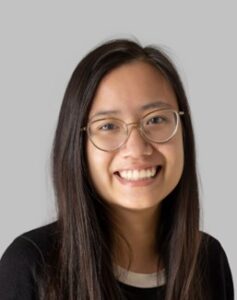
May Tajima is an Assistant Professor in the Department of Management & Organizational Studies at Western University. She holds a Ph.D. in Management Sciences from the University of Waterloo (1998). Her research focuses on RFID technology applications in supply chains, operations management, and supply chain agility. She teaches courses including Operations Management (as course coordinator) and Statistics at Western's DAN Management program. Teaching Experience: Previously taught at University of Waterloo and Wilfrid Laurier University in areas like Production Management, Operations Research, and Engineering Economics. Industry background includes supply chain analysis at Chesapeake Decision Sciences. Key Research Themes: RFID adoption challenges across industries, technology standardization in pharmaceutical contexts, and strategic supply chain adaptability. Authored five major publications between 2005-2012 and contributed to an engineering economics textbook (2005). Awards: Recognized on University Student Council Teaching Honour Roll (2016) Office: SSC 4415 | Phone: 519-661-2111 x87619
Yingli Qin is an Associate Professor in the Department of Statistics and Actuarial Science at the University of Waterloo, part of the Faculty of Mathematics. His research focuses on high-dimensional statistics and random matrix theory, with applications to covariance matrix analysis and hypothesis testing. He holds a PhD in Statistics from Iowa State University, alongside MA and BSc degrees in Mathematics and Statistics from Iowa State University and Northeast Normal University, China. Education : PhD in Statistics, Iowa State University, USA MA in Statistics, Iowa State University, USA BSc in Applied Mathematics, Northeast Normal University, China Research Interests : Qin’s work emphasizes high-dimensional statistical methodologies, including covariance matrix estimation, spectral distribution analysis, and the application of random matrix theory to address challenges in large-scale data. His contributions include developing bias-reduced estimators and testing frameworks for high-dimensional datasets. Publications : Qin has published extensively in top-tier journals such as the Annals of Statistics , Journal of Multivariate Analysis , and Biometrika , with a focus on advancing statistical theory for high-dimensional settings. Teaching : He teaches advanced courses including Multivariate Analysis (Stat 923), Estimation and Hypothesis Testing (Stat 850/450), and Mathematical Statistics (Stat 330).
Vladimir Itskov is an Associate Professor in the Department of Mathematics at The Pennsylvania State University, affiliated with the Eberly College of Science. His research focuses on theoretical neuroscience, applied algebraic topology, and neural networks. He holds a Ph.D. in Mathematics from the University of Minnesota (2002) and a B.S. from Moscow Institute of Electronics and Mathematics (1995). His career includes roles at the University of Nebraska-Lincoln (2009–2014), Columbia University’s Center for Theoretical Neuroscience (2006–2009), and Rutgers University (2004–2006). Research interests include understanding neural coding, network dynamics, and topological methods in neuroscience. Notable work involves applying algebraic topology to analyze neural correlations and developing models for neural network behavior. He has received grants from NIH, NSF, and DARPA, focusing on projects like olfactory coding and neural network dynamics. His lab, the Mathematical Neuroscience Laboratory, develops computational tools and collaborates on interdisciplinary projects. Software packages are hosted on GitHub (nebneuron repository). Publications span journals such as PNAS, SIAM, and Neural Computation, addressing topics from clique topology to competitive network dynamics. His theoretical contributions emphasize bridging data-driven neuroscience with mathematical rigor.
Professor Vincent Y. F. Tan holds dual appointments in the Department of Mathematics and the Department of Electrical and Computer Engineering (ECE) at the National University of Singapore (NUS). He is also affiliated with the Institute of Operations Research and Analytics (IORA) and the Institute of Data Science (IDS). His research focuses on Online Decision Making, Multi-Armed Bandits, Reinforcement Learning, Information Theory, and Statistical Signal Processing. Notably, he has been actively publishing in top-tier conferences like NeurIPS, ICML, and IEEE journals, with recent works exploring topics such as low-rank adaptation, off-policy evaluation, and queueing control. Professor Tan has advised numerous PhD students, including Fengzhuo Zhang, Yujun Shi, and Junwen Yang. He has received recognition for his teaching, including a 4.7/5.0 rating for EE5137 Stochastic Processes. His work has led to impactful publications, such as the best paper award at the ICML 2025 workshop on World Models and an oral presentation at ICLR 2025. He currently serves as a Senior Area Chair for NeurIPS 2025 and an Area Editor for the IEEE Transactions on Information Theory. His research group focuses on advancing theoretical and applied aspects of machine learning, with projects funded by grants in areas like distributed optimization and adversarial robustness. He collaborates widely, including with institutions like IIT Delhi and HKUST Guangzhou. Open positions are available for motivated postdocs and students in his research areas.
Michael C. Hughes ("Mike") is an Assistant Professor in the Department of Computer Science at Tufts University's School of Engineering, where he develops statistical machine learning methods for healthcare applications. His work focuses on building predictive models that extract actionable insights from complex clinical data, including electronic health records and medical imaging. PhD, Computer Science, Brown University (2016) MS, Computer Science, Brown University (2012) BS, Computer Science, Franklin W. Olin College of Engineering (2010) Research interests center on: Bayesian hierarchical models for documents, sequences, and medical images Optimization algorithms for approximate inference Model fairness and interpretability in clinical contexts Semi-supervised learning for medical diagnostics Recent publications demonstrate these capabilities through applications in cardiovascular disease diagnosis, opioid overdose forecasting, and ICU risk prediction. His lab emphasizes reproducibility through open datasets like TMED-2 and open-source tools like BNPy. Grants include NIH R01 funding for heart valve disease detection, NSF CAREER support for model interpretability, and NSF GCR funding for educational uncertainty research. Scientific awards include: NIH R01 Award (PI) for heart valve disease detection (2025) NSF CAREER Award (2024) NSF GCR Grant (2024) Best Poster Award at Time Series Workshop (ICML 2021) Top 10% Reviewer Awards at AISTATS (2023, 2022) Teaching activities include courses on Bayesian Deep Learning, Introduction to Machine Learning, and Statistical Pattern Recognition. He previously served as postdoctoral fellow at Harvard SEAS.
Saeed Mehraban is an Assistant Professor of Computer Science at Tufts University's School of Engineering and an Assistant Professor in the Department of Physics & Astronomy within the School of Arts and Sciences. He joined Tufts University in June 2022 as an Assistant Professor after serving as a Visiting Assistant Professor from June 2021 to May 2022. Prior to his position at Tufts, he was an IQIM Postdoctoral Scholar at the California Institute of Technology and a research fellow at the Simons Institute for the Theory of Computing during spring 2020. Doctor of Philosophy in Electrical Engineering and Computer Science from MIT (2019) Master of Science from MIT (2015) B.Sc. in Physics from Sharif University of Technology, Iran (2013) B.Sc. in Electrical Engineering from Sharif University of Technology, Iran (2013) Saeed Mehraban's research focuses on quantum computation and information, exploring the profound connections between computer science and physics. His work particularly addresses quantum computational complexity and continuous variable systems. A significant portion of his recent research concerns delineating the boundary between classical and quantum computing in noisy intermediate-scale quantum devices. His research bridges theoretical computer science with quantum physics, examining fundamental questions about what quantum computers can and cannot efficiently solve, with particular emphasis on mathematical foundations and computational complexity aspects of quantum information processing. Mehraban's publication record demonstrates a strong focus on quantum computing theory, with particular emphasis on quantum complexity, quantum algorithms, and the mathematical foundations of quantum information. His recent work (2021-2023) has explored topics like unitary t-designs, holomorphic representations of quantum computations, and quantum-inspired identities. Earlier publications (2015-2020) examined computational complexity in quantum theories, approximation algorithms for matrix problems, and connections between classical algorithms and quantum many-body systems. His research consistently sits at the intersection of theoretical computer science and quantum physics, addressing fundamental questions about computational advantages of quantum systems. Gold Medalist, National Physics Olympiad (2007) Bronze Medalist, National Astronomy Olympiad (2005) Identified as Exceptional Talent by the Iranian Educational System (2004) Mehraban teaches dissertation research courses at Tufts University, indicating his involvement in mentoring graduate students. His teaching activities include specialized courses in quantum information science, quantum computer science, and quantum complexity theory. His professional activities show invitations to speak at prestigious institutions including Microsoft Research Station Q, Mila Institute in Quebec, and the Simons Institute, suggesting recognition of his research contributions. His postdoctoral work at Caltech's Institute for Quantum Information and Matter (IQIM) demonstrates his connection to leading quantum research groups. While specific lab affiliations at Tufts aren't explicitly detailed in the provided information, Mehraban's teaching of specialized quantum courses and his research profile suggest he likely contributes to quantum computing research initiatives at Tufts University. His background at Caltech's IQIM and involvement with the Simons Institute's Quantum Wave in Computing Program indicate strong connections to the broader quantum information science community.
Forest Agostinelli is an Assistant Professor in the Department of Computer Science and Engineering at the Molinaroli College of Engineering and Computing, University of South Carolina, where he is also affiliated with the AI Institute. His research focuses on designing AI algorithms for pathfinding problems, integrating deep learning, reinforcement learning, heuristic search, and formal logic. He holds a Ph.D. in Computer Science from the University of California, Irvine, an M.S. from the University of Michigan, and a B.S. in Electrical and Computer Engineering from The Ohio State University. Research Overview : Agostinelli’s work emphasizes solving pathfinding problems in domains like robotics, theorem proving, and molecular optimization. His group develops explainable AI methods to enable collaboration between humans and machines. Key projects include DeepCubeA (solving the Rubik’s Cube via deep reinforcement learning) and neural activation function research. Funding & Awards : He has secured grants from NSF, NASA EPSCoR, and South Carolina’s ASPIRE and MADE programs. Notable awards include the NSF Graduate Research Fellowship and the Graduate Education for Minority Students Fellowship. Teaching : He teaches courses in Artificial Intelligence (CSCE 580) and Deep Reinforcement Learning and Search (CSCE 790), mentoring over 15 students at undergraduate and graduate levels. Labs & Collaborations : Active in AI-driven education and interdisciplinary projects, his lab contributes to tools like ALLURE for children’s learning and Bioinformatics platforms like CircadiOmics.
Sadaf Salehkalaibar is an Assistant Professor in the Department of Computer Science at the University of Manitoba, Winnipeg, Canada. She holds an office in the EITC building (E2-416) and has previously held academic positions at the University of Tehran, University of Toronto as a research associate, and visiting roles at McMaster University, Telecom Paristech, and National University of Singapore. Her research focuses on explainable artificial intelligence, generative models, and information theory with an emphasis on rate-distortion-perception tradeoffs in video and image processing. Her educational background includes teaching courses such as Signals and Systems, Digital Signal Processing, and Network Security at the University of Tehran. She currently teaches COMP4190 (Artificial Intelligence) at the University of Manitoba. Research interests revolve around developing efficient algorithms for AI systems, with key contributions in learned video compression, federated learning, and privacy-preserving techniques. Notable work includes the M22 algorithm for communication-efficient federated learning and the NSERC Discovery Grant-funded project on data-driven learning efficiency. Recent publications highlight advancements in perception loss functions, Gaussian vector source analysis, and secure distributed hypothesis testing. She actively serves on editorial boards (e.g., IEEE Transactions on Communications) and conferences (ISIT, ITW). Awards include the prestigious NSERC Discovery Grant (2025). Supervision highlights 13 MSc students at the University of Tehran, focusing on topics like privacy-preserving systems and distributed learning. Labs/teams: Leads research group at University of Manitoba focusing on AI and information theory applications in multimedia systems.
Helmut H. Strey is an Associate Professor in the Department of Biomedical Engineering at Stony Brook University. His research focuses on micro- and nanotechnologies for quantitative biology , including single-cell analysis, cancer metabolism modeling, and functional MRI data analysis. He holds academic appointments since 2008 and has pioneered technologies like tumor-on-a-chip and optical decoders for translation stages. Education: PhD in Biophysics (Technical University München, 1993), postdoctoral training at NIH (1994-1998). Awards include the NSF CAREER Award (2000-2005), Dillon Medal (2003), and Weston Visiting Professorship (2020). Research interests span cell-to-cell variability , Warburg effect in cancer , and Bayesian analysis of time-series data . His lab develops tools for 3D tumor microenvironments, MRI-compatible drug delivery systems, and biomimetic neural circuit models. Teaching includes advanced numerical methods in biomedical engineering, quantitative biology, and biomolecular analysis. Active in open hardware projects, including microfluidics controllers and IoT devices for health monitoring.
Dr. Haiyan Liu is an Associate Professor of Quantitative Methods, Measurement, and Statistics in the Department of Psychological Sciences at the University of California, Merced, within the School of Social Sciences, Humanities, and Arts. She earned her Ph.D. in Quantitative Psychology from the University of Notre Dame (2018). Her research focuses on advanced statistical modeling of psychological and educational data, including high-dimensional, longitudinal, and social network data. She develops Bayesian methodologies and machine learning techniques to enhance understanding of human behavior, with recent emphasis on structural equation modeling, network dynamics, and nonparametric growth curves. Her work addresses challenges in survey methodology and behavioral data analysis. Dr. Liu’s educational background includes a Ph.D. in Quantitative Psychology from the University of Notre Dame (2018), complementing her current academic role. Her lab, accessible at https://sites.google.com/view/ucmhaiyanliu , supports her research activities. Her research interests span Bayesian SEM, social network analysis, and applications of machine learning to behavioral data, aiming to bridge methodological innovation with practical psychological inquiry. Her recent articles highlight advancements in Bayesian model selection, longitudinal sentiment analysis, and social network mediation. She emphasizes prior specification rigor in Bayesian frameworks and explores nonlinear relationships in social dynamics. Though no awards are explicitly listed, her contributions to statistical methodologies in psychological research reflect significant scholarly impact. Dr. Liu advises students in quantitative methods and has developed software tools like logistic4p for misclassification correction in logistic regression. Her work integrates computational methods with theoretical advancements, positioning her as a key contributor to modern quantitative psychology.
Anup Basu is a Professor in the Department of Computing Science at the University of Alberta. His research focuses on computer graphics, computer vision, and multimedia communications. He holds an B.S. in Math & Statistics from the Indian Statistical Institute (1980), an M.E. in Computer Science from the Indian Statistical Institute (1983), and a Ph.D. in Computing Science from the University of Maryland (1990). His work emphasizes Quality of Service (QoS) in multimedia delivery for e-commerce and telelearning, adaptive bandwidth monitoring, and 3D visualization tools. He pioneered foveated image compression and stereo visualization techniques, contributing to MPEG-4 coding standards. He leads major initiatives like the ASRA/TelePhotogenics/IBM 3D Medical Imaging project ($2M+ funding) and developed patented SHR Stereo/3D scanning technologies. Awards include the American Neurological Association Fellowship. He has held leadership roles as General Chair for IEEE International Conferences on SMC (2017), Multimedia & Expo (2013), and SMC (2014). His research integrates interdisciplinary collaborations across universities and industry partners, leveraging advanced equipment like the CAVE system for immersive visualization.
Athena Nghiem is an Assistant Professor at the University of Wisconsin-Madison, starting Fall 2024, specializing in biogeochemistry and hydrology. She currently holds an ETH Postdoctoral Fellowship at ETH Zürich, focusing on redox processes in groundwater systems. Education: PhD in Earth and Environmental Sciences from Columbia University, BA in Geophysics and Statistics from UC Berkeley Research interests: Environmental variability in hydrology, redox processes, groundwater contamination, data science in environmental research, and reactive transport modeling Her research combines traditional laboratory/field methods with data science to study trace element cycling, particularly arsenic release in aquifers. Recent work includes quantifying sulfate reduction's role in arsenic contamination and evaluating mitigation strategies. Notable awards: ETH Postdoctoral Fellowship (2022-2024), NSF Graduate Research Fellowship (2018-2021), and multiple academic honors during her UC Berkeley BA studies. Current advisees at UW-Madison: Juyong Bak, Savannah Finley, Logan Goulette. She actively encourages applications from diverse backgrounds for future lab positions.
Dr. Pulin Gong is an Associate Professor in the School of Physics at the University of Sydney. His research focuses on understanding the self-organizing mechanisms of neural circuits' spatiotemporal dynamics and their computational principles. He investigates distributed dynamic computation via propagating neural waves, irregular neural activity variability, and coherent spatiotemporal patterns in large-scale neural data. His work combines experimental and computational approaches to unravel neural coding principles. Research interests include: Distributed dynamic computation (e.g., visual feature integration) Irregular neural dynamics and membrane potential fluctuations Coherent spatiotemporal wave patterns (e.g., spiral waves) Recent projects involve analyzing cortical wave patterns in mice and primates, fractional neural sampling, and Lévy walk dynamics in neural systems. Collaborators include institutions like Fudan University and Kyoto University. Current research student: Andrew LY, working on cortico-cortical loop dynamics and AI applications.