Maciej Zięba is an academic researcher affiliated with the Faculty of Information and Communication Technology at Wrocław University of Science and Technology, specifically within the Department of Artificial Intelligence . His work spans machine learning, deep learning, and computer vision, with a focus on hyperspectral imaging, autonomous systems, and 3D modeling. Recent research includes uncertainty-aware sensor deployment for autonomous vehicles, low-light image enhancement algorithms, and probabilistic regression frameworks for tabular data. He has co-authored publications on flow-based models, hypernetworks, and neural radiance fields (NeRF) applied to 3D face rendering. Contact: maciej.zieba@pwr.edu.pl
Rafał Biedrzycki is an Assistant Professor at The Institute of Computer Science within Warsaw University of Technology's Faculty of Electronics and Information Technology. His research focuses on optimization algorithms, evolutionary computation, and machine learning applications. He holds a PhD in Information Science (2009) and a D.Sc. (2024). Key research interests include evolutionary algorithms (e.g., Differential Evolution, CMA-ES), optimization techniques for real-world problems (e.g., compressor scheduling, optical networks), and algorithm benchmarking. He has contributed to improving constraint-handling methods and hybrid algorithm designs. Received team awards for scientific achievements from Warsaw University of Technology (2019, 2023) and teaching excellence (2021, 2024). Active in interdisciplinary projects, including the DAFNE initiative for data fusion systems (2010-2011). Supervises research in optimization, machine learning, and computational electromagnetics. His work bridges theoretical algorithm development with practical applications in engineering and data analysis. Recent efforts include analysis of CEC competition algorithms and parameter-tuning methodologies.
Adam Woźniak is a Professor and Vice-Rector for Development at Warsaw University of Technology (WUT), holding positions at the Faculty of Mechatronics and the Institute of Metrology and Biomedical Engineering. He earned a PhD in 2002, D.Sc. (habilitation) in 2011, and was promoted to full professor in 2017. His research focuses on advanced geometrical measurement techniques, coordinate metrology, quality engineering, and reliability of mechatronic systems. He has authored 2 books and over 130 scientific publications, including work on probing accuracy, X-ray CT applications, and dynamic error analysis in manufacturing systems. Notably, he served as Director of the Institute of Metrology and Biomedical Engineering (2012–2020) and later as Dean of the Faculty of Mechatronics (2020). He received the Polish Prime Minister’s Prize for Scientific Achievements (2012) and multiple scholarships from the Foundation for Polish Science. Education: PhD (2002), D.Sc. (2011), Warsaw University of Technology; Visiting Professor at École Polytechnique de Montréal (2005–2006). Research interests include coordinate measuring machine (CMM) performance, probing system accuracy, and industrial CT applications. His work addresses dynamic error identification, probe error compensation, and precision measurement techniques. Recent projects involve high-density point cloud correction, scanning probe validation, and pediatric growth measurement systems. His articles analyze topics like probe reliability, CNC machine tool errors, and X-ray CT threshold optimization. Awards also include recognition for leadership in standardization bodies, including roles in Poland’s Council for Metrology and Standardization. He has supervised 6 PhD students and numerous master’s candidates, contributing to over a dozen funded research projects. His lab, the Virtual Manufacturing Research Laboratory, integrates metrology, mechatronics, and biomedical engineering for advanced measurement solutions.
Michał Paweł Michalak is an Assistant Professor at AGH University of Science and Technology in Kraków, affiliated with the Faculty of Geology, Geophysics and Environmental Protection and Department of Geoinformatics and Applied Informatics. His research spans computational geometry in geological modeling, machine learning applications in Earth sciences, statistical epidemiology, and ecclesiological dynamics. Doctoral degree from University of Silesia in Katowice Developed GeoAnomalia software suite combining C++, R, and ParaView Created unbiased risk metrics (WCSIR) for infectious disease surveillance Research focuses on: Subsurface geological modeling using combinatorial algorithms and machine learning; Spatial epidemiology emphasizing testing heterogeneity bias; Ecclesiological dynamics analyzing factional theological interactions. His 2020/37/N/ST10/02504 grant project received 'very good' evaluation for developing angular distance metrics in geological contacts. Scientific contributions include: 2025 Solid Earth paper on fault-related structure detection 2025 Frontiers in Public Health work on global pandemic risk evaluation 2023 AGH Rector award recipient Developer of open-source geological analysis tools Collaboration network includes Harvard University, Technische Universität Freiberg, and University of Texas at Austin. Currently teaching GIS modeling, optimization methods, and geoinformatics systems. Maintains a personal website with open data access.
Bartosz Grzybowski serves as Distinguished Affiliate Professor at the Institute of Organic Chemistry, Polish Academy of Sciences (PAS), leading the Laboratory of Computer-Assisted Synthesis. His work bridges artificial intelligence and experimental organic chemistry to transform synthesis from trial-and-error into algorithmic science. His research focuses on AI-driven synthesis planning , reaction network analysis , and computational prediction of chemical properties . Key contributions include pioneering algorithms for multistep organic synthesis of complex targets, discovery of novel organic reactions through AI, and design of temporally/spatially synchronized reaction networks. His group develops methods for sustainable chemistry, drug analog design, and enzymatic process optimization. Analysis of his 2023-2025 publications reveals dominant trends in retrosynthetic AI (87% of articles), sustainable chemistry applications (63%), and integration of mechanistic understanding with machine learning. Work frequently appears in Nature , Science , and JACS , emphasizing experimental validation of computational predictions. Prof. Grzybowski currently advises three PhD students and collaborates with a multidisciplinary team: Core team : Assoc. Prof. Michał Michalak (Adjunct), Dr. Anna Żądło-Dobrowolska, Dr. Aleksei Koshevarnikov Active grant : NCN SONATA 2020/39/D/ST4/01890 on hazardous chemical degradation (PI: Żądło-Dobrowolska) The Laboratory of Computer-Assisted Synthesis operates as an integrated computational-experimental unit at IBS-IOC PAS. Current projects include blockchain-orchestrated reaction networks, AI-guided catalyst selection, and metabolic-cycle emulation. The group maintains strong industry/academic partnerships for validating algorithms in drug discovery and green chemistry applications.
Marek Miśkowicz serves as a Professor at the Department of Metrology and Electronics within the Faculty of Electrical Engineering, Automatics, Computer Science and Biomedical Engineering at AGH University of Science and Technology in Kraków, Poland. His primary institutional contact is miskow@agh.edu.pl, with physical location in building B-1, room 212. His research spans signal processing, biomedical engineering, and electronics, specializing in event-based sampling methodologies, time-to-digital conversion techniques, and reconstruction of bandlimited signals from nonuniform samples. Key contributions include QRS detection algorithms for ECG monitoring, POCS-based reconstruction frameworks, and event-driven control systems for industrial IoT applications. His work emphasizes resource efficiency in embedded systems and mobile health monitoring through approximate computing and adaptive sampling strategies. Recent publications (2022-2025) demonstrate consistent focus on signal reconstruction from irregular samples, with growing emphasis on spiking neural networks for event classification and industrial IoT optimization. Biomedical applications (particularly ECG analysis) and industrial control systems represent dominant application domains, while methodological innovations center on iterative reconstruction algorithms and temporal accuracy evaluation in noisy environments. No scientific awards were referenced in the source materials. No information regarding student advising or research grants was available in the provided documentation. The source texts contained no details about laboratory facilities, research teams, or collaborative groups associated with Professor Miśkowicz.
Somnath Ghosh is the Michael G. Callas Chair Professor at Johns Hopkins University, holding joint appointments in the Departments of Civil & Systems Engineering, Mechanical Engineering, and Materials Science & Engineering. He directs the Computational Mechanics Research Laboratory (CMRL) and founded the Center for Integrated Structure-Materials Modeling and Simulations (CISMMS). His research focuses on multiscale computational mechanics, materials science, and integrated computational materials engineering (ICME). Key areas include additive manufacturing, fatigue and fracture mechanics, machine learning, and uncertainty quantification. Education includes a B.Tech. from IIT Kharagpur, M.S. from Cornell University, and Ph.D. from the University of Michigan. Ghosh has led major initiatives like NASA’s Space Technology Research Institute for Additive Manufacturing (IMQCAM) and the Air Force-funded Center of Excellence in Integrated Materials Modeling (CEIMM). He has authored over 300 peer-reviewed publications, three books, and is a Fellow of multiple societies, including the AAAS, ASME, and TMS. Award highlights include the Theodore von Karman Medal (2025), J.N. Reddy Medal (2024), and Nathan M. Newmark Medal (2013). His work bridges theory and industry applications in aerospace, automotive, and defense sectors. Labs under his leadership (CMRL and CISMMS) develop digital twins and advanced modeling tools for materials qualification and design.
John Hughes, PhD, is an Associate Professor and Chair of the Department of Biostatistics and Health Data Science at Lehigh University's College of Health. With nearly 30 years of experience in higher education, he has held positions at institutions including Frostburg State University, the University of Minnesota, and Pennsylvania State University. His methodological research focuses on statistical models for dependent data, Bayesian methods, and spatial and spatiotemporal analysis. He has developed numerous software packages for R and Perl, including copCAR , ngspatial , and krippendorffsalpha . Dr. Hughes' interdisciplinary work spans environmental health, bioimaging, vaccine hesitancy, and spatial epidemiology of HPV-related cancers. He has consulted for organizations such as the Courage Kenny Research Center and Temple University. His education includes a PhD in Statistics from Penn State University and an MS in Applied Computer Science from Frostburg State University. His research emphasizes statistical computing and the application of advanced models to health data. Recent work includes methodologies for agreement coefficients, environmental noise measurement, and spatial analysis of vaccination refusal patterns. Dr. Hughes teaches courses in biostatistics, data science, and programming, reflecting his dual role as a teacher-scholar. Professional contributions include software development, collaborative research projects, and academic leadership. His work bridges computational innovation and real-world health challenges, positioning him as a key figure in modern biostatistical research.
Dr. Łukasz Baran is an Assistant Professor at the Department of Theoretical Chemistry , Maria Curie-Skłodowska University (UMCS), Lublin, Poland. He earned his PhD in Chemical Sciences (2022) with a dissertation on computer simulations of molecular self-assembly processes on solid surfaces. His current research focuses on interfacial behavior of water in liquid/crystalline forms and the influence of confinement curvature on patchy particle systems, combining molecular dynamics and advanced Monte Carlo simulations. Current Affiliation: Maria Curie-Skłodowska University (UMCS), Lublin, Poland Additional Affiliation: Complutense University of Madrid, Spain (PostDoc, 2024-) His research spans self-assembly mechanisms , ice friction phenomena , and 2D supramolecular networks , with applications in nanoscience and materials chemistry. Recent work includes studies on colloidal diamond formation, ice premelting layers, and confinement effects on Janus particles. His publications have appeared in high-impact journals like Nanoscale , PNAS , and Journal of Chemical Physics . Scientific Awards Ministry Scholarship for Young Researchers (2022) START Scholarship by Foundation for Polish Science (2020) Best PhD Thesis Award, UMCS Faculty of Chemistry (2022) Dr. Baran has secured significant grants including NCN PRELUDIUM 20 (2022-2025) and the "Diamentowy Grant" (Diamond Grant) (2018-2021). His work has been featured in Polish media (TVP Lublin) and international outlets like phys.org . He collaborates with researchers across Europe, including teams in Madrid and Lublin.
Jacob Fish holds the Rosalind and John J. Redfern Jr. Chair in Engineering at Columbia University's Department of Civil Engineering and Engineering Mechanics within the Fu Foundation School of Engineering and Applied Science. His research program focuses on computational mechanics and multiscale modeling with applications across material science and structural engineering. His research interests center on developing advanced computational frameworks for multiscale analysis of heterogeneous materials. Key areas include computational continua, atomistic-to-continuum coupling, fracture mechanics of composites, and thermomechanical modeling of advanced materials. His work bridges theoretical developments with practical engineering applications through reduced-order modeling and data-physics integration. His recent publications demonstrate strong trends in multiscale computational engineering, particularly in homogenization techniques, phase-field fracture modeling, and data-driven approaches for material behavior prediction. The research spans from atomistic simulations to structural-scale analysis with emphasis on computational efficiency and physical fidelity. Fellow, U.S. Association for Computational Mechanics (USACM) Computational Structural Mechanics Award, 2005 Fellow, International Association for Computational Mechanics (IACM), 2002 National Science Foundation Presidential Young Investigator Award, 1992 Walter P. Murphy Fellowship, Northwestern University, 1986 Fish serves as Editor-in-Chief of the International Journal for Multiscale Computational Engineering and has secured numerous research grants focused on multiscale modeling of advanced materials. His collaborative network spans multiple institutions and disciplines, particularly in computational mechanics and material science. His laboratory develops computational frameworks for multiscale analysis with applications in structural engineering, material science, and biomechanics, focusing on efficient algorithms for complex material behavior prediction.
Dr. Paulina Witkowska is an academic affiliated with the University of Wrocław's Faculty of Philology, specifically the Department of Contemporary Polish Language. She is a member of the linguistic research team at Wrocław University of Science and Technology's Language Technology Group and serves as the Secretary of the editorial office for the 'Rozprawy Komisji Językowej' of the Wrocław Scientific Society. Education: PhD (dr) in Philology from the University of Wrocław. Her research focuses on grammar of contemporary Polish, corpus linguistics, computational linguistics, and semantic analysis of language units from cognitive and generative perspectives. Recent work emphasizes verb semantics, syntactic valence, and corpus-based studies on Polish verbs. Her publications span formal linguistic analysis, corpus studies, and generative approaches to Polish syntax and semantics. Notable works include studies on verb polysemy, particle usage, and morphological patterns in Polish. She is involved in academic editorial work and contributes to language technology initiatives. No awards or specific grants are explicitly mentioned in the provided materials.
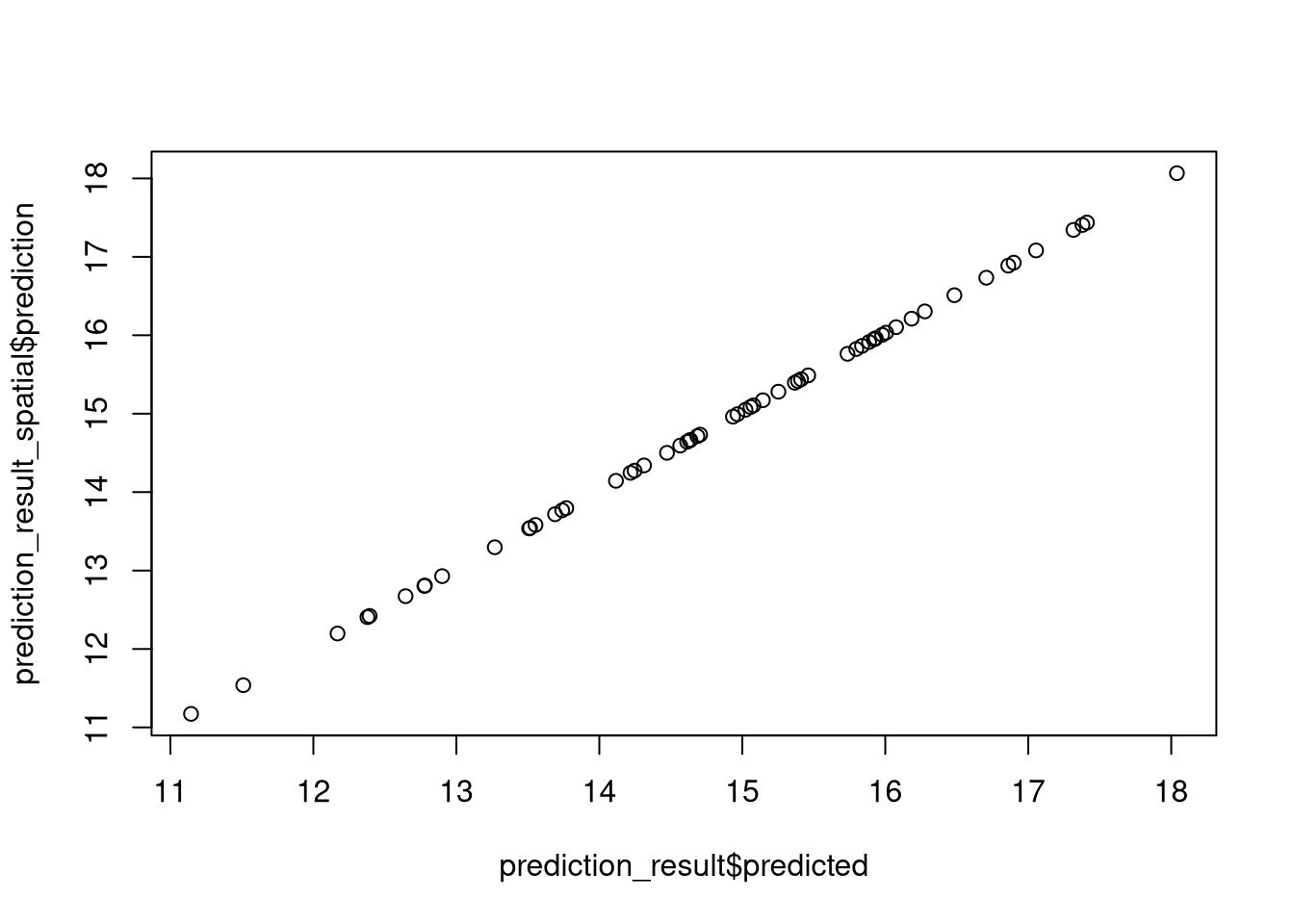
Jakub Nowosad is a researcher affiliated with Adam Mickiewicz University in Poznań and currently holding a prestigious Marie Skłodowska-Curie Actions Postdoctoral Fellowship at the University of Münster's Remote Sensing and Spatial Modeling group (August 2024-August 2026). His work bridges geography, computer science, and environmental science with a focus on spatial data analysis and machine learning applications. Nowosad's research interests center on spatial association methods, landscape metrics, information theory applications in geography, and spatial machine learning techniques. He has made significant contributions to developing and implementing computational methods for analyzing spatial patterns, particularly through R programming packages that address spatial autocorrelation challenges in machine learning. His work spans environmental monitoring, landscape ecology, and geospatial analysis with practical applications in understanding climate change impacts, forest fragmentation, and permafrost degradation. His publication record demonstrates a strong focus on methodological development in spatial data science, with numerous recent publications on spatial machine learning frameworks, computational landscape ecology, and specialized software tools. Nowosad's work shows a clear trajectory toward integrating advanced machine learning techniques with traditional spatial analysis methods to overcome limitations in spatial prediction and pattern recognition. Marie Skłodowska-Curie Actions Postdoctoral Fellowship (MSCA-PF) for the PRISM project (PReservation and RecognItion of Spatial patterns using Machine learning) Nowosad actively contributes to the open-source geospatial community through software development, including packages like spatialRF and contributions to spatial machine learning frameworks. His collaborative work spans multiple institutions including the University of Cincinnati, International Institute for Applied Systems Analysis, and various European research groups. He appears to be developing methodologies that will significantly impact how spatial patterns are recognized and preserved in environmental datasets, with applications ranging from Arctic landscape monitoring to forest conservation planning.
Dr. Sinan Tankut Gülhan is an Assistant Professor at the University of Zielona Góra's Institute of Sociology in Poland, where he applies a multidisciplinary approach to urban sociology. With expertise spanning Turkish urbanization processes, comparative urban history, and digital transformation in urban contexts, he bridges theoretical frameworks with practical applications in urban planning and policy. His research interests focus on the intersection of urban sociology and digital transformation, examining algorithmic decision-making in urban planning, digital inequality, housing market dynamics, 'smart city' initiatives, and the impact of digital platforms on urban mobility. Drawing from Henri Lefebvre's spatial theory, he analyzes how urban spaces are produced through political, economic, and social processes, with particular attention to Istanbul's historical development. Dr. Gülhan has expanded his methodological approach from qualitative to quantitative and computational techniques, utilizing statistical analysis (RStudio, SPSS), data science applications (Python, machine learning), digital research methods (web scraping, text analysis), and spatial analysis (QGIS). His publications reveal a consistent focus on urban political economy, historical urban development, and the evolving relationship between state power and urban space. Actively engaged in public sociology, he collaborates with community organizations, policymakers, and media outlets, organizing workshops for planners and advising municipal governments on technology implementation. His work on the 1960 Istanbul Housing Census visualization demonstrates his commitment to making historical urban data accessible for contemporary urban challenges.
Ewa Synówka is a researcher at the Institute of Mathematics, University of Zielona Góra , Poland. Her academic work spans interdisciplinary applications of mathematics and computer science. Research focuses on iterative methods for fixed point problems in Hilbert spaces Contributions to graph theory, particularly coloring models and combinatorial geometry Investigations into nonlinear wave propagation and stochastic equations Applications of computer science in secure data transmission and supply chain privacy She teaches advanced statistical methods, econometric modeling, and multivariate data analysis. Her work also emphasizes modern pedagogy using open-source tools for primary/secondary school outreach.
Marek Zaionc is a Professor at the Faculty of Mathematics and Computer Science, Jagiellonian University in Kraków, Poland. He specializes in theoretical computer science, logic, and computability theory. His research focuses on asymptotic properties of logical systems, lambda calculus, and the quantitative analysis of fuzzy logics. He has held visiting positions at institutions including the University of Alabama (USA), University of Buffalo (USA), and Université de Versailles (France). Education and Career: PhD in Mathematics, University of Warsaw (1985) Habilitation, Jagiellonian University (1993) Professor of Mathematical Sciences, Jagiellonian University (2003) Deputy Dean of Faculty of Mathematics and Computer Science (2002–2003) Research Interests: Asymptotic probability in logic and computability Typed lambda calculus and functional programming Quantitative studies of fuzzy logics and non-classical logics Combinatorial analysis of logical terms and structures Grants and Projects: NCN Grant (2019–2023): Investigating asymptotic equivalence in set theories NCBR Grant (2014–2017): Asymptotic methods in lambda calculus and combinatory logic Narodowe Centrum Badań (2010–2013): Quantitative studies in logic and computation Awards and Recognition: While no specific awards are listed, his extensive publications and leadership roles reflect significant contributions to theoretical computer science and logic. Labs and Teams: Active contributor to the Algorithmics Research Group and Foundations of Computer Science initiatives at Jagiellonian University.