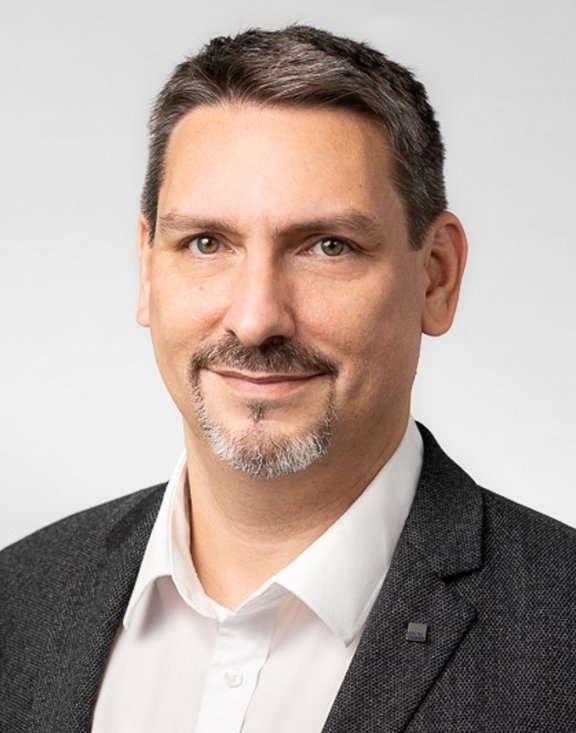
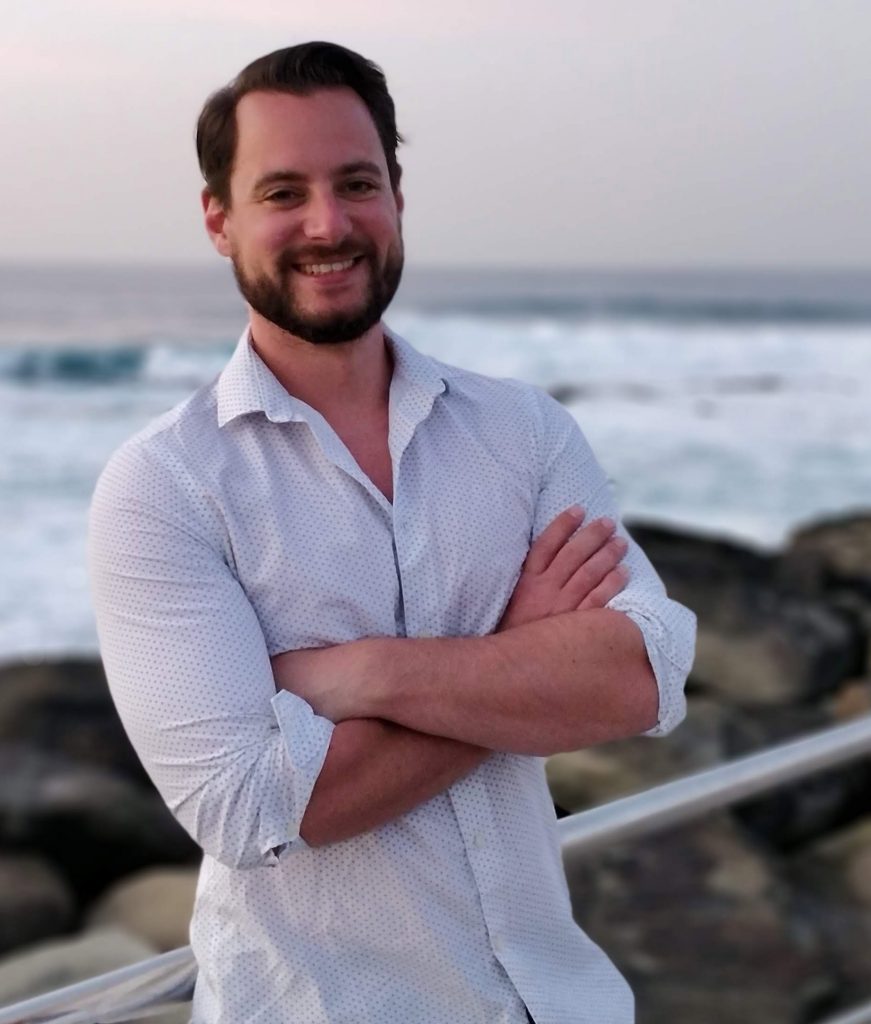
Ulrik Hansen is a Research Fellow at the University of Innsbruck, affiliated with the Faculty of Mathematics, Computer Science, and Physics (MIP). His research focuses on the intersection of probability theory and mathematical physics, particularly percolation-type models and their connections to statistical mechanics. He is part of the Stochastics research group. Current Position: Post-doctoral researcher in Alexander Glazman's group at the University of Innsbruck. Previous Positions: Post-doctoral researcher at QMATH and the Analysis & Quantum section at the University of Copenhagen. Education: PhD (2019–2024) under Ioan Manolescu at the University of Fribourg. Awards: None explicitly listed in provided texts. Lab/Team Affiliation: Stochastics Group at the University of Innsbruck.
Gemma de les Coves is an ICREA Research Professor at the Departament d'Enginyeria of Universitat Pompeu Fabra (Barcelona) and holds an Associate Professorship at the University of Innsbruck (Austria). Her research bridges quantum physics, mathematical theory, and philosophy, focusing on universality, undecidability, and interdisciplinary frameworks. She leads the Mathematical Quantum Physics research group in Innsbruck and has received prestigious awards including the START Prize (2020) and the ICREA professorship (2024). Education & Academic Path: PhD in Theoretical Physics (University of Innsbruck, 2011) Postdoc at Max Planck Institute for Quantum Optics (2011–2016) Assistant Professor (University of Innsbruck, 2018–2023) ICREA Research Professor (2024–present) Research Interests: Universality in physical and computational systems Undecidability in quantum models and formal languages Mathematical foundations of quantum theory Interdisciplinary connections between physics, philosophy, and culture Awards & Recognition: START Prize (FWF, 2020) Elise Richter Fellowship (2016–2018) Emmy Noether Visiting Fellowship (Perimeter Institute, 2016) Advisees & Grants: Supervised PhD students include Tobias Reinhart, Andreas Klingler, and Mirte van der Eyden Recipient of the START Prize grant (FWF) Labs & Outreach: Runs the Mathematical Quantum Physics group at Innsbruck Active in science communication via YouTube, podcasts, and public lectures
Thomas Hofer is an Associate Professor in the Department of General, Inorganic and Theoretical Chemistry at the University of Innsbruck, affiliated with the Faculty of Chemistry and Pharmacy. He leads the Hofer Lab, focusing on theoretical and computational chemistry, materials science, and molecular dynamics simulations. His academic journey includes a Habilitation in Theoretical and Computational Chemistry (2011), a Doctorate (2006), and earlier roles as an Assistant Professor (2008-2011) and Erwin Schrödinger Fellow (2008-2010). Research Interests: Hofer specializes in quantum mechanical methods, molecular dynamics, and computational modeling of materials, with applications in energy storage, catalysis, and environmental chemistry. His work bridges theoretical approaches with experimental validation, addressing challenges in nanostructured materials and reactive systems. Awards: He has received prestigious honors such as the Young Scientist Excellence Award (2006), Georg und Christine Sosnovsky Award (2007), and IUPAC Award (2012). His teaching spans advanced courses in simulation methods, computer-based materials science, and data-driven discovery for PhD students. Labs/Teams: The Hofer Lab collaborates with other groups (e.g., Liedl Lab) and contributes to facilities like the Center for Chemistry and Biomedicine. His research impacts areas like battery materials, environmental pollutant interactions, and renewable energy systems.
Henning Deters is a political scientist and researcher at the University of Vienna's Centre for European Integration Research (EIF), part of the Faculty of Social Sciences. He holds a PhD from Bremen International Graduate School of Social Sciences. His primary research focuses on EU judicial politics, environmental policy, single market policy, and computational analysis. Deters has held roles including Assistant Professor at the University of Innsbruck and postdoctoral researcher in FWF-funded projects on EU judicial appointments. He has taught courses on EU regulatory policies and European integration at multiple institutions. Education includes a Diplom degree in Political Science from Universität Bremen and an MA from BIGSSS. His work combines qualitative and quantitative methods, with recent emphasis on computational approaches. Notable publications analyze EU policy dynamics in areas like the Posted Workers Directive, climate governance, and judicial politics. He actively contributes to academic discussions through blogs like Regioparl and maintains a focus on EU institutional transformations. His research highlights include examining the role of German regional parliaments in EU policymaking and analyzing the EU's Green Deal. Deters' current projects investigate judicial appointments at the Court of Justice of the EU and the politicization of legal challenges. His work bridges theoretical insights with practical data analysis, often using web-scraping and statistical methods. Key Positions: Postdoctoral Researcher (University of Vienna), Assistant Professor (University of Innsbruck), Research Associate (Danube University Krems) Teaching: Courses on EU policy, judicial politics, and European integration Awards: None explicitly listed, though his work has been peer-reviewed and published in top journals Labs/Teams: EIF Research Group, Regioparl Project
Elias Weiss is a researcher at the University of Vienna's Institute of Political Science within the Faculty of Social Sciences. He holds a BA and MA in Political Science from the University of Vienna, focusing on interpretive qualitative and exploratory research methods. His bachelor's thesis examined the duration of electoral periods, specifically the extension of Austria's legislative period from four to five years. His master's work shifted to solidarity research, particularly in labor market, economic, and health policies, analyzing the GameStop incident's political-solidarity dimensions. Research Interests: Solidarity studies, labor market dynamics, health policy, universal basic income, election period analysis, and policy discourse analysis. His work bridges political theory with empirical policy evaluation, emphasizing interdisciplinary approaches to contemporary societal challenges. Articles Trends: His publications span cognitive science, health policy, and education, reflecting a focus on mental health interventions, workplace environments, and neurocognitive adaptations. Recent work includes studies on pandemic impacts, light therapy efficacy, and stroke rehabilitation. These themes underscore a commitment to applying empirical research to real-world challenges in academia, healthcare, and public policy. Advising & Grants: No specific advising roles or grants are mentioned. His contributions are primarily through research and academic publications. Labs/Teams: Associated with the CESCoS (Contemporary Solidarity Studies) research group at the Institute of Political Science, focusing on socio-political solidarity dynamics in modern contexts.
Ansgar Jüngel is a Full Professor for Analysis of Nonlinear Partial Differential Equations at TU Wien, Austria. He leads the Institute of Analysis and Scientific Computing within the Faculty of Mathematics and Geoinformation. His research focuses on mathematical modeling, analysis, and numerical simulation of complex systems, particularly in semiconductor physics, quantum hydrodynamics, and biological transport phenomena. Jüngel holds a PhD from TU Berlin (1994) and habilitation (1997), with prior academic roles at University of Konstanz and University of Mainz. His work spans nonlinear PDEs, cross-diffusion systems, entropy methods, and applications in semiconductor modeling (e.g., quantum drift-diffusion, Maxwell-Stefan systems). Notable contributions include rigorous derivation of energy-transport models, analysis of quantum fluid models, and development of entropy-dissipative numerical schemes. Awards include the ERC Advanced Grant (2021) and Tsungming-Tu Award (2011). Teaching emphasizes advanced mathematical topics: cross-diffusion systems, partial differential equations, and computational finance. Active in PhD supervision and collaborative projects, he co-authored books on transport equations, entropy methods, and semiconductor modeling. His team includes postdocs and PhD students working on topics like multi-species populations, tumor growth modeling, and stochastic cross-diffusion systems.
Esther Daus is a researcher affiliated with the Department of Analysis at TU Wien. Her primary research focuses on cross-diffusion systems, partial differential equations (PDEs), and their applications in biomathematics and stochastic processes. She specializes in deriving macroscopic models from microscopic particle systems, particularly in the context of biofilm growth, interacting particle systems, and fractional diffusion phenomena. Her work bridges applied mathematics with computational science, addressing challenges in numerical methods for degenerate PDEs and stochastic algorithms. Key contributions include rigorous analysis of cross-diffusion limits, finite-volume scheme convergence, and long-time behavior of nonlocal equations. She has advised PhD candidates Markus Fellner and Alexandra Holzinger on cross-diffusion and population dynamics modeling.
Kristóf Huszár is an Assistant Professor at the Institute of Geometry, Graz University of Technology (TU Graz), where he conducts research in computational topology and parameterized algorithms. He has held postdoctoral positions at Centre Inria d’Université Côte d’Azur (DataShape team), Laboratoire de l’Informatique du Parallélisme at ENS de Lyon, and was an adjunct instructor at IUT Lyon 1. He previously spent time at Institut Henri Poincaré in Paris for a thematic trimester on Geometry and Statistics in Data Sciences. His educational background includes a PhD from IST Austria supervised by Uli Wagner and Jonathan Spreer, a BSc in Mathematics from Eötvös Loránd University under András Stipsicz, with additional study periods at Beloit College and Heidelberg University. Kristóf's research centers on computational topology, particularly width parameters of graphs associated with 3-manifolds. His work bridges theoretical computer science and geometric topology, aiming to develop algorithmic tools for topological problems. He is motivated by parameterized complexity and structural graph theory. No recent articles are listed in the provided text, so no trend analysis can be performed. There are no scientific awards mentioned in the available information. Kristóf Huszár has served as a postdoctoral researcher under prominent figures such as Jean-Daniel Boissonnat, Clément Maria, and Édouard Bonnet. While no formal students are listed, his roles involve research mentorship in collaborative environments. No grants are explicitly mentioned. He has been affiliated with the DataShape research team at Inria and the Laboratoire de l’Informatique du Parallélisme at ENS de Lyon, both of which are leading institutions in computational geometry and theoretical computer science. His current research is conducted within the Institute of Geometry at TU Graz.
Johannes Hagel is a Visiting Professor at Graz University of Technology's College of Engineering, affiliated with the Institute of Theoretical Physics - Computational Physics. His research focuses on theoretical and computational approaches to understanding complex physical systems. Academic Affiliation: Graz University of Technology (College of Engineering) Research Areas: Theoretical Physics, Computational Physics, Condensed Matter Physics, Quantum Mechanics, Statistical Physics, Numerical Analysis His work bridges fundamental physics concepts with advanced computational methods to investigate phenomena in condensed matter and quantum systems. He contributes to the academic community through teaching and research in these specialized fields.
Raimundo Saona is a Research Fellow in the Department of Mathematics at the London School of Economics and Political Science (LSE), where he joined in 2025. His work bridges theoretical mathematics with practical applications in computer science and decision theory. His research focuses on Game Theory, Probability Theory, Algorithmic Game Theory, Stochastic Analysis, Optimal Control, and Imprecise Probability Theory. He develops mathematical tools to provide new insights on situations involving uncertainty, working with both continuous and discrete models, proving theoretical existence theorems, coding efficient algorithms, and analyzing both dynamic online and static offline settings. His publication record shows a strong focus on stochastic games, Markov decision processes, and prophet inequalities. His recent work (2022-2024) has centered on ergodic unobservable MDPs, marginal values in stochastic games, and zero-sum random games on directed graphs, demonstrating his continued contribution to advancing theoretical frameworks in game theory and decision processes. His earlier work established foundational results in POMDPs and prophet inequalities.
Philip Riris is a Senior Lecturer in Archaeological & Palaeoenvironmental Modelling at Bournemouth University's Institute for the Modelling of Socio-Environmental Transitions (IMSET), following postdoctoral work at the UCL Institute of Archaeology. His research integrates archaeology, historical ecology, and computational methods to investigate past human societies in tropical South America through extensive fieldwork across Argentina, Brazil, Venezuela, Colombia, and Oman. Dr Riris earned his PhD in 2015 from the University of Southampton, focusing on hunter-gatherer land use in northern Argentina. His educational trajectory reflects deep specialization in quantitative archaeological methods and environmental reconstruction. His research centers on two interconnected domains: coupled human-environmental systems and computational approaches to rock art and sacred landscapes . Employing spatial analysis and agent-based modeling, he draws from physical geography, quantitative ecology, and complex systems theory to explore how ancient populations interacted with environmental change. Recent work demonstrates how frequent disturbances enhanced societal resilience, revealing sophisticated adaptation strategies to climate pressures in prehistory. His methodologies bridge archaeological data with ecological theory to model long-term socio-environmental dynamics. Analysis of his 2019-2024 publications reveals consistent focus on South American archaeology, particularly the Orinoco region and Amazonia. His work integrates computational techniques with traditional archaeological analysis to examine rock art sequences, demographic responses to climate change, and spatiotemporal patterns of cultural transmission. Key methodological contributions include developing resolution-aware approaches for cultural dispersal studies and formal resilience metrics for archaeological time series. Dr Riris has secured major research funding including the AHRC-funded Comparative Legacies of Human Land Use in the Brazilian Atlantic Forest (2023), British Academy's Connected Communities: Network approaches to rock art (2018), and Sainsbury Research Unit's Ancient Networks of Art project (2017). His external roles include Honorary Research Fellow at UCL Institute of Archaeology (2018-present) and visiting positions at Venezuelan and Argentinean research institutions. Media coverage of his work in National Geographic, Newsweek, and Archaeology Magazine highlights discoveries of monumental rock art in Venezuela and climate-demerography linkages in ancient South America.
Timo Damm is a PhD candidate at the Complexity Science Hub Vienna and researcher at the Institute of Social Ecology, University of Natural Resources and Life Sciences, Vienna (BOKU). His educational trajectory includes: 2024: PhD candidate in the "Digital Innovation School" (Complexity Science Hub Vienna) 2022-2024: Master in "Research in Public Administration and Organisational Science" (M.Sc) with "Complex Systems" track and Graduate Honours Interdisciplinary Seminars 2019-2022: Bachelor in "Global Management of Social Issues" (B.Sc.) with Tilburg Outreaching Honors Programme Damm investigates collective adaptation and resilience in activist and political collectives through empirical qualitative methods and agent-based modeling. His interdisciplinary work connects organizational theory with computational approaches to examine how social movements navigate evolving challenges. His research bridges social sciences with mathematical modeling, focusing on relational dynamics within networked action collectives. He has presented his work at academic conferences, including an upcoming presentation at Sunbelt 2025 on "LLM-aided Analysis of Adaptation Processes in a Networked Direct Action Collective" in Paris. Professional experience includes Research Assistant at Utrecht School of Governance and Student Assistant positions in Organisational Science and Statistics at Tilburg University.
Regina Kratzer is an Associate Professor at the Graz University of Technology , affiliated with the Institute of Biotechnology and Bioprocess Engineering . Her academic work focuses on advancing CO₂-based biotechnology, enzyme engineering, and sustainable bioprocessing techniques. Her research emphasizes: Bioprocess optimization for Cupriavidus necator cultivation CO₂ utilization in microbial systems Enzyme engineering for industrial applications Integration of reaction engineering with protein design Development of sustainable chemical production systems Analysis of microbial growth dynamics and substrate interactions Recent publications highlight trends in microbial CO₂ fixation, bioplastic production, and enzymatic reduction mechanisms. She maintains a focus on practical implementation of green biotechnology solutions. Contact: regina.kratzer@tugraz.at Location: Room BC01124, 8010 Graz, Petersgasse 10-12/I
Manfred Dorninger serves as Associate Professor in the Department of Meteorology and Geophysics at the University of Vienna's Faculty of Earth Sciences, Geography and Astronomy. His research spans meteorological modeling, renewable energy systems, and atmospheric observation techniques. His primary research interests focus on weather forecasting in complex terrain , cloud physics and classification , lightning phenomena , and renewable energy integration . Recent work leverages machine learning for ground-based cloud observations and improves photovoltaic efficiency under variable cloud conditions. His fingerprint analysis reveals significant contributions to Complex Terrain (100%), Lightning (72%), and Weather Forecast (42%) research domains. Analysis of his 111 publications shows increasing emphasis on AI-driven meteorological analysis (2024-2025), with recent papers developing neural network ensembles for cloud classification and novel metrics for ensemble forecast verification. His work bridges fundamental atmospheric science with practical applications in renewable energy and weather impact assessment. He has led significant research projects including NWP-Modellverifikation (2008-2011) and actively participates in the MesoVICT (Mesoscale Verification in Complex Terrain) initiative. His 120 recorded activities include 78 scientific talks and 38 poster presentations, demonstrating extensive knowledge dissemination. Dorninger maintains strong collaborative networks with researchers like Markus Rosenberger and Martin Weißmann, focusing on computational meteorology and atmospheric observation systems. His laboratory work centers on ground-based optical radar systems and neural network applications for weather parameter analysis.
Lars Mehnen serves as a Senior Lecturer and Researcher at the University of Applied Sciences Technikum Wien (UAS Technikum Wien) in Austria, where he has been teaching since 2019 in Computer Science and previously from 2003-2019 in Biomedical Engineering. His academic career includes significant roles at Vienna University of Technology as University Assistant (2004-2007) and Research Assistant (1998-2002), along with leadership positions in major international space initiatives including QB50 (2010-2013), GENSO (2006-2010), and SSETI (1999-2006). TU-Wien: Dipl.Ing. in Computer Engineering and Medical Informatics Dr. Techn. from Institute for Fundamentals and Theory of Electrical Engineering and Institute of Technical Mathematics Mehnen's research spans multiple domains with particular expertise in Artificial Intelligence, Evolutionary Algorithms, and Sensor Technology. His work in explainable and non-parametric evolutionary algorithms represents cutting-edge contributions to AI methodology. In biomedical engineering, he has developed innovative magnetoelastic skin curvature sensors for cardiovascular monitoring and other medical applications. His teaching portfolio is exceptionally diverse, covering Statistics (parametric and non-parametric), Artificial Intelligence, Aerodynamics (particularly for sports equipment), Physics for game engineering, and extensive programming topics including Java, C/C++, Python, and functional programming languages. His publication record from 2001-2024 shows a clear evolution from early work on magnetostrictive bilayer sensors toward more recent applications of machine learning in biological classification, medical diagnostics, and educational technology. The 2024 publication on ChatGPT's diagnostic accuracy for medical conditions demonstrates his engagement with the latest AI developments. His research consistently bridges theoretical computer science with practical applications in healthcare, sports engineering, and space technology. Mehnen has been deeply involved in European collaborative projects throughout his career, including QB50 (EC F7), GENSO (ESA initiative), and B-Sens (EC-Project in 5th framework). These projects involved coordination with numerous universities and institutions across Europe, demonstrating his ability to lead international research collaborations. His work on the SSETI Express satellite project resulted in the successful launch of a micro-satellite at the end of 2005. At UAS Technikum Wien, Mehnen contributes to curriculum development across multiple domains including statistics, AI, programming, and physics. His research on paraglide control systems demonstrates application of his expertise to sports safety technology, while his recent work in teaching analytics shows commitment to improving educational outcomes through data-driven approaches.