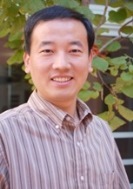
Patrick Aigner, M.Sc., is a Tutor at the Technical University of Munich , affiliated with the Professorship for Environmental Sensors and Modeling led by Prof. Jia Chen. His work focuses on urban greenhouse gas monitoring , particularly through automated measurement networks and emission inventory analysis . Research : Urban CO2/CH4 sensing, high-density sensor networks, spatial emission inventories Teaching : Tutor for Environmental Sensing and Modeling lectures and seminars Email : patrick.aigner@tum.de Research Areas include: Environmental Science : Urban climate impact assessment Atmospheric Modeling : Flux tower measurements, footprint analysis Climate Policy : Quantitative mapping of mitigation plans Air Quality Monitoring : CO/NOx co-emissions Publication Trends show collaboration across European cities (Munich, Zurich, Paris) with emphasis on high-density sensor networks , emission inventory methods , and climate verification frameworks . Key projects include ICOS Cities , MUCCnet , and SCOUT .
Dr. Aneurin "Nye" Grant is a Professor in the Department of Civil Engineering and Construction Management at the University of West Florida , where he has taught since 2010. His research focuses on Sustainable Construction , Life Cycle Assessment (LCA) , Water Conservation , and Construction Safety , with publications in journals such as Building Research and Information and Safety Science . He integrates project-based learning and field experiences into his courses. Bachelor's Degree in Social Ecology (University of California Irvine) Master’s in Urban and Regional Planning (University of Florida, 2003) Ph.D. in Construction Management (University of Florida, 2010) Dr. Grant’s research spans Urban Metabolism , Rudimentary Structures , and Alternative Building Materials , emphasizing practical applications in Developing World Building Technologies and Rapid Manufacturing. His recent publications analyze hurricane resilience, 3D-printed materials, and passive energy-efficient building strategies. He has presented at conferences like the Southern Political Science Association and CIB W099 International Conference , and his work has been featured in peer-reviewed journals including the Journal of Industrial Ecology and Water Science and Technology .
Vamvatsikos Dimitrios serves as an Associate Professor in the Department of Structural Engineering at the School of Civil Engineering, National Technical University of Athens (NTUA), maintaining active research and teaching roles in seismic engineering and structural dynamics. His work centers on risk assessment methodologies, fragility analysis, and innovative seismic protection systems for buildings and critical industrial infrastructure. His research spans seismic risk assessment of oil refineries and industrial facilities, development of advanced protection systems (including inerter devices and fiber-reinforced elastomeric isolators), and experimental validation of non-structural component performance. Key methodological contributions include probabilistic fragility curve estimation via Bayesian updating, analysis of vertical ground motion effects, and hazard-consistent risk frameworks. His work extends to cultural heritage protection and infrastructure resilience decision-support systems. Recent publications (2024-2025) demonstrate intense focus on practical industrial risk assessment, particularly for oil refineries and steel racking systems, integrating experimental shaking table tests with computational modeling to validate seismic protection strategies like nonlinear steel fuses. A growing trend incorporates sustainability-driven design principles and climate change impacts into risk assessment frameworks. Scientific Awards: No scientific awards were documented in the provided source material. Advising and Grants: No information regarding student advising, research grants, or funding sources was available in the scraped content.
Dr. C. Hendricks Brown is a Professor at Northwestern University's Feinberg School of Medicine with joint appointments in the Departments of Psychiatry and Behavioral Sciences, Preventive Medicine, and Medical Social Sciences. He holds adjunct positions at Johns Hopkins Bloomberg School of Public Health and a courtesy professorship at the University of Miami's Miller School of Medicine. Education: PhD in Social Sciences from the University of Chicago (1981) Dr. Brown's work focuses on developing innovative methodologies in implementation science and prevention research, including generalized behavioral intervention frameworks, mediational analyses, and implementation trial designs. His research spans HIV prevention, drug abuse prevention, suicide prevention, violence reduction, and addressing health disparities through scientific equity frameworks. His recent publications emphasize implementation strategies, pragmatic trial designs, and sustainability assessment of preventive interventions. He cochaired the National Academy of Sciences Forum on Children's Well-Being and serves on multiple federal advisory panels. Scientific Awards: Fellow, Society for Prevention Research (2014) Rema Lapouse Award, APHA (2004) President's Award, SPR (2002) Friend of Early Career Preventionists, SPR (2001)
Liam Kelleher is a Research Fellow at Swansea University's College of Science, specializing in microplastic pollution and clinical tool development . His work bridges environmental science and health research through advanced spectroscopic techniques . Education : BSc Physics with Nanotechnology (1.1), Swansea University (2015) PhD (Centre for Nanohealth, Swansea University) Research Interests focus on environmental microplastic dynamics, including hydrological drivers , sensor development , and clinical applications of photobiomodulation for traumatic brain injury. His projects span from Arctic monitoring to neurodegenerative disease mechanisms. Recent Projects include POLARSENSE: Polar Online Airborne Nano/Microplastic Sensing (Principal Investigator) The Plastic Brain: Micro/Nanoplastics in Cerebrospinal Fluid (Principal Investigator) ADAPT: Photobiomodulation Device for TBI (Co-Investigator)
Damiano Zanotelli serves as Professor at the Free University of Bozen-Bolzano's Faculty of Agricultural, Environmental and Food Sciences, where he conducts pioneering research on climate change adaptation in mountain agriculture. His work bridges fundamental plant science with practical solutions for sustainable food production in Alpine regions, with particular emphasis on water management and fruit tree resilience. His research portfolio centers on: Physiological responses of apple and grapevines to heatwaves and drought stress Evapotranspiration dynamics and precision irrigation systems in mountain orchards Carbon sequestration mechanisms in vineyard and orchard ecosystems Soil-plant-atmosphere interactions under climate extremes Sustainable management of mountain crop ecosystems Analysis of his 15 most recent publications (2023-2025) reveals a dominant focus on climate stressors, with 80% addressing water relations during heat events. His methodology combines isotopic tracing, multi-sensor monitoring, and computational modeling to develop practical irrigation strategies. A distinctive trend is the integration of physiological measurements (sap flow, chlorophyll fluorescence) with ecosystem-level carbon flux analysis, particularly in Italian Alpine vineyards and apple orchards. No scientific awards were documented in the available materials. Professor Zanotelli teaches six courses across bachelor's, master's, and doctoral programs including Sustainable Management of the Mountain Environment and Statistical Methods for Agricultural Research. He leads an active research group focused on water management systems for apple cultivation, as highlighted in university news regarding efficient irrigation solutions for South Tyrolean apple production. His team employs field experiments, sensor networks, and modeling approaches to optimize water use while maintaining productivity under climate change.
Magne Jørgensen serves as a Research Professor in the Department of IT Management at Simula Metropolitan, a research center operated by Simula Research Laboratory in collaboration with Oslo Metropolitan University. His work bridges academic research and practical public sector IT implementation, focusing on evidence-based solutions for digitalization challenges. His research centers on critical gaps in software project management, particularly examining human judgment biases in estimation, benefits realization frameworks for agile public sector projects, and the statistical properties of software productivity distributions. He investigates how front-end project phases impact success in Norwegian government IT initiatives and develops methods for more accurate cost-benefit analysis in digital transformation. Analysis of his 15 most recent publications reveals three dominant research trajectories: (1) Agile adaptation challenges in public sector contexts, (2) Empirical studies of productivity variation and estimation bias, and (3) Benefits management frameworks connecting technical delivery to organizational outcomes. His work consistently employs mixed-method approaches combining systematic literature reviews with Norwegian case studies. Jørgensen actively contributes to the EDOS research center at SimulaMet, collaborating with public sector agencies like NAV and the Ministry of Finance. His frequent presentations at governmental seminars (e.g., for Statsministerens kontor and Finansdepartementet) demonstrate direct policy impact, while his Norwegian-language publications target local practitioners through outlets like Magma and Stat & Styring.
Prof. Dr. Hendrik Scholz is a Professor at the Friedrich-Alexander University Erlangen-Nuremberg (FAU) , holding the Chair of Business Administration with a focus on Finance and Banking. His research spans portfolio management, performance analysis of investment funds, ESG (Environmental, Social, Governance) metrics, and capital market-oriented financial strategies. Education: University of Göttingen, Colorado College Academic Career: Habilitation at KU Eichstätt-Ingolstadt (2007), Senior Academic Councilor (2008–2009) Key research trends include ESG integration, sustainable indices, currency-hedged funds, and corporate credit spread analysis. His work combines empirical methods with machine learning, addressing market anomalies and risk management. Recent publications focus on diversity in corporate boards, fund flow dynamics, and ESG rating impacts. Collaborations with researchers like Greger, Hübel, and Webersinke highlight interdisciplinary approaches.
Jake Kraft is an Assistant Professor within the clinical program of the Department of Psychology at the University of South Dakota. He holds a PhD in Clinical Psychology from Oklahoma State University (2022) and is a Licensed Psychologist with the South Dakota Board of Examiners of Psychologists. Ph D, Clinical Psychology, Oklahoma State University, 2022 MS, Clinical Psychology, Oklahoma State University, 2019 BA, Psychology, Augsburg University, 2016 Dr. Kraft's research program focuses on documenting cognitive and physiological processes within anxiety and related disorders to better inform treatment. At the PAWS Lab (Psychophysiology of Anxiety, Worry, and Stress Lab), he employs techniques including event-related potentials, time-frequency analyses, skin conductance, electrocardiography, and heart-rate variability to capture cognitive impairments such as executive function and attention deficits. His long-term goal involves using noninvasive brain stimulation techniques like tACS to target disease-specific and transdiagnostic physiological and cognitive processes. His publication record shows a strong emphasis on anxiety disorders, particularly weather anxiety and social anxiety, with recent work examining attentional biases, emotional processing, and the influence of self-focused attention. His research integrates clinical psychology with affective neuroscience, creating a bridge between basic science and clinical applications. Dr. Kraft teaches undergraduate courses including General Psychology, Psychopathology, Research Methods, and Biological Psychology, and graduate courses such as Cognitive and Personality Assessment and Psychopathology. He also serves as a clinical supervisor for the Psychological Service Center. As director of the PAWS Lab, Dr. Kraft leads research examining the cognitive and physiological underpinnings of anxiety and stress disorders, with particular focus on how these mechanisms maintain symptoms and how they might be targeted for treatment improvement.
Rüdiger Bieler serves as Curator (Research Professor) in the Integrative Research Center at the Field Museum of Natural History, Chicago, and is a Member of the Committee on Evolutionary Biology at the University of Chicago. His dual institutional affiliation bridges museum-based organismal research with academic evolutionary biology training. His research centers on evolutionary systematics and taxonomy of marine Mollusca, particularly Gastropoda and Bivalvia, integrating morphological, paleontological, and molecular data. Key focus areas include: Development of collections-based research methodologies Large-scale specimen and data management systems Bivalve Assembling-the-Tree-of-Life (BivAToL) initiatives Coral reef restoration ecology in the Florida Keys Marine biogeography and biodiversity assessment His work frequently addresses conservation challenges through systematic frameworks. Bieler's editorial leadership includes significant contributions to PeerJ as Editor (2,100+ contributions) and involvement with WoRMS (marinespecies.org) and MolluscaBase.org. His research infrastructure development supports global taxonomic efforts through digital platforms and specimen databases. Professional leadership roles include past presidency of both the American Malacological Society and the International Society for Malacology (Unitas), reflecting his standing in the malacological community. Current service includes the WoRMS steering committee and chief editorship for MolluscaBase.org. His publication record demonstrates consistent output in marine biodiversity documentation, with recent emphasis on: Discovery of novel anatomical features in mollusks Island biogeography patterns in remote archipelagos Adaptive radiation mechanisms in marine invertebrates Integration of micro-fragmentation techniques for reef restoration Methodological innovations in species diversity estimation and mark-recapture adaptations for taxonomic work represent cross-disciplinary contributions.
Brooks Paige serves as an Associate Professor in Machine Learning at University College London's Department of Computer Science, where he leads research at the intersection of artificial intelligence, computational biology, and environmental science. His work bridges theoretical machine learning with high-impact applications in drug discovery, genomics, and climate modeling. His research portfolio spans: Machine Learning (core methodology development) Artificial Intelligence (generative models and deep learning) Information Systems (data-intensive applications) Cognitive and Computational Psychology (human-AI interaction aspects) Analysis of his 56 publications (2021-2025) reveals a dominant focus on generative modeling for molecular design, particularly protein-ligand binding prediction and antibody-epitope analysis. His methodological innovations include Gibbs sampling variants, Gaussian processes on non-Euclidean domains, and active learning frameworks, applied across biomedical and environmental domains including Arctic sea ice forecasting and urban analytics. No scientific awards are documented in available sources. Similarly, student advisement records, research grant details, laboratory facilities, and collaborative team structures remain unspecified in the current dataset.
Maria Elena Martin Cañadas is an Associate Professor at the Department of Electrical Engineering within the Barcelona East School of Engineering (EEBE) at Universitat Politècnica de Catalunya (UPC). She leads research at the SEPIC group (Power Electronics and Control Systems), focusing on renewable energy integration and power systems optimization. Research Interests: Her work spans power electronics, microgrid design, energy policy analysis, and control systems for distributed generation. Key research areas include: Regulatory frameworks for renewable energy adoption Uncertainty modeling in energy systems High-temperature heat pump technologies Economic optimization of microgrids Solar energy integration and policy analysis Publication Trends: Recent articles (2020-2025) demonstrate strong focus on regulatory impacts in energy systems, with methodologies addressing uncertainty through stochastic modeling and probabilistic analysis. Dominant themes include microgrid optimization, solar policy evolution, and decarbonization strategies for industrial applications. Student Advising & Projects: Supervised doctoral candidates include Alonso (microgrid design), Coronas (distributed generation), and El Mariachet (power quality). Actively leads competitive R&D projects such as: Decarbonization of energy-intensive industries Power quality improvement in remote systems Regulatory framework development for Latin American biogas projects Research Group: Core member of SEPIC laboratory specializing in power electronics applications for sustainable energy systems, collaborating with industrial and international partners.
Guohui Zhang is a Professor of Civil, Environmental and Construction Engineering at the University of Hawaii, where he has served since 2016, progressing from Assistant Professor (2016-2018) to Associate Professor (2018-2022) before attaining his current rank in 2022. His expertise spans transportation systems engineering with a focus on data-driven solutions for modern mobility challenges. His educational foundation includes: Ph.D. in Civil Engineering, University of Washington, Seattle (2008) M.S. in Systems Engineering, Tsinghua University, China (2003) B.S. in Control Engineering, Harbin Institute of Technology, China (2000) Professor Zhang's research integrates advanced computational methods with transportation theory across six core domains: Large-Scale Transportation Systems Modeling, Traffic Control and Operations, Sensor Data Analysis, Cyber-Transportation Security, Congestion Pricing, and Safety/Security systems. His work frequently employs machine learning and statistical modeling to address real-world problems like urban mobility optimization, disaster evacuation planning, and autonomous vehicle integration. Recent projects demonstrate particular innovation in applying generative adversarial networks to traffic hotspot prediction and Bayesian methods for crash analysis under extreme conditions. Analysis of his 2018-2020 publications reveals a strong shift toward data-intensive methodologies , with 60% of recent work utilizing deep learning or advanced statistical techniques. Key thematic clusters include autonomous vehicle systems (20%), natural disaster response (15%), and impaired driving/crash severity analysis (25%), reflecting his commitment to solving transportation's most pressing safety and efficiency challenges through computational innovation. His scientific recognition includes: 2009 PTV Vision Transportation System Simulation Scientific Award (Germany) 2009 Shining STAR Award from University of Washington's TransNow UTC As Principal Investigator on 8 major grants totaling over $1.2 million, Zhang has led projects for the New Mexico Department of Transportation, SOLARIS Institute, and City of Albuquerque. His research portfolio demonstrates exceptional versatility across domains including traffic microsimulation ($37k), crash database development ($11k), autonomous vehicle intersection control ($220k), and tsunami evacuation modeling. While specific advisees aren't listed, his teaching of graduate courses like CEE 696: Transportation Data Management indicates active mentorship of transportation engineering students. Professional leadership includes Guest Editor roles for IEEE Intelligent Transportation Systems Magazine and Transportation Research Part C , plus active committee service with the Transportation Research Board.
Professor Christopher Nemeth of Lancaster University's School Of Mathematical Sciences is a leading researcher in computational statistics and probabilistic machine learning. His work focuses on Markov chain Monte Carlo (MCMC), sequential Monte Carlo (SMC), Gaussian processes, and approximate Bayesian computation, with applications in environmental science, target tracking, and econometrics. He currently holds a UKRI Turing AI Acceleration Fellowship and leads the ProbAI research hub. Research Interests: Development of probabilistic AI algorithms for large-scale learning, state-space modeling, and intersections between sampling and optimization algorithms. Grants: £9M UKRI-EPSRC ProbAI hub (2024-2029), £1.1M Turing AI Acceleration Fellowship (2021-2026), and multiple NERC grants. Academic Roles: Turing University Academic Liaison (2023-present), Associate Editor for ACM Transactions on Probabilistic Machine Learning (2023-present), and leadership roles in the Royal Statistical Society. Supervision: Completed supervision of 7 PhD students with projects on scalable Gaussian processes, Monte Carlo methods, and network modeling.
Kenneth Backlund is an Associate Professor at the Department of Economics within the Umeå School of Business, Economics and Statistics (USBE) at Umeå University. His primary affiliation is with the Economics section and he is located at Samhällsvetarhuset, Biblioteksgränd 6, A23701 in Umeå. He holds a recognized university teacher qualification and is actively involved in the Economic Policy Network research group. His research focuses on environmental policy, sustainability frameworks, and welfare economics. Key areas include tax policy design under migration pressures, hyperbolic discounting effects on paternalistic policies, and the role of technology transfers in climate policy. He has extensively studied green taxation mechanisms, public goods provision in heterogeneous economies, and the interplay between nuclear energy policy and differential game theory. Backlund's work frequently integrates quantitative methods with normative policy analysis. His publications span topics from optimal tax systems in unionized labor markets to the theoretical foundations of green accounting in imperfect markets. Notable contributions include analyses of the Clean Development Mechanism's effectiveness and the economic implications of emigration on fiscal frameworks. He has collaborated with institutions like the Edward Elgar Publishing and has contributed to edited volumes such as Handbook Of Environmental Accounting . His research demonstrates a commitment to bridging theoretical economic models with real-world policy challenges in sustainability and public finance. Backlund can be contacted via email at kenneth.backlund@umu.se or via phone at +46 90 786 78 78 for academic inquiries related to his research or teaching activities.