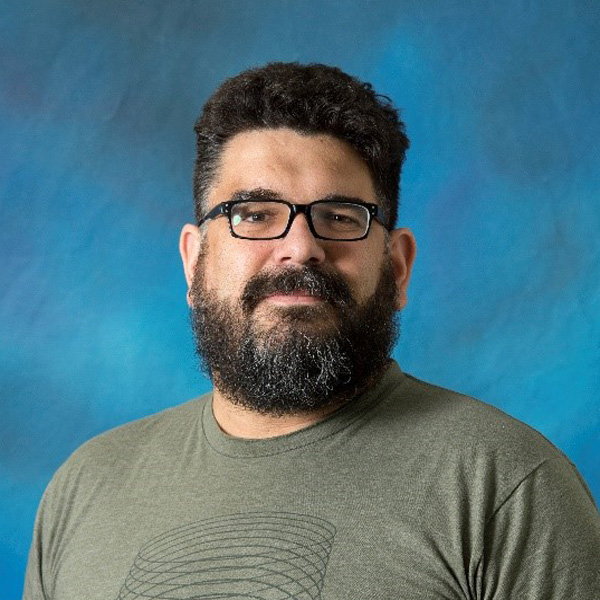
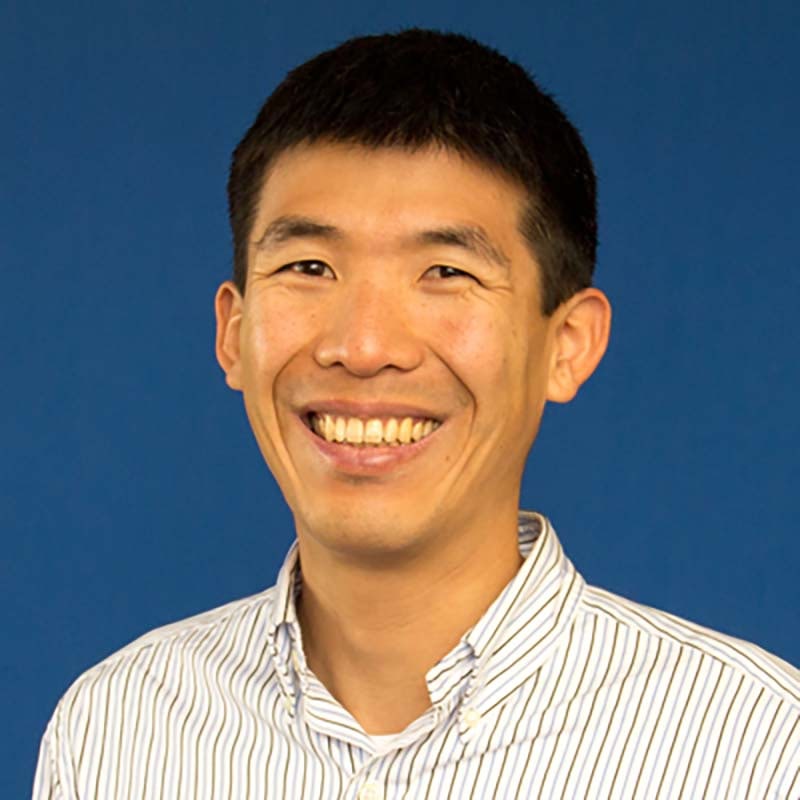
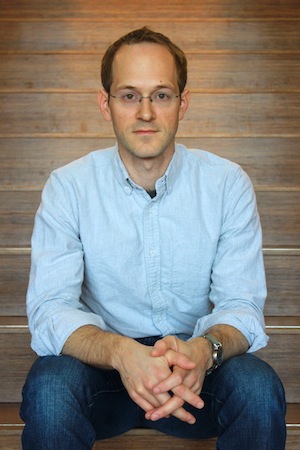
Brent Doiron is a Professor at the University of Chicago, holding appointments in the Departments of Neurobiology and Statistics, and serving on the Committee on Computational and Applied Mathematics (CCAM). His research integrates nonlinear dynamics and statistical mechanics to study neural circuit variability, focusing on mechanisms underlying neural coding and network learning through collaborations with experimentalists in sensory systems. Education: PhD in Physics (University of Ottawa, 2004) Postdoc: Center for Neural Science at New York University (2017) Previous Roles: Mathematics Professor at University of Pittsburgh (2007-2020), Co-Director of Neural Computation Program at Carnegie Mellon Neuroscience Institute Research interests center on neuronal population dynamics, recurrent circuit mechanisms, and computational neuroscience. Current work investigates correlated variability in cortical networks, inter-areal communication, and stochastic spiking models. Recent publications emphasize cortical stability/gain modulation, asynchronous/synchronous activity balance, and Bayesian inference frameworks. Key themes include sensory processing, network plasticity, and dimensionality reduction in neural coding. Scientific Awards Alfred P. Sloan Research Fellowship in Neuroscience Vannevar Bush Faculty Fellowship Chancellor’s Distinguished Research Award (University of Pittsburgh) Active grants include NIH R01 and R90/T90 awards for neuronal dynamics research and computational neuroscience training programs.
Byron Yu is a Professor in Electrical & Computer Engineering and Biomedical Engineering at Carnegie Mellon University, with affiliations to the Neuroscience Institute and Robotics Institute. He is a core faculty member of the Center for the Neural Basis of Cognition. Research focuses on computational neuroscience , neural dynamics , and brain-machine interfaces . Key contributions include dimensionality reduction techniques and neural population activity analysis. Recent publications explore topics such as neural dynamics during motor imagery, BCI optimization, and attentional processing. His work has appeared in Nature Neuroscience , Neuron , and eLife , often as cover articles. Awardees include the Gerard G. Elia Career Development Professorship and AIMBE Fellowship . His lab has mentored numerous PhD and postdoctoral researchers, many now in academic and industry leadership roles.
Andrew Childs is a Professor at the University of Maryland, affiliated with the Department of Computer Science and the Institute for Advanced Computer Studies (UMIACS). He serves as Director of the NSF Quantum Leap Challenge Institute for Robust Quantum Simulation (RQS) and is a Fellow at the Joint Center for Quantum Information and Computer Science (QuICS). His research focuses on quantum algorithms for simulating physical systems, algebraic problems, and quantum walk protocols, with applications in quantum computing and computational complexity. University of Maryland Institute for Advanced Computer Studies (UMIACS) Joint Center for Quantum Information and Computer Science (QuICS) NSF Quantum Leap Challenge Institute for Robust Quantum Simulation Childs' research spans quantum simulation, quantum Fourier transform, phase estimation, and Hamiltonian dynamics. He has developed techniques to reduce quantum computational resources for simulating quantum systems and explored limitations of quantum computers through hidden subgroup problems and non-unitary dynamics. His publications cover diverse areas including quantum walk optimization, Hamiltonian simulation methods, and applications to cryptography and condensed matter physics. Recent works address spatial search algorithms, product formulas for commutators, and quantum routing protocols. As an educator, Childs has taught courses on quantum algorithms and information processing at both the University of Maryland and University of Waterloo, with lecture notes and materials spanning multiple years. Contact: amchilds@umd.edu | Office: ATL 3359 | Affiliated with University of Maryland's quantum research institutes.
Alexey Gorshkov is an Adjunct Professor at the University of Maryland (UMD) affiliated with the Joint Quantum Institute (JQI) and the Quantum Information and Computer Science Laboratory (QuICS). His primary academic role is in theoretical physics, focusing on quantum optics, quantum information science, and condensed matter physics. He leads a research group exploring quantum magnetism with alkaline-earth atoms, driven-dissipative systems, topological matter, and strongly interacting photons. His work bridges AMO (atomic, molecular, and optical) systems with high-energy and condensed matter physics, emphasizing quantum simulation and novel quantum technologies like precise clocks and quantum computers. Education details are not explicitly listed, but his research collaborations with institutions like JQI and UMD suggest advanced academic training in theoretical physics. His research interests revolve around understanding and controlling quantum many-body systems, particularly in far-from-equilibrium scenarios, entanglement dynamics, and dissipation effects. He has contributed to studies on Rydberg atoms, quantum routing protocols, and error mitigation in quantum simulators. Recent articles highlight his work on quantum protocols for verifying speedups, time-independent information flow, and entanglement dynamics. His group's achievements include demonstrating one-dimensional anyons and developing methods for correlated noise estimation with quantum sensors. Awards and grants are not explicitly mentioned in the provided text, but his prolific publication record indicates sustained research impact. Labs and teams associated with him include the JQI and QuICS, where he collaborates on experimental and theoretical projects. Graduate student and postdoc positions are available in his group, focusing on areas like quantum magnetism and topological systems. His work often involves close ties with experimental groups, emphasizing practical applications of theoretical breakthroughs.
Royal Holloway, University of LondonUnited Kingdom
Grégoire Ithier is a Senior Lecturer in Physics at the Department of Physics, Royal Holloway, University of London. His research focuses on quantum engineering, decoherence, thermalization, mesoscopic physics, and random matrix theory. He leads the 'TypDyn' project exploring typical dynamics of embedded quantum systems, and co-leads the Leverhulme Trust-funded 'Generation and detection of quantum signals' initiative. His work bridges theoretical and experimental domains, including superconducting circuits and cryogenic microwave engineering. Ithier's research tools include advanced numerical methods (e.g., exact diagonalization) and statistical techniques (e.g., random matrix theory). Key Projects: TypDyn: Studies typical dynamics in embedded quantum systems (2015–present) QSimFP: Quantum simulators for fundamental physics (2020–2024) A new statistical theory of disordered quantum systems (2020–2024) His experimental work involves superconducting qubits, Josephson devices, and nano-superfluidic cavities. Grants include STFC and Leverhulme Trust funding. Recent publications address quantum thermalization, many-body systems, and random Hamiltonian analysis.
Daniel E. Ho holds multiple prestigious positions at Stanford University: William Benjamin Scott and Luna M. Scott Professor of Law Professor of Political Science Professor of Computer Science (by courtesy) Senior Fellow, Stanford Institute for Economic Policy Research Senior Fellow, Stanford Institute for Human-Centered Artificial Intelligence Faculty Fellow, Center for Advanced Study in the Behavioral Sciences He serves on the National Artificial Intelligence Advisory Commission (NAIAC), as Senior Advisor on Responsible AI at the U.S. Department of Labor, and as a Public Member of the Administrative Conference of the United States (ACUS). Ho earned his J.D. from Yale Law School and Ph.D. from Harvard University, completing a clerkship with Judge Stephen F. Williams on the U.S. Court of Appeals for the District of Columbia Circuit. His research bridges artificial intelligence, law, and public policy with emphasis on: Regulatory governance frameworks for AI systems Fairness and bias mitigation in algorithmic decision-making Environmental enforcement using satellite imagery and computer vision Methods for estimating racial disparities without direct demographic data Legal AI reliability and statutory research systems Analysis of his 2025 publications reveals a consistent focus on practical AI governance tools addressing real-world regulatory challenges. Key themes include developing benchmarks for legal applications, mitigating hallucination in legal AI tools, and creating systems for statutory research. His work demonstrates strong integration of technical AI methods with policy implementation, particularly in environmental enforcement and fairness assessment. As Director of the Regulation, Evaluation, and Governance Lab (RegLab), Ho leads interdisciplinary research partnerships with government agencies. While specific grant details aren't provided, RegLab's operational model indicates substantial research funding for policy-relevant AI projects. No student advisees are mentioned in available materials. Ho's leadership extends to national advisory roles where he shapes federal AI policy through evidence-based recommendations, particularly regarding environmental protection and civil rights enforcement mechanisms.
Jungsang Kim is the Schiciano Family Distinguished Professor of Electrical and Computer Engineering and Professor of Physics at Duke University. He serves as Associate Director of the Duke Quantum Center and leads the Multifunctional Integrated Systems Technology group. Quantum Computing with Trapped Ions Quantum Information Science Photonic Device Development Quantum Communication Networks His research focuses on scalable quantum information processors using trapped atomic ions and advanced photonic technologies. Key innovations include microfabricated ion traps, optical MEMS, and cryogenic systems for quantum integration. Recent publications highlight trapped ion quantum simulation, high-fidelity gate design, and photonic error mitigation. His group develops practical quantum hardware and co-founded IonQ, the first publicly traded pure-play quantum computing company. Fellow, American Physics Society (2021) Stansell Family Distinguished Research Award (2016) Fellow, National Academy of Inventors Fellow, Optica (formerly OSA) Kim's work bridges quantum physics and engineering, with over 80 patents and leadership in Duke's quantum computing initiatives. He recently stepped down as IonQ's CTO while maintaining active research and strategic roles at Duke.
Theo Damoulas is a Professor of Machine Learning at the University of Warwick with a joint appointment in the Department of Computer Science and Statistics. He is a Turing AI Fellow (2021-2026) through UK Research and Innovation, an ELLIS member, and a Visiting Professor at New York University's Center for Urban Science and Progress (CUSP). He founded and leads the Warwick Machine Learning Group and has directed major projects at The Alan Turing Institute including Project Odysseus and the London Air Quality project. Education includes: PhD in Probabilistic Multiple Kernel Learning (University of Glasgow, 2009) MSc in Informatics (Distinction, University of Edinburgh, 2004) MEng in Mechanical Engineering (1st Class, University of Manchester, 2003) His research focuses on probabilistic machine learning and Bayesian statistics, emphasizing the integration of structural priors, spatiotemporal dependencies, physical laws, and causal relationships. Key applications include Digital Twins, urban science, and computational sustainability. His work advances robust and scalable inference methodologies for complex real-world systems. Publications demonstrate strong emphasis on Bayesian methods, spatiotemporal modeling, and uncertainty quantification, with applications spanning battery modeling, urban mobility, federated learning, and causal inference. Recent work shows increased focus on physics-informed models, federated learning frameworks, and causal abstraction techniques. Major scientific awards: Turing AI Acceleration Fellowship (2021-2026) Best Paper Awards (Wilkes 2024, AISTATS 2022, IEEE ICMLA 2010) ACM SIGMOD Most Reproducible Paper (2017) Dissertation Award (Classification Society 2012) Teaching Excellence nominations (Warwick 2015-2017) He actively advises PhD students and secured significant grants including the £multi-million Turing AI Fellowship. Current doctoral researchers investigate federated learning, causal inference, and spatiotemporal modeling. He leads the Warwick Machine Learning Group, a cross-departmental team developing foundational ML methods for scientific and societal challenges.
Peter Selinger is a Professor in the Department of Mathematics and Statistics at Dalhousie University , with a cross-appointment in Computer Science. He specializes in mathematical methods in computer science, particularly quantum computing and combinatorial game theory . His work on quantum programming languages like Quipper and foundational research in category theory has garnered international recognition. Education : Ph.D. in Mathematics (University of Pennsylvania, 1997), undergraduate studies in Mathematics (Technische Universität Darmstadt). Research Interests span quantum computing, category theory, and combinatorial game theory. He has pioneered formalisms for quantum programming languages, developed categorical models for quantum mechanics, and analyzed game-theoretic structures in games like Hex. His recent work includes linear dependent type theory , quantum circuit synthesis , and combinatorial game classification . Publications demonstrate expertise in quantum programming languages, categorical semantics, and game theory. Key trends include Hamiltonian simulation , Clifford+T circuits , and monotone game realization . Scientific Honors include the Killam Professorship (2017–2022), Faculty of Science Award for Excellence in Teaching (2023), and fellowships from the Alfred P. Sloan Foundation and German National Scholarship Foundation . Students he has supervised include PhD graduates Xiaoning Bian , Francisco Rios , and Neil J. Ross , along with MSc students like Fahimeh Bayeh and Seth Greylyn . He has advised 16 postdoctoral researchers.
Kuldeep S. Meel is the Stephen Fleming Early-Career Associate Professor at the School of Computer Science, Georgia Institute of Technology, and an Associate Professor at the University of Toronto (on leave). He previously held a NUS Presidential Young Professorship at the National University of Singapore. His research focuses on automated reasoning, aiming to enable computing systems to handle uncertain real-world environments through scalable techniques integrating randomized algorithms, statistical inference, formal methods, distribution testing, and software engineering. Core research areas: Automated Reasoning, Formal Methods, Approximate Model Counting, Probabilistic Inference, Constraint Solving His research group has achieved significant recognition in both individual awards and publications. Key trends in his recent work include advancing model counting algorithms, developing frameworks for probabilistic explanations, and improving scalability in formal verification and constraint satisfaction. His tools have consistently ranked top in international competitions, demonstrating practical impact in automated reasoning. 2019 NRF Fellowship for AI 2022 ACP Early Career Researcher Award 2020 IEEE Intelligent Systems AI's 10 to Watch Top placements in Model Counting, SAT, and CAV competitions He mentors a diverse group of PhD and Master's students and collaborates with institutions worldwide. His group's publications span premier conferences in AI, formal methods, and design automation, reflecting interdisciplinary contributions to theoretical and applied computer science.
Florian Kerschbaum is a Professor and NSERC/RBC Industrial Research Chair in Data Security at the Cheriton School of Computer Science, University of Waterloo. His research focuses on data security and privacy, applied cryptography, and confidentiality in data science. Research interests span data collection/preparation management, secure multi-party computation, homomorphic encryption, differential privacy, and machine learning robustness/privacy. His work develops cryptographic solutions for practical data management challenges in distributed systems.
University of Illinois Urbana-ChampaignUnited States
Naresh R. Shanbhag is the Jack Kilby Professor in the Department of Electrical and Computer Engineering and the Coordinated Science Laboratory at the University of Illinois at Urbana-Champaign. He serves as Director of the Systems on Nanoscale Information fabriCs (SONIC) Center and held the D.J. Gandhi Distinguished Visiting Professorship at IIT Mumbai from 2015-2020. Previously, he was a visiting faculty member at National Taiwan University (2007) and Stanford University (2014). Dr. Shanbhag received his doctorate from the University of Minnesota (1993) in Electrical Engineering. From 1993 to 1995, he worked at AT&T Bell Laboratories as the lead chip architect for AT&T's 51.84 Mb/s transceiver chips over twisted-pair wiring for Asynchronous Transfer Mode (ATM)-LAN and very high-speed digital subscriber line (VDSL) chip-sets. His research focuses on the design of energy-efficient machine learning, communications, and signal processing systems on resource-constrained embedded platforms. He explores fundamental trade-offs between energy efficiency, latency and accuracy of decision-making systems implemented in nanoscale technologies, with applications to computer vision, biomedicine, automatic target recognition, and imaging. His work spans four primary focus areas: Resource-efficient Machine Learning for the Edge, In-memory Computing (IMC), Energy-efficient High Data Rate Communications, and Shannon-inspired Statistical Error Compensation (SEC). Analysis of his recent publications reveals a strong emphasis on in-memory computing architectures (SRAM, MRAM, RRAM) for machine learning acceleration. His work consistently addresses energy-accuracy trade-offs, with increasing attention to security aspects of hardware implementations and applications to MIMO signal processing and edge AI systems. His research demonstrates a progression from theoretical foundations to practical silicon implementations. 2024 Semiconductor Research Corporation Innovation Award 2018 Semiconductor Industry Association/Semiconductor Research Corporation University Researcher Award 2018 IEEE International Symposium on Circuits and Systems Best Paper Award 2006 IEEE Fellow 1996 National Science Foundation CAREER Award Professor Shanbhag has mentored over 50 graduate students who now work at leading technology companies including Qualcomm, Amazon, Nvidia, Intel, and Apple. His research has been generously supported by the National Science Foundation, DARPA, AFRL, Semiconductor Research Corporation, Texas Instruments, Sandia National Laboratories, and industry partners including IBM, GlobalFoundries, and Intel Corporation. He led the Alternative Computational Models research theme (2006-2012) and was the founding Director of the SONIC Center (2013-2017), a 5-year multi-university center funded by DARPA and SRC. Currently, he leads research themes in the SRC and DARPA funded JUMP 2.0 Program's Center for Co-Design of Cognitive Systems and the Center for Ubiquitous Connectivity, and in the NSF IUCRC Center for Advanced Semiconductor Chips with Accelerated Performance (ASAP). As Director of the Systems on Nanoscale Information fabriCs (SONIC) Center, Professor Shanbhag leads a multidisciplinary team exploring novel computing paradigms for the nanoscale era. His group has benchmarked an extensive collection of in-memory computing and digital accelerator IC designs, maintaining a publicly available IMC benchmarking repository of metrics extracted from published IC prototypes. His research philosophy integrates concepts from information theory, statistical signal processing, detection and estimation, VLSI architectures, and digital and analog integrated circuits to develop energy-efficient systems from algorithms to silicon implementations.
Massachusetts Institute of TechnologyUnited States
Aram Harrow is a Professor of Physics at the Massachusetts Institute of Technology (MIT) , affiliated with the MIT Center for Theoretical Physics and MIT Center for Quantum Engineering . He focuses on quantum information science and quantum algorithms , with additional interests in representation theory and optimization . His recent work explores quantum computing applications in chemical physics and statistical mechanics . Undergraduate and graduate degrees in Physics at MIT Faculty positions: MIT (2013-present), University of Washington (2010-12), University of Bristol (2005-10) Research Interests: His work bridges quantum information theory and many-body physics , including: Quantum algorithm design for chemistry and optimization Quantum circuit complexity and t-designs Entanglement dynamics in quantum systems Quantum-classical hybrid computing models Key Publications: Recent articles demonstrate quantum speedups for biomolecular free energy calculations , Hamiltonian simulation , and jet clustering algorithms . His research combines quantum complexity theory with practical implementations on near-term quantum devices. Scientific Awards: 2023 Simons Investigator 2018 APS Bennett Award 2017 IEEE Best Paper Award 2016 Kavli Frontiers Fellow Mentorship: He advises current PhD students Shankar Balasubramanian , Angus Lowe , and Norah Tan , with 12 former advisees including Anand Natarajan and Saeed Mehraban . His 2026 recruitment seeks one new graduate student.
John D. Murray is the Gregg L. Engles Associate Professor of Psychological and Brain Sciences at Dartmouth College and an Adjunct Associate Professor of Psychiatry at Yale School of Medicine. He holds a PhD in Physics from Yale University (2013) and a BS in Physics and Mathematics from Yale (2006). His research focuses on computational neuroscience and computational psychiatry, with secondary appointments in Physics and Neuroscience at Yale until 2023. His work integrates computational modeling, neuroimaging, and systems neuroscience to study decision-making processes, cortical organization, and psychiatric disorders. Collaborators include prominent researchers like Dr. John Krystal and Dr. Anticevic. Research interests include hierarchical brain organization, neuroimaging analysis techniques, and pharmacological effects on neural circuits. His lab (Murray Lab) develops computational tools like PsychRNN for cognitive task modeling. Notable contributions include linking transcriptomic data to neuroimaging patterns and modeling LSD’s effects on brain topography. He has been featured in YaleNews and Nature Communications for innovations in mapping mental illness variability and neural circuit dynamics. Grants and collaborations span translational neuroscience, addiction, and PTSD research through partnerships with Yale’s Center for Biomedical Data Science and VA National Center for PTSD. His interdisciplinary approach bridges physics, computer science, and clinical psychiatry to advance understanding of brain function and dysfunction.
Holger Fröning is a full professor at Heidelberg University’s Institute of Computer Engineering (ZITI), where he leads the Hardware and Artificial Intelligence (HAWAII) Lab. His research focuses on embedded machine learning , high-performance computing , and hardware-software co-design , with emphasis on resource efficiency, power optimization, and emerging architectures like analog , photonic , and resistive memory systems. He has held leadership roles including Managing Director of ZITI (2023–present) and Dean of Studies for Computer Science (2019–2022) , and has collaborated with institutions such as NVIDIA Research, Chinese Academy of Sciences, and Graz University of Technology. Research Trends : His recent publications explore Bayesian neural networks , green machine learning , analog computing noise mitigation , and GPU/FPGA optimization . Articles highlight photonic computing for AI , memory-efficient training , and hardware-aware DNN compression . Scientific Awards : 2025 HiPEAC Paper Award (Nature Computational Science) 2014 Google Faculty Research Award Multiple Best Paper Awards (IPDPS, ICPP, ECML-PKDD workshops) Leadership & Service : Organized workshops (WEML, ITEM, F4HD), chaired tracks at EuroPar and ISC, and served on program committees for ICPR, ECAI, and FPL. Education & Affiliations : PhD and MSc from University of Mannheim (2007/2001). Sponsors include DFG, FWF, FFG, NVIDIA, SAP, and XILINX.