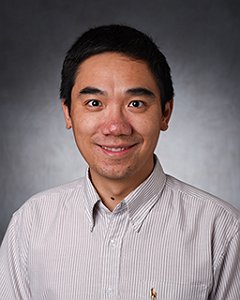
Mariano Scazzariello is a Lecturer at KTH Royal Institute of Technology, Sweden, affiliated with the School of Electrical Engineering and Computer Science and the Department of Network and Systems Engineering. He teaches the course 'Network Systems with Edge or Cloud Datacenters (IK2227)'. His research focuses on advanced networking topics including machine learning in networks, high-speed packet processing, network emulation, and software-defined networking innovations. His work spans contributions to network emulation tools like Kathará and Megalos, stateful packet processing at terabit scales, and leveraging large language models (LLMs) for network configuration and vulnerability detection. Recent research emphasizes low-latency protocols (e.g., SRv6/DetNet integration) and GPU-centric networking on commodity hardware. Mariano’s publications (2020–2025) highlight expertise in network function virtualization, ASIC-based switching, and optimizing network configurations through AI-driven approaches. He has pioneered frameworks for evaluating routing protocols and virtualizing large network scenarios at scale.
Monika Henzinger is Professor at the Institute of Science and Technology Austria (ISTA), heading the research group of Theory and Applications of Algorithms. She also serves as Vice President for Technology Transfer at ISTA since 2024. Previously, she held professorships at the University of Vienna (2009-2023) and EPFL, Switzerland (2005-2009), was Director of Research at Google (1999-2005), and served as Assistant Professor at Cornell University. Professor Henzinger's research centers on efficient algorithms and data structures with three main thrusts. First, she investigates dynamic settings where program inputs are repeatedly updated, seeking solutions faster than restarting computations. Second, she develops privacy-preserving algorithms that add minimal noise to protect input data while maintaining efficiency. Third, she translates theoretically optimal algorithms into practical implementations for dynamically changing inputs. Her work consistently addresses resource conservation in data processing, particularly computing time and memory space, while exploring the theoretical limits of possible savings. Henzinger's recent publications (2024-2025) reveal strong trends in dynamic algorithms, differential privacy, and graph theory. Her research consistently bridges theoretical computer science with practical applications, focusing on algorithms that adapt to changing inputs while preserving computational efficiency and data privacy. She has made significant contributions to problems like dynamic matching, minimum cut computation, and privacy-preserving data analysis across various domains. Professor Henzinger has received numerous prestigious awards and honors: Wittgenstein Award (2021) Two ERC Advanced Grants (2014, 2021) Carus Medal of the German Academy of Sciences Leopoldina (2019) SIGIR Test of Time Award Fellow of the Association of Computing Machinery (2016) Member of the Austrian Academy of Sciences (2017) CAREER Development Award of the National Science Foundation Best paper Award at the Symposium on Discrete Algorithms (2024) Professor Henzinger currently advises PhD students Bardiya Aryanfard, Antoine El-Hayek, and Roodabeh Safavi Hemami, along with postdocs Anamay Chaturvedi and Niklas Hahn. Her research is supported by multiple significant grants including an ERC Advanced Grant for 'Design and Evaluation of Modern, Fully Dynamic Data Structures,' the FWF Wittgenstein Prize, and the WEAVE Project on 'Static and dynamic hierarchical graph decompositions.' She also serves as Principal Investigator for the FWF project 'Fast algorithms for a reactive network layer,' providing substantial funding for her innovative work in algorithms and data structures. Professor Henzinger leads the Theory and Applications of Algorithms research group at ISTA, which focuses on developing practical algorithms for dynamic environments. Her team investigates resource conservation in data processing, specializing in dynamic algorithms that efficiently handle changing inputs, privacy-preserving algorithms that minimize noise while protecting data, and translating theoretical algorithms into practical implementations. The group maintains a strong presence in theoretical computer science through regular publications in top conferences and journals, and collaborates extensively with institutions worldwide to advance algorithmic research.
Professor Wayne Luk is a Professor of Computer Engineering at the Department of Computing, Faculty of Engineering, Imperial College London. He leads the Programming Languages and Systems Section and the Custom Computing Research Group, and directs the EPSRC Centre for Doctoral Training in High-performance Embedded and Distributed Systems and the Centre for Advanced Financial Engineering. He previously served as a Visiting Professor at Stanford University from 2006 to 2009. His research spans FPGA acceleration, quantum computing, deep learning optimization, and algorithm-hardware co-design, with affiliations to the CRUK Convergence Science Centre and the Engineering Secure Software Systems group. His research interests include computational modeling for particle physics, causal discovery in agent-based systems, and high-throughput digital electronics. Notable contributions include FPGA-accelerated algorithms for neural networks, quantum circuit simulation, and Bayesian optimization frameworks. His work emphasizes practical applications of reconfigurable hardware in fields like medical imaging, high-energy physics, and financial systems. Professor Luk is a Fellow of the Royal Academy of Engineering, IEEE, and BCS. His publications focus on advancing hardware-aware machine learning, FPGA-based acceleration techniques, and scalable design methodologies. His research bridges theoretical computer science with applied engineering, addressing challenges in real-time systems, embedded computing, and next-generation computing architectures. His academic leadership includes directing interdisciplinary centers and training programs, fostering collaboration across computing, engineering, and physics. Current projects explore quantum computing tools, causal inference systems, and high-performance graph neural networks for particle physics applications.
Olav Tirkkonen serves as a Full Professor in the Department of Communications and Networking at Aalto University, Finland, a position he has held since August 2006. He leads the Communication Theory research group, driving innovation in wireless communication systems. His academic journey includes a distinguished career spanning industry and academia, with significant contributions to 3G, 4G, and 5G technologies. His educational qualifications are: Doctor of Science (Ph.D.) in Theoretical Physics, Helsinki University of Technology, 1994 Master of Science (M.Sc.) in Theoretical Physics, Helsinki University of Technology, 1990 Professor Tirkkonen's research interests are centered on wireless communications, with a focus on physical layer processing, coding theory, and quantum information processing. His group explores advanced topics including 5G and beyond wireless networks (spectrum management, large-scale MIMO, ultra-reliable low-latency communication), network-level interference coordination, collaborative caching, machine learning applications for wireless channel geography, coding on manifolds, and quantum communication systems. This research bridges fundamental theory with practical implementation in next-generation wireless networks. Analysis of his recent publications (2024-2025) indicates a predominant focus on machine learning techniques for wireless channel modeling (channel charting), pilot allocation in MIMO systems, and quantum error correction. His work is instrumental in addressing key challenges in 5G/6G networks, particularly in scenarios demanding ultra-reliability, low latency, and efficient resource utilization. His scientific contributions include: Co-inventor of approximately 80 families of patents and patent applications Co-author of the book "Multiantenna transceiver techniques for 3G and beyond" Throughout his career, Professor Tirkkonen has mentored numerous graduate students and secured substantial research funding from various sources. His industry experience at Nokia Research Center (1999-2010) and visiting position at Cornell University (2016-2017) have enriched his research perspective and fostered strong industry-academia collaborations. The Communication Theory group, under his leadership, maintains active collaborations with leading institutions and companies worldwide, positioning Aalto University at the forefront of wireless communications research.
Andrew Rice is a Professor of Computer Science at the University of Cambridge's Department of Computer Science and Technology, and holds the Hassabis Fellowship in Computer Science. He is also the Director of Studies in Computer Science at Queens' College. His research focuses on programming languages, software engineering, and machine learning applications in software development. He leads projects like Isaac Computer Science and ALTA (Automated Language Teaching and Assessment), advancing adaptive learning technologies. His work includes static analysis tools such as Error Prone at Google, energy efficiency studies in computing infrastructure, and contributions to the Computing for the Future of the Planet initiative. His teaching emphasizes practical skill development through flipped classrooms and video lectures, earning him the 2014 Pilkington Prize for teaching excellence. He has held visiting roles at Google and collaborated on energy consumption research for mobile devices and data centers. His research spans systems, networking, and natural language processing, with a strong focus on applying computational methods to real-world challenges. Key Projects: Isaac Physics/Computer Science, ALTA, Error Prone Static Analysis Research Themes: Programming Languages, Machine Learning, Energy Efficiency Awards: Pilkington Prize (2014)
Westley Weimer is a Professor in the Department of Electrical Engineering and Computer Science (EECS) at the University of Michigan, College of Engineering. He teaches advanced courses such as EECS 590 (Advanced Programming Languages) and EECS 481 (Software Engineering), and has previously taught at the University of Virginia. His research integrates software engineering, programming languages, and cognitive science, focusing on automated program repair, program analysis, and the neuroscience of code comprehension. University: University of Michigan School: College of Engineering Department: Department of Electrical Engineering and Computer Science Academic Rank: Professor His research interests include automated program repair (e.g., GenProg), software quality, cognitive modeling of programming, neuroimaging studies of code review, and the application of medical imaging to software engineering. He explores deep questions at the intersection of consciousness, time, and computation, advocating for interdisciplinary approaches to understanding the mind through programming behavior. The most recent publications reflect a trend toward empirical and cognitive studies in software engineering, combining automated repair with human factors, neuroimaging (fMRI, TMS), and real-world software challenges. Themes include bias in code review, programming under cognitive influences, and the neurological basis of code comprehension. His work increasingly bridges computer science with psychology, neuroscience, and social science. Scientific awards include multiple Distinguished Paper Awards at ICSE, FSE, and ESEC/FSE, Best Paper and Runner-up awards, and several 10-Year Most Influential Paper Awards from ASE, GECCO, POPL, and ASPLOS, recognizing the lasting impact of his contributions to automated software repair and program analysis. He has advised numerous PhD and Master’s students, many of whom have gone on to faculty positions or industry research roles. He contributes to academic service through organizing diversity and inclusion initiatives, maintaining graduate career resources, and promoting ethical and inclusive practices in computing. He leads a vibrant research group focused on improving software quality through both technical and human-centered innovations, with ongoing projects in automated repair, cognitive modeling, and secure systems.
Matteo Maffei is a Full Professor at TU Wien, leading the Security and Privacy group. He joined in 2017 after 11 years at Saarland University's CISPA. He holds a Ph.D. in Computer Science from Ca’ Foscari University of Venice (2006). He coordinates the TU Wien Cybersecurity Center, the SecInt Doctoral School, and the FWF Special Research Program SPyCoDe. His research focuses on formal methods for security and privacy, blockchain technologies, and web security. Roles: Full Professor, Coordinator of TU Wien Cybersecurity Center, Module Head of Christian Doppler Lab for Blockchain Technologies (CDL-BOT), Board Member of Vienna Cybersecurity and Privacy Research Cluster (ViSP). His work emphasizes formal verification of cryptographic protocols, smart contracts, and decentralized systems. Key achievements include ERC Advanced (2024) and Consolidator (2018) Grants, and leadership roles in conferences like IEEE Computer Security Foundations Symposium (CSF). Research Interests: Formal methods, smart contracts, blockchain scalability, web security, privacy-preserving protocols, and decentralized systems. His recent projects include optimizing Lightning Network channels, secure multi-hop payments, and AI-driven robustness verification. Publications: Over 200 publications in top venues like CCS, IEEE S&P, and CRYPTO. Recent work includes advancements in blockchain interoperability (e.g., Alba bridges), light client protocols (Blink), and neural network verification techniques. Grants & Awards: ERC Advanced Grant (2024), ERC Consolidator Grant (2018), DFG Emmy Noether Fellowship (2009). Led projects funded by EU Horizon, FWF, and industry partners like ABC Research GmbH. Advising & Labs: Supervised over 20 PhD/Master theses. Active in the Christian Doppler Lab for Blockchain Technologies and the SPyCoDe SFB. Collaborates with institutions like SBA Research and Stanford University.
Deepak Ganesan is a Professor at the Manning College of Information and Computer Sciences (CICS) at the University of Massachusetts Amherst. His research focuses on low-power sensing and communication, networked systems, and machine learning applied to pervasive health monitoring and societal challenges. PhD, Computer Science, University of California, Los Angeles (2004) MS, Computer Science, University of California, Los Angeles (2000) BTech, Computer Science, Indian Institute of Technology, Madras (1998) Ganesan's work bridges wireless sensor networks, smart textiles, and healthcare applications. He designs ultra-low-power wearable devices for tracking health signals like drug use, smoking, and cognitive performance, often integrating machine learning for robust detection. His research emphasizes societal impact, particularly in aging and Alzheimer's care through the Massachusetts AI and Technology Center for Connected Care (MassAITC) and the Center for Personalized Health Monitoring (CPHM). Recent publications highlight innovations in edge-cloud collaboration, fabric-based sensors, and longitudinal health analytics. His NIH-funded MD2K Center for Excellence and affiliations with the Center for Data Science and Computational Social Science Institute further underscore his interdisciplinary approach. ACM Fellow NSF CAREER Award (2006) IBM Faculty Award (2008) UMass Junior Faculty Fellow (2008) UMass Lilly Teaching Fellow (2009) Best Paper at CHI 2013 Best Paper Runner-up at Mobicom 2014 Honorable Mentions at Ubicomp 2013 Ganesan leads the SENSORS: Wireless Sensor Networks Group and contributes to global initiatives like the Internet of Battlefield Things. His work spans academic research, industry partnerships, and policy development in AgeTech and digital health.
Alexander Summers is an Associate Professor at the Department of Computer Science , University of British Columbia . He joined UBC in March 2020 after serving as a Senior Researcher (Oberassistent) at ETH Zurich from 2014-2020. His research bridges Programming Languages , Formal Methods , and Software Engineering , with a focus on automated verification tools for heap-based and concurrent programs. MSc Joint Mathematics and Computer Science, Imperial College London (2004) PhD Computer Science, Imperial College London (2009) Postdoc, ETH Zurich (2009-2014) Summers leads the Prusti Project , developing deductive verification tools for Rust, and contributes to the Viper Project for intermediate verification languages. His work addresses challenges in: Memory safety and concurrency verification Ownership models and aliasing control Automated reasoning with SMT solvers Resource-oriented programming specifications Debugging verification condition quantifiers Formal validation of verification infrastructure His research has been recognized with a Amazon Research Award and ACM SIGPLAN Distinguished Paper Awards . He teaches courses like Advanced Software Engineering and Program Verifiers and Program Verification , and supervises graduate students in formal verification and Rust-related research.
Shiva Nejati is a Professor at the University of Ottawa 's School of Electrical Engineering and Computer Science . He holds a PhD in Computer Science from the University of Toronto and previously worked as a Senior Scientist (2012-2019) and Scientist (2009-2012) at the SnT Centre (University of Luxembourg) and Simula Research Laboratory. Research focus: Software engineering for cyber-physical systems (autonomous vehicles, IoT), blending formal verification, machine learning, and search-based testing Key tools developed: ARIsTEO, SOCRaTEs, SimCoTest, EPIcuRus Editorial roles: Associate Editor for EMSE Journal (2025–), ASE Journal (2025–), IEEE Transactions on Software Engineering (2020–2024) His work combines formal methods , empirical software engineering , and AI/ML to address verification challenges in complex systems, particularly through evolutionary algorithms and surrogate modeling . Notable collaborations include industry partners in telecommunications, automotive, and aerospace sectors. Recent publications emphasize large language models for requirements analysis, adversarial testing of vision systems, and multi-objective optimization for test generation. His Sedna Research Lab actively trains graduate students in these cutting-edge methodologies.
Natalie Enright Jerger is a Professor in the Department of Electrical and Computer Engineering at the University of Toronto's Faculty of Applied Science and Engineering. She holds the Canada Research Chair in Computer Architecture and serves as Director of the Division of Engineering Science (2023-2028). Previously, she was the Percy Edward Hart Professor (2016-2019). She received her B.S. in Computer Engineering from Purdue University (2002), and M.S./Ph.D. in Electrical Engineering from University of Wisconsin-Madison (2004/2008). Her research focuses on: Multi/many-core architectures and on-chip networks Cache coherence protocols and memory hierarchy optimization Approximate computing and sustainable systems Intermittent computing for energy-harvesting devices Hardware acceleration for machine learning Her publications demonstrate strong emphasis on networks-on-chip (NoC) innovations, including routing algorithms, deadlock handling, power-efficient designs, and topology optimizations. Recent work expands into approximate computing, mobile architectures, and ML-driven hardware design. Major Awards: Fellow of Engineering Institute of Canada (2023) McLean Senior Fellow (2019) IEEE Micro Top Picks (2016) ACM/IEEE Microarchitecture Hall of Fame (2015) Sloan Research Fellowship (2015) Canada Research Chair (current) Distinguished Scientist, ACM Fellow, IEEE She leads the NEJ research group and collaborates with industry partners including Intel, AMD, Qualcomm, and IBM. Her work is funded by NSERC, CFI, and industrial grants. She co-chaired ASPLOS 2023 and HPCA 2014, and actively promotes diversity through WICARCH and ACM initiatives.
Teddy Mekonnen is an Orlando Bravo Assistant Professor of Economics at Brown University's Department of Economics. Previously, he was a Linde Postdoctoral Fellow at Caltech (California Institute of Technology). He holds a PhD in Economics from Northwestern University (2017) and a BA in Economics with a Mathematics minor from Washington University in St. Louis (2011). His research focuses on information economics and mechanism design, particularly studying informational externalities, incentives for information acquisition/sharing, and their applications to industrial organization and political economy. He also explores decision theory and static/dynamic settings. Teaching responsibilities include courses such as ECON 1110 (Intermediate Microeconomics), ECON 2060 (Microeconomics II), and ECON 2970 (Workshop in Economic Theory). His recent research spans topics like search market efficiency, competition dynamics, and Bayesian comparative statics. Though no explicit grants or awards are listed, his work reflects deep engagement with theoretical and applied economic problems.
Gang (Gary) Tan is a Professor at the Pennsylvania State University's College of Engineering, specializing in computer security, formal methods, and programming languages. He co-directs the Institute for Networking and Security Research (INSR) and leads the Security of Software (SOS) Group, focusing on compiler, programming language, and formal method techniques to enhance computer security. Education: B.E. in Computer Science from Tsinghua University Ph.D. in Computer Science from Princeton University His research integrates formal verification with practical security applications, particularly emphasizing: Compiler-based security enforcement Side-channel mitigation in speculative execution Fairness analysis in machine learning systems Formal grammar approaches for software reliability Key article trends show: Security-focused formal methods (15% of publications) ML fairness verification (20% of recent work) Compiler-based security solutions (30% of output) Side-channel defense mechanisms (25% of research) Parser design and formal grammar synthesis (10% of contributions) Scientific achievements include: NSF CAREER Award Google Research Awards (2x) PLDI 2024 Best Paper James F. Will Career Development Professorship Outstanding Research Award at Penn State Ruth and Joel Spira Excellence in Teaching Award Dr. Tan actively contributes to academic communities through: DARPA ISAT study group membership Program committee roles (CGO 2024, ECOOP 2018, etc) Leadership in security research initiatives
Michael Pyrcz is a Professor in the Hildebrand Department of Petroleum and Geosystems Engineering and holds the rank of Associate Professor in the Jackson School of Geosciences at the University of Texas at Austin. He is the recipient of the B. J. Lancaster Professorship in Petroleum Engineering and the George H. Fancher Centennial Teaching Fellowship in Petroleum Engineering. His research focuses on subsurface data analytics, geostatistics, and machine learning applications in energy systems and CO2 sequestration. Pyrcz teaches widely, including through online lectures and GitHub workflows, and has authored over 50 peer-reviewed publications and a textbook on spatial data analytics. His work integrates machine learning with geoscience challenges, such as uncertainty quantification in reservoir modeling and CO2 storage site evaluation. He leads initiatives in energy data analytics through the Freshman Research Initiative and collaborates with industry on workflow development. Key research areas include generative AI for subsurface models, stochastic methods for fracture networks, and anomaly detection in geologic monitoring. Education: Background in petroleum engineering and geosciences (details not explicitly provided). Grants/Advising: Extensive industry collaboration and mentorship roles at Chevron prior to UT Austin. Labs/Teams: Maintains active GitHub repositories (GeostatsGuy), YouTube lecture series (GeostatsGuyLectures), and social media outreach (X/GeostatsGuy).
Dimitris Mitropoulos is an Assistant Professor at the National and Kapodistrian University of Athens (NKUA) in the Department of Business Administration, where he teaches courses on Distributed Ledger Technologies, Data Security and Privacy, Algorithms and Business Analytics, and Introduction to Programming. He also serves as Head of the Reliability Engineering Directorate at the National Infrastructures for Research and Technology (GRNET), Greece's national research and education network organization. Previously, he was a Postdoctoral Researcher in the Computer Science Department at Columbia University. Dr. Mitropoulos received his Ph.D. degree in Secure Software Development Technologies from the Athens University of Economics and Business (AUEB) in 2014. His doctoral research was supported by the Heracleitus II Scholarship, co-financed by the European Union and Greek national funds. He is a member of prestigious professional organizations including ACM, IEEE, and USENIX. Dr. Mitropoulos conducts pioneering research at the intersection of software engineering and cybersecurity, with particular expertise in secure software development, vulnerability analysis, and blockchain security. His work spans multiple dimensions of software security including code injection attacks, infrastructure as code security, smart contract analysis, and dependency management in software ecosystems. His research methodology combines static and dynamic analysis techniques with empirical studies of real-world software systems, particularly focusing on Java, Python, and Solidity ecosystems. His recent work has made significant contributions to understanding security vulnerabilities in modern software development practices and infrastructure management. Dr. Mitropoulos has received numerous prestigious awards for his research contributions, including the Research Excellence Award from NKUA (2025), Distinguished Paper and Artifact Awards at PLDI '22, Best Data Showcase Award at MSR 2018, and multiple postdoctoral research funding scholarships. His work on "Finding typing compiler bugs" was recognized with both Distinguished Paper and Artifact Awards at PLDI '22, highlighting the significance and reproducibility of his research. He has also received recognition for his service to the academic community, including a Certificate of Appreciation from ESEC/FSE '21 for his contributions to conference organization. Dr. Mitropoulos has been actively involved in securing research funding and leading significant research projects. He currently serves as Principal Investigator for the SecOPERA project (2023-Today), funded by the European Commission under Horizon Europe. Previously, he contributed to several major EU and US-funded projects including eSSIF-Lab (2019-2022), FASTEN (2019-2022), PRIViLEDGE (2018-2021), CERTCOOP (2017-2020), PANORAMIX (2016-2019), and TREDISEC (2016-2018). His research has been supported by diverse funding sources including the European Commission's Horizon 2020 program, the National Science Foundation, and the Defense Advanced Research Projects Agency (DARPA). Dr. Mitropoulos plays an active role in the international research community through various leadership positions. He serves on program committees for top-tier conferences including OOPSLA (2026), ICSE (2026), ESEC/FSE (2025), and ISSTA (2025). He has previously served as Workshop Co-Chair for ISSTA 2025 and Student Volunteer Chair for ESEC/FSE 2021. His contributions to mentoring the next generation of researchers include serving as a mentor for the ICSE Student Mentoring Workshop (2022) and supervising Google Summer of Code projects (2017).