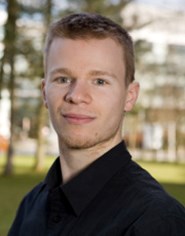
Joel Nyholm is a Researcher at Halmstad University 's School of Information Technology , Department of IT - Computer Department . His research focuses on Computer Science , specifically Software Engineering and Static Analysis of Energy Efficiency in software systems. He works on an ELLIIT-sponsored project exploring this domain. Joel's work aligns with subfields such as Programming Languages and Formal Methods , though no detailed information is available on his publications, students, or awards.
Håkan Hjalmarsson is a full Professor at the KTH Royal Institute of Technology , affiliated with the Division of Decision and Control Systems within the School of Electrical Engineering and Computer Science . He serves as examiner for advanced-level degree projects in Computer Science , Electrical Engineering , and Systems Engineering , while also contributing as assistant, course manager, and teacher for Control Engineering courses. Research focus on Control Theory , System Identification , and Data-Driven Control Expertise in Optimal Experiment Design , Sparse Estimation , and Bayesian Methods Active in Industrial Applications including bioprocess optimization and network control His recent publications (2024-2025) emphasize finite-time regret minimization , sparse system identification , dynamic programming exploration , and Bayesian approaches to control problems. Key subfields include linear quadratic control , Markov parameter estimation , Wiener-Hammerstein models , and metabolic network identification . He has no listed scientific awards in the provided data.
Konstantinos Sagonas is a Senior Lecturer/Associate Professor at Uppsala University's Department of Information Technology. His work bridges theoretical and practical aspects of computer science, focusing on concurrency, formal verification, and functional programming in Erlang. Despite his self-identification as a "terrible e-mail responder," he encourages phone contact for direct communication. University: Uppsala University Department: Department of Information Technology Academic Rank: Senior Lecturer/Associate Professor His research spans from stateless model checking and dynamic partial order reduction for concurrent systems to static analysis and type systems in functional programming. Recent work explores IoT protocol testing via fuzzing and symbolic execution, fine-grain memory coherence for security, and automated detection of state machine bugs in network protocols. Key publication trends include formal methods (2024: "Testing IoT Protocol Requirements"; 2023: "Tailoring Stateless Model Checking for Event-Driven Programs") and concurrent data structures (2021: "Lock-free Contention Adapting Search Trees"). Earlier contributions focus on Erlang optimization (2002-2018) and logic programming tabling (1999-2006).
Sandro Stucki is a Lecturer in the Department of Computer Science and Engineering at Chalmers University of Technology. He has previously worked as an applied scientist at Amazon and as a postdoctoral researcher at Chalmers University of Technology and the University of Gothenburg. He completed his doctoral studies at the Programming Methods Laboratory (LAMP) at EPFL under the supervision of Professor Martin Odersky. His research focuses on programming languages, with particular interest in formal methods, type systems and theory, and the semantics and implementation of domain-specific languages. He applies formal methods and type theory to problems in privacy and security, investigates type safety of Scala and related type systems, and develops type soundness proofs using Agda. His work also includes designing domain-specific languages for modeling probabilistic and stochastic systems, especially biochemical systems. He has contributed to the Scala ecosystem by developing a GNU/Emacs mode for Kappa, a modeling language for systems biology. His recent publications demonstrate strong expertise across programming language theory, formal verification, privacy-preserving systems, and applications in systems biology. His work bridges theoretical foundations with practical applications, particularly in the Scala programming language ecosystem. Stucki is actively involved in academic service, having served on program committees for numerous conferences including ECAI, GPCE, NWPT, and as a steering committee member for the Scala Symposium series. He has also organized several academic events, including the Scala Symposium 2016. He currently teaches courses on Data Science and AI, Fundamentals of Program Development, and Neuro-symbolic AI at Chalmers/Gothenburg University, and has previously taught courses on Parallel Functional Programming, Principles of Concurrent Programming, and Types and Programming Languages.
Peter Göransson is a Professor at the Royal Institute of Technology (KTH) in Stockholm, Sweden, affiliated with the School of Engineering Sciences, Department of Aeronautical and Vehicle Engineering. His research focuses on numerical modeling of coupled acoustic and vibration phenomena, with a particular emphasis on finite element modeling of dissipative mechanisms and efficient computational methods for highly damped, layered structures. He serves as an examiner for the Degree project in technical acoustics (SD211X) and as course coordinator and teacher for Numerical Methods for Acoustics and Vibrations (SD2175). Dr. Göransson's research spans over three decades, beginning with groundbreaking work in the early 90s on the Noise Attenuation for Launchers project (funded by ESA estec), which resulted in 3D large-scale models for ARIANE 4 and 5 with satellites' dynamic properties included. He has participated in more than 10 EU research projects, including the ASANCA projects which developed a full-scale 3D model of a Saab 340 aircraft cabin, and the BRAIN project which advanced elastoacoustic modeling of fibrous porous materials. In 2006, he expanded his research to sustainable design through the Center for ECO2 Vehicle Design, focusing on multifunctional structural components optimized for contradictory requirements like structural load-bearing capacity combined with acoustic performance at minimal weight, complexity, cost, and environmental impact. His most recent research directions include inverse methods for characterizing anisotropic solid materials, micro-to-macro-based modeling of poroelastic cellular materials, acoustic metamaterials based on modified cell geometries, topology optimization of structures under multifunctional constraints, and life cycle-based energy optimization methods. His publication record shows a clear progression from fundamental computational methods to applied research with increasing emphasis on sustainability and multifunctional design. The articles demonstrate expertise spanning computational acoustics, structural dynamics, metamaterials, and sustainable vehicle design, with particular strength in wave propagation analysis, parameter identification techniques, and optimization of complex multilayer structures. ESA-funded Noise Attenuation for Launchers project (early 90s) EU-funded ASANCA projects (full-scale aircraft cabin modeling) EU-funded BRAIN project (elastoacoustic modeling) Center for ECO2 Vehicle Design (established 2006) COST Action DENORMS participation Dr. Göransson has established himself as a leading researcher in computational vibroacoustics, with significant contributions to both theoretical developments and practical applications in aerospace, automotive, and sustainable design. His work bridges fundamental computational methods with real-world engineering challenges, particularly in noise and vibration control for complex systems. He continues to push the boundaries of computational methods for acoustics and vibrations while increasingly focusing on sustainable design methodologies and novel metamaterials for vibration and noise control applications.
Jonas Lundberg is a Senior Lecturer in Computer Science at Linnaeus University since 2000, holding a Ph.D. in Theoretical Physics (Umeå University, 1994) and a second Ph.D. in Computer Science (Linnaeus University, 2012). He teaches foundational and advanced courses in programming, machine learning, and compiler design. His research focuses on data-intensive computing, program analysis, and cross-disciplinary projects like the Nordic Tweet Stream (NTS), analyzing social media data from Nordic countries. He leads the Computer Engineering program and participates in CDIO initiatives. Education: Ph.D. in Theoretical Physics, Umeå University (1994) Ph.D. in Computer Science, Linnaeus University (2012) Research interests include machine learning applications in software engineering, program analysis techniques for large codebases, and digital humanities projects leveraging big data. He co-founded the DISA research center (2016) to address challenges in data collection, analysis, and utilization. Recent work involves developing memory-efficient program analysis frameworks and detecting anti-democratic discourse in social media. Key projects include managing the Master's program in Computer Science and advancing self-adaptive systems engineering. His contributions span 70+ publications in venues like IEEE Transactions, Journal of Systems and Software, and conferences such as SAC and DHN. He is affiliated with research groups like Data Intensive Software Technologies (DISTA) and co-leads the Nordic Tweet Stream initiative. His work bridges computational methods with humanities, emphasizing real-time data analysis and cross-disciplinary collaboration.
Alexandru Dura is a Doctoral Student and Researcher at the Department of Computer Science, Faculty of Engineering, Lund University. He is affiliated with the ELLIIT initiative (Linköping-Lund) on IT and mobile communication and serves as a Profile Area Member for AI and Digitalization at LTH. His work bridges theoretical program analysis with practical software development needs through declarative approaches. His research focuses on static program analysis, bug pattern detection, and declarative specification languages, with emphasis on incremental evaluation techniques. Key contributions include developing Clog for C static code checkers and JavaDL for Java bug pattern detection, which optimize analysis efficiency through automatic incrementalization. His fingerprint highlights expertise in Syntactics (100%), Pattern Matching (90%), and Specification Languages (50%). Recent publications demonstrate a clear trend toward fully declarative frameworks that simplify static analysis tool development while maintaining performance. His work addresses real-world challenges in program verification, particularly for performance-critical systems where traditional analysis methods become computationally prohibitive. Dura leads the active dissertation project "Performance bug detection through combined static and dynamic program analysis" (funded since October 2018), collaborating with Professor Carl Reichenbach. This research integrates multiple analysis techniques to identify subtle performance issues in software systems.
Görel Hedin is a Professor at the Department of Computer Science, Lund University, within the Faculty of Engineering, LTH. She holds key roles including Deputy Head of Department, Assistant Head of Department, and Project Manager, while leading the Software Development and Environments (SDE) division. Her affiliations include ELLIIT (Linköping-Lund IT initiative) and the Wallenberg Autonomous Systems Program (WASP). She actively contributes to UN Sustainable Development Goals through technology-driven solutions. Teaching includes courses such as EDAN65 Compilers and EDAN70 Project in Computer Science, where she supervises compiler-related projects. Her research spans object-oriented languages, domain-specific language design, generative implementation techniques, static analysis frameworks, and pervasive systems. She emphasizes agile methodologies and secure communication in healthcare and IoT contexts. Research interests include: Advanced compiler optimization Tooling for software development environments Live program analysis techniques Adaptive developer tool interactions Integration of static analysis into code analysis Cyber-physical system development She has been honored with awards such as the Distinguished Artifact and Paper Awards in 2024 for her work on fixed-point attributes and the Best Demonstration Award in 2020 for healthcare IoT contributions. Her advising includes supervision of doctoral candidates like McCabe and Kuang. Key grants involve leadership in the Swedish Foundation for Strategic Research-funded ADAPT2 project and initiatives on cloud-based language tooling. She also manages projects like Explainable Declarative Programming Analysis and Cloud Tooling for Cyber-Physical Systems. As the Head of the SDE division, she drives research in software development tools and methodologies. Her involvement extends to editorial roles at ACM SIGPLAN conferences and chairing the AITO Dahl Nygaard Prize committee.
Alexandre Bartel is a Professor at Umeå University's Department of Computing Science and a member of the Research Management Group Software at the Wallenberg AI, Autonomous Systems and Software Program (WASP). His primary research focuses on software engineering and computer security, with particular emphasis on Java vulnerabilities, Android security, and cryptographic systems. His recent publications highlight trends in Control Flow Integrity (CFI) adoption Java deserialization attacks Android malware detection using BERT Blockchain wallet security JVM fuzzing for type confusion Secure development practices As head of the Software Engineering and Security research group, he contributes to advancing security methodologies for complex software systems, particularly in collaboration with European research initiatives.
Jonas Skeppstedt is a Senior Lecturer in the Department of Parallel Systems at Lund University's Faculty of Engineering. His research focuses on Computer Science and Parallel Processing. Institution: Lund University School: Faculty of Engineering Department: Parallel Systems Research Interests span multiple domains in computer science: Heuristics for optimizing computational processes Parallel Processing architectures and implementation Compiler design and optimization techniques Dataflow programming models Publications reflect his expertise in code optimization and parallel systems. Contact: jonas.skeppstedt@cs.lth.se
Daniel Varro is a Professor and Head of Unit at the Department of Computer Science (IDA) of Linköping University, Sweden. He leads the Software and Systems (SAS) department, focusing on AI, software engineering, and cyber-physical systems. His research is supported by major grants like the Vinnova 5.6 million SEK project for AI-generated software quality assurance. Affiliation: Department of Computer Science (IDA), Linköping University Department: Software and Systems (SAS) Research Focus: Model-based systems, large language models for code analysis, reinforcement learning, and cyber-physical safety verification. His recent work includes empirical studies on machine learning notebooks, infrastructure code smells, and data leakage in large language models. He collaborates extensively within the Wallenberg Autonomous Systems Program (WASP) and trains doctoral students in software engineering.
Karl Meinke is a Professor at KTH Royal Institute of Technology, where he serves as Head of the Computer Science Department and Head of the Division of Theoretical Computer Science within the School of Electrical Engineering and Computer Science. His research focuses on applying machine learning techniques to software testing, particularly for safety-critical systems like autonomous vehicles and embedded systems. His research interests span machine learning, software testing, safety critical systems, embedded systems, autonomous driving, digital pathology, and graph neural networks. Meinke has developed innovative approaches like Learning-Based Testing that combine machine learning with formal methods for system validation. His work bridges theoretical computer science with practical applications in automotive systems and medical diagnostics. His recent publications show a strong trend toward applying graph neural networks to diverse domains including program analysis, digital pathology, and autonomous vehicle testing. His research demonstrates a consistent focus on solving the test oracle problem and generating meaningful test cases for complex systems where traditional testing approaches fall short. Meinke actively collaborates with Karolinska Institutet (KI), indicating interdisciplinary work between computer science and medical research. He is responsible for Masters level education in software testing at KTH and serves as examiner for several advanced courses including Degree Projects in Computer Science and Software Reliability. His research group has developed tools like LBTest for learning-based testing of reactive systems, and he has secured funding for projects such as the ITEA3 Testomat Project focused on next-level test automation. His work has significant implications for validating autonomous systems where safety is paramount. Meinke leads research in using machine learning to address fundamental challenges in software testing, particularly for systems where traditional test oracles are unavailable or impractical. His approach of combining active learning with formal specifications has created new pathways for validating complex cyber-physical systems.