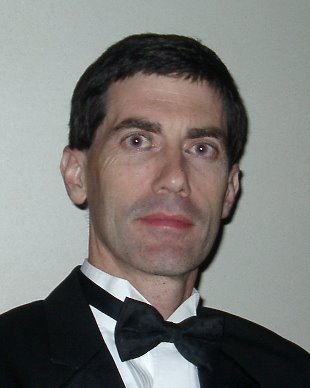
Edgar Weippl is a Professor at the Faculty of Computer Science, University of Vienna, where he serves as Vice Dean and Head of the Research Group Security and Privacy. His work spans cybersecurity, blockchain, and machine learning, with teaching roles in information security and software security courses. Current Positions: Vice Dean (Faculty of Computer Science), Head (Security and Privacy Research Group), Deputy Head (Neuroinformatics & Knowledge Engineering Groups) Research Interests: Cybersecurity, blockchain, IoT security, code obfuscation, privacy technologies, reinforcement learning, and socio-technical systems security Selected Publications: Focus on blockchain privacy, VoWiFi security, code obfuscation, and reinforcement learning applications
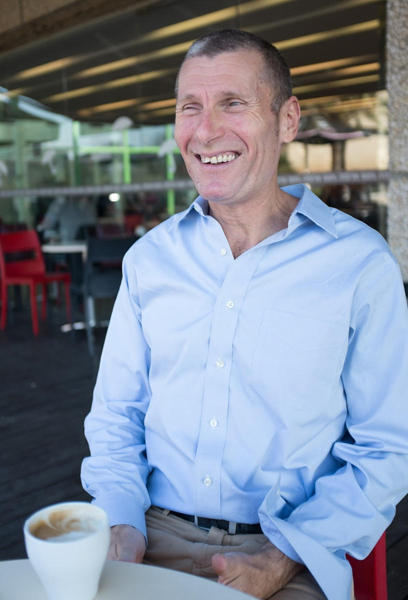
Alex X. Liu is a Professor in the Department of Computer Science & Engineering at Michigan State University (2016-2022), currently serving as Chief Information Security Officer and President of Midea Software Engineering Institute. His academic career includes roles as Associate Professor (2012-2016) and Assistant Professor (2006-2012) at the same institution. He holds a Ph.D. and M.S. in Computer Science from The University of Texas at Austin, and a B.S. in Computer Science from Jilin University, China. Education Ph.D. in Computer Science (UT Austin, 2006) M.S. in Computer Science (UT Austin, 2002) B.S. in Computer Science (Jilin University, 1996) Liu's research focuses on Dependable computing , Networking algorithms , Cloud computing , Mobile computing , Privacy computing , and Computer/network security . His work spans secure systems, network protocols, and resource optimization in distributed environments. Recent publications address quantum neural networks , microservices autoscaling , RFID tag recognition , network traffic classification , and hybrid physical-layer authentication , demonstrating expertise at the intersection of AI and network security. Key trends include deep learning applications for cloud systems and robust security protocols. Scientific Awards IET Fellow (2021) IEEE Fellow (2019) ACM Distinguished Scientist (2019) Withrow Distinguished Scholar Awards (Senior 2019, Junior 2011) NSF CAREER Award (2009) IEEE & IFIP William C. Carter Award (2004)
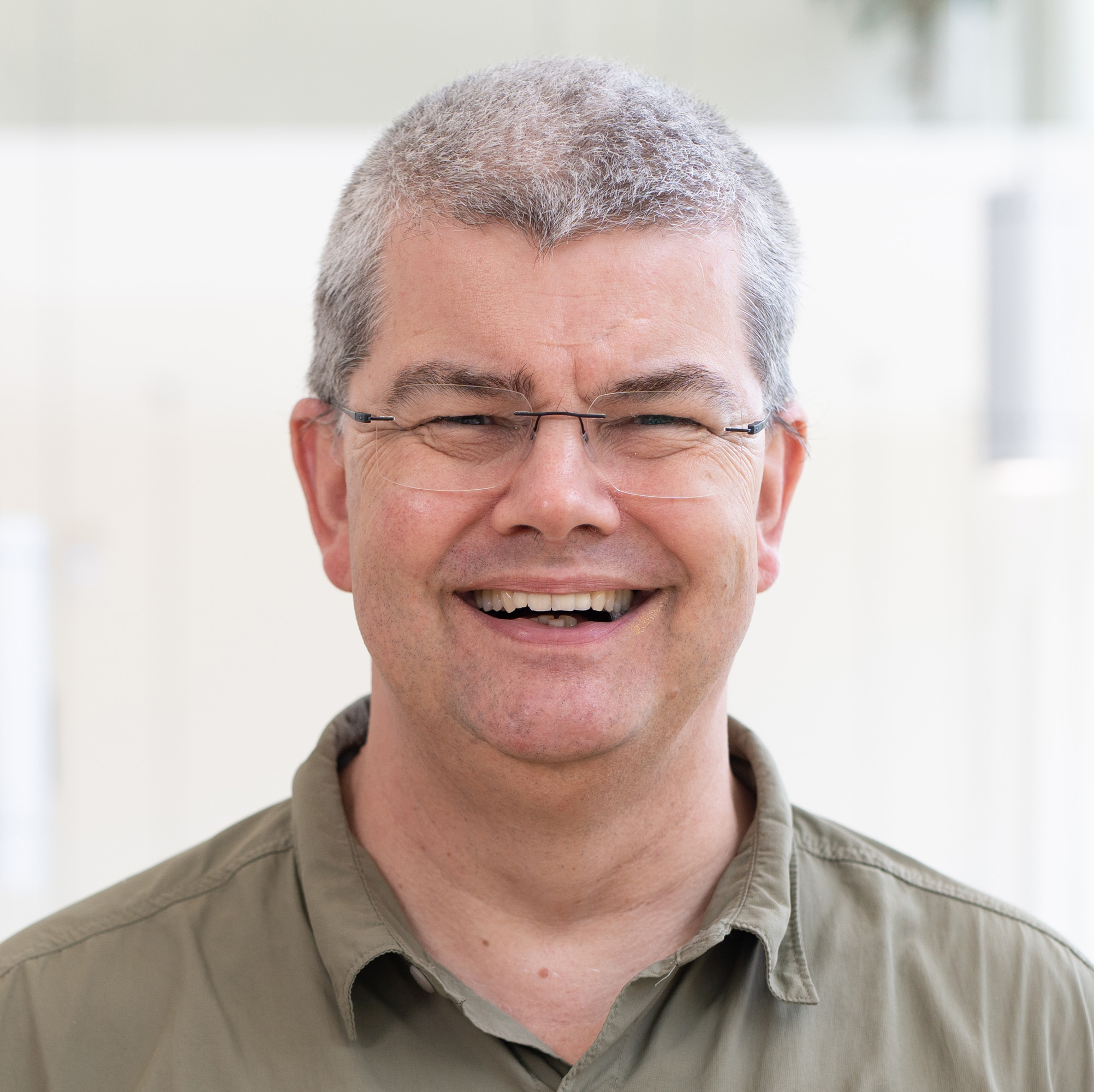
Patric Genfer is a researcher in the Faculty of Computer Science specializing in Software Architecture with a focus on microservice systems. His work combines static code analysis , component modeling , and repository mining to address architectural challenges in distributed systems. Active in microservice architecture and code-model consistency Co-developed detector-based abstraction frameworks for architectural evolution Published in top venues like Empirical Software Engineering and ECSA Recent research includes security tactics in microservice APIs and metric visualization for software portfolios . He received two major awards: the Best Paper Award (2021) and Distinguished Open Artifact Award (2024). Collaborates with experts like Uwe Zdun, Cesare Pautasso, and Wilhelm Hasselbring. Scientific Awards: Best Paper Award (2021) Distinguished Open Artifact Award (2024) Participated in international conferences (ECSA 2024, WICSA 2021) and presented work on data exposure prevention and software quality metrics in microservice environments.
M. Anton Ertl is an Associate Professor at TU Wien's Faculty of Informatics, Department of Compilers and Languages. His roles include teaching courses such as 'Compilers,' 'Efficient Programs,' and 'Stack-based languages.' He specializes in compiler back-ends, Forth, interpreters, programming languages, operating systems, and computer architectures. Ertl's research focuses on optimizing interpreters, compiler design, and hardware security, particularly addressing vulnerabilities like Spectre. His research interests span interpreter performance, compiler optimization, and Forth language evolution. Recent work includes exploring hardware-based Spectre mitigation, decompilers for Gforth, and stack-based language efficiency. He actively contributes to the EuroForth conferences as an editor and presenter. Ertl supervises students on topics like compiler construction, reverse engineering, and interpreter optimization. His academic contributions include over 50 publications, with a focus on virtual machine performance, compiler back-ends, and Forth-related advancements. He is a key figure in the Gforth project and regularly teaches advanced courses on programming languages and computer systems.
Jürgen Cito is an Associate Professor in the Department of Software Engineering at the Faculty of Informatics, TU Wien, where he leads research in probabilistic programming, security, and configuration management. His work is supported by major grants from the Austrian Science Fund (FWF), European Commission, and Meta Platforms, Inc., with active projects spanning 2022-2027. His research focuses on the intersection of software engineering and machine learning, particularly in static analysis of probabilistic programs, AI-driven penetration testing, and infrastructure security. Key contributions include identifying secret exposure in configuration files, grammar inference for ad hoc parsers, and performance prediction from source code, often combining empirical studies with tool development. Analysis of his 15 most recent publications (2020-2024) reveals three dominant trends: (1) Security vulnerabilities in configuration management systems, especially secret leakage in dotfiles; (2) Application of large language models to offensive security testing; and (3) Machine learning techniques for performance prediction and AutoML optimization in software contexts. Cito has supervised 22 Master's students on cutting-edge topics including AI security, infrastructure as code, and program analysis. His current research portfolio includes: Types4Strings (FWF, 2024-2027): Type systems for string processing Cloud Open Source Research Mobility Network (EU, 2023-2026): Open-source cloud infrastructure Software Assistants for Probabilistic Programming (Meta, 2022-2026): AI tools for probabilistic code He is embedded in TU Wien's Institute of Software Technology and Interactive Systems (E194), collaborating on cross-institutional projects focused on software security and developer tooling, with particular emphasis on empirical validation of security practices and configuration management systems.
Georg Simhandl is affiliated with the Faculty of Computer Science, specifically within the Research Group Software Architecture. His work focuses on advancing theoretical and practical aspects of software engineering with a strong emphasis on cybersecurity, microservices, and empirical studies. Research Interests: His core research spans Microservices Architecture , Cybersecurity in Software Systems , Formal Methods , and Empirical Software Engineering . He investigates topics such as secure firmware updates, threat modeling for microservices, and developer cognition in system maintenance. Recent work highlights include leveraging TPMs for cryptographic anchoring and analyzing how dataflow diagrams enhance security analysis. Activities: He has presented at conferences like the ACM SIGPLAN International Conference on Software Language Engineering (SLE '24) and participated in workshops such as the IEEE/ACM International Workshop on Eye Movements in Programming (EMIP). His research bridges theoretical frameworks with practical software development challenges. Labs/Teams: Works within the Research Group Software Architecture, contributing to projects on secure architecture design and empirical evaluation of software practices.
Jens Knoop is a Full Professor at TU Wien, leading the Department of Information Systems Engineering (E194) and the Research Unit Compilers and Languages (E194-05). His roles include Head of Institute for Information Systems Engineering and membership in the Curriculum Commission for Informatics. He specializes in compiler design, program analysis, and embedded systems, with a focus on worst-case execution time (WCET) analysis and formal methods. His research interests span optimizing compilers, programming languages, and real-time computing. Notable contributions include the Platin tool suite for WCET analysis and contributions to the T-CREST project on time-predictable multi-core architectures. He has authored and edited multiple influential publications, including proceedings of international conferences such as Code Generation and Optimization (CGO) and ARCS. Professor Knoop has supervised numerous theses, including works on effect systems in Haskell, mutation testing in Rust, and robotic systems. He has received the Most Influential PLDI Paper Award (2002) for foundational work in compiler optimization.
Markus Böck is a PreDoc Researcher at the Software Engineering department of Technische Universität Wien (TU Wien), Austria. His academic work focuses on the intersection of software engineering and machine learning , particularly in performance prediction and probabilistic program analysis . He contributes to automated code analysis and intelligent software systems research. Role: PreDoc Researcher Department: Software Engineering, TU Wien Contact: markus.h.boeck@tuwien.ac.at His research explores: Language-agnostic static analysis of probabilistic programs Context-dependent performance prediction from source code Interactive machine learning systems for software engineering Distributional reinforcement learning applications Code-based performance modeling Program analysis for probabilistic systems Key publication trends include: Advancing probabilistic program analysis (2024-2025) Performance prediction techniques (2022-2023) Reinforcement learning innovations (2020-2022) Application of machine learning to software engineering challenges Game theory algorithm optimization (2025)
Jakob Bleier is a PreDoc Researcher at the Institute of Security and Privacy, part of the Faculty of Informatics at Technische Universität Wien. His work focuses on mobile and IoT security, with an emphasis on Android and iOS application analysis, malware lifecycle assessment, and reverse engineering techniques. He contributes to projects such as IoTIO (2020–2025) and W4MP (2023–2027), addressing challenges in software attribution and cross-platform security. Research Interests: Mobile application security (Android/iOS) Static and dynamic malware analysis Binary code analysis and disassembly IoT security and exploit lifespan quantification Software attribution and provenance tracking His publications highlight advancements in cross-platform app comparison, Android disassembly evaluation, and IoT malware lifecycle studies. He has supervised diploma theses on topics like framework identification in Android apps and PII leakage analysis in IoT companion apps. Current Projects: IoTIO: Investigating IoT security and privacy challenges W4MP: Exploring mobile security methodologies SPFBT: Security in pervasive and future networks
Matteo Maffei is a **Professor** at TU Wien's Institute of Computer Engineering, part of the Security and Privacy research group. His work focuses on blockchain security, cryptographic protocols, and decentralized systems. He has contributed to formal verification of smart contracts, payment channel networks, and web security mechanisms. Recent research includes analyzing vulnerabilities in web session integrity, optimizing Lightning Network protocols (e.g., Thora, Sleepy Channels), and developing privacy-preserving coin mixing services. Education: PhD in Computer Science (details not specified) Affiliations: TU Wien's Security and Privacy Research Group Labs/Teams: Network Lab (affiliated with TU Wien) Research Interests: Cryptography and its applications to blockchain systems Secure decentralized protocols (e.g., payment channels, smart contracts) Formal methods for verifying system security properties Publications emphasize practical security solutions for blockchain scalability (e.g., atomic multi-channel updates) and privacy (e.g., coin mixing services). His work bridges theoretical cryptography with real-world implementations, addressing vulnerabilities in widely used protocols like Bitcoin and Ethereum. Grants/Advising: Supervised over 15 graduate students on topics including blockchain analysis, static code verification, and privacy-preserving systems. Notable advisees include Aron Wussler (Post-Quantum Cryptography), Martin Schweighofer (Ethereum contract analysis), and Nikolas Haimerl (Terra Network tracing).
Thomas W. Reps is a Professor in the Department of Computer Science at the University of Wisconsin, holding the position since 1985. He has served as President and Co-founder of GrammaTech, Inc. since 1988, and held visiting roles including Guest Professor at the University of Paris 7 (2007-08), Visiting Researcher at CNR in Pisa, Italy (2000-01), and Guest Professor at the University of Copenhagen (1993-94). He previously served as Associate Chairman of the Computer Sciences Department at Wisconsin (1990-93) and held postdoctoral roles at Cornell University and INRIA. Reps' research spans programming languages, software engineering, and computer security, with a focus on static program analysis, machine-code analysis, and program slicing. His work in model checking, software maintenance, and analysis techniques for information security has significantly impacted the field of computer science. 2017 ACM SIGPLAN Programming Languages Achievement Award 2015 WARF Named Professorship 2005 ACM Fellow 2000 Guggenheim Fellowship 1986 NSF Presidential Young Investigator Award Reps' publications highlight advancements in interprocedural dataflow analysis, weighted pushdown systems, and symbolic computation. His work bridges theoretical foundations with practical applications in software verification and security, creating tools that have shaped modern program analysis techniques. He has collaborated extensively with researchers like Somesh Jha, Mooly Sagiv, and Gogul Balakrishnan across institutions in Europe and the U.S.
Prof. Sagiv Shmuel is a Full Professor at Tel-Aviv University's Department of Computer Science. He has held various academic roles, including Associate Professor (2004–2005), Senior Lecturer (2000–2004), and visiting positions at institutions such as the University of Chicago and University of Copenhagen. His research focuses on software verification, shape analysis, smart contracts, and programming languages. Education: Ph.D. in Computer Science, Technion (1986–1990) B.A. in Computer Science, Technion (1982–1985), cum laude Research Interests: His work addresses challenges in static analysis, formal verification, and program analysis. Notable areas include invariant inference, smart contract security, and parametric shape analysis. These contributions have led to practical tools like Ivy and the foundation of Certora, a company specializing in smart contract verification. Awards: ACM Fellow (2016) Friedrich Wilhelm Bessel Research Award (2002) Microsoft Outstanding Collaborator Award (2016) Grants & Leadership: Principal Investigator (PI) of a Senior ERC Grant (1.57M Euros) for software composition verification Editor of Foundations and Trends in Programming Languages Chair of program committees for POPL, SAS, and other leading conferences His research has been applied to real-world systems, such as improving the Java concurrent library and ensuring kernel extension security in Linux.
Prof. Maria Christakis is a full professor at TU Wien's Faculty of Informatics, leading the Rigorous Software Engineering Group and the Software Engineering Research Unit. Her research focuses on developing reliable software tools and improving developer productivity through formal methods, automatic test generation, and program analysis. She holds a PhD from ETH Zurich and a diploma from the National Technical University of Athens. Her work bridges verification and systematic testing, with notable contributions to fuzzing, static analysis, and neural network certification. Key projects include tools like Harvey (smart contract fuzzer), DeepSearch (neural network attack framework), and Nomos (specification language for machine learning models). Her research has received awards including the Best Presentation Award at FSE'20 and a Distinguished Paper Award at ICSE'16. She advises multiple PhD and master's students and teaches courses in advanced software engineering and formal methods. Current projects explore green fuzzer benchmarking, compositional smart contract verification, and testing code translation models. Grants: Austrian Science Fund (FWF) doctoral school on Automated Reasoning Labs/Teams: Rigorous Software Engineering Group, Software Engineering Research Unit
Engin Kirda is a researcher at the Department of Distributed Systems , Vienna University of Technology . His work focuses on Network Security , Malware Detection , and Web Security , with a particular emphasis on Malware Analysis , XSS Prevention , and Botnet Detection . He has led and contributed to projects such as WOMBAT , SECoverer , and SysSec , funded by entities like the Austrian Research Promotion Agency (FFG) and the European Commission . Research Areas : Network Security, Malware Analysis, Web Application Vulnerabilities Key Projects : WOMBAT (2008–2011), SECoverer (2008–2011), SysSec (2010–2014) His publications highlight advancements in automated malware analysis , phishing detection , and web spam mitigation . He has mentored students in topics including Android security , CSV Attack Prevention , and Malware Threat Landscapes .
Andreas Zeller is a Full Professor of Computer Science at Saarland University and a faculty member at CISPA Helmholtz Center for Information Security in Germany. His research focuses on software engineering, automated debugging, and software testing/analysis, with foundational contributions like Delta Debugging and the SZZ algorithm. He has held academic positions since 2001 and leads projects funded by ERC grants, including the 'Semantics of Software Systems (S3)' initiative. Education: Ph.D. in Computer Science (1997, focused on software versioning). Research interests include mining software repositories, input grammar inference, fuzzing, and open science practices. He has authored influential papers (e.g., 'Mining Software Histories to Guide Software Changes' with over 1,700 citations) and interactive textbooks like The Fuzzing Book and The Debugging Book . Key awards include ACM Fellow (2010), ERC Advanced Grants (2011, 2023), and multiple 10-Year Most Influential Paper Awards. His group at CISPA/Saarland includes PhD students and postdocs working on testing, debugging, and security.