Bruce A. Markell is a Professor of Bankruptcy Law and Practice and Edward Avery Harriman Lecturer in Law at Northwestern University Pritzker School of Law. Formerly a U.S. Bankruptcy Judge and academic at Florida State, Indiana, and Harvard, he specializes in bankruptcy, commercial law, and cross-border insolvency. He consults for the IMF on insolvency issues and drafted Kosovo’s bankruptcy law. Education: BA, Pitzer College JD, University of California, Davis Markell’s research focuses on bankruptcy equity, fraudulent transfers, and comparative bankruptcy systems. His work bridges judicial practice, legislative reform, and international cooperation, emphasizing practical applications in corporate reorganization and small business insolvency. Recent publications analyze fraudulent transfer laws, cross-border Chapter 15 recognition, and equitable mootness. He contributes to Collier on Bankruptcy and co-authors casebooks on contracts and secured transactions. Scientific Awards: 2022 Lawrence P. King Award (Commercial Law League of America) Markell co-founded the NITA-trained faculty for the Advanced Consumer Bankruptcy Practice Institute and serves on the editorial advisory board of Collier on Bankruptcy . His IMF consultancy spans missions to Ireland, Kosovo, and Greece, influencing global insolvency frameworks.
Brett Smith is an Associate Professor in the UWA Business School at the University of Western Australia, affiliated with the School of Social Sciences and the Planning and Transport Research Centre (PATREC). His research focuses on transport planning, land use analysis, and choice modeling, with emphasis on autonomous vehicles, public transport policy, and gig economy workers' rights. He holds roles including UWA Research Representative on PATREC's Research Committee and Centre of Business Data Analytics Research Fellow. Education details are not explicitly listed in the text, but his professional roles and research output demonstrate advanced expertise. His research interests span micro-economic analysis, experimental design, and policy evaluation, with notable contributions to Perth's transport modeling and strategic planning. He has led over AU$2 million in industry-funded grants, including projects on e-rideables, working-from-home impacts, and land use-transport integration. His research has influenced state policies, such as public transport fare restructuring and strategic transport modeling updates. Awards include the Lyndsay Oxlad Best Paper Award and Eric Pas Dissertation Prize. He supervises students in areas like blockchain in food transparency and AV adoption, and teaches courses in business analytics and data-driven decision-making. Key Projects: Transport Mode Choice Development (PATREC, $80k) Impacts of e-Rideables (PATREC, $92k) Working from Home Transport Demand Modeling (i-Move CRC, $260k) Labs/Teams: PATREC, Centre of Business Data Analytics, and collaborations with global institutions like Leeds University and Czech Republic’s Transport Research Centre.
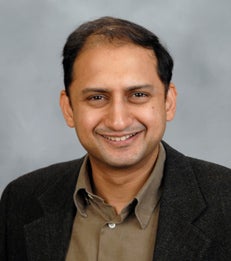
Viral V. Acharya is the C.V. Starr Professor of Economics in the Department of Finance at New York University Stern School of Business. He is a Research Associate at the National Bureau of Economic Research (NBER), a Research Affiliate at the Center for Economic Policy Research (CEPR), and a Research Associate at the European Corporate Governance Institute (ECGI). He previously served as Deputy Governor of the Reserve Bank of India (2017–2019), with responsibilities in monetary policy, financial markets, and financial stability. He is currently Director of Doctoral Education at NYU Stern (2025–), Advisor to the NYU Stern Henry Kaufman Initiative on Financial History (2023–2026), and a Scientific Advisor to the Sveriges Riksbank (2024–). He is also a member of the Climate-related Financial Risk Advisory Committee (CFRAC) of the Financial Stability Oversight Council (2023–2026), the Bellagio Group, and the Financial Advisory Roundtable of the Federal Reserve Bank of New York. Education: B.Tech. in Computer Science and Engineering, Indian Institute of Technology, Mumbai (1995) Ph.D. in Finance, New York University Stern School of Business (2001) His research focuses on systemic risk, financial regulation, sovereign and financial linkages, credit and liquidity risk, and the macroeconomic implications of financial frictions. He has also recently explored risks related to pandemics and climate change. His recent publications examine commercial real estate exposure in banks, spillover risks from non-banks, U.S. Treasury market dynamics, and industrial policy in India. The body of work consistently emphasizes financial stability, regulatory design, and the interaction between public policy and financial markets. Scientific Awards: Alexandre Lamfalussy Senior Research Fellowship, Bank for International Settlements (2017) Inaugural Banque de France – Toulouse School of Economics Junior Prize (2011) Senior Houblon-Norman Research Fellowship, Bank of England (2008) Clarivate Analytics Highly Cited Researcher (2020–2022) Acharya has held numerous editorial and leadership roles, including Editor of the Journal of Law, Finance and Accounting (2014–2016, 2020–), member of the Editorial Committee of the Annual Review of Financial Economics (2022–), Board Member of the American Finance Association (2024–), and Director of the Western Finance Association (2012–2015). He has served as an Academic Advisor to multiple Federal Reserve Banks and international institutions including the IMF, World Bank, and BIS. He advises on financial policy globally and is a frequent commentator in major media outlets. He is not known to advise specific students, but his leadership in doctoral education at NYU Stern underscores his role in mentoring the next generation of finance scholars. He is affiliated with research centers and policy initiatives focused on financial history, climate risk, and financial stability.
Ben Clift is Professor of Political Economy at the University of Warwick , with a career focused on the interplay between technocratic economic governance and political dynamics. He holds a PhD from the University of Sheffield and has held visiting fellowships at Sciences-Po Paris and the University of Oxford . Research spans comparative political economy, IMF policy evolution, and the political economy of climate action Key projects include Leverhulme-funded work on the OBR and UK growth in the context of Brexit Active in disciplinary history of IPE and French political economy studies His recent work analyzes how technocratic institutions like the OBR and IMF approach climate policy and fiscal rules, revealing tensions between ideational rigidity and adaptive governance. Articles in Review of International Political Economy and Comparative European Politics examine the paradoxes of rules-based economic management and the contested politics of expertise. Ben has been recognized with a Leverhulme Major Research Fellowship for his work on UK growth challenges. He supervises doctoral students on topics including financialization, European integration, and climate policy dynamics, advancing critical perspectives on capitalist restructuring and social democratic renewal.
Mark Fagan is a Lecturer in Public Policy at Harvard Kennedy School, with affiliations to the Mossavar-Rahmani Center for Business and Government, Taubman Center for State and Local Government, and Center for Public Leadership. He teaches courses on operations management, policy design, and supply chain management. Previously, he was a Lecturer in Law at Boston University School of Law and a consultant at Norbridge, Inc. Education: MA in City and Regional Planning from Harvard University (199X), BA from Bucknell University (19XX). Research focuses on regulatory policy in competitive markets, autonomous vehicles, transportation systems, and energy markets. Key initiatives include leading the Autonomous Vehicle Policy Scrums initiative and publishing Supply Chain Management: A Public Sector Perspective (2024). His work examines how public policy can optimize supply chains while addressing geopolitical, environmental, and equity challenges. Teaching materials include digital courses on lobbying and advocacy, operations management case studies, and the Architect, Pilot, Scale, Improve policy implementation framework. Professional activities include advising governments on cross-sector policy design and consulting for private-sector clients in transportation, utilities, and telecommunications industries.
Sreedhar Bharath is the Richard C. Kraemer Professor of Finance at Arizona State University's W. P. Carey School of Business, where he has been since 2010. He holds a Ph.D. from New York University, an MBA from the Indian Institute of Management Ahmedabad, and a B.Tech. from the Indian Institute of Technology Madras. His research focuses on Corporate Finance, Banking, and Credit Risk, with publications in leading journals like the Journal of Finance and Review of Financial Studies. Notable works include analyses of corporate bond liquidity risk, private equity exits, and creditor recoveries during industry distress. Awards: LECG Best Paper Award (2007), Journal of Financial Economics Best Paper (2007), Crowell Memorial Prize (2012). Teaching: Courses include Risk Management in Banks, AI in Finance, and Corporate Finance. Research Activity: Explores banking relationships, debt structure, and governance impacts on corporate finance decisions.
Margot Salomon is Associate Professor in the Law Department at the London School of Economics and Political Science (LSE), where she directs the Laboratory for Advanced Research on the Global Economy at LSE Human Rights and coordinates a cross-departmental research group on Globalisation, Poverty and Responsibility. She is also an Associate of LSE and Leeds's Centre for Climate Change Economics and Policy (CCCEP). Her educational background includes a PhD in International Law from LSE, an LLM in International Human Rights Law from University College London, an MA in Comparative European Social Studies from the University of Amsterdam, and a BA from Concordia University in Montreal. Salomon's research critically examines the relationship between international law, poverty, and economic globalization. Her work spans socio-economic rights, indigenous rights, environmental justice, and the political economy of international law. She explores how international legal frameworks interact with capitalism and investigates possibilities for transformative human rights approaches that challenge dominant economic paradigms. Her recent scholarship has focused on peasant rights, debt, austerity, and the potential for emancipatory legal frameworks that move beyond conventional human rights approaches. Her publications reveal a consistent focus on the structural dimensions of poverty and inequality within international legal frameworks. She has pioneered work on extraterritorial obligations through the Maastricht Principles and has examined how economic governance structures impact human rights. Her scholarship demonstrates a growing emphasis on radical alternatives to conventional human rights approaches, particularly through engagement with peasant movements, commons-based approaches, and post-growth paradigms. European Society of International Law Book Prize (2019) for The Misery of International Law Belgian European Francqui Chair (2018) Salomon has supervised numerous PhD candidates in areas including socio-economic rights, development and international law, and environmental rights, often working in cross-disciplinary supervisory teams. Her advisory work extends to significant policy impact, having served as consultant to the UN High Commissioner for Human Rights on extreme poverty and human rights, and to the World Bank on Human Rights and Economics. She has been involved with major initiatives including the Maastricht Principles on Extraterritorial Obligations and has advised the Speaker of the Greek Parliament on socio-economic rights during the debt crisis. She directs the Laboratory for Advanced Research on the Global Economy at LSE Human Rights, which serves as an interdisciplinary hub for critical research on the global economic order and its relationship to human rights. The Laboratory fosters dialogue between legal scholars, economists, political scientists, and activists working on transformative approaches to global justice.
Prof. Michael Janoschka is a Professor of Regional Studies at the Karlsruhe Institute of Technology (KIT), leading the Institute of Regional Studies since June 2022. His work focuses on urban transformation, housing market dynamics, and participatory research methods. He holds a doctorate from Goethe University Frankfurt and has taught internationally in institutions including the University of Leeds, Universidad Autónoma de Madrid, and Universidad de Santiago de Chile. Research interests include financialization of housing markets, urban displacement processes, and governance innovations. He has conducted fieldwork across Latin America, Southern Europe, and German urban regions like Leipzig and Karlsruhe. Notable projects include CONTESTED_TERRITORY (EU-funded, 2025), CoprodAction (Ecuador urban co-production study), and the IECO Institute for Eco-Industrial Development (BMBF-funded). Publications span over 20 years, with key works on gentrification dynamics, post-crisis urban landscapes, and transnational real estate investment. His 2016 study Gentrification, displacement, dispossession established frameworks for understanding Latin American urban processes. Current research emphasizes spatial justice and the 'Right to the City' discourse. Education: Humboldt University of Berlin (undergraduate), Goethe University Frankfurt (PhD) Labs/Teams: Institute of Regional Studies research group, IECO eco-industrial development initiative Grants: Over €5M in EU and German federal funding since 2020
Jesook Song is a Professor at the Department of Anthropology, University of Toronto. She serves as Department Chair and Graduate Chair (Tri-Campus), focusing on sociocultural anthropology, contemporary urban transformation, and welfare issues including homelessness, youth unemployment, and single women's housing in East Asia, particularly South Korea. PhD in Cultural Anthropology (2003), University of Illinois, Urbana-Champaign B.A. in Education Science, Yonsei University Her research examines neoliberal capitalism's impact on welfare systems, labor practices, and gendered experiences in urban South Korea. Key themes include: Financial techniques in everyday life Post-development welfare states Gendered care work in public policy Homelessness and urban marginality Single women's spatial autonomy Recent publications analyze pandemic-era welfare policies, financial subjectivity, and urban marginality. Her books include Living on Your Own (2014) and On the Margins of Urban South Korea (2019). American Anthropological Association Sylvia H. Forman Prize (2002) Academy of Korean Studies Distinguished Paper Award (2010) She has advised graduate students Sophia Jaworski, Celeste Pang, and Kristina Alda, while securing multiple grants from SSHRC, Korea Foundation, and Academy of Korean Studies for research on financial techniques in everyday life and welfare systems.
Tat Kong is a Professor in the Department of Politics and International Studies at SOAS University of London, specializing in East Asian political economy with particular expertise in Korean studies, Taiwan politics, and North Korea's political economy. His research spans comparative political economy, economic reform processes, labor relations, and international relations in East Asia. Professor Kong's research interests focus on the political economy of East Asia, with particular emphasis on: The political economy of South Korea, including labor relations, economic reform, and democratic transitions North Korea's economic policies, marketization processes, and political constraints on reform Taiwan's political development and socio-economic inequality China-North Korea relations and China's foreign policy toward the Korean Peninsula Comparative analysis of East Asian capitalism and socio-economic inequality The interplay between state security, regime stability, and economic development in East Asia His extensive publication record demonstrates consistent scholarly engagement with East Asian political economy over three decades. Kong's research shows a clear evolution from studying South Korea's democratization and economic development in the 1990s to more recent analyses of North Korea's economic reforms and changing patterns of inequality across East Asia. His work frequently employs comparative frameworks, examining how different East Asian states have responded to globalization while maintaining distinctive political systems. Professor Kong has contributed significantly to policy discussions on Korean Peninsula issues, having provided written evidence to the UK House of Commons Foreign Affairs Select Committee on North Korea's nuclear capacity and security issues. His research combines theoretical sophistication with policy relevance, making important contributions to understanding the complex political economies of East Asia.
Edward K. CHAN is Professor of American Studies in Waseda University's School of Culture, Media and Society and Department of Transcultural Studies, where he has served since 2018 after holding academic positions at Aichi University, Nagoya University, and Kennesaw State University. His career demonstrates sustained transnational engagement with American cultural production through Japanese institutional frameworks. His educational trajectory includes a PhD in English from the University of Rochester (2004), MA in English from California State University, Fullerton (1993), and BA in English from the University of California, Riverside (1989). CHAN's research interrogates the racialized foundations of utopian thought, particularly examining how white nationalist movements construct utopian visions through neoliberal frameworks. His scholarship spans American literature, film studies, and transnational cultural consumption, with special focus on science fiction, dystopian narratives, and the intersection of race with family ideology. This work reveals consistent patterns in how racial hierarchies are naturalized through cultural production across historical periods. His publication trajectory demonstrates deepening engagement with white power ideology, evolving from foundational work on 1970s utopian subjectivity to contemporary analyses of neoliberal whiteness. The 2023 monograph 'White Power and American Neoliberal Culture' represents a culmination of this research arc, systematically documenting the convergence of economic restructuring and racialized utopianism in 21st-century America. His scientific recognition includes: University College Distinguished Research & Creative Activity Award (2010, Kennesaw State University) Eugenio Battisti Award for Best Article in Utopian Studies for 2006 (2007, Society for Utopian Studies) As President of the Society for Utopian Studies (2024-present), he mentors emerging scholars through international symposia like the 2024 'Utopia/Dystopia, Race, Nation' event funded by Waseda University grants. His teaching portfolio encompasses comprehensive undergraduate and graduate instruction in American literature, film studies, and postcolonial theory, with 2025 syllabi showing active course development. He currently leads the 'Racial Utopianism and Cultural Representation' research project, fostering international collaborations between Japanese and global scholars while supervising graduate research in transcultural studies through Waseda's Department of Transcultural Studies.
Armando Lara-Millan is an Associate Professor in the Department of Sociology at the University of California, Berkeley. He earned his PhD from Northwestern University and holds affiliations with the Berkeley Economy and Society Initiative and Stanford's Center for Advanced Study in the Behavioral Sciences. His research bridges political economy, historical sociology, and ethnography to analyze institutional transformations. PhD in Sociology, Northwestern University Current Chair-Elect, Sociology of Law Section, ASA 2022 Distinguished Scholarly Book Award (ASA) His work examines: Political Economy of Institutions : How public hospitals and county jails use caseloads to generate revenue, challenging conventional cost-benefit analyses Global Economic Shifts : Reassessing neoliberal theories through the lens of investment firms, corporate reporting, and the end of low-cost labor Urban Digital Platforms : Investigating Nextdoor and Citizen's impact on neighborhood governance and social control Recent publications span American Sociological Review , Criminology , and Social Problems , with a focus on: Administrative disappearing mechanisms Healthcare spending dynamics Medical debt data collection Urban order reconstruction Awards include the 2022 ASA Distinguished Scholarly Book Award. His email is armando@berkeley.edu and blog posts explore contemporary economic challenges.
Dr Jonathan Baker is a Senior Lecturer in Strategy at the Adelaide Business School , part of the Faculty of Arts, Business, Law and Economics at the University of Adelaide. He previously served as Director of the Yunus Centre for Business, Sustainability & Social Impact (2022-2023) and has held academic positions at Auckland University of Technology, University of Auckland, and guest professorship at University of Bayreuth. His research focuses on Interdisciplinary intersections of markets, strategy, and social impact Market-shaping strategies Sustainability and circularity transitions UN Sustainable Development Goals (9, 11, 12) Systemic business model perspectives Dr Baker's work appears in top journals including Industrial Marketing Management , Journal of Business Research , and Marketing Theory . He serves on the Editorial Review Board of Industrial Marketing Management (ABDC A*). Scientific Awards Excellence Early Career Researcher Award (ANZAM-European Management Journal, 2023) Emerging Career Researcher Award (Adelaide Business School, 2023) As a principal supervisor, he welcomes PhD/MPhil candidates interested in market shaping, sustainability transitions, or social entrepreneurship. His methodology emphasizes qualitative research and ecosystem-level analysis.
Dr. Esther Prins is a Professor of Education in the Learning and Performance Systems department at Pennsylvania State University's College of Education. She serves as Co-Director of both the Goodling Institute for Research in Family Literacy and the Institute for the Study of Adult Literacy (ISAL). Her research employs critical and sociocultural theories to examine various forms of literacies (adult, family, digital, health), adult basic education, rural adult education, and participatory approaches to education, community development, and research. Her scholarship particularly explores the "wider benefits" of adult education and how it reproduces or mitigates inequities rooted in race/ethnicity, class, gender, and immigration status. Her primary focus is on community-based programs in adult and family literacy, including adult English as a Second Language (ESOL). Dr. Prins has recently expanded her research to explore the influence of White Christian nationalism in public education, school board elections, adult education, and literacy studies. Her work spans numerous disciplines with publications in journals such as Educational Researcher, American Educational Research Journal, Adult Education Quarterly, and Rural Sociology. Her research has been supported by major funding agencies including the National Science Foundation, Institute of Education Sciences, and Spencer Foundation. Selected awards: Exemplary Paper Award, Adult Literacy and Adult Education SIG, AERA (2025) Graduate Faculty Teaching Award, Penn State (2019) Mildred B. and Charles A. Wedemeyer Award for Outstanding Scholar in Distance Education (2013) Outstanding Researcher Award, College of Education, Penn State (2011) Imogene Okes Award for Outstanding Research, AAACE (2010) Outstanding Paper by an Early Career Scholar Award, AERA (2007) Dr. Prins has co-authored the book "Teaching and Learning about Family Literacy and Family Literacy Programs" (Routledge, 2022) and co-edited "Family and Intergenerational Literacy and Learning: International Perspectives" (UNESCO, 2025). She is actively engaged in community outreach, presenting her research on White Christian nationalism to churches and community groups.
Dr. Fabian Eichberger serves as a Charles & Katharine Darwin Research Fellow at Darwin College, University of Cambridge, and holds a fellowship at the Lauterpacht Centre for International Law. With a Dipl. Jur. from Bucerius Law School, MJur from Oxford, and PhD from Cambridge, he specializes in the intersection of state sovereignty and judicialization within international legal frameworks. His educational foundation includes: Dipl. Jur. (Bucerius Law School, Hamburg) MJur (University of Oxford, with exchange at Waseda University Tokyo) PhD (University of Cambridge, funded by W.M. Tapp Studentship and German Academic Scholarship Foundation) Eichberger's research centers on general international law with particular emphasis on dispute settlement mechanisms and state responsibility, while actively exploring international investment law, environmental law, and German public law dimensions. Current investigations examine how national security imperatives interact with climate change obligations through the lens of international courts' evolving authority. His scholarship consistently addresses the delicate balance between legal institutionalization and state-driven pushback against judicial encroachment. Analysis of his publication trajectory reveals increasing focus on jurisdictional boundaries of international courts, particularly regarding the ICJ's handling of non-appearance cases and incidental issues. His work demonstrates sophisticated engagement with investment arbitration reforms and the implications of 'nationality planning' in treaty claims, reflecting broader scholarly trends toward examining systemic tensions within international legal architecture. His scholarly recognition includes: Rosalyn Higgins Prize (2022) Prize for Best Article in International Dispute Resolution (2025) Eichberger maintains significant editorial influence as Associate Editor for International Law in Domestic Courts (OUP), building on prior leadership as General Editor of the Cambridge International Law Journal and Editor of Voelkerrechtsblog. His doctoral research received dual funding through Cambridge's W.M. Tapp Studentship and the German Academic Scholarship Foundation, establishing his early research trajectory. He actively contributes to the Lauterpacht Centre for International Law's research ecosystem, participating in initiatives examining the functional roles of international courts within contemporary global governance structures, with current work focusing on the forthcoming Edward Elgar Research Handbook on State Responsibility (2026).