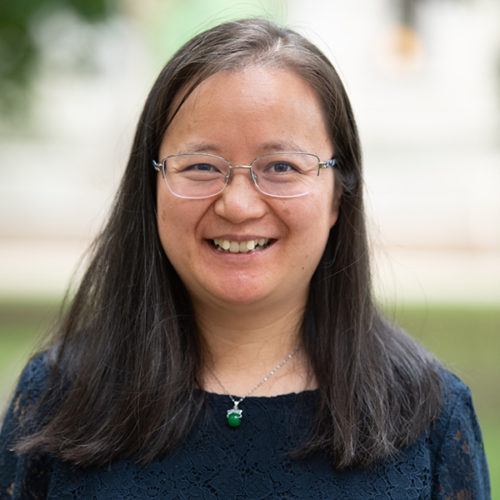
Dr Zhe Wang is a Senior Lecturer at the School of Information and Communication Technology, Griffith University, focusing on artificial intelligence, knowledge graphs, and semantic technologies. He earned his PhD in Computer Science from Griffith University (2011) and previously worked as a Research Fellow at the University of Oxford (2011-2013) on ontology-based systems. Research: Specializes in knowledge graph construction, rule mining for explainable AI, and integrating machine learning with logical reasoning. Led development of the scalable RLvLR rule-mining system and contributed to the HermiT ontology reasoner. Teaching: Instructs undergraduate and postgraduate courses including Introduction to Artificial Intelligence, Secure Development Operations, and Software Engineering Fundamentals. Grants: Funded by Australia's Economic Accelerator Ignite Grant (2025) for AI-driven marine life survey systems and Office of National Intelligence projects (2021-2022). Publications: Active in top venues like AAAI, ICASSP, and ISWC, with recent work on temporal knowledge graph reasoning, auction design algorithms, and neurosymbolic AI systems.
Jenny Andersson is Professor at Uppsala University's Department of History of Science and Ideas and affiliated with the Centre d'études européennes et comparées de Sciences Po as a CNRS research professor on leave. Her work bridges history of ideas , social theory , and futures studies , with a focus on neoliberalism , political ideologies , and temporal governance . Academic Appointments : Professor (Uppsala University, 2021–present), CNRS Research Professor (on leave) Research Themes : Historical epistemology of futures, ideological shifts in welfare states, techno-political imaginaries, neoliberalism in Nordic contexts Recent Publications : 2024 article on future knowledge in European Journal of Social Theory, 2023 works on libertarianism and welfare state critique, 2018 monograph The Future of the World (Oxford University Press) Projects : Leadership in Neoliberalism in the Nordics research programme (Riksbankens Jubileumsfond, 2019–2023)
Sverker Lindblad is a Senior Researcher at the Department of Education and Special Education , University of Gothenburg . His work critically examines the intersections between education and society, focusing on governance, curriculum theory, and the political dimensions of educational systems. Academic Affiliation: University of Gothenburg, Sweden Teaching Interests: History of education sciences, comparative education, curriculum theory Research Areas include: Education Policy : Analyzing political governance and public opinion on school reforms Curriculum Theory : Exploring paradigmatic changes in doctoral education Comparative Education : Investigating international assessments and their societal implications Social Reproduction : Studying categorization processes in education Academic Publishing : Mapping research fronts and intellectual traditions Welfare State Education : Examining reforms and governance in Nordic contexts Publication Trends reveal a focus on: 2025-2024: International research mapping, teacher education networking, European research area organization 2023-2021: Pandemic responses, educational governance, OECD influence 2020-2018: Historical education reforms, statistical reasoning in policy
Ziying You serves as Associate Professor and Department Chair of Chinese Studies and East Asian Studies at The College of Wooster where she teaches courses spanning Chinese language advanced literature and cultural studies including specialized topics like Anti-Asian Racism Women and Gender in China and Food and Religion in China. Her educational background includes a Ph.D. in East Asian Languages and Literatures from The Ohio State University (2015) an M.A. in Interdisciplinary Studies: Folklore from University of Oregon (2009) an M.A. in Modern and Contemporary Chinese Literature from Peking University (2005) and a B.A. in Chinese Language and Literature Education from Henan Normal University (2002). Professor You’s research bridges Chinese oral traditions contemporary folklore and public health with a focus on grassroots responses to cultural heritage preservation. Her work examines how communities navigate state-led intangible cultural heritage initiatives particularly in rural Shanxi Province where she documents flood narratives ritual practices and mythological adaptations. She actively explores intersections between digital media ethnographic filmmaking and folk performance while addressing gender dynamics through Women’s Gender and Sexuality Studies frameworks. Recent scholarship analyzes memorialization practices during the COVID-19 pandemic examining virtual tributes to Dr. Li Wenliang and community resilience among Chinese immigrant groups. Her publication trends reveal consistent engagement with contested cultural narratives shifting from classical myth analysis (e.g. Yao and Shun stories) toward urgent contemporary issues including pandemic responses online activism and heritage politics. This evolution demonstrates her commitment to applying folklore methodologies to rapidly changing social landscapes while maintaining deep roots in Chinese ethnographic traditions. College Citizen Award The College of Wooster (2022) Faculty Connection of the Year Division of Student Affairs (2018-2019) Tien-Yi Li Award for Outstanding Academic Performance The Ohio State University (2014) Dan Crowley Memorial Student Essay Prize American Folklore Society (2010) Archie Green Student Travel Award American Folklore Society (2009) Professor You has advised numerous independent studies on topics ranging from China’s three-child policy impacts to Indigenous activism in Taiwan and expatriate experiences during the pandemic. Her mentorship extends beyond traditional academic supervision into fostering cross-cultural understanding as evidenced by her New Books Network interviews promoting scholarly dialogue. While not leading formal laboratories her ethnographic approach involves immersive fieldwork and digital documentation techniques that function as dynamic research teams engaging community participants as co-creators of knowledge.
Louise Elffers is a Professor at the Centre for Applied Research on Education at Amsterdam University of Applied Sciences and holds a Special Professorship in Inequality of Opportunity in Education at the University of Amsterdam. Her work focuses on educational systems, equity, and accessibility. Universities: Amsterdam University of Applied Sciences, University of Amsterdam Secondary Roles: Director of the Knowledge Center Inequality, Chairman of the Education Council, Member of the State Commission on Demographic Developments 2050 Her research examines educational inequality , shadow education , and accessibility of higher education . Recent work includes national studies on preacademic programs and teacher practices in selective systems. Scientific Awards : NRO Toegankelijk Hoger Onderwijs (2020) Volkskrant Best Book Award shortlist (2022) Sociologische Bril nomination (2023) Elffers serves on multiple educational advisory boards and has secured significant national research grants. She regularly contributes to policy discussions and public media on educational equity.
Brian Kovak is an Associate Professor of Economics and Public Policy at Carnegie Mellon University's Heinz College of Information Systems and Public Policy. He holds the Dean's Career Development Professorship at Heinz College and maintains significant affiliations as a Faculty Research Fellow at the National Bureau of Economic Research (NBER) and a Research Fellow of the Institute for the Study of Labor (IZA). His scholarly contributions reach across multiple institutions and academic journals, reflecting his prominence in the field of labor economics and international trade. Ph.D., Economics, University of Michigan Master of Public Affairs, Indiana University B.S., Computer Engineering, Penn State University Brian Kovak's research examines the economic effects of international migration and trade with a focus on local labor markets. His work investigates how worker mobility responds to local labor market conditions, particularly the role of immigrants' geographic mobility in equalizing wage differences for native-born workers across U.S. local labor markets. He also studies the local labor market effects of trade liberalization, developing theoretically motivated empirical approaches based on specific-factors models of local economies. His research spans multiple countries, including extensive work using household survey and matched employer-employee data from Brazil to study the effects of liberalization on wages, employment, informality, and the skill premium. Analysis of Kovak's recent publications reveals a consistent focus on how migration and trade policies affect local labor market dynamics. His work demonstrates sophisticated methodological approaches that bridge theoretical economic models with empirical evidence from diverse contexts. The research shows particular attention to how economic shocks transmit across regions through migration networks and how trade liberalization affects different segments of the workforce. His publications in top economics journals demonstrate the significance of his contributions to understanding the intersection of international economics and labor market outcomes. IZA Young Labor Economist Award (2014) for best peer-reviewed journal publication in labor economics by authors under age 40 Beyond his research, Kovak serves as an Associate Editor of the Journal of Development Economics, contributing to scholarly discourse in his field. His work has attracted significant funding, including NSF grants (award #1851679) for research on wage insurance for displaced workers and another NSF grant (award #1854051) on emerging technologies, labor outcomes, and policy responses. His research has garnered substantial attention from both academic and policy communities, with coverage in major media outlets including the New York Times, Financial Times, Wall Street Journal, and Washington Post. Kovak's scholarly impact extends through his collaborations with numerous researchers across institutions, creating a substantial body of work that informs both academic understanding and policy development in international economics and labor markets.
Matthias Kranke is Junior Professor for Global Sustainability Governance at the Institute for Socio-Economics, Faculty of Social Sciences, University of Duisburg-Essen, within the College for Social Sciences and Humanities of the University Alliance Ruhr. His research critically examines global governance structures through socioeconomic and socioecological lenses. His educational background includes: PhD in Politics and International Studies, University of Warwick (2013-2018) MA in International Relations, Macquarie University, Sydney (2008-2009) MA in Political Science, Economics and Modern History, University of Trier (2002-2008) Kranke's research centers on the political economy of global governance, with particular focus on international organizations' role in sustainability transitions. His work interrogates how quantification practices, forecasting techniques, and indicator systems shape policy spaces and power dynamics in post-growth paradigms. He critically analyzes boundary work within international bureaucracies and the anticipatory governance of global challenges like debt sustainability and ecological transformation. Analysis of his 2021-2025 publications reveals dominant themes in post-growth political economy, anticipatory governance, and the politics of measurement. His work bridges International Relations, Political Economy, and Science and Technology Studies, demonstrating how international organizations produce knowledge that legitimizes specific policy pathways while marginalizing alternatives. The publications consistently examine power dynamics in global governance through empirical studies of IMF-World Bank interactions, sustainability indicators, and future-oriented policymaking. His scientific recognition includes: Best Graduate Student Paper Award, International Political Economy Section, International Studies Association (2017) Vice-Chancellor's Commendation for academic excellence, Macquarie University (2009) No formal advising roles or grant information is publicly documented, though his work connects to the Research Alliance Ruhr and third-party funded projects at the Institute for Socio-Economics. His research appears embedded within collaborative networks examining socio-ecological transformation and inequality, as evidenced by co-authored working papers and participation in the Doctoral Program 'Political Economy of Socio-Ecological Transformation'.
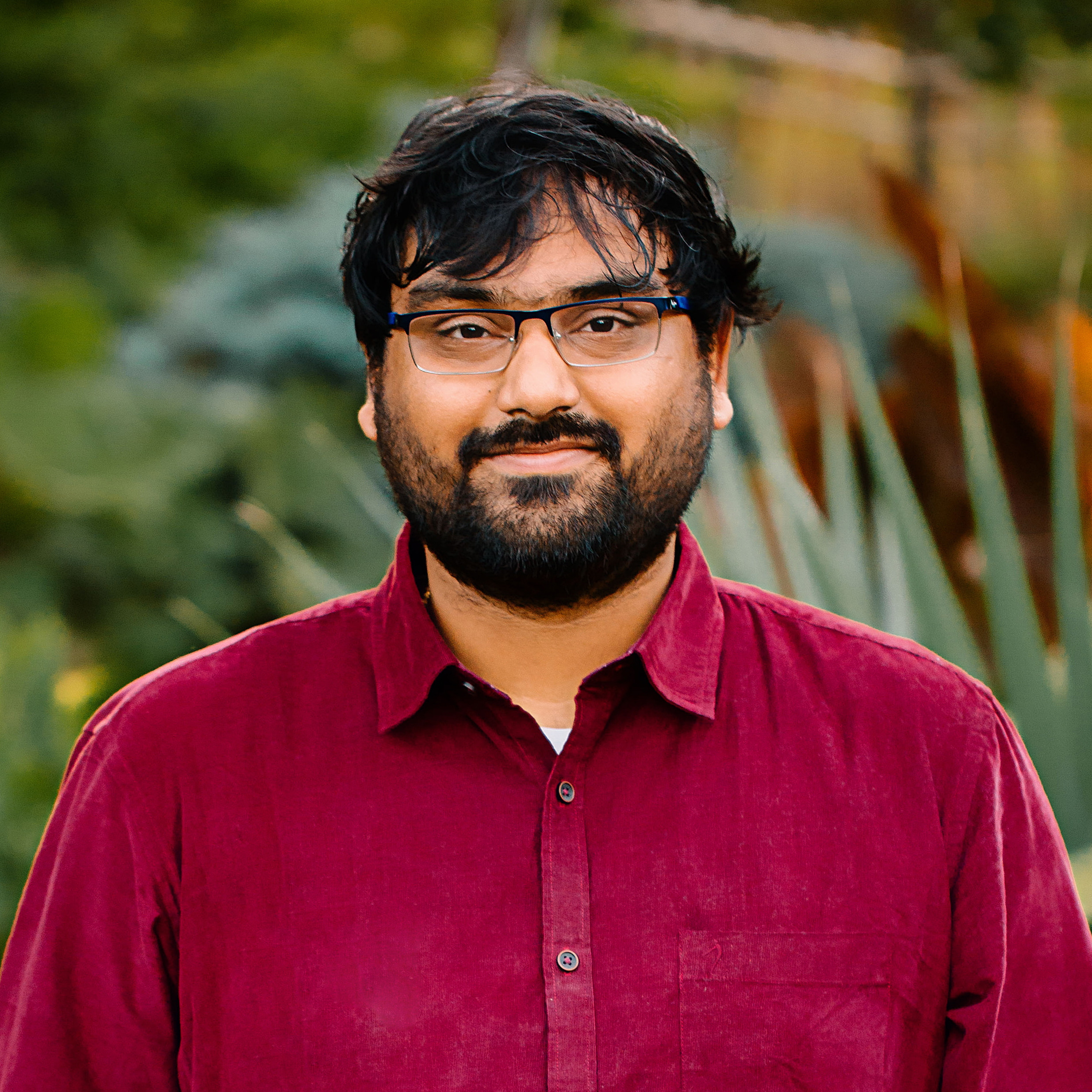
Sathyanarayanan N. Aakur is an Assistant Professor in the Department of Computer Science and Software Engineering at Auburn University's College of Engineering. Previously, he was an Assistant Professor in the Department of Computer Science at Oklahoma State University. He is an IEEE Senior Member and has received the prestigious NSF CAREER award for his research on multi-modal event understanding. Dr. Aakur received his PhD from the University of South Florida, where he worked with Dr. Sudeep Sarkar in the Computer Vision and Pattern Recognition Group. He also holds a Master's degree in Management Information Systems from the Muma College of Business at the University of South Florida and an undergraduate degree in Electronics and Communication Engineering from Velammal Engineering College, Anna University, India. His research focuses on the intersection of computer vision, natural language processing, and psychology, with the goal of building intelligent agents that understand the visual world beyond simple recognition or captioning. His work encompasses self-supervised predictive learning for video event segmentation, commonsense reasoning to ground perception and prior knowledge, and generative modeling for building knowledge systems. Much of his group's current work focuses on analyzing, modeling, and synthesizing complex video scenes, with applications in agriculture and animal diagnostics. His recent publications demonstrate a strong focus on open-world visual understanding, neurosymbolic reasoning, and multimodal learning. His work spans from fundamental computer vision problems like egocentric action recognition and scene graph generation to applied research in agricultural technology and biomedical informatics. He has successfully published at top-tier conferences including CVPR, ICCV, ECCV, and WACV, as well as in high-impact journals like IEEE TPAMI. NSF CAREER Award (2022) IEEE Senior Member (2024) Dr. Aakur serves as Area Chair for major conferences including CVPR, WACV, ICML, and NeurIPS, and as Associate Editor for Pattern Recognition journal. He has successfully mentored numerous students who have published at top venues in computer vision and machine learning. His research group has received funding from sources including the NSF and USDA for projects related to multimodal time series classification and stress detection in precision agriculture. The lab maintains active collaborations with institutions including the University of South Florida and Florida State University.
Dr. Wai Kiong Oswald Chong is an Associate Professor at Arizona State University's School of Sustainable Engineering and the Built Environment, with a dual affiliation as Senior Global Futures Scientist at the Global Futures Scientists and Scholars program. He holds a PhD in Civil Engineering from the University of Texas-Austin, MSc and BSc in Building from the National University of Singapore, and focuses on integrating artificial intelligence with sustainable engineering systems. PhD (2005): Civil Engineering, University of Texas-Austin MSc (1999) & BSc (1997): National University of Singapore His research bridges lunar construction with Earth-bound sustainable systems, covering topics like: Space habitat modularization Resource circularity systems AI-enhanced building codes Climate-resilient infrastructure Advanced energy modeling Construction supply chain optimization Publications demonstrate consistent focus on: Semiconductor facility HVAC optimization Building energy consumption anomalies Life cycle assessment frameworks Construction risk management Deconstruction and material reuse AI-driven system modeling Current research projects include: Lunar MVI (Moon Village Initiative) Semiconductor fab design optimization Human-AI knowledge interfaces Thermal insulation systems for extreme environments Smart grid energy modeling
Yikun Ban is a tenure-track Associate Professor in the School of Computer Science and Engineering at Beihang University, where he is a member of the State Key Laboratory of Software Development Environment. He earned his PhD in Computer Science from the University of Illinois Urbana-Champaign (2023), MS in Computer Science from Peking University (2019), and BS in Software Engineering from Wuhan University (2016). PhD: University of Illinois Urbana-Champaign (2023) MS: Peking University (2019) BS: Wuhan University (2016) His research focuses on principled algorithms for reinforcement learning with human feedback, neural contextual bandits, and exploration-exploitation problems. He develops frameworks combining deep learning with bandit theory for applications in recommendation systems, disinformation detection, and dynamic graph learning. Recent publications address: Robust neural contextual bandits (NeurIPS 2024) Graph neural bandits (KDD 2023) Meta-learning for bandit scheduling (NeurIPS 2023) Clustering in contextual bandits (WWW 2021, AAAI 2021) Honors include the NeurIPS Scholar Award and recognition as ICML Outstanding Reviewer . His open-source LOCB repository provides Python implementations for contextual multi-armed bandit algorithms with local clustering, supporting applications in recommendation systems and online learning.
J. Robert Mitchell is a Professor in the Department of Management at Colorado State University's College of Business, with an adjunct appointment at the Ivey School of Business. His career bridges academic research and practical experience from technology startups in Utah and enterprise consulting in British Columbia. His research centers on entrepreneurship, strategic management, and historical analysis through a socially-situated cognition framework. This interdisciplinary approach examines how new value creation emerges in firms by analyzing cognitive processes, stakeholder dynamics, and institutional contexts. Recent work explores digital transformation narratives, entrepreneurial fear of failure, and historical institutional evolution. Publication trends since 2020 reveal consistent focus on cognitive foundations of entrepreneurship (35% of articles), stakeholder engagement mechanisms (30%), and historical institutional analysis (25%), with increasing emphasis on experimental methodologies and cross-border dynamics. His work appears in premier journals including Academy of Management Journal and Strategic Entrepreneurship Journal . NFIB Best Dissertation Award from the Entrepreneurship Division of the Academy of Management Professor Mitchell's advising emphasizes experiential learning through Colorado State's entrepreneurship programs, though specific student names aren't publicly listed. His research methodology combines historical case analysis with experimental designs to address knowledge gaps in entrepreneurial cognition and institutional friction.
Dr. Ali Çarkoğlu is Professor of Political Science at Koc University in Istanbul, Turkey, specializing in comparative politics, electoral systems, and political communication. Holding a PhD from SUNY Binghamton (1994), he has previously taught at Boğaziçi and Sabancı Universities. Doctoral Degree: State University of New York-Binghamton (1994) Master's Degree: Rutgers University (1989) Bachelor's Degree: Boğaziçi University (1986) His research focuses on political polarization in multiparty systems, misinformation dynamics in authoritarian regimes, and the emotional mobilization effects of populist rhetoric. Recent studies examine partisan bias in pandemic-era conspiracy theories and electoral alliance challenges in Turkey's 2023 presidential election. Notable scientific achievements include the 2013 Wapor Best Article Award. He has developed innovative network-based approaches for measuring party polarization and conducted experimental analyses of voting advice applications' impact in constrained media environments.
Ben Gardner is an Associate Professor in the School of Interdisciplinary Arts & Sciences at the University of Washington Bothell, where he serves as Faculty Coordinator for Global Studies. He also chairs the African Studies Program in the Henry M. Jackson School of International Studies and holds an adjunct position as Associate Professor in the Department of Geography at UW Seattle. His academic work bridges cultural studies, geography, and environmental politics with a primary focus on African contexts. Dr. Gardner earned his B.A. in Anthropology from Connecticut College, followed by an M.E.S. from Yale University's School of Forestry and Environmental Studies, and completed his academic training with a Ph.D. in Geography from the University of California, Berkeley. His teaching philosophy centers on creating student-centered classrooms where students actively engage as ethnographers and critical thinkers, examining relationships among culture, power, and political-economic change. His research program focuses on three interconnected areas: the cultural politics of the environment, the political economy of development, and the post-colonial state. Through ethnographic research on transnational and trans-local aspects of development, Gardner illuminates how grounded struggles shape global phenomena. His work primarily examines Tanzania, investigating the complex intersections of tourism, conservation policies, land rights, and community politics, particularly among Maasai communities. Gardner's publications reveal a consistent scholarly trajectory examining how global conservation efforts and tourism are deeply embedded in local political and cultural contexts. His research challenges simplistic narratives about environmental protection and development, highlighting the political dimensions of landscape commodification and the enduring influence of colonial discourses on contemporary conservation practices. University of Washington Bothell Distinguished Teaching Award (2014) University of Washington undergraduate research mentor award (2017) As an educator, Gardner has received significant recognition for both teaching excellence and mentoring undergraduate research. He teaches diverse courses including Africa on Film, Globalization, Environmental Politics, and Critical Perspectives on Ecotourism in Tanzania. His commitment to public scholarship is evident through his work with the Humanities Washington Speakers Bureau, where he presents on topics related to tourism, conservation, and cultural politics. Currently, Gardner is working on projects examining how social media influences conservation ideas and policies, as well as collaborating on 'Pedagogies of Reciprocity,' which investigates the political economy and cultural politics of study abroad in higher education, building on his critical perspective about the 'romance of study abroad' experiences.
Robert Pollice is a Lecturer at the Faculty of Science and Engineering , University of Groningen , specializing in Homogeneous Catalysis . His research integrates computational chemistry , machine learning , and automated experimentation to accelerate molecular design and catalyst development . Research Interests focus on homogeneous catalysis , quantum chemistry , and machine learning applications. His work addresses challenges in reaction mechanism modeling , noncovalent interactions , and inverse molecular design , leveraging closed-loop optimization and large language models for chemical data analysis . Publications span quantum chemical simulations , solvation energy calculations , excited state engineering , and automated catalyst discovery . His recent studies explore inverted singlet-triplet gaps , machine learning for reaction modeling , and SELFIES for molecular string representations . Peer-review Contributions include evaluations for journals like Organic Process Research & Development , Materials Advances , and Chem , reflecting his expertise in catalysis , quantum chemistry , and AI-driven chemical discovery .
Ashton Potter serves as Executive Director of The Food Connection and Extension Specialist for Local Food Systems Leadership at the University of Kentucky's Martin-Gatton College of Agriculture, Food and Environment, responsible for strategic vision and program implementation across Kentucky's food ecosystem. Her educational background includes: Bachelor of Science in Biology from Rhodes College Master of Public Health from Georgia State University Doctor of Public Health from the University of Kentucky Her research focuses on building sustainable agricultural value chains, with expertise in farm-to-institution procurement systems and community food security initiatives that bridge public health nutrition with economic development. She leads statewide programs connecting Kentucky farmers to new markets while educating consumers about nutrient-dense local food systems. Through The Food Connection, she directs multifaceted initiatives including Culinary Medicine, Cultivate Kentucky, Growing Health, and the Kentucky Value Chain Collaborative, emphasizing practical applications of food systems knowledge in institutional settings and community health programs. Her collaborative work engages UK Dining Services, farmers, policymakers, and community stakeholders to strengthen Kentucky's local food economy through practical procurement strategies and educational outreach centered on sustainable food practices.