Alena Thiel is an Associate Professor at the Centre of African Studies within the Faculty of Social Sciences at the University of Copenhagen. Her research examines digital technologies' impact on state formation and knowledge systems across Africa, with primary field sites in Ghana, Senegal, Botswana, and Kenya. Her core research areas include: State knowledge systems (biometric ID, census histories, DHIS2 health records) Digital governance (addressing systems, payment solutions, disaster risk datafication) African/feminist AI development and implementation Anthropology of the state through Science and Technology Studies (STS) frameworks Recent publications (2024-2025) reveal concentrated analysis of health data infrastructures in Ghana, trust dynamics in Africa's global networks, and critical sociological examinations of digital identification. Her work consistently bridges anthropological theory with practical governance challenges in African contexts. As an active member of the Centre of African Studies, she maintains interdisciplinary collaborations across multiple African countries and European institutions, with particular emphasis on Ghanaian research partnerships and editorial leadership for Africa Spectrum journal.
Claudia Acciai is a Guest Researcher at SODAS (Sociology Department) at the University of Copenhagen, where she works on the research project "Quantifying institutional and country-related Matthew effects in science." She holds a PhD in Political Science and Sociology from the Scuola Normale Superiore, with a dissertation focused on policy design in the Research and Innovation sector. Her academic journey includes research visits at Alliance Manchester Business School, Science Po Paris, and Copenhagen Business School. Her research interests lie at the intersection of comparative public policy, innovation studies, and science of science. She combines computational and experimental methods with qualitative content analysis techniques to examine policy design, institutional effects in science, and research evaluation. Her work frequently addresses how policy instruments function in complex governance environments and investigates gender-related differences in academic publishing. Analyzing her recent publications reveals a strong focus on the science of science, with particular attention to bibliometrics, policy instrument effectiveness, and gender dynamics in academic careers. Her work spans multiple disciplines including political science, sociology of science, and innovation studies, often employing mixed-methods approaches that combine quantitative analysis with qualitative insights. Acciai is an active member of the Knowledge, Organization and Politics research group at the Department of Sociology. Her collaborations span multiple countries and institutions, reflecting the international nature of her research on comparative policy and science studies. She has conducted significant work for research projects funded by the Italian Ministry of Education, including analyses of policy analysis capacity in Italian policymaking and governance changes in higher education systems.
Remus Teodorescu is a Professor at AAU Energy , Aalborg University , specializing in Power Electronics System Integration and Materials . His work bridges Lithium-Ion Batteries , Modular Multilevel Converters , and Smart Battery Systems . Education : Not explicitly mentioned in the text. Research Interests focus on Battery Management Systems , AI-Driven Energy Optimization , and Power Electronics for renewable energy integration. Key projects include Digital Twin for Lithium-Ion Batteries and BMS-DC for Data Centers . Recent Publications (2025) emphasize Finite Set MPC , Gradient Descent Optimization , and AI in Battery Parameter Estimation . His 2024 work explores Physics-Informed Neural Networks and Fault-Tolerant Converters . Scientific Awards : Villum Foundation Grant (313 million kroner, 2021) Named world's best in electrical engineering (2023) Advising includes supervising PhD projects on AI-Accelerated Battery Twins and Data-Driven SOH Estimation . Collaborations span Energy Cluster Denmark and Villum Fonden .
Peter Danholt is an Associate Professor at the School of Communication and Culture, Aarhus University, affiliated with the Department of Digital Design and Information Studies, the Centre for Science-Technology-Society Studies, and the SHAPE – Shaping Digital Citizenship research initiative. His work spans multiple interdisciplinary domains, focusing on the sociotechnical dimensions of digital systems in healthcare, welfare, and organizational contexts. His research interests include IT in healthcare , pervasive computing , gender and technology , organizational change , and qualitative research methods . He employs ethnographic and fieldwork-based approaches to study how digital technologies reshape work practices, citizenship, and care relations. His work often draws on Science and Technology Studies (STS), Actor-Network Theory, and relational ontologies. The recent publications highlight a consistent focus on digital healthcare systems (e.g., Teledialogue), data-driven governance , and the ethical implications of surveillance in welfare . Themes such as vulnerability, privacy, and citizen agency recur across his research, particularly in projects involving digital interventions in social work and patient care. Principal Investigator : Shaping Digital Citizenship – SHAPE (Independent Research Fund Denmark, 2022–2023) Collaborative Projects : CDC: Cultures of Data Collaboration , Teledialog , Håndhygiejne projektet , Sundhedsbarometer projektet He has contributed extensively to academic discourse through journal articles, conference papers, and book chapters, with a strong emphasis on ethnographic depth and theoretical innovation. His public engagement includes media contributions on AI, digital ethics, and urban technology. He has participated in organizing workshops and conferences, including EASST2010 and SHAPE Workshop (2024), and has delivered lectures on technoscience, surveillance, and welfare technology. His collaborations extend across Denmark and internationally, reflecting a robust network in STS and digital society research.
Tuukka Ruotsalo serves as Associate Professor in the Machine Learning Section at the Department of Computer Science, University of Copenhagen. His research bridges human cognition with computational systems through brain-computer interfaces and physiological computing. As Academy Research Fellow at University of Helsinki (2019-2024), he maintained dual institutional affiliations while leading cutting-edge work in neuro-linguistic modeling and affective relevance. His research focuses on brain-computer interfaces for information retrieval , where he pioneers methods to decode cognitive states from neural signals to improve search systems. Key areas include affective relevance modeling that integrates emotional states into search algorithms, and neuro-linguistic reconstruction that translates brain activity into language. His work on fairness-relevance tradeoffs in recommender systems established Pareto frontier evaluation frameworks now widely adopted in ethical AI research. Recent publications demonstrate how physiological signals like EEG and galvanic skin response can create more adaptive human-information interaction systems. Ruotsalo's scientific recognition includes the prestigious Academy Research Fellow position. His publications in IEEE Transactions on Human-Machine Systems , Journal of the Association for Information Science and Technology , and Communications Biology reveal growing interdisciplinary impact. His advising spans cognitive neuroscience and machine learning students, with notable collaborations across the SCIENCE AI Centre. Current projects include the TreeSense initiative for remote sensing of global tree resources and development of quantum-inspired neural architectures. His lab leverages the department's powerful compute cluster for large-scale physiological data analysis.
Manfred Laubichler is President’s Professor of Theoretical Biology and History of Biology at Arizona State University (ASU), where he serves as Director of the School of Complex Adaptive Systems and the Global Biosocial Complexity Initiative. He is also an External Professor at the Santa Fe Institute (SFI) and co-director of the ASU-SFI Center for Biosocial Complex Systems. His academic affiliations include the Center for Social Dynamics and Complexity, the Center for Biology and Society, the Center for Evolution and Medicine, and the Water Institute at ASU. His educational background spans zoology, philosophy, and mathematics from the University of Vienna; biology from Yale University; and history/history of science from Princeton University. Laubichler's research centers on evolutionary novelties across scales—from genomes to knowledge systems—alongside the structure of evolutionary theory and the evolution of scientific knowledge. His work bridges theoretical biology, philosophy of science, and complex systems, with a strong emphasis on biosocial complexity and sustainability. He has contributed extensively to understanding the conceptual foundations of evolutionary developmental biology (Evo-Devo) and the historical and philosophical dimensions of biological theory. His recent publications reflect an interdisciplinary trend, integrating epidemiology, public health, and social behavior during crises such as the COVID-19 pandemic, while maintaining a core focus on theoretical biology, history of science, and complex systems. Themes include trust, scientific responsibility, epistemology of science, and modeling biosocial dynamics. Elected Fellow of the American Association for the Advancement of Science Fellow at the Wissenschaftskolleg zu Berlin Vice Chair of the Global Climate Forum Laubichler has led multiple NSF-funded research initiatives in digital humanities, history and philosophy of science, and complex adaptive systems. He has advised numerous doctoral projects and co-led training programs such as the Embryo Project. He is actively involved in interdisciplinary labs and centers, including the Information and Competition Lab, Complexity Economics Lab, and the Social Insect Research Group. His leadership extends to editorial roles in journals like Biological Theory , Journal of Experimental Zoology Part B , and the Archimedes series.
Steffen Dalsgaard is a Professor at the Technologies in Practice group at IT University of Copenhagen. As Head of Center for Climate IT, he leads initiatives exploring how digital technologies interact with climate change mitigation. He also contributes to the Center for Information Security and Trust. PhD in Anthropology and Ethnography (Aarhus University, 2010) Recipient of DFF Sapere Aude grant, ERC Consolidator Grant, and Carlsbergfondet funding Key research areas: climate data valuation, sociopolitical implications of IT, and comparative ethnography Research Focus: Investigates intersections between digital technologies, climate change, and sociocultural values through ethnographic studies in Denmark, Papua New Guinea, and Brazil. Examines carbon markets, environmental technoscience, and digital governance systems. Scientific Awards: ERC Consolidator Grant (DecouplingIT) DFF Sapere Aude grant Carlsbergfondet grant Key Collaborations: Works with Independent Research Fund Denmark, European Commission, and external bodies like the Academy for Technical Sciences (ATV). Leads multidisciplinary projects involving climate data analysis and sustainable technology implementation.
Gerald Steiner is a full professor of organizational communication and innovation, dean of the Faculty of Business and Globalization, and chair of the Department for Knowledge and Communication Management at Danube University Krems in Austria. He is also a member of the Associate Faculty at the Complexity Science Hub Vienna since 2018, reflecting his deep engagement with systems and complexity science. His academic journey includes a PhD in management studies and social sciences from the University of Graz and a BSc in mechanical engineering, with training at UC Berkeley, UCLA, and the University of Oklahoma. His education includes: PhD in Management Studies and Social Sciences (Organizational and Innovation Management), University of Graz Bachelor of Science in Mechanical Engineering, Austria Training at UC Berkeley, UCLA, and University of Oklahoma at Norman Gerald Steiner's research is rooted in systemic and sustainability management, guided by a complexity science framework. His work explores sustainability-oriented innovation systems, knowledge integration, transdisciplinarity, and stakeholder collaboration. He investigates competences for solving complex problems and sustainable entrepreneurship, with recent focus on sustainable resource management, particularly the phosphorus supply chain and phosphate rock mining. His research emphasizes collaborative, science-practice co-creation and digital transformation in innovation systems. The recent publications reflect a strong interdisciplinary trend, bridging sustainability science, public health, mineral economics, and digital entrepreneurship. Articles frequently address systemic challenges during crises (e.g., COVID-19), transdisciplinary modeling, and resource security. Keywords span environmental science, behavioral science, policy, and systems thinking, indicating a holistic, integrative research approach. Scientific awards are not explicitly listed in the provided text. Gerald Steiner actively mentors students and early-career researchers, as evidenced by co-authorships with individuals such as L. Satalkina, L. Zenk, and J. Weitzer. He co-directs the PhD program in migration studies, indicating leadership in graduate education. While specific grants are not mentioned, his involvement in transdisciplinary labs and high-impact publications suggests successful funding acquisition. His work often involves international collaboration, especially with institutions in the D-A-CH region and the United States. He has co-founded four transdisciplinary labs at Danube University Krems: the Transdisciplinarity Laboratory Sustainable Digital Environments, the Transdisciplinary Laboratory for Sustainable Mineral Resources, GovLab Austria, and the Biodiversity Hub. These labs serve as platforms for integrating science, policy, and practice in sustainability transitions.
Joeri Witteveen is an Associate Professor in the Department of Science Education at the University of Copenhagen, specializing in History and Philosophy of Science with a focus on biology. His work bridges scientific practice with philosophical inquiry, particularly examining how scientific classification systems interact with conservation policy and biodiversity assessment. Witteveen received his PhD in History and Philosophy of Science from the University of Cambridge (Trinity College), following studies at Maastricht University, the University of California at Berkeley, and the London School of Economics. His research centers on the history and philosophy of biology, with particular emphasis on biological taxonomy, species conservation, and the role of human values in scientific classification. Current projects include "Tackling the Conservationist's Dilemma" (2023-2026), which examines epistemic and ethical tensions between science and policy making in biological taxonomy and species conservation, and the upcoming "Human Variables in Biodiversity Assessment" (2025-2029), which investigates how human values influence biodiversity metrics and categories. These projects reveal a consistent theme in his work: understanding how scientific objectivity interacts with human values and social contexts in the life sciences. Sapere Aude Starting Grant from Danish Research Council (DFF) Semper Ardens Accelerate Grant from Carlsberg Foundation VENI early career research grant from Dutch Research Council (NWO) Witteveen has secured significant research funding including a Sapere Aude Starting Grant and a Semper Ardens Accelerate Grant, demonstrating the impact and relevance of his work at the intersection of philosophy, history, and biological sciences. His editorial roles with History and Philosophy of the Life Sciences, Studies in History and Philosophy of Science, and Acta Biotheoretica highlight his standing in the academic community. His collaborative work extends internationally, including partnerships with researchers at Arizona State University on projects examining productive ambiguity in scientific classification.
Aristides Gionis is a Research Professor Fellow at Aalto University specializing in advanced network analysis and data mining. His work bridges theoretical graph algorithms with practical applications in dynamic and signed networks. His research focuses on graph theory and temporal network analysis , particularly in discovering dense subgraphs, community structures, and event patterns in evolving networks. Key methodologies include contrastive subgraph mining for explainable AI in brain networks and polarization detection in social systems. His publication trends reveal consistent contributions to top-tier venues like KDD, PAKDD, and ECML PKDD, with emphasis on algorithmic solutions for network segmentation, correlation mining, and interpretable classification. Primary application domains include social networks, neuroscience, and temporal data streams. As a Fellow at Aalto University, he leads research in computational network science without explicit departmental affiliation stated in available sources.
Christopher Gad is an Associate Professor and Section Manager in Technologies in Practice at the IT University of Copenhagen, specializing in Science and Technology Studies (STS). His research examines the complex interplay between human beings and digital technologies through ethnographic and ontological lenses. His research focuses on digitalization, surveillance, bureaucracy, and organizational theory , with particular attention to Changing human-technology relations Ontological approaches in STS Lateral thinking in technological contexts Practice-based understandings of computational systems Democracy and electoral processes in digital societies His work bridges theoretical STS with practical applications in security, welfare systems, and democratic infrastructure. Gad's recent publications reveal strong trends in affective engagement with technology (e.g., extended reality for medical diagnostics), prototyping methodologies in education, and security dimensions of digitalization . His research consistently explores the messy, situated realities of technology implementation across welfare systems, democratic processes, and medical contexts. As Principal Investigator and Co-Investigator on major projects including DaR (Data as Relation), DemTech, and WaD (Welfare after Digitalization), Gad has secured significant funding from Velux Fonden, Innovation Fund Denmark, and Danmarks Frie Forskningsfond. His collaborative work spans Denmark, Europe, and international networks. He actively contributes to the STS community through conference leadership (6th Nordic STS Conference 2023), editorial work, and public engagement. His Technologies in Practice section serves as a hub for research on how digital technologies transform organizational practices and societal infrastructures.
Kathrine Carstensen serves as a Part-time Lecturer and Researcher at Aarhus University's Department of Public Health, specializing in health services research with a focus on quality improvement collaboratives and welfare governance. Her work bridges academic theory and practical healthcare implementation across Denmark's public health system. Her research interests center on Quality Improvement in Healthcare , Implementation Science , and Welfare Governance , examining how healthcare professionals engage in quality initiatives, the role of welfare professions in institutional change, and translational challenges in collaborative programs. Specific domains include maternal health decision-making, elder care innovation, and mental health promotion within community settings. Analysis of her publication portfolio reveals consistent exploration of implementation barriers and professional agency in Danish healthcare quality programs. Her work demonstrates methodological diversity through qualitative case studies, mixed-methods evaluations, and multisite research, primarily contextualized within Denmark's national healthcare framework with implications for international health systems. Carstensen has led significant research projects including: OBS; Igangsættelse af fødsler efter termin (2018-2019) on late-term labor induction experiences Professions and innovation in elderly care (2018) examining welfare governance Fetal Medicine: Downs syndrome diagnosis (2016-2018) studying prenatal counseling Health promotion in community psychiatry (2014-2016) on physical health interventions These projects reflect sustained engagement with healthcare implementation challenges across multiple service domains.
Julia Suárez-Krabbe is an Associate Professor in the Department of Communication and Arts at Roskilde University (Denmark). Her research focuses on racism, human rights, decolonization, and knowledge production in Europe and the Americas. She collaborates closely with refugee movements, examining state-sanctioned racism in Danish deportation camps and exploring ontological/existential dimensions of decolonization. She holds a Distinguished Research Associate position at the Ali Mazrui Centre for Higher Education. Key research areas include multiculturalism from southern theories, gender studies, and the intersection of law/ethics with human rights. She has published extensively on topics like non-knowledge in education, indigenous resistance in Colombia, and Eurocentric crises. Recent projects include 'Freedom of Movements. The Practice of Resistance' (2025-2026) and 'Rethinking Democracy from the Global South' (ongoing since 2017). Notable contributions include analyzing colonial legacies in Danish policies, advocating for decolonial pedagogical reforms, and documenting struggles against extractivism in Latin America. Her work bridges academic scholarship with grassroots activism through collaborations with global south scholars and marginalized communities.
Carsten Schürmann is a Professor of Theoretical Computer Science at IT University of Copenhagen, where he serves as Center Manager for the Center for Information Security and Trust. His research spans information security, cryptographic voting protocols, identity management, and digital democracy, with significant contributions to security ceremonies and formal verification of protocols. Professor, Department of Computer Science Center Manager, Center for Information Security and Trust Principal Investigator for multiple DIREC projects through 2025 Active researcher with 64 publications and 20 projects listed His research focuses on the intersection of theoretical computer science and practical security challenges, particularly in voting systems and security ceremonies. Schürmann has developed formal methods for analyzing security protocols, with emphasis on human factors in security implementations and cryptographic voting systems. His work bridges logical frameworks with real-world security applications, addressing both technical and socio-technical aspects of security. Analysis of his recent publications reveals a strong emphasis on voting security, with multiple papers on risk-limiting audits, receipt-free voting, and election integrity. His work increasingly incorporates formal logical frameworks to verify security properties, while also addressing human factors in security ceremonies. The research spans theoretical foundations in linear logic to practical applications in election systems. As Principal Investigator, Schürmann leads several major projects funded by the Innovation Fund Denmark, including DIREC initiatives focused on Capacity Building, PhD School, Voting, and Entrepreneurship (2020-2025). He has also established working groups in Adversarial AI and Machine Learning. Organized workshops on Code Scanning (2014) and Verifying Security Protocols in Tamarin (2016) Active media commentator on security issues with 311 media appearances through 2025 Principal Investigator for 7 ongoing and 13 completed research projects Schürmann directs the Center for Information Security and Trust, which serves as a hub for interdisciplinary security research connecting theoretical computer science with practical security applications. His center focuses particularly on voting systems security and security ceremonies, bringing together researchers from multiple disciplines to address complex security challenges.
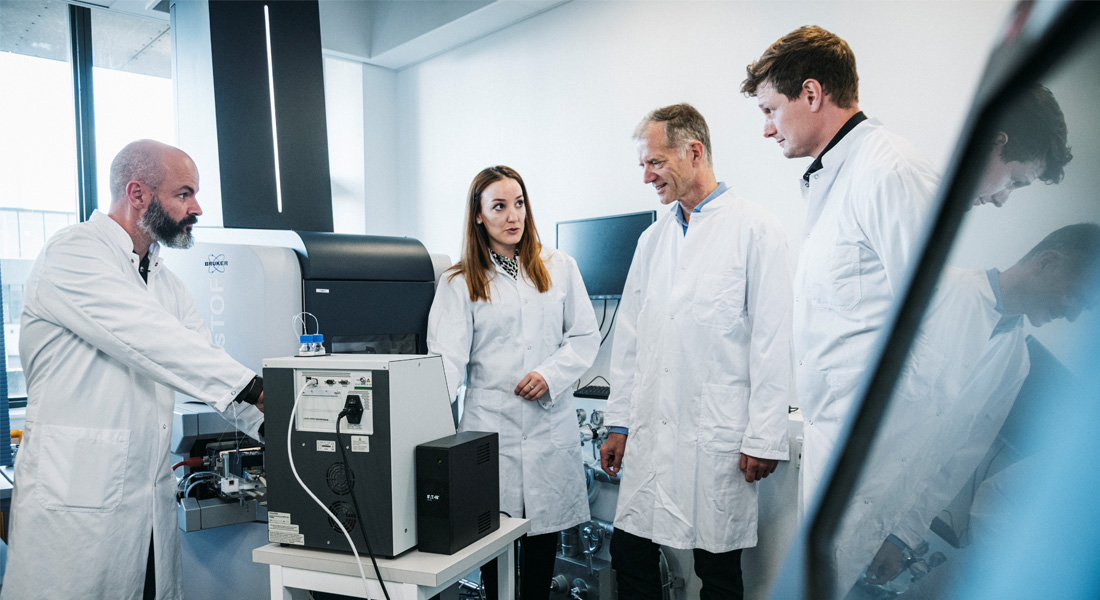
Professor Matthias Mann is Research Director and Group leader at the Proteomics Program at Novo Nordisk Foundation Center for Protein Research (CPR) at the University of Copenhagen's Faculty of Health and Medical Sciences. He also holds a Director position at the Max-Planck Institute of Biochemistry in Munich. As one of the most highly cited researchers in the world with h-index 216 and over 200,000 citations, Mann is a pioneer of mass spectrometry-based proteomics who has made landmark contributions to the development of electrospray ionization. Professor Mann's research interests focus on proteomics technology development and its application to biological and clinical problems. His Clinical Proteomics group applies mass spectrometry-based proteomics to understand human health and disease, with the goal of improving patient diagnosis, stratification, and prevention of diseases such as metabolic disorders and cancer. The group has established robust, high-throughput proteome profiling pipelines for clinical cohorts and develops AI-guided platforms for analyzing proteomes from low amounts of formalin-fixed, paraffin-embedded samples. A key research area is the interpretation of multi-omics data through the Clinical Knowledge Graph, which harmonizes multi-omics data with meta-data for machine learning applications. Professor Mann's recent publications demonstrate trends across several fields including clinical proteomics, biomarker discovery, mass spectrometry technology development, and multi-omics integration. His work spans applications in cancer research, metabolic diseases, neuroscience, and cardiac biology, with a consistent focus on translating proteomic technologies into clinical applications for personalized medicine. Dr H.P. Heineken Prize for Biochemistry and Biophysics 2024 Louis-Jeantet Foundation Prize for Medicine (2012) Leibniz Prize of the German Research Society (2012) Körber European Science Award (2012) Ernst Schering Prize (2012) Protein Society Anfinsen Award (2005) Novo Nordisk Prize (2004) Professor Mann has mentored numerous researchers, with several former post-docs receiving prestigious ERC Starting Grants. His research has been supported by significant funding from the Novo Nordisk Foundation and other major research organizations. The Mann Group maintains collaborations with clinical researchers across multiple institutions to apply proteomics to patient cohorts and disease studies. The Mann Group operates within the Novo Nordisk Foundation Center for Protein Research at the University of Copenhagen, working closely with other research groups including the Choudhary Group, Olsen Group, and others within the CPR. The group maintains state-of-the-art mass spectrometry facilities and develops computational tools for proteomic data analysis, creating an integrated environment for technological innovation and biological discovery.