Jan Ryckebusch is a Senior Full Professor and Department Chair at Ghent University's Faculty of Sciences, Department of Physics and Astronomy . His research bridges Nuclear Physics and Interdisciplinary Physics , with notable contributions to quantum mechanics, statistical mechanics, and machine learning applications. Key research areas include Short-Range Nuclear Correlations , Neutrino-Nucleus Scattering , and Social Network Dynamics . He has supervised multiple PhD students in projects related to Quantum Computing , Agent-Based Modeling , and Statistical Physics of Social Systems . His recent work explores Econophysics (e.g., wealth-income mobility studies) and Opinion Dynamics in social networks. Scientific Awards : No specific awards mentioned in the provided data. Grants & Collaborations : Active in interdisciplinary projects with co-authors across Physics , Economics , and Computer Science , including Luis E C Rocha, Koen Schoors, Wim Cosyn, and others.
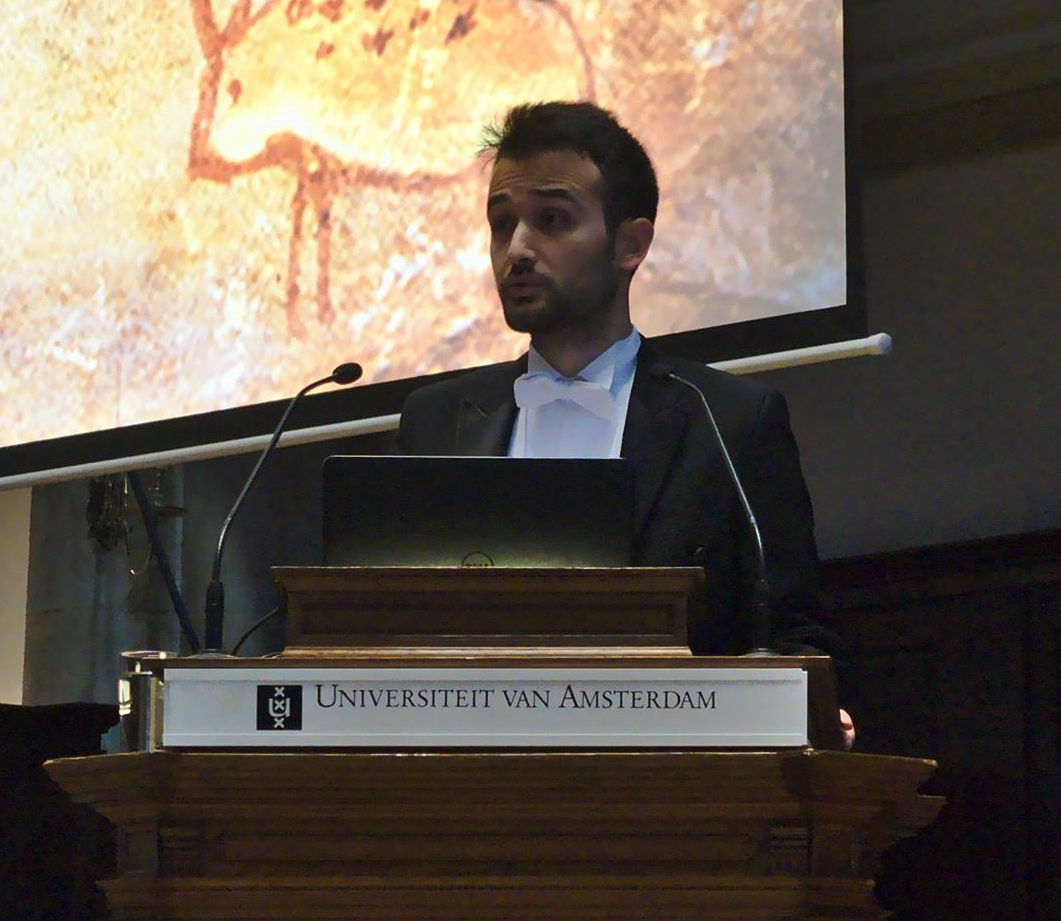
Sezer Karaoglu is a Lecturer and part-time postdoctoral researcher at the Computer Vision Group, Informatics Institute, University of Amsterdam. He is also the CTO and Co-Founder of 3DUniversum, a technology spin-off of the University of Amsterdam that provides state-of-the-art 2D/3D computer vision solutions. Additionally, he has co-founded other startups including Scanm and 3DHealthScan. Dr. Karaoglu received his PhD from the Computer Vision Group, Informatics Institute, University of Amsterdam, with research funded by the COMMIT project. His educational background includes a double master's degree: an optics, image and vision master's degree from University Jean Monnet in France and a media technology master's degree from Gjovik University College in Norway. He completed his undergraduate studies with honors at Istanbul Technical University in Telecommunication Engineering. His research focuses on Artificial Intelligence and 3D Computer Vision, with specific interests in SLAM, re-localization, 3D reconstruction, 3D object detection and segmentation, synthetic media, generative AI, deep fake creation and detection, and VR/AR technologies. His work has significant applications in healthcare, particularly in using deepfake technology for therapy for victims of sexual violence-related PTSD and moral injury, as documented in a Frontiers in Psychiatry article. Analyzing his recent publications reveals a strong trend toward neural scene reconstruction, intrinsic image decomposition, and the application of diffusion models to computer vision problems. His research increasingly integrates 3D scene understanding with language models, as evidenced by his work on language-to-3D scene generation. The applications span from healthcare (deeptherapy.ai) to media authenticity (deepfake detection) and industrial applications. ICT.OPEN Poster Award (3rd Position), Oct'13 Pascal VOC'12 Classification challenge, 2nd Position, Sep'12 Pascal VOC'12 Detection challenge, 3rd Position, Sep'12 Best project award at Nokia and CIMET project competition Outstanding reviewer at CVPR'21 PROVADA Future Startup Battle winner Best Dutch AI startup by Valuer Dr. Karaoglu has supervised numerous PhD, Master's, and Bachelor's students, demonstrating his commitment to academic mentorship. His research has attracted significant media attention, with features on Dutch national TV programs including NPO, VPRO, RTL, and international outlets like BBC News. He has received research funding through the COMMIT project during his PhD studies and has successfully translated his research into commercial applications through his startups. His work on deepfake technology has been applied in innovative therapeutic contexts through DeepTherapy.ai, showing the real-world impact of his research. Dr. Karaoglu leads research efforts at the Computer Vision Group Amsterdam and through his company 3DUniversum, which has developed applications like weScan, DeepTherapy, and FairFake.ai. His team collaborates with various institutions including the Netherlands Film Academy for grief therapy applications using deepfake technology. The DeepTherapy project represents a particularly impactful application of his work, using deepfake technology to help victims of sexual violence confront perpetrators in therapeutic settings.
Johanna Turnbull is a Lecturer in Biological Sciences at the University of Wollongong, affiliated with the School of Earth, Atmospheric and Life Sciences (SEALS). Her research focuses on plant ecophysiology, particularly stress biology, photosynthesis, and climate change impacts on Antarctic mosses. She employs advanced techniques like ELISAs, spectrophotometric assays, and remote sensing to monitor plant health and stress markers. Turnbull has been involved in long-term Antarctic moss monitoring since 2000, contributing to projects like the State of the Environment Indicator 72. Her teaching philosophy emphasizes student-centered approaches, including blended learning, formative feedback, and active learning strategies in large cohorts. She has developed courses using case studies, flipped lectures, and peer assessment. Turnbull has secured funding for interdisciplinary projects, such as ECO-ANTARCTICA (Antarctic observing systems) and Drones@UOW (UAV-based ecological monitoring). She collaborates widely, appearing in media (e.g., The Conversation) and publishing influential work on Antarctic vegetation dynamics and climate change impacts. Turnbull’s research spans 20+ peer-reviewed articles, with notable contributions to understanding moss desiccation tolerance, Antarctic ecosystem resilience, and the application of remote sensing in polar environments. Her work bridges plant physiology, ecology, and technology, addressing critical questions about life in extreme environments and climate-driven ecological shifts.
Professor Dollas Apostolos serves as a Professor in the School of Electrical and Computer Engineering at the Technical University of Crete (TUC), where he has held leadership roles such as Department Chairman. He directs the Microprocessor and Hardware Laboratory, focusing on reconfigurable computing, embedded systems, and high-performance digital systems. His work emphasizes rapid prototyping and real-world implementation of computational solutions. Education: Ph.D., Computer Science, University of Illinois at Urbana-Champaign (1987) M.Sc., Computer Science, University of Illinois at Urbana-Champaign (1984) B.Sc., Computer Science, University of Illinois at Urbana-Champaign (1982) Research Interests: Reconfigurable computing architectures FPGA-based acceleration for bioinformatics and genomics Embedded systems and real-time processing Hardware-software co-design for high-performance computing His research bridges theoretical innovation with practical applications, such as FPGA implementations for genome assembly and aquaculture monitoring systems. Publications: Recent work highlights FPGA-based solutions for bioinformatics (e.g., genome assembly acceleration), real-time embedded systems (e.g., fish cage net monitoring), and scalable data processing frameworks. His articles often explore the intersection of FPGA technology with computational biology, embedded vision, and distributed systems. Awards and Affiliations: Senior Member, IEEE and IEEE Computer Society Recipient of IEEE Computer Society Golden Core and Meritorious Service Awards Twice honored with the University of Illinois Teaching Excellence Award He is a co-founder of IEEE conferences like FCCM and RSP, reflecting his leadership in the reconfigurable computing community. Teaching and Labs: Teaches courses on computer architecture, logic design, and VLSI design. The Microprocessor and Hardware Lab under his direction drives advancements in FPGA-based systems, with projects ranging from bioinformatics hardware accelerators to embedded vision systems.
Inna Ponomareva is Professor and Director of Graduate Admissions in Physics at the University of South Florida. She leads the Computational Nanoscience Lab, specializing in ferroic materials using atomistic simulations and machine learning. Research explores phase transitions, nanoscale phenomena, and caloric effects in functional materials. Current group includes 4 researchers focusing on: Halide perovskite spin physics Ultra-thin ferroelectric behavior Multicaloric effects Recent publications demonstrate advances in controlling spin textures via strain and intercalation in 2D materials. Teaches quantum mechanics and computational physics courses. Recognized with SIGMOD Distinguished Reviewer Award and ELIDEK grants.
Kostas Magoutis is Professor and Chair of the Computer Science Department at the University of Crete and collaborating researcher with FORTH-ICS. His research focuses on distributed systems, scalable data processing, IoT, and cloud computing, with projects including GreenInCities for urban regeneration and STREAMSTORE for stateful stream processing systems. Research interests include: Distributed computer systems architecture Elastic stream processing platforms Quantum-enhanced computing applications Multi-cloud application lifecycle management Recent publications demonstrate strong focus on federated data systems, quantum computing applications, and IoT-enhanced infrastructure, with consistent output in high-impact conferences and journals. Awards and distinctions: Multiple best paper awards from USENIX conferences Grand Challenge Audience Award at DEBS 2022 Marie Curie Fellowship and IBM Research awards Advises over 20 PhD and MSc students in distributed systems research. Leads multiple EU-funded projects and serves on program committees for top conferences including SOSP, EuroSys, and IEEE BigData. Directs research groups in distributed systems and cloud computing at FORTH-ICS.
Zhongyuan (Annie) Yu is a Teaching Associate Professor in the Department of Systems and Enterprises at Stevens Institute of Technology. She holds a PhD in Systems Engineering (2014), and two MS degrees in Operations Research (2012) and Industrial Engineering (2010), both from Georgia Institute of Technology. Her research bridges applied statistics, optimization, data visualization, and socio-economic systems analysis. Key focus areas include healthcare systems engineering, defense acquisitions, and interactive decision support systems. She leads software engineering education initiatives, including serving as Program Director for the Software Engineering Program (2022-2024). Yu has secured major grants from DoD DASD(SE) and NIH, focusing on mega-project management, digital engineering integration, and healthcare policy simulations. Her 2023-2024 research explores HIPAA compliance challenges in software engineering and patient trust in electronic health records. Her publications span health informatics, portfolio optimization networks, and systems engineering methodology. Notable works include developing policy flight simulators for healthcare interventions and semantic integration frameworks for digital engineering interoperability. Teaching responsibilities include courses like Agile Methods for Software Development, Data Analysis & Visualization, and Engineering Economics. She advises capstone projects and maintains active roles in curriculum development for systems and software engineering programs.
Qin Lin is an Assistant Professor in the Department of Engineering Technology at the University of Houston's Cullen College of Engineering. Their research focuses on autonomous systems, control theory, and safety-critical applications. Lin holds a Ph.D. in Computer Science from Delft University of Technology (2015-2019) and completed a postdoctoral fellowship at Carnegie Mellon University's Robotics Institute (2019-2021). Research interests include safe reinforcement learning, fault-tolerant control systems, and cybersecurity for industrial control systems. Lin has published extensively on topics like vehicle autonomy, exoskeleton safety, and disturbance rejection in robotics. Their work emphasizes practical applications of control theory in autonomous driving, robotics, and human-robot interaction. Recent publications highlight advancements in control barrier functions, latency-aware autonomous systems, and data-driven anomaly detection in ICS environments. Lin has been recognized for contributions to curriculum development in engineering technology and maintains active collaborations in automotive and robotics domains.
Donald Leopold is a Distinguished Teaching Professor in the Department of Environmental Biology at the State University of New York College of Environmental Science and Forestry (SUNY-ESF). He specializes in conservation biology, wetland ecology, and plant species restoration. His research focuses on wetland plant communities, endangered species recovery, and the impacts of human activities on ecological systems. Leopold holds a degree from the University of Pittsburgh in Ecology and Evolution with a Linguistics minor. His research interests include wetland restoration, climate change impacts on plant species, and the ecological roles of keystone species. He has published extensively on topics such as deer population dynamics in protected areas, greenhouse gas fluxes in restored wetlands, and the conservation of rare plant species like the hart’s tongue fern. Leopold actively advises graduate students in Environmental & Forest Biology, focusing on topics like green roof plant ecology and inland salt marsh phylogeography. Leopold’s work integrates field studies, ecological modeling, and restoration practices. He has contributed to regional conservation projects, including assessments of Lake Atitlan’s littoral zone and studies on Adirondack and New York City floras. His teaching and research emphasize hands-on ecological field methods and community-based conservation strategies.
Blanka Horvath is a Lecturer at King's College London and Honorary Lecturer at Imperial College London's Department of Mathematics (Faculty of Natural Sciences). Her research focuses on stochastic analysis and mathematical finance, particularly in numerical methods, machine learning applications, and volatility modeling (e.g., SABR and rough volatility models). She holds a PhD from ETH Zurich (2015), a Diplom in Mathematics from the University of Bonn, and an MSc in Economics from the University of Hong Kong. She has organized major conferences such as the SIAM MMF 2017 mini-symposium and co-organized the Rough Volatility Meeting at Imperial College. Her honors include the 2019 Risk Rising Star Award and the 2024-25 LMS Emmy Noether Fellowship. She collaborates with institutions like UBS, The Alan Turing Institute, and Quantennium LTD. Her teaching includes courses on numerical methods in finance and Python/R programming. She supervises PhD and MSc students in areas like rough volatility, machine learning, and quantitative finance. Recent work explores quantum GANs for option pricing and regime detection using Wasserstein distances.
Michael Nussbaum is a Professor of Mathematics at Cornell University, affiliated with the College of Arts and Sciences. He holds a Ph.D. (1979) and Dr. Sc. (1990) from the Academy of Sciences Berlin (Germany). His research focuses on quantum statistics, applying mathematical statistics to analyze quantum experiments and developing asymptotic methods for hypothesis testing, equivalence theory of statistical experiments, and nonparametric models. Key contributions include work on quantum Chernoff bounds, Gaussian approximation of quantum models, and asymptotic equivalence between statistical experiments. Recent research emphasizes quantum hypothesis testing, low-rank quantum state estimation, and asymptotic equivalence with quantum Gaussian white noise. Supported by an NSF Grant (DMS-1915884), his work bridges operator algebras, quantum information, and noncommutative probability. Publications span foundational topics like nonparametric regression, spectral density estimation, and functional empirical processes. He teaches courses such as Statistical Theory and Application in the Real World and supervises graduate research. His lab explores interdisciplinary applications of asymptotic statistical methods in quantum engineering and communication technologies.
Dr Elliot J. Crowley is a Senior Lecturer in Electronics and Electrical Engineering at the University of Edinburgh, serving as Discipline Programme Manager. He co-leads the Bayesian and Neural Systems research group. His research focuses on simplifying machine learning, automated ML, low-resource deep learning, and engineering applications. He holds an MEng in Engineering Science and a DPhil (PhD) from the University of Oxford, with postdoctoral experience at Edinburgh's School of Informatics. He leads the EPSRC New Investigator Award and participates in the dAIEdge Horizon Network. Notable contributions include foundational work in neural architecture search (NAS), probabilistic methods for model efficiency, and applications in computer vision. His courses, such as the Data Analysis and Machine Learning module, emphasize practical Python-based learning for engineering students. Key awards include an EPSRC grant and recognition through distinguished papers at ASPLOS 2021. His team includes current PhD students (Linus Ericsson, Miguel Espinosa) and former advisees (Chenhongyi Yang at Meta, Jack Turner at Qualcomm). Research spans from NAS algorithms to ethical machine learning practices, with a focus on bridging theoretical advances and real-world engineering challenges.
Jean Dennison is an Associate Professor of American Indian Studies at the University of Washington and Co-Director of the Center for American Indian and Indigenous Studies. Her research focuses on Indigenous sovereignty, governance, and decolonization, particularly through the lens of the Osage Nation. She explores how Indigenous nations navigate settler colonialism in areas like citizenship, governance, and resource management. Her academic contributions include the book Colonial Entanglement: Constituting a Twenty-First-Century Osage Nation (2012), which examines national revitalization efforts. Her work emphasizes intergenerational knowledge transfer, participatory research methodologies, and institutional reform within academia. Recent articles highlight strategic relations of the Osage Nation, Indigenous futurism, and decolonizing educational spaces. Key themes across her publications include sovereignty struggles, Indigenous nation-building, and the intersection of gender and power. She advocates for transformative academic practices that center Indigenous knowledge systems and empower marginalized communities through participatory research frameworks.
Paolo Santucci de Magistris is a Professor of Econometrics at the Department of Economics and Finance of Luiss University (Rome) since February 2018 and previously served as Head of the Department from 2021 to 2024. He held roles as Associate Professor and Assistant Professor at Aarhus University (Denmark) from 2013 to 2018, with prior postdoctoral research at the University of Padova and CREATES. His education includes a PhD from the University of Pavia and visiting research at Northwestern University’s Kellogg School of Management. His research focuses on time series econometrics, financial econometrics, and energy economics, with emphasis on volatility modeling, liquidity risk, and climate impacts. Notable contributions include work on liquidity coverage in financial markets, cointegration models, and the interplay between wind energy and CO2 emissions. His publications span top journals like the Journal of Financial Economics and Journal of Econometrics , exploring topics ranging from stochastic volatility to climate policy analysis. Ongoing projects include research on option price dynamics, energy market connectedness, and risk-neutral density fitting via the RNDfittool MATLAB application. Prof. Santucci de Magistris collaborates internationally with institutions like CREATES and has contributed to policy-relevant studies on energy transition and financial stability. His methodological innovations include Bayesian econometric techniques and tools for analyzing financial risks embedded in derivatives markets.
Prof. Vlado A. Lubarda holds dual roles at the University of California, San Diego: Full Professor of Teaching in the Department of Chemical and Nano Engineering and Adjunct Professor of Mechanical and Aerospace Engineering. He is a Faculty Fellow of Revelle College and a Research Affiliate at the Center for Memory and Recording Research. Lubarda's academic journey includes degrees from the University of Montenegro (Dipl. Ing., 1975) and Stanford University (M.S. and Ph.D., 1977–1979). His research spans elasticity, plasticity, biomechanics, and nanomechanics, with over 130 journal publications and five authored books. Notable awards include the Barbara and Paul Saltman Distinguished Teaching Award and multiple Tau Beta Pi Outstanding Teacher Awards. He has advised numerous graduate and undergraduate students, contributing to advancements in materials science and mechanics. Affiliations: Full Professor of Teaching, Department of Chemical and Nano Engineering Adjunct Professor, Department of Mechanical and Aerospace Engineering Fellow of Revelle College Research Affiliate, CMRR Education: Bachelor of Engineering, University of Montenegro (1975) M.S. and Ph.D. in Mechanical Engineering, Stanford University (1977–1979) Research Interests: Elasticity, plasticity, viscoelasticity, dislocation mechanics, damage mechanics, and biomechanics. Key Contributions: Author of Strength of Materials , Elastoplasticity Theory , and other seminal texts. Editorial board member of Theoretical and Applied Mechanics and Mathematics and Mechanics of Solids . His research articles explore topics like dislocation dynamics, material fracture mechanics, and biomedical applications. Lubarda’s awards reflect his dedication to teaching and research excellence. He collaborates with institutions globally and actively contributes to academic governance through roles such as Chair of the NanoEngineering Undergraduate Affairs Committee.