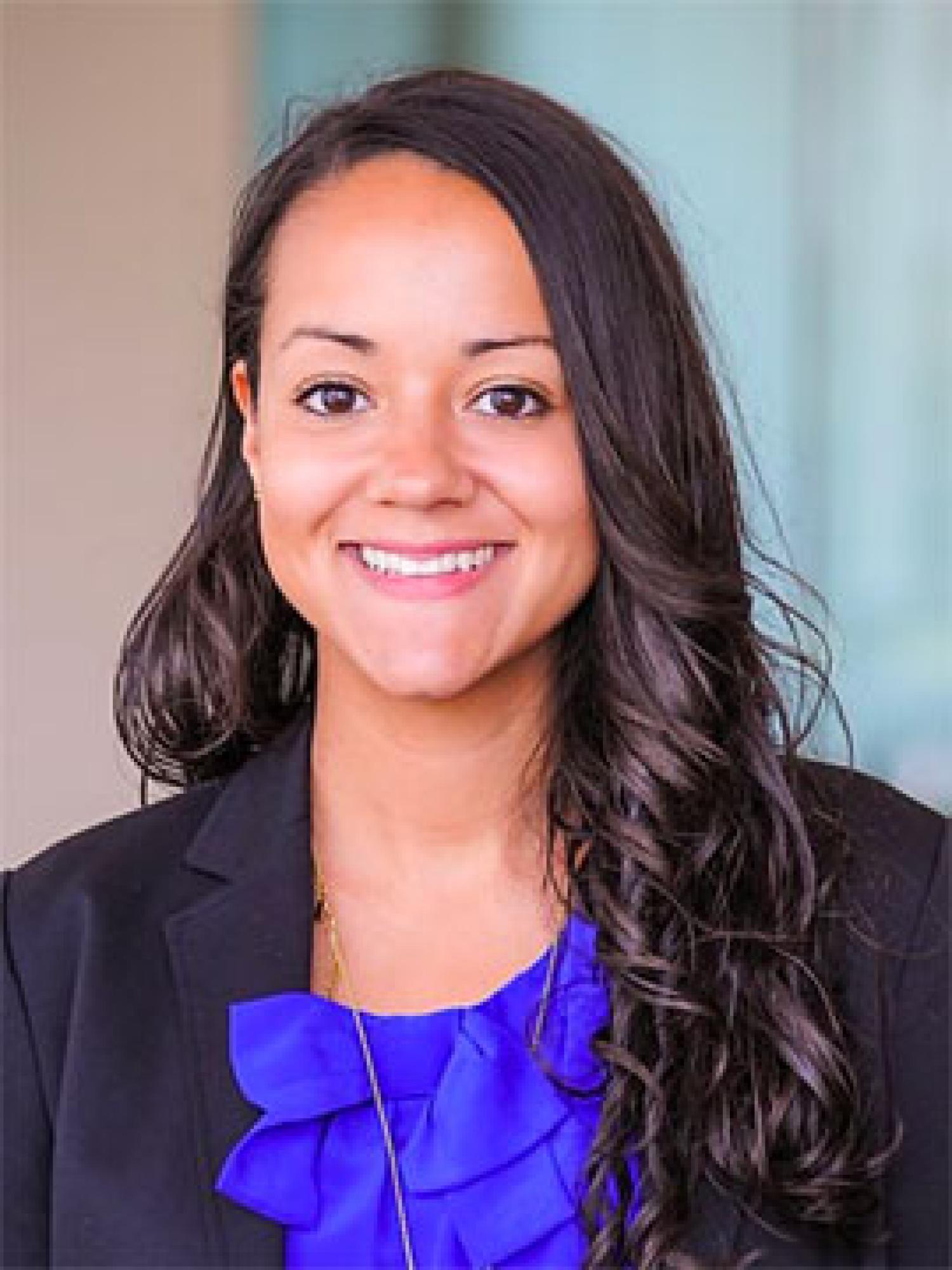
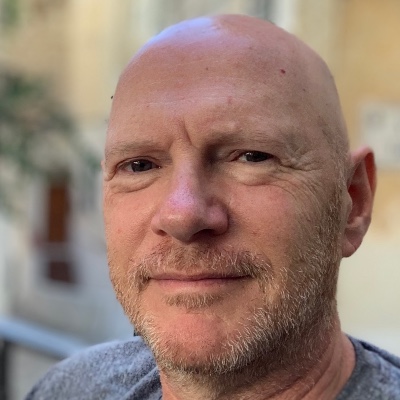
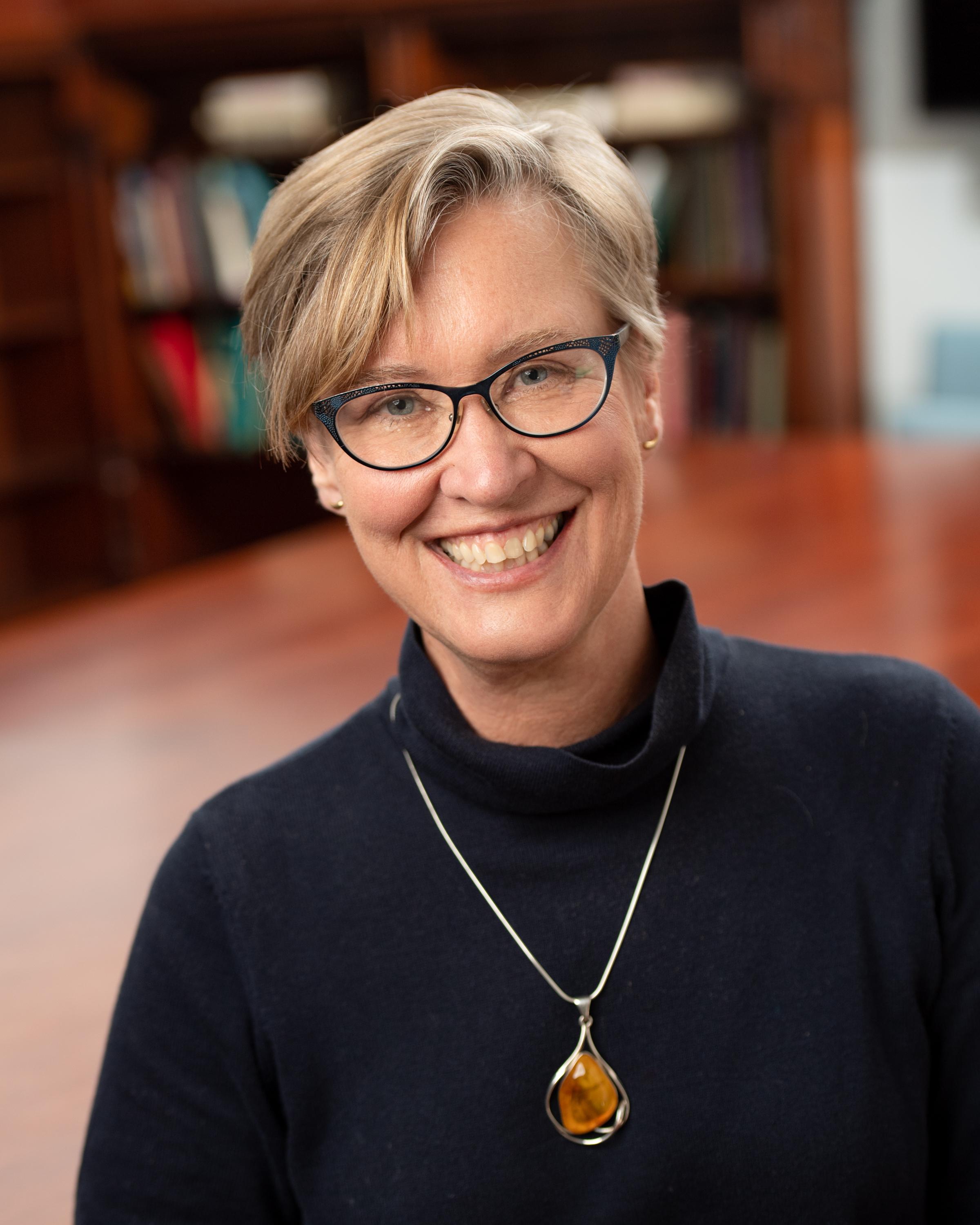
Evava (Eva) Pietri is an Associate Professor in the Department of Psychology and Neuroscience at the University of Colorado Boulder. She previously held a position at IUPUI before moving to CU Boulder in 2021. Dr. Pietri earned her PhD in Social Psychology from The Ohio State University in 2013. Her research focuses on reducing biases and promoting diversity in STEM through interventions targeting identity-safety, intergroup relations, and allyship. Her work emphasizes understanding how marginalized individuals, particularly Black and Latina women, form connections with role models and perceive inclusive environments. Key projects include developing the Video Interventions for Diversity in STEM (VIDS) to address gender bias, exploring allyship frameworks, and examining organizational cues that foster belonging. She has secured grants from the National Science Foundation and SIOP to study identity-safety in STEM and anti-racism messaging strategies. Dr. Pietri’s lab, the PSIA Lab, employs experimental methods and collaborations to investigate real-world applications of social psychology. Current research includes expanding role model effectiveness, mitigating bias, and enhancing equity in education and workplaces. She advises PhD students Nadia Floyd and Sheba Aikawa, both from NYU, and collaborates widely on initiatives like the NSF-funded project on shared adversity and identity-safety.
Peta Goldburg is a Professor in the School of Theology at Australian Catholic University, within the Faculty of Theology and Philosophy. Her work focuses on religious education, theological pedagogy, and the integration of creative arts into faith-based learning. She has contributed significantly to curriculum development in Catholic schools, emphasizing Catholic social teaching, interfaith dialogue, and critical religious literacy. Her research explores topics such as Holocaust education, Jewish-Christian relations, and the role of the arts in religious studies. Goldburg has authored textbooks for Australian schools and edited volumes addressing faith-based identity in education. She has published extensively in journals like Journal of Religious Education and British Journal of Religious Education , focusing on pedagogical strategies, curriculum design, and ethical education. Goldburg’s work bridges theology, education, and cultural studies, with a particular emphasis on fostering religious literacy and ethical awareness in diverse educational contexts. Her recent publications highlight the importance of dialogue between theological principles and contemporary educational practices. Key Contributions: Textbook development for religious studies, curricular frameworks for Catholic schools, and methodologies for integrating creative arts into religious pedagogy. Themes: Interfaith education, Holocaust studies, Catholic social doctrine, and the intersection of art and spirituality.
Jacob Miller is an Assistant Professor in the Department of Psychology at the University of Miami’s College of Arts and Sciences. His research focuses on understanding how neural circuits in the prefrontal cortex (PFC) integrate learning across timescales—from seconds to years—to guide adaptive behavior. Central to his work are investigations into the structural-functional relationships within PFC, including the role of tertiary sulci as landmarks for cognitive processes. Key research interests include prefrontal plasticity, memory consolidation, and the evolution of human cognition. He employs neuroimaging (fMRI), electrophysiology, and longitudinal studies to explore how cortical organization relates to cognitive functions like reasoning and working memory. Miller’s work bridges neuroanatomical, developmental, and evolutionary perspectives to elucidate mechanisms underlying uniquely human cognitive abilities. His lab’s findings highlight the dynamic interplay between short-term working memory and long-term learned knowledge, emphasizing the PFC’s role in shaping goal-directed behavior. Collaborations with institutions like the Alzheimer’s Disease Neuroimaging Initiative further underscore his commitment to translational neuroscience.
William Nickley is an Assistant Professor in the Department of Design at The Ohio State University, holding an MFA and BSD in Design from the same institution. His research bridges industrial design with social impact, focusing on co-design methodologies, youth development through design-based making (DBM), and person-centered design (PCD). He leads the Ohio State DESIS Lab, emphasizing practice, pedagogy, and research to create equitable futures. Nickley has pioneered frameworks for youth empowerment through design, including grant-funded projects with Columbus City Schools and the Boys & Girls Clubs of Central Ohio. His education includes a MFA (2020) and BSD (2010) in Industrial Design from OSU. He previously worked in consultancy, freelance design, and non-profit leadership. Current courses include Design 4650/5650 (Collaborative Design Studio) and Design 4151 (Intermediate Industrial Design II). Research interests include design for social justice, LGBTQIA+ youth healthcare engagement, and the intersection of design with Positive Youth Development. Notable projects include the ISPARK Mobile Maker Cart (2024), CoDe Rainbow training platform (2023), and the Hayes 210 Student Space Redesign (2024-25), a grant-funded interdisciplinary initiative enhancing campus spaces through student input. He has received the 2024 IDSA Young Educator Award and serves on multiple committees including the IDSA Education Council. His service includes leadership in Local Tech Heroes, a nonprofit promoting tech access for underserved communities.
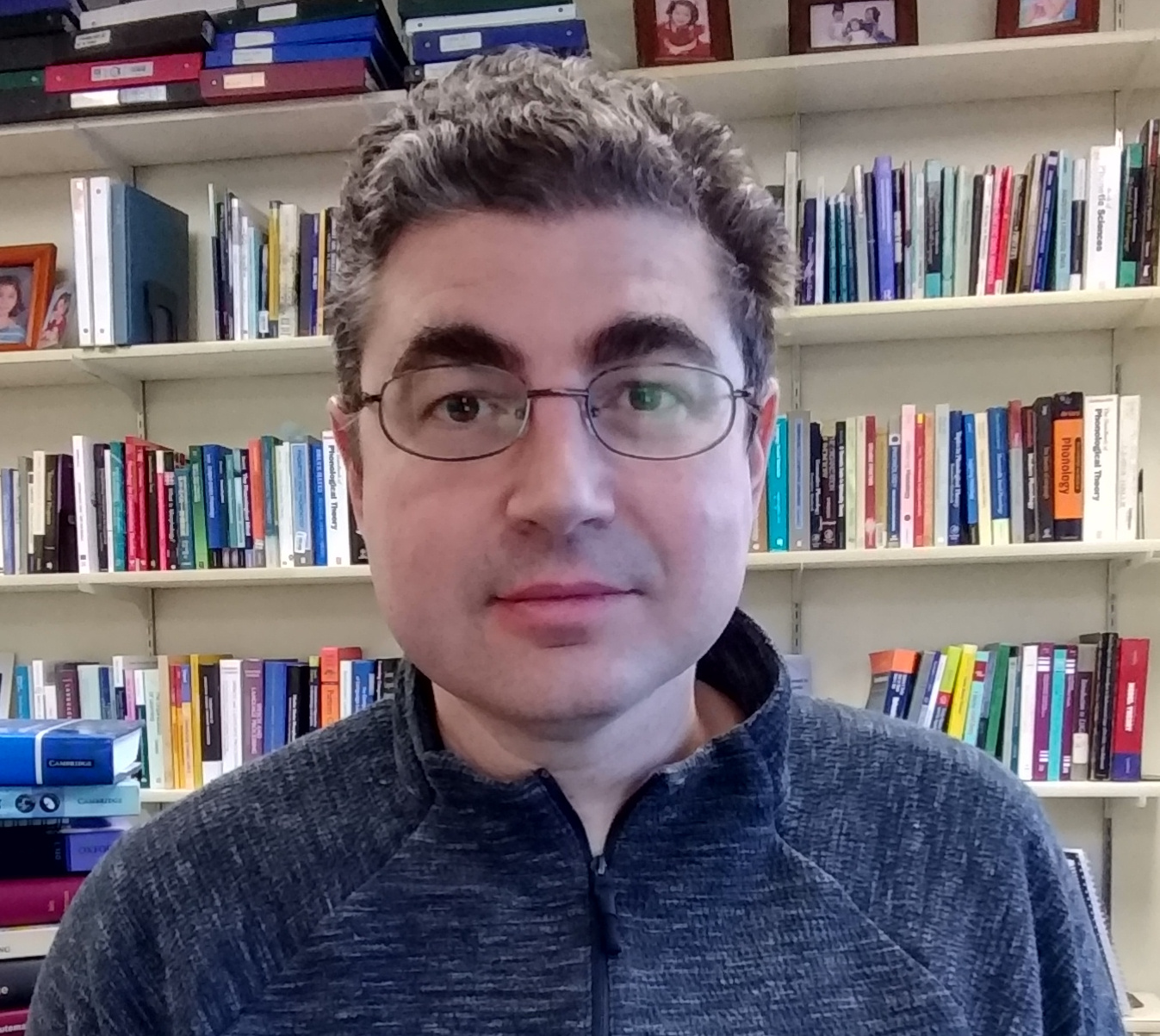
Jeffrey Heinz is a Professor at Stony Brook University , holding a joint appointment in the Department of Linguistics and the Institute for Advanced Computational Science . He has been at Stony Brook since 2017, following a decade at the University of Delaware. His research focuses on computational linguistics, formal language theory, grammatical inference, and phonology, with applications to robotics and artificial intelligence. He earned his Ph.D. in Linguistics from UCLA in 2007. Heinz’s work bridges theoretical linguistics and computational methods, emphasizing the learnability of linguistic patterns through formal models. He has contributed to understanding phonological typology, reduplication, and the mathematical foundations of language learning. His research has been published in Science , Phonology , and Machine Learning , among others. He was honored with the 2017 Early Career Award from the Linguistic Society of America for his contributions to computational learning theory in linguistics. He teaches advanced courses in computational phonology and linguistics, including a course at the LSA Summer Institute. He actively organizes academic sessions and serves on steering committees for conferences like ICGI. His interdisciplinary approach integrates linguistics with computer science, robotics, and mathematical logic. Award highlights include: 2017 Early Career Award (Linguistic Society of America) He advises students in linguistics and computational fields, though specific names are not listed here. His research labs and collaborations involve computational linguistics and robotics projects, such as stress pattern databases and grammatical inference benchmarks.
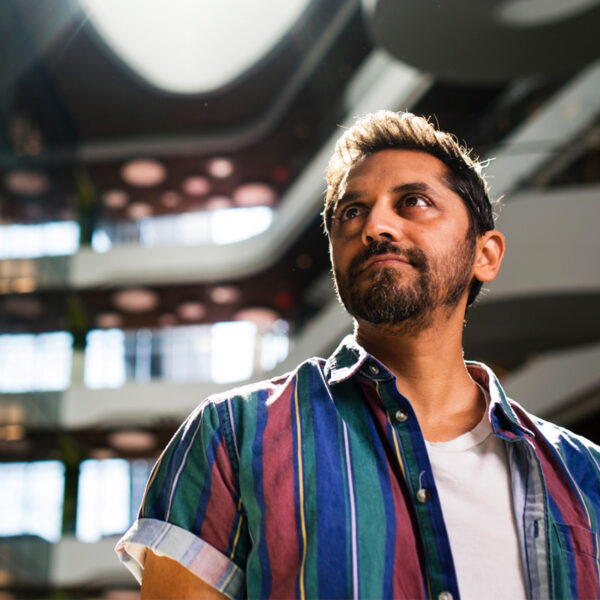
Ajay Satpute is an Associate Professor of Psychology at Northeastern University's College of Science, leading the Affective and Brain Science (ABS) Lab. His research integrates computational modeling, neuroimaging, and behavioral experiments to study affective and social neuroscience, focusing on emotion, fear, and brain architectures. He uses predictive processing theories and machine learning to explore neural correlates of affective experiences and cognitive control. Key areas of investigation include the neural basis of pleasure/pain, emotion regulation, and large-scale brain networks. His lab employs advanced techniques like 7-Tesla fMRI to map subcortical regions such as the periaqueductal gray. He has contributed to understanding context-dependent fear responses and the role of language in emotion construction. In 2023, he was awarded a TIER1 Seed Grant for innovative research. His work has been featured in media discussions on fear psychology, emotion regulation, and societal anxiety (e.g., 'murder hornets').
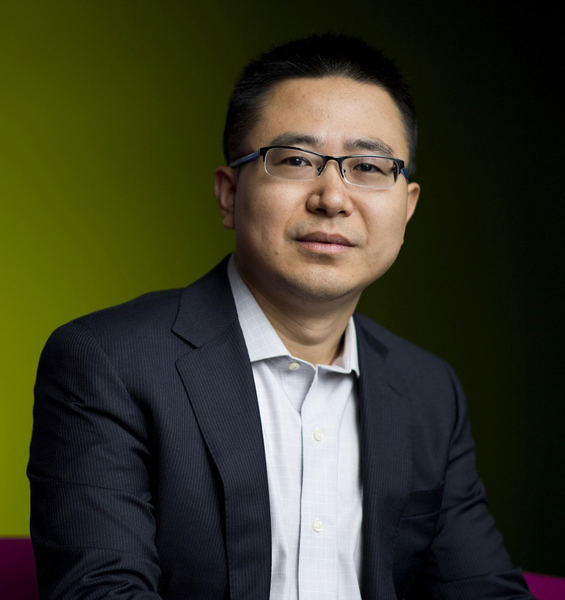
Yun Fu is a tenured Professor in the Department of Electrical and Computer Engineering at Northeastern University, with a joint appointment in the Khoury College of Computer Science. He has established himself as a leading researcher in Artificial Intelligence, with over 500 publications in top-tier venues including IEEE/ACM transactions and major AI conferences. His work spans both theoretical foundations and practical applications, with significant impact in computer vision and machine learning. Professor Fu earned his Ph.D. in Electrical and Computer Engineering from the University of Illinois at Urbana-Champaign. His academic career progressed from Assistant Professor at SUNY Buffalo to his current position as tenured Professor at Northeastern University, where he has held appointments since 2012. His educational background includes a Beckman Graduate Fellowship at UIUC (2007-2008). His research focuses on advancing Artificial Intelligence with particular emphasis on Computer Vision, Pattern Recognition, and Machine Learning. His seminal work includes the "Residual Dense Network for Image Super-Resolution" presented at CVPR 2018, which was ranked among the Top 10 Most Influential CVPR papers. His research interests span image processing, anomaly detection, multimodal learning, and trajectory prediction, with applications ranging from healthcare to consumer technology. Analysis of his recent publications reveals a strong trend toward developing efficient and robust AI systems that bridge computer vision with language understanding. His work increasingly focuses on multimodal learning, trajectory prediction for multi-agent systems, anomaly detection in complex environments, and model validation techniques for black-box systems, while maintaining practical applications in real-world scenarios. Professor Fu's extensive recognition includes: Fellow of IEEE (2018), OSA (2019), SPIE (2018), IAPR (2016), AAIA (2021), and AAAI (2025) Member of Academia Europaea (2022) and European Academy of Sciences and Arts (2023) Fellow of National Academy of Inventors (2023) Multiple Young Investigator Awards from NAE, ONR, ARO, IEEE, ACM, and INNS 12 Best Paper Awards from major conferences Industrial Research Awards from Google, Amazon, Samsung, JPMorgan, and others Professor Fu has successfully mentored numerous Ph.D. students who now hold prominent positions in academia and industry at institutions including Amazon, Microsoft, Meta, Adobe, and major universities. His entrepreneurial ventures include founding Giaran (acquired by Shiseido in 2017) and co-founding TVision Insights, demonstrating his commitment to translating research into real-world impact. He has secured significant research funding from both government agencies and industry partners. As the PI and Founding Director of the SmiLe Lab at Northeastern University, Professor Fu leads a dynamic research group focused on advancing the state-of-the-art in AI and Computer Vision. The lab fosters interdisciplinary collaboration across computer science, electrical engineering, and applied mathematics, with ongoing projects in efficient deep learning, multimodal understanding, and practical AI applications.
Glen Berseth is an Associate Professor in the Department of Computer Science and Operations Research at the University of Montreal and a Senior Academic Fellow at Mila – Quebec Institute for Artificial Intelligence. He is also a Canada CIFAR Chair in AI and Co-Director of the Montreal Robotics and Integrative AI Laboratory (REAL). His work focuses on reinforcement learning, robotics, and deep learning applied to autonomous systems. He holds a postdoctoral background from Berkeley Artificial Intelligence Research (BAIR), working under Sergey Levine. His research emphasizes real-world applications, including human-robot collaboration, continual learning, and multi-agent systems. He teaches courses on robot learning at the University of Montreal and Mila, covering cutting-edge techniques for general-purpose robots. Key research interests include reinforcement learning for robotics, adaptive interfaces, and sim-to-real transfer. His recent work addresses challenges in autonomous learning systems, such as robust locomotion control and efficient exploration strategies. Notable awards include the Canada CIFAR AI Chair. He has supervised numerous students, including PhD candidates Ozgur Aslan and Siddarth Venkatraman, and Master’s students like Roger Creus-Castanyer and Léa Demeule, focusing on topics like reinforcement learning and robotic control. Berseth leads research projects funded by organizations like the CRSNG, FCI, and MITACS, addressing topics such as modular lifelong learning and generalization in robotics. His lab, REAL, explores embodied AI and robotics integration.
Gerry Altmann is a Professor and Director of Perception, Action, and Cognition in the Department of Psychological Sciences at the University of Connecticut. He earned his Ph.D. from the University of Edinburgh in 1986. His research employs behavioral and neuroscientific methods to investigate real-time language processing, event cognition, and object representation dynamics. His research focuses on: Sentence processing and language comprehension mechanisms Event cognition and mental representation of object histories Real-time mapping between language and visual environments Neural correlates of language processing using EEG and fMRI Recent publications (2019-2025) demonstrate methodological diversity including eye-tracking, EEG, computational modeling, and behavioral paradigms. Predominant themes include event representation, neural dynamics of language processing, and cognitive architectures supporting abstract concept formation. Honors include: Founding Director of the CT Institute for the Brain and Cognitive Sciences (2015-2021) Editor-in-Chief of Cognition (2006-2015) Honorary Secretary of the UK's Experimental Psychology Society (2004-2007) He has supervised numerous graduate students including doctoral candidate Emily Yearling and master's student Wesley Leong. Recent graduates include Julia Mocciola, Katrina Turick, and Yanina Prystauka. Dr. Altmann directs the Altmann Lab at UConn, which uses eye-tracking, EEG, and fMRI to study language processing. The lab is affiliated with the CT Institute for the Brain and Cognitive Sciences and includes postdoctoral, graduate, and undergraduate researchers.
Bowen Xu is an Assistant Professor in the Department of Computer Science at North Carolina State University (NC State), College of Engineering. His research focuses on software engineering, machine learning, and program analysis, particularly in securing AI models and improving code quality. He holds a PhD from Singapore Management University (SMU), where he also conducted postdoctoral research. Education: PhD in Computer Science, Singapore Management University (SMU) Postdoctoral Researcher, SMU School of Computing and Information Systems Research Interests: AI for Code, Backdoor Attacks on Code Models, Vulnerability Detection Code Representation Learning, Model Compression, Safety of AI Systems Chatbot Development for Developers, Automatic Code Review Key Contributions: Developed PTM4Tag+, a Stack Overflow tag recommendation system using pre-trained models Explored stealthy backdoor attacks in code and reinforcement learning systems Pioneered work on automatic vulnerability repair using LLMs and broader input analysis Awards: 2022: Honorable Mention Award (ACSAC) 2018: Highly Commended Full Paper Award (ESEM) Service Roles: Editorial Board Member, Empirical Software Engineering Journal Program Committee Co-chair for ICSE/FSE Research Tracks Organized workshops like FORGE, MaLTeSQuE, and SEA4DQ Labs & Teams: Leads the Softmax Lab at NC State, advising 12+ students across PhD, Master's, and undergraduate levels. Alumni include industry professionals at Microsoft, Barclays, and Marvell Semiconductor.
Michael Zurel is a NSERC Postdoctoral Fellow in the Department of Mathematics at Simon Fraser University, working under Dr. Nadish de Silva, Canada Research Chair in the Mathematics of Quantum Computation. His research focuses on foundational aspects of quantum computation, quantum information, and nonclassical physics. Key interests include quantum contextuality, negativity in quasiprobability representations, and classical simulation algorithms for quantum systems. He holds a PhD, MSc, and BSc in Physics and Mathematics from the University of British Columbia (2024, 2020, 2019), all supervised by Dr. Robert Raussendorf. His doctoral work explored classical descriptions of quantum computations via hidden variable models and quasiprobability representations. His master’s thesis addressed hidden variable models and classical simulation algorithms for quantum computation with magic states on qubits. Research interests emphasize bridging quantum foundations with computational efficiency, particularly how nonclassical features like contextuality enable quantum advantage. Collaborators include prominent figures such as Robert Raussendorf, Juani Bermejo-Vega, and Cihan Okay. His scientific achievements include the NSERC Postdoctoral Fellowship. Advising and grants are not explicitly detailed, but his work is supported by foundational research grants. He collaborates actively within quantum information theory and computational physics communities.
Seo Eun "Sunny" Yang is an Assistant Professor of Political Science and Communication Studies at Northeastern University, affiliated with the College of Social Sciences and Humanities and the College of Arts, Media and Design. Her research integrates graph/network theory, machine learning, NLP, and computer vision to study visual politics, political communication, and neuroscience. She holds a PhD in Political Science from The Ohio State University (2022), and degrees in Statistics from Korea University (BE 2013, MS 2015) and a Master's in Political Science from the University of Rochester (2017). Education: PhD in Political Science, Ohio State University, 2022 MS in Political Science, University of Rochester, 2017 MS in Statistics, Korea University, 2015 BE in Statistics, Korea University, 2013 Research Interests: Explores how media, politicians, and institutions use visual/verbal strategies to shape political meaning. Central questions include neural mechanisms of visual interpretation, multimodal framing analysis, and biased media representation of minorities. Uses computational methods like neural networks and computer vision to analyze photojournalism and legislative politics. Awards & Grants: Network Science Institute Seed Grant ($10,000) 2023 Transforming Interdisciplinary Experiential Research Grant ($50,000) 2023 NULab Seedling Grant ($2,500) 2022 Advising & Labs: Leads projects on neuro-racial bias in political evaluations and AI-driven analysis of media narratives. Office hours: Fridays 9-10am.
Nancy Jacobs is a Professor of History at Brown University, affiliated with the Department of History in the School of Humanities. Her research spans environmental history, colonial and contemporary African history, the history of science, and animal studies, with a particular focus on human-animal relations and knowledge production in southern Africa. Her research interests center on the intersections of power, race, class, and gender in colonial and postcolonial Africa, with a unique emphasis on the more-than-human world. She employs microhistory and biography to explore how scientific knowledge, particularly in ornithology, was shaped by colonial dynamics and local African expertise. Her work challenges traditional boundaries between nature and culture, emphasizing interspecies relationships and the role of animals in historical processes. The 15 most recent publications reflect a consistent trajectory in African environmental and scientific history, with increasing focus on animal agency, communication, and the Anthropocene from subaltern perspectives. Her work integrates Actor-Network Theory and transnational approaches, particularly evident in her studies of birders, parrots, and ecological networks across Africa and the diaspora. Hutchins Family Fellow, Harvard University (2023) Affiliated Scholar, Max Planck Institute for the History of Science (2022) Richard B. Salomon Faculty Research Award, Brown University (2022-23) Carson Fellow, Rachel Carson Center (2018) National Humanities Center Fellow (declined, 2022) American Society for Environmental History Alice Hamilton Prize (2002) Fulbright-Hays Fellowship (1990-91) Dr. Jacobs has been an active mentor, receiving the Mellon Mays Outstanding Mentors Award in 2004, and has secured significant research funding from institutions such as the American Council for Learned Societies, the Rockefeller Foundation, and Brown University. She has taught a wide range of courses at Brown, including African Environmental History, Southern African Entanglements, and Animal Histories. Her current research project, 'The African Grey Parrot: A Global History,' continues her innovative exploration of interspecies relations across evolutionary, colonial, and contemporary contexts. She is involved in collaborative research, notably with Jennifer Johnson of Brown University on a sourcebook for African history. Her lab and intellectual community include the Animal Studies Working Group at the Pembroke Center, which she led as a Seed Grant PI in 2016.
Xianzhi Li is an Associate Professor at the School of Computer Science and Technology, Huazhong University of Science and Technology (HUST). Before joining HUST, he was a postdoctoral fellow at The Chinese University of Hong Kong (CUHK) and the Hong Kong Center for Logistics Robotics. He earned his Ph.D. in Computer Science and Engineering from CUHK under Professors Pheng-Ann Heng and Chi-Wing Fu, preceded by an M.Sc. in Biomedical Engineering (CUHK, 2015) and a B.Eng. in Biomedical Engineering from Sichuan University (2014). His research focuses on 3D vision, computer graphics, point cloud processing, and deep learning, with a specific emphasis on designing machine learning algorithms for 3D data analysis. Recent work includes advancements in 3D point cloud analysis, semantic segmentation, and sim-to-real robotics applications. Key research trends include the integration of large language models with 3D data (e.g., MiniGPT-3D), open-world semantic segmentation (PDF), and joint 2D-3D learning frameworks (Joint-MAE). His contributions span robotics, computer vision, and graphics, with notable applications in industrial bin picking and 3D reconstruction. Awards: Teaching Assistant of Merit (2018), Biomedical Engineering Scholarship (2015), and National Scholarship in China (2013). Teaching: Courses include Computer Vision (Spring 2022), Advanced Topics in Computer Graphics and Visualization, and Principles of Computer Graphics.
Alexander Hoyle is a Researcher at the ETH Zürich AI Center, concurrently contributing to natural language processing/machine learning and social science groups. He holds a PhD in Computer Science from the University of Maryland (advised by Philip Resnik) and a Master's in Computational Statistics from University College London (advised by Sebastian Riedel and Jeff Mitchell). His research focuses on computational social science, emphasizing methods for latent construct identification (e.g., topic models, ideal point models) and evaluation frameworks grounded in validity. Key areas include bias/fairness in AI, political science applications, and mental health constructs like suicidality. He pioneered frameworks like PairScale (attitude measurement via pairwise comparisons) and TopicGPT (prompt-based topic modeling). Education: PhD in Computer Science, University of Maryland (2020-2023) MS in Computational Statistics & Machine Learning, University College London (2018) Bachelor's degree (pre-PhD details omitted) Research Interests: Combining NLP with social science needs, particularly in evaluation rigor and interpretability. Active in interdisciplinary work between NLP and computational social science (e.g., measuring attitude evolution on Reddit, improving topic model validity). Advocates for human-in-the-loop approaches to address LLM limitations in tasks like document clustering and sentiment analysis. Grants & Projects: Contributed to a landmark $2.2B DOJ settlement on NYC public housing via econometric modeling at The Brattle Group. Active in graduate labor advocacy (Maryland state legislature testimony) and mentorship (Científico Latino's mentorship program). Labs & Teams: Leads initiatives at the ETH Zürich AI Center, collaborating with groups like Microsoft Research (FATE) and AI2's AllenNLP. Involved in multi-university projects (e.g., University of Maryland's Computational Linguistics lab).