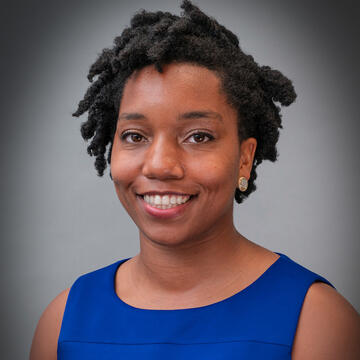
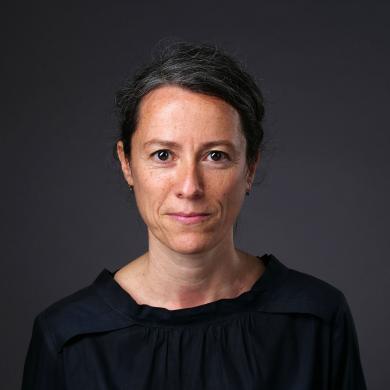
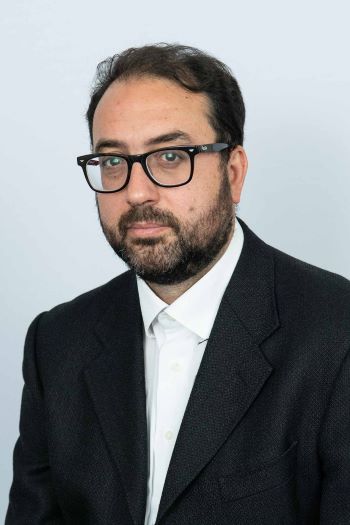
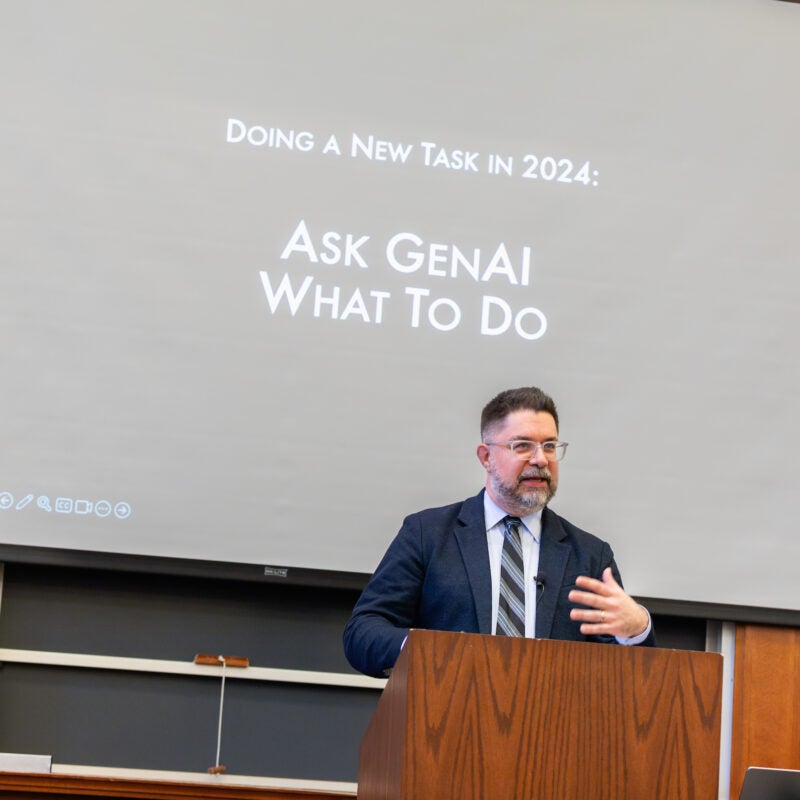
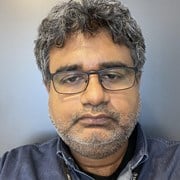
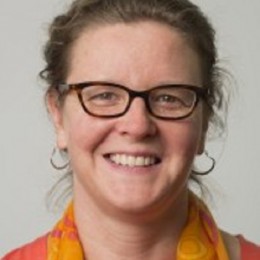
Line Brotnow Decker is a Lecturer in the Child Study Center at Yale School of Medicine. She holds a BS in Psychology from Université de Paris (2011) and an MSc in Developmental Neuroscience and Psychopathology from University College London (2013). Her research focuses on intensive home-based treatments for youth with psychiatric conditions, family systems therapy, maternal mental health, and behavioral motivation measurement. Dr. Decker co-developed the CRAVE Scale for assessing motivation states related to physical activity and has published extensively on interventions targeting high-risk youth, parent-clinician collaboration, and prenatal stress impacts. Key Research Areas: Mentalization-based interventions, family therapy, school absenteeism interventions, and maternal-child health dynamics Notable Contributions: Evaluation of IICAPS home-based program, development of CRAVE Scale, studies on parent-clinician disagreement impacts Her work emphasizes practical clinical strategies for improving family mental health treatment outcomes through enhanced clinician-parent collaboration and tailored behavioral interventions. Dr. Decker collaborates with institutions like the Stephen & Denise Adams Center for Parkinson’s Disease Research on translational child psychiatry initiatives.
Daniel Aldrich is a Dean's Professor of Resilience and Director of the Resilience Studies Program at Northeastern University , affiliated with the College of Social Sciences and Humanities and Political Science Department . His career spans decades of research on disaster resilience , social capital , and post-crisis recovery , with fieldwork across Japan, India, and Africa. Education : PhD and MA in Political Science from Harvard University, MA from UC Berkeley, BA from UNC Chapel Hill. Leadership : Co-Director of Global Resilience Institute, Board member of journals Asian Politics and Policy and Risk Hazards and Crisis in Public Policy . Research Focus centers on social capital's role in disasters , controversial facility siting , and countering violent extremism . His work reveals how community networks enhance survival rates during tsunamis, hurricanes, and pandemics, and how decentralized decision-making improves recovery. Scientific Contributions include groundbreaking studies on Fukushima nuclear policy , social ties in evacuation behavior , and resilience through rainwater harvesting . His 2019 book Black Wave analyzes Japan's 3/11 disasters. Grants : NSF, Fulbright, Abe Foundation, Rasmussen Foundation, Japan Foundation. Awards : TIER 1 NEU Award, AAAS Fellowship, NSF Research Center Grant, University Faculty Scholar (Purdue). Media Engagement spans New York Times , CNN , AP , Reuters , and NPR , with over 50 media appearances in 2025 alone. He consults for the New England Aquarium and Louisiana Coastal Protection Authority .
Michael Quante is a Professor of Philosophy with a focus on Practical Philosophy at the University of Münster. His affiliations include leadership roles in the Cluster of Excellence 'Religion and Politics', the Graduate School, and the Center for Science Communication. He holds dual roles as Prorector for International Affairs and Sustainability at the University of Münster. His academic career includes habilitation (2001) and a PhD (1992) from the University of Münster, with earlier studies in Philosophy and German at the Universities of Münster and Berlin. Quante’s research focuses on Philosophy of German Idealism, especially Hegel and Marx, Philosophy of the Person, Action Theory, and Biomedical Ethics. Notable projects include leading the 'Religious-Philosophical Noncognitivism' project and co-editing the 'Hegel Studien' series. His work bridges philosophical theory with contemporary societal issues, such as ethics in science, inclusive education, and the critique of religion. His recent publications emphasize Marx’s philosophy, Hegelian recognition theory, and ethical aspects of biomedical technologies. He has received prestigious awards, including the German Prize for Philosophy and Sozialethik (2013) and honorary doctorates from institutions like the Ilia State University (2023). He actively contributes to academic governance, including roles in the Berlin-Brandenburg Academy of Sciences and the Academia Europaea. Quante’s advising and grants include leading interdisciplinary projects on individualization and evolutionary processes. His involvement in labs and teams includes the Center for Bioethics and the Graduate School 'Evolutionary Processes of Adaptation and Disease'.
Destenie Nock is an Assistant Professor in Civil and Environmental Engineering (CEE) and Engineering and Public Policy (EPP) at Carnegie Mellon University. Her research focuses on energy justice, sustainable energy transitions, and equitable infrastructure planning. She develops mathematical models to address societal challenges in energy systems, particularly for vulnerable communities. Nock co-founded Peoples Energy Analytics , using algorithms to identify energy poverty and connect households with assistance programs. Education: PhD in Industrial Engineering and Operations Research (UMass Amherst, 2019); BS in Electrical Engineering and Applied Mathematics (North Carolina A&T State University). Research Interests: Energy equity, decarbonization impacts, transportation electrification, and policy analysis. She investigates how energy systems disproportionately affect marginalized groups and designs solutions to mitigate disparities. Awards: 2024 Science Defender (Union of Concerned Scientists), 2025 Outstanding Alumni Award (UMass Amherst). Grants & Funding: Six National Science Foundation grants, Sloan Foundation, and EPA support for projects on energy justice and equity metrics. Labs/Teams: Leads research groups in energy modeling and policy at CMU, collaborating with utilities and policymakers to implement equitable energy solutions.
Marta Moita is a Research Professor and Principal Investigator at the Champalimaud Foundation's Champalimaud Research center in Lisbon, Portugal, where she leads the Moita Lab in the Behavioral Neuroscience research group. Her laboratory investigates the neural and behavioral mechanisms underlying threat responses in animals, with particular focus on how contextual cues influence defensive decision-making between freezing and fleeing behaviors. Dr. Moita's research spans multiple levels of analysis, from collective behavior in social contexts to detailed neural mechanisms. Her lab employs diverse model organisms, particularly fruit flies ( Drosophila melanogaster ) and rats, to study how animals integrate social, spatial, and internal state information to guide threat responses. Key research areas include fear conditioning, emotional contagion, social safety cues, and the neural circuits underlying defensive behaviors. Her work often bridges behavioral neuroscience with evolutionary biology perspectives, examining how defensive strategies have been shaped by natural selection. The Moita Lab's publication record demonstrates a consistent focus on innovative approaches to understanding threat processing across species. Recent work has revealed how looming visual stimuli drive defensive responses in rats, how social cues can override threat levels, and the physiological consequences of threat exposure. The lab frequently publishes in high-impact journals including Current Biology , Nature Communications , and Science Reports , reflecting the significance of their contributions to the field. Dr. Moita actively mentors several PhD and Masters students, including Charlotte Rosher, Violetta La Franca, Mariana Franco, Matilde Henriques, and Mirjam Heinemans. Her laboratory team also includes postdoctoral researchers like Alexandre Leitão, Anna Hobbiss, and Ricardo Neto Silva, along with research technicians and lab administrators who support the diverse research projects.
Professor Luca Anceschi is a faculty member in the Department of Central & East European Studies at the University of Glasgow, where he holds the title of Professor of Eurasian Studies (Political & International Studies). He joined the university in 2013 and became a full professor in 2021. His research focuses on post-Soviet Central Asia’s foreign policy, Eurasian energy geopolitics, and personalist rule. Anceschi previously held a Discovery Early Career Fellowship at La Trobe University (2012–2013) and currently edits Europe-Asia Studies , a leading journal for post-socialist studies. His research explores three core themes: (1) foreign policy-making mechanisms in Central Asian states, including Turkmenistan and Kazakhstan; (2) the intersection of energy infrastructure projects (e.g., TAPI pipeline) with domestic and international politics; and (3) comparative analysis of personalist regimes in the region. He has authored monographs such as Turkmenistan’s Foreign Policy (2008) and Analysing Kazakhstan’s Foreign Policy (2020), and co-edited Personalism and Personalist Regimes (2024). Anceschi contributes to public discourse through media engagements, including writing for Open Democracy and podcast appearances on Radio Free Europe/Radio Liberty. His work frequently addresses authoritarian governance, energy security, and the geopolitical implications of Eurasian integration. He supervises doctoral students on topics such as the Eurasian Economic Union, remittance regimes, and natural resource management in Azerbaijan and Kazakhstan. Key Awards: Australian Research Council Discovery Early Career Fellowship (2012–2013) Editorial Role: Editor of Europe-Asia Studies (2015–present)
James Robert Brennan is an Associate Professor in the Department of History and the Center for African Studies at the University of Illinois, Urbana-Champaign. His research focuses on African history, particularly modern Tanzania, colonialism, and decolonization. He holds significant awards including the Conrad Humanities Scholar (2019-2024) and the Bethwell A. Ogot Book Award (2013). His work explores themes such as Islamic politics, print culture, and Cold War-era intelligence networks. Notable publications include Taifa: Making Nation and Race in Urban Tanzania (2012) and co-edited volumes on Dar es Salaam's urban history. Brennan’s research bridges historical analysis with critical engagement on colonial legacies and postcolonial governance. He has held prestigious fellowships including the ACLS Ryskamp Research Fellowship (2012–2015). His recent scholarship addresses topics like Islamic authority in Tanzania, Cold War political intelligence, and postcolonial urban intellectual networks. Brennan actively contributes to academic discourse through peer-reviewed articles and book reviews, emphasizing interdisciplinary approaches to African history. He is also a co-editor of the Journal of Eastern African Studies .
Prof. Dr. Markus Freitag is a Professor of Political Sociology at the University of Bern . He studied political science, economics, and German language and literature at Heidelberg University, obtaining his Magister Artium in 1995, followed by a PhD in 1999. Positions: Post-Doc at University of Basel, ETH Zurich, University of Essex; Visiting Lecturer at University of Konstanz; Assistant Professor at Humboldt University Berlin; Chair of Comparative Politics at University of Konstanz (2005-2011) Current role: Director of the Institute of Political Science, University of Bern (since 2011) His research focuses on political sociology, political psychology, comparative politics, social capital , and direct democracy . Key themes include: Emotional drivers of political behavior during crises (e.g., pandemic politics) Personality traits and voter decision-making Trust in institutions and associational life Intergroup conflict and polarization Swiss militia system and local governance Global analysis of regime preferences and social cohesion Recent scientific publications emphasize affective polarization, pandemic preparedness, institutional trust , and arms export ethics , with empirical studies across Europe and post-conflict regions . His work appears in journals like British Journal of Political Science , Comparative Political Studies , and Political Psychology . Prof. Freitag leads teaching courses at the University of Bern, including "Demokratie und Gesellschaft I" and "The Political Sociology of Crises" , and collaborates with researchers such as Christopher Claassen, Sascha Göbel, Alina Zumbrunn , and Maximilian Filsinger .
Megan J. Elias is an Associate Professor of the Practice and Director of the Food Studies Program at Boston University. She holds a PhD from the City University of New York (CUNY), an MA from San Francisco State University, and a BA from Cornell University. Her research explores the intersection of food, culture, and history, with a focus on food writing, markets, home economics, and gender. Dr. Elias is the author of seven books, including *Food on the Page: Cookbooks and American Culture* (2017) and *Food in the United States, 1890–1945* (2009), which received the American Library Association’s Outstanding Academic Text award. She serves as editor-in-chief of *Food, Culture & Society* and has been a co-recipient of multiple National Endowment for the Humanities grants. Elias teaches courses such as *History of Food*, *Introduction to Gastronomy*, and *Food and Gender*, emphasizing interdisciplinary approaches. Her work bridges historical analysis with public engagement, including contributions to Sundance Channel’s *Love/Lust* series and collaborations on museum podcasts like the *Making Objects Speech* project. Her research interests span business history, cultural history, food technology, and the scholarship of teaching and learning. In grants and fellowships, she secured $350,000 as Lead Faculty Mentor for the *Bridging Historias* program and a $74,937 NEH grant for the *Foodways and Humanities Project*. Her awards include the CUNY Chancellor’s Fellowship (2014) and the Culinary Historians of New York Amelia Scholars Grant (2007). She actively mentors faculty and curricular development, reflecting her commitment to academic innovation and educational equity.
Christopher T. Bavitz is the WilmerHale Clinical Professor of Law and Vice Dean for Experiential and Clinical Education at Harvard Law School. He serves as Managing Director of the Cyberlaw Clinic at the Berkman Klein Center for Internet & Society and is a Faculty Co-Director of the Center. His expertise spans intellectual property, media law, AI governance, and technology policy. Bavitz teaches courses like Music & Digital Media and Counseling and Legal Strategy in the Digital Age . His research focuses on algorithmic fairness, intermediary liability, and regulatory frameworks for emerging technologies. Bavitz holds a B.A. from Tufts University and a J.D. from the University of Michigan Law School. Before joining HLS, he was Senior Director of Legal Affairs at EMI Music and practiced litigation at Sonnenschein Nath & Rosenthal. Key initiatives include work on the Lumen Database for transparency in content takedowns, the AGTech Forum for state attorneys general, and policy analysis on AI ethics, facial recognition, and algorithmic risk assessment tools. He advises on startup legal strategy, digital finance, and generative AI accountability.
Lokukaluge Prasad Perera is a Professor in Maritime Technology at UiT The Arctic University of Norway and a Senior Research Scientist in Smart Data at SINTEF Digital . He holds a BSc in Mechanical Engineering from Oklahoma State University (1999), MSc in Systems & Controls from the same institution (2001), and a PhD in Naval Architecture and Marine Engineering from Technical University of Lisbon (2012). His research focuses on Maritime and Offshore Systems , Advanced Data Analytics , Autonomous Navigation , Energy Efficiency , and Digital Twin Applications . He has published over 100 peer-reviewed papers and was recognized in the World's Top 2% Scientists (2021-2022) by Stanford University. Key professional experiences include roles at SINTEF Ocean (2014–2017), Center for Marine Technology and Engineering in Portugal (2008–2012), and Wärtsilä Finland (2012–2014). He has also held academic positions at Naval & Maritime Academy and Ocean University of Sri Lanka . His work addresses challenges in emission reduction , renewable energy integration , and safety-critical systems for maritime operations. Current projects emphasize trustworthiness of autonomous ships and data-driven decision frameworks for energy efficiency.
Virginia Page Fortna is the Harold Brown Professor of U.S. Foreign and Security Policy and Chair of the Department of Political Science at Columbia University. She is a leading scholar in international relations with expertise in conflict resolution, peacekeeping operations, and civil war dynamics. Professor Fortna earned her BA from Wesleyan University and completed her Ph.D. at Harvard University in 1998. Her academic career has been centered at Columbia where she has established herself as a prominent figure in international security studies through rigorous research and scholarly leadership. Fortna's research focuses on terrorism in civil conflicts, international climate politics, peace durability after wars, and war termination processes. Her work integrates quantitative and qualitative methodologies while addressing policy-relevant questions. She is particularly renowned for her groundbreaking studies on peacekeeping effectiveness that have reshaped academic understanding of post-conflict stabilization. Her scholarship consistently challenges conventional wisdom, as evidenced by recent work questioning whether terrorism is truly 'a weapon of the weak.' Her publication record shows an evolution from foundational work on peace agreements and ceasefire durability to more recent investigations of terrorist tactics in civil wars. Throughout her career, Fortna has maintained methodological innovation, often developing new datasets to address critical questions in international security. Her research combines theoretical diversity with empirical rigor, making significant contributions to both academic debates and policy discussions. Elected to the American Academy of Arts and Sciences (2021) Lenfest Distinguished Columbia Faculty Award (2014) Karl Deutsch Award from International Studies Association (2010) Fellowships at multiple prestigious research institutions Professor Fortna mentors graduate students through Columbia's Ph.D. program and teaches courses on international politics, climate change, war termination, terrorism, cooperation and security, and research methods. Her research has received substantial support through fellowships from leading academic institutions, reflecting the significance and policy relevance of her work in international relations. Based in New York with connections to Portland, Oregon, Fortna continues active research on terrorism in civil wars and international power dynamics in the anthropocene. Her scholarship remains highly influential in both academic and policy circles, particularly regarding effective conflict resolution strategies and international security frameworks.
Dr. Alice Cheng is an Associate Professor in the Department of Communication at North Carolina State University (NCSU), with an adjunct role at the Poole College of Management. She is also the Director of the Studying Broad Communication Program-China and a University Faculty Fellow. She holds a Ph.D. from the Missouri School of Journalism and an MBA from the Crosby MBA program, recognized with an outstanding academic award. Her research focuses on AI-driven strategic communication, crisis management, and misinformation. Notable projects include leveraging AI chatbots for mental health support, combating misinformation, and ethical AI integration. She has secured over $2 million in grants from NSF, NEH, and others, including a prestigious Arthur Page Center Legacy Grant for ethics in public communication. Dr. Cheng has published over 160 articles in top journals like New Media & Society and Journal of Public Relations Research , and co-edits special issues in Internet Research and Public Relations Review . Awards include the University Faculty Scholar (2023-2024), Top Faculty Paper Award (AEJMC 2024), and the Hong Kong Government Reaching Out Award. She advises numerous graduate students and has led international collaborations, including keynote addresses at MIT, Peking University, and Vienna University of Economics. Her work bridges academia and practice through editorial roles, grants, and community outreach initiatives.
Adam Harkens is a Lecturer in Public Law at the University of Strathclyde. He holds a PhD in Law from Queen's University Belfast, funded by the Leverhulme Interdisciplinary Network on Cybersecurity and Society (LINCS). His research focuses on the intersection of public power, digital decision-making tools, and constitutionalism, addressing issues like algorithmic policing, surveillance, and AI governance. He is a founding member of the Strathclyde Centre for Doctoral Training (SCDT) in Human Rights-Based Decision-Making and the LEADS Lab at the University of Birmingham. Teaching includes modules on constitutional law, administrative law, and digital regulation at both undergraduate and postgraduate levels. Professional activities include advising bodies like the Office for AI and the Dutch Raad van State. He co-leads the SCDT project (2023–2027) and contributed to the FATAL4JUSTICE? Programme (2019–2022). His upcoming monograph, The Algorithmic State: Power, Constitutionalism and the Future of Administrative Law , explores these themes further. Research interests emphasize preventing power abuse via algorithmic systems, engaging legal theory, human rights, and interdisciplinary collaboration. Recent projects include workshops on predictive policing regulation and EU AI accountability frameworks.
Professor Stuart Phinn is a distinguished academic at the University of Queensland, serving as Professor in the School of the Environment and Centre Director of the Remote Sensing Research Centre (Earth Observation Research Centre). He also maintains affiliations with the Centre for Marine Science. With a career spanning over two decades, Professor Phinn has established himself as a leading expert in earth observation and environmental monitoring, with over 559 publications including 295 journal articles. His educational background includes a Bachelor (Honours) of Science (Advanced) from The University of Queensland and a Doctor of Philosophy from San Diego State University. Professor Phinn's leadership extends to founding directorships of Australia's national earth observation coordination body (www.eoa.org.au) and collaborative research infrastructure (www.tern.org.au), as well as a world-leading research-to-operational program supporting government environmental monitoring (www.jrsrp.org.au). He also leads the Earth Observation for Government Network. Professor Phinn's research focuses on monitoring environmental change using earth observation and field data. His work primarily involves using images collected from satellites and aircraft, combined with field measurements, to map and monitor Earth's environments and how they change over time. This research is conducted in collaboration with environmental scientists, government agencies, NGOs, and private companies. A growing aspect of his work focuses on national coordination of earth observation activities and the collection, publishing, and sharing of ecosystem data. His work provides solutions to support sustainable development and resource use for governments, industries, and communities. His recent publications demonstrate a consistent focus on applying earth observation technologies to solve environmental challenges across multiple domains. The 15 most recent articles reveal strong themes in coral reef mapping and monitoring, land cover change detection, fire resilience analysis, and advanced remote sensing techniques including multi-sensor fusion and machine learning applications. His work spans terrestrial, coastal, and marine environments, with significant contributions to understanding environmental change in Australia and internationally, particularly in Indonesia. Professor Phinn has secured substantial research funding from diverse sources including government agencies (Queensland Government, Great Barrier Reef Marine Park Authority), industry partners (SmartSat CRC, Blue Economy CRC), and international organizations (Google Inc, Vulcan Inc). Current projects include evaluating impacts of threats to endangered reptiles, automating tree-scale vegetation structure monitoring, and continuing the Joint Remote Sensing Research Program. As an academic supervisor, Professor Phinn has mentored numerous PhD and Master's students, with current supervision spanning topics from forest disturbance analysis to kelp forest mapping and fire resilience of mine site rehabilitation. His extensive supervision history demonstrates his commitment to training the next generation of earth observation scientists. The Earth Observation Research Centre he directs fosters a collaborative research environment focused on transforming satellite and airborne images with field survey data into meaningful environmental information for decision-making.