Jørgen Møller is a Professor at the Department of Political Science, Aarhus University, specializing in international relations, state formation, democracy and democratization, history and politics, and qualitative methodology. His research examines long-term historical processes in Europe, including the development of the international system and the interplay between religious institutions and state-building. Education: PhD in Political Science (2007, European University Institute), MSc (2003, Aarhus University), BSc (2001, Aarhus University). Research Projects: Conflict and Democratization (2015–2020), DEDERE: Democratic Deepening and Regression (2013–2016), and The Catholic Origins of the Rise of Europe (2019). Publications: Focus on state formation, historical political economy, and methodological rigor, with peer-reviewed articles in journals like American Journal of Political Science and Journal of Historical Political Economy .
Alison Louise Milner is an Assistant Professor in the Department of Culture and Learning at Aalborg University's Faculty of Social Sciences and Humanities. She joined in 2020 after completing her PhD at the University of Nottingham, focusing on teacher professionalism in England and Sweden. Her research explores teacher unions, social dialogue, education policy, and inclusive education systems. She is a co-PI on EU-funded projects addressing teaching profession attractiveness and union renewal. Education: PhD in Education from University of Nottingham (2015–2019) Qualified secondary school teacher in England and Sweden (French/German/Spanish) Completed university pedagogy course for assistant professors (Spring 2022) Research Interests: Teacher professionalism, education policy governance, social dialogue in education, union renewal, and comparative analyses of European education systems. She speaks English, French, German, Spanish, Swedish, and Danish. Recent Research Output: Focused on cross-national comparisons of education policy, teacher union dynamics, and inclusive education frameworks. Her work includes analyzing accountability mechanisms in Denmark and England, trade union renewal strategies, and pandemic-era governance challenges. Awards: Educational Review Article of the Year Award 2019 Teaching: Coordinates modules on qualitative research methods, global education perspectives, and comparative education design. Supervises master's theses and moderates academic programs on organizational learning and change processes. Key Projects: 'Getting stronger together: trade union renewal in education' (EU-funded, 2023–2024) 'Education Access under the Reign of Testing and Inclusion' (Danish funded, 2019–2023)
Adam Scharpf is a Tenure Track Assistant Professor in Comparative Politics at the Department of Political Science , University of Copenhagen . His research focuses on political regimes, autocracy dynamics, and security apparatus behavior, with a special emphasis on loyalty production and repression mechanisms. Research Interests: Political regime structures and transition Authoritarian security sector dynamics International relations of dictatorships Sportswashing and reputation management Elite selection in repressive institutions Military training and political militarization Publication Trends: Recent work examines soft power targeting through Kissinger's seminars, sportswashing effectiveness analysis, military training impacts on political systems, and authoritarian security apparatus career dynamics. His 2023-2025 publications show increasing focus on event-driven repression patterns and elite ideological influence. Awards: APSA Best Article Award (Democracy & Autocracy Section) NEPS Stuart A. Bremer Award ISA Dina Zinnes Award Young Scholar Award (University of Mannheim) Contact: adam.scharpf@ifs.ku.dk | Office Hours: Wednesdays 16.00-17.00
Jacob Gerner Hariri is a Professor in Comparative Politics at the Department of Political Science, University of Copenhagen. His work bridges political science, state formation, and long-term development processes. His research focuses on State formation and institutional theory Democratization and democracy Political economy of development Middle East politics Social policy preferences Recent publications highlight trends in Arms technology and security imbalances Geographical roots of democratic diffusion Income inequality's impact on political behavior Authoritarian legacies in state-building Historical institutional analysis Jacob serves as an editor for Tidsskriftet Politik and has contributed to public debates through 25 media appearances. His work spans peer-reviewed journals, working papers, and book chapters.
Morten Fink-Jensen serves as Associate Professor of History and University Historian at the University of Copenhagen's Saxo Institute within the Faculty of Humanities. His academic career spans over two decades with continuous appointments at major Danish universities including the University of Copenhagen (2003-2006, 2014-present), Aarhus University (2010-2011), and Roskilde University (2007-2008). As University Historian, he maintains deep institutional knowledge of Copenhagen University's development since its 1539 foundation. His educational background includes an MA (1997) and PhD (2003) in History from the University of Copenhagen, with additional scholarly experience as a visiting scholar at University College London's Wellcome Trust Centre for the History of Medicine (2000). His professional development reflects consistent advancement from Assistant Professor positions to his current tenured Associate Professorship. Fink-Jensen's research centers on early modern European and Danish history with particular emphasis on cultural and intellectual history. His work explores the intersections of religious transformation, educational development, and scientific thought during the Reformation era. Key research areas include the history of universities and science, church history, educational reforms, and the history of magic and witchcraft in early modern Scandinavia. His scholarship demonstrates how religious, political, and intellectual forces shaped educational institutions and cultural practices across Northern Europe. His publication record reveals a strong focus on 16th-18th century Scandinavian history, particularly examining university foundations, religious transformations, and educational reforms. The articles show consistent thematic development around Reformation-era intellectual networks, university governance, and the transmission of knowledge across national boundaries. His work frequently analyzes primary source materials including university charters, religious diaries, and educational regulations to reconstruct historical contexts. Historical Book of the Year award (2015) Nominated for Historical Book of the Year award (2009) Member of Det Kongelige Danske Selskab for Fædrelandets Historie (2018-present) Editorial board member of Scandia – Tidskrift för Historisk Forskning (2020-present) Fink-Jensen actively contributes to academic governance as a Member of the Academic Council at the Faculty of Humanities (2022-present) and previously served as Chairman of the Teachers' Assembly at the Department of History (2015-2019). His engagement extends to public scholarship through 24 media contributions where he discusses historical topics ranging from freedom of speech in Danish history to university heritage. He has coordinated research networks including the Reformationshistorisk Netværk (2005-2012) and served as referee for the Junior Researchers Project at the University of Copenhagen. As University Historian, Fink-Jensen maintains responsibility for preserving and interpreting the institutional memory of Copenhagen University. His work with the university archives and publications on university history demonstrates his commitment to documenting academic traditions while making them accessible to contemporary audiences through lectures, media appearances, and scholarly publications.
Thomas Günther-Pomorski serves as Full Professor at Ruhr-University Bochum and holds a part-time position at the University of Copenhagen's Department of Plant and Environmental Sciences (Section for Transport Biology). His research bridges plant biology and membrane biophysics, focusing on molecular mechanisms of lipid transport. His primary research interests include: Biophysical characterization of membrane proteins Function and dynamics of P4 ATPases in vesicular transport Molecular analysis of P-type ATPases ABC protein roles in sterol transport Plant plasma membrane H⁺-ATPase mechanisms Recent publications (2023-2025) demonstrate advanced methodologies including single-vesicle analysis , fluorescence-based flippase assays , and giant unilamellar vesicle reconstitution . Key trends show increasing focus on lipid-protein interactions , membrane asymmetry , and quantitative sterol analysis with applications in cellular trafficking and plant physiology. Professional activities include organizing the 9th Yeast Lipid Conference (2009) and presenting on lipid pump mechanisms at international venues. His ORCID profile (0000-0002-4889-0829) documents extensive collaborative work across membrane biology disciplines.
Marianne Vestergaard is a Professor at the Niels Bohr Institute, University of Copenhagen, specifically affiliated with the Dark Cosmology Centre (DARK). She has been a faculty member since returning to the University of Copenhagen in 2009 as a Freja Fellow. Her research focuses on distant, young galaxies called quasars, particularly studying the physics of supermassive black holes at their centers. Dr. Vestergaard earned her PhD in Astrophysics from the Niels Bohr Institute in 1999 with a dissertation titled "Are Radio-loud Quasars Rebellious or Are Radio-quiets Just Plain Untalented? A Study of the Ultraviolet Broad Emission Line Profiles in High-Redshift Radio-loud and Radio-quiet Quasars." Prior to her PhD, she completed her Master of Science at the University of Copenhagen in 1992. She conducted research at the Harvard-Smithsonian Center for Astrophysics during her PhD studies and subsequently worked at Ohio State University, University of Arizona, and Tufts University before returning to Copenhagen. Marianne Vestergaard's primary research interest is in the physics of distant, young galaxies called quasars. These objects emit powerful radiation due to material falling onto supermassive black holes at the centers of galaxies. She specializes in determining the mass of these black holes and investigating how the powerful energy emission from the central active nucleus affects their surroundings. Her work employs a wide array of telescopes both in space and on Earth, sensitive to X-ray, ultraviolet, visible, infrared, sub-millimeter and radio radiation. Recently, she has utilized data from the Very Large Telescope at the European Southern Observatory in Chile, Atacama Pathfinder Experiment (APEX), Atacama Large Millimeter Array (ALMA), Hubble Space Telescope, and Swift X-ray and UV-optical telescope. Analysis of Dr. Vestergaard's recent publications (2024-2025) reveals a strong focus on active galactic nuclei (AGN) physics, particularly through the AGN STORM 2 project. Her work examines accretion disk dynamics, black hole mass measurements, reverberation mapping techniques, and the relationship between central black holes and their host galaxies. She frequently collaborates on multi-wavelength observational campaigns, combining data from X-ray through radio wavelengths to build comprehensive models of AGN structure and behavior. A significant portion of her recent work involves studying specific AGN like Mrk 817 and NGC 7469 to understand accretion physics in detail. Året Harald (2016) KIF (Women in Physics) Honorary Award (2024) Jens Martin Prisen (2015) Dr. Vestergaard has been actively involved in numerous international collaborations and research projects throughout her career. Her work has generated significant interest in the scientific community, with her publications being referenced by multiple news outlets, blogged about, and shared across social media platforms. She has participated in public outreach activities, giving lectures at institutions like Folkeuniversitetet in Aarhus and Copenhagen on topics including "Giant black holes, quasars and baby galaxies." Her research has been featured in media outlets such as Videnskabernes Verden ("World of the Sciences"). As a member of the Dark Cosmology Centre at the Niels Bohr Institute, Dr. Vestergaard is part of a research environment dedicated to understanding the dark components of the universe - dark matter and dark energy. The center combines observational, theoretical, and computational approaches to cosmological research, with particular strengths in high-redshift astronomy, galaxy formation and evolution, and the physics of active galactic nuclei.
Wiebke Marie Junk is an Associate Professor at the Department of Political Science, University of Copenhagen. She is affiliated with the Centre for European Politics, Danish and Comparative Politics – Behavior, Institutions, and Methods, and Public Administration and Policy. Her research focuses on public policy, comparative politics, European Union (EU) and global governance, and democratic participation, particularly examining how non-state actors influence political decision-making. Education B.A. in Politics, Philosophy and Economics, University of Oxford M.A. in International Relations from Free University Berlin, Humboldt University, and Potsdam with an exchange at Sciences Po Paris PhD in Political Science (2018), University of Copenhagen, dissertation on lobbying coalitions Her work addresses policy processes at national and EU levels, emphasizing the influence of interest groups, lobbying strategies, media framing, and coalition dynamics. She leads the LOBBYMETRY project (2025-2030) funded by the European Research Council (ERC) and co-investigates the Resilient Civil Society Project (ReCiv, 2024-2027). Previously, she led the InterCov Project (2020-2023) on pandemic-era lobbying, resulting in the book Viral Lobbying and multiple journal articles. Research Trends Recent articles explore structural lobbying power, brokerage logic, advocacy intelligence, and citizen responsiveness to interest groups Themes include asymmetries in lobbying, coalition dynamics, crisis resilience, and EU policy processes Scientific Awards Tietgenprisen (2020) Best Paper Award (ECPR Standing Group on Interest Groups, 2019) UCPH Forward Fellowship (2020-2021) Berlingske Talent 100 (2021) Honorary mentions for Brian Farrell Prize (2023) and ECPR Best Paper Award (2023) Teaching and Mentorship Teaches Public Policy, EU Institutions, Lobbying and Interest Groups, Political Representation, and Advanced EU Methods Supervises Master theses and internship reports on EU politics and public policy Office hours: Tuesdays 11:30 a.m. - 12:30 p.m. Collaborations External collaborations across European countries Contributions to press/media debates on Danish lobbying registers Previous roles at Berlin Social Science Center, German Ministry for the Environment, Spiegel Online, Facing Finance, and The Green Belt Movement
Fanar Haddad is an Assistant Professor (Tenure Track) at the University of Copenhagen's Department of Cross-Cultural and Regional Studies, within the Faculty of Humanities. His research focuses on Iraqi politics, sectarianism, and post-2003 state formation. He contributes to HUM:Global initiatives, exploring global phenomena through interdisciplinary humanities approaches. His work examines identity politics, militia dynamics, and governance challenges in conflict-affected states. Research interests include the transformation of sectarian identities, the role of armed groups in state structures, and the interplay between nationalism and communalism in the Middle East. He investigates how historical narratives shape contemporary political struggles and how post-conflict societies navigate hybrid power systems. He is part of the Professional Project Group (PPG) coordinating HUM:Global programs, ensuring broad disciplinary inclusion across departments like Cultural Studies, Communication, and the Saxo Institute. His work bridges academic analysis with policy-relevant insights on global challenges. Labs/Teams: Active in the Department of Cross-Cultural and Regional Studies and HUM:Global's interdisciplinary research network.
Robert Christian Thomsen is an Associate Professor at the Department of Culture and Learning within The Faculty of Social Sciences and Humanities at Aalborg University. His research focuses on sociocultural aspects of sustainability, green transitions, and Arctic studies with particular attention to national identity formation, indigenous communities, and globalization impacts. Key areas of expertise include: Arctic geopolitics and cultural heritage Indigenous identity politics Canadian and Greenlandic studies Encyclopedia contributions on modern nations Recent work centers on the Arctic Winter Games as a platform for cultural diplomacy and sustainability, with collaborative projects involving Canada, Greenland, and Scandinavia. He has published 95+ works including 22 book chapters and 16 journal articles, with 2023-2025 marking peak productivity. Active in academic leadership: Coordinated 19 research projects (1 active, 18 completed) Edited the journal Etudes Inuit Studies Organized 83 academic activities including conferences and workshops Media engagements include commentary on Greenland's autonomy movements, territorial disputes in the North Atlantic, and Canadian political developments.
Miguel Angel Centeno is a senior faculty member at Princeton University, currently serving as vice-dean of the Woodrow Wilson School. He has held multiple leadership roles, including founding director of the Princeton Institute for International and Regional Studies (PIIRS) and former chair of the Sociology Department. He is also the founder of the Research Community on Global Systemic Risk and the Princeton University Preparatory Program. Woodrow Wilson School, Princeton University Department of Sociology, Princeton University His research focuses on the sociology of war, global capitalism, state formation, and systemic risk. He has pioneered interdisciplinary work connecting historical sociology with contemporary global challenges, including sustainability and artificial intelligence. His work spans theoretical and empirical studies on how states, nations, and global systems evolve under pressure. The recent publications indicate a strong trajectory toward integrating technology, risk, and societal transformation. His work bridges sociology with political science, economics, and environmental studies, particularly in analyzing how global systems respond to crises. There is a clear emphasis on historical depth and structural analysis across his research. Notable initiatives led by Dr. Centeno include: Founding Director, Princeton Institute for International and Regional Studies (2003–2007) Founder, Research Community on Global Systemic Risk (2013–present) Founder, Princeton University Preparatory Program (2000–present) He has advised numerous academic programs and mentored students through these initiatives, though specific advisees are not listed. His leadership in creating interdisciplinary research communities suggests an active role in academic mentorship and grant-funded research.
Rune Olsen is a Part-time Lecturer and Research Assistant in the Department of Cross-Cultural and Regional Studies at the University of Copenhagen's Faculty of Humanities. Holding a PhD in Egyptology, he currently serves as a Carlsberg Foundation Postdoctoral Research Fellow (2023-2025) focusing on New Kingdom tomb construction economics through Social Network Analysis. Education: PhD in Egyptology (2018), University of Copenhagen Cand. mag. in Egyptology (2007), University of Copenhagen Bachelor in Egyptology (2004), University of Copenhagen Olsen's research centers on socio-economic structures of ancient Egyptian tomb construction during the New Kingdom (c. 1550-1069 BCE), investigating how state resources were diverted for private funerary monuments. His interdisciplinary methodology combines archaeological evidence, textual analysis, and quantitative Social Network Analysis to map elite relationships and resource flows, challenging traditional assumptions about ancient Egyptian economic organization. His publication trajectory (2013-2023) reveals consistent focus on New Kingdom administration, tomb construction logistics, and socio-economic dynamics, with increasing methodological sophistication in resource quantification and network modeling. Key thematic clusters include bureaucratic control systems, volumetric analysis of monuments, and the role of officials like the Medjay in security and administration. Scientific Awards: Carlsberg Foundation Reintegration Fellowship (2023-2025) Carlsberg Foundation Internationalisation Fellowship (2020-2022) Velux Foundations Postdoctoral Fellowship (2019-2020) Olsen has supervised undergraduate students at Cambridge (2021-2022) and taught extensive Egyptology curricula at Copenhagen, covering hieroglyphs, Middle Egyptian, and historical analysis. His research is primarily funded by prestigious Danish foundations, with the Carlsberg Foundation supporting three consecutive postdoctoral phases examining tomb construction economics from multiple methodological angles. He actively contributes to collaborative academic infrastructure through the Materiality in Islam Research Initiative and Center for Canon and Identity Formation, while organizing specialized workshops like "Working Titles" (2024) that advance methodological discourse in Egyptological title interpretation.
Peter Krogstrup Jeppesen is a Professor and Executive Director at the Niels Bohr Institute, University of Copenhagen, specializing in Quantum Information Science & Technology. He holds a dual appointment with the University of Copenhagen and Microsoft, serving as Principal Researcher for the Project Q Experimental Physics Initiative, a collaboration between these institutions. His research is supported by an ERC Starting Grant from the European Research Council. His primary research interests focus on the intersection of material science and quantum transport, with the goal of developing new materials for future quantum electronic applications. Currently, his work concentrates on controlling the formation of heterostructure III-V/superconductor nanowires for topological superconductor devices. This research targets the fundamental building blocks needed for topological quantum computing. Analysis of his recent publications reveals a strong focus on superconductor-semiconductor hybrid systems, particularly nanowire-based quantum devices. His work spans materials science, quantum transport phenomena, and device physics, with particular emphasis on topological superconductivity, Majorana physics, and quantum coherence in hybrid systems. The publications demonstrate a progression from fundamental materials characterization to increasingly sophisticated quantum device demonstrations. His scientific recognition includes: ERC Starting Grant from the European Research Council As Principal Researcher for the Project Q Experimental Physics Initiative, he leads a significant collaboration between the University of Copenhagen and Microsoft, directing quantum research efforts with practical applications in quantum computing. His dual appointment structure represents a strategic partnership between academia and industry in the rapidly developing field of quantum technologies. He directs experimental research at the qdev laboratory (http://qdev.nbi.ku.dk), which focuses on quantum transport in semiconductor-superconductor hybrid structures, nanofabrication of quantum devices, and the development of materials for topological quantum computing applications. The lab maintains strong connections with Microsoft's quantum computing initiative while pursuing fundamental scientific research.
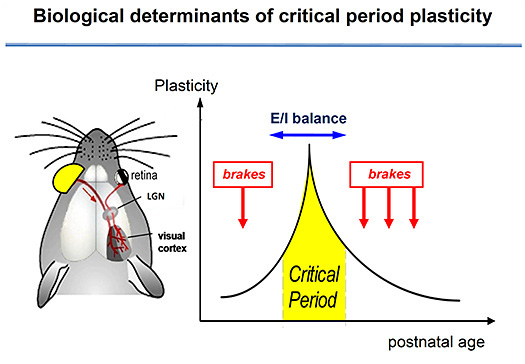
Takao Hensch is a distinguished Professor of Neurology at Harvard Medical School/Boston Children's Hospital and Professor of Molecular and Cellular Biology at Harvard University's Center for Brain Science. He serves as Director of the International Research Center for Neurointelligence (IRCN) at the University of Tokyo and leads the NIMH Silvio Conte Center for Mental Health Research at Harvard. His groundbreaking work focuses on critical periods in brain development—windows of heightened plasticity when neural circuits are most responsive to environmental input. Hensch's research has revealed how specific inhibitory (GABA) circuits trigger the onset of critical periods and how 'brake'-like factors actively prevent circuit rewiring when these periods close. His laboratory integrates molecular, cellular, and systems neuroscience to understand how early life experiences shape brain function from motor skills to language and emotions. This work has profound implications for understanding and treating neurodevelopmental disorders including autism spectrum disorders, epilepsy, and amblyopia. Analysis of Hensch's recent publications shows a consistent focus on critical period mechanisms across multiple brain systems. His work demonstrates how molecular interventions can reopen plasticity windows in adulthood, with particular emphasis on GABAergic circuits, perineuronal nets, and oxidative stress mechanisms. Recent studies examine anesthesia effects on infant brain development, sex-specific responses to early adversity, and novel pharmacological approaches for restoring neural plasticity. Order of the Rising Sun, Gold Rays with Neck Ribbon (2024) NIH Director's Pioneer Award (2007) Mortimer D. Sackler, M.D. Prize for Distinguished Achievement in Developmental Psychobiology (2016) Society for Neuroscience Young Investigator Award - Japan (Tsukahara Prize, 2001) Society for Neuroscience Young Investigator Award - US (2005) Hensch has trained numerous PhD students and postdoctoral fellows who have gone on to successful careers in neuroscience. His laboratory receives substantial funding from the National Institute of Mental Health and other sources to investigate the biological basis of critical periods and their clinical applications. Current research focuses on translating basic findings into therapeutic approaches for neurodevelopmental disorders through collaborations with clinicians at Boston Children's Hospital and computational modelers. The Hensch Lab, housed in Harvard's Northwest Building and the F.M. Kirby Neurobiology Center at Boston Children's Hospital, maintains active collaborations with researchers at the University of Tokyo, RIKEN Brain Science Institute, and other international institutions. The lab employs state-of-the-art techniques in mice to explore neural circuit development from sensory systems to prefrontal cortex, with particular emphasis on translating findings into real-world applications for pediatric care and mental health treatment.
Rachel Douglas-Jones is Professor and Research Group Leader of Technologies in Practice at IT University of Copenhagen. She leads interdisciplinary research at the intersection of science, technology, and society with active projects spanning ethics committees, data governance, and social credit systems. Her research focuses on ethics in biomedicine and digital technologies , particularly examining governance structures, evaluation practices, and standardization processes. Key interests include ethics committees in the Asia Pacific region, feminist critical pedagogy in labs, and the sociopolitical dimensions of China's social credit system. Her work combines ethnographic methods with theoretical frameworks from Science and Technology Studies. Analysis of her recent publications reveals strong trends in critical data studies (28% of 2021-2024 outputs), ethics committee operations (22%), and creative responses to regulation (15%). She increasingly examines temporal aspects of laboratory work and digital environmental impact. Presentation Award, University of Copenhagen (2019) Teacher of the Year (2016) Multiple major grants including VIRT-EU (€3.2M) and MDMP (DKK 6.8M) As Principal Investigator for 5 major projects since 2014, she has secured over DKK 13 million in research funding. Her leadership extends to advisory roles including the REgeneration project on energy and social change in net-zero Britain. She maintains active collaborations with institutions across Europe and Asia, particularly in China and the Pacific region. Douglas-Jones co-leads the Technologies in Practice research group, which integrates anthropological, sociological, and design perspectives. Her recent work with M. Cohn on GDPR-inspired poetry demonstrates innovative approaches to public engagement with data regulation.