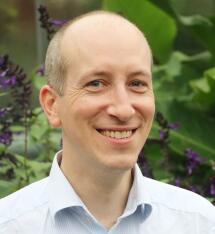
Emily S. Cross is Professor at the University of Glasgow's School of Psychology & Neuroscience, where she co-directs the Social Brain in Action Lab (SoBA) and leads the ERC Starting Grant 'Social Robots' project. She completed her PhD at Dartmouth College and held positions at Bangor University, Radboud University, and the University of Western Australia before joining Glasgow. Her research explores: Experience-dependent plasticity through dance and motor learning Social cognition in human-robot interaction Emotional processing during action observation Aesthetic perception of movement Cross-cultural differences in technology acceptance Professor Cross uses neuroimaging (fMRI), neurostimulation (TMS, tDCS), and behavioral methods to study how we perceive and learn from human and artificial agents. Her work has been published in Trends in Cognitive Sciences, Journal of Neuroscience, and Philosophical Transactions of the Royal Society. She currently supervises projects on robot-assisted health interventions and develops VR paradigms to study social cognition.
Dr. Sonia Petrone is a Full Professor of Statistics at Bocconi University's Department of Decision Sciences. She earned her PhD in Statistics from Bocconi University and has held academic positions at the University of Pavia and University of Insubria before joining Bocconi. Her extensive international experience includes research visits across North America, Latin America, Europe, India, and Russia. Her research specializes in Bayesian statistics, with contributions to foundational theory, predictive modeling, Bayesian nonparametrics, and stochastic processes. She currently directs the Bocconi Summer School in Advanced Statistics and Probability and previously led the PhD program in Statistics (2011-2018). Her research portfolio demonstrates consistent focus on Bayesian nonparametric methods, predictive modeling, and applications to complex data structures. Recent work explores urn processes, time series analysis, and network modeling using innovative Bayesian approaches. Awards & Honors: IMS Medallion Lecture Award (2018) ISBA Foundational Lecture Award (2016) Fellow of International Society for Bayesian Analysis Fellow of Institute of Mathematical Statistics Fellow of European Laboratory for Intelligent Systems Fellow of Bocconi Institute of Data Science She has held editorial leadership positions as Editor of Statistical Science (2020-2022) and Bayesian Analysis (2010-2014), and served as President of the International Society for Bayesian Analysis (2014).
Alis Oancea is Professor of Philosophy of Education and Research Policy at the University of Oxford's Department of Education, part of the Social Sciences Division. She holds additional roles including ESRC Centre for Global Higher Education Deputy Director and Social Sciences Division Advocate for Responsible Engagement. With dual doctoral degrees (DPhil from Oxford and PhD from Bucharest), she also received a Doctor Honoris Causa from University of the West Timisoara. Her research focuses on meta-research, research policy, and higher education governance. Key areas include research assessment frameworks, impact measurement, ethics, open knowledge practices, and teacher education. She co-edited the 2024 Handbook of Meta-Research and leads international studies on research cultures and policies. Education: DPhil (Oxford), PhD (Buc), DipLATHE (Oxford), Dhc (UWT) Roles: Director of Research (2016-20), REF2021 Coordinator, ESRC CGHE Deputy Director Leadership: Over 30 funded projects including the RKEEI initiative and BERA Observatory Her 150+ publications span research policy, impact evaluation, and education systems. Awards include FAcSS Fellowship and numerous international advisory roles across Europe and Norway. Advises on global education reforms and chairs panels for EU, UK, and Nordic research councils. Current doctoral supervision focuses on research policy, higher education systems, and teacher education innovations. Active in editorial roles for Oxford Review of Education and Review of Education .
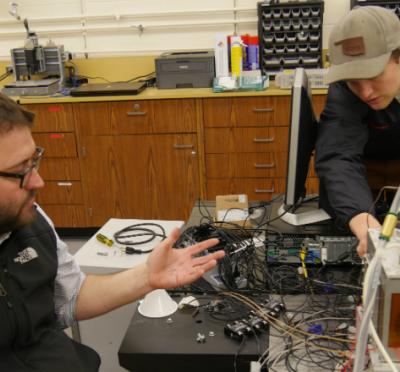
Scott Kerlin is a Senior Lecturer in the Department of Electrical Engineering and Computer Science at Oregon State University's College of Engineering. He holds an M.S. and B.S. in Computer Science from the University of North Dakota. Prior to academia, he worked at the Mayo Clinic on medical software systems and IBM as a build master for enterprise products. His career spans roles including network administrator, lab manager, and Undergraduate Director at UND. Dr. Kerlin's research focuses on bridging industry experience with academic curriculum, particularly in computer science education, project-based learning, and cybersecurity. He emphasizes practical applications of theoretical concepts, such as integrating 3D printing and scanning technologies with security systems for small satellites. His work also explores student efficacy in AI courses and scalable software project management methodologies. He has taught at multiple institutions, including the University of Minnesota and Augsburg University, and held roles at Michigan Tech as Senior Security Engineer. His 2024 Engineering+ Outstanding Teaching Award highlights his commitment to pedagogical innovation. Current projects include in-space 3D printing, solar energy systems, and cryptographic solutions for satellite communications. Key areas of contribution include: 3D printing/Scanning: Material characterization, key replication, and aerospace applications Cybersecurity: Intrusion detection, satellite communications security, and chaotic cryptosystems Educational Innovation: Active learning frameworks, PBL implementation, and student performance modeling His interdisciplinary approach connects computer science fundamentals with real-world engineering challenges, emphasizing sustainability and industry relevance in curricula.
Joshua Gess is an Associate Professor in the Mechanical, Industrial, and Manufacturing Engineering department at Oregon State University's College of Engineering. He joined Oregon State in 2015 and serves as a co-principal investigator at the Enhanced Heat Transfer Laboratory, where he leads research in thermal management solutions for high-performance microelectronics. His educational background includes: PhD, Mechanical Engineering, Auburn University, 2015 MS, Mechanical Engineering, Auburn University, 2012 B.E., Mechanical Engineering, Vanderbilt University, 2005 Before academia, he worked as a mechanical engineer at SSOE Group (including consulting for Johns Manville) and Northrop Grumman where he focused on military communication equipment. Professor Gess specializes in advancing thermal management solutions for high-performance microelectronic equipment. His research spans multiple scales, examining single and two-phase heat transfer on the macro-scale with passive and active liquid immersion techniques, as well as on the micro and nano scale for complex embedded thermal management solutions. He combines fundamental heat transfer knowledge with novel experimental methods such as two-phase PIV and high-speed image capture to develop reliable and energy-efficient cooling solutions for demanding electronics systems. His publication record demonstrates a clear trajectory toward increasingly sophisticated thermal management solutions, with recent work focusing on additive manufacturing applications for cooling systems, semiconductor thermal management, and nuclear reactor cooling systems. His research has significant implications for data center energy efficiency, where even small improvements in cooling efficiency could save enormous amounts of energy that could be returned to the grid. Gess is deeply committed to mentoring graduate students, emphasizing the practical applications of engineering principles. He attributes his interest in engineering to childhood influences like the movie RoboCop and the TV series MacGyver, and finds the reality of engineering work just as gratifying as he'd imagined. He particularly values the moments when his graduate students "get it" and watching them grow with each new accomplishment. As a person with a disability himself, Gess is passionate about establishing more robust support systems for people with disabilities at Oregon State. He is working with the School of Public Health to start an adaptive sports program, with the goal of building infrastructure that allows anyone to feel welcome and pursue advanced degrees at the university.
Juris Salaks is an Acting Associate Professor and Director of the Institute of the History of Medicine and RSU Museum at Riga Stradiņš University. His work bridges medical history with archival research, focusing on pharmaceutical legacies and historical narratives in the Baltic region. Fields of Interest: Medical Sciences, History, USSR Studies, Central/Eastern Europe, and medical museology. Academic Leadership: Organized the 47th Congress of the International Society for the History of Medicine and co-led the "Bridging the Baltic IV" conference. Research Trends : Recent publications analyze the history of artificial kidney development and Roche's industrial archives, emphasizing cross-border scientific collaboration and preservation of medical heritage. His work aligns with SDGs for education and historical research. Scientific Awards : General Secretary (Other distinction, 2024) Pauls Stradiņš Award (Honorary award, 2001) Cross of Recognition (State award, 2023) Academic Contributions : As director of RSU Museum, he integrates medical history with interdisciplinary exhibitions, including projects on Fabergé's medical connections and Baltic medical innovators. Supervised 2 academic works and participated in 67 activities, including invited talks and editorial roles.
Dr. Michael J. Katz is a Professor in the Department of Chemistry at Memorial University in St. John's, Newfoundland and Labrador, Canada. He leads an active research group focused on porous materials, particularly metal-organic frameworks (MOFs), with applications in gas storage, chemical separation, and catalysis. His work is well-recognized in the field of materials chemistry, with numerous publications in high-impact journals spanning from 2005 to 2025. Dr. Katz's primary research interests lie in the synthesis, properties, and applications of porous materials. His work specifically focuses on: Metal-Organic Frameworks (MOFs) design and synthesis Gas storage technologies, particularly low-pressure methane storage Chemical separation processes including removal of harmful molecules from air Catalysis using porous materials Adsorption properties of various porous frameworks Environmental applications of porous materials Analysis of Dr. Katz's publication record from 2017-2025 reveals a strong emphasis on zirconium-based MOFs, particularly the UiO-66 family. His research spans fundamental characterization techniques like NMR spectroscopy to practical applications in carbon capture, gas separation, and environmental remediation. A notable trend is the increasing focus on real-world implementation of MOFs, including biochar-based materials for CO 2 capture and frameworks for air pollutant removal such as nitrous acid. His work demonstrates a progression from fundamental materials science toward practical environmental applications. Dr. Katz actively supervises graduate students and postdoctoral researchers in his research group. His laboratory at Memorial University is equipped for the synthesis and characterization of novel porous materials, with particular expertise in metal-organic framework development. His research is supported by various grants that enable the exploration of structure-property relationships in porous materials and their practical applications.
Chao Wang is an Associate Professor at the Department of Chemical and Biomolecular Engineering within the Whiting School of Engineering at Johns Hopkins University. He also serves as the Director of the Nano Energy Laboratory and the department’s Master’s Admissions Director. His research focuses on sustainable energy systems and nanomaterials for CO2 capture and conversion, electrocatalysis, thermocatalysis, and green chemical engineering. Education: Bachelor’s degree, University of Science and Technology of China (2004) Doctorate, Brown University (2009) Wang’s research targets efficient energy conversion and storage via nanomaterials with tailored atomic structures, emphasizing catalytic activity, selectivity, and stability. His group explores electrochemical and thermochemical processes for reduced carbon footprints, including CO2 and methane conversion, ammonia recovery, and phosphorus/nitrogen nutrient recycling using zeolite-based systems. Recent publications (2021–2024) highlight his work in high-entropy alloys, solid-state battery materials, CO2 electroreduction, and biomedical nanotechnologies. Collaborative efforts span catalysis, nanoparticle dynamics, and environmental applications. Grants include a $1M DOE award for multi-university research, a $625K DOE grant for electrified transportation systems, and $3M in startup funding for carbon-removal technology commercialization. Alumni under his mentorship include Ph.D. graduates like Michael J. Manto (2018) and Master’s students like Mitchell Keller (2018), with notable achievements in catalyst development for ammonia/phosphorus recovery and industry placements at Grace & Co. and GEA Engineering.
Craig Pirrong is a Professor of Finance at the C. T. Bauer College of Business, University of Houston, where he also serves as the Energy Markets Director for the Gutierrez Energy Management Institute (GEMI). He joined the faculty in January 2003, bringing prior experience from Oklahoma State University, the University of Michigan, the University of Chicago, and Washington University in St. Louis. Ph.D. in Business Economics, University of Chicago His research centers on the economics of commodity markets, particularly the interplay between market fundamentals and price dynamics in energy and derivatives markets. He is known for developing structural models linking observable factors like temperature and load to power derivatives pricing. His work spans power markets, financial exchanges, and risk management. His publications reveal a strong focus on energy derivatives, structural modeling, and market manipulation detection. Recent and forthcoming work includes applications in power and weather derivatives, lattice pricing methods, and commodity price dynamics, reflecting his deep expertise in quantitative and fundamental analysis of energy markets. Author of three books, including Managing Energy Risk Over 30 professional publications Consultant to global utilities, commodity firms, and exchanges Blogger at Streetwise Professor He has advised numerous industry clients and contributed to regulatory and market design discussions, particularly in energy and derivatives markets. While no formal students are listed, his leadership in GEMI and extensive research output suggest active mentorship and collaboration. He is involved with research initiatives at the intersection of finance, energy, and policy. Dr. Pirrong has held significant roles across top-tier business schools and continues to influence both academic and industry practices in commodity and energy finance.
Dr. David Jordan is a Senior Lecturer in Defence Studies at King's College London, based at the Defence Academy of the UK. He serves as Co-Director of the Freeman Air and Space Institute and holds roles such as Academic Director (Air) for the Advanced Command & Staff Course. His research focuses on air and space power, military history, and strategic studies, with notable works including Understanding Modern Warfare . He has contributed to radio/TV commentary on air power and defence matters and is a Fellow of the Royal Aeronautical Society, Royal Historical Society, and Royal Society of Arts. Education: Doctorate in relevant field (not explicitly stated). Affiliations: RAF Centre for Air & Space Power Studies (RAFCASPS) Chief of the Air Staff’s Air Power Workshop His teaching includes modules on air power theory, the Falklands War, and Royal Air Force history. He supervises PhD students researching topics like space power theory, air power doctrine, and British military history since 1914. Recent research highlights include analyses of air power in the Falklands Conflict, RAF maritime operations, and space strategy. He has authored over 30 publications, including peer-reviewed articles on historical battles and contemporary military operations. Grants and projects involve collaboration with institutions like the Freeman Air and Space Institute, focusing on independent research into air and space power issues. His work often intersects with policy analysis, such as NATO operations and defense reviews.
Laura E. Brumariu is a Professor and Associate Dean for Professional Programs and Student Advancement at the Gordon F. Derner School of Psychology, Adelphi University. She holds a Ph.D. from Kent State University and completed postdoctoral research fellowships at Harvard Medical School. Her office is located in the Hy Weinberg Center, and she is licensed as a psychologist in New York State. Education: Postdoctoral Research Fellow, Harvard Medical School/CHA/MGA (2013) Postdoctoral Research Fellow with Clinical Attributions, Cambridge Health Alliance/Harvard Medical School (2012) Ph.D., Kent State University (2010) Her research adopts a developmental psychopathology perspective, focusing on how parent-child attachment influences emotional and social development, particularly in middle childhood. She investigates emotion regulation, anxiety, disorganized attachment, role-confusion, and family processes related to borderline personality features and dissociation. She developed the Middle Childhood Attachment Strategies Coding System and leads the Child and Adolescent Research (CARE) Lab. Her recent work emphasizes meta-analytic reviews on emotion socialization, attachment, anxiety, and empathy. Her most recent publications reflect trends in attachment theory, emotion regulation, parenting, and internalizing disorders across development, often using meta-analytic and longitudinal methods. Much of her work integrates international collaboration, especially with Romanian researchers. Scientific Awards and Honors: Clinical Research Training Program, Harvard Medical School, Research Fellow (2010–2012) The Jeanette and Louis Reuter Fellowship in Developmental Sciences, Kent State University (2008–2009) She has mentored numerous doctoral students whose research spans topics such as gratitude, empathy, emotion socialization, and trauma. She teaches courses in psychological research, family therapy, and doctoral thesis supervision. She has secured research funding and collaborates extensively on studies related to child and adolescent mental health, though specific grants are not detailed in the text. Her professional activities include frequent presentations at major psychological conferences such as the Association for Psychological Science and the International Attachment Conference. Labs and Research Teams: She directs the Child and Adolescent Research (CARE) Lab at Adelphi University, which focuses on attachment, emotion regulation, and psychopathology in children and adolescents. The lab conducts both observational and survey-based research and trains graduate students in developmental and clinical methods.
Norman Doe is Professor of Law at Cardiff University's School of Law and Politics, where he serves as Director of the Centre for Law and Religion and course director of the LLM in Canon Law. He has held significant leadership roles including Director of Research at the Law School (2011-2014) and has been instrumental in establishing key academic programs such as the LLM in Canon Law (1991) and the LLB module Law and Religion (2002). His international academic presence includes being a visiting professor at the University of Paris since 1999, KU Leuven (2013-16), and Pontifical University of St Thomas in Rome (2009). Doe earned his law degree at University College Cardiff, completed his doctorate at Magdalene College, Cambridge, and studied theology at St Michael's Theological College, Llandaff and Mansfield College Oxford University. His academic credentials include LLD (Cambridge), LLM (Wales), MTh (Oxford), PhD (Cambridge), DCL (Lambeth), and he is a Barrister (Middle Temple). Professor Doe's research focuses on Anglican canon law, comparative church law, law and religion, and the history of ecclesiastical law. His scholarly work has established foundational frameworks for understanding Christian legal systems across denominations. His book Canon Law in the Anglican Communion (1998) formed the basis for The Principles of Canon Law Common to the Churches of the Anglican Communion (2008), while his Christian Law: Contemporary Principles (2013) contributed to the Statement of Principles of Christian Law (2016) that was launched at the World Council of Churches in 2022. His recent publications demonstrate a sustained focus on historical Anglican priest-jurists, ecclesiastical legal history, and the development of Christian legal principles across traditions. His scholarly impact is reflected in his election as a Fellow of the British Academy (2024), appointment as honorary King's Counsel (2024), and previous recognition as one of the 'top ten' law and religion scholars worldwide (2018). He has received numerous honors including election to the Council of the Selden Society (2023), becoming an Academic Bencher of the Inner Temple (2021), and being listed among the 50 most influential Anglicans in the world by The Telegraph (2008). Professor Doe serves as Chancellor of the Diocese of Bangor (since 2012), functioning as president of the Diocesan Consistory Court. He has been deeply involved in global Anglican structures, serving on the Lambeth Commission (2003-2004), contributing to the Windsor Report, and working with the Anglican Communion Network of Legal Advisers. He co-founded the Interfaith Legal Advisers Network (2007) and the Law and Religion Scholars Network (2008), demonstrating his commitment to practical applications of his scholarship. His current research focuses on the history of English ecclesiastical law since the Reformation and a series of articles on clergy jurists published in the Ecclesiastical Law Journal . He is also active in multiple networks of the Cardiff Centre for Law and Religion, including the Colloquium of Anglican and Roman Catholic Canon Lawyers and the Church Law History Network. His 2023 canon law play Thrice to Rome about Gerald of Wales has been performed at St Davids Cathedral and the Temple Church London, with upcoming performances planned for Canterbury and Rome.
Mashood Baderin is a Professor at SOAS University of London's School of Law, where he has established himself as a leading scholar in Islamic law, international law, and human rights. With over 90 publications spanning more than two decades, Professor Baderin has made significant contributions to bridging Islamic legal traditions with contemporary international legal frameworks. Professor Baderin's research interests focus on the intersection of Islamic jurisprudence with modern legal challenges. His work explores how Islamic legal principles can inform contemporary human rights frameworks, international criminal justice systems, and social reform initiatives in Muslim-majority countries. He has extensively examined Islamic legal theory (usul al-fiqh), the application of Islamic law in modern contexts, and the relationship between Islamic law and international legal norms. His most recent publications reveal a continued focus on the universality of international law from Islamic perspectives, the application of Islamic law in African contexts, and the relationship between Islamic principles and human rights frameworks. Professor Baderin has edited significant works including 'Islamic Legal Theory' (2014) and authored the widely recognized 'Islamic Law: A Very Short Introduction' (2021). Professor Baderin has supervised numerous doctoral students working on Islamic law topics with regional focus on Nigeria, Saudi Arabia, and the UAE. His students' research often examines gender issues, legal reform, and the practical application of Islamic law in contemporary settings.
Ashley M R Montanaro is a Professor of Quantum Computation at the School of Mathematics, University of Bristol . Active in quantum computing research since at least 2014, they lead projects at the intersection of quantum algorithms , computational complexity , and quantum information theory , affiliated with the Bristol Quantum Information Institute. Research interests focus on quantum algorithm design , computational complexity analysis , and quantum simulation . Key work includes developing variational quantum algorithms for phase transition detection, Hamiltonian simulation techniques, and quantum-classical hybrid methods for solving complex problems in physics and optimization. Recent publications demonstrate expertise in: Quantum phase diagram simulation with low-depth circuits Quantum speedups for constraint satisfaction problems Quantum communication complexity of machine learning tasks Quantum-enhanced optimization heuristics Hamiltonian simulation with time-dependent product formulas Quantum algorithm complexity analysis Scientific awards include: EPSRC Fellowship (2014-2019) - "New insights in quantum algorithms and complexity" Active in quantum software development through projects like: "Quantum Algorithms from Foundations to Applications" (ERC-2018-COG) "Quantum Computing and Simulation Hub" (2019-2024) "Prosperity Partnership in Quantum Software" (2019-2023)
Prof. Dr. Markus Schwarzländer leads the Arbeitsgruppe for Plant Energy Biology at the Institute for Plant Biology and Biotechnology (WWU Münster) . His research focuses on mitochondrial physiology, redox signaling, and biosensor development in Arabidopsis thaliana and other plant species, integrating molecular biology with systems-level analyses to understand energy regulation. Key Research Areas: Mitochondrial-NAD(P)H dynamics Redox-regulated signaling networks Organelle communication Stress-adaptive metabolism Recent work highlights Golgi-localized mitochondrial uncoupling proteins , chloroplast-mitochondria redox coupling , and mitochondrial calcium uniporter function . His group employs cutting-edge fluorescent biosensors and proteomic approaches to dissect energy physiology. Students benefit from hands-on training in bioimaging , metabolic modeling , and organelle biology through iMoPLANT and Life Sciences programs. Scientific Awards: DAAD Fellowship (2019) As an active member of the Faculty of Biology , he collaborates with international institutions including University of São Paulo , CEA France , and Siberian Institute of Plant Physiology , while maintaining a robust publication record in top journals like Plant Cell and Nature . His teaching emphasizes integrative plant sciences and advanced biosensing techniques for B.Sc. and M.Sc. students.