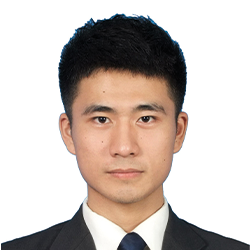
Jianwen MENGView profile
Assistant Professor
Jianwen MENG serves as an Assistant Professor at ESTACA, where he has been an Enseignant-chercheur (Teacher-Researcher) since 2020. He is affiliated with ESTACA'Lab, the institution's research laboratory focused on embedded energy systems and transportation technologies. His academic foundation includes a PhD in Electrical Engineering from Université Paris-Saclay (2020), a Master's degree in Electronic Systems and Electrical Engineering from the University of Nantes (2017), and a Bachelor's degree in Electrical Engineering and Automation from Jimei University, China (2015). Dr. MENG specializes in fault diagnosis, fault tolerant control, and energy management systems for electric vehicles and embedded applications. His research integrates advanced control theory with machine learning to address critical challenges in battery and fuel cell technologies, particularly focusing on state estimation, degradation prediction, and real-time monitoring under operational stress. Analysis of his recent publications (2024-2025) reveals a strong interdisciplinary trajectory blending electrical engineering with artificial intelligence. Key trends include AI-enhanced battery state estimation under fast-charging conditions, reinforcement learning for energy management in hybrid vehicles, and novel fault diagnosis frameworks for electrochemical systems. His work consistently targets practical implementation in automotive applications while advancing theoretical control methodologies. He received the Best Paper Award at the IEEE Prognostics and System Health Management Conference (PHM-Paris) in 2019 for his contributions to lithium-ion battery monitoring. At ESTACA, Dr. MENG teaches multivariable systems, real-time control, rapid prototyping, and advanced simulation tools across multiple engineering program levels. His pedagogical approach emphasizes hands-on implementation of theoretical concepts in embedded systems. As a core member of ESTACA'Lab, he contributes to cutting-edge research in automotive electrification, particularly through projects involving battery management systems, fuel cell degradation modeling, and fault-tolerant control architectures for next-generation electric vehicles.