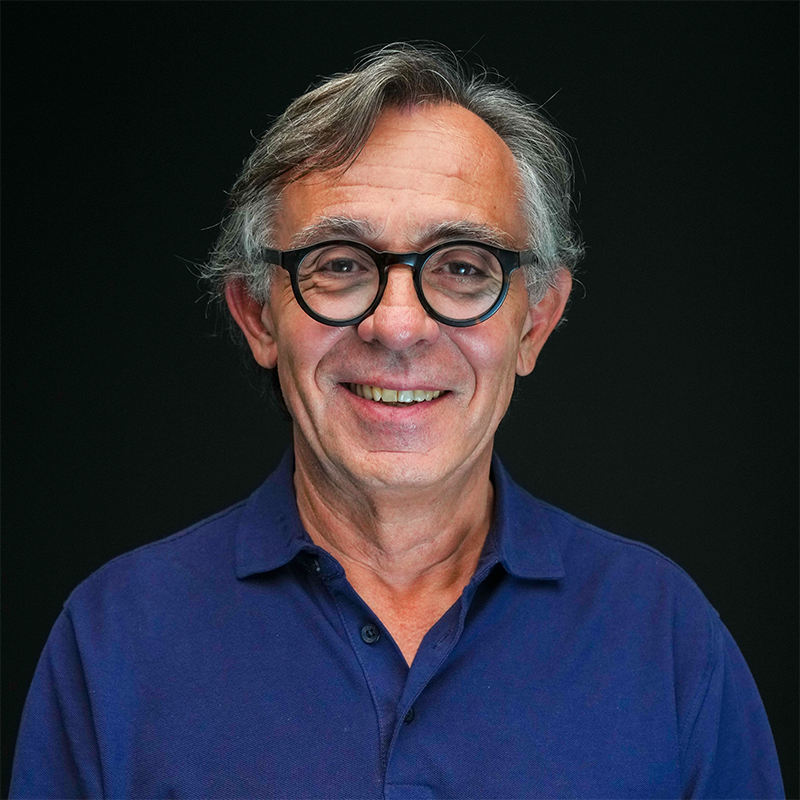
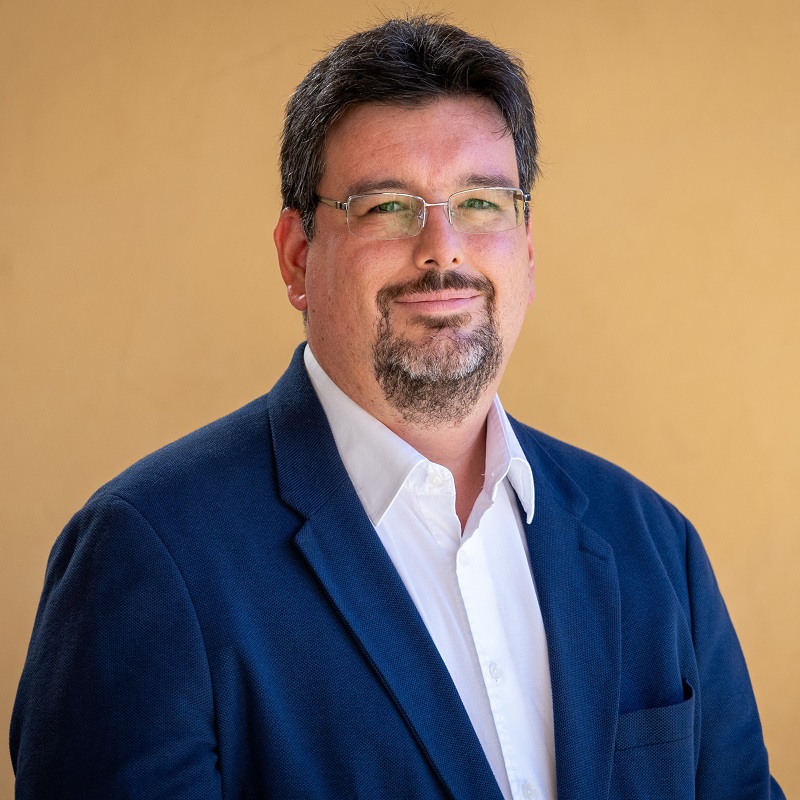
Paolo Cesarini is a Part-time Professor and Programme Director at the Florence School of Transnational Governance within the European University Institute. He leads the European Digital Media Observatory (EDMO) and European Media and Information Fund (EMIF) projects, focusing on digital media governance, EU competition law, and combating online disinformation. He also serves as a Senior Advisor at Teneo, advising on strategy and corporate communications. Education : Master's in International Law (University of Siena), LLM (College of Europe, Bruges) His expertise spans media policy , Digital Single Market regulations, and EU competition law , with a focus on technological transitions in media industries and the interplay between digital platforms and societal challenges. Recent research examines platform self-regulation of harmful content and foreign interference in digital ecosystems.
Emanuele Giuseppe Sommario is an Associate Professor of International Law at the Dirpolis Institute, Sant'Anna School of Advanced Studies in Pisa. Since 2018, he has directed the Master in Human Rights and Conflict Management. He earned a PhD in International Law from Sant'Anna School, an LL.M in Public International Law from the University of Nottingham, and a Political Science degree from the University of Pisa. Excellence Fellow, University of Geneva (2010) Visiting Fellow, British Institute (2013–2015) Visiting Fellow, Institut des hautes études (2016–2018) His research focuses on international human rights law, humanitarian law, use of force in international relations, and disaster law. He has coordinated the International Disaster Law Project (2013–2016) and leads the PRIN 2022 project on Health Emergencies and Legal Preparedness. His work spans teaching and advising for international organizations in Europe, the Horn of Africa, the Balkans, and the Middle East. Recent publications highlight trends in UN disaster law, cyber-attack legality, and EU cyber sanctions. He serves on the editorial boards of the Yearbook of International Disaster Law and the Italian Review of International and Comparative Law . Jean Monnet Chair (2023–present) Jean Monnet Module Coordinator (2020–2023) Member, ILA Committee on Human Rights in Times of Emergency He collaborates with the International Training Programme for Conflict Management and has worked with OSCE and Council of Europe on election monitoring.
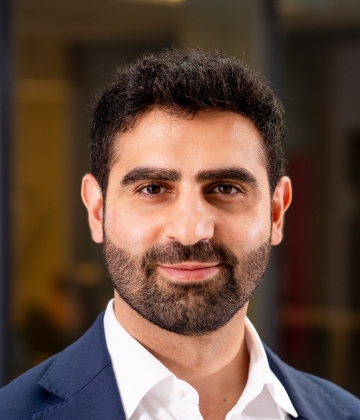
Marco Fisicaro is an Assistant Professor of European Union Law at the Law Faculty of Sapienza University of Rome , where he teaches EU Internal Market Law and European Competition and State Aid Law . He is affiliated with the Department of Legal and Economic Studies and serves as managing editor of European Papers - A Journal on Law and Integration and editorial staff member for Diritti umani e diritto internazionale . Education : Master Degree in Law (2018), PhD in Law (2022), and Post-graduate Diploma in Social Sciences (2021) from University of Catania Research Interests : His work focuses on European Union Law , Competition Law , State Aid Law , and Rule of Law enforcement. He examines judicial independence mechanisms, EU funding conditionality, sovereignty dynamics, and supranational governance challenges. Academic Contributions : Recent publications analyze interim measures for rule-of-law crises, EU solidarity frameworks, sovereignty debates, and judicial independence strategies. His research intersects legal, economic, and policy dimensions of European integration. Scientific Awards : Common Market Law Review Prize for Young Academics (2024) Giuseppe Sperduti Prize (2015) Professional Experience : Former post-doctoral researcher at Rome Unitelma Sapienza (2021-2023), visiting researcher at University of Vienna (2020) and Max Planck Institute for Comparative Public Law and International Law (2021), and intern at the European Court of Human Rights (2016).
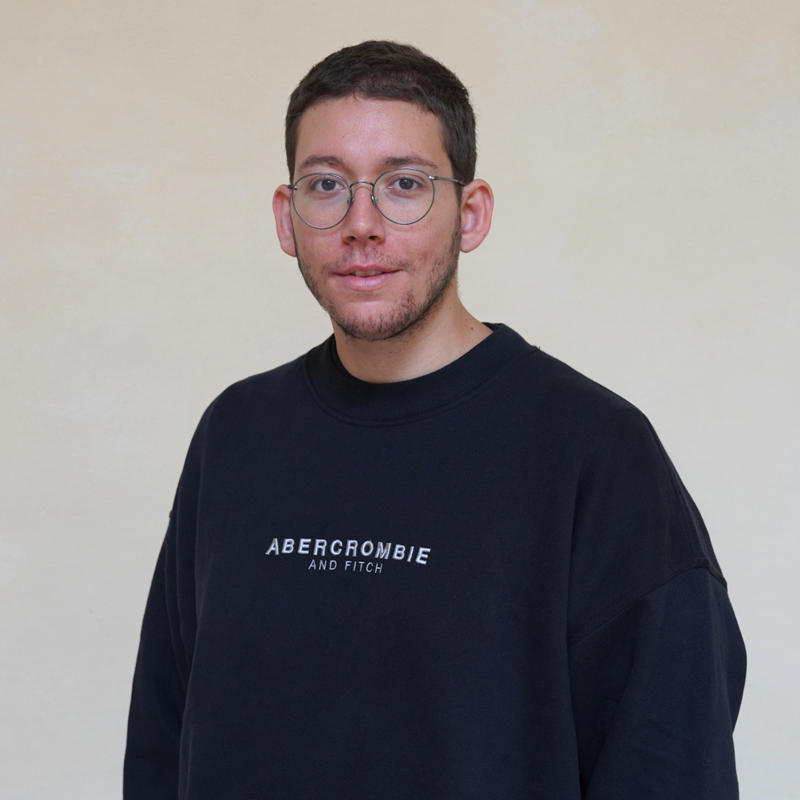
Flavia Zorzi Giustiniani is an Associate Professor of European Union Law at Link Campus University in Rome, specializing in International Law and Disaster Law. She teaches at multiple institutions including Uninettuno University and eCampus University, focusing on courses like 'The EU approach to cross-border health threats' (2023-2026). She is affiliated with organizations such as the Italian Red Cross's Scientific Committee on International Humanitarian Law, the International Law Association (ILA), and AISDUE. Her research centers on international legal frameworks addressing disasters, human rights in crisis contexts, and cultural heritage protection. Notable works include monographs on the UN and humanitarian assistance (2008), international law in disaster scenarios (2021), and the Routledge Handbook of Human Rights and Disasters (2018). She contributes to leading law journals globally. Her publications from 2021-2020 emphasize interdisciplinary legal analysis of disaster response, civil-military coordination, and mixed disaster-conflict scenarios. Earlier works explore accountability in international criminal tribunals and African IDP protections. She actively participates in academic networks and policy dialogues on global governance challenges.
Simone Baglioni is a Full Professor in the Department of Economics and Management at the University of Parma and Vice Rector for Education since November 2023. He co-founded the GRIMLI research group focusing on migration, labor markets, and entrepreneurship. Previously, he held academic positions at Glasgow Caledonian University , and the Universities of Geneva, Neuchâtel, Florence, and Milan-Bocconi . Current Role: Professor, Vice Rector Education Departments: Economics and Management (University of Parma), Yunus Centre for Social Business and Health (Glasgow Caledonian University) Research Focus: Labor migration, asylum, gig economy, social innovation, civil society, and integration policies. Research Themes : His work examines labor market integration of migrants , transnational solidarity , and social innovation in policy . Recent projects include PRIN and FIL A1 on remittances and migrant entrepreneurship, and coordination of EU Horizon 2020 projects like SIRIUS and MATILDE . He also developed the WORKEEN mobile app to aid migrant employment. Teaching : Courses on Socioeconomic analysis of agrifood environments , sociology of globalization , and critical food consumption at the University of Parma , covering both undergraduate and graduate programs in Global Studies , International Business , and Food Law .
Federica CICCI is a Contract Lecturer in the Department of Asian and North African Studies at Ca' Foscari University of Venice and has recently taken on an adjunct professorship in 'History of Asia and Southeast Asia' at Roma Tre University. Her academic work is deeply rooted in gender history, Chinese studies, and transnational humanitarianism, particularly focusing on women's roles during wartime China (1937–1945). Education: Ph.D. (Magna Cum Laude, 2024): Double Degree, Ca' Foscari University of Venice and Heidelberg University. Research: 'Caring Women: Transnational Activism and Humanitarian Relief Efforts during Wartime China (1937-1945).' M.A. in Languages, Economies and Institutions of Asia and North Africa (110/110 con lode, 2018), Ca' Foscari University of Venice. B.A. in Languages, Culture and Societies of Asia and Mediterranean Africa (110/110 con lode, 2016), Ca' Foscari University of Venice. Classical High School Degree (96/100, 2013), Liceo G. Mazzatinti, Gubbio. She also completed multiple exchange programs in China at Renmin University, Xi’an Jiaotong-Liverpool University, and Capital Normal University. Her research interests center on gender, humanitarianism, women's transnational activism, and modern Chinese history . She explores how women navigated war, care, and political ideologies through institutions like the Red Cross and missionary networks. Her work bridges history, gender studies, and international relations, often highlighting silenced female voices in 20th-century China. The analysis of her publications reveals a strong thematic consistency: all recent works examine women’s humanitarian roles during wartime China, with sub-themes including gendered discourse, medical missions, Sino-Vatican relations, and the ideological framing of care. She frequently publishes in Italian and international journals such as DEP. Deportate, Esuli e Profughe and Asia Maior , and presents at major conferences like EACS and AISC. Scientific Awards and Scholarships: 3-year Ph.D. full scholarship from Italian Ministry of University and Ca' Foscari (2019) Erasmus+ funding for research at Heidelberg University (2020–2021) Third prize in 'Chinese Speech Contest' and scholarship at ECNU (2018) Multiple 'Overseas' Program awards from Ca' Foscari for study in China Confucius-Hanban Institute Scholarship Federica CICCI has served as a Teaching Assistant and Faculty Tutor at Ca' Foscari, supporting courses in Chinese history and law. She has not advised any students yet. She has received research grants through Erasmus+ and participated in summer schools and workshops on area studies and gender history. She is an active member of several academic associations and serves on the editorial board of DEP. Deportate, Esuli e Profughe . She is involved in academic communities such as the Associazione Italiana per gli Studi Cinesi (AISC) , European Association of Chinese Studies (EACS) , and Società Italiane delle Storiche (SIS) . She has organized and reported on international conferences, particularly those focusing on women’s transnational activism.
Dr. Ala Alrababah is an Assistant Professor in the Department of Social and Political Sciences at Bocconi University, with affiliations including the Evidence in Governance and Politics (EGAP) network, Immigration Policy Lab (IPL) at ETH Zurich and Stanford, BAFFI Center on Economics, Finance and Regulation at Bocconi, and the Abdul Latif Jameel Poverty Action Lab (J-PAL). She holds a Ph.D. in Political Science from Stanford University (2021). Her research examines immigration, refugees, and political violence using innovative mixed-methods approaches combining fieldwork with experimental and computational techniques. Primary domains include comparative analysis of migration policies, conflict dynamics in the Middle East, prejudice reduction strategies, and quantitative analysis of political discourse. She maintains active field research programs focused on Syrian refugee communities. Publications demonstrate consistent focus on migration policy impacts, refugee decision-making, and political violence analysis across multiple contexts. Computational methods feature prominently alongside field experiments, with strong methodological contributions to survey research and text analysis. As an active member of international research networks, Dr. Alrababah collaborates on large-scale projects examining refugee integration policies, transitional justice mechanisms, and political behavior in conflict regions. Her work has received international media coverage in outlets including The Economist, Foreign Policy, and BBC Arabic.
Dario Guarascio is a researcher at the Department of Economics and Law (Dipartimento di Economia e Diritto) at Sapienza University of Rome. He teaches courses in Innovation Economics, Labor Economics, and Public Economics, focusing on topics such as digital platforms, technological unemployment, and EU policy challenges. His research spans the impact of AI, robotics, and digitalization on labor markets, as well as structural vulnerabilities within the EU. Teaching responsibilities include modules on innovation policy, labor economics, and platform work dynamics. Courses are delivered in both Italian and English, with practical components involving STATA analysis of economic datasets. His research emphasizes empirical analysis of technological adoption, policy effectiveness, and socio-economic inequality linked to digital transformation. Recent work explores AI’s regional employment disparities in Europe, meta-analyses of robotics’ labor market impacts, and EU energy resilience strategies. His publications address issues like monopoly capital in digital platforms, the Eurozone’s structural challenges, and the green transition’s core-periphery divides within the EU. He actively collaborates with research networks and institutions, contributing to policy debates on digital sovereignty, platform regulation, and innovation-driven competitiveness. His work bridges theoretical economic frameworks with applied policy analysis, emphasizing real-world implications of technological change.
Olga Desiato is an Associate Professor of Civil Procedural Law at the University of Salento's Department of Legal Sciences. She holds qualifications to exercise Full Professor functions in Civil Procedural Law (sector 12/F1). Her expertise includes Civil Procedural Law and Domestic/International Arbitration Law. She joined the university in November 2022 as an Associate Professor following roles as a Senior Researcher (2019–2022) and lecturer in various specialized courses. Education: She earned a Law Degree (2003), PhD in 'Protection of Rights and Judicial System' (2009), and Legal Professions Specialization (2005) from the University of Lecce/Bari. She is a certified mediator accredited by the Ministry of Justice and has taught extensively in postgraduate legal courses since 2007. Research focuses on procedural law reforms, arbitration, ADR, and judicial efficiency. She contributes to journals like Judicium and serves on editorial boards. Recent publications address mediation, bankruptcy law, and legal reforms post-2022 legislative changes. She actively participates in research projects like the 'Start UPP' initiative and chairs academic committees on legal processes. Teaching includes courses on Civil Procedure, Arbitration, and Mediation. She organizes virtual classrooms via Microsoft Teams for courses like Civil Procedural Law and International Arbitration. Her work emphasizes practical legal training, compliance with judicial reforms, and student support through dedicated online platforms.
Francesca Lagioia is a Part-time Professor at the Department of Law , European University Institute. Her research focuses on the intersection of law, technology, and artificial intelligence, particularly examining algorithmic fairness, legal argumentation, and digital rights. Works on AI ethics and legal accountability Investigates privacy, surveillance, and consumer protection Engages in cross-jurisdictional legal analytics Develops computational models for judicial decision analysis Recent publications analyze algorithmic bias in criminal justice systems, predictive models for tax law outcomes, and argumentation schemes in judicial reasoning. Her work combines legal scholarship with computational methods to address challenges in digital transformation and democratic governance. Lagioia collaborates extensively with researchers in legal informatics and AI ethics. She has contributed to studies on judicial decision prediction and legal causality modeling, working with interdisciplinary teams across Europe.
Alexandros Lymperopoulos is a Researcher in the Department of Law at the European University Institute , where he focuses on State Aid , International Economic Law , and Risk Reduction and Resilience . As part of the 2023 cohort, his work examines subsidy regulations through a socio-legal lens, integrating insights from global trade frameworks like the WTO and bilateral agreements. Alexandros is supervised by Professor Thomas Streinz and hails from Greece. Nationality: Greece Email: alexandros.lymperopoulos@eui.eu Research Interests: His research explores the intersection of legal and regulatory theory with economic resilience, particularly addressing how state aid policies can mitigate systemic risks in international trade. He also investigates data governance and digital transformation within economic frameworks, including the implications of artificial intelligence and cross-border data flows for regulatory systems.
Leigh Hancher is a Part-time Professor at the Robert Schuman Centre for Advanced Studies within the European University Institute. She also serves as a Professor of European Law at the University of Tilburg and Counsel at Allen & Overy, Amsterdam. Her expertise spans energy regulation, EU state aid, and market governance. Education : Studied law at the Universities of Glasgow, Sheffield, and the EUI; obtained a doctorate in law from Leiden University (1989). Research Interests : Focus on energy market liberalization, EU governance, and the evolving role of governments in regulating key sectors. Academic Experience : Held chairs since 1991 (Erasmus University, Tilburg), including a Visiting Professor role at the University of Calgary (1996). Recent research explores long-term contracts in energy transitions, EU Green Deal implications, and regulatory frameworks for market stability, reflecting her deep engagement with European energy policy and legal innovation.
Emanuele Sommario is Associate Professor of International Law at Sant'Anna School of Advanced Studies (SSSA) in Pisa, Italy, where he directs the Master in Human Rights and Conflict Management. His academic affiliations include visiting positions at the University of Geneva, British Institute of International and Comparative Law, and Graduate Institute of International and Development Studies (Geneva). He coordinates high-impact projects including the Italian Ministry-funded 'International and European Disaster Law' initiative (2013-2016) and the Jean Monnet Module on 'European and International Human Rights Standards in Disaster Settings' (2020-present). His interdisciplinary research focuses on: Human rights in emergencies : Legal frameworks for rights limitations during disasters and conflicts Disaster governance : International coordination mechanisms for crisis response Combatant status : Classification of foreign fighters and mercenaries under IHL Cyber conflict : State responsibility for digital attacks Climate displacement : Human rights protections for environmental migrants His publications demonstrate consistent focus on state responsibility during armed conflicts, disaster law evolution, and human rights limitations during crises (especially COVID-19). Recent works explore emerging challenges in cybersecurity governance and climate-induced migration. Professor Sommario holds significant institutional roles: Italian representative to ILA Committee on Human Rights in Times of Emergency Editorial Board Member of Yearbook of International Disaster Law Director of SSSA's International Disaster Law Course and Health Systems through Crisis and Recovery program He teaches diverse courses including International Humanitarian Law, Human Rights in Armed Conflicts, and Research Methodologies in International Law across undergraduate, graduate and postgraduate levels.
Marko Milenkovic serves as a Senior Research Fellow at the Institute of Social Sciences in Belgrade, Serbia, and holds an Affiliated Research Fellow position at the Center for Constitutional Studies and Democratic Development (CCSDD) of Johns Hopkins University SAIS in Bologna. He maintains a primary academic affiliation with the Robert Schuman Centre for Advanced Studies at the European University Institute (EUI), leveraging institutional email credentials from eui.eu. His scholarly work centers on the legal and administrative dimensions of European integration: Transformation of legal systems during EU accession processes EU conditionality mechanisms driving public administration reforms Specialized regulatory domains including environmental law and health law State aid frameworks within integrated markets Differentiated integration pathways for Western Balkan nations through EU agency engagement Milenkovic contributes to academic governance as a steering committee member of the Academic Research Network on EU Agencies and Institutional Innovation (TARN), and has held visiting researcher positions at the University of Bologna and Europa Kolleg Hamburg.
Michele Di Maio is a Professor of Economics at Sapienza University of Rome. He holds additional roles as ReCIPE-CEPR Theme Leader and IZA Research Fellow. His research focuses on the socio-economic impacts of conflict, labor markets in developing countries, and trade policy. He consults for major international organizations including the World Bank, UNIDO, and UNCTAD. Di Maio earned his PhD from the University of Siena (2006) and Laurea from Bocconi University (2001). His fieldwork spans regions like Zanzibar, Sierra Leone, and Palestine. He co-organizes the Firms, Labor Markets, and Development Workshop with Francesco Amodio, Mariapia Mendola, and Marco Sanfilippo. Research highlights include analyzing conflict effects on fertility (Rwanda), child schooling (Palestinian Territories), and firm performance in conflict zones. His work bridges theoretical economics with policy-relevant empirical analysis. Notable contributions include studies on trade liberalization's political violence linkages and the role of informal competition in firm dynamics. His consultancy reports address industrial strategies for developing nations and conflict mitigation frameworks.