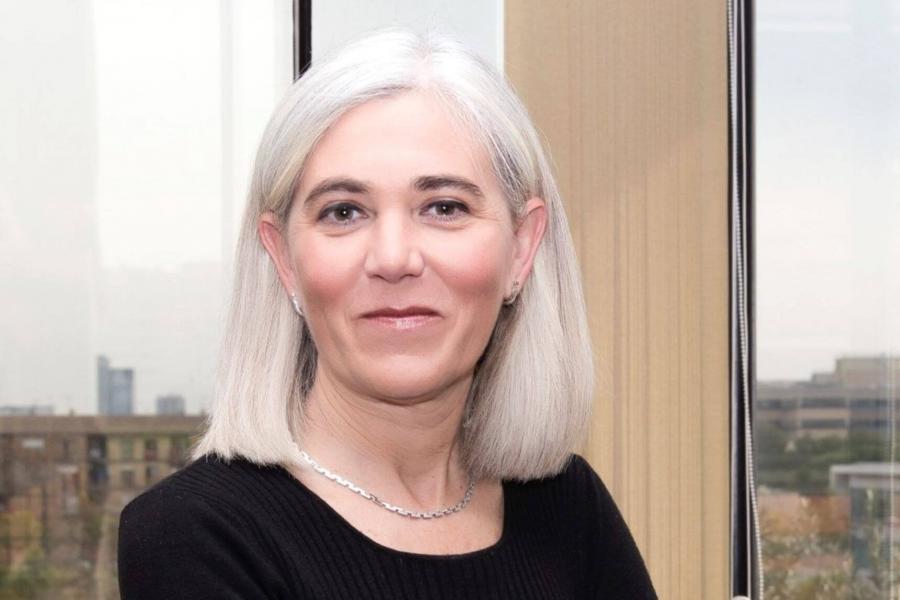
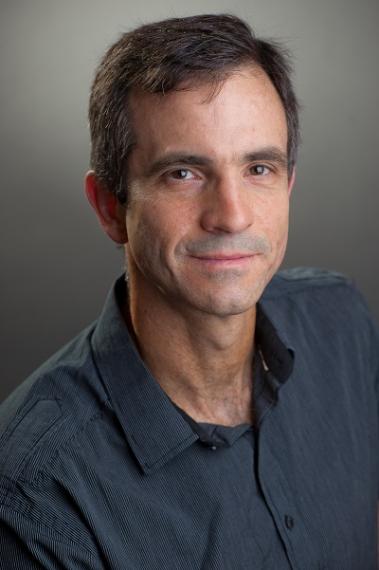
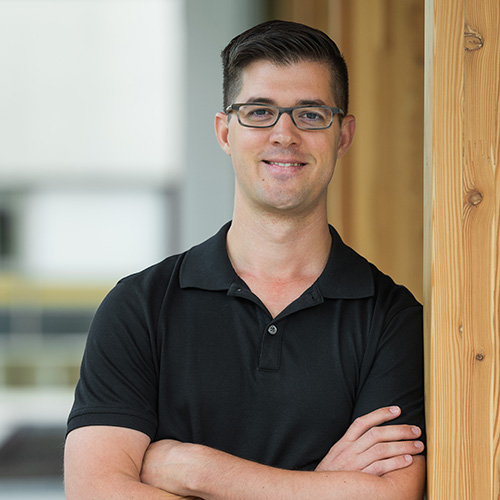
Dr. Cristina Rosell is a Professor and Head of the Department of Food and Human Nutritional Sciences at the Faculty of Agricultural and Food Sciences, University of Manitoba. Her research focuses on grain-based food innovation, starch properties, and sustainable bakery processes. Education: PhD and BSc in Pharmacy from Universidad Complutense de Madrid, Spain Dr. Rosell specializes in cereal science, enzymatic food modification, and gluten-free product development. Her current projects include optimizing bakery processes with computational tools, tracing rice supply chains via blockchain, and integrating bioactives into gluten-free foods. Her work bridges food chemistry, nutritional science, and industrial bakery technology. Her recent research trends emphasize gluten-free bread using legume and root starches, starch-plant compound interactions , and sustainable food processing via microwave-assisted extraction, high-pressure treatments, and fermentation. Key subfields include dough rheology, polyphenol bioactivity, and techno-functional ingredient development. Dr. Rosell’s teaching includes graduate seminars in food science (HNSC 7130). She supervises graduate students in breadmaking, starch hydrolysis, and functional food design. Her lab explores grain quality, enzymatic treatments, and bakery product optimization through interdisciplinary approaches combining chemistry, nutrition, and process engineering.
Rajinder Pal is a Professor at the University of Waterloo, specializing in rheology of complex fluids, colloidal systems, and transport phenomena. His research focuses on the rheological behavior of suspensions, emulsions, and nanomaterials, with particular emphasis on non-Newtonian fluid dynamics, interfacial phenomena, and exergy analysis of multiphase flows. He has contributed extensively to understanding the viscosity modeling of concentrated suspensions and emulsions, nanoparticle-stabilized dispersions, and thermodynamic optimization of industrial processes. Key research areas include the development of novel viscosity models for asphaltene nanoaggregates, cellulose nanocrystals, and starch nanoparticles in industrial applications. His work bridges fundamental fluid mechanics with practical engineering challenges, addressing topics such as catastrophic phase inversion in Pickering emulsions, drag reduction in turbulent flows, and exergy destruction in pipeline systems. Pal also investigates the integration of nanomaterials into energy storage systems, such as graphene-based supercapacitors stabilized by ionic liquid/surfactant complexes. His publications span over two decades, demonstrating sustained contributions to chemical engineering, material science, and colloid science. Notable recent work includes studies on rheology of high internal phase emulsions (HIPEs), nanocomposite mechanical properties, and the thermodynamic analysis of cyclic processes using the Gouy-Stodola theorem. Pal's research has implications for food processing, pharmaceuticals, oil recovery, and sustainable materials development. While no formal awards or grants are explicitly listed in the provided materials, his extensive publication record reflects significant academic impact. He advises on graduate research in rheology and colloids but no specific student names are mentioned. Pal's work often emphasizes practical applications of fundamental fluid mechanics principles, with a focus on energy-efficient systems and nanotechnology-driven solutions.
Alejandro Marangoni is a Professor and Tier I Canada Research Chair in Food, Health and Aging at the University of Guelph. He holds a B.Sc. from McGill University and a Ph.D. from the University of Guelph. His research focuses on the physical properties of fats and oils, including structured emulsions, oleogels, and sustainable materials for food and non-food applications. Marangoni’s academic roles include editorial leadership as Co-Editor-in-Chief of Current Opinion in Food Science and Technology and former Editor-in-Chief of Food Research International . He has been recognized with over 40 patents and numerous awards, including the E.W.R. Steacie Memorial Fellowship and the Kaufmann Medal. His work bridges food science, chemistry, and materials engineering, addressing sustainability challenges in food production and environmental remediation. Education: B.Sc. (McGill University), Ph.D. (University of Guelph) Affiliations: Fellow of the Royal Society of Chemistry, Fellow of AOCS, Member of IFT and APS Research Themes: Fat crystallization, edible emulsions, biolubricants, anti-aging cosmetics His lab has trained over 100 researchers, many now in academia and industry. Recent projects include plant-based cheese alternatives, sulfolane separation in groundwater, and ferroelectric soft materials. Marangoni’s interdisciplinary approach drives innovation in both food systems and sustainable technologies.
Vassilis Kontogiorgos is an Associate Professor in the Department of Food, Nutrition and Health (Food Chemistry) at the University of British Columbia's Faculty of Land and Food Systems. His research focuses on the physical chemistry of food macromolecules, particularly polysaccharide-based colloidal systems. Post Graduate Certificate in Higher Education Practice (2009), University of Huddersfield, UK PhD in Food Science (2007), University of Guelph, Canada MSc in Food Science (2004), Aristotle University of Thessaloniki, Greece BSc (Hons) in Food Science (2001), Aristotle University of Thessaloniki, Greece His work explores polysaccharide isolation, characterization, and interfacial arrangement to stabilize dispersions, with applications in food-body interactions and responsive colloidal systems for targeted bioactive delivery. Research spans food chemistry, polymer physics, and nutritional science. Recent publications emphasize pectin chemistry , hydrocolloid functionality , plant protein behavior , and bioactive delivery systems . Themes include food processing optimization, sustainable packaging, and structural characterization of polysaccharides. Contact: vkontogi@mail.ubc.ca
Pierre Hucl is a half-time Professor in the Department of Plant Sciences at the University of Saskatchewan's College of Agriculture and Bioresources, affiliated with the Crop Development Centre. His research focuses on plant genetics, crop improvement, and food science, with an emphasis on wheat and canary seed. He holds a Ph.D. and M.Sc. from the University of Saskatchewan and a B.Sc. from the University of Guelph. His educational background includes: Ph.D., University of Saskatchewan M.Sc., University of Guelph B.Sc., University of Guelph Research interests center on wheat genetics, disease resistance (e.g., Fusarium head blight, wheat midge), starch/protein composition of cereals, and crop adaptation to environmental stresses. Recent work explores canary seed’s nutritional properties and biofortification potential. Key contributions include genomic analysis of Pseudoroegneria species and development of high-throughput genotyping methods. Publications span crop physiology, plant pathology, and food chemistry, with trends in improving crop resilience through genetics and optimizing cereal-based food products. His lab collaborates on projects involving wheat germplasm enhancement and sustainable agricultural practices. Currently, he does not supervise graduate students but remains active in collaborative research and grant-funded projects focusing on crop improvement and food science applications. Laboratory affiliations include the Crop Development Centre, where interdisciplinary teams address global challenges in food security and agricultural sustainability.
Abdellah Ajji is a Full Professor in the Department of Chemical Engineering at Polytechnique Montréal and holds the NSERC Prolamina Industrial Research Chair on Safe, Smart and Sustainable Packaging (3SPack). He directs the Flexible Polymer Packaging Laboratory (PolyFlexPack) and is a member of the Institute of Biomedical Engineering and the Center for High-Performance Polymer and Composite Systems (CREPEC). Rheology and processing of polymers Biomedical materials and tissue engineering Polymer properties and characterization Smart and sustainable packaging solutions His recent publications focus on 3D bioprinting , electrospun nanofibers , and polymer recycling across biomedical, food packaging, and renewable energy applications. Current research includes multifunctional films with antibacterial properties and photocrosslinkable bioinks for cardiac regeneration. Scientific awards include over $1M in CFI funding (2015) and recognition as one of the top 2% most cited researchers globally (2021). He supervises 6 postdoctoral researchers, 6 doctoral students, and 1 master’s student, with 32 completed PhDs and 23 completed master’s theses since 2006.
John Frostad is an Associate Professor at the University of British Columbia (UBC) in the Department of Chemical and Biological Engineering under the Faculty of Applied Science. His research focuses on interfacial phenomena, soft matter physics, and novel instrumentation for multiphase fluid systems, including emulsions, foams, and sprays. PhD, University of California, Santa Barbara BS, University of Washington Postdoctoral Fellow, Stanford University Dr. Frostad’s research integrates experimental measurements, analytical theory, instrument design, and hardware automation to address fundamental and applied questions in food science and chemical engineering. His group develops tools like the interfacial dilational rheometer and cantilevered-capillary force apparatus to study fluid dynamics and mechanical properties. His recent publications (2021–2025) span topics such as starch gelatinization, foam stabilization mechanisms, surfactant effects in oil remediation, and neurosphere mechanics. These works emphasize interdisciplinary applications of chemical engineering principles to food systems, biomedical research, and environmental challenges. The Frostad Research Group actively engages in collaborations and interdisciplinary projects, with members like Yun-Han Huang and Lanxin Mo contributing to advancements in interfacial rheology and starch gelatinization. The group’s work is affiliated with UBC’s BioProducts Institute and supports graduate training in Chemical and Biological Engineering.
Derek Dee is an Assistant Professor in Food, Nutrition and Health (Food Science) at the Faculty of Land and Food Systems, University of British Columbia (UBC). His research focuses on understanding protein structure and function, with applications in food, biomaterials, and medicine. Dr. Dee leads the Food Protein Biophysics Laboratory, where he applies biophysical tools and protein engineering to study protein folding and aggregation, particularly amyloid fibrils (also known as nanofibrils). Dr. Dee's educational background includes: Postdoctoral Fellow, Department of Physics, University of Alberta PhD in Biophysics, University of Guelph MSc in Food Science, University of Guelph Bachelor's (Honors) in Food Science, University of Saskatchewan Dr. Dee's research centers on protein folding, aggregation, and the engineering of amyloid-like nanomaterials. His work examines how to control the self-assembly of food proteins into nanofibrils with varying functional properties, while assessing their safety for food applications. A key focus is converting plant proteins (particularly from legumes like soy, pea, lentil, and chickpea) into nanofibrils for use as meat analogues. His research also involves using novel bioconjugate chemistry and molecular biology tools to engineer proteins with non-standard amino acids, which can be targeted for specific labeling or to create functionalized nanofibrils. This work bridges food science and biophysics, combining biochemical, molecular biology, and biophysical approaches to better understand and utilize food proteins and enzymes. Analysis of Dr. Dee's recent publications reveals a strong focus on plant protein nanofibrils, particularly from legumes like lentils and peas. His research explores the structural properties, formation kinetics, and functional applications of these nanofibrils in food systems. There's also significant work on understanding protein folding mechanisms, amyloid formation, and the application of high-pressure processing in food science. His research increasingly addresses sustainability in food production, with growing attention to cellular agriculture and recombinant protein expression as future food sources. Dr. Dee has received several prestigious awards and fellowships: Alberta Innovates Health Solutions Postdoctoral Fellowship Ontario Graduate Scholarship Natural Sciences and Engineering Research Council (NSERC) Post Graduate Scholarship Dr. Dee actively mentors graduate students interested in applying fundamental concepts from biophysics, biochemistry, molecular biology, bioinformatics, or molecular dynamics to understand proteins for food or health applications. His laboratory, the Food Protein Biophysics Laboratory, provides a training environment that blends basic and applied sciences. Current research projects include the conversion of plant proteins into nanofibrils for meat analogues and the use of bioconjugation to create functionalized nanofibrils. His work has potential applications as adhesives, cell-culture scaffolding, biosensors, encapsulants, and food ingredients. Dr. Dee collaborates with food scientists, physicists, and computer simulation specialists, and his research is supported by various funding sources focused on sustainable food systems and protein engineering. The Food Protein Biophysics Laboratory utilizes advanced techniques including single-molecule force spectroscopy with optical tweezers, proteomics (LC-MS/MS), and various biochemical and biophysical methods to study protein structure and function. The lab collaborates with the National Research Council (NRC) in Saskatchewan on pea protein research and works on developing novel food ingredients from plant proteins to create sustainable alternatives to animal-based products.
Zhongwei Chen is an Adjunct Professor in the Department of Chemical Engineering at the University of Waterloo. His research focuses on advanced energy storage systems, including proton exchange membrane fuel cells, next-generation rechargeable batteries (lithium-ion, lithium-sulfur, zinc-air), and nanomaterials synthesis for electrochemical applications. He explores innovative solutions for improving battery performance, safety, and sustainability through material design and interfacial engineering. Chen's work spans interdisciplinary areas such as membrane technology, solid-state electrolytes, and electrode materials optimization. He has contributed to breakthroughs in polysulfide regulation for lithium-sulfur batteries, scalable silicon anode prelithiation, and biomass-based electrolytes for zinc-iodine batteries. His research often integrates computational modeling (e.g., P2D models) with experimental validation to address practical challenges in energy storage. Publications highlight his expertise in electrocatalysis for water splitting, high-energy-density solid-state batteries, and flame-retardant materials for safer battery systems. His team develops novel characterization techniques (e.g., in situ X-ray diffraction) to study battery degradation mechanisms and improve cycle life. Chen collaborates extensively with industry partners to translate lab-scale innovations into real-world energy solutions.