Ron WorkmanView profile
Research Professor
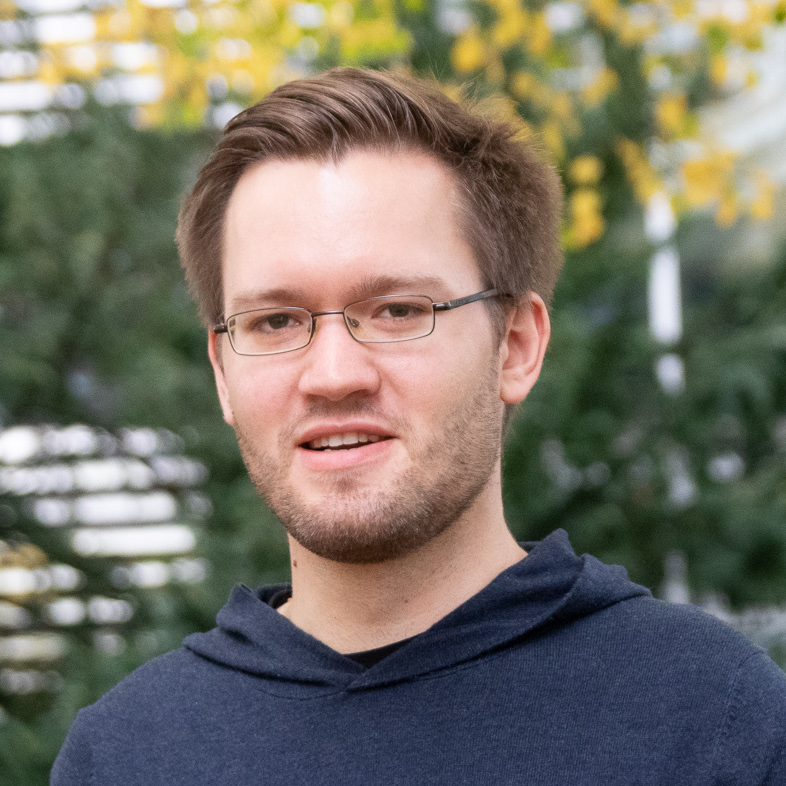
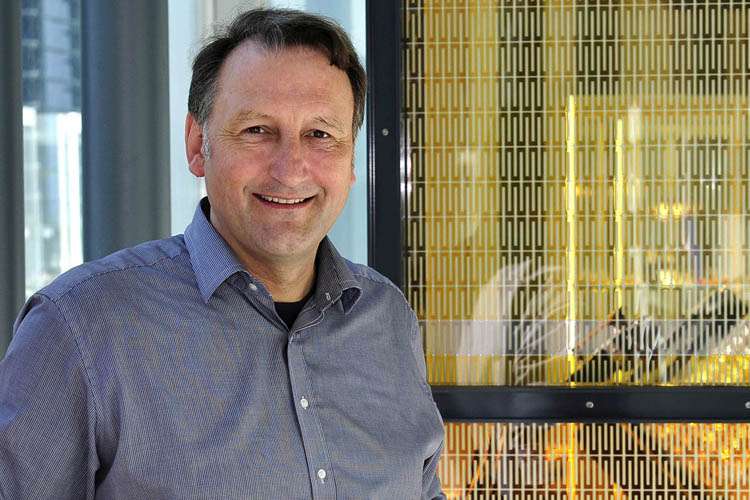
Ron Workman is a Research Professor of Physics at George Washington University's Department of Physics, where he teaches undergraduate courses including Classical Mechanics (Physics 3161), Principles of Quantum Physics (Physics 3167), and Stars, Planets, and Life in the Universe (Astronomy 1001). His research focuses on nuclear theory with emphasis on the baryon resonance spectrum through analysis of photon-induced reactions on nucleons using global accelerator data. Education background: PhD in Physics from University of British Columbia (1988) MSc in Physics from University of British Columbia (1984) BSc with Honors in Physics from University of Victoria (1981) Workman's research centers on nuclear theory and particle physics , specializing in partial-wave analysis of pion-nucleon and photon-nucleon scattering data. He develops advanced techniques to extract resonance parameters and pole positions in the complex energy plane, with particular focus on baryon transition form factors and the role of inelastic channels in photoproduction processes. His work bridges experimental data from facilities like Jefferson Laboratory with theoretical frameworks for hadron spectroscopy. Analysis of his recent publications (2022-2024) reveals consistent advancement of partial-wave analysis methodologies including the SAID program and Laurent+Pietarinen expansion techniques. These studies predominantly address photoproduction helicity asymmetries, baryon transition form factors, and exotic state investigations, significantly contributing to the global understanding of nucleon resonance spectra and hadronic interactions. Workman actively contributes to the SAID Data Analysis Center for electromagnetic and hadronic interactions and serves as a key member of the Particle Data Group, authoring multiple editions of the biennial Review of Particle Physics. His collaborative work with the CLAS Collaboration at Jefferson Laboratory represents a major component of his experimental engagement. No information regarding student advising or grant funding is available in the provided materials.