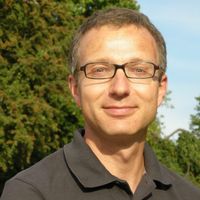
Munindar P. Singh is a Professor affiliated with North Carolina State University. His research focuses on multiagent systems, normative systems, cybersecurity, and ethical AI. He has contributed extensively to the development of protocols for decentralized systems, computational governance, and the application of AI in socially responsible contexts. Key Roles: Leading research in multiagent systems, norms, and sociotechnical systems. Affiliations: North Carolina State University. His work spans theoretical frameworks for agent collaboration, practical applications like microtransit optimization, and ethical considerations in AI. Recent studies include analyzing social media dynamics, deception strategies in cybersecurity, and moral reasoning in narratives. Publications reflect interdisciplinary impact across AI, computer science, and social computing. Notable areas include norm emergence, cyber deception via hypergame theory, and ethical frameworks for autonomous systems.
Alexander Bondarenko is a postdoctoral researcher at the Databases and Information Systems group, Friedrich-Schiller-Universität Jena, where he works on natural language understanding, argument retrieval, and causality extraction since October 2022. He completed his PhD in June 2023 with a dissertation titled Understanding Comparative Questions and Retrieving Argumentative Answers . Research Focus Primary research areas: natural language processing, question answering systems, information retrieval, argumentation modeling, and causal inference. Key projects: developing frameworks for comparative QA, stance-aware ranking, and misinformation-resistant biomedical search systems. Recent Article Trends His publications (2020–2025) emphasize: Argument retrieval systems and axiomatic re-ranking Biomedical question answering robustness Comparative question modeling across languages Causal inference in neural models Search quality impact on decision-making AI applications in medical education Teaching & Advising Supervised 8 theses including Marvin Vogel ( Axiomatic Re-ranking ) and Lukas Zeit-Altpeter ( Health QA with Trusted Sources ) Contributed to Touché shared tasks and Webis research group Contact Phone: +49 3641 9-46506 | Room 3237, Ernst-Abbe-Platz 2, 07743 Jena
Rob Procter is Professor of Social Informatics in the Department of Computer Science at the University of Warwick. He is Co-director of the AI and Human-Centred Computing Theme, a Faculty Fellow at the Alan Turing Institute, Visiting Professor at the University of Edinburgh’s School of Informatics, and Visiting Scholar at the Blavatnik School of Government, Oxford University. He is a member of the OECD AI expert group on AI incidents and lead rapporteur for the Forum for Information Democracy. His research interests include social informatics, data science methodologies, trustworthy and ethical AI, social media analytics, health informatics, computer-supported cooperative work (CSCW), participatory design, and science and technology studies (STS). He applies these to domains such as public policy, healthcare, and humanitarian response. His work emphasizes responsible innovation and the societal implications of AI and digital technologies. Recent publications highlight his focus on ethical AI in healthcare, misinformation detection, peacebuilding with machine learning, and youth digital wellbeing. He has led and collaborated on numerous projects funded by ESRC, EPSRC, EU Framework 7, JISC, and UK RAI, including Reading the Riots and Digital Wildfires. Notable scientific awards include best paper awards at ACM Web Science Conference and CHI, as well as the Data Journalism Award and Online Media Award for Best Use of Social Media. These reflect his impactful interdisciplinary work bridging computing, social science, and policy. Rob Procter has supervised and collaborated with numerous researchers across disciplines. He has been involved in major grants such as MEDI@4SEC, Petras IoT Hub, and SCALS. His work often involves co-production with stakeholders from government, industry, and civil society to ensure real-world relevance and impact. He is affiliated with several research groups including the Human-Centred Computing Division, Warwick Institute for the Science of Cities, Collaborative Online Social Media Observatory, and Centre for Interdisciplinary Methodologies.
Kristaps Slaidiņš serves as a Lecturer in the Department of Sport Games and Acting Scientific Assistant at Riga Stradins University, focusing on sports science research for youth athletic development. His institutional affiliation shows consistent engagement with Latvian sports education frameworks through collaborations with entities like the Latvian Olympic Committee. His research profile centers on Football Training biomechanics, Balance Performance metrics, and Youth Sports psychology. Key investigations include position-specific physical demands in adolescent footballers, dynamic/static balance assessment methodologies, and motivational factors influencing training compliance among children in grades 5-9. Supplementary work extends to Swimming pedagogy for school-aged children. Publication trends (2019-2025) reveal progressive specialization in football performance analytics, evolving from foundational swimming education materials to sophisticated biomechanical studies on explosive strength and technique classification. Recent work demonstrates methodological rigor in measuring lower limb power output and balance characteristics across playing positions, with strong emphasis on practical applications for youth coaching. No scientific awards or grant funding acknowledgments appear in the source documentation. Research activities indicate active conference participation through oral presentations at international venues (2023-2025), though specific student mentorship or laboratory affiliations remain undocumented in available materials.
Cécile Paris is a researcher at CSIRO , focusing on interdisciplinary applications at the intersection of Artificial Intelligence , Cybersecurity , and Human-AI Collaboration . Her work spans domains such as biomedical informatics, social media analysis, and robotics. Research Interests: Developing collaborative frameworks for human-AI teams Explainable AI in cybersecurity Trust modeling in social networks Fake news detection via temporal and graph-based networks Image captioning with multimodal learning Stance classification across domains Article Trends: Recent publications emphasize adaptive alert prioritization (2025), systematic reviews on cybersecurity challenges (2024), and foundational work in NLP for epidemic intelligence (2018-2020). Key methodologies include graph neural networks, transformer models, and adversarial training.
Devin Hussong, Psy.D., is an Assistant Professor of Psychology at Chestnut Hill College, affiliated with the Doctor of Psychology Program in Clinical Psychology. He teaches core courses in psychometric theory, psychological assessment, practicum training, and doctoral dissertation mentoring within the Department of Psychology in the College of Arts and Sciences. B.A., Moravian College M.S., Chestnut Hill College Psy.D., Chestnut Hill College Dr. Hussong's research centers on the role of humor in psychotherapy, personality assessment and conceptualization, media ecology, and the psychology of religion. His work adopts a constructivist framework, emphasizing the human elements in therapy and questioning rigid diagnostic models. He explores how humor fosters connection, understanding, and emotional healing in therapeutic settings. His publications and presentations reflect a consistent focus on therapist-client dynamics, non-medical models of emotional healing, and the integration of personal and philosophical perspectives into clinical practice. Themes across his recent work include the therapeutic alliance, authenticity in therapy, and alternatives to traditional psychiatric diagnosis. Dr. Hussong is a member of the American Psychological Association and the Pennsylvania Psychological Association. He provides clinical services through a group practice, offering assessment and psychotherapy to adolescents and adults. He mentors doctoral students in their dissertation research and has presented nationally on topics including MMPI-2 interpretation, ethical countertransference, and constructivist therapy principles. His workshops often involve collaboration with established figures in the field, such as Jay Efran, Ph.D., and Scott Levson, Psy.D. Dr. Hussong has delivered presentations at institutions including Togus Veterans Hospital and international conferences like the Biennial International Meaning Conference, demonstrating active engagement in professional development and knowledge dissemination.
Prof. Svenja Taubner serves as Director of the Institute for Psychosocial Prevention and Research Group Leader for Competence Development of Healthcare Professionals at Heidelberg University Hospital. She holds a W3-Professorship in Psychosocial Prevention. Her career includes roles at Alpen-Adria-University Klagenfurt, University Kassel, and Berlin's International Psychoanalytic University. She specializes in mentalization-based therapies, personality disorders, and competency development for healthcare professionals. Education highlights include a PhD (Dr. phil.) and training as an analytical psychotherapist certified by the German Psychoanalytic Society. Her work focuses on improving therapeutic competencies through structured feedback and deliberate practice models like the DYNAMIC curriculum. She leads studies on MBT-CD for conduct disorders, trauma-focused therapies, and epistemic trust constructs. Key initiatives include the Lighthouse Parenting Programme-Online, OSTE assessment tools for psychotherapy trainees, and validation of mentalization measurement instruments. She collaborates on S3 guidelines for borderline personality disorder and has pioneered pediatric skills labs for communication with psychosocially burdened families. Her research bridges clinical practice with theoretical advancements in attachment theory, epistemic trust frameworks, and transdiagnostic mechanisms. She actively contributes to training programs for psychotherapists and has developed innovative screening instruments like the PFAM-Screen for pediatric practices.
Anna Kolliakou is a Research Fellow at King’s College London’s Institute of Psychiatry, Psychology & Neuroscience (IoPPN), where she has been affiliated since 1999. She holds the role of Clinical Informatics Interface and Network Lead, managing collaborations for the CRIS team and broader informatics initiatives. Her research integrates mental health, social media analysis, and natural language processing (NLP), with a focus on improving clinical data extraction and understanding of psychosis outcomes. Her PhD explored cannabis use in first-episode psychosis, and she contributed to the EU-funded PHEME project, validating NLP methods for mental healthcare applications. Education: BA (Hons) Psychology (University of Essex), MSc in Clinical and Public Health Aspects of Addiction (King’s College London), PhD in Psychosis Studies (King’s College London). Research interests span electronic health records, data linkage, and interdisciplinary art-science collaborations, including the Arts in Mind Festival. She leads CRIS-NLP initiatives and has pioneered work on social media analysis for public health insights. Her recent studies include investigating catatonia associations, cardiometabolic risks post-psychosis, and childhood adversity impacts on mental health outcomes.
Leon Derczynski is a researcher at the IT University of Copenhagen with a focus on Natural Language Processing and computational linguistics. His work spans multiple NLP subfields including temporal information extraction , misinformation detection , and social media analysis . He has contributed to the development of NLP resources for Danish and Nordic languages, and created frameworks like garak for model security probing. Research interests include: Temporal relation classification and time expression modeling Social media analysis and misinformation detection Model efficiency and resource-aware NLP Scandinavian language processing Ethical considerations in NLP Publications highlight trends in transformer architecture optimization , set-to-sequence modeling , and abusive language detection . His work frequently appears in top venues like Transactions of the Association for Computational Linguistics , EMNLP , and COLING . Key collaborations include work with Kalina Bontcheva on rumor evaluation, Manuel R. Ciosici on efficient NLP methods, and Erick Galinkin on model security. He has also contributed to datasets like the Danish Gigaword Corpus and evaluation frameworks like Risk Cards for model deployment assessment.
Mounika Marreddy is a Postdoctoral Researcher at Goethe-Universität Frankfurt am Main, focusing on advancing Natural Language Processing (NLP) through interdisciplinary research that bridges machine learning, cognitive science, and multilingual language modeling. Her work explores the alignment between human and AI annotations, brain activity prediction using language models, and addressing challenges in low-resource languages like Telugu. Research Focus : Human-AI annotator alignment across NLP tasks (e.g., sentiment analysis, stance detection) Task effects on concept representation in neural models Development of Telugu-specific NLP datasets and pretrained models (ELMo-Te, BERT-Te) Neuroimaging studies linking syntactic processing to brain activity Publications : Her research has been published in top-tier venues such as the European Conference on Information Retrieval (ECIR), ACL Findings, IEEE ICASSP, and ACM Transactions, with recent work on the USDC dataset for dogmatism analysis and robustness in transformer models. She actively collaborates with researchers like Alexander Mehler and Manish Gupta.
Markus Egg is a Professor at the Department of English and American Studies , Humboldt University of Berlin. He is a principal investigator in the Collaborative Research Center 1412 (CRC 1412) focused on "Register: Language Users’ Knowledge of Situational-Functional Variation". His work bridges theoretical linguistics with computational approaches, particularly in metaphor annotation, register analysis, and discourse structure. He has organized international workshops such as MeStaR (Metaphors and Stance Markers in Register Variation). Current affiliation: Humboldt University of Berlin Key projects: CRC 1412, GeRMaN (German Register Marking by Non-Literal Expressions), MeStaR workshop Research Focus: His research examines how metaphors and metonymies function as markers of register variation across different contexts, including social media (e.g., LGBTQ+ slang on Twitter), religious language, and computational linguistics. He integrates methodologies from corpus linguistics, cognitive science, and natural language processing to model register knowledge. Teaching: Regularly teaches courses on linguistics, computational semantics, and machine learning applications in language research. In 2023, he conducted a webinar on "Register marking by metaphor and metonymy" at Nakhchivan State University. Collaborations: Collaborates with institutions like Charles University (Prague), Ruhr-Universität Bochum, and Università della Calabria. Frequent collaborator: Valia Kordoni (metaphor corpus development).