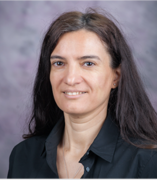
Sally Rice is a Professor in the Department of Linguistics at the University of Alberta, Faculty of Arts. Her research integrates empirical methodologies with cognitive and functional linguistics, focusing on the inseparability of meaning and form in language. Education: PhD in Linguistics (University of California, San Diego, 1987) Landrex Distinguished Professor (2007-2011) McCalla Research Professor (2008-2009) Key research areas include: Language documentation and revitalization for Dene Sųłiné and Tsuut’ina Grammaticalization and lexicalization patterns Corpus linguistics and psycholinguistic experimentation Form-meaning interface across typologically diverse languages Notable projects: Community Linguist Certificate program with CILLDI Interactive speech atlas of Dene languages with Joyce McDonough Dene migration studies via interdisciplinary collaboration Scientific awards: Landrex Distinguished Professorship McCalla Research Professorship SSHRC-CURA grants for Daghida Project Her work bridges theoretical and applied linguistics, with over 20 years of fieldwork on Athapaskan languages and extensive supervision of graduate students in corpus-based and cognitive approaches to language structure.
Dr. Sanda Harabagiu is the Research Initiation Chair Professor in the Department of Computer Science at The University of Texas at Dallas (UTD), affiliated with the Erik Jonsson School of Engineering and Computer Science. Her expertise spans natural language processing, medical informatics, and artificial intelligence for public health. She holds dual doctorates in Computer Engineering (University of Southern California, 1997) and Electrical Engineering and Computer Science (University of Rome, 1994), alongside a diploma in Computer Science from the Polytechnic Institute of Bucharest (1983). Her research focuses on advancing technologies for medical data analysis, including automatic extraction of actionable insights from radiology reports and EEG records. Notable projects include the Multimedia Vaccine Informatics System for analyzing social media discourse on vaccines and the development of AI tools for clinical decision support. She has led interdisciplinary collaborations through the Human Language Technology Research Institute (HLTRI), established in 2002 to pioneer advancements in human language processing. Dr. Harabagiu’s honors include the 2019 AMIA Distinguished Paper Award and the 2017 Homer Warner Award. Her work bridges computational linguistics with healthcare, emphasizing applications in public health communication, misinformation detection, and clinical informatics. She has contributed to over 150 publications and served on numerous editorial and organizing committees for conferences such as ACL, AAAI, and AMIA. Education: Ph.D., Computer Engineering, University of Southern California, 1997 Doctorate, Electrical Engineering and Computer Science, University of Rome, 1994 Diploma, Computer Science and Engineering, Polytechnic Institute of Bucharest, 1983 Awards: 2019 AMIA Distinguished Paper Award 2017 Homer Warner Award 2000 NSF CAREER Award 1991-1993 Fondazione Ugo Bordoni Research Award Her research also addresses social media analysis for public health, including frameworks to detect vaccine hesitancy and misinformation. Current projects involve leveraging large language models (LLMs) and multimodal data to understand communication patterns in health-related discourse. She has advised students like Travis Goodwin, contributing to impactful work in clinical informatics and AI ethics.
Jing Jiang is a prominent researcher at Singapore Management University, specializing in Natural Language Processing (NLP), Computational Linguistics, and Artificial Intelligence. His work spans diverse areas including Vision-Language Models, Machine Translation, Knowledge Graph Reasoning, Sentiment Analysis, and Social Media Discourse Modeling. Key contributions include frameworks for consistent client simulation in mental health counseling and counterfactual contrastive prefix-tuning for many-class classification. He has pioneered methods in zero-shot VQA with interpretable reasoning graphs , cross-lingual understanding with universal syntax , and modularized zero-shot architectures . His research often combines theoretical insights with practical implementations, as seen in works on stereotypical bias in vision-language models (VLStereoSet), tensorized self-attention for dependency modeling, and collaborative relation-augmented attention for knowledge graph completion. Jing Jiang's collaborations span global experts in NLP and AI, with co-authors from institutions like SMU, Waseda University, and Microsoft Research.
Dr. Yankee Modi is a Research Associate at the University of Sydney , affiliated with the Department of Linguistics and the Sydney Centre for Language Research . She serves as Co-Director of the Centre for Cultural-Linguistic Diversity (Eastern Himalaya) and holds membership in the Vere Gordon Childe Centre . Education: BA (Hons) from Rajiv Gandhi University MA from Jawaharlal Nehru University (JNU) MPhil from JNU PhD from University of Bern Her research focuses on documentation and description of Tibeto-Burman languages in the Eastern Himalayas, particularly those of the Milang tribe in Arunachal Pradesh, India. She specializes in community-led language projects, cultural prehistory reconstruction through proper names, and linguistic responses to geopolitical tensions. Recent projects include a 4-year community-led documentation initiative for 20 Eastern Himalayan languages in partnership with Firebird Foundation and University of North Texas. Publications span topics like applicative morphology, subject autonomy marking, and cultural linguistic diversity. Awards: Shortlisted finalist for 2019 Panini Award (Association for Linguistic Typology) She advocates for indigenous researcher sovereignty and has publicly challenged Chinese geopolitical influence in academic publishing, as seen in her 2023 commentary on retracted Himalayan research.
Anne Göhring is an Academic Associate at the University of Zurich, working within the Language, Technology and Accessibility research team at the Institute of Computational Linguistics. With over a decade of experience in computational linguistics and natural language processing, she has established herself as a specialist in machine translation, sign language processing, and German language analysis. Her work bridges theoretical linguistics with practical applications, particularly focusing on accessibility technologies and resource-poor languages. Her educational background includes: 2001-2010: Studies in Spanish Linguistics and Literature, Computational Linguistics 2006-2007: Erasmus study year at Universidad Complutense Madrid Dr. Göhring's research spans multiple domains of computational linguistics with a strong emphasis on practical applications. She has made significant contributions to machine translation systems, particularly for hybrid approaches and low-resource languages like Quechua. Her recent work has increasingly focused on sign language processing, developing corpora and translation systems to improve accessibility. She also conducts important research in semantic role labeling, sentiment analysis, and German language processing, with applications ranging from social media analysis to veterinary text mining. Analysis of her recent publications reveals a clear trajectory toward accessibility-focused NLP research, particularly in sign language technologies. While maintaining expertise in German language processing and machine translation, her 2023-2024 work shows a strong emphasis on sign language corpora development (SwissSLi) and pose-based identification systems. Earlier work focused more on semantic analysis, sentiment detection, and cross-lingual processing, demonstrating remarkable versatility across NLP subfields. Dr. Göhring has been actively involved in numerous research projects: 2011-2014: SNSF project SQUOIA on Hybrid Machine Translation 2015: CTI project SentiSpider on expectation-based sentiment analysis 2016-2018: What's up, Switzerland? corpus project 2018-2022: Sentiment inference research 2021-2024: NCCR Evolving Language Project: IMAGINE 2022-2026: Flagship IICT Throughout her career, Dr. Göhring has supervised numerous student projects and taught courses ranging from introductory computational linguistics to specialized seminars on machine translation and NLP for medicine. Her teaching portfolio demonstrates commitment to both foundational knowledge and cutting-edge applications in the field. She is an active member of the Language, Technology and Accessibility research group at the University of Zurich, collaborating extensively with researchers like Manfred Klenner, Sarah Ebling, and Martin Volk on diverse NLP challenges.
Marcela Munera is an Associate Professor in Assistive Robotics at the University of the West of England (UWE Bristol). Her research focuses on robotic devices for rehabilitation, human-robot interaction, biomechanics, and movement analysis, with a particular emphasis on user-centered design approaches. Bioengineer, Universidad de Antioquia (Colombia) MSc in Mechanics and Materials, Ecole Nationale de Metz (France) PhD in Mechanics and Biomechanics, Université de Reims Champagne Ardenne (France) Key research areas include socially assistive robotics, rehabilitation robotics, and biomechanical modeling. She has led projects involving exoskeletons, smart walkers, and wearable sensors, often integrating participatory design and multimodal feedback mechanisms. Her publications highlight interdisciplinary applications in neurological rehabilitation (e.g., stroke, Parkinson's disease), autism therapy, and occupational health. Recent work explores smart upper-limb exoskeletons for construction workers, stress classification via novel sensors, and adaptive control systems for mobility assistance. FEDER, Region Champagne Ardenne Doctoral Grant Her doctoral research focused on industrial biomechanical assessments for sports performance and injury prevention, later expanding to human-centered rehabilitation robotics. She has collaborated on projects involving brain-computer interfaces, serious games, and cloud robotics frameworks like PoundCloud.
Dr. Timothy Cribbin is a Senior Lecturer in the Department of Computer Science within the College of Engineering, Design and Physical Sciences at Brunel University London. He has been with the university since 2001, initially joining as a lecturer and advancing to his current position. His academic home is firmly rooted in the intersection of information science, human-computer interaction, and data analytics. His educational background includes: PGCert Learning and Teaching in Higher Education, Brunel University (2007) PhD Information Science, Brunel University (2005) for research exploring spatial-semantic interfaces for exploratory document search MSc Industrial Psychology, University of Hull (1996), where he was awarded the Tom Hoyes Memorial Prize BSc (Hons) Psychology, University of Portsmouth (1994) Dr. Cribbin's research focuses on information visualization, interactive search interfaces, and text analytics, with particular expertise in processing and modeling large text collections to uncover meaningful insights. His work spans the design and evaluation of algorithms, interaction models, and end-user tools that support search, navigation, exploration, and sense-making within connected information spaces like scholarly publications and social media platforms. Early in his career, he pioneered work on interactive visualization using distance-similarity and spatial-semantic metaphors, making key contributions through the application of geodesic distance and second-order similarity transformations. More recently, his research has centered on citation-enhanced information retrieval and social media analytics, including the development of the Chorus Twitter analytics project. His scholarly output reveals a consistent trajectory from foundational work in information visualization to increasingly applied research in social media analytics and text mining. Throughout his career, Dr. Cribbin has maintained a strong focus on human-centered approaches to information processing, with particular attention to how users interact with and make sense of complex information spaces. His recent work demonstrates growing interest in psychological aspects of information processing, author classification, and the analysis of linguistic patterns in online radicalization. Dr. Cribbin has received notable recognition including: Tom Hoyes Memorial Prize for his MSc in Industrial Psychology Fellowship of the Higher Education Academy (FHEA) He has secured research funding for projects including "Predicting online radicalisation" and "Facilitating social media research in social sciences." Dr. Cribbin serves as a Deputy Senior Tutor (Academic Misconduct) and provides supervisory duties for final year undergraduate and Masters dissertation projects. He regularly acts as a reviewer for conferences and journals in information science, social media analytics, and information visualization. Dr. Cribbin is a key contributor to the User Centred Design research group and is the founder and lead programmer of the Chorus Twitter analytics project. His work bridges theoretical research with practical applications, particularly in the areas of social media analytics and text mining.
Hadeel Alnegheimish is a dual-affiliated academic serving as an Ibn Khaldun Postdoctoral Research Fellow at MIT's Computer Science and Artificial Intelligence Lab (CSAIL) and an Assistant Professor in the Department of Computer Science at King Saud University. Her research focuses on advancing machine learning and natural language processing, particularly in neuro-symbolic reasoning, model interpretability, and robust numerical reasoning. She holds a PhD from Imperial College London, advised by Alessandra Russo and Pranava Madhyastha, and completed an internship at DeepMind's Cognition team. Education: PhD in Computer Science, Imperial College London (2023) M.Sc. in Artificial Intelligence, Imperial College London B.Sc. in Computer and Information Sciences, King Saud University Research Interests: Compositional reasoning, model evaluation, and neuro-symbolic integration. She emphasizes transparent and reliable systems that demonstrate how answers are derived, alongside advancing evaluation methodologies. Current projects explore symbolic rule learning for LLMs and preserving word order sensitivity in neural models. Grants & Advising: Currently recruiting MIT UROPs for summer 2025. Collaborates actively with peers in neuro-symbolic NLP and evaluates model behavior through initiatives like Forced Invalidation. Labs & Teams: Participates in CSAIL's machine learning initiatives and leads pedagogical efforts at King Saud University, fostering interdisciplinary research in computational linguistics and AI.
Prof. Antske Fokkens is a Full Professor in Computational Linguistic Methods at Vrije Universiteit Amsterdam, with joint appointments in the Faculty of Humanities and the Network Institute. She directs the Text Mining/Language and AI track in the Linguistics Master's program and serves as Vice Dean of Research. Her research investigates methodological aspects of computational linguistics, focusing on language models, interpretable AI, and digital humanities. She develops tools to extract patterns from large text corpora for applications in social science and history, emphasizing transparency and interdisciplinary collaboration. Current projects include analyzing perspective expression in media and semantic modeling for biographical data. Recent publications examine shortcut learning in text classification, persona-driven content generation, hate speech model alignment, and cross-disciplinary approaches to stance detection. Her work integrates NLP with social science theories to analyze discourse on sustainability, polarization, and media framing.
Professor Heidrun Dorgeloh is affiliated with Heinrich Heine University Düsseldorf (HHU), where she has served as an Außerplanmäßige Professorin for English Language and Linguistics since 2021. She is part of the Faculty of Arts and Humanities and contributes to the Department of English Language and Linguistics through research, teaching, and leadership roles. Education : Habilitation (2014), Ph.D. in English Linguistics (1994), studies at Justus-Liebig-Universität Gießen, London School of Economics, and Université de Paris II. Her research focuses on English syntax , discourse and genre theory , discourse processing , and argumentative discourse . She examines how syntactic structures interact with discourse functions across genres, including medical, scientific, and narrative contexts. Recent work explores genre bias in language models and argument annotation schemes. Her publications and grants reflect interdisciplinary approaches, including: Scientific awards : Beste Dissertation des Jahres 1995 (HHU Düsseldorf). Grants : eLearning and teaching grants for projects like 'Linguistics, Literature, and your Career' and 'Narrativity and evolution of English genres.' Dorgeloh has held leadership roles such as Head of the B.A. Students' Office and Vice President of the HHU Senate. Her career spans full-time lecturing, interim professorships, and visiting scholarship at Ohio State University.
Chengkai Li is a Professor and Associate Chair in the Department of Computer Science and Engineering at the University of Texas at Arlington (UTA), directing the Innovative Data Intelligence Research (IDIR) Lab and co-directing the Center for Artificial Intelligence and Big Data (CARIDA). He holds adjunct roles in the Multi-Interprofessional Center for Health Informatics (MICHI). His academic journey includes a Ph.D. from UIUC (2007) and faculty positions at UTA since 2007, progressing from Assistant to Full Professor (2019). Education: Ph.D. in Computer Science (UIUC, 2007), M.E. and B.S. from Nanjing University (2000, 1997). Research focuses on AI-driven data systems for social good, including computational fact-checking, knowledge graphs, and graph data usability. Key projects include ClaimBuster (end-to-end fact-checking), FactWatcher (automated fact monitoring), and Maverick (exceptional fact discovery). His work spans 30+ news features and collaborations with organizations like Knight Foundation and Google. Publications (over 100) appear in top venues (SIGMOD, KDD, VLDB), with awards like the 2017 SIGMOD Most Reproducible Paper Award. He advises over 30 students and leads grants totaling millions from NSF, Knight Foundation, and industry partners. Labs/Teams: IDIR Lab (40+ researchers), CARIDA (AI/Big Data initiatives), and partnerships with Duke Tech & Check Cooperative.
Dr. Cornelia Caragea is the Robert V. Kenyon Professor in the Department of Computer Science at the University of Illinois at Chicago (UIC), College of Engineering. She holds a Ph.D. in Computer Science from Iowa State University. As a Program Director at the National Science Foundation , she bridges academic research with national funding priorities. UIC Affiliation: Department of Computer Science, College of Engineering NSF Role: Program Director (current) Education: Ph.D., Computer Science, Iowa State University Her research spans artificial intelligence, machine learning, and natural language processing , focusing on semi-supervised learning, data cartography, and emotion/stance detection in social media. Applications include privacy prediction for images , disaster response systems , and scientific document analysis. She pioneered datasets like SciNLI, GunStance, and EZ-STANCE, while developing techniques such as Beam Tree Recursion and JointMatch. Recent publications emphasize semi-supervised frameworks for NLP tasks, multimodal disaster tweet classification , and large vision-language model evaluations . Collaborations with students like Seo Yeon Park, Jishnu Ray Chowdhury, and Chenye Zhao highlight her expertise in domain adaptation and calibrated knowledge distillation . She actively recruits PhD students for research assistantships in NLP, info retrieval, and machine learning. Her work has appeared in top venues including ACL, EMNLP, NeurIPS, and CVPR.
Kenny Joseph is an Associate Professor in the Department of Computer Science and Engineering at the University at Buffalo's School of Engineering and Applied Sciences. He serves as Associate Director of the AI and Society Institute for Artificial Intelligence and Data Science. PhD in Societal Computing from Carnegie Mellon University (2016) MS in Societal Computing from Carnegie Mellon University (2012) BS in Computer Science from Carnegie Mellon University (2010) His research focuses on computational social science , examining stereotypes and prejudice dynamics , social inequality through computational tools , and gender disparities in organizations . He develops machine learning frameworks for neighborhood change prediction and predictive models for child welfare systems , with work featured in the New York Times . Scientific contributions include: UB Exceptional Scholar—Young Investigator Award (2021) He advises students Yuhao Du (Meta data scientist), Jason Yan (Michigan Ph.D. student), Arjunil Pathak (Amazon researcher), and Navid Madani (former Ph.D. student). His Computation and Equity Lab (cubelab) produces interdisciplinary work spanning social media analysis, urban equity, and computational methods for marginalized communities.
Dr. Serdar Arslan is a Lecturer at the Department of Computer Engineering at Cankaya University. He holds a PhD in Computer Engineering from Middle East Technical University (METU), with a thesis on multidimensional data indexing. His academic background includes a Master's (2005) and Bachelor's (2001) in Computer Engineering from METU and Hacettepe University, respectively. His research focuses on database systems, machine learning, multimedia data indexing, and forecasting models. Education: Bachelor of Engineering, Computer Engineering, Hacettepe University (2001) Master of Science, Computer Engineering, METU (2005) Doctor of Philosophy, Computer Engineering, METU (2018) Research Interests: Machine Learning applications in healthcare forecasting and financial markets Advanced indexing techniques for multimedia databases (e.g., MM-FOOD structure) Natural language processing for stance detection in political discourse Hybrid forecasting models combining LSTM and Prophet algorithms Domain-specific NLP for product name extraction in Turkish text Publications: His recent work emphasizes machine learning-driven solutions for complex systems, including pandemic modeling, cryptocurrency analysis, and conflict discourse analysis. His earlier contributions focused on multimedia indexing and image retrieval systems using MPEG-7 standards. The 2025 paper on OSINT architecture frameworks highlights his expanding focus on cybersecurity and system design. Labs/Teams: While no specific lab is mentioned, his GitHub repositories (e.g., Forecasting, NLP projects) suggest active involvement in collaborative research projects related to his domains.
Nan Bai is an Assistant Professor in the Heritage & Architecture section at Delft University of Technology's Faculty of Architecture and the Built Environment. His research integrates computational social science, architecture, and artificial intelligence to analyze heritage values in urban contexts, focusing on social perceptions derived from social media data. PhD in Heritage and Values from TU Delft Marie Sklodowska-Curie Early Stage Researcher in the HERILAND Project Research Interests : Computational social science, cultural heritage analytics, spatiotemporal modeling, and social media-driven urban planning. His work bridges architecture, AI, and big data to address heritage preservation challenges. Scientific Awards : Best Paper Award from CIPA 2023 Young CAADRIA Award 2020 External Roles : Active in committees like ICOMOS Nederland, CIPA Emerging Professionals, and CIPA Heritage Documentation. He has presented at international conferences and workshops on heritage and AI topics.