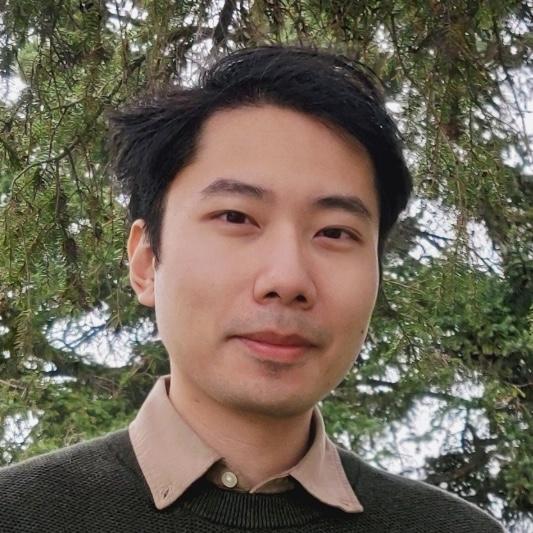
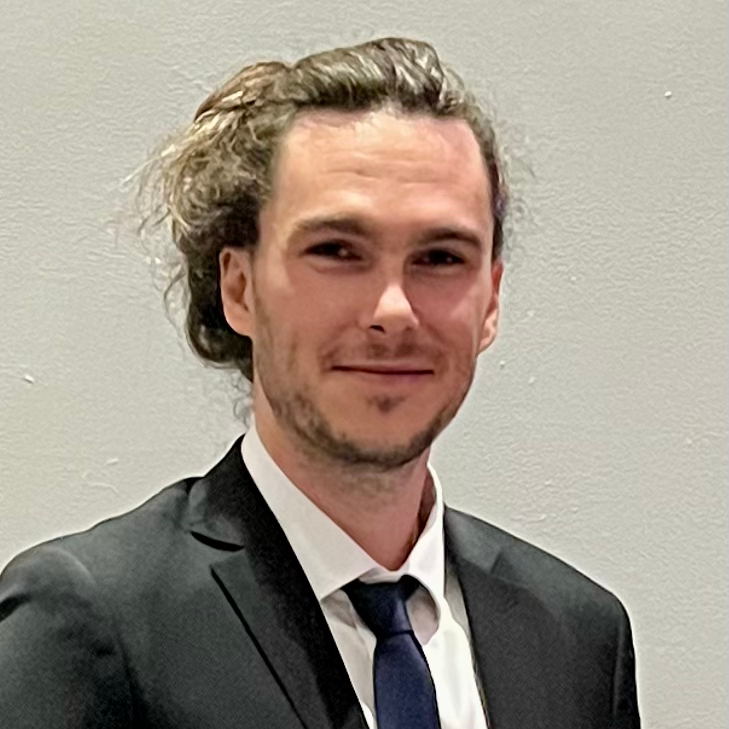
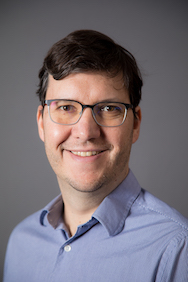
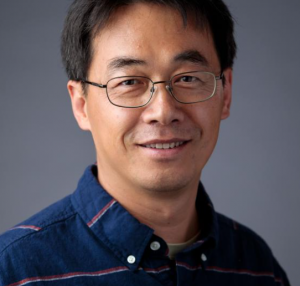
Tse-Hsun (Peter) Chen is an Associate Professor in the Department of Computer Science and Software Engineering at Concordia University, Montreal. He leads the Software PErformance, Analysis, and Reliability (SPEAR) lab, focusing on improving software quality through log analysis, AIOps, and mining software repositories. His research collaborates with companies like Microsoft, BlackBerry, and Ericsson. Education: PhD, MSc, and BSc in Computer Science from Queen's University and the University of British Columbia. Awards include the Gina Cody Research Award (2021) and recognition as one of the world's most active software engineering researchers (JSS study). Research interests include software testing, DevOps, and leveraging LLMs for SE tasks. Recent work emphasizes log parsing with LLMs (e.g., LibreLog) and fault localization. Graduates from his lab hold academic positions at institutions like York University and DePaul University. Teaching includes courses on software verification, testing, and process management. Active in program committees for ICSE, FSE, and MSR. Over 50 publications in top venues like TSE, ICSE, and FSE.
Cristiano Politowski is an Assistant Professor in the Department of Computer Science at Ontario Tech University's Faculty of Science. His research focuses on software engineering for video games, automated testing, AI4SE, and empirical studies. He holds a Ph.D. in Software Engineering from Concordia University (2022), an M.Sc. in Computer Science from Universidade Federal de Santa Maria (2017), and a B.Sc. in Computer Science from Universidade Regional do Estado do Rio Grande do Sul (2014). Prof. Politowski has extensive postdoctoral experience at Université de Montréal (GEODES group) and École de Technologie Supérieure (ÉTS), focusing on game engine architecture, requirements specification, and certifiable RTOS systems. He has organized workshops like ASE4Games 2021/2022 and FaSE4Games 2024, emphasizing game software engineering. His research interests span video game development challenges, software testing methodologies, and leveraging AI for software engineering. Notable projects include analyzing game engine subsystem coupling, assessing video game balance with autonomous agents, and curating datasets like PlayMyData. Prof. Politowski has secured $20K from MITACS for a 5G infrastructure project during the pandemic and received the Concordia Accelerator Award (2021). His work has been published in venues like MSR, ICSE, and IEEE Transactions.
Marco Aurélio Gerosa is a Professor at Northern Arizona University and was previously an Associate Professor at the University of São Paulo (USP), Brazil . He is affiliated with the School of Informatics, Computing, and Cyber Systems (SICCS) at NAU and the Department of Computer Science at USP. His research focuses on the Human Aspects of Software Engineering , including Software Engineering Education , Computer Supported Cooperative Work (CSCW) , and AI-Assisted Software Engineering . He has published extensively on topics such as Open Source Software development, Bots and Chatbots in software engineering, and Mining Software Repositories techniques. His recent work explores Using Large Language Models (LLMs) for educational purposes in programming, data science, and software engineering Developing chatbots to facilitate newcomer onboarding to OSS projects Investigating the evolution of Integrated Development Environments (IDEs) Assessing the impact of software bots on projects Understanding how to design effective chatbot languages Dr. Gerosa has received numerous scientific awards, including ACM SIGSOFT Distinguished Paper Award Best paper awards at ICSE and International Symposium on Open Collaboration IEEE Computer Society TCSE Distinguished Paper and Service Awards Productivity grants from CNPq (Brazilian Council for Scientific and Technological Development) He has graduated numerous PhD students who are now researchers in top institutions worldwide and has been a mentor to many more at various levels. His research projects have secured over USD 1 million in funding. Dr. Gerosa is also involved in the development of tools and environments for software engineering, including MetricMiner for repository analysis and various gamification platforms to enhance developer engagement. He brings over 25 years of teaching experience across multiple universities, teaching courses ranging from Introduction to Programming to Advanced Topics on Web Development and Collaborative Systems Development.
Anees Baqir is an Assistant Professor of Data Science at Northeastern University London, affiliated with the CoMENS Faculty's Data and AI department. He is also a research fellow at the Complex Human Behavior (CHuB) lab at Fondazione Bruno Kessler (FBK), Trento, Italy, contributing to the European-funded AI-CODE project studying misinformation and polarization in social media. His research focuses on analyzing online information dynamics, polarization, and machine learning applications in healthcare, crime prediction, and language processing. Education details are not explicitly provided here, but his work bridges computer science and social sciences through interdisciplinary projects. He is part of the Complex Systems Society and collaborates globally, leveraging Northeastern University's transnational network across 13 campuses in the UK, US, and Canada. Research interests include: (1) Misinformation spread and polarization in digital ecosystems, (2) Machine learning for health analytics and behavioral prediction, (3) NLP innovations for Urdu and multilingual content analysis, (4) Spatio-temporal crime modeling for smart cities, and (5) Computational social science methods for political and societal dynamics. His recent publications span 2020–2025, exploring topics like Twitter-based PTSD detection, Urdu language processing systems, and AI-driven crime prediction. His work frequently intersects technical methodologies with societal impact, such as analyzing polarization in Pakistan’s political discourse or developing frameworks for university course scheduling. He holds no explicitly listed academic awards but is actively involved in research initiatives addressing global challenges like misinformation and public health surveillance. His advisory roles and grant activities are not detailed here, though his CHuB lab affiliation suggests collaborative funding opportunities. Key affiliations include the CHuB lab (FBK, Italy), Complex Systems Society, and Northeastern’s global network. He contributes to projects like AI-CODE, focusing on federated social media analysis and European misinformation trends.
Dr. Mel Ó Cinnéide is an Associate Professor at the School of Computer Science, University College Dublin. He holds a PhD from Trinity College Dublin (2001) and has over three decades of experience in academia and industry. His research focuses on automated refactoring, search-based software engineering, design patterns, and energy-efficient software development. He leads the Masters in Advanced Software Engineering program at UCD and has received multiple research grants and best paper awards. Prior to academia, he worked as a software engineer at Philips (Netherlands) and Motorola (Cork). Education: BSc in Computer Science, University College Cork MSc in Computer Science, University College Cork PhD in Computer Science, Trinity College Dublin Diploma in Gaeilge Fheidhmeach (Computing Irish), UCD Research interests emphasize practical applications of refactoring techniques to improve software quality and energy efficiency. He pioneers tools like Code-Imp and RefDetect for automated refactoring, integrating multi-objective optimization and interactive systems. His work bridges theoretical software engineering principles with real-world industry challenges. Awards and Grants: - Best Paper Awards in peer-reviewed conferences - Competitive research grants supporting software engineering projects Advising & Leadership: - Director of UCD's Masters in Advanced Software Engineering - Supervisor of numerous academic and industrial projects Labs & Projects: - Co-lead of the CodeImp Project (automated search-based refactoring) - Involved in international workshops on refactoring and software engineering
Xiaoguang Wang is an Assistant Professor in the Department of Computer Science at the University of Illinois Chicago. His research spans systems and software security, focusing on heterogeneous CPU architectures, secure software systems, and virtualization-based security frameworks. He actively mentors PhD and Master’s students and offers funded research opportunities for UIC students. University of Illinois Chicago, Department of Computer Science Research: Systems & Software Security, Heterogeneous Architectures, Virtualization His work includes projects like sMVX (multi-variant execution), Dapper (live program rewriting), and DynaCut (dynamic program customization). Recent publications address cross-architecture process migration, Linux kernel security, and using large language models (LLMs) for software security. He teaches advanced courses such as CS 487: Building Secure Computer Systems and CS 594/561: Adv. Linux Kernel Programming , emphasizing hands-on kernel development and security techniques. Grants from the U.S. Office of Naval Research and NSF support his work on secure systems and cross-architecture security solutions.
Professor Omar Alam is an Associate Professor in the Department of Computer Science at Trent University. His research focuses on software engineering, particularly Model-Driven Software Engineering, Aspect-Oriented Modelling, and Mining Software Repositories. Prior to Trent, he earned his PhD at McGill University, specializing in Model-Driven Engineering. He has received notable awards such as the ACM SIGSOFT Distinguished Paper Award (2019) and the Merit Award for Excellence in Research (2022). His teaching includes courses like Software Specification (COIS 3030), Software Design and Modeling (COIS 2240), and Software Architecture (COIS 3040). Key grants include the NSERC Discovery Grant (2017-2024) and past fellowships from NSERC and FRQNT. His work spans collaborative modeling, automated grading systems, and empirical studies on developer practices. Research often intersects software development methodologies, tool integration, and socio-technical aspects of computing. His recent publications explore topics like developer workplace communication, transit schedule deviations using real-time data, and three-way domain-specific model differencing. He actively contributes to journals like SoSyM and conferences such as SLE and ICSM. His teaching excellence is recognized through student awards and nominations, reflecting his commitment to pedagogy in computer science education.
Andrew Begel is an Associate Professor in the Software and Societal Systems Department (S3D) at Carnegie Mellon University's School of Computer Science. He is also affiliated with the Human-Computer Interaction Institute (HCII) at CMU and holds an Affiliate Professor position at the University of Washington's Information School. Previously, he spent 16 years as a Principal Researcher at Microsoft Research, focusing on software engineering and human-computer interaction. Education: Ph.D. in Computer Science, University of California, Berkeley (2005), advised by Susan L. Graham M.Eng. in Electrical Engineering and Computer Science, MIT (1997), advised by Mitchel Resnick B.S. in Computer Science and Engineering, MIT (1996), advised by Mitchel Resnick Research Focus: His work centers on creating inclusive workplaces for neurodivergent individuals and people with disabilities. Current projects include: AI tools for real-time communication support between autistic/non-autistic individuals Neurodiversity-aware educational programs (e.g., game coding camps for autistic students) VR training for neurotypical allies to understand sensory challenges faced by autistic colleagues Adaptive coding instruction for neurodivergent learners Awards & Recognition: ACM Distinguished Member (2019) National Merit Scholarship (1992) Leo V. Dustman Award in Mathematics Advising & Labs: Runs the VariAbility Lab at CMU Currently advising Jiwoong (Joon) Jang and Darren (Ren) Butler Key Contributions: Pioneered programming-by-voice systems for developers with disabilities Developed collaboration tools like Deep Intellisense and StarLogo for inclusive education Advocated for neurodiversity inclusion in software engineering workplaces
Bowen Xu is an Assistant Professor in the Department of Computer Science at North Carolina State University (NC State), College of Engineering. His research focuses on software engineering, machine learning, and program analysis, particularly in securing AI models and improving code quality. He holds a PhD from Singapore Management University (SMU), where he also conducted postdoctoral research. Education: PhD in Computer Science, Singapore Management University (SMU) Postdoctoral Researcher, SMU School of Computing and Information Systems Research Interests: AI for Code, Backdoor Attacks on Code Models, Vulnerability Detection Code Representation Learning, Model Compression, Safety of AI Systems Chatbot Development for Developers, Automatic Code Review Key Contributions: Developed PTM4Tag+, a Stack Overflow tag recommendation system using pre-trained models Explored stealthy backdoor attacks in code and reinforcement learning systems Pioneered work on automatic vulnerability repair using LLMs and broader input analysis Awards: 2022: Honorable Mention Award (ACSAC) 2018: Highly Commended Full Paper Award (ESEM) Service Roles: Editorial Board Member, Empirical Software Engineering Journal Program Committee Co-chair for ICSE/FSE Research Tracks Organized workshops like FORGE, MaLTeSQuE, and SEA4DQ Labs & Teams: Leads the Softmax Lab at NC State, advising 12+ students across PhD, Master's, and undergraduate levels. Alumni include industry professionals at Microsoft, Barclays, and Marvell Semiconductor.
Jun Yang is a Senior Lecturer in Chinese Language at the Department of East Asian Languages and Civilizations, University of Chicago. He serves as Director of the Chinese Language Program and focuses on pedagogy, linguistics, and language evaluation. His work bridges theoretical and applied research in language acquisition and teaching methodologies. University: University of Chicago School: East Asian Languages and Civilizations Role: Director of Chinese Language Program His research interests span Chinese linguistics , second language acquisition , discourse analysis , and Chinese language pedagogy . These areas are reflected in his leadership and instructional strategies within the Chinese language curriculum. Jun Yang’s publication record includes 14 recent articles (2017–2022) focused on optimizing database-backed web applications. Key themes involve automated code refactoring , schema management , reinforcement learning for data pipelines , and performance bug detection . These works emphasize tools for improving software reliability and efficiency in distributed systems and IDE environments. Jun Yang holds a Ph.D. in Second Language Acquisition and Teaching, underscoring his expertise in language education. His email address is yangj@uchicago.edu , and he is based at Classics 416, 1010 E 59th St, Chicago, IL 60637.
Davide Di Ruscio is a Full Professor at the Department of Information Engineering Computer Science and Mathematics of the University of L'Aquila (Italy), where he leads research in Model-Driven Engineering and Software Engineering. His work spans domain-specific modeling languages, model transformations, and recommender systems applied to open source software and autonomous systems. His research interests focus on Model Driven Engineering , Model evolution , Open Source Software , and Recommender Systems , with recent work exploring LLM applications in code analysis and fairness engineering. Key application domains include service-based systems, autonomous systems, and hybrid polystore systems. Di Ruscio actively contributes to the software engineering community through leadership roles in major conferences and journals. He serves on the steering committees of ICMT, SLE, SATTOSE, MiSE, and RoSE, and is on the editorial boards of SoSyM, IEEE Software, Journal of Object Technology, and IET Software. His work has been published in over 200 papers across top-tier venues. He has contributed to numerous European and Italian research projects since 2006, applying MDE concepts to real-world systems. Current teaching includes Software Engineering for Autonomous Systems and Software Engineering for the Internet of Things, with office hours on Tuesdays and Wednesdays from 11:30-13:30 at Edificio Alan Turing, Room 208.
Xumin Liu is a Professor in the Department of Computer Science at the Golisano College of Computing and Information Sciences, Rochester Institute of Technology (RIT). His research focuses on Artificial Intelligence, Data Science, Data Mining, and Service-Oriented Computing. He holds a PhD in Computer Science from Virginia Tech, an ME from Jinan University (China), and a BE from Dalian University of Technology (China). Education: BE in Computer Science, Dalian University of Technology (China) ME in Computer Science, Jinan University (China) PhD in Computer Science, Virginia Tech Research Interests: Artificial Intelligence Data Science Education and Applications Service-Oriented Computing (SOC) Machine Learning for Web Services Workflow Mining and Clustering Data Management and Analytics Publications highlight contributions to service mashup popularity prediction, workflow mining, and service recommendation systems. His recent work emphasizes bridging data science education for non-technical students and integrating SOC principles into curricula. Teaching Contributions: CSCI-621: Foundations of Database Systems CSCI-724: Web Services and Service-Oriented Computing ISCH-370: Principles of Data Science
Maria Del Rio-Chanona is an Assistant Professor in the Department of Computer Science at University College London, where she conducts interdisciplinary research at the intersection of economics, computer science, and complex systems. Her academic journey began with a BSc in Physics from UNAM, Mexico, followed by a DPhil in Mathematics from the University of Oxford, where she was part of the Complexity Economics group at the Institute for New Economic Thinking at the Oxford Martin School. Her research spans multiple critical domains including network science, machine learning, large language models, and agent-based modeling, with applications to the future of work, net-zero transition economics, and the economic impacts of both AI and the Covid-19 pandemic. She has developed innovative methodologies that integrate economic and epidemic models, created data-driven network models of labor markets, and pioneered the use of large language models for economic analysis and historical benchmarking. Dr. Del Rio-Chanona's recent work demonstrates a clear trajectory toward increasingly sophisticated applications of AI in economic modeling, with significant contributions to understanding how generative AI reshapes freelance markets, how LLMs can model financial market behavior, and how to assess AI's capabilities through historical knowledge benchmarks. Her research shows consistent growth in methodological sophistication, moving from traditional economic modeling toward cutting-edge AI applications. JSMF Research Fellow at Complexity Science Hub, Vienna Visiting Scholar at Harvard Kennedy School's Growth Lab Collaborator with International Monetary Fund and International Labour Organisation She actively supervises PhD students in computer science with research projects focused on AI, networks, and economic modeling. Her work has been supported by multiple research grants, including projects modeling well-being impacts of natural disasters and analyzing employment dynamics during rapid decarbonization. She maintains active research collaborations across institutions including the Complexity Science Hub Vienna, Harvard Growth Lab, and Oxford Martin School.
Maria P. Roche serves as Assistant Professor of Business Administration in the Strategy Unit at Harvard Business School, where she teaches the MBA elective Innovating at Scale and contributes to executive education programs. Her research investigates how specialized knowledge is commercialized and how micro-geographic environments—including neighborhoods, buildings, and office layouts—influence innovation outcomes, demonstrating that strategic design of physical and social environments yields significant performance gains. Her educational background includes a PhD in Management (Strategy and Innovation) from the Scheller College of Business at Georgia Institute of Technology, where she received a National Science Foundation Doctoral Dissertation Improvement Grant. She also holds an MS in Business Administration and a BA in International Cultural and Business Studies from the University of Passau in Germany. Professor Roche's research spans innovation , strategy , and entrepreneurship , with emphasis on knowledge spillovers in coworking spaces, urban infrastructure effects on innovation, and academic entrepreneurship. Her work combines large-scale empirical analyses with field experiments, revealing how proximity-driven social interactions and environmental design shape technological adoption and startup success across biotechnology, software, and high-tech industries. Her publications from 2020–2025 consistently explore geography-innovation linkages, with major themes including physical proximity effects in coworking hubs, street-network impacts on regional innovation, and optimal workplace configurations for knowledge-intensive organizations. This body of work has appeared in Management Science , Organization Science , and Review of Economics and Statistics , influencing both academic discourse and corporate practices as featured in The Wall Street Journal and The Economist . Her scientific recognition includes: 2025 Wyss Award for Excellence in Mentoring Doctoral Students 2025 TIM Emerging Scholar Award 2021 Best Dissertation Award from TIM Division of Academy of Management National Science Foundation Doctoral Dissertation Grant (2019–2021) 2019 Ewing Marion Kauffman Best Student Paper Award Professor Roche actively mentors doctoral students—evidenced by her Wyss Award—and serves on editorial boards for Organization Science , Strategic Management Journal , and Strategy Science . Her research has received external funding including NSF grants, and she engages globally as a keynote speaker at academic and corporate conferences. Prior to academia, she gained professional experience in venture capital and film across Canada, Germany, Austria, Spain, and the United States.
UnivProf.Dr. Delphine Reinhardt is a Professor of Computer Science at the University of Göttingen, serving as Head of the Computer Security and Privacy group and Head of the Dean's Office of the Faculty of Mathematics and Computer Science. She is a core member of the Institute of Computer Science and the Campus Institute Data Science (CIDAS). Her work focuses on privacy engineering in emerging technologies like smart devices, extended reality (XR), and human-robot interaction. Research interests include privacy-preserving computation, IoT security, and ethical AI applications. Her recent work explores privacy challenges in smart speakers, telepresence robots for hospitalized children, and cross-platform XR privacy solutions. She leads multiple courses on security and privacy, including advanced seminars and lab internships. Her publications analyze user privacy perceptions across cultures and technologies, with a focus on quantifying privacy risks in smart environments. She actively contributes to standards through leadership roles, balancing academic research with institutional governance responsibilities. Lab affiliations include the Computer Security and Privacy research group, which develops tools like PrivXR and SensitivAlert. She collaborates on EU-funded projects addressing privacy in smart workplaces and autonomous systems.