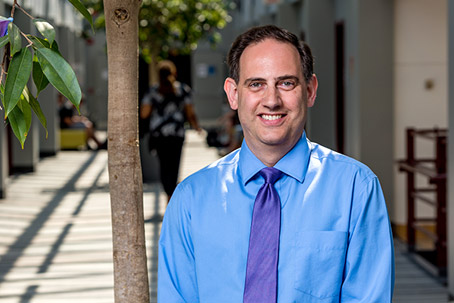
Aleksey Sikstel is a part-time faculty member at RWTH Aachen University , holding the title of Vertr.-Prof. (Part-Time Lecturer). His research focuses on advanced numerical methods for hyperbolic conservation laws, including Discontinuous Galerkin schemes, stochastic Galerkin formulations, and error estimation techniques. Key research areas: Numerical Analysis, Computational Fluid Dynamics, and Applied Mathematics Primary affiliation: Faculty 10 Institutions at RWTH Aachen University Contact: aleksey.sikstel@rwth-aachen.de His work emphasizes coupling hyperbolic systems, entropy-stable discretizations, and adaptive grid methods. Recent publications analyze Baer-Nunziato-type models, multiresolution strategies, and boundary control for hyperbolic equations.
Nhu H. Nguyen is an Associate Professor of Soil Microbial Ecology and Principal Investigator at the University of Hawaii at Manoa's Department of Plant and Environmental Protection Sciences within the College of Tropical Agriculture and Human Resources. His research focuses on organismal interactions in soil ecosystems using integrated molecular and biogeochemical approaches. His research interests span soil microbial ecology, fungal-bacterial interactions, ectomycorrhizal symbiosis, and soil biogeochemistry. He employs advanced techniques including stable isotope probing (SIP), network analysis, metabolomics, and high-throughput 'omics to investigate carbon cycling, microbial community dynamics, and soil health in tropical ecosystems. His work bridges fundamental organismal biology with practical agricultural applications in Hawaiian contexts. Analysis of his recent publications reveals strong trends in soil microbiome analysis, particularly focusing on fungal-bacterial interactions in the hyphosphere, ectomycorrhizal ecology using Suillus as a model system, and development of tools like FUNGuild for fungal community characterization. His research increasingly incorporates machine learning approaches for soil health prediction while maintaining strong field-based components in Hawaiian ecosystems. Dr. Nguyen actively mentors a diverse group of researchers including multiple postdoctoral scholars, graduate students across Ph.D. and M.S. programs, undergraduate researchers, and visiting international scholars. His lab has secured research funding supporting projects on soil biodiversity, microbial interactions, and agricultural sustainability in Hawaii. Principal Investigator leading a dynamic research group with 3 current postdocs, 3 graduate students, and numerous undergraduate researchers Teaches courses including BOT430/BIOL430/TPSS432 (Biology of Fungi), TPSS480/BIOL480 (Life in the Soil Environment), and TPSS604 (Advanced Soil Microbiology) Member of Evolutionary Ecology & Conservation Biology (EECB) faculty His laboratory maintains active research programs in fungal-bacterial interactions, soil microbiome analysis, and tropical soil health assessment, with particular emphasis on Hawaiian agricultural systems and native ecosystems. The lab utilizes advanced molecular techniques, stable isotope methods, and computational approaches to understand soil microbial dynamics across spatial and temporal scales.
Irene Crimaldi is an Associate Professor of Statistics at IMT Lucca (Italy) since 2011. She serves on the Scientific Board of IMT's PhD programs . Her academic journey includes roles as a researcher and part-time professor at the University of Bologna (2006-2011) and a tenured assistant professor at IMT Lucca (2011-2014). Crimaldi holds a cum laude degree in Mathematics from the University of Pisa and a cum laude PhD in Financial Mathematics from the Scuola Normale Superiore (Pisa). She has received scholarships from Istituto Nazionale di Alta Matematica and fellowships from University of Pisa and University of Bologna . Her research focuses on Probability and Statistics with applications in Economics, Social Sciences, Computer Science, and Engineering . Key areas include interacting reinforced stochastic processes , network modeling , urn models , species sampling , and stable convergence . She has co-authored influential works on synchronization phenomena, systemic risk in OTC markets, and latent attribute network models. Crimaldi's peer-reviewed publications span 15 most recent articles (2013-2025) addressing synchronization rates, network dynamics, and systemic risk. These works employ stable convergence, central limit theorems, and reinforcement mechanisms, contributing to disciplines like stochastic processes, financial mathematics, and network science. She actively collaborates with institutions such as the University of Bologna , University of Pisa , and IMT Lucca , integrating mathematical rigor with real-world applications in financial systems and social networks.
Dr. Jean-François Angers is a Full Professor in the Department of Mathematics and Statistics at the University of Montreal. With a Ph.D. in Statistics from Purdue University (1987) and an M.Sc. and B.Sc. in Applied Mathematics from the University of Sherbrooke (1984, 1982), his academic foundation is robust in statistical theory and its applications. P.Stat. (Statistical Society of Canada, 2005) His research spans Bayesian statistics, climate change impact analysis, and interdisciplinary applications in hydrology, epidemiology, and actuarial science. Key contributions include Bayesian hazard function estimation using wavelets, non-stationary climate modeling, and statistical methods for zero-modified continuous data. The 15 most recent publications highlight his work in environmental statistics (air pollution effects), climate modeling, survival analysis, and actuarial risk assessment. His methodological innovations in Bayesian hierarchical models, wavelet estimation, and hidden Markov random fields have advanced statistical approaches in ecological and medical research. Dr. Angers has supervised over 40 graduate and undergraduate students, including Jonathan Jalbert (non-stationary climate modeling), Alain Desgagné (Bayesian econometrics), and James Merleau (hydrograph synchronization). His collaborations extend to institutions like Hydro-Québec, IREQ, and INRS-ETE.
Marc Baldo is the Dugald C. Jackson Professor of Electrical Engineering and the Director of the Research Laboratory of Electronics (RLE) at the Massachusetts Institute of Technology (MIT), where he has been a faculty member since 2002. His work spans multiple departments and research centers within MIT's School of Engineering, with primary affiliation in the Department of Electrical Engineering and Computer Science (EECS). Dr. Baldo's educational background includes: B. Eng. (Electrical Engineering) from the University of Sydney in 1995 with first class honors and university medal M.A. from Princeton University in 1998 Ph.D. from Princeton University in 2001 Professor Baldo's research focuses on the intersection of materials science, electrical engineering, and quantum physics, with particular emphasis on optoelectronics , spintronics , and sensing technologies . His work on high efficiency solar cells and solid-state lighting has pushed the boundaries of organic electronics and photonics. The Spin and Excitonic Engineering Group he leads develops stable blue organic light-emitting devices and improves silicon solar cells beyond the Shockley-Queisser limit. His research also explores applications of spintronics to computation and the development of low-cost, high-speed gas sensors. Professor Baldo's work on exciton fission and fusion represents a significant contribution to the field of photovoltaics, potentially enabling solar cells with efficiencies beyond traditional limits. His most recent publications reveal a strong focus on advancing organic electroluminescent devices, photon upconversion technologies, and spintronic applications for artificial intelligence. The research trends show progression from fundamental exciton physics toward practical applications in energy conversion and computing technologies, with increasing integration of machine learning approaches in materials design and device optimization. Dr. Baldo's scientific recognition includes: Jan Rajchman Prize from the Society for Information Display (2013) for contributions to modern phosphorescent organic light emitting displays Membership in the U.S. National Academy of Engineering Leadership of the Center for Excitonics, a Department of Energy Energy Frontier Research Center (2009-2019) As Director of the Research Laboratory of Electronics since 2017, Professor Baldo oversees one of MIT's largest interdisciplinary research laboratories, managing substantial research funding and guiding numerous federally and industry-sponsored projects. His leadership extends to significant MIT Energy Initiative Seed Fund grants and collaborations with national laboratories, including involvement in National Quantum Information Science Research Centers. His administrative role complements his active research program, demonstrating a successful balance between scientific innovation and research management. Professor Baldo leads the Spin and Excitonic Engineering Group, which operates within the Research Laboratory of Electronics framework. The group maintains strong connections with the Organic and Nanostructured Electronics Laboratory and the former Center for Excitonics. This collaborative environment fosters interdisciplinary research across materials science, electrical engineering, and quantum physics, with facilities supporting advanced materials synthesis, device fabrication, and optical characterization.
Michele Coti Zelati is a Royal Society University Research Fellow and Professor of Mathematics at Imperial College London's Department of Mathematics within the Faculty of Natural Sciences. Her research focuses on partial differential equations, particularly infinite-dimensional dynamical systems, fluid dynamics, and nonlocal equations, supported by grants from the EPSRC Horizon Europe Guarantee and Royal Society. She contributes to editorial boards of journals including the Journal of Functional Analysis and Proceedings of the Royal Society of Edinburgh Section A: Mathematics. Current affiliation: Imperial College London (Faculty of Natural Sciences, Department of Mathematics) Previous roles: Chapman Fellow (Imperial), Brin Postdoctoral Fellow (University of Maryland) Key research areas include: Enhanced dissipation and mixing mechanisms Stability of shear and stratified flows Stochastic effects in fluid dynamics Dynamo action and magnetic field amplification Asymptotic behavior of PDEs Scientific awards: Royal Society University Research Fellowship EPSRC Horizon Europe Guarantee grant (EP/X020886/1) Former ERC-StG STABLE-CHAOS grant She teaches courses on partial differential equations, statistical mechanics in fluid flows, and Landau damping, with historical teaching roles spanning stochastic differential equations to advanced calculus. Her work appears in top journals like Archive for Rational Mechanics and Analysis, Communications in Mathematical Physics, and Annals of PDE.
Dr. Kirstin Strokorb (she/her) is a Senior Lecturer and Deputy Director of Postgraduate Research at the School of Mathematics, Cardiff University . Her research focuses on multivariate, spatial, and temporal dependence phenomena in extreme value theory , a field critical for assessing rare hazardous events in data-driven risk modeling. She contributes to interdisciplinary research through editorial roles (Extremes, Stochastic Models) and leadership in the One World Extremes seminar and Statistics seminar series . Education: PhD in Mathematics (University of Göttingen, summa cum laude, 2013), Diploma in Pure Mathematics (University of Göttingen, 2010), Exchange student at Warwick University (2006/2007). Research Interests include extreme value theory, stochastic processes, and graphical models. She develops tools for spatio-temporal risk assessment and forecast evaluation , with applications in finance, insurance, and environmental engineering. Her work addresses challenges in max-stable processes , stochastic orderings , and realisability problems . Recent article trends emphasize graphical models for extremes , simulation algorithms , and stochastic ordering . She explores high-dimensional extremes and tail correlation functions , contributing to spatial and temporal modeling and conditional independence frameworks . Scientific Awards : Oberwolfach Research Fellow (2024) RSS Mardia Award for interdisciplinary workshops (2018) Nominated for Philip Leverhulme Prize (2020) Supervision & Grants : Mentored PhD students Michela Corradini, Matt Hutchings, Eferhonore Efe-Eyefia, and Jonas Brehmer. Projects supported by EPSRC DTP , TETFund , and Innovation for All grants . Led workshops under Cardiff’s Water Research Institute and Data Innovation Research Institute . Labs & Collaborations : Collaborated with institutions including University of Copenhagen, University of Geneva, and University of Edinburgh. Active in the Bernoulli Society , Royal Statistical Society , and Data Innovation Research Institute .
Fabrice Baudoin is a Professor at the Department of Mathematics, Aarhus University . His research focuses on stochastic analysis, differential geometry, and Dirichlet forms, with applications to Lie groups, manifolds, and fractal spaces. Research Interests : Stochastic methods in geometric analysis Heat kernel theory and functional inequalities Sub-Riemannian geometry and curvature bounds Probability distributions for Brownian motion functionals Dirichlet forms on fractal spaces Publications Trends : Recent works address sub-Riemannian comparison theorems, hypoelliptic SPDEs, infinite-dimensional diffusions, and stochastic processes on fractals. His research combines geometric insights with probabilistic techniques. Teaching Activities : He has taught diverse undergraduate and graduate courses, with lecture notes available on his blog https://fabricebaudoin.blog .
William Weiner serves as Department Head of Biology and Biomedical Engineering and Associate Professor at Rose-Hulman Institute of Technology, where he specializes in circadian rhythms, neural sensory processing, and invertebrate vision—particularly in horseshoe crabs. Recognized nationally as one of America’s ‘Best 300 Professors’ by the Princeton Review (2012), he excels in integrating engineering principles into biological education and maximizing student potential through innovative teaching methods. His academic credentials include a PhD in Neuroscience (2000) and BS in Bioengineering (1991), both from Syracuse University. Dr. Weiner’s research explores fundamental biological mechanisms in neural systems, with emphasis on how light regulates structural rhythms in horseshoe crab eyes and the underlying sensory processing. His work bridges neuroscience and engineering, examining circadian control in visual systems and developing signal processing techniques for neural data analysis. This interdisciplinary approach extends to culturing amebocytes from horseshoe crab gill books for potential biomedical applications. His publication history reveals a sustained focus on invertebrate vision and circadian biology since the 1990s, evolving from visual field mapping to advanced neural spike train analysis and algorithm development. Key themes include photostasis mechanisms, seasonal adaptation in neural structures, and engineering solutions for biological data interpretation. Major recognitions include: One of America’s ‘Best 300 Professors’, Princeton Review, 2012 Dean’s Outstanding Teacher, Rose-Hulman Institute of Technology, 2008 Teacher of the Year, Triangle Fraternity, Rose-Hulman Institute of Technology, 2011 He has mentored multiple Goldwater Scholars and actively supports undergraduate research, while leading the Grand Challenges After-School Project to develop STEM activities for elementary students. His teaching portfolio spans human physiology, general biology, electrical systems, and biocontrols, reflecting his commitment to cross-disciplinary education. Current research involves ongoing studies of horseshoe crab visual systems and circadian rhythms, with laboratory work focused on amebocyte culturing and neural sensitivity regulation in natural lighting conditions.
Piotr Jan Garbaczewski is a Professor of Physics at the University of Opole, Poland, where he serves as the Head of the Institute of Physics. Previously, he held professorial positions at the University of Zielona Góra (1998-2006) and the University of Wrocław (1971-1998). His research spans multiple areas of theoretical and mathematical physics, with particular focus on: Stochastic processes and random dynamics Quantum mechanics and fractional quantum mechanics Non-equilibrium statistical mechanics Lévy flights and stable processes in bounded domains Diffusion processes with non-conservative drifts Mathematical aspects of quantum potentials Garbaczewski's recent publication record shows consistent output in prestigious journals, with notable work on killing versus branching processes, non-conservative diffusion, and Lévy processes in bounded domains. His research demonstrates a strong connection between stochastic processes and quantum mechanical systems, particularly through the lens of non-Hermitian quantum mechanics and fractional calculus. His scientific achievements include: h-index (WoS Citations): 7 Total Impact Factor: 31.499 Total SNIP: 15.42 Total CiteScore: 28.41 Total ministerial score: 1,210 Throughout his career, Garbaczewski has maintained active collaborations with researchers across Poland and internationally, contributing significantly to the field of mathematical physics through both theoretical developments and practical applications of stochastic processes in physical systems.