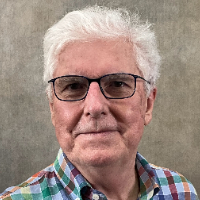
Steven N. Evans is a Distinguished Professor at the University of California, Berkeley , affiliated with the Department of Statistics and the Center for Computational Biology . With over three decades of service since 1987, his work bridges probability theory , stochastic processes , and their applications in mathematical biology , computational genetics , and phylogenetics . His research spans: Probability on Algebraic Structures , including random matrices and local fields. Measure-Valued Processes and coalescent models in population genetics. Phylogenetic Inference in historical linguistics and ecology. Stochastic Models for gene expression, fitness landscapes, and mutation-selection balance. Markov Processes and their applications in phylodynamics. Recent publications highlight his contributions to phylogenetic networks , Frechet mean sets , and Levy process analysis , with keywords spanning Probability , Computational Biology , and Population Genetics . He has mentored 10 PhD students, including Boyan Xu (2024) and Nicholas Bhattacharya (2022). His email is evans@stat.berkeley.edu .
Jonas Bergström is a Professor in the Department of Mathematics at Stockholm University specializing in Algebra, Geometry, Topology, and Combinatorics. His research focuses on arithmetic geometry, moduli spaces, Siegel modular forms, and number theory, with extensive collaborations across international institutions including KTH Royal Institute of Technology. His research interests span algebraic geometry, topology, combinatorics, and number theory, with particular emphasis on moduli spaces of curves, abelian varieties, Siegel modular forms, and arithmetic geometry. Bergström's work bridges theoretical mathematics with computational approaches, often developing algorithms for complex mathematical structures. His research group actively explores commutative and homological algebra, complex and real algebraic geometry, arithmetic geometry, homotopy theory, and Ramsey theory. The most recent publications reveal a strong focus on cohomology of moduli spaces, Siegel modular forms, abelian varieties over finite fields, and L-functions. His work demonstrates a consistent pattern of combining algebraic geometry with number theory, particularly investigating arithmetic properties of algebraic varieties and developing computational methods for modular forms. The research shows increasing emphasis on algorithmic approaches and connections to theoretical physics through moduli space cohomology. Bergström has supervised several PhD students including Sjoerd de Vries (current), Stefano Marseglia, and Olof Bergvall (with Prof. Carel Faber). He currently mentors postdoctoral researchers Séverin Philip and Thomas Wennink, while former postdocs include Angelina Zheng, Valentijn Karemaker, Oliver Leigh, and Alex Samuel Bamunoba. His research is supported through collaborations with major mathematical networks including the Nordic number theory network and joint seminars with KTH. He is affiliated with the Algebra and Geometry Seminar (KTH and SU) and maintains active research connections through multiple collaborative projects, including joint work with Gerard van der Geer and Carel Faber on Hecke operators and Siegel modular forms. Bergström also contributes to open mathematical research through GitHub repositories containing computational results on cohomology of moduli spaces.
Professor Steffen Dereich is a leading researcher in mathematical stochastics at the University of Münster's Faculty of Mathematics and Computer Science, where he serves as Professor at the Institute of Mathematical Stochastics. He is an active investigator in the Mathematics Münster cluster of excellence, contributing significantly to the fields of stochastic processes and machine learning theory. His primary research interests span Stochastic Processes , Machine Learning , Deep Learning , Complex Networks , and Stochastic Analysis . Dereich has developed a unique research program that bridges classical probability theory with modern machine learning challenges, particularly focusing on the mathematical foundations of optimization algorithms used in deep learning. His work on stochastic gradient descent methods, especially the Adam optimizer, has provided crucial theoretical insights into convergence properties and optimization landscapes. The 15 most recent publications reveal a strong trend toward mathematical analysis of deep learning, with approximately 70% of his work focusing on neural network optimization, convergence analysis, and theoretical foundations of machine learning algorithms. The remaining publications continue his earlier work on complex networks, stochastic processes, and branching structures, demonstrating how he has successfully connected his foundational work in probability with cutting-edge machine learning research. Professor Dereich actively supervises PhD students and maintains productive collaborations, particularly with Arnulf Jentzen and Sebastian Kassing. His research group at Münster has secured significant funding through the Mathematics Münster cluster, supporting multiple projects including T8: Random discrete structures and their limits, and T10: Deep learning and surrogate methods. His teaching portfolio includes advanced courses on Probability Theory, Stochastic Analysis, Markov Chains, and specialized seminars on Machine Learning and Financial Mathematics, reflecting his dual expertise in theoretical mathematics and applied data science.
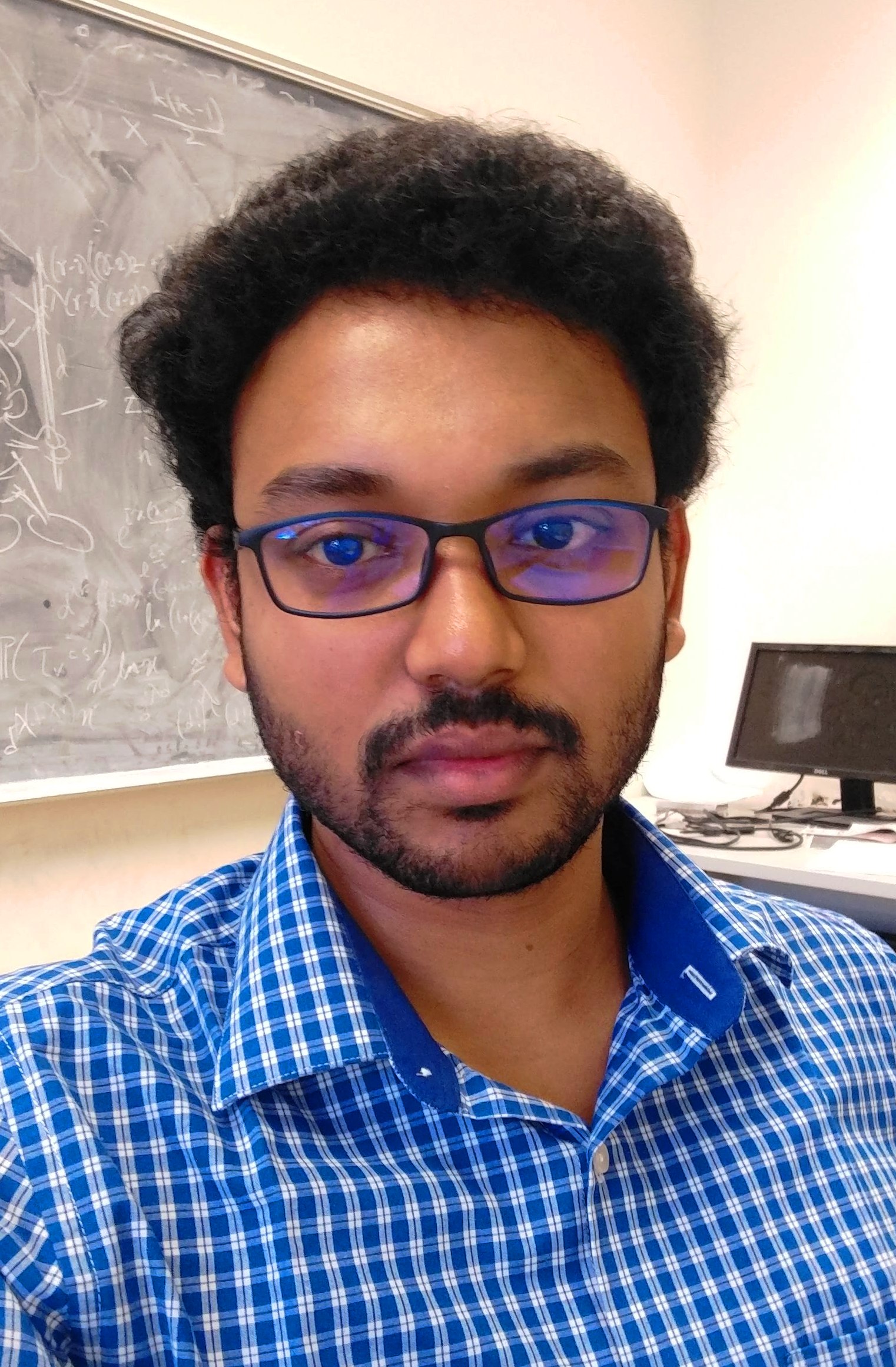
Sourav Sarkar is a University Associate Professor in Probability at the Department of Pure Mathematics and Mathematical Statistics (DPMMS), University of Cambridge (since July 2024) and a Fellow of Trinity Hall. Previously, he held positions as an Assistant Professor at DPMMS (2021–2024), Postdoctoral Fellow at the University of Toronto (2019–2021), and completed his Ph.D. in Statistics at UC Berkeley (2019) under Prof. Alan Hammond. His education includes a BSc (2013) and MSc (2015) in Statistics from the Indian Statistical Institute, Kolkata, advised by Prof. Parthanil Roy. Research Interests : Probability theory with a focus on KPZ universality class, random growth models (e.g., last passage percolation, exclusion processes), Coulomb gas, and percolation theory. His work bridges stochastic processes, mathematical physics, and statistical mechanics. Teaching : Teaches advanced courses in Probability and Stochastic Calculus at the University of Cambridge, including Part II courses on Applied Probability and Probability & Measure. Previously taught at UC Berkeley, where he received the Outstanding Graduate Student Instructor Award (2019). Publications : Focuses on KPZ fixed point, geodesic properties, and phase transitions in interacting particle systems. Recent work includes studies on the directed landscape, stable random fields, and competitive erosion dynamics. Awards : Recognized for exceptional teaching at Berkeley and sustained contributions to probability theory research.
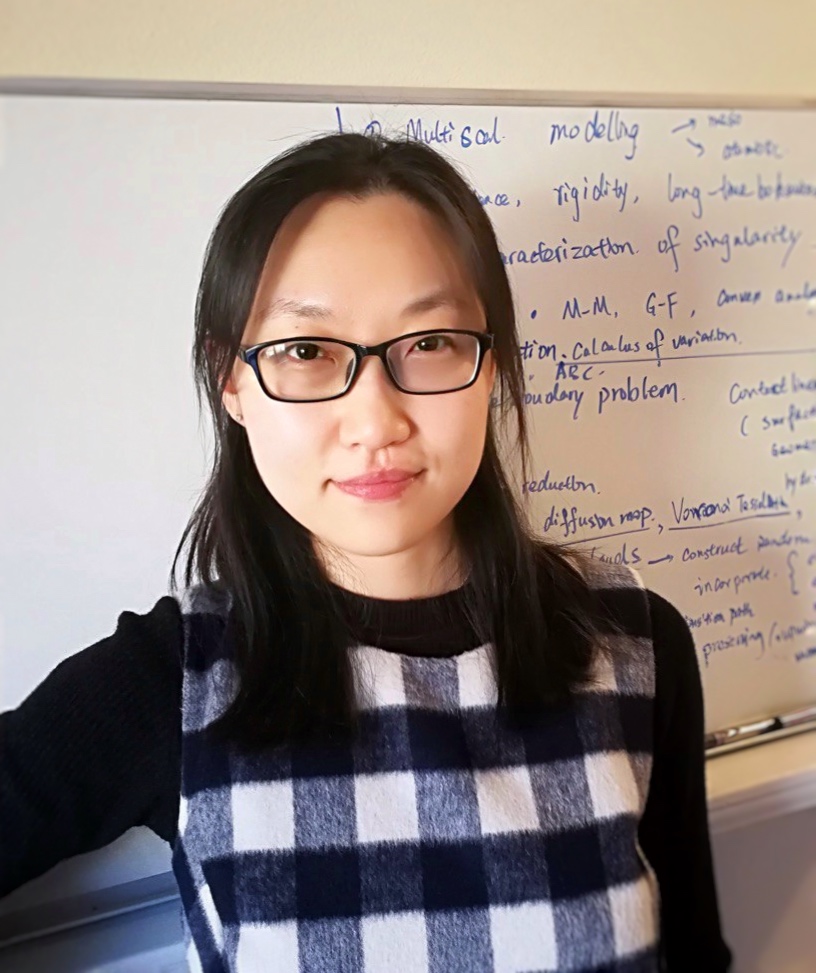
Yuan Gao is an Assistant Professor of Mathematics at Purdue University's Department of Mathematics (College of Science). His research focuses on analysis and computations of PDEs in materials science, biology, and microfluidics, with recent emphasis on optimal control, Hamilton-Jacobi equations, and non-equilibrium chemical reactions. His work is supported by NSF awards DMS-2204288 and DMS-2440651. Previously, he held the William W. Elliott Assistant Research Professor position at Duke University (2019-2021). Research interests include PDE analysis in materials science (crystal growth, dislocation dynamics), numerical methods for interface dynamics, applied stochastic analysis (Langevin dynamics, transition path theory), and mean-field games for fluid systems. He organizes the PSU-Purdue-UMD Joint Seminar on Mathematical Data Science. Key publications span topics like dislocation evolution, Wasserstein gradient flows, and stochastic algorithms for rare events. Awards include NSF CAREER funding recognizing his contributions to mathematical analysis of non-equilibrium systems.
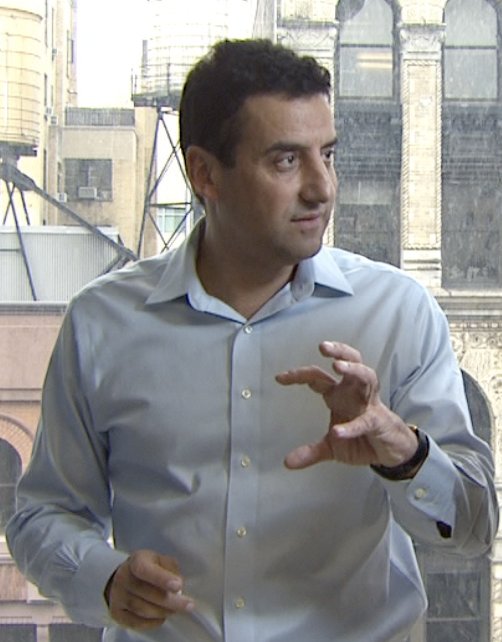
Gérard Ben Arous is a Silver Professor of Mathematics at New York University's Courant Institute of Mathematical Sciences, where he has served as Director and Vice Provost for Science and Engineering Development since 2011. He holds a PhD in Mathematics from the University of Paris VII (1981) and has previously taught at the University of Paris-Sud, École Normale Supérieure, and the Swiss Federal Institute of Technology in Lausanne. His research focuses on probability theory, stochastic analysis, and their applications to physics and industrial problems, particularly exploring complex systems' long-time behavior and aging phenomena in disordered media. Education: PhD in Mathematics, University Paris 7, France (1981) M.Sc. in Statistics, University Paris-Sud Orsay, France (1979) B.S. in Mathematics, École Normale Supérieure (Paris), France (1978) His research interests bridge probability with partial differential equations, dynamical systems, and statistical mechanics. Key contributions include studies on random media, random matrices, and the interplay between complexity, disorder, and aging in physical systems. He has held leadership roles in academic institutions, including directing the mathematics departments at Orsay and École Normale Supérieure, and founded Lausanne's Bernoulli Center. Notable awards include Fellow of the Institute of Mathematical Statistics and the Montyon Prize from the French Academy of Sciences. His work is published in top journals like Annals of Probability and Communications in Pure and Applied Mathematics , and he co-edits Probability Theory and Related Fields . Ben Arous has advised numerous researchers and contributed to interdisciplinary projects, including studies on machine learning landscapes and financial mathematics. His lab focuses on stochastic modeling and its applications across disciplines.
Arijit Chakrabarty is a Professor at the Theoretical Statistics and Mathematics Unit of the Indian Statistical Institute, Kolkata, India. His research focuses on random matrix theory, heavy-tailed distributions, large deviations, and long-range dependence. He can be reached via email at arijit.isi@gmail.com. Research Interests: Random matrix theory, Heavy-tailed distributions, Large deviations, Long-range dependence, Spectral analysis, Stochastic processes Publications Trends: His 15 most recent articles span random matrix theory, large deviations, Gaussian processes, and free probability. Key topics include eigenvalue analysis in random graphs, excursion lengths in Gaussian processes, and clustering of extremes in memory regimes. Lecture Notes: He has produced educational materials on Measure Theoretic Probability, Martingale Theory, and Probability Theory, partially in collaboration with Arup Bose and Rajat Hazra. These notes are accessible online and reflect his teaching contributions.
Farzad Sabzikar is an Associate Professor in the Department of Statistics at Iowa State University, specializing in stochastic processes, fractional models, and optimization algorithms. He integrates mathematical theory with applications in machine learning and time series analysis. Education: PhD in Statistics (Michigan State University, 2014), MS in Mathematics (Sharif University, 2009), BS in Mathematics (Isfahan University of Technology, 2006) His research bridges fractional calculus and statistical modeling, focusing on tempered processes and their applications in turbulence analysis, geophysical flows, and high-frequency data. He employs wavelet methods and asymptotic theory to study heavy-tailed phenomena and long-range dependencies. Recent publications emphasize tempered fractional Brownian motion, stable noise modeling, and functional data analysis. Key trends include transient anomalous diffusion, machine learning for cognitive decline classification, and optimized signal processing techniques. Scientific Awards: None listed His work has implications for machine learning, geophysics, and astrophysics, though no formal advising, grant, or lab affiliations are detailed in available sources.
Anders Rønn-Nielsen is an Associate Professor at the Department of Finance and Center Coordinator at the Center for Statistics at Copenhagen Business School (CBS). He holds a M.Sc. in Statistics from University of Copenhagen and a PhD in Statistics and Probability Theory from Aarhus University. His research focuses on applied probability theory, particularly Lévy-based spatial models, and statistical efficiency analysis. His academic credentials include: M.Sc. in Statistics, University of Copenhagen PhD in Statistics and Probability Theory, Aarhus University Research interests span: Lévy processes and spatial stochastic modeling Extreme value theory applications in finance and natural sciences Nonparametric production frontier analysis Efficiency measurement methodologies His publications (18+ articles) emphasize theoretical probability and statistical applications in efficiency analysis. He has served as external examiner at Aarhus University and Copenhagen University for master’s and PhD examinations (2017–2019). His teaching responsibilities include advanced probability theory courses and statistical methods training for economics students.
Julia Wolf is a Professor of Pure Mathematics at the University of Cambridge, affiliated with the Department of Pure Mathematics and Mathematical Statistics (DPMMS) and Trinity College. Her research focuses on arithmetic combinatorics, harmonic analysis, and analytic number theory, with interdisciplinary connections to model theory, discrete geometry, and theoretical computer science. She holds an EPSRC Open Fellowship and has organized events like the Warwick-Oxbridge-Manchester-Bristol-London (WOMBL) meetings. Wolf teaches advanced courses such as 'Higher-Order Uniformity' and 'Analytic Number Theory,' emphasizing structure and applications. Her work bridges combinatorial, analytic, and algebraic techniques, addressing problems like polynomial configurations in primes, extremal hypergraph theory, and Ramsey multiplicity. Recent research includes structural stability in finite abelian groups and applications of model theory to additive combinatorics. Wolf actively promotes open-access publishing and has mentored numerous postdoctoral researchers and students through initiatives like the Philippa Fawcett Internship Programme. She also contributes to academic equity efforts, such as gender-inclusive hiring in mathematics. Professional activities include editorial roles, conference organization (e.g., the Simons Institute's Pseudorandomness program), and leadership in collaborative projects like the 'Combinatorics Meets Model Theory' workshop. Her grants and fellowships underscore her contributions to advancing discrete mathematics and fostering international academic networks.
Olaf Schmidt is a Professor at the School of Agriculture and Food Science, University College Dublin (UCD). His academic career includes roles such as Senior Lecturer/Associate Professor (2008–2017) and extends back to a Post-doctoral Research Assistant position (1999–2001). He holds a Ph.D. from UCD (2000), an M.Sc. in Soil Science from the University of Aberdeen (1993), and a Diplom-Agraringenieur from Martin-Luther-University Halle-Wittenberg (1992). Research Focus: Schmidt specializes in soil ecology, earthworm biology, stable isotope analysis, and sustainable agriculture. His work addresses topics like soil restoration, invasive species impacts, food authentication, and ecosystem rehabilitation. He leads projects such as Edaphobase 2.0 and the Gunnera tinctoria invasion studies. His research integrates molecular techniques, isotopic tracing, and large-scale data synthesis. Awards & Recognition: Fellow of the Royal Entomological Society (2023) Honorary Member of the Association of Applied Biologists (2022) Fellow of the Institute of Soil Science (2023) Teaching & Outreach: Coordinates modules on soil science, environmental microbiology, and the circular bioeconomy. Engages in public lectures on topics like earthworm contributions to soil health. Collaborates internationally, including a visiting professorship at the University of Agriculture in Kraków (2022). Grants & Impact: Contributed to the SmartGrass project, enhancing sustainable agricultural practices through multispecies swards. His work on peat alternatives and mine tailings rehabilitation has practical implications for environmental management and policy. Labs & Collaborations: Active in the Global Soil Biodiversity Initiative and Soil BON network. Edaphobase 2.0 exemplifies his data-driven approach to soil biodiversity research.
Jan Rosinski is a Professor in the Department of Mathematics at the University of Tennessee. He holds a Ph.D. from Wrocław University (Poland). His research focuses on Probability and Stochastic Processes, particularly Stable and Infinitely Divisible Processes, Stochastic Analysis, and High-Dimensional Probability. He has held editorial roles at journals such as Probability and Mathematical Statistics and Discussiones Mathematicae - Probability and Statistics . His service includes managing editor roles and editorial board memberships across multiple international journals. Rosinski has contributed extensively to stochastic processes, Lévy processes, and infinitely divisible distributions, with a focus on theoretical developments and applications. Education: Ph.D., Wrocław University, Poland. Research Interests: Probability Theory, Stochastic Processes, Stable Processes, Infinite Divisibility, and High-Dimensional Probability. His work explores spectral representations, stochastic integrals, and applications in theoretical and applied probability. Editorial Contributions: Managing Editor of Probability and Mathematical Statistics (2008–present), and Editorial Board Member of Discussiones Mathematicae (2000–present), among others.
Professor Georg Gottwald is a distinguished academic in the School of Mathematics and Statistics at the University of Sydney, where he has been a faculty member since 2002, progressing from Lecturer to his current position as Professor since 2013. He also holds a Visiting Professor position at the University of Surrey in the UK since 2013. His extensive research career spans dynamical systems theory, geophysical fluid dynamics, and the intersection of machine learning with complex systems. Professor Gottwald's research focuses on dynamical systems theory as an abstract formalism for studying systems evolving in time and space. His work has significant applications across diverse fields including climate modeling, biological systems, and complex networks. He is particularly known for developing methods for model reduction of complex dynamical systems, stochastic modeling approaches, and the application of machine learning techniques to dynamical systems. His research aligns with the Faculty of Science Research Strengths in Understanding the Universe, Fundamental Laws of Nature, Complex Systems, Climate and Environmental Change, Data and Decisions, and National Security. His most recent publications demonstrate a strong trajectory toward integrating machine learning with dynamical systems theory, particularly in developing stable generative models, learning dynamical systems with random feature maps, and combining data assimilation with machine learning for forecasting. His work spans pure mathematical theory to practical applications in climate science, finance, and biological systems, showing remarkable breadth while maintaining deep mathematical rigor. Future Fellowship, 'Stochastic methods in mathematical geophysical fluid dynamics', Australian Research Council, 2010-2014 Australian Research Fellowship, 'Stochastic methods in mathematical geophysical fluid dynamics', Australian Research Council, 2010-2015 (declined) Australian Research Fellowship, 'Geometric methods in geophysical fluid dynamics', Australian Research Council, 2004-2009 Professor Gottwald has successfully supervised numerous PhD and Master's students who have gone on to academic and industry positions worldwide. His current research group includes postdocs and PhD students working on machine learning for dynamical systems, stochastic model reduction, physics-informed machine intelligence, and tensor methods for scientific machine learning. He has secured multiple ARC Discovery Project grants and has been involved in significant international collaborative research projects. He is actively involved with the Sydney Dynamics Group, which he co-founded in 2007, fostering collaboration between the University of Sydney and UNSW. Professor Gottwald maintains strong editorial commitments as Associate Editor for Geophysical and Astrophysical Fluid Dynamics, SIAM Journal of Applied Dynamical Systems, and Journal of Computational Dynamics, and serves on the Editorial Advisory Board for Chaos and the Editorial Board for Physical Review E. His professional activities demonstrate leadership in the dynamical systems community through organizing workshops, seminars, and special journal issues.
Suchuan Dong is a Professor in the Department of Mathematics at Purdue University , affiliated with the Center for Computational and Applied Mathematics . His work bridges Computational Mathematics and Machine Learning , focusing on High-Order Numerical Methods and Multiphase Flows . Academic Background Post-Doc in Applied Mathematics, Brown University (2004) Ph.D. in Mechanical Engineering, SUNY Buffalo (2001) M.S. in Physics, Zhejiang University (1995) B.S. in Aerospace Engineering, National University of Defense Technology (1992) His research centers on Neural Network-Based Numerical Methods and Data-Driven Scientific Computing , with applications to Computational Fluid Dynamics , Contact Line Dynamics , and High-Performance Computing . Publications highlight Physics-Informed Neural Networks , Energy-Stable Schemes , and Extreme Learning Machines for PDEs. The articles reflect trends in Neural Network Applications to Dynamic PDEs , Phase Field Modeling , and High-Dimensional Computing , often combining High-Order Numerical Methods with Interfacial Phenomena . His recent work focuses on Exact Time Integration Algorithms and Hidden-Layer Concatenation for stability and efficiency. He leads research in the Center for Computational and Applied Mathematics , emphasizing Thermodynamically Consistent Modeling and Flow-Structure Interactions . His teaching includes MA-36600: Ordinary Differential Equations (Spring 2025).
James Freitag is a Professor in the Department of Mathematics, Statistics, and Computer Science at the University of Illinois at Chicago (UIC). He earned his PhD from UIC in 2012, specializing in Model Theory and Differential Algebraic Geometry . Prior to his current role, he held postdoctoral positions at UC Berkeley and UCLA and served as a research member at the Mathematical Sciences Research Institute (MSRI) and Fields Institute. His research integrates model theory , differential algebra , and number theory , with recent emphasis on functional transcendence, geometric stability theory, and applications to machine learning. Key themes include: Strong minimality in differential equations and stability theory Ax-Lindemann-Weierstrass theorems for Fuchsian groups Combinatorial and algorithmic aspects of query learning His publications (2017–2025) predominantly explore differential-algebraic geometry, model-theoretic classification, and computational learning. Recurring topics include Painlevé equations, Littlestone dimension, nonminimality bounds, and geometric invariants in differential systems. He advises doctoral students in differential algebra and machine learning and directs the Young Scholar Program —a summer camp for Chicago high school students. His research is funded by NSF grants, including CAREER #1945251 and #2452197.