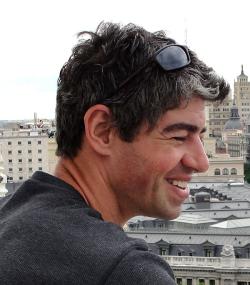
Seth Finnegan is a Professor in the Department of Integrative Biology at the University of California, Berkeley, and affiliated with the University of California Museum of Paleontology. His research focuses on understanding the processes shaping marine ecosystems and biota from the late Neoproterozoic to the present, with a particular emphasis on the Ordovician Period and mass extinctions. He integrates field observations, laboratory data, and literature databases to study extinction selectivity, environmental proxies (e.g., stable isotopes, biomarkers), and ecosystem reconstructions. His lab, the Finnegan Lab, explores themes such as organism-environment interactions and the drivers of biodiversity changes. Finnegan’s work has been widely published in journals like Proceedings of the National Academy of Sciences and Geology , and he collaborates with institutions globally. Despite no listed awards here, his contributions to paleontology are significant.
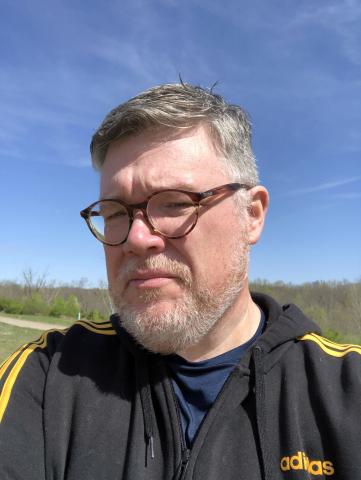
Dr. John Warren Huntley is an Associate Professor in the Department of Geological Sciences at the University of Missouri. His research examines the fossil record of biotic interactions including parasitism, predation, and competition, with additional focus on conservation paleobiology and morphological disparity evolution. Dr. Huntley investigates host-parasite dynamics in marine bivalves, human impacts on mollusk populations, and Phanerozoic predation patterns. His work integrates stratigraphic paleobiology with ecological and evolutionary analyses to reconstruct historical ecosystem dynamics. His recent publications demonstrate expertise in paleoparasitology, taphonomy, and conservation paleobiology, applying novel analytical methods to questions about parasite-host coevolution, preservation biases, and extinction events. This research provides critical insights into long-term ecological patterns and biological responses to environmental change. Dr. Huntley has received significant recognition including an NSF CAREER Award and Humboldt Research Fellowship, and he co-edited the comprehensive volumes 'The Evolution and Fossil Record of Parasitism'.
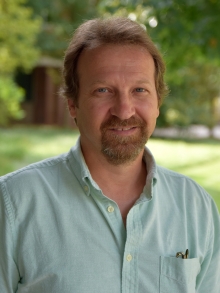
Dr. Rodney Weber is a Professor in the School of Earth & Atmospheric Sciences at Georgia Institute of Technology, part of the College of Sciences. His research focuses on atmospheric aerosols, urban air quality, and particle formation mechanisms. He holds a Ph.D. (1995) and M.S. (1991) in Mechanical Engineering from the University of Minnesota, and a B.S. (1987) from the University of Waterloo. Key research interests include atmospheric aerosol sources and processing, new particle formation via homogeneous nucleation, and aerosol growth processes. He develops novel instrumentation, such as the Particle Into Liquid Sampler (PILS), and leads field studies like the ALPACA project in Fairbanks, Alaska. His work bridges laboratory experiments and real-world atmospheric measurements. Dr. Weber has received awards including the Cullen-Peck Faculty Fellow Award (2007), Whitby Award (2005), and NASA Global Change Fellowship. His recent publications (2024–2025) address biomass burning plumes, urban pollution dynamics, and aerosol chemistry in cold climates. He collaborates on global initiatives like the NASA Atmospheric Tomography (ATom) mission and FIREX-AQ campaigns. His lab (ES&T 2107/2115) focuses on aerosol optical properties, reactive oxygen species in particulate matter, and the health effects of pollution. Research highlights include quantifying sulfur chemistry in Fairbanks and assessing oxidative potential of PM2.5 in urban environments.
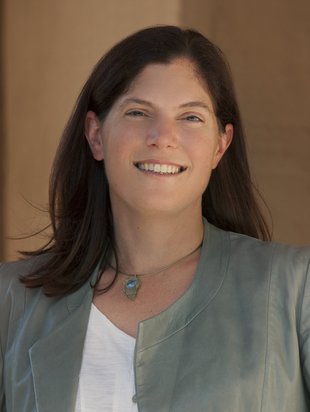
Mark Abbott is a Professor at the University of Pittsburgh, specializing in paleoclimatology and environmental science. He holds a PhD from the University of Minnesota (1997) and conducted postdoctoral research at the University of Massachusetts. His research integrates stratigraphy, geochemistry, and isotopic analysis to study climate change impacts on human societies and environmental systems. Abbott leads projects recovering lake sediment cores to document Holocene climate variability, focusing on annual-resolution records for temperature and drought reconstructions. He has authored over 50 peer-reviewed articles, with recent work emphasizing monsoon dynamics, Arctic mercury deposition, and tropical Andean glacial retreat. His fieldwork spans North America, South America, and Asia, including collaborative projects in Alaska, Peru, and India. Education: PhD in Geology (Minnesota, 1997), MS (Colorado, 1991), BA in Biology (Colorado, 1987) Postdoctoral Training: Climate System Research Center (UMass) Research interests include reconstructing past environmental changes via lacustrine archives, with emphasis on human-environment interactions. His lab analyzes stable isotopes, organic biomarkers, and sedimentology to address critical climate questions. Recent studies highlight climate-vegetation-fire linkages in the Pacific Northwest and Holocene lake-level changes in Canada/Yunnan. Recent articles focus on decadal-to-millennial climate shifts in mountain regions, Arctic permafrost dynamics, and anthropogenic impacts on lake ecosystems. Abbott’s work is supported by grants from NOAA and the NSF, with field sites in the Canadian Rockies, Himalayas, and Alaskan Arctic.
Leibniz Institute for Research on Evolution and Biodiversity at the Humboldt University BerlinGermany
Dr. Peter Bartsch serves as curator of the fish collection and construction project officer at the Museum für Naturkunde (MfN), Leibniz Institute for Evolution and Biodiversity Science, which is affiliated with Humboldt University Berlin. With expertise in ichthyology, embryology, and comparative anatomy, Dr. Bartsch has been instrumental in the museum's collection management and building renovation projects since joining the institution as a research associate before becoming curator in 2000. Dr. Bartsch received his academic training in ichthyology, embryology, and comparative anatomy at the University of Cologne. His academic career includes positions as a research assistant at the University of Tübingen and a postdoctoral fellowship at the Natural History Museum in Stockholm before joining the Museum für Naturkunde. Dr. Bartsch's primary research focuses on the evolution and systematics of major groups of bony fishes (Osteichthyes), with particular emphasis on primitive ray-finned fish lineages. His work integrates morphological analysis of both fossil and extant species to understand evolutionary relationships. A significant portion of his research centers on the developmental biology of ancient fish groups, especially the Polypteridae (bichirs), examining embryonic development, skeletal formation, and sensory systems. More recently, his interests have expanded to include the logistics and optimal management of research collections, reflecting his administrative responsibilities at the museum. Analysis of Dr. Bartsch's recent publications reveals a consistent focus on fish morphology, evolution, and development, with particular attention to primitive actinopterygian lineages. His work spans both systematic taxonomy and functional morphology, with increasing attention to museum collection management challenges. The publications demonstrate expertise in comparative anatomy across diverse fish groups including chondrichthyans (sharks, rays, and chimaeras) and basal actinopterygians. Recent work shows integration of molecular phylogenetic approaches with traditional morphological analysis. Dr. Bartsch has held significant administrative roles at the Museum für Naturkunde, serving as head of the collections department from 2011 to 2013. He was responsible for the museum's construction program for the east wing reconstruction, completed in 2010, which created modern facilities for the storage and scientific processing of the museum's wet collections. Currently, he manages the second phase of the building's renovation that began in 2011 and participates in planning for the future development of the museum's facilities. The Museum für Naturkunde houses extensive ichthyological collections that form the basis for Dr. Bartsch's research. His work involves close collaboration with various research teams within the museum, particularly in the areas of molecular phylogenetics, collection preservation, and paleontological research. The museum's facilities include specialized laboratories for morphological analysis, molecular studies, and collection management that support his research activities.
California Institute of Technology (Caltech)United States
Victoria J. Orphan is the James Irvine Professor of Environmental Science and Geobiology at Caltech, where she directs the Center for Environmental Microbial Interactions. Her research investigates microbial processes in anaerobic ecosystems including deep-sea methane seeps, hydrothermal vents, and coastal sediments using interdisciplinary approaches combining molecular biology, stable isotope techniques, and geochemistry. Her laboratory focuses on: Microbial partnerships in methane cycling Ecophysiology of uncultured archaea and bacteria Viral ecology in marine environments Biogeochemical impacts of microbial communities Blue carbon sequestration in seagrass ecosystems Professor Orphan has developed innovative methods including BONCAT-FISH and nanoSIMS for studying microbial activity in environmental samples. Her research group maintains active field programs in Monterey Canyon and hydrothermal vent systems, and develops high-pressure incubation systems for studying deep-sea microbes. She teaches courses on microbial ecology and evolution, and mentors graduate students through the Geobiology and Environmental Science programs.
Professor John Parnell is the Chair in Geology & Petroleum Geology at the University of Aberdeen , affiliated with the School of Geosciences and Department of Geology and Petroleum Geology . His research focuses on geochemistry, paleoenvironmental reconstruction, trace element cycling, and sedimentary systems , with significant contributions to studies of the Rhynie Chert, Bowland Shale, and Lewisian Complex. Research Interests Professor Parnell's work spans: Geochemical analysis of Paleoproterozoic and Neoproterozoic systems Trace metal mobility in sedimentary and metamorphic environments Organic carbon burial and its tectonic implications Planetary analog studies for Mars exploration Shale resource characterization and environmental impact assessment Recent Publications His recent articles highlight investigations into: Graphitization processes in Scottish Highlands marbles Sulphur isotope records in Precambrian successions Trace element dynamics in the Bowland Shale Biogeochemical cycling at the Precambrian-Cambrian boundary Labs & Collaborations He leads research in the Geofluids Group and collaborates with the Planetary Sciences Department on Mars analog studies.
Oliver Shorttle is a Professor of Natural Philosophy at the University of Cambridge, holding a joint position between the Department of Earth Sciences and the Institute of Astronomy. His research focuses on planetary evolution, extrasolar planets, and geochemical cycling, integrating geological and astronomical perspectives. He explores topics such as exoplanet habitability, volcanic processes on distant worlds, and the role of volatiles in planetary systems. Education and Career: Shorttle earned his undergraduate degree in Natural Sciences from Cambridge, followed by a PhD in Earth Sciences. He held postdoctoral positions at Caltech and as a JSPS fellow in Japan before returning to Cambridge as faculty. Research Themes: His work spans planetary chemistry, magma dynamics, and the interplay between planetary interiors and atmospheres. Key projects include analyzing protoplanetary disks, simulating volcanic activity on exoplanets, and investigating phosphorus’s role in prebiotic chemistry. Collaborations: Leads the Planetary Chemistry group, collaborating across disciplines at Cambridge and internationally. Current projects involve modeling exoplanet atmospheres, studying mantle melting processes, and developing geochemical methods to probe planetary formation. Labs/Teams: Directs the Planetary Chemistry research group, fostering interdisciplinary research between geology and astronomy. Active in fieldwork, lab analysis, and computational modeling.
David Zakharov is an Assistant Professor in the Department of Geological and Environmental Sciences at Western Michigan University (WMU), specializing in petrology, stable isotope geochemistry, and water-rock interaction. His research focuses on the geochemical co-evolution of Earth’s crust and hydrosphere, particularly through igneous and metamorphic processes, with projects targeting Archean subaerial magmatism, Precambrian chert geochemistry, and fluid circulation in oceanic crust. At WMU, Zakharov established a stable isotope lab in January 2023, equipped with advanced instrumentation including a Thermo EA Isolink, Renishaw Raman microscope, and CO2 laser. His lab conducts high-precision triple O-isotope (δ¹⁸O, δD, Δ¹⁷O) analyses, geochronology, and SIMS measurements, collaborating on studies such as the 2025 Chemical Geology paper on exceptionally low δ¹⁸O zircon values and the 2024 Chemical Geology paper on experimental olivine-water reactions. He has presented at major conferences like Goldschmidt 2024 and AGU Fall Meeting 2022. Zakharov’s research integrates fieldwork, laboratory experiments, and analytical techniques to reconstruct ancient environmental conditions, such as seawater chemistry and hydrological cycles. His lab has hosted distinguished lecturers and workshops, including a 2024 SIMS Workshop at UCLA. Current projects involve PhD students Israr Hussain, Afrid Abdaly Sheik, and Zack Stevens, with recent publications highlighting reactive fluid dynamics, silicification processes, and isotopic constraints on early Earth environments.
Bryan K. Hanks is an Associate Professor in the Department of Anthropology at the University of Pittsburgh's Dietrich School of Arts and Sciences. An archaeologist specializing in prehistoric Eurasian societies, his research spans from the Bronze Age steppes of Russia to Neolithic villages in the Balkans and Native American pit house settlements in Idaho. Education: Dr. Hanks earned his Ph.D. from the University of Cambridge in 2003, establishing his foundation in archaeological research. Research Interests: His work focuses on late prehistoric societies , particularly examining mobile pastoralism , early metallurgy , and settlement patterning . His projects integrate geophysical and geochemical methods to understand subsistence strategies, craft production, and social organization across Eurasia and North America. Research Trends: His publications reveal a consistent focus on Bronze Age societies of the Eurasian steppes, with particular attention to mortuary practices , metallurgical developments , and social complexity . Recent work has expanded to include Neolithic European settlements and Native American archaeology in the American West. Collaborations & Training: Dr. Hanks maintains extensive international collaborations with institutions in Russia, Serbia, the UK, and across the US. He is deeply committed to student training , regularly including graduate and undergraduate students in his international field projects and offering local geophysics training in Pittsburgh.
Ken Oakes is an Associate Professor in the Biology Department at Cape Breton University (CBU) and holds the Industrial Research Chair in Environmental Remediation. He specializes in environmental toxicology, nanotechnology, and aquatic ecosystems. With a Ph.D. from the University of Guelph and postdoctoral training at the University of Waterloo, his research focuses on reactive oxygen species, water treatment, and pollution mitigation. He has over 60 peer-reviewed publications and supervised numerous graduate/undergraduate theses. Key research areas include photocatalytic water treatment using TiO₂ composites, surface-enhanced Raman spectroscopy (SERS) for contaminant detection, and transdermal drug delivery via polymeric microneedles. His work addresses industrial effluent impacts on marine ecosystems and sustainable antifouling technologies. Recent studies investigate nanomaterials for environmental remediation and biomedical applications. Dr. Oakes has contributed to projects assessing pulp mill effluent effects on coastal ecosystems, copper-based Fenton chemistry for biofilm removal, and uranium extraction from water. His lab develops innovative solutions for environmental challenges, combining engineering, chemistry, and biology disciplines. Funding sources include industrial partnerships and academic grants focused on clean technologies.
Prof. Dr. Oliver Schilling is an Assistant Professor of Hydrogeology at the University of Basel and affiliated with Eawag , the Swiss Federal Institute of Aquatic Science and Technology. He leads research on surface water-groundwater interactions using integrated surface-subsurface hydrological models (ISSHM) and novel tracer techniques including dissolved atmospheric noble gases, environmental DNA, and radioactive tracers. Research Focus : Surface-subsurface hydrology, ecohydrology, groundwater-surface water interactions, tracer hydrogeology, climate change adaptation in water systems Key Projects : Integrated Hydrological Modeling for Operational Forecasting, Sustainable Nitrogen Fertilization, Slow Water Initiatives, Cryosphere-Groundwater Connectivity in Alpine Regions Scientific Contributions include developing HGS-PDAF (modular data assimilation framework), advancing microbial transport algorithms in HydroGeoSphere, and pioneering online flow cytometry for microbial analysis in high-turbidity environments. His work addresses drinking water production via bank filtration along alluvial rivers, critical for 30% of Swiss and 50% of European drinking water supply. Scientific Leadership : Editor, Hydrogeology Journal (since 2025) Associate Editor, Frontiers in Water (since 2021) Coordinator, Swiss Water-Earth Systems (WES) PhD School (2020–2022)
Pierre Bouilhol is a Senior Lecturer (Maître de conférences) at Université de Lorraine, Nancy, France, affiliated with the CRPG-CNRS research unit. His expertise spans petrology, geochemistry, and tectonic processes, with a focus on subduction zones, magmatic systems, and isotope geochemistry. He holds a Doctorat en Sciences (PhD) from ETH Zurich (2005-2008) and a Master in Earth Sciences from Montpellier (2002-2004). His research investigates subduction dynamics, including volatile cycling, serpentinite evolution, and magmatism linked to continental collisions. Notable contributions include studies on Archaean subduction-like magmatism and redox heterogeneities in subducting slabs. Teaching includes courses on petrology, field geology, and magmatic systems at undergraduate and graduate levels. He has held prior positions at MIT (2009-2011), Durham University (2012-2016), and the LMV in Clermont-Ferrand (2016-2017). Recent publications (2021–2025) address topics such as early Earth magmatism, slab devolatilization, and carbonate transfer mechanisms in subduction zones. Collaborations span institutions globally, focusing on fieldwork and experimental petrology. His lab work at CRPG involves advanced geochemical and isotopic analyses, contributing to understanding continental crust formation and mantle processes.
David Finkelstein is an Associate Professor in the Department of Geosciences at Hobart and William Smith Colleges, where he has been a faculty member since 2013. He earned his Ph.D. from the University of Illinois at Urbana-Champaign and holds advanced degrees from the University of Massachusetts, Amherst. His academic affiliations include prior roles as a Research Assistant Professor and Lab Manager at the University of Massachusetts and as an Assistant Professor at the University of Tennessee. Ph.D., University of Illinois at Urbana-Champaign M.S., University of Massachusetts, Amherst B.S., University of Massachusetts, Amherst Dr. Finkelstein's research centers on limnogeology and biogeochemistry , with a focus on the chemical evolution of lake systems, stable isotope geochemistry, and microbial life in extreme environments. His work integrates aqueous geochemistry, organic molecular analysis, and microbiological methods to reconstruct paleoenvironments and climate change across geological timescales, including the Holocene, Pleistocene, Cretaceous, and Triassic periods. He has extensively studied lake sediments, wildfires, and the environmental impacts of the 2010 Gulf of Mexico oil spill. His recent publications show a strong trend in using biogeochemical proxies and isotopic signatures to understand past climate variability, human-environment interactions, and extreme environmental conditions. His research often involves multidisciplinary collaborations and field-based studies in diverse regions such as Russia, Iran, and Central America. Dr. Finkelstein is actively involved in scientific communities, with affiliations including: International Association of Limnogeology American Geophysical Union Geological Society of America Geochemical Society SEPM (Society for Sedimentary Geology) He has advised numerous research projects and mentored students in geoscience, though specific names are not listed. His teaching includes courses such as Stable Isotope Geochemistry, Limnology, and Environmental Geochemistry, reflecting his expertise in both theoretical and applied aspects of earth sciences. Dr. Finkelstein has not received any explicitly listed scientific awards in the provided text, but his publication record in high-impact journals demonstrates significant scholarly contributions. He does not appear to lead a named laboratory or research center, but his work is deeply embedded in field and laboratory-based geochemical analysis.
Jan Esper is a Professor in Climate Geography at the Department of Geography, Johannes Gutenberg University Mainz. His research focuses on dendrochronology, paleoclimatology, global climate change, and urban climate. He maintains significant affiliations as a Member of the Academy of Sciences and Literature, Member of the National Academy Leopoldina, Member of the Global Change Research Institute of the Czech Academy of Sciences, Fellow at the Center for Interdisciplinary Research, and Fellow at the Gutenberg Research College. Esper's research interests center on dendrochronology and paleoclimatology, with specific expertise in tree-ring analysis for climate reconstruction. His work spans the Holocene period, examining climate variability across Europe and globally. He investigates how tree growth patterns reflect past climate conditions and how these patterns can inform our understanding of current and future climate change. His research also extends to urban climate systems and the impacts of climate change on forest ecosystems. His extensive publication record demonstrates a consistent focus on high-resolution paleoclimate reconstructions using tree-ring data. Recent work has examined the context of the 2023 extreme summer within the last 2000 years, Holocene temperature records in Europe, and climate-driven tree longevity patterns. His research often involves international collaborations and integrates multiple proxy methods to refine climate reconstructions and understand climate impacts on ecosystems. Among his notable scientific achievements are his contributions to understanding long-term climate variability, volcanic impacts on climate, and the relationship between historical societies and climate conditions. His work on tree-ring stable isotopes has provided new insights into hydroclimate shifts and long-term drying trends in the European Alps. Esper leads research projects including the Tree Ring Lab, Urban Climate Sensor Network, Air Quality monitoring, Urban Vegetation studies, and UNESCO Beech Forest research. His work bridges the gap between historical climate patterns and contemporary climate change challenges, providing essential context for understanding current climate extremes.