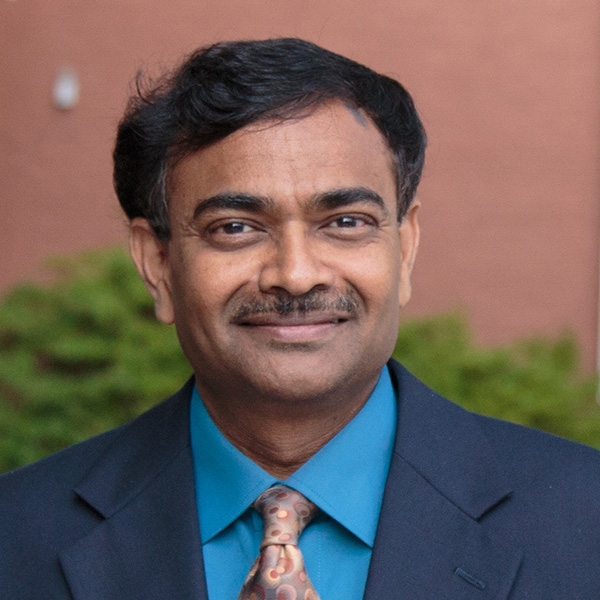
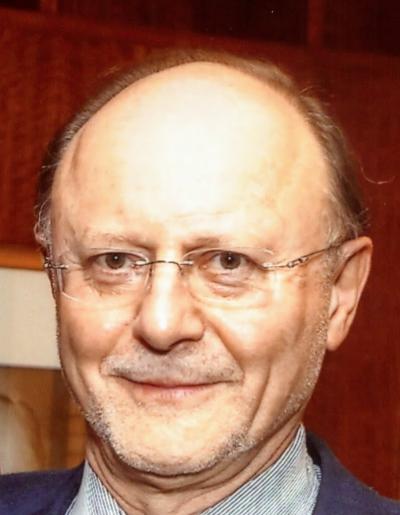
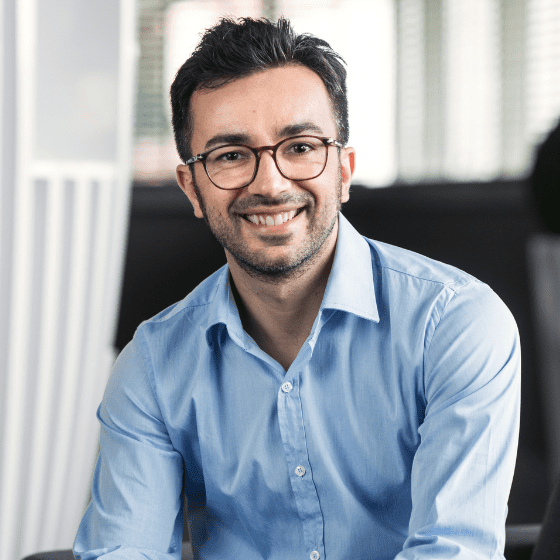
Dr. Srinivas Peeta is the Frederick R. Dickerson Chair and Professor in Transportation Systems Engineering at the Georgia Institute of Technology’s School of Civil and Environmental Engineering. He previously held the Jack and Kay Hockema Professorship at Purdue University, where he served for 24 years. He is also the Associate Director of the USDOT Center for Connected and Automated Transportation. Education: B. Tech. from IIT Madras, M.S. from Caltech, and Ph.D. from UT Austin, all in Civil Engineering. His research focuses on large-scale transportation systems, infrastructure interdependencies, and connected/automated vehicles. He has authored over 345 publications and secured over $48M in research funding. Research Interests: Dynamic traffic networks and driver behavior modeling Information-based navigation in vehicular systems Systems perspectives for complex adaptive infrastructure Autonomous vehicle integration and human-vehicle interactions Key Achievements: Developed DYNASMART software for traffic operations Recipient of NSF CAREER Award (1997) and ASCE Walter Huber Prize (2009) Directed NEXTRANS UTC and pioneered USDOT’s real-time route guidance systems Grants & Outreach: Secured funding from USDOT, NSF, FHWA, and international agencies Initiated NEXTRANS internship programs and K-12 outreach Labs/Teams: Active in Georgia Tech’s ACT Lab, focusing on autonomous transportation systems and human-vehicle-environment interactions.
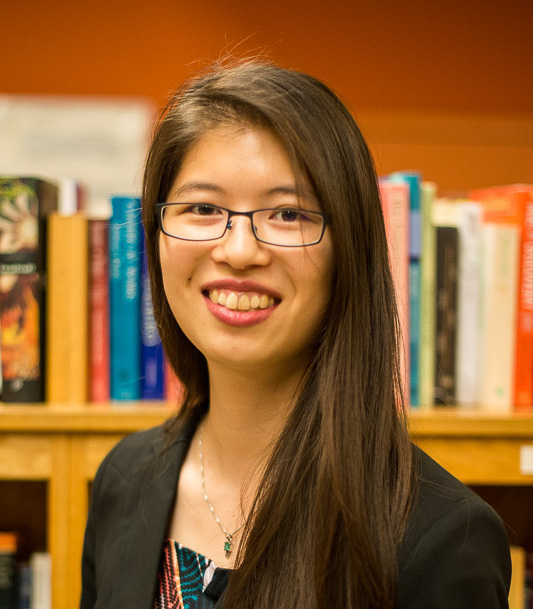
Cathy Wu is an Associate Professor at MIT, with affiliations in the Laboratory for Information and Decision Systems (LIDS), Department of Civil and Environmental Engineering (CEE), and Institute for Data, Systems, and Society (IDSS). Her research group focuses on integrating machine learning with model-based optimization to solve complex problems in transportation systems and cyber-physical systems. Academic Leadership: Class of 1954 Career Development Associate Professor (MIT) Research Grants: NSF CAREER Award, Amazon Robotics, Mathworks, MIT Mobility Initiative, US DOT, Microsoft Research, Cintra, Symbotic Research Interests : Wu's work bridges AI and engineering challenges in transportation. Key areas include: Hybrid ML/Model-based Optimization (large neighborhood search, branch-and-cut) Sustainable Mobility (Project Greenwave, eco-driving) Multi-Agent Coordination (warehouse automation, cooperative driving) Cyber-Professional Systems (generalization in RL, transfer learning) Recent work demonstrates significant advances in eco-driving (11-22% emissions reduction), large-scale multi-agent path finding (1000+ agents), and foundational RL methods for traffic control. Her group has produced 15+ major publications since 2015, with notable media coverage in Science, Wired, and NewScientist. Selected Scientific Awards NSF CAREER Award (2023) Ole Madsen Mentoring Award (2025) IEEE ITSS WiE/YP Fellowship (2024) Harold L. Hazen Teaching Award (2022) Her lab has advised 12+ graduate students and postdocs, including: Vindula Jayawardana (PhD '24, now at Anthropic) Sirui Li (PhD '25, now at Microsoft Research) Yining Ma (Postdoc, active researcher) Zhongxia Yan (PhD '24, now at Anthropic)
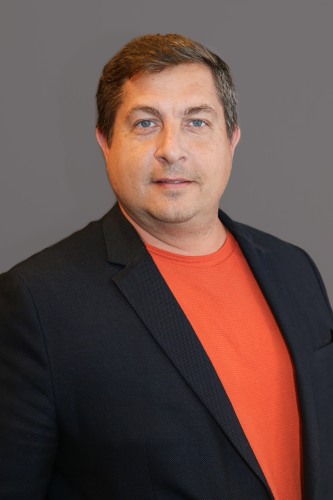
Yuri Bazilevs is the E. Paul Sorensen Professor of Engineering at Brown University's School of Engineering and Co-Director of the Mechanics of Undersea Science and Engineering Center. His research focuses on computational mechanics, isogeometric analysis, fluid-structure interaction, and high-performance computing. Prior to Brown, he held positions at UC San Diego, where he advanced to Full Professor in 2014 after a rapid tenure. He earned his PhD in 2006 and postdoc training in computational engineering at UT Austin's ICES. Research interests span computational fluid dynamics, solid mechanics, and advanced discretization methods like isogeometric analysis (IGA) and meshfree approaches. He has developed novel formulations for complex phenomena such as underwater explosions, composite material failure, and hypersonic flow dynamics. His work integrates cutting-edge numerical methods with practical engineering applications in aerospace, energy, and biomedical systems. Recent publications highlight advancements in IGA for architected materials, RKPM-based crack modeling, and stabilized formulations for compressible flows. His contributions bridge theoretical mechanics with computational innovation, addressing challenges in multiphysics coupling and large-scale simulations. Collaborations span academia and industry, emphasizing practical validation and real-world impact. Bazilevs' expertise includes variational multiscale methods, peridynamics for fracture mechanics, and immersive particle methods for fluid-structure interaction. His work has been applied to wind turbine aerodynamics, gas turbine optimization, and cardiovascular flow analysis. He actively contributes to computational infrastructure development, such as the tIGAr software framework for IGA automation.
Prof. Dr. Stefan Luther is a Max Planck Research Group leader (W2, tenured since 2013) at the Max Planck Institute for Dynamics and Self-Organization, Göttingen, and an Honorarprofessor at the Faculty of Physics, University of Göttingen. He holds adjunct roles as Adjunct Associate Professor at Cornell University (2009–2012) and Northeastern University (2016–2018), and serves as DZHK-Professor at the Institute of Pharmacology and Toxicology, University Medical Center Göttingen. His research focuses on nonlinear spatiotemporal dynamics in excitable biological media, particularly cardiac arrhythmias. He pioneered 4D imaging of heart function and developed algorithms for optogenetic and electrical control of arrhythmias. Translational efforts span basic research to preclinical and clinical studies. Education includes a Diplom in Physics (1997) and PhD (2000) from Georg-August-University, Göttingen. Postdoctoral training followed at the University of Twente (2001–2004) and Cornell University’s LASSP (2004–2006). His lab, the Biomedical Physics group, explores electromechanical coupling in cardiac systems and develops novel therapeutic approaches. Collaborations include work on computational modeling, uncertainty quantification in dynamical systems, and fluid dynamics of multiphase flows.
Konstantinos Karapiperis is a Tenure Track Assistant Professor at EPFL's Laboratory of Multiscale Modeling of Materials (LMD), within the School of Architecture, Civil and Environmental Engineering (ENAC). His research integrates mechanics , multiscale modeling , and data science to study geomaterials and structural materials. PhD in Applied Mechanics (minor in Applied Mathematics), Caltech Postdoctoral Researcher & Lecturer, ETH Zürich (Marie Skłodowska-Curie Fellowship) Research focuses on granular materials , architected materials , and nonlocal modeling using techniques like Level-Set Discrete Element Method (LS-DEM) and machine learning . Recent work explores fracture control via graph neural networks and thermodynamics-informed models. Selected scientific award: Marie Skłodowska-Curie Fellowship Teaches courses in Soil Mechanics and Multiscale Modeling . PhD students include Thomas Henzel and Hrishikesh Gopakumar Menon. His Data-Driven Mechanics Laboratory (LMD) develops predictive tools for granular and structured material behavior.
Professor Paul Goulart is a full Professor of Engineering Science at the University of Oxford and Tutorial Fellow at St Edmund Hall, positions he has held since 2014. He leads research and teaching in robust optimization, control systems, and high-speed numerical methods, with applications spanning fluid flows, traffic networks, and economics. Education SB & MSc, Aeronautics and Astronautics – Massachusetts Institute of Technology (MIT) PhD, Control Engineering – University of Cambridge (Gates Scholar, 2007) Research Interests Professor Goulart’s work lies at the intersection of control engineering and optimization . His core expertise includes: Robust and high-speed convex optimization Model predictive control (MPC) and control barrier functions Neural-network-based control and system identification Optimization over traffic and economic networks Real-time and embedded optimization solvers These interests are reflected in prolific publication output and active supervision of doctoral researchers. Publications & Trends From 2020 to 2025 Professor Goulart has co-authored more than thirty papers. A dominant theme is the development of fast, reliable algorithms for conic optimization and robust control , often leveraging machine-learning techniques to enhance scalability and real-time performance. Recent works emphasize safety certificates, GPU-accelerated solvers, and neural-network controllers for uncertain systems. Awards & Honors Gates Cambridge Scholar (2003) Advising & Grants Professor Goulart actively seeks DPhil students in control engineering and optimization . He leads the Control Group within the Department of Engineering Science and has been involved in multiple industrially funded projects, although specific grant identifiers are not provided in the supplied text. Laboratory & Teams He is a member of the Control Group , Department of Engineering Science, University of Oxford, and serves as Secretary to the Governing Body of St Edmund Hall (Michaelmas Term 2024).
Professor Gregor Verbic is a faculty member at the University of Sydney in the School of Electrical and Computer Engineering , where he serves as Director of the Centre for Future Energy Networks . Previously, he held an assistant professor position at the University of Ljubljana and was a NATO-NSERC Postdoctoral Fellow at the University of Waterloo. His career spans academic research, industry leadership as Head of Interenergo's Investment Department, and extensive collaboration with IEEE. PhD in Electrical Engineering (University of Ljubljana) Senior IEEE Member Research Interests focus on transforming power systems to zero-carbon grids through: Aggregation and control of distributed energy resources (DERs) Frequency control with wind generation and electric vehicles Stochastic optimization for multi-energy systems Smart home energy management with phase change materials Notable Contributions include: 2006 IEEE prize paper for voltage instability prediction 2010-2024: 15 recent publications on DER coordination, network tariffs, and low-inertia grid stability Teaching includes courses on: ELEC3203/ELEC9203: Electricity Networks ELEC5213: Engineering Optimisation ELEC5206: Sustainable Energy Systems Labs & Initiatives Centre for Future Energy Networks The Net Zero Institute
Simone D. Castellarin is a Professor in the Department of Applied Biology at the University of British Columbia's Faculty of Land and Food Systems, and holds the Canada Research Chair Tier 2 in Viticulture. His research focuses on the molecular and physiological mechanisms governing berry ripening and composition in grapes, blueberries, and raspberries, with emphasis on genomic regulation under environmental stressors like heatwaves and drought. PhD in Plant Biology from the University of Udine (2007) Postdoctoral training at Hochschule Geisenheim University and University of California Davis Research areas include terpene biosynthesis, jasmonate signaling, cuticular wax dynamics, and agronomic strategies for climate change mitigation. Key projects involve remote sensing for vineyard zoning , hormone application effects , and genetic studies of berry quality traits . His work spans collaborations with industry bodies like the BC Wine and Grape Council and academic partners including the Cantu Lab at UC Davis. Recent publications highlight genomic analyses of terpene synthases, water deficit impacts on metabolites, and postharvest quality assessments. Awards include the 2009 Rudolf Hermanns Prize for viticultural research. He supervises numerous PhD and Master's students, and leads the Castellarin Lab at UBC's Wine Research Centre.
Irina Oleinikova is a Professor at the Norwegian University of Science and Technology (NTNU) in the Department of Electric Energy, Faculty of Information Technology and Electrical Engineering. She leads the Power System Operation and Analysis research group and serves as the NTNU Smart Grid Team Leader. She is a steering committee member of the European Energy Research Alliance (EERA) Joint Programme on Smart Grids and an expert in the International Smart Grid Action Network (ISGAN) WG6. Research Interests : Power System Operation, Digital Power System Protection and Control, Grid Resilience, Energy Flexibility, Cybersecurity in Power Systems, and Hydrogen Technology Integration. Her work focuses on advancing smart grids, grid flexibility, and cybersecurity through projects like FME CINELDI, HONOR, ASAP, and ZeroKyst. Key Projects : CINELDI : Developing intelligent electricity distribution grids. HONOR : Cross-sectoral energy flexibility markets. ASAP : Next-generation system protection schemes. ZeroKyst : Hydrogen and charging infrastructure along Norway’s coast. COSPAT : Stability of AC/DC transmission grids via co-simulation. Advising & Grants : Supervises PhD students in digital protection and cybersecurity. Active in projects funded by RCN, STATNETT, and EU Horizon 2020. Leads the Power System Operation and Analysis group and collaborates with SINTEF and industry partners. Labs/Teams : NTNU Smart Grid Team and the Power System Operation research group.
Joshua Aizenman is the Robert R. and Katheryn A. Dockson Chair in Economics and International Relations, and Professor of Economics and International Relations at the University of Southern California (USC), Dornsife College of Letters, Arts and Sciences. He joined USC in 2013 and holds a Research Associate position at the National Bureau of Economic Research (NBER). His research focuses on applying cost-benefit analysis to international economics, examining policies, institutions, and their impacts on economic performance, particularly in emerging markets. Key areas include commercial policies, crises management, capital controls, exchange rate regimes, and macroeconomic resilience. Previously, he held positions at UC Santa Cruz (Presidential Chair in Economics), Dartmouth (Champion Professor of International Economics), Hebrew University of Jerusalem, University of Chicago GSB, and University of Pennsylvania. He has served as Co-Editor for the Journal of International Money and Finance (2010–2021) and consults with institutions like the IMF, World Bank, and Federal Reserve Bank of San Francisco. His research highlights include analyzing the Mundell-Fleming Trilemma/Quadrilemma, fiscal-monetary policy interactions during crises, and the role of international reserves. Notable awards include the USC Endowed Chair since 2013. Recent work addresses post-pandemic economic challenges, central bank policies during crises, and resilience of emerging markets under global monetary cycles.
Dongwoo Kim is a researcher affiliated with Hanyang University, ERICA Campus (Department of Electronics and Communication Engineering) and has previously collaborated with institutions like POSTECH , Chungnam National University , and Microsoft . His work spans interdisciplinary domains in Computer Science and Engineering . Hanyang University, ERICA Campus - Department of Electronics and Communication Engineering POSTECH - Power Analog Electronics & Semiconductor Devices Lab Microsoft Chungnam National University Kim's research focuses on formal verification of automotive control software, deep learning applications in environmental monitoring, 3D modeling for indoor positioning, and machine learning for signal processing. His recent publications highlight advancements in graph neural networks (GNNs), including analyzing oversmoothing and gradient dynamics, as well as developing geometric vision-language models with domain-agnostic encoders. His 15 most recent articles (2023-2025) address topics like: Optimizing hybrid electric vehicle engine performance 3D modeling for indoor localization GNN training stability UAV-based environmental monitoring Algorithm difficulty prediction for programming problems Millimeter-wave antenna design Kim collaborates with researchers in software engineering , signal processing , and environmental science domains. His work intersects formal methods , applied machine learning , and embedded systems research.
Zhuo Feng is Professor of Electrical and Computer Engineering at Stevens Institute of Technology, directing the HUDSON Lab and holding a Ph.D. from Texas A&M University. His research develops spectral graph methods for VLSI design, including circuit simulation, power grid verification, and machine learning applications. Funded by NSF CAREER and multiple grants, his work has produced award-winning algorithms like GRASS for graph sparsification. Recent publications focus on spectral methods for circuit stability analysis, physics-informed neural networks, and explainable AI frameworks. He teaches graduate courses in VLSI design and GPU programming while co-founding LeapLinear Solutions. NSF CAREER Award (2014) ACM/IEEE DAC Best Paper Award (2013) Multiple Best Paper Nominations (ICCAD 2008, 2006)
John C. Doyle is the Jean-Lou Chameau Professor of Control and Dynamical Systems, Electrical Engineering, and BioEngineering at the California Institute of Technology (Caltech), where he holds appointments in the Division of Engineering and Applied Science with primary affiliation in the Control and Dynamical Systems Department. His research bridges theoretical foundations with applications across biological, technological, medical, and ecological networks. He earned a BS and MS in Electrical Engineering from MIT (1977) and a PhD in Mathematics from UC Berkeley (1984), followed by consultancy at Honeywell Systems and Research Center (1976-1990). MIT: BS & MS in Electrical Engineering (1977) UC Berkeley: PhD in Mathematics (1984) Doyle's research centers on universal laws and architectures in complex systems, emphasizing robustness-efficiency tradeoffs, speed-accuracy tradeoffs (SATs), diversity-enabled sweet spots (DeSS), bowtie/hourglass structures, and evolvability. His work pioneers System Level Synthesis (SLS) for control systems with sparse, local, saturating, delayed, noisy, quantized, and distributed (SLSDNQD) components, integrating control theory, computation, communication, and machine learning to address challenges from neural networks to infrastructure resilience. Key concepts include virtualization, horizontal transfer, and virality in multiscale systems. Analysis of his publication trends reveals consistent interdisciplinary impact across neuroscience (brain connectivity modeling), systems biology (metabolic oscillations), network science (internet topology), and physics (turbulence, earthquakes), with recurring themes of robust-efficiency limits and architectural principles governing complex networks. His work demonstrates exceptional translation from abstract theory to practical tools like the Matlab Robust Control Toolbox and Systems Biology Markup Language (SBML). His scientific recognition includes: 1990 IEEE Baker Prize (ranked among top 10 most important mathematics papers 1981-1993) Three IEEE Automatic Control Transactions Awards (1998, 1999, 2021) ACM Sigcomm Paper Prize (2004) and Test of Time Award (2016) IEEE Control Systems Field Award (2004) Multiple early-career honors including IEEE Centennial Outstanding Young Engineer (1984) Doyle has mentored generations of students whose contributions include foundational software tools adopted globally. His research has secured sustained funding from NSF, NIH, and other agencies supporting theoretical advances in control frameworks and their applications to biomedical systems, network infrastructure, and environmental modeling. The SBML initiative exemplifies his group's impact in standardizing computational biology research. He leads a highly collaborative research ecosystem at Caltech that integrates engineers, biologists, neuroscientists, and computer scientists to develop universal principles for complex networks. Current efforts focus on translating theoretical insights into health technologies, resilient infrastructure, and climate-responsive systems through the application of robust-efficiency frameworks to emerging challenges in cyber-physical and biological domains.
Stefano Galelli is a tenured Associate Professor in the School of Civil and Environmental Engineering at Cornell University, where he leads the Critical Infrastructure Systems Lab. He also holds an adjunct position as a Research Scientist at the Lamont-Doherty Earth Observatory, Columbia University. His career spans roles in Singapore, including a Postdoctoral Research Fellow at NUS (2011–2013) and faculty at the Singapore University of Technology and Design (2013–2023). Dr. Galelli earned his B.Sc. (2004), M.Sc. (2007), and Ph.D. (2011) in Environmental and Land Planning Engineering and Information Technology from Politecnico di Milano, Italy. His research focuses on the interactions between critical infrastructure systems and natural environments, emphasizing adaptive management solutions for water-energy systems. Techniques include process-based modeling, climatology, statistical learning, control theory, and optimization. He explores topics like hydro-climatic variability impacts, dam re-operation for environmental flows, and cyber-physical security in infrastructure. His contributions to journals such as Nature Sustainability, Earth’s Future, and Environmental Modelling & Software have earned him multiple awards, including the Early Career Research Excellence Award (2014) and SUTD Excellence in Research Award (2017). He has served as an editor for several journals and is recognized for advancing interdisciplinary approaches to water-energy nexus challenges. Teaching highlights include foundational mathematics courses and advanced topics in data analytics, optimization, and water-energy management. He is developing new courses on data-driven control of coupled human-natural systems and risk management for interconnected systems.
Giancarlo Ferrari Trecate is an Adjunct Professor at the Swiss Federal Institute of Technology Lausanne (EPFL) , affiliated with the School of Engineering and the SCI-STI-GFT department. He is also involved in teaching and research through the STI-SGM and EDRS-ENS programs. Research Interests : Automatic control, state estimation, system identification, machine learning, distributed control, hybrid systems, microgrids, biochemical networks, voltage and frequency stabilization in AC/DC microgrids. Publications Trends : His recent work focuses on integrating Neural ODEs and Hamiltonian structures for stable control systems, regret minimization in distributed control, and robust state estimation under uncertainty. Applications include autonomous mobility-on-demand , power grid optimization , and secure microgrid control against cyber-attacks. Scientific Awards : No specific awards mentioned in the provided data. Teaching & Advising : He supervises PhD students in mechanical engineering and teaches courses on Multivariable control and Networked control systems . His lab, DECODE , specializes in Dependable Control and Decision systems.