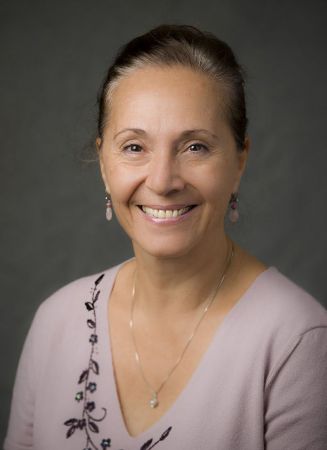
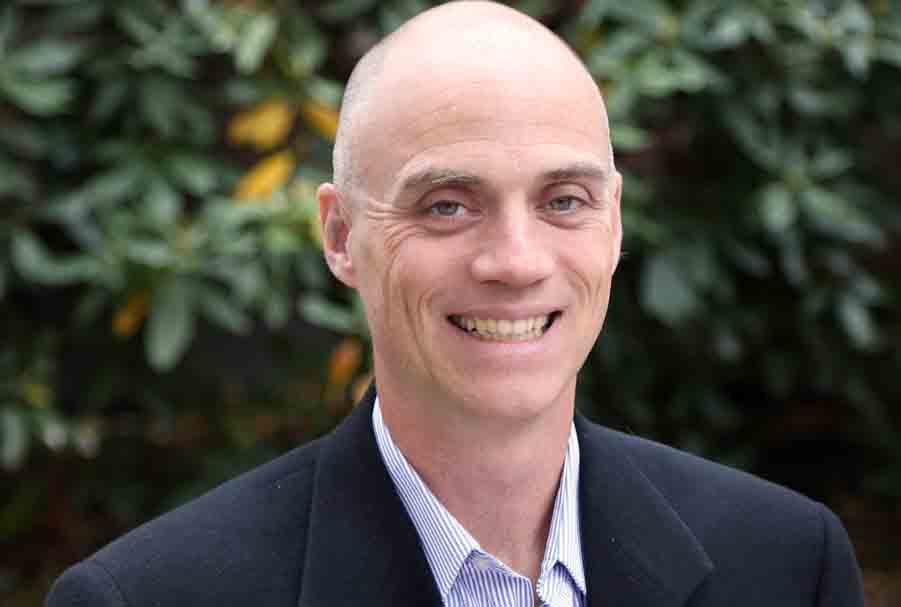
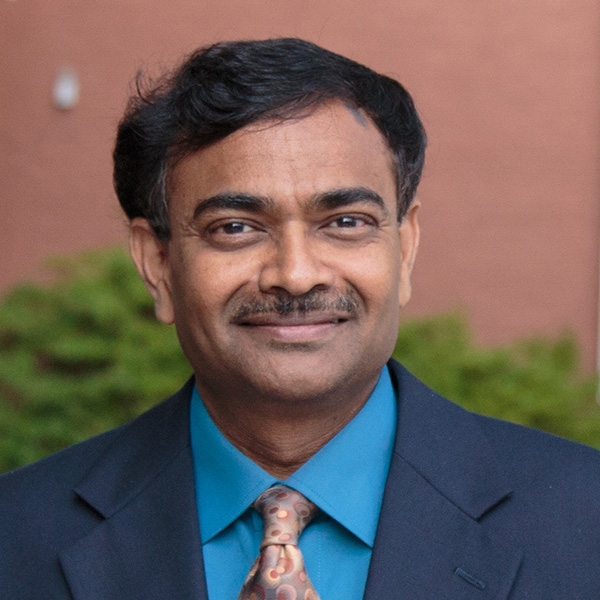
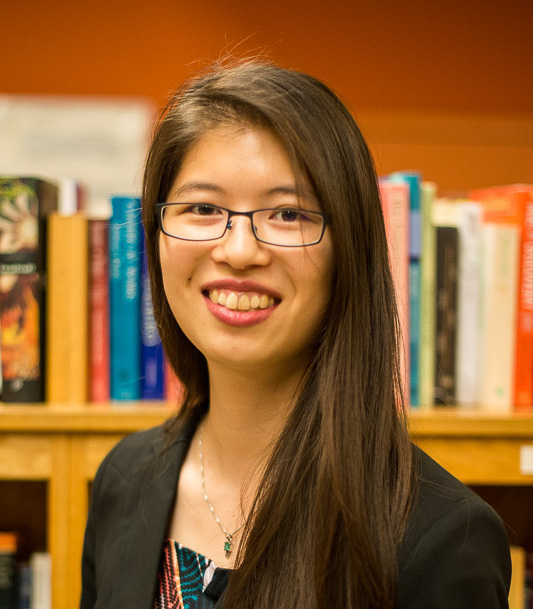
Mariana Resener is an Assistant Professor in the School of Sustainable Energy Engineering at Simon Fraser University (SFU). She holds a Ph.D. in Electrical Engineering (2016) from the Federal University of Rio Grande do Sul, Brazil, alongside M.Sc. (2011) and B.Sc. (2008) degrees in the same field. Her research focuses on optimizing power systems, particularly in distributed energy resources, energy storage, and volt/var control. She teaches courses like Power Electronics and Power Systems Analysis & Design. Her work emphasizes sustainable development in grid planning and energy infrastructure. As a Senior Member of IEEE and an Associate Editor for the Energy Systems Journal (Springer), she contributes to advancing smart grid technologies and renewable integration. Her research spans metaheuristic optimization, stochastic modeling, and grid resilience strategies for distributed systems. Recent projects include hybrid renewable energy systems for substations, EV charging station optimization, and fault analysis in unbalanced grids. She collaborates with industry on practical solutions for grid modernization and reliability enhancement.
Claudio Canizares is a University Professor and Hydro One Endowed Chair in the Department of Electrical and Computer Engineering at the University of Waterloo. He also serves as Executive Director of the Waterloo Institute for Sustainable Energy (WISE). With a career spanning over 30 years, his research focuses on power systems stability, smart grids, microgrids, and renewable energy integration. He has secured nearly $118 million in grants and supervised 180+ researchers/students. Education: PhD (1991) and MSc (1988) in Electrical Engineering from University of Wisconsin-Madison; Electrical Engineering Diploma (1984) from Escuela Politécnica Nacional, Ecuador. Research Interests : Nonlinear systems theory, FACTS/HVDC applications, energy storage systems, microgrid stability/control, renewable integration in remote communities, and smart grid analytics. His work emphasizes bridging academic research with industrial applications through collaborations with utilities and tech firms. Key Achievements : IEEE Transactions on Smart Grid Editor-In-Chief; multiple IEEE Fellowships (IEEE, Royal Society of Canada, Canadian Academy of Engineering); 2017 IEEE PES Outstanding Educator Award; 2016 IEEE Canada Electric Power Medal. His publications (370+) include landmark papers on microgrid stability definitions and control frameworks, cited over 29,000 times. Teaching: Recently taught ECE 140 (Linear Circuits), ECE 467 (Power Systems Analysis), and graduate courses ECE 6601PD/ECE 6613PD on power systems modeling and analysis.
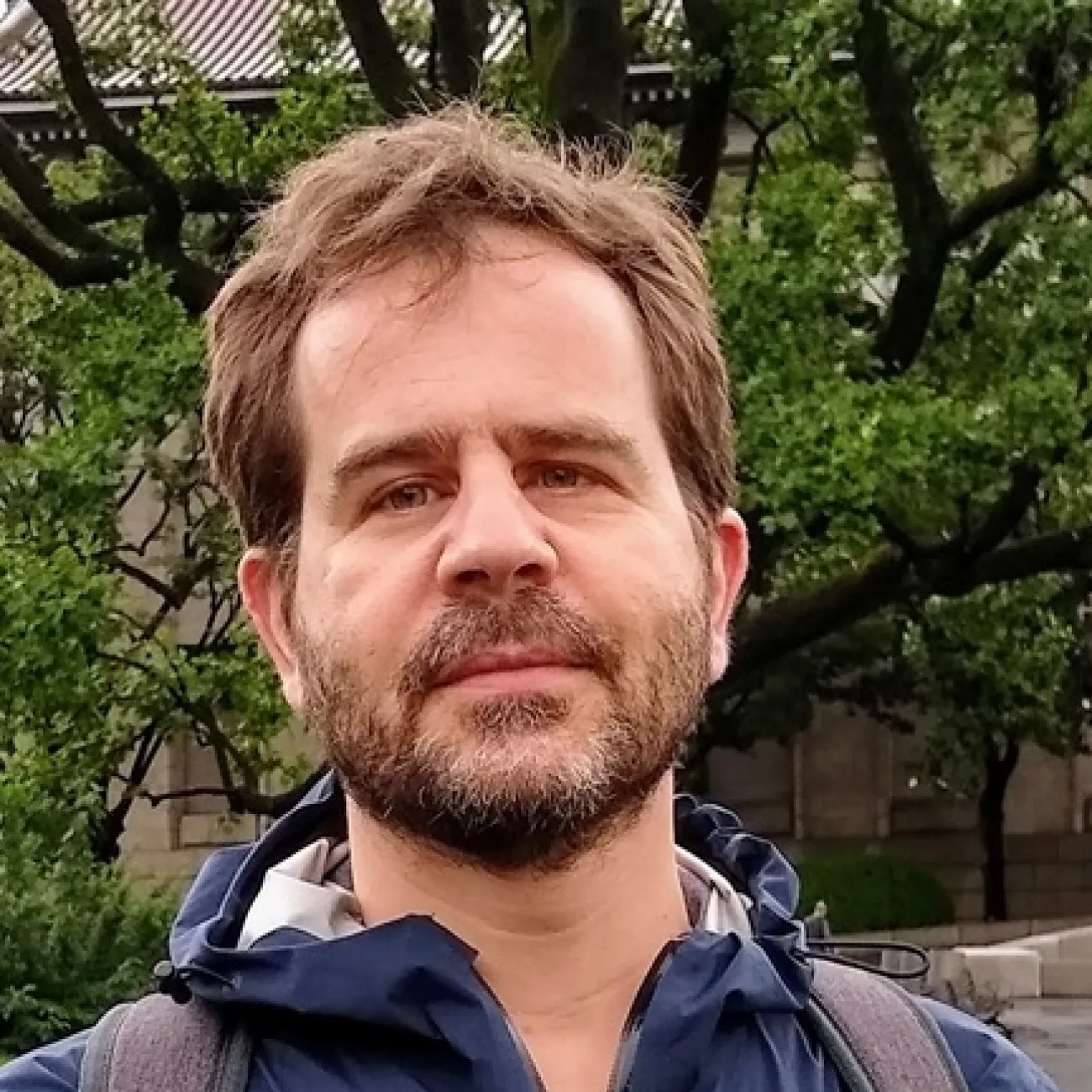
Sibel Pamukcu is a Professor in the Department of Civil and Environmental Engineering at Lehigh University, affiliated with the P.C. Rossin College of Engineering and Applied Science. Her research focuses on electroremediation of soils and groundwater, advanced geo-materials, and sensor systems for subsurface monitoring. She has held leadership roles including interim Chair of Civil and Environmental Engineering and co-director of Lehigh’s ADVANCE grant. Pamukcu teaches courses in geotechnical and environmental engineering at both undergraduate and graduate levels. Education: Ph.D. in Civil Engineering, Louisiana State University M.S. in Civil Engineering, Louisiana State University B.S. in Civil Engineering, Bogazici University, Turkey Research Interests: Her work spans electrochemical methods for environmental detoxification, development of polymer-enhanced sands, and distributed sensor networks for real-time subsurface monitoring. Key focus areas include: In-situ destruction of contaminants in clay-rich soils Enhanced oil recovery via electric fields Wireless and fiber-optic sensor systems for hazard mitigation Grants & Awards: Principal investigator on over 60 grants from NSF, DOE, DOD, and others. Notable awards include the Alfred Noble Robinson Award (Lehigh University) and the ASCE Civil Engineering Foundation Grant Award. Her lab holds multiple patents on soil remediation techniques and polymer-coated sands. Advising & Service: Supervised 9 Ph.D. and 25+ M.S. students Appointed to Martindale Center faculty and Sigma Xi leadership Contributed to 50+ peer-reviewed articles and 100+ technical publications Labs & Teams: Leads interdisciplinary initiatives in electrokinetic remediation and underground sensing, collaborating with industry partners like Electric Power Research Institute and the Pennsylvania Department of Transportation.
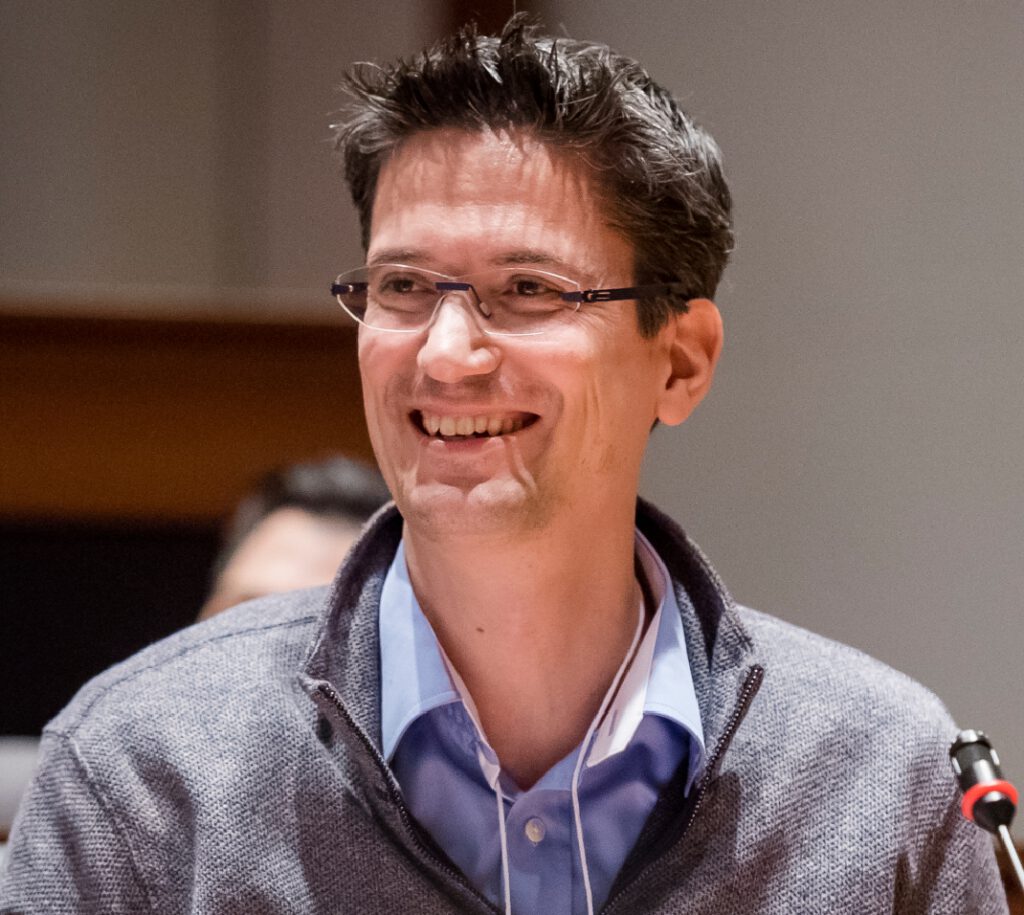
Minjie Chen is an Associate Professor of Electrical and Computer Engineering and the Andlinger Center for Energy and the Environment at Princeton University, serving as Acting Associate Director for Research at the Andlinger Center. He leads the Princeton Power Electronics Lab (PowerLab), which focuses on developing fundamental and novel power electronics solutions for a wide range of applications from mW-scale energy harvesting to MW systems in renewable energy integration. Dr. Chen received his Ph.D. in Electrical Engineering and Computer Science from MIT in 2015 and his B.S. in Electrical Engineering from Tsinghua University in 2009. Before joining Princeton as an Assistant Professor in February 2017, he was a postdoctoral associate at MIT Research Laboratory of Electronics. His research spans power electronics, magnetics design, and machine learning applications in energy systems. The PowerLab develops advanced power conversion architectures that enable order-of-magnitude higher power density through high-frequency designs, addressing circuit timing, parasitics, magnetics, and thermal management challenges. Their work targets applications ranging from portable devices to data centers and renewable energy systems. The research group has produced a remarkable series of high-impact publications, with seven IEEE Transactions on Power Electronics Prize Papers in seven consecutive years (2016-2023). Their recent work increasingly integrates machine learning techniques with power electronics, exemplified by the MagNet project which redefines how power magnetics are studied and modeled. NSF CAREER Award, 2019 IEEE PELS Richard M. Bass Outstanding Young Power Electronics Engineer Award, 2023 Power of Associations Silver Award from ASAE for MagNet project, 2024 Multiple IEEE Transactions on Power Electronics Prize Papers (2016-2023) Princeton Engineering Commendation List for Outstanding Teaching (2019, 2020) Dr. Chen advises approximately 15 graduate students who have received numerous awards including the IEEE PELS John G. Kassakian Fellowship, Princeton SEAS Honorific Fellowship, and multiple IEEE conference best paper awards. His research is supported by significant grants from NSF, DOE ARPA-E, Princeton Innovation Fund, C3.ai DTI, and industry partners including Intel, Google, and pSemi. The lab's MagNet project has become a major international initiative with a $60,000 prize pool challenge. The PowerLab maintains strong industry connections and has launched several collaborative projects with Intel, Google, and pSemi. Their MagNet project has evolved into an international challenge with participation from over 40 teams worldwide, demonstrating the growing impact of their approach to machine learning for power magnetics modeling.
J.D. Jansen is a full Professor at Delft University of Technology (TU Delft) in the School of Civil Engineering & Geosciences, specializing in the Reservoir Engineering department. His research focuses on systems and control theory applied to subsurface flow mechanics, with applications in oil and gas production, geothermal energy, and induced seismicity. He actively contributes to academic networks through editorial roles, keynote presentations, and international collaborations. Active in computational geosciences (modeling, simulation, data analysis) Member of the Dutch Mining Council since 2016 Recipient of two Society of Petroleum Engineers awards in 2018 His work emphasizes optimization of subsurface processes, numerical modeling of porous materials, and seismicity mitigation. Recent publications highlight fault slip mechanics, benchmarking simulations, and stress pattern analysis in geothermal systems. Collaborations span geomechanics, reservoir engineering, and data assimilation domains. Scientific awards include: Distinguished Membership of the Society of Petroleum Engineers (2018) SPE Distinguished Achievement Award for Petroleum Engineering Faculty (2018) He leads research initiatives in induced seismicity, particularly in the Groningen Field, and contributes to model-based production optimization. Media engagements since 2020 demonstrate public outreach in energy transition topics.
Dr. Andrea Lecchini Visintini is an Associate Professor at the School of Electronics and Computer Science , University of Southampton. He specializes in systems modelling and control with applications in aerospace engineering and biomedical domains, utilizing Monte Carlo methods for stochastic optimization. Cyber-Physical Systems Research Group Institute for Life Sciences Research Focus: His work bridges computational methods with practical applications in: Neurovascular coupling and brain tissue pulsation analysis Advanced control strategies for aerospace systems Stochastic optimization in machine learning and fault detection Medical imaging and diagnostic protocol development Publication Trends: Recent work emphasizes interdisciplinary approaches combining computational neuroscience with engineering, focusing on brain hemodynamics, MIMO system control, and data augmentation techniques for imbalanced datasets. Supervision: Currently supervising PhD student Xuankun Cai in Computer Science.
Andres Arrieta is an Associate Professor in the School of Mechanical Engineering at Purdue University. His research focuses on adaptive structures, mechanical metamaterials, and programmable systems. He holds a PhD from the University of Bristol and conducted postdoctoral research at ETH Zurich. Education: Mechanical Engineer, Universidad de los Andes, 2006 PhD in Mechanical Engineering, University of Bristol, 2010 Postdoctoral Research Fellow, ETH Zurich, 2012 Research Interests: Adaptive Structures Multistable Systems Structural Nonlinearity Robotics & Mechanosensing Origami Engineering Awards: 2019 ASME Best Paper Award 2018 Gary Anderson Early Achievement Award 2012 ETH Postdoctoral Fellowship Labs: Directs the Programmable Structures Lab , exploring smart materials and morphing systems.
Pablo Fajardo Peña is a Full Professor in the Department of Aerospace Engineering at Universidad Carlos III de Madrid (UC3M). He leads the Plasmas and Space Propulsion Team (EP2) and co-directs the Aerospace Engineering Research Group. His research focuses on advanced propulsion technologies for space applications, including plasma thrusters, electric propulsion, and fluid-thermal systems. Professor Peña's work spans computational modeling of plasma dynamics, experimental characterization of propulsion systems, and development of novel thrusters like Hall effect thrusters and electrospray systems. His recent publications analyze plasma discharge mechanisms, thruster plume behavior, magnetic nozzle effects, and propellant interactions. He leads multiple EU and Spanish-funded projects including HIPATIA (Helicon Plasma Thruster), CHEOPS (Hall Effect Orbital Propulsion), and ADAPT (Advanced Plasma Propulsion). These initiatives focus on developing efficient propulsion systems for spacecraft and addressing challenges in space debris removal. Professor Peña supervises doctoral research on plasma diagnostics and thruster simulation, and has developed simulation tools like HYPHEN (Hybrid Plasma Thruster Holistic Environment). His team collaborates with ESA, Airbus, and SENER Aeroespacial on propulsion technology validation.
Prof. Dr. Patrick Huber is a leading physicist and Institute Director at the Hamburg University of Technology (TUHH) , heading the Institute for Materials and X-Ray Physics (M-2) . He also leads the High-Resolution X-Ray Analytics of Materials group at DESY through a cooperative professorship. His research spans condensed matter physics , nanoporous materials , and X-ray analytics , with significant contributions to molecular water science and soft matter in confinement . Education: PhD in Physics (1999, Saarland University), Diploma in Physics (1995, Saarland University) Professional Career: Full Professor at TUHH (2020-present), Member of CRC 1615 (2023-present), Spokesperson for CMWS (2024-present), Cluster of Excellence BlueMat (2025) Research Interests focus on multi-scale material behavior under extreme confinement, particularly hierarchical porous silicon and silica systems . His work examines adsorption-induced deformation , elastocapillarity , fluid transport in nanopores, and metamaterial design principles using electrolytes , polymers , and liquid crystals . Fundamental studies include fluid interface thermodynamics and microscopic hydrodynamics . Scientific Awards include the Top Reviewer Award (2018) from Applied Physics Letters and the Dr.-Eduard-Martin Award (2000) for his dissertation. He contributes to 130+ publications with an h-index of 36 (2021). Advising and Grants involve supervising 18 doctoral and master's students , including Manuel Brinker , Marc Thelen , and Stella Gries . He participates in Collaborative Research Centre CRC 1615 , Cluster of Excellence EXC 3120 BlueMat , and the United Nations University Hub on Climate Engineering . Laboratory and Teams include the Institute for Materials and X-Ray Physics (M-2) at TUHH, the High-Resolution X-Ray Analytics group at DESY, and contributions to the Centre for Hybrid Nanostructures (CHyN) .
Axel Dreher is Professor of International and Development Politics at Heidelberg University’s Alfred-Weber-Institute for Economics. He is a leading scholar in political economy and development economics, with extensive affiliations including the German National Academy of Sciences Leopoldina, CEPR, CESifo, KOF, AidData, and EUDN. He serves as Editor of the Review of International Organizations and Co-Director of the Center for European Studies (CefES) at the University of Milan-Bicocca. Ruprecht-Karls-University Heidelberg (2011–Present) Georg-August University Göttingen (2008–2011) ETH Zurich (2005–2008) University of Konstanz (2004–2005) University of Exeter (2003–2004) University of Mannheim (2000–2003) His research centers on political economy , economic development , foreign aid , and globalization . He investigates how political institutions, leadership incentives, and geopolitical interests shape development outcomes and international financial flows. His work often employs empirical and geospatial methods to analyze aid allocation, corruption, migration, and the rise of emerging donors like China. The 15 most recent publications reflect a strong focus on China’s overseas development finance , regional favoritism , and the political determinants of aid . Keywords span political economy, development economics, and international relations, with subfields including Chinese foreign aid, geospatial analysis, governance, institutional quality, and South-South cooperation. His recent book Banking on Beijing and award-winning paper Wedded to Prosperity exemplify his cutting-edge contributions to understanding the political economy of development. Scientific awards include: 2023 Best Paper Award, Political Economy of Aid Society (PEAS) 2023 Best New Dataset Award, International Political Economy Society International Geneva (IG) Award 2020 Excellence in Refereeing Award, World Bank Economic Review (2019) 2010 KfW Excellence Award for policy-relevant research Multiple DFG and Swiss research grants Dreher has advised over 30 PhD students on topics ranging from aid effectiveness to political violence and migration. He has received major research grants from the German Research Foundation (DFG), Swiss Network for International Studies (SNIS), European Commission, and VolkswagenStiftung. His leadership roles include organizing the annual Political Economy of International Organizations conference series and serving on editorial boards of top journals such as World Development and Defence and Peace Economics . He is actively involved in academic labs and research networks including the Courant Research Center on Poverty and Equity at Göttingen, AidData at William & Mary, and the Center for European Studies (CefES). His current work continues to explore the intersection of politics, development, and globalization, particularly through georeferenced data and natural experiments.
Thomas R Powers is a Professor of Engineering and Professor of Physics at Brown University. He joined Brown in 2000 as the first holder of the James R. Rice Term Chair in Solid Mechanics and has been an influential figure in soft matter physics, biomechanics, and microorganism locomotion. PhD in Physics, University of Pennsylvania (1995) BS in Physics and Mathematics, MIT (1989) His research focuses on soft matter systems, including colloidal and lipid bilayer membranes, liquid crystals, and active matter, with an emphasis on low-Reynolds-number hydrodynamics and geometric mechanics. His work has been supported by NSF grants, including collaborations with Brandeis University's bioinspired materials center. Recent publications explore microbial flagellar dynamics (e.g., Giardia lamblia ), chiral membrane behavior, and active gel responses to shear. Key keywords include soft matter, active matter, fluid mechanics, and microscale locomotion. Scientific honors include: Fellow, American Physical Society NSF CAREER Award (2001-2006) T. Francis Ogilvie Young Investigator Lectureship, MIT Ocean Engineering He has advised numerous students through courses like ENGN 2912F (Soft Matter) and ENGN 1210 (Biomechanics), while leading funded research on colloidal membranes and viscoelastic fluid interactions.
Diana Allen is a Professor in the Department of Earth Sciences at Simon Fraser University, where she leads the Groundwater Resources Research Group (GRRG). Her research focuses on hydrogeology with particular emphasis on groundwater resource evaluation and hydrogeological modeling, with current research on climate change impacts on groundwater systems, groundwater resources in mountainous and coastal regions, and low temperature geothermal systems. Education: B.Sc. Honours, Carleton University, 1986 M.Sc., Carleton University, 1988 Ph.D., Carleton University, 1996 Dr. Allen's research spans several key areas of hydrogeology and water resources. Her work on climate change impacts examines how extreme climate events affect groundwater systems, particularly in mountainous regions. She has developed methodologies for reconstructing historical groundwater levels using tree ring widths to understand long-term drought patterns. Her research on coastal aquifers assesses vulnerability to salinization, while her work in Northeast British Columbia evaluates water security risks associated with shale gas development. She also investigates aquifer-stream connectivity and the impacts of pumping on streamflow. Dr. Allen's publication record shows a strong focus on applied hydrogeology with significant contributions to understanding groundwater responses to climate extremes, drought assessment methodologies, and coastal aquifer vulnerability. Her research combines field studies with numerical modeling across diverse environments from mountainous regions to coastal deltas. Dr. Allen has successfully secured funding from major agencies including NSERC, the Canadian Mountain Network, the Pacific Institute for Climate Solutions, and various BC government ministries. Her research has practical applications for water resource management under climate change. As a dedicated educator and mentor, Dr. Allen supervises numerous graduate students working on cutting-edge hydrogeological research projects across British Columbia and beyond. Her students pursue careers in hydrogeology and environmental geoscience, applying GIS methods and computational hydrogeology to analyze field data.
Dr. Srinivas Peeta is the Frederick R. Dickerson Chair and Professor in Transportation Systems Engineering at the Georgia Institute of Technology’s School of Civil and Environmental Engineering. He previously held the Jack and Kay Hockema Professorship at Purdue University, where he served for 24 years. He is also the Associate Director of the USDOT Center for Connected and Automated Transportation. Education: B. Tech. from IIT Madras, M.S. from Caltech, and Ph.D. from UT Austin, all in Civil Engineering. His research focuses on large-scale transportation systems, infrastructure interdependencies, and connected/automated vehicles. He has authored over 345 publications and secured over $48M in research funding. Research Interests: Dynamic traffic networks and driver behavior modeling Information-based navigation in vehicular systems Systems perspectives for complex adaptive infrastructure Autonomous vehicle integration and human-vehicle interactions Key Achievements: Developed DYNASMART software for traffic operations Recipient of NSF CAREER Award (1997) and ASCE Walter Huber Prize (2009) Directed NEXTRANS UTC and pioneered USDOT’s real-time route guidance systems Grants & Outreach: Secured funding from USDOT, NSF, FHWA, and international agencies Initiated NEXTRANS internship programs and K-12 outreach Labs/Teams: Active in Georgia Tech’s ACT Lab, focusing on autonomous transportation systems and human-vehicle-environment interactions.
Prashant Mehta is a Professor of Mechanical Science and Engineering at the University of Illinois at Urbana-Champaign , affiliated with the Coordinated Science Laboratory . His research focuses on controlled interacting particle systems and machine learning applications , particularly in human activity recognition using motion sensors. Education: Ph.D. in Mathematics, Cornell University (2004) M.S. in Electrical & Computer Engineering, University of Massachusetts Amherst (1996) B.E. in Electrical & Electronics Engineering, Birla Institute of Technology & Sciences (1993) Mehta's work has pioneered the feedback particle filter (FPF) algorithm for nonlinear estimation, applied in robotic systems and gesture recognition. His research spans control of combustion instabilities in jet engines, mean-field games , and dynamical systems in aerospace engineering. His publications emphasize nonlinear control theory and stochastic filtering , with recent trends in sensor data pattern recognition and cyber-physical systems . He has received multiple scientific awards , including the MURI award for the Cyberoctopus project and Excellence in Undergraduate Advising Awards . Scientific Honors: MURI Award (2019) for Cyberoctopus Excellence in Undergraduate Advising (2010, 2008) Outstanding Teaching Assistant Award (1994) Senior Member, IEEE Control Systems Society Member, ASME Energy Systems Subcommittee Member, SIAM Dynamical Systems Group Mehta has supervised students like Jin Kim (IEEE CDC Best Student Paper, 2019) and co-founded the startup Rithmio , acquired by Bosch Sensortec . His laboratory develops gesture-detection filters for applications in soft robotics and human-machine interfaces .
Cathy Wu is an Associate Professor at MIT, with affiliations in the Laboratory for Information and Decision Systems (LIDS), Department of Civil and Environmental Engineering (CEE), and Institute for Data, Systems, and Society (IDSS). Her research group focuses on integrating machine learning with model-based optimization to solve complex problems in transportation systems and cyber-physical systems. Academic Leadership: Class of 1954 Career Development Associate Professor (MIT) Research Grants: NSF CAREER Award, Amazon Robotics, Mathworks, MIT Mobility Initiative, US DOT, Microsoft Research, Cintra, Symbotic Research Interests : Wu's work bridges AI and engineering challenges in transportation. Key areas include: Hybrid ML/Model-based Optimization (large neighborhood search, branch-and-cut) Sustainable Mobility (Project Greenwave, eco-driving) Multi-Agent Coordination (warehouse automation, cooperative driving) Cyber-Professional Systems (generalization in RL, transfer learning) Recent work demonstrates significant advances in eco-driving (11-22% emissions reduction), large-scale multi-agent path finding (1000+ agents), and foundational RL methods for traffic control. Her group has produced 15+ major publications since 2015, with notable media coverage in Science, Wired, and NewScientist. Selected Scientific Awards NSF CAREER Award (2023) Ole Madsen Mentoring Award (2025) IEEE ITSS WiE/YP Fellowship (2024) Harold L. Hazen Teaching Award (2022) Her lab has advised 12+ graduate students and postdocs, including: Vindula Jayawardana (PhD '24, now at Anthropic) Sirui Li (PhD '25, now at Microsoft Research) Yining Ma (Postdoc, active researcher) Zhongxia Yan (PhD '24, now at Anthropic)