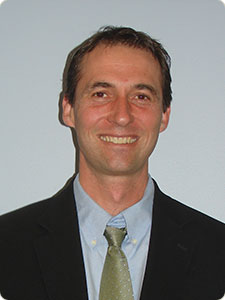
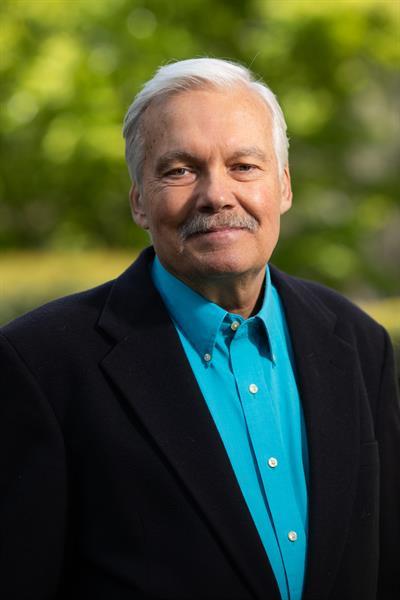
Steen Ørndorf is a PartTime Lecturer at Aalborg University Business School, affiliated with the Macroeconomic Methodology, Theory and Economic Policy unit under the Faculty of Social Sciences and Humanities. His interdisciplinary work spans: Economic theory and statistical applications Political philosophy (notably Edmund Burke) Educational methodologies in quantitative fields Publications include historical analyses of academic institutions, conservative political theory, and statistical software guides.
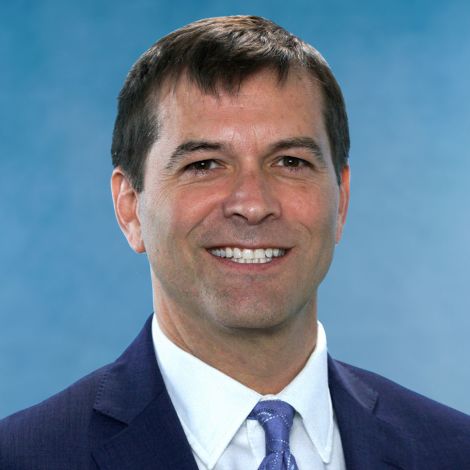
Travis Day is a Clinical Associate Professor of Strategy and Entrepreneurship at the Kenan-Flagler Business School, University of North Carolina at Chapel Hill. He joined the institution in 1993 as a systems administrator and began teaching in 1997, imparting practical skills to thousands of students. His expertise focuses on leveraging technology to enhance workplace efficiency, particularly through advanced spreadsheet modeling and business information management. Education: He holds an MBA and BSBA from UNC Kenan-Flagler Business School. Research Interests: Entrepreneurship, financial modeling, small business management, and technology integration in business operations. He emphasizes actionable solutions for businesses, including consulting in finance and medical practice management. Awards: Recipient of the 2021 Weatherspoon Award for Excellence in Teaching, recognizing his impactful teaching in the Master of Accounting Program. Advising/Grants: While specific grants are not mentioned, his consulting work and teaching reflect engagement with real-world challenges. He has advised numerous students through his courses on business technology and productivity.
Nicholas J. Horton is a distinguished faculty member in the Department of Statistics at Amherst College, where he teaches courses in statistics, data science, probability, mathematical statistics, regression, and design of experiments. With a passion for improving quantitative and data literacy for students of diverse backgrounds, he has made significant contributions to statistics education and applied biostatistical research. His educational background includes: Sc.D. from Harvard School of Public Health (1999) A.B. from Harvard College (1987) Horton's research bridges the mathematical, statistical, and computational sciences with interdisciplinary applications. As an applied biostatistician and data scientist, his methodological work focuses on multivariate response models, longitudinal studies, and missing data. He completed a fellowship through the ASA/NSF/Bureau of Labor Statistics program, leading a project to improve imputation methods for the Occupational Employment Survey. His work emphasizes bridging the gap between theory and practice in interdisciplinary statistics and data science settings, with a particular focus on developing novel solutions for real-world data problems that existing methodology sometimes cannot address. An analysis of Horton's recent publications reveals a strong focus on data science education, statistical methodology, and interdisciplinary applications. His work spans from foundational statistics education to cutting-edge applications in public health, obesity research, and audiometry. A notable trend is his commitment to improving statistical and data literacy across educational levels, from K-12 to undergraduate programs. His publications also demonstrate expertise in handling complex data structures including longitudinal studies and missing data problems across diverse fields. Horton has received numerous prestigious awards recognizing his contributions to statistics and education: Waller Distinguished Career Teaching Award, American Statistical Association (2025) Fellow of the Institute of Mathematical Statistics (2025) Peter Holmes Prize (2023) Mosteller Award (2023) Concord Consortium Tinker Fellow (2020) Fellow of the American Association for the Advancement of Science (2018) Robert V. Hogg Award For Excellence in Teaching Introductory Statistics (2015) Fellow of the American Statistical Association (2012) Through his teaching and research mentorship, Horton has actively involved undergraduate students in research projects, viewing this as a key component of his educational mission. He has participated in data science education initiatives through the National Academies and has contributed to developing guidelines for undergraduate programs in statistics. His work with the Project MOSAIC package demonstrates his commitment to integrating computing in the statistics curriculum. Horton maintains active involvement with the R community, contributing to resources like the "mosaic" package that helps students "think with data" using R. He has also been instrumental in developing educational resources including "Modern Data Science with R" and "A Student's Guide to R," supporting both students and educators in the field.
Brian K. Niece serves as Professor of Chemistry within the Department of Chemistry at Assumption University's D’Amour College of Liberal Arts and Sciences. His academic career integrates advanced research with dedicated undergraduate instruction across general, analytical, and inorganic chemistry courses, supported by active engagement in educational innovation and instrumentation development. His educational foundation includes a B.S. in Chemistry from the Georgia Institute of Technology (1992) and a Ph.D. in Chemistry from the University of Illinois at Urbana-Champaign (1997), where his doctoral research investigated catalytic monolayers on gold electrodes using surface science methodologies. Dr. Niece's research spans Analytical Chemistry, Physical Chemistry, and Chemistry Education, with significant contributions in electrochemical interface studies, molecular symmetry visualization, and low-cost analytical methodologies. His work demonstrates a strategic shift from fundamental surface electrochemistry toward pedagogical advancements, developing accessible tools like 3D-printed molecular models and adapted NMR systems for undergraduate laboratories while maintaining rigorous analytical standards in areas such as mercury contamination analysis and silver leaching studies. Analysis of his publication trajectory reveals a sustained commitment to transforming chemical education through technology integration, with recent works emphasizing real-time data visualization, ethical research practices, and instrumentation democratization. This evolution reflects a deliberate focus on making complex chemical concepts tangible for undergraduate learners through hands-on experimentation and computational modeling. No major scientific awards are documented in available institutional records. Dr. Niece secured competitive funding through a 2007 Faculty Development Grant establishing the Molecular Structure and Characterization Laboratory, enabling student access to advanced analytical instrumentation. His curriculum development—including case studies on research misconduct and authorship ethics—demonstrates deep investment in mentoring students' technical and professional growth, though specific advisee names are not publicly listed. The Molecular Structure and Characterization Laboratory functions as an educational hub where students engage in spectroscopy, electrochemical analysis, and materials characterization, directly supporting Dr. Niece's mission to bridge theoretical knowledge with practical laboratory skills through purpose-built instrumentation and experimental design.
Eric C. Gaze is a Senior Lecturer in the Mathematics Department at Bowdoin College and serves as the Director of Quantitative Reasoning (QR) in the Baldwin Center for Learning and Teaching (BCLT). He previously led the development of a Master’s in Numeracy program at Alfred University as an Associate Professor of Mathematics and Education. His roles include past President of the National Numeracy Network (2013–2019) and past chair of the BCLT (2015–2019). Dr. Gaze has authored a widely used QR textbook, Thinking Quantitatively: Communicating with Numbers , and directed an NSF-funded project to develop the Quantitative Literacy and Reasoning Assessment (QLRA). His work focuses on QR curriculum design, K-12 math education, teaching methodologies, computation science, and data analytics training. Education: PhD in Mathematics, University of Massachusetts-Amherst MS in Mathematics, University of Massachusetts-Amherst BA in Mathematics, College of the Holy Cross Research & Teaching Interests: QR curriculum development and assessment Integration of Excel, R, and Python in education Educational technology and pedagogy Complexity science and computation His publications emphasize QR’s role in informed decision-making, critical analysis of educational policies, and bridging algebraic concepts with real-world contexts. Dr. Gaze has delivered keynote addresses and workshops globally, focusing on QR program implementation and interdisciplinary teaching strategies. He has also contributed to national initiatives like the AACU’s STEM education reforms and the New Mathways Project. Key Grants & Projects: NSF TUES Grant (2012–2014): Quantitative Literacy and Reasoning Assessment Leadership roles in QR course development for community colleges and universities Dr. Gaze’s labs and teams include collaborations with the Baldwin Center for Learning and Teaching, the National Numeracy Network, and international institutions like Peru’s UPC University. His future work continues to prioritize QR’s role in 21st-century education and workforce readiness.
Anil Gurung is a Professor of Management Information Systems at Marshall University’s Lewis College of Business, specializing in organizational and individual practices related to information security and privacy. He holds a faculty position in the Department of Marketing, Management Information Systems, & Entrepreneurship. Prior to academia, he worked in aviation and tourism sectors. His research focuses on cybersecurity behaviors, e-commerce trust dynamics, mobile commerce adoption, and innovative teaching methodologies in database design. Key areas include cross-cultural technology use, user privacy concerns, and supply chain management in fast fashion industries. Dr. Gurung has published extensively in journals like the Journal of Global Information Technology Management and Computers in Human Behavior. His work spans over two decades, with articles addressing topics such as consumer motivations for combating spyware, trust restoration in electronic commerce, and the impact of cultural differences on IT outsourcing. He has contributed to academic service through roles in curriculum development, including advocating for workflow management systems in MIS education. Awards and honors are listed under 'Employee Awards and Honors' in his profile.
Sylwia Gornik-Tomaszewski, Ph.D., serves as Professor in the Department of Accountancy at St. John's University's Peter J. Tobin College of Business. Holding a DBA in Accounting from Cleveland State University, MS in Accounting from Kent State University, and MS in Economics from the University of Economics in Katowice, Poland, she joined the university in Fall 2000 and maintains active research and teaching roles. Her research focuses on International Financial Reporting Standards (IFRS) , international accounting standardization , and management science applications in accounting . She pioneered spreadsheet-based simulation techniques for modeling accounting uncertainties and capital budgeting risk, with publications spanning Journal of International Accounting , Research in Accounting Regulation , and Management Accounting Quarterly . Her work bridges theoretical accounting frameworks with practical analytical tools. Dr. Gornik-Tomaszewski serves on the editorial board of the Journal of International Accounting, Auditing and Taxation and co-edits the Journal of Global Awareness . Her research trends demonstrate consistent focus on IFRS convergence impacts, data analytics integration in accounting education, and emerging market financial reporting evolution since the 1990s. Lybrand Silver Medal recipient Two Best Paper Awards Tobin College Teaching Excellence Award (2002) Beta Alpha Psi Outstanding Faculty (2004) TCB Professor of the Year (2005) PwC Faculty Fellowships (2007-08, 2021-22) Outstanding Faculty Achievement Award (2013) Beta Gamma Sigma Professor of Year (2015) Teaching Excellence Award (2021) She teaches ACC 620 Global Managerial Accounting I , ACC 622 Global Managerial Accounting II , and ACC 4345 Cost Accounting , integrating experiential learning through Excel-based simulations. Her curriculum development focuses on embedding data analytics into managerial accounting education, supported by PricewaterhouseCoopers fellowships recognizing teaching innovation. She maintains active involvement with professional organizations including the American Accounting Association.
Fang L. Lu, Ph.D., is a Professor in the Department of Business Analytics & Information Systems at St. John's University's Peter J. Tobin College of Business. He holds degrees from Syracuse University (Ph.D. in Operations Research), Georgia Institute of Technology (M.S. in Operations Research and Engineering Mechanics), and National Cheng-Kung University (B.S. in Engineering Science). His research focuses on decision sciences, information technology integration, and queueing systems. Dr. Lu has authored books, edited conference proceedings, and contributed chapters to academic volumes. He serves on editorial boards for journals like Review of Business and Journal of Global Business and Technology . Dr. Lu has received multiple accolades, including the Faculty Achievement Award and various Merit and Research Awards. His teaching spans Decision Analytics, Business Statistics, and Information Systems courses such as BUA 602, BUA 2334, and IS 601. He has consulted for firms like NYNEX and maintains active roles in organizations like INFORMS since 1980.
Dr. Diana Franz is a Professor of Accounting at the John B. and Lillian E. Neff College of Business and Innovation, University of Toledo. She specializes in financial reporting, earnings management, and regulatory compliance. Her research explores topics such as academic integrity in online education, post-pandemic management strategies, and the impact of regulation on market dynamics. Franz holds a PhD in Accounting from Texas Tech University (1993) and an MS in Professional Accountancy from Wichita State University (1985). Her teaching focuses on advanced accounting courses like External Financial Reporting II and Accounting Systems for Strategic Management. She has been recognized with the Beta Alpha Psi Outstanding Faculty Advisor Award (2018) and the Andrews Best Paper Award (2009). Her work frequently addresses contemporary challenges in auditing, corporate governance, and the evolving role of technology in accounting practices. Key research themes include stock distribution signaling, PCAOB inspection efficacy, and financial statement restatements due to historical liabilities. Franz’s recent studies highlight responses to post-COVID workplace shifts and the ethical use of AI in accounting education. She maintains active involvement in professional development and curriculum design initiatives at the University of Toledo.
José Proença is a Lecturer and Integrated PhD Researcher at CISTER Research Centre, ISEP, Portugal. He is currently a postdoc focusing on formal models for component-based systems. Previously, he worked at HASLab (University of Minho) and Distrinet (KU Leuven), collaborating with researchers like Luís Barbosa, Danny Hughes, and Dave Clarke. His expertise includes coordination of distributed components (Reo language), software product line engineering, and embedded systems (LooCI middleware and VirtuosoNext RTOS). Education: 5-year degree in Mathematics and Computer Science from University of Minho, with an Erasmus exchange at Bristol University, UK. PhD in Computer Science from Leiden University (2011), conducted at CWI, Amsterdam, in the Foundations of Software Engineering group. Research interests span formal methods, distributed systems, embedded systems, and software engineering. He has contributed to projects like IBEX (quantitative cyber-physical programming) and MARS (toolset for real-time systems). His work emphasizes practical applications of formal models in real-time and safety-critical systems. Publications focus on coordination models, multiparty session types, and formal verification, with contributions to journals like Science of Computer Programming and conferences such as COORDINATION and FMAS. He actively collaborates on tools like CAOS (Scala framework) and ARx (reactive programming for connectors).
Sebastian Schuster is a Lecturer in Computational Linguistics at University College London (UCL), effective January 2024. He will transition to the University of Vienna in mid-2025 to lead a WWTF-funded research group. Previously, he held postdoctoral positions at Saarland University and NYU (via the 2020 Computing Innovation Fellowship), and completed his PhD in Linguistics at Stanford University, affiliated with the ALPS Lab and Stanford NLP Group. His research focuses on evaluating large language models (LLMs), computational semantics, and pragmatics. Key themes include improving NLU systems through entity tracking analysis, understanding scope ambiguities, and modeling pragmatic inferences. Recent work explores how pretraining affects LLM capabilities and how context influences scalar implicature processing. Notable contributions include datasets like SIGA for scalar implicatures and SpreadNaLa for code generation evaluation. He has presented at ETH Zurich, Oxford, and served as Area Chair for *SEM2023's psycholinguistics track. His fellowship and invited talks reflect recognition of his interdisciplinary work bridging computational and experimental linguistics. Professional activities include contributions to Universal Dependencies projects, software tools like Open Linguistics, and collaborations on child language development. His work integrates methodologies from NLP, experimental psychology, and cognitive science to advance both theoretical and applied linguistic research.
Miroslav Perić is a faculty member at the Faculty of Business in Belgrade, affiliated with Singidunum University. His academic and research work focuses on auditing, digitalization, corporate governance, and sustainable development in the financial sector. He has published extensively on topics such as the impact of information technology on auditing, digital transformation in banking, and financial management challenges in modern corporations. Research Interests: Auditing practices, financial sector digitalization, corporate governance models, sustainable development policies, and supply chain finance. Key Contributions: Explored the role of internal auditing in improving corporate management, analyzed digitalization's impact on financial sustainability, and studied reverse factoring in supply chain financing. Publications: Authored/co-authored over 10 journal articles and books, including works on monetary unit sampling, corporate change management, and integrated accounting systems.
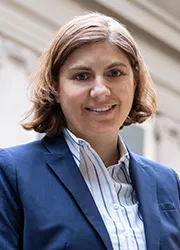
Elizabeth Mohr is a Clinical Associate Professor at the Simon Business School. Her expertise focuses on Information Systems, with teaching responsibilities in analytics and data management. She instructs courses such as Spreadsheet Modeling Using Excel, Prescriptive Analytics with Python/R, and Data Management/Descriptive Analytics for Business. No awards, grants, or research labs are explicitly mentioned in the provided information. Her academic contributions are centered on curriculum development and applied business analytics education.
Steven Chapra is a Research Professor and Professor Emeritus in the Department of Civil and Environmental Engineering at Tufts School of Engineering, Tufts University. He holds a Ph.D. from the University of Michigan and B.S. and M.E. degrees from Manhattan College. His research focuses on water quality modeling, numerical methods, and advanced computer applications in environmental engineering. He has held roles at the U.S. EPA, NOAA, Texas A&M University, and the University of Colorado. His teaching philosophy emphasizes respect for students, professionalism, subject enthusiasm, and fair evaluation. Key awards include Fellowships from the American Society of Civil Engineers and the Association of Environmental Engineering and Science Professors (AEESP). Chapra’s publications span water quality modeling frameworks, climate change impacts, and numerical methods. Recent work addresses dissolved oxygen dynamics, nutrient attenuation in rivers, and algal growth modeling. His research bridges computational tools and environmental challenges, with applications to lake management and river systems.
Lone Leth Thomsen is an Associate Professor at the Department of Computer Science, Aalborg University, affiliated with The Technical Faculty of IT and Design. She is a member of CISS (Center for Embedded Software Systems) and Daisy (Center for Data-intensive Systems). Her research focuses on spreadsheet semantics, parallel programming, formal verification, and programming language design. Key research interests include operational semantics for spreadsheets, concurrency models, and energy-efficient software development. She has participated in projects such as P3: Popular Parallel Programming (2015–2019) and COST Action IC0701 (2008–2012), which addressed formal verification of object-oriented software. Recent work explores sustainable software practices and energy consumption analysis of IT systems. Her publications emphasize spreadsheet semantics, parallel execution optimization, and formal methods. She has collaborated on projects like The Virtual Desktop and Beyond (2006–2009), focusing on service-oriented architectures in farming industries.