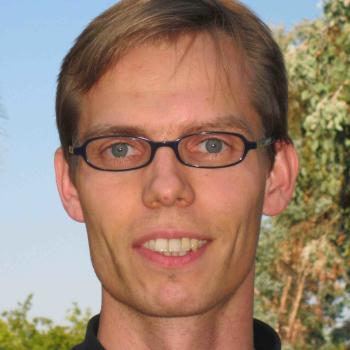
Mika Järvinen serves as Associate Professor in the Department of Energy and Mechanical Engineering at Aalto University, leveraging fundamental sciences—physics, thermodynamics, chemistry, and numerical modeling—to address cross-sector energy challenges. His research spans sustainable bioenergy and inter-linked circular economy systems integrating energy, materials, and environmental considerations across biomass, pulp/paper, metallurgy, and waste-to-energy industries. His expertise centers on sustainable bioenergy and circular economy frameworks, utilizing numerical modeling to optimize combustion engineering and metallurgical processes. By maintaining diverse industrial engagement, he ensures research continuity during economic fluctuations while advancing black liquor spraying technologies and energy-material-environment synergies. This approach enables flexible, physics-based solutions for complex industrial energy conversion problems. Professor Järvinen's 2025 publications reveal a cohesive focus on renewable energy systems operating within planetary boundaries, spanning carbon capture (calcium looping), low-temperature heat engines, and comprehensive textbook development. His work integrates solar, wind, bioenergy, and storage technologies into holistic frameworks that balance technical innovation with ecological constraints, emphasizing system-level sustainability over isolated component optimization. His scientific recognition includes: Best Dissertation Award (2002) from Helsinki University of Technology's Department of Machine Technology for research on black liquor droplet conversion Resonate Award (2015) from Caltech University's Resnick Institute As lead of the Energy Conversion and Systems research group, he directs projects bridging fundamental modeling with industrial applications while developing educational resources for next-generation energy engineers. His laboratory work emphasizes experimental validation of numerical models across combustion, metallurgical, and biomass conversion processes.
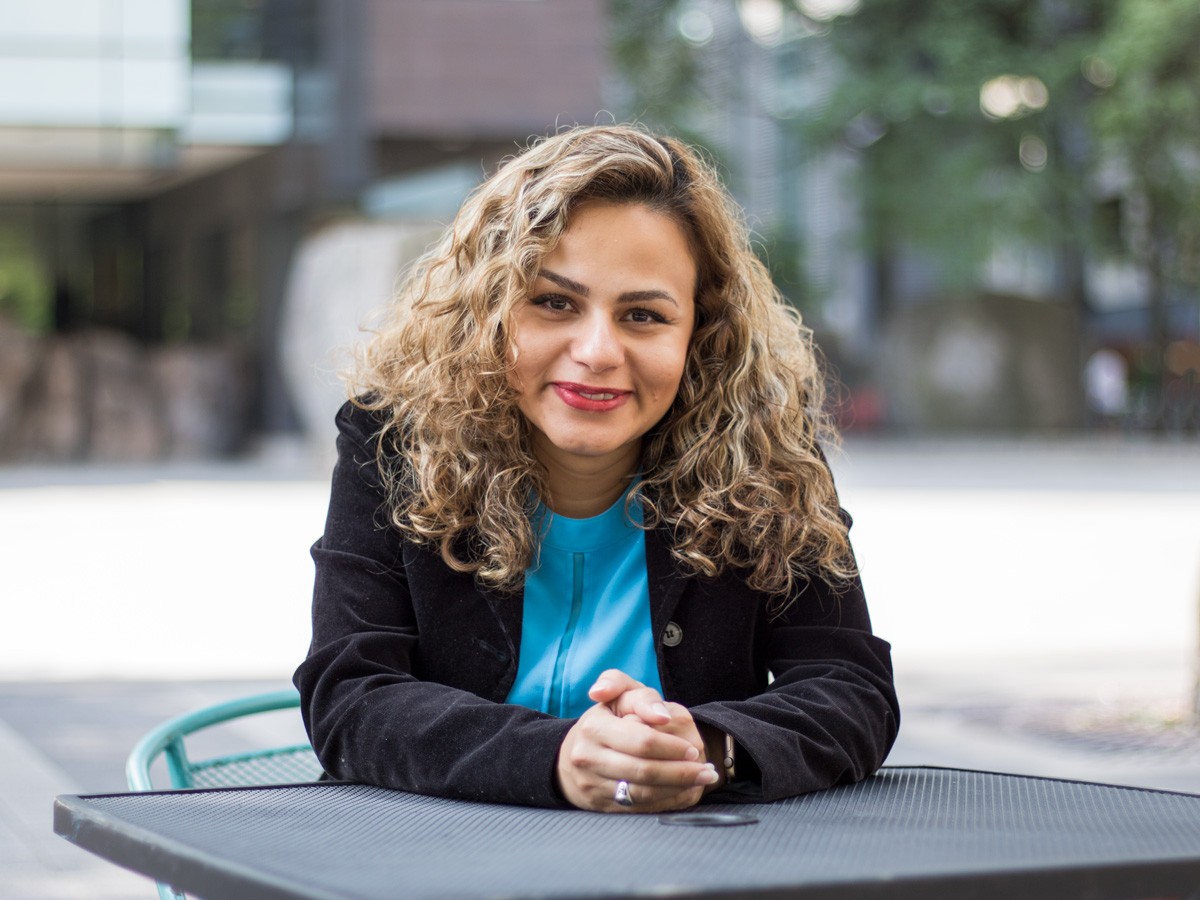
Desiderio Kovar is a Professor at the University of Texas at Austin holding the BFGoodrich Professorship in Materials Engineering and the Distinguished Teaching Professor title within the Department of Mechanical Engineering at the Cockrell School of Engineering. He is affiliated with the Texas Materials Institute, the Center for Electromechanics, and is a core member of the Center for Additive Manufacturing and Design Innovation. Dr. Kovar currently serves as the Associate Chair for Academics for the Mechanical Engineering Department. Dr. Kovar's research focuses on the interface between materials science and engineering and additive manufacturing, with particular expertise in ceramic processing. His work encompasses Advanced Design and Manufacturing, Advanced Materials Science and Engineering, and Nano and Micro-scale Engineering. He teaches undergraduate and graduate classes in the Materials Engineering area, having developed the Materials Science and Engineering minor in 2018, the first minor in Engineering at UT Austin. His recent publications (2023-2025) demonstrate a strong focus on ceramic additive manufacturing processes, particularly Selective Laser Flash Sintering and Micro-Cold Spray technologies. These works explore fundamental mechanisms of high-velocity particle impact, sintering kinetics, and process optimization for ceramic film and part production, reflecting his pioneering work in direct ceramic additive manufacturing without polymer binders. Dr. Kovar has received numerous prestigious awards for his teaching and research: Engineering Foundation Young Faculty Excellence Award (2000) Teaching Excellence Award from the Student Engineering Council (2000) Cockrell School of Engineering's Jack and Maxine Zarrow Family K-16 Teaching Innovation Award (2014) Lockheed Martin Aeronautics Company Award for Excellence in Engineering Teaching (2016) Mechanical Engineering Department's Teaching Award (2016) University of Texas' Outstanding Graduate Advisor (2012) Inducted into the University of Texas at Austin's Academy of Distinguished Teachers (2019) Dr. Kovar has supervised 47 undergraduate students, 21 MS theses, and 17 Ph.D. dissertations, and currently supervises 12 graduate students and one undergraduate student. His research has been generously funded by the National Science Foundation, Los Alamos National Laboratory, Sandia National Laboratory, the Army Research Laboratory, the Office of Naval Research, the US Department of Energy, and various corporate sponsors. In 2013, he founded the Cockrell School's Longhorn Maker Studio, which evolved into Texas Inventionworks. Dr. Kovar leads the Kovar Research Group which currently includes multiple graduate students and postdoctoral researchers working across three main research thrusts: Additive Manufacturing of Ceramics by Selective Laser Flash Sintering, Additive Manufacturing of Ceramics by Indirect Selective Laser Sintering, and Direct Writing of Patterned Films and Devices using the Micro-cold Spray Process.
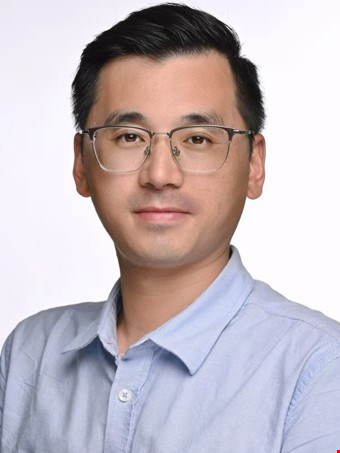
Xianguo Li is a Professor in the Department of Mechanical and Mechatronics Engineering at the University of Waterloo, Canada. He holds prestigious fellowships including Fellow of the Canadian Academy of Engineering (FCAE), Fellow of the Engineering Institute of Canada (FEIC), and Fellow of the Canadian Society for Mechanical Engineering (CSME). His primary research focuses on thermal fluid science, energy systems, and fuel cell technology, with a strong emphasis on green energy solutions. **Education**: 1989: Doctorate in Mechanical Engineering, Northwestern University, USA 1986: Master's in Mechanical Engineering, Northwestern University, USA 1982: Bachelor's in Thermal Energy Engineering, Tianjin University, China **Research Interests**: His work spans fuel cells, spray dynamics, fluid dynamics, heat and mass transfer, power generation, and renewable energy systems. He leads the Fuel Cell and Green Energy Lab, advancing innovations in energy storage, propulsion systems, and sustainable technologies. **Awards**: Outstanding Performance Award (University of Waterloo, 2007) Frank Walk Service Award (2001) Best Paper Award (2003) Recipient of the Simpson Fellowship (1988) **Advising & Grants**: He supervises graduate students and research associates in projects funded by NSERC, Auto 21, CFI, and industry partners. His lab collaborates on fuel cell durability, thermal management, and green energy policy initiatives. **Editorial Roles**: Founding Editor-in-Chief of the International Journal of Green Energy , Field Chief Editor of Frontiers in Thermal Engineering , and serves on dozens of editorial boards. He chairs major conferences like the International Green Energy Conference and the World Fuel Cell Conference series.
Bart Somers is an Associate Professor at Eindhoven University of Technology , affiliated with the Department of Mechanical Engineering . His primary affiliations include the Power & Flow Group and his own research group, Group Somers , alongside cross-cutting roles in EAISI (Eindhoven Artificial Intelligence Systems Institute) and EIRES (Eindhoven Research on Innovation and Sustainability in Energy Systems). He focuses on advancing combustion science , sustainable fuels , and engine efficiency , leveraging computational fluid dynamics (CFD) and experimental methods. His research interests span alternative fuels (hydrogen, bio-oils, biofuels), high-pressure spray combustion , and low-emission engine design . He investigates combustion optimization through CFD tools like large-eddy simulation (LES) and flamelet-generated manifolds (FGM), emphasizing fuel stratification , ignition dynamics , and emission control . His work bridges experimental diagnostics (e.g., spray visualization, OH* chemiluminescence) and numerical modeling. Academically, he teaches courses such as Thermodynamics , Clean Engines and Future Fuels , and Sustainable Vehicles , integrating practical projects into curricula. His educational activities emphasize interdisciplinary sustainability and innovation, including honors programs focused on professional development. Recent publications highlight his contributions to hydrogen injection strategies, biofuel applications in genset engines, and optimization of diesel-biofuel blends. His work aligns with global sustainability goals, addressing energy transition challenges through advanced combustion technologies.
Kareem Ahmed is a Professor in the Department of Mechanical and Aerospace Engineering at the University of Central Florida (UCF) and a faculty member of the Center for Advanced Turbomachinery and Energy Research. He leads research in advanced propulsion and energy systems, focusing on high-speed turbulent combustion, detonations, and hypersonic technologies. His work includes groundbreaking projects in detonation-based propulsion for hypersonic flight and power generation, supported by over $17 million in grants from NASA, AFOSR, and DOE. Education: Ph.D. and M.S. in Mechanical Engineering, University at Buffalo (SUNY) B.S. in Mechanical Engineering, New York State College of Ceramics at Alfred University Research Interests: Ahmed’s expertise spans detonation dynamics, supersonic reacting flows, flow-flame control, and advanced laser diagnostics . His team explores innovations like rotating detonation engines (RDEs) and scramjet combustion systems, with applications in aerospace defense and space exploration. Awards and Recognition: AIAA Associate Fellow American Chemical Society Doctoral New Investigator Award AFOSR Summer Faculty Fellowship UCF Trustee Chair (2025–2030) Grants & Advising: PI of over $17M in research funding; mentors 145+ doctoral, master’s, and undergraduate students. Collaborates with industry leaders like GE, Aerojet Rocketdyne, and Pratt & Whitney. Labs & Teams: Director of UCF’s Center of Excellence in Hypersonic and Space Propulsion, advancing technologies for 15-minute transcontinental flight and clean rocket fuels.
Oliver Schmitz is a Professor in the Department of Nuclear Engineering & Engineering Physics at the University of Wisconsin-Madison, where he leads research in plasma edge physics for magnetic confinement fusion and next-generation particle accelerators. His work bridges experimental plasma science, computational modeling, and diagnostic development with applications in both tokamaks and stellarators. Education: PhD (2006), Heinrich-Heine-Universität Diploma (2003), Rheinische Friedrich-Wilhelms-Universität Professor Schmitz's research focuses on 3D plasma edge transport phenomena, plasma-wall interactions, and helicon plasma generation for wakefield accelerators. His group employs advanced computational tools like EMC3-EIRENE for 3D plasma edge modeling and develops active spectroscopic diagnostics to measure plasma parameters through atomic emission analysis. Key themes include resonant magnetic perturbation effects in tokamaks, inherent 3D physics in stellarators, and high-density plasma sustainment for accelerator applications. He actively develops atomic models to interpret spectroscopic data and operates helicon plasma test stands for fundamental process studies. Recent publications reveal strong emphasis on experimental-computational integration for fusion boundary physics, with significant contributions to ITER divertor solutions, stellarator exhaust optimization, and plasma-facing materials. The work shows growing focus on wakefield accelerator diagnostics through helicon plasma sources and advanced spectroscopy, alongside persistent innovation in 3D modeling of plasma-material interfaces. Scientific Awards: 2020 Thomas and Suzanne Werner Chair Professorship 2018 UW Madison Teaching Academy Fellow 2017 ITER Science Fellowship & Vilas Mid-Career Award 2015 DOE Early Career Award & NSF CAREER Award 2011 Torkil Jensen Award (General Atomics) 2007 Günther-Leibfried-Preis (Jülich) Professor Schmitz directs multiple DOE/NSF-funded research programs including his UW Madison laboratory and AWAKE project contributions at CERN. He mentors graduate students through NE 890/990 thesis research courses and has developed nationally recognized K-12 outreach including the "Plasma Show" for elementary schools and "Plasma Academy" for high-school educators developing AP Physics curriculum modules. His leadership extends to university governance through the Kaufman seminar on academic leadership. His research group operates helicon plasma test stands and computational facilities for EMC3-EIRENE simulations, with current efforts focused on high-density plasma sources for accelerators and resilient divertor solutions for stellarators. The group maintains strong international collaborations with ITER, CERN, and major fusion facilities worldwide.
Terese Løvås serves as Vice Dean of Research and Innovation at the Faculty of Engineering, Norwegian University of Science and Technology (NTNU), where she leads strategic development of research and innovation activities. She concurrently holds the position of Professor of Combustion and Thermodynamics within the Department of Energy and Process Engineering. Her leadership responsibilities include oversight of Centers of Excellence, Horizon Europe projects, and PhD researcher training. Her research focuses on combustion engineering and alternative fuel technologies , particularly investigating ammonia and hydrogen combustion for zero-emission engines, biomass gasification processes, and reactive multiphase flow modeling. She heads the Engine Lab at NTNU and teaches Thermodynamics, Heat, and Combustion courses. Her work bridges theoretical modeling with experimental validation in sustainable energy systems. Løvås actively contributes to major research initiatives including LowEmission (SFI center), ACTIVATE (ammonia-powered agricultural vehicles), AMAZE (ammonia zero-emission), and CAHEMA (marine ammonia/hydrogen engines). Her publications reveal strong trends in ammonia combustion chemistry , emissions reduction , and advanced computational modeling for sustainable fuel systems, with increasing focus on nitrogen oxide formation mechanisms and dual-fuel strategies. Member of the Board of Directors, Combustion Institute (2022–present) Joint Editor, Proceedings of the Combustion Institute (2019–present) Alumni Fellow in Engineering, Churchill College, Cambridge University As Vice Dean, she manages NTNU's Research and Innovation Committee and represents the faculty in NTNU's Research and Innovation Committee. She supervises multiple PhD candidates and leads international collaborations through projects funded by the Norwegian Research Council, Nordic Energy Research, and EU programs. Her laboratory work focuses on optical engine diagnostics and advanced combustion testing. Løvås maintains active industry engagement through her leadership in the ComKin Research Group and membership in the Institute of Physics and Scandinavian-Nordic Section of the Combustion Institute. Her current work emphasizes practical implementation of ammonia-fueled engine technologies for marine and agricultural applications.
Dr. Mehmet Öztürk is a Professor in the Department of Electrical and Computer Engineering at North Carolina State University. His research focuses on nanoelectronics, energy harvesting, and advanced materials for flexible electronics, particularly thermoelectric devices for body heat energy conversion. He holds a Ph.D. in Electrical Engineering from NC State, a Master’s from Michigan Technological University, and a Bachelor’s from Bogazici University. Dr. Öztürk’s research interests span Physical Electronics, Photonics, and Magnetics, with emphasis on novel materials and processes for thermoelectric generators and wearable technologies. His work includes developing flexible, high-efficiency thermoelectric systems using liquid metal interconnects and graphene-doped elastomers. Recent projects involve aerosol spray deposition techniques for stretchable electronics and optimizing materials for body heat harvesting systems. Key scientific contributions include analytical models for thermoelectric energy extraction, high thermal conductivity composites, and microporous CNT nanocomposites. His work bridges fundamental material science with applied engineering solutions for energy-efficient wearable devices. Awards: 2020 William F. Lane Outstanding Teaching Award 2009 IEEE Fellow for contributions to Si/SiGe epitaxy 2006 IEEE Undergraduate Teaching Award Lab Affiliations: Center for Advanced Self-Powered Systems of Integrated Sensors and Technologies (ASSIST)
Matthias Ihme is a Professor in the Department of Mechanical Engineering and Photon Science Directorate at Stanford University. His research focuses on large-eddy simulation (LES) of turbulent reacting flows, aeroacoustics, combustion-generated noise, numerical methods, and high-order schemes. He holds a Ph.D. from Stanford University (2008), an M.Sc. in Computational Engineering from the University of Erlangen (Germany, 2002), and a Dipl.-Ing. in Mechanical Engineering from Munich University of Applied Sciences (Germany, 2000). His work bridges computational fluid dynamics, combustion science, and photon science, with notable contributions to supercritical fluid dynamics, machine learning integration in fluid simulations, and high-fidelity atmospheric transport modeling. Recent research emphasizes ultrafast cluster dynamics, shock-induced interface behavior, and stochastic ignition mechanisms in advanced fuel systems. Publications highlight interdisciplinary advancements, including physics-informed ML frameworks for reacting flows and experimental studies using X-ray photon correlation spectroscopy. His projects often involve high-performance computing and collaboration with national labs like SLAC.
Carson Slabaugh is an Assistant Professor in the Department of Aeronautics and Astronautics and holds a courtesy appointment in the Department of Mechanical Engineering at Purdue University. His research focuses on advanced propulsion systems, particularly combustion dynamics in rotating detonation engines (RDEs), rocket combustors, and ramjet configurations. He leads studies on high-pressure flames, laser diagnostics, and fuel injection mechanisms. Key research areas include detonation wave propagation, pressure gain combustion, and the application of advanced optical diagnostics (e.g., CARS, PLIF) to study transient phenomena in extreme environments. His work addresses challenges in next-generation propulsion systems, including hydrogen-blend fuels, methane-oxygen rocket ignition, and solid-fuel ramjet performance. Recent studies emphasize geometric optimization of RDEs, fuel injection dynamics under detonation conditions, and the impact of flow parameters on combustion stability. Collaborations involve experimental validation with high-speed imaging and computational fluid dynamics (CFD) modeling to bridge theoretical predictions with real-world performance. Slabaugh’s laboratory develops novel diagnostic tools for megahertz-rate imaging of mixing and combustion processes, advancing understanding of transient flame structures and instability mechanisms. His contributions aim to improve efficiency and operability of propulsion systems for aerospace and terrestrial applications.
Dr. Hadis Zarrin is an Associate Professor in the Department of Chemical Engineering at Toronto Metropolitan University. Her research focuses on multifunctional nanoengineered materials for clean energy storage, environmental remediation, and wearable biosensors. PhD, University of Waterloo (2014) MSc, Iran University of Science and Technology (2008) BSc, Azad University (2004) Dr. Zarrin’s research spans Clean Energy Storage and Conversion , leveraging 2D nanomaterials (e.g., MXene, hBN, rGO) to advance Hydrogen Production , Fuel Cells , Supercapacitors , and Water Treatment . Her work integrates Nanotechnology with Electrochemistry to develop Smart Coatings and Flexible Electronics . Her recent publications (2024–2025) highlight innovations in MXene-hBN composites for energy devices, self-healing coatings , and environmental remediation via nanofibers. These studies emphasize scalable solutions for hydrogen generation , thermal management , and biomedical sensors . NSERC Alexander Graham Bell Canada Graduate Scholarship (2012–2014) Waterloo Institute of Nanotechnology Fellowship (2012–2014) Waterloo President Graduate Scholarship (2012–2014) As a mentor, Dr. Zarrin encourages students to embrace creativity and risk in problem-solving. She leads the Nano-Engineering Laboratory for Energy and Environmental Technologies , fostering interdisciplinary innovation.
Marc Olano is an Associate Professor in the Department of Computer Science and Electrical Engineering at the University of Maryland, Baltimore County (UMBC), and serves as the Associate Dean of Academic Programs and Learning in the College of Engineering and Information Technology. He leads the Computer Science Game Development Track and co-directs the VANGOGH lab. His research focuses on interactive 3D computer graphics, programmable shading, graphics hardware, and surface appearance modeling, with contributions to foundational graphics technologies like procedural shading and normal mapping. Research Interests: Olano’s work spans real-time rendering, GPU algorithms, texture compression, and procedural shading. He has pioneered techniques such as LEAN mapping and variable bitrate texture compression, significantly impacting game development and real-time graphics. His research often explores the intersection of hardware capabilities and algorithmic innovation, with applications in medical visualization, visualization of scientific data, and haptic interaction. Key Contributions: Olano’s accomplishments include pioneering procedural shading on graphics hardware, developing homogeneous rendering techniques, and advancing normal mapping. His work on GPU-based curvature estimation and BT volumes for volume rendering exemplifies his focus on leveraging GPU parallelism for real-time visualization challenges. He has also contributed to standards in shading languages and GPU programming. Teaching & Mentorship: Olano teaches courses in computer graphics, game development, and advanced computer architecture. He mentors students in independent studies and has advised numerous MS theses exploring topics like GPU random number generation, volume rendering, and soft shadow algorithms. His students’ work often bridges theoretical research and practical GPU implementations. Labs & Projects: The VANGOGH lab under his co-direction focuses on advanced visualization and graphics research, including real-time rendering techniques, GPU algorithms, and interactive data visualization. His research collaborations span industry partners like Firaxis Games, contributing to titles such as Civilization V through texture compression innovations.
Professor Dinos Arcoumanis FREng is a distinguished academic at City, University of London, where he has served as Professor since 2000. He previously held academic positions at Imperial College London from 1988-2000, progressing from Lecturer to Reader and ultimately to Professor of Internal Combustion Engines. At City University, he has held significant leadership roles including Head of the Aeronautical, Civil and Mechanical Engineering Department, Dean of the School of Engineering & Mathematical Sciences, Pro-Vice-Chancellor for Research and International Links, and Deputy Vice-Chancellor (Research & International) until August 2014. He remains actively involved in research and academic leadership, currently serving as Director of the International Institute of Cavitation Research and Coordinator of the World Cities World Class (WC2) University Network. Professor Arcoumanis holds undergraduate and graduate degrees in Physics, Engineering and Mechanical Engineering from the Aristotelian University of Thessaloniki, Greece (1973), the University of California at Irvine, USA (1980), and the Imperial College of Science, Technology and Medicine, London (1984), respectively. His primary research focuses on internal combustion engines, with specific expertise in combustion, exhaust emissions, and engine lubrication. Professor Arcoumanis has pioneered the application of laser diagnostics and computational fluid dynamics to study internal combustion engines, with particular interest in automotive fuels including renewable and alternative fuels. His work bridges fundamental fluid mechanics with practical engine applications, addressing critical environmental engineering challenges in the transportation sector. His recent research has expanded into cavitation phenomena, fuel cell technology, and the development of sustainable propulsion systems for future transportation needs. Professor Arcoumanis's extensive publication record demonstrates a clear evolution in research focus, beginning with fundamental studies of diesel engine combustion and progressing toward advanced fuel injection systems, alternative fuels, and environmental sustainability. His work consistently bridges theoretical fluid mechanics with practical engine applications, with recent emphasis on cavitation phenomena in fuel systems and the integration of renewable energy technologies with traditional combustion systems. The interdisciplinary nature of his research connects mechanical engineering principles with environmental science, materials science, and energy systems engineering. Professor Arcoumanis has received numerous prestigious awards and honors throughout his career: 1991 Dugald Clerk Prize of IMechE 1995 and 1998 Arch T. Colwell Merit Award of the Society of Automotive Engineers Elected Fellow of the Royal Academy of Engineering (FREng) in 2001 Honorary doctorate from St. Petersburg State Polytechnic University of Russia (2009) Professor Arcoumanis has made significant contributions to academic leadership and professional service. He founded the International Journal of Engine Research (JER) in 1999 and serves as its Editor for Europe. He has coordinated the World Cities World Class (WC2) University Network since 2010, which brings together international institutions in major cities to address research challenges in transport, global health, business, and cultural industries. He has also served as a consultant to Brussels (DG17) and Bechtel Ltd. on the Auto-oil II European Programme (1998-2000), and was appointed Ambassador-at-Large of the Hellenic Republic for Energy Policy and New Technologies in September 2012. His research has been supported by various funding bodies including the Lloyd's Register Educational Trust, which funds the International Institute of Cavitation Research that he directs. Professor Arcoumanis leads the International Institute of Cavitation Research, a partnership between City University London, Loughborough University, and Delft University of the Netherlands. He has established collaborative research teams focused on engine combustion, fuel injection systems, and alternative propulsion technologies. His research group has developed advanced experimental facilities for studying fuel spray dynamics, combustion processes, and cavitation phenomena in engine systems. These teams regularly collaborate with automotive industry partners and international research institutions to address cutting-edge challenges in engine technology and sustainable transportation.
Luc Deike is an Associate Professor at Princeton University, jointly appointed in the Department of Mechanical and Aerospace Engineering and the High Meadows Environmental Institute. His research focuses on multi-phase turbulent systems involving waves, bubbles, and droplets, with applications to environmental science and renewable energy. Education: Ph.D. in Physics, Université Paris Diderot, France (2013) BSc and MSc in Physics, Ecole Normale Supérieure and Université Pierre et Marie Curie, Paris (2006–2010) Research Interests: Dr. Deike's work integrates laboratory experiments and numerical simulations to study fundamental fluid dynamics in environmental contexts. Key areas include ocean wave breaking, air-sea gas exchange, bubble fragmentation in turbulence, sea spray generation, and offshore wind energy. His research bridges nonlinear wave dynamics, climate science, and sustainable materials. Publications: Recent work (2023–2025) emphasizes turbulence modeling, bubble-mediated gas transfer, wave-current interactions, and aerosol physics. Articles consistently explore interfacial phenomena, climate parameterizations, and high-fidelity simulations of oceanic processes. Awards: François Frenkiel Award, APS Division of Fluid Dynamics (2023) Milton Van Dyke Award, APS Division of Fluid Dynamics (2021) NSF CAREER Award (2019) Alfred Rheinstein Faculty Award, Princeton SEAS (2021) Grants & Labs: Leads the Deike Lab and holds multiple NSF/NASA grants (e.g., $1.2M for bubble dynamics in turbulence, 2023–2026). Projects include wind-wave-bubble gas exchange modeling and offshore wind farm optimization. Collaborates with NOAA GFDL and international partners on climate-scale parameterizations.
Professor Xinyan Wang is a leading academic at Brunel University London, affiliated with the College of Engineering, Design and Physical Sciences and the Department of Mechanical and Aerospace Engineering. He serves as a Principal Editor for Fuel (Elsevier) , editorial board member for multiple journals, and committee member for Hydrogen Europe Research and UK Chinese Society of Automotive Engineering. PhD, Power Machinery and Engineering, Tianjin University MSc, Power Machinery and Engineering, Tianjin University BEng, Thermal Energy and Power Engineering, Jiangsu University His research focuses on low-carbon fuel technologies for internal combustion engines, including hydrogen/ammonia combustion, biofuels, and nanobubble applications. He develops advanced hybrid electric systems and specializes in engine design optimization for alternative fuels. His work spans experimental investigations, computational modeling (CFD/MD/Chemkin), and optical diagnostics of combustion processes. Recent publications (2024-2025) highlight trends in hydrogen combustion analysis, nanofluid applications, dual-fuel strategies, and 2-stroke engine optimization. Key themes include emission reduction, ignition process decoupling, and integration of machine learning with molecular simulations for fuel characterization. UKRI Future Leaders Fellowship (2020) Editorial roles at Fuel , Highlights of Vehicles , and MDPI journals BSI committee member for fine bubble technology He supervises research on topics including zero-carbon fuel combustion, numerical simulations (chemical kinetics, CFD), and optical diagnostics for spray/combustion analysis. His teaching includes vehicle propulsion systems and major engineering projects at undergraduate/graduate levels.