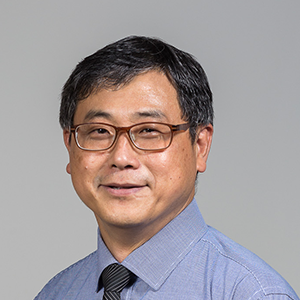
Rajesh Krishna BALAN is a Full-Time Professor at the School of Computing and Information Systems (SCIS) at Singapore Management University (SMU) . His research focuses on Human-Machine Collaborative Systems , Pervasive Sensing , and Health & Wellbeing technologies. Based in Singapore, he leverages mobile computing to address urban sustainability and quality-of-life challenges. PhD from Carnegie Mellon University (2006) Specializes in WiFi sensing , VR/AR , and health monitoring Advises PhD students in areas like urban mobility , empathetic design , and cyber-physical systems Beyond academia, BALAN's work bridges ubiquitous computing and public health , with applications in ageing populations , mental health analytics , and smart city optimization . His recent publications highlight cross-disciplinary approaches to sleep analysis , group behavior modeling , and contactless physiological sensing . BALAN actively contributes to educational technology through projects like Technology-Enhanced Learning frameworks. He is also a mentor in collaborative research areas including biomedical informatics and lifestyle monitoring , with a focus on mobile GPU optimization and low-power systems .
Jiang Kan is a Lecturer at the Department of Computer Science, National University of Singapore. He earned his Ph.D. in Computer Science from NUS in 2023, following an MComp (2017) and B.Sc. (1994) from NUS and Shanghai Jiao Tong University respectively. His teaching portfolio includes courses like Introduction to Computing , Introduction to Programming , Database Systems and Management , and Systems Programming . Education: Ph.D., Computer Science, National University of Singapore, 2023 M.Comp., National University of Singapore, 2017 B.Sc., Shanghai Jiao Tong University, 1994 Research Focus: Jiang Kan specializes in sports analytics, integrating computer vision and probabilistic modeling to analyze sports strategies, player dynamics, and broadcasting data. His work includes tennis and soccer strategy analysis , event recognition in sports videos , and injury prediction models . Publication Trends: Recent articles (2023-2025) explore hybrid approaches combining deep learning with probabilistic model checking for sports analytics. Key contributions include automated court detection , fine-grained event analysis , and dynamic team strategy modeling in tennis and soccer. Teaching: He teaches foundational and advanced courses in programming, computer organization, software engineering, and databases to both full-time and part-time students.
Dong Jin Song is a full Professor at the National University of Singapore's School of Computing, Department of Computer Science. He joined NUS in 1998 and was promoted to Professor in 2016 after serving as Associate Professor (2005) and Assistant Professor. He has held various leadership roles including Deputy Head of CS Department (2023-2024), NUS Senate Member (2020-current), and Assistant Dean (Graduate Office, SoC). PhD, University of Queensland, Australia (1993-1995) BInfTech with First Class Honours, University of Queensland, Australia (1989-1992) - Major in Software Engineering Professor Dong's research spans formal methods, safety and security systems, probabilistic reasoning, sports analytics, and trusted machine learning. He is best known for co-founding the PAT verification system which has attracted thousands of registered users from over 150 countries and won the 20-year ICFEM Most Influential System Award in 2018. He also co-founded 'Silas: Trusted Machine Learning' and the Dependable Intelligence company. His work bridges formal verification with practical applications in security, AI, and even sports analytics where he developed Markov Decision Process models for tennis strategy analysis. His recent publications show a strong trend toward integrating formal methods with modern AI systems, particularly focusing on trustworthy AI, LLM verification, and security applications. The research spans multiple high-impact venues including ICML, NeurIPS, IEEE Transactions, and top security conferences like USENIX Security, reflecting his interdisciplinary approach that combines formal verification with machine learning, security, and practical applications. Professor Dong has received numerous honors including the ACM SIGSOFT Distinguished Paper Award for ICSE 2020, the 20-Year ICFEM Most Influential System Award (2018), and being named a Fellow of the Institute of Engineers Australia (2018). His awards reflect both theoretical contributions to formal methods and practical impact on software engineering. ACM SIGSOFT Distinguished Paper Award for ICSE 2020 NUS Research Recognition Award (2020) Fellow of Institute of Engineers Australia (2018) 20-Year ICFEM Most Influential System Award (2018) Best Paper Award at ICECCS (2015 and 2012) Professor Dong has successfully supervised 33 PhD students, many of whom have become tenured faculty members at leading universities worldwide including The University of Auckland, Aston University, Singapore Management University, and Monash University. His students have gone on to successful careers in both academia and industry at organizations like Google, Apple, HP Research Lab, and IBM. He has served on the editorial boards of prestigious journals including ACM Transactions on Software Engineering and Methodology and has been active in numerous conference organizing committees. Through his research group and commercial ventures (Dependable Intelligence), Professor Dong has built a strong team focused on formal verification, trusted AI systems, and practical applications of model checking. His work has evolved from foundational formal methods research to cutting-edge applications in AI safety and security, maintaining a consistent thread of rigorous verification throughout his career.
NG Teck Khim is an Associate Professor (Practice Track) at the School of Computing, National University of Singapore (NUS). He holds a Ph.D. from Carnegie Mellon University (1999) and M.Sc./B.Eng. degrees from NUS (1992/1988). His academic career bridges both academia and industry with significant experience at DSO National Laboratories and Media Development Authority. Education: Ph.D. (CMU), M.Sc. & B.Eng. (NUS) Leadership: Vice-Dean, Industry Relations at NUS Computing Research Focus: Geometrical computer vision, signal processing, and their applications in Markerless AR, sports analytics, and image forensics. His work also explores audio signal processing and military technology applications. Publication Trends: Recent works emphasize multimodal learning, adversarial attack defenses, medical imaging, and efficient neural architectures. Key themes include distribution regression, self-supervised frameworks, and video recognition optimization. Scientific Awards: NUS School of Computing Faculty Teaching Excellence Award (AY14/15, AY15/16, AY16/17) NUS School of Computing Teaching Honours Roll (AY17/18) NUS Annual Teaching Excellence Award (2016/17) Teaching & Industry Contributions: He serves as Vice-Dean for Industry Relations, actively shaping academic-industry partnerships. Previously, he led the Signal Processing Lab at DSO National Laboratories Singapore, focusing on defense applications of image processing and computer vision.