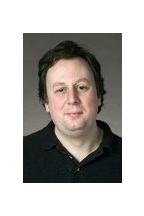
Paul Ward is an Associate Professor in the Department of Electrical and Computer Engineering at the University of Waterloo and a faculty fellow at the IBM Centre for Advanced Studies. He holds a PhD (2002) and MASc (1993) from Waterloo and a BScE (1998) from the University of New Brunswick. His research focuses on distributed systems management, dependable systems, autonomic computing, wireless networks, and IoT. Key areas include fault detection in web services, service-oriented networking, and optimization of wireless mesh networks. Ward's publications span computer networks, cognitive science, and sports analytics, reflecting interdisciplinary applications of computational methods. He holds two patents in mobile web services and fault resolution.
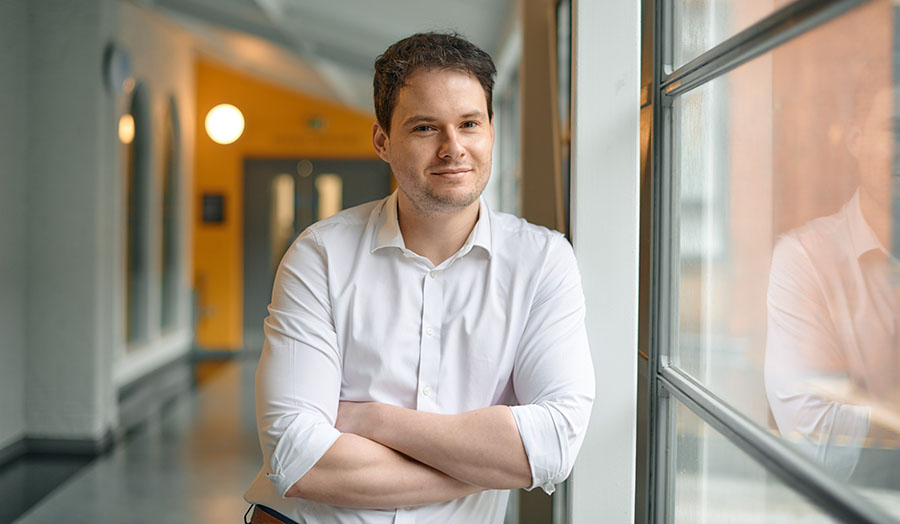
Dr. Mark Thompson is a Senior Lecturer in Psychology and Researcher of Sport Psychology at London Metropolitan University's School of Social Sciences and Professions. He holds a PhD from the University of Hull and is a Fellow of the Higher Education Academy (FHEA). His academic work bridges sport psychology, healthcare rehabilitation, and youth athlete development. Dr. Thompson's education includes a PhD in Psychology from the University of Hull. His research focuses on emotional processes in elite athletes, doping propensity in youth sports, and post-COVID-19 patient rehabilitation. Notable projects include NHS-funded studies on telerehabilitation and collaborations with the International Olympic Committee and World Anti-Doping Agency. Research Interests: Psychophysiological responses to stress in sports Emotional regulation strategies among athletes Anti-doping education and youth athlete behavior Telehealth applications in post-hospitalization recovery His publications emphasize qualitative methodologies, exploring topics like athlete performance under stress, doping prevention programs, and healthcare professional perspectives on self-management approaches. Awards: Fellow of the Higher Education Academy (FHEA). Dr. Thompson has delivered presentations at major conferences such as the American College of Sports Medicine and contributed to media discussions on doping in elite sport via LoveSport Radio. His teaching spans foundational psychology to advanced modules like cognition and behavior, often serving as module leader.
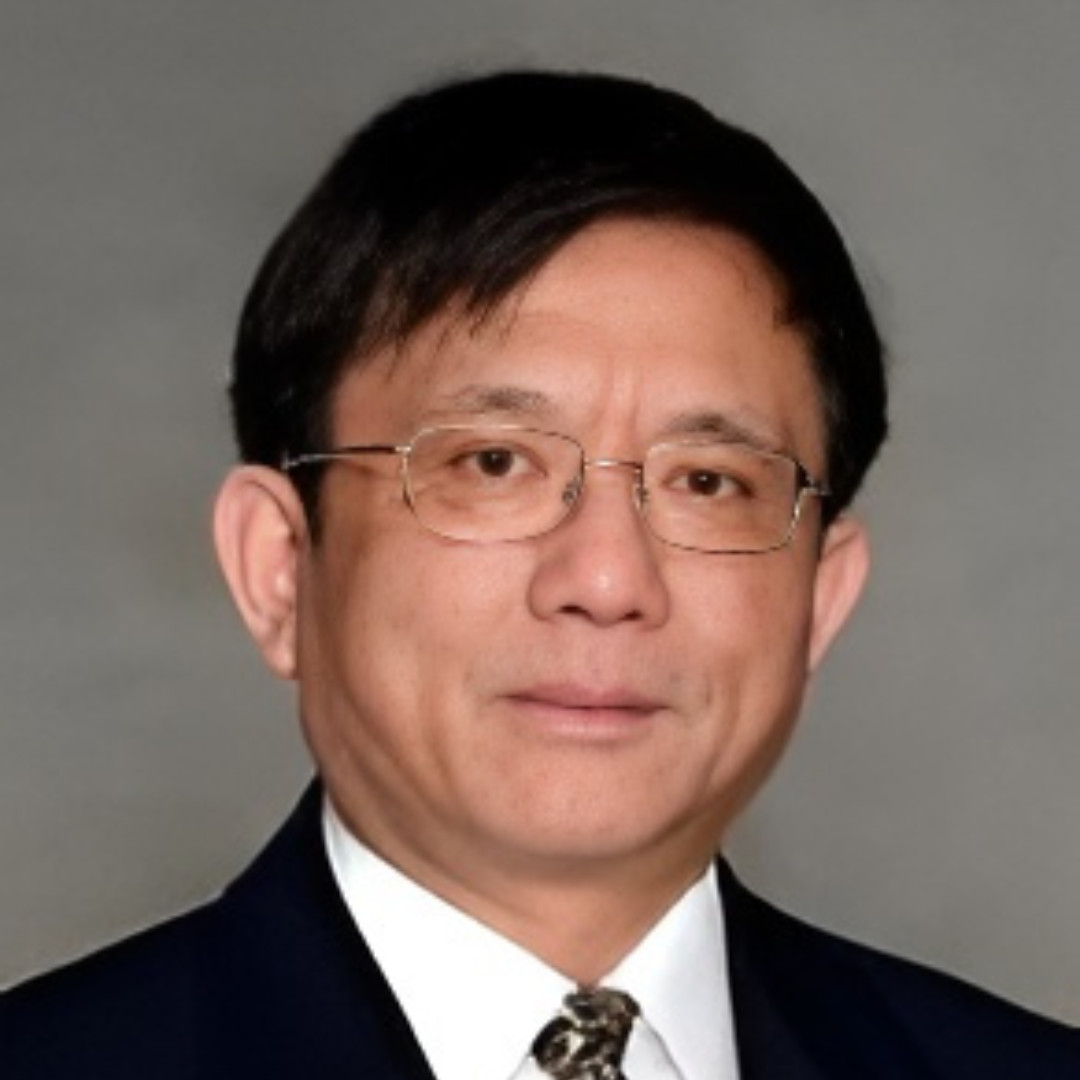
Dr. Yuping He is a Professor in the Department of Automotive and Mechatronics Engineering at the University of Ontario Institute of Technology (UOIT). He holds a PhD in Mechanical Engineering from the University of Waterloo (2002) and has extensive academic and industry experience, including postdoctoral fellowships at the University of Windsor and University of Waterloo. His research focuses on autonomous driving, vehicle dynamics, chassis design, and active safety systems, with expertise in modeling and simulation techniques. Education: PhD (Mechanical Engineering), University of Waterloo, 2002 MASc (Automotive Engineering), Tsinghua University, China, 1991 BASc (Automotive Engineering), Hubei Automotive Industries Institute, China, 1985 Research interests include automated design synthesis, multidisciplinary optimization, and driver-hardware-in-the-loop simulations. He has contributed to advancements in heavy vehicle stability control, trailer steering systems, and energy-saving strategies for steer-by-wire vehicles. His work bridges mechanical systems, control engineering, and real-time simulation technologies. Awards include the 2010 Research Excellence Award from UOIT’s Faculty of Engineering and Applied Science, and a nomination for the Governor-General’s Gold Medal (2003). His publications span journals like Vehicle System Dynamics and ASME Journal of Computational and Nonlinear Dynamics , with a focus on improving vehicle safety and performance through advanced control strategies. Advising and Grants: Dr. He has advised student teams in capstone projects, including the 2010 FEAS Capstone Design Competition-winning team. His research integrates industrial collaboration, as seen in roles like Senior Product Engineer at American Axle & Manufacturing (2005). His work emphasizes practical applications in automotive and mechatronic systems.
Dr. Thilina Halloluwa is a Teaching Focused Lecturer in the Department of Human-Centred Computing at The University of Queensland (UQ). He holds a PhD in Human-Computer Interaction from Queensland University of Technology (2019) and a Computer Science undergraduate degree from the Sri Lanka Institute of Information Technology. With over 15 years of academic and industry experience, his research emphasizes real-world impact in education technology, financial inclusion, smart agriculture, and HCI. Educational Background: PhD in Human-Computer Interaction, Queensland University of Technology (2019) Bachelor of Computer Science, Sri Lanka Institute of Information Technology Research Interests: Education for All: Leveraging technology to enhance collaborative learning and social experiences in education. Human Money Interaction: Designing ethical AI solutions for financial services, particularly for underserved communities. Smart Agro: Developing AI-driven tools for crop disease detection, yield optimization, and precision agriculture. Software Project Estimation: Improving effort estimation accuracy through explainable AI (Metrix project). Key Contributions: Developed UrbanAgro (tomato disease detection) and BellCrop (bell pepper disease datasets). Pioneered Dhana Labha , a financial management tool for rural Sri Lankan communities. Advanced online exam proctoring systems for low-resource settings. Previous Roles: Lecturer at University of Sydney (2023) Senior Lecturer at University of Colombo (2013–2023) Lab/Team Affiliations: Smart Agro Project: AI-driven agricultural solutions Metrix Initiative: Software project estimation frameworks
Konstantinos Pelechrinis is an Associate Professor in the Department of Informatics and Networked Systems at the University of Pittsburgh's School of Computing and Information. He holds a Ph.D. in Computer Science from the University of California, Riverside. His research focuses on network science, urban informatics, and sports analytics. He has been recognized with the Army Research Office Young Investigator Award for his contributions. Education: Ph.D. in Computer Science, University of California, Riverside Research Interests: Urban mobility patterns and infrastructure analysis Sports performance quantification and strategy Data-driven decision-making in transportation systems Network science applications in social and urban systems His recent work explores topics such as implicit biases in sports refereeing, anomaly detection in NFT markets, and optimizing bike-sharing systems using predictive models. He also investigates urban infrastructure resilience through projects like the Epui platform for experimental urban informatics. Awards: Army Research Office Young Investigator Award He contributes to academic outreach through courses like TELCOM2125 (Network Science and Analysis) and collaborates on initiatives like the Healthy Ride Pittsburgh bike-sharing study. His lab focuses on bridging theoretical models with real-world urban and sports datasets.
Jonathan Hauenstein is the Robert and Sara Lumpkins Collegiate Professor in the Department of Applied and Computational Mathematics and Statistics at the University of Notre Dame, serving as Department Chair. He holds a Ph.D. from Notre Dame (2009) and M.S. from Miami University (2005). His research focuses on numerical algebraic geometry and computational methods for solving nonlinear equations, implemented in the Bertini software package. Applications span engineering, ecology, sports science, and machine learning. Education: Ph.D., Applied and Computational Mathematics, University of Notre Dame (2009) M.S., Mathematics, Miami University (2005) Research Interests: Development of numerical algorithms for polynomial systems, real algebraic geometry, and scientific computing. Key areas include homotopy continuation methods, parameter space decomposition, and applications in mechanism design, ecological modeling, and sports biomechanics. His work bridges theoretical mathematics with practical computational tools. Awards: Sloan Research Fellowship DARPA Young Faculty Award Army Research Office Young Investigator Award Office of Naval Research Young Investigator Award College of Science Research Award Advising & Grants: Advised numerous undergraduates, graduate students, and postdoctoral researchers. Active in securing grants for computational mathematics projects, including NSF-funded initiatives. His work emphasizes interdisciplinary collaboration between mathematics and engineering. Labs/Teams: Leads computational algebraic geometry research groups at Notre Dame, focusing on software development (e.g., Bertini) and numerical methods innovation.
Dr. Jose Pino Ortega is an Associate Professor in the Department of Physical Activity and Sport at University of Murcia's Faculty of Sports Sciences. As Research Director of the Chair of Education, Activity and Cancer, he specializes in sports performance analysis and applied sports technology. His research focuses on developing and validating tracking systems for athlete monitoring across various sports. Recent publications examine performance indicators in paralympic football, wearable sensor validation for beach volleyball, and physiological demands in extreme sports.
Dr. Bradley Schoenfeld is a Professor of Exercise Science at Lehman College, serving as Graduate Director of the Human Performance and Fitness program. He previously acted as Sports Nutritionist for the New Jersey Devils hockey team. His research focuses on the effects of exercise on body composition, particularly muscle hypertrophy and fat loss, along with related nutrition interventions. Schoenfeld has authored over 300 peer-reviewed papers and the influential textbook Science and Development of Muscle Hypertrophy . He has received notable awards including the 2016 Dwight D. Eisenhower Fitness Award and 2018 NSCA Young Investigator of the Year. His work examines muscular adaptations from exercise variables manipulation, body composition changes, and supplementation effects. Key research themes include resistance training protocols, load progression strategies, and the physiological mechanisms underlying muscle growth. Education: Doctoral degree in Exercise Science Key Affiliations: National Strength and Conditioning Association (NSCA Fellow) Publications consistently address practical applications of resistance training science, emphasizing evidence-based approaches to optimize muscle development. His studies frequently explore training variables like volume, frequency, intensity, and rest periods. Grants and collaborations have supported investigations into deload strategies, isometric training effects, and nutritional strategies for hypertrophy. Labs/Teams: Conducts research through Lehman College's Human Performance Lab Future Work: Continuing exploration of training variables optimization and nutritional ergogenic aids
Rajesh Krishna BALAN is a Full-Time Professor at the School of Computing and Information Systems (SCIS) at Singapore Management University (SMU) . His research focuses on Human-Machine Collaborative Systems , Pervasive Sensing , and Health & Wellbeing technologies. Based in Singapore, he leverages mobile computing to address urban sustainability and quality-of-life challenges. PhD from Carnegie Mellon University (2006) Specializes in WiFi sensing , VR/AR , and health monitoring Advises PhD students in areas like urban mobility , empathetic design , and cyber-physical systems Beyond academia, BALAN's work bridges ubiquitous computing and public health , with applications in ageing populations , mental health analytics , and smart city optimization . His recent publications highlight cross-disciplinary approaches to sleep analysis , group behavior modeling , and contactless physiological sensing . BALAN actively contributes to educational technology through projects like Technology-Enhanced Learning frameworks. He is also a mentor in collaborative research areas including biomedical informatics and lifestyle monitoring , with a focus on mobile GPU optimization and low-power systems .
Ashish Thatte serves as Associate Professor of Operations Management at Gonzaga University, teaching undergraduate courses including Operations Management (OPER 340), Lean Thinking (OPER 347), and Supply Chain Management (OPER 489), alongside graduate courses such as Global Operations (MBUS 640), Lean Thinking (MBUS 648), and Supply Chain Management (MBUS 699). His industry background encompasses manufacturing management and supply chain/logistics roles in multinational corporations. His academic credentials feature a Ph.D. and M.S. from the University of Toledo, complemented by an M.B.A. and B.E. from the University of Pune (India), plus APICS CPIM certification: CPIM, APICS Ph.D., University of Toledo M.S., University of Toledo M.B.A., University of Pune (India) B.E., University of Pune (India) Dr. Thatte's research centers on supply chain responsiveness, competitive advantage, and information systems in operations, with significant extensions into consumer behavior (particularly Gen Z purchasing in beauty care) and healthcare operations (emergency department efficiency and medical procedure cost analysis). His work bridges theoretical frameworks with practical applications across manufacturing, retail, and healthcare sectors. Analysis of his 15 most recent publications reveals three dominant research trajectories: (1) Supply chain responsiveness mechanisms and their competitive impact through supplier networks and modular manufacturing; (2) Cross-cultural consumer behavior examining regional variations in brand perception; (3) Healthcare operations optimization in emergency departments and procedural cost-effectiveness. His interdisciplinary approach connects operations theory with real-world business challenges across automotive, sports analytics, and global consumer markets. No scientific awards were documented in the available information. While the provided materials confirm his teaching responsibilities and publication record, specific details regarding student advisement, research grants, or laboratory affiliations remain undisclosed in the source materials.
Julian Berger is a postdoctoral researcher at the Max Planck Institute for Human Development in the Center for Adaptive Rationality , where he explores how to enhance decision-making through hybrid human-AI systems. He is also a fellow of the Joachim Herz Foundation and has received funding from the Foundation of German Business and the Danish Data Science Academy. Education: M.A. Psychology in Business and Economics, Universidade Catolica Portuguesa (2021) B.A. Politics, Administration and International Relations, Zeppelin Universität (2018) His research spans human-AI collaboration , collective intelligence , and interpretable machine learning . A recurring theme in his work is developing methods to combine human expertise with AI capabilities for accuracy in domains like medical diagnostics , credit scoring , and football analytics . He has authored publications in high-impact venues such as PNAS , Nature Human Behavior , and Science and Medicine in Football . Scientific awards and funding include: Fellowship for interdisciplinary economics, Joachim Herz Foundation (2024) PhD funding from the Foundation of German Business (Stiftung der deutschen Wirtschaft) Research grant from the Danish Data Science Academy His recent article trends emphasize ensembling techniques that leverage complementary human and AI errors, algorithmic fairness, and practical heuristics like Hybrid Confirmation Trees. These works demonstrate significant improvements in diagnostic accuracy and decision cost-efficiency. Beyond academia, Berger works as a consultant and ML engineer with Simply Rational , focusing on interpretable models for financial and sports analytics. His work bridges theoretical research with real-world applications, prioritizing fairness, transparency, and human accountability in AI systems.
Michael C. Hughes ("Mike") is an Assistant Professor in the Department of Computer Science at Tufts University's School of Engineering, where he develops statistical machine learning methods for healthcare applications. His work focuses on building predictive models that extract actionable insights from complex clinical data, including electronic health records and medical imaging. PhD, Computer Science, Brown University (2016) MS, Computer Science, Brown University (2012) BS, Computer Science, Franklin W. Olin College of Engineering (2010) Research interests center on: Bayesian hierarchical models for documents, sequences, and medical images Optimization algorithms for approximate inference Model fairness and interpretability in clinical contexts Semi-supervised learning for medical diagnostics Recent publications demonstrate these capabilities through applications in cardiovascular disease diagnosis, opioid overdose forecasting, and ICU risk prediction. His lab emphasizes reproducibility through open datasets like TMED-2 and open-source tools like BNPy. Grants include NIH R01 funding for heart valve disease detection, NSF CAREER support for model interpretability, and NSF GCR funding for educational uncertainty research. Scientific awards include: NIH R01 Award (PI) for heart valve disease detection (2025) NSF CAREER Award (2024) NSF GCR Grant (2024) Best Poster Award at Time Series Workshop (ICML 2021) Top 10% Reviewer Awards at AISTATS (2023, 2022) Teaching activities include courses on Bayesian Deep Learning, Introduction to Machine Learning, and Statistical Pattern Recognition. He previously served as postdoctoral fellow at Harvard SEAS.
Dr. Andrew Best is an Assistant Professor of Biology at Massachusetts College of Liberal Arts (MCLA), specializing in biological anthropology with a focus on human physiological evolution. His primary research examines the role of sweating in human evolution, contemporary human sweat characteristics, and the metabolic limits of endurance performance. He holds a Ph.D. from the University of Massachusetts (2021), an M.A. from the University of Massachusetts (2016), an M.A. from Quinnipiac University (2006), and a B.A. from Saint Michael’s College (2004). Dr. Best teaches courses including BIOL 101: Biology Seminar for Majors , BIOL 342/343: Anatomy and Physiology , BIOL 440: Exercise Physiology , and BIOL 484: Biomechanics . His research integrates evolutionary biology, thermal physiology, and exercise science to explore how human metabolic and thermoregulatory systems have evolved to support extreme endurance activities. Key projects include studying sweat gland density variation across populations and the physiological constraints of ultra-endurance events. His publications span topics such as ultramarathon energy expenditure, strength training’s impact on endurance, and primate sweat gland evolution. He actively participates in academic conferences and collaborates with researchers globally. No scientific awards are explicitly noted in the provided materials. Dr. Best’s work reflects interdisciplinary approaches to understanding human biological adaptation, with ongoing projects likely extending into nutritional strategies for endurance athletes and comparative analyses of primate thermoregulation systems.
Riccardo Raheli is a Full Professor at the University of Parma , Department of Engineering and Architecture, with a career spanning over three decades in Information and Communication Technologies (ICT). He has served as Chair of the Councils for Telecommunications and Communication Engineering programs, and as representative of the University of Parma in CNIT and its Members' Assembly. Education: Laurea in Electronic Engineering (University of Pisa, 1983), M.Sc. in Electrical and Computer Engineering (University of Massachusetts, 1986), Postgraduate Diploma (Scuola Superiore Sant'Anna, 1987) Key Roles: President of Degree Councils (2002-2018), CNIT Committee Member (2000-2005), Editorial Board member for IEEE Transactions, Springer and MDPI journals His research bridges telecommunications , digital signal processing , and healthcare applications , producing extensive international publications and industrial patents. He has co-authored monographs including Detection Algorithms for Wireless Communications (Wiley, 2004) and LDPC Coded Modulations (Springer, 2009). Recent article trends show interdisciplinary work in automotive stress monitoring (IoT/Matlab-based systems), video processing for healthcare (neonatal seizures, respiratory monitoring), and acoustic field control (microphone virtualization, personal sound zones). His work spans machine learning applications in automotive systems, stochastic acoustic modeling , and power-line communications . Scientific Leadership : Co-Chair for IEEE conferences (ICC 2010, GLOBECOM 2011, ISPLC 2020) Editorial roles in 7+ international journals Grants & Collaborations : Led industrial patents in communications systems Coordinated CNIT Technical Reports series (2025) He teaches Wireless Communications and Digital Signals Laboratory , emphasizing Matlab/Simulink proficiency. His laboratory sessions focus on practical implementation of signal processing algorithms, requiring full software installation on personal devices.
Professor Christian Deutscher is a prominent sports economist at Bielefeld University's Faculty of Psychology and Sport Science, specializing in the Department of Sport Science within Division V - Sport and Business. As both Research Officer and Internationalization Officer, he leads significant work in sports economics, particularly focusing on betting markets, match-fixing detection, and sports integrity. His research has attracted funding from major institutions including the German Research Foundation. Deutscher's research interests span sports economics, betting market efficiency, match-fixing detection, sports management, and the business aspects of professional sports. His work combines advanced statistical modeling with practical applications in sports integrity monitoring. He has extensively analyzed live betting markets, Bundesliga economics, and the impact of technological innovations like VAR in football. His research often examines the intersection of sports performance, economic incentives, and market behavior. Analysis of his recent publications reveals a strong focus on empirical studies of sports betting markets, particularly live and in-play betting dynamics. His work demonstrates sophisticated use of state-space models and other advanced statistical techniques to detect market inefficiencies and potential integrity issues. Deutscher frequently collaborates with statisticians and economists to develop warning systems for match-fixing, with particular attention to German football leagues. His research bridges theoretical economics with practical applications in sports governance. Professor Deutscher actively contributes to the European Sport Economics Association (ESEA), having edited special issues of conference proceedings and serving in editorial capacities. His work has been published in leading journals including Journal of Sports Economics, Economic Inquiry, and Applied Stochastic Models in Business and Industry. As Research Officer for the Faculty of Psychology and Sport Science, Deutscher oversees research initiatives and international collaborations. His current projects include data-based fraud detection in live betting markets, funded by the German Research Foundation across multiple phases. He also serves on various university committees including the Quality Improvement Commission and Examination Board for the Department of Sport Science. Deutscher maintains strong connections with sports organizations and betting industry stakeholders, ensuring his research has practical relevance for sports integrity monitoring. His work on betting market inefficiencies has direct applications for regulatory bodies seeking to protect the integrity of sporting competitions.