Julien Delarue is an Associate Professor in Sensory & Consumer Science at the University of California, Davis. Formerly a Professor at AgroParisTech (Université Paris-Saclay), he specializes in sensory perception, consumer preferences, and contextual influences on food evaluation. His work integrates immersive environments and digital tools to study how context shapes hedonic measures and drives healthy/sustainable food choices. Research Focus: Delarue's studies address sensory determinants of food preferences, leveraging methods like rapid profiling and contextual testing. He explores category labels' impact on consumer expectations, sensory complexity in desserts, and the role of non-verbal evaluation (e.g., facial expressions) in assessing novel products. Leadership: He served as Chair of the French Society for Sensory Analysis (SFAS) and the European Sensory Science Society (E3S), advocating for rigorous methodologies in sensory evaluation. His interdisciplinary approach bridges food science, consumer behavior, and data science. Key Themes: Publications emphasize ecological validity in testing, sensory-led reformulation (e.g., cookies, pizzas), and the interplay between product context and perception. Recent work investigates non-dairy milk labeling, sports nutrition products, and child food preferences.
Kristin Livingston, MD is an Assistant Professor of Orthopedic Surgery at Harvard Medical School and serves as Director of the Orthopedic Trauma Program at Boston Children’s Hospital. She plays key roles in clinical leadership, quality improvement, and education within the department. Education: Dartmouth College (Undergraduate), UCSF School of Medicine (MD), Harvard Combined Orthopedic Residency, Boston Children’s Pediatric Fellowship Professional Engagement: Member of Orthopaedic Trauma Association, POSNA, AAOS; serves on multiple hospital and departmental committees Research Focus: Specializes in pediatric orthopedic trauma, innovative imaging modalities, and family-centered care protocols. Her work addresses diagnostic accuracy, treatment standardization, and trauma system optimization. Clinical Innovation: Developed family education programs, revised fracture treatment protocols, and established triage algorithms for pediatric trauma urgency. Academic Collaborations: Partnered with Harvard Medical School Orthopaedic Trauma Initiative to bridge pediatric and adult trauma care.
Professor Mauricio Villarroel is an Associate Professor of Biomedical Engineering at the University of Oxford's Institute of Biomedical Engineering and a Fellow of Magdalen College. He leads the Laboratory for Computational Medicine and Technology (LCMT), which focuses on improving clinical decision-making through digital health innovations for both high-income and low- or middle-income countries. Villarroel was born in Bolivia where he completed his undergraduate engineering degree before obtaining his doctoral degree in Engineering Science from the University of Oxford. He previously worked as a research scientist at the Health Sciences and Technology department at MIT and Harvard University, collaborating with multidisciplinary teams from academia, hospitals, and industry to develop advanced monitoring algorithms for intensive care. He returned to Oxford as a post-doctoral research assistant in Data Fusion & Telehealth and later served as a Senior Researcher in Next Generation of Digital Health. His research focuses on developing non-contact video-based physiological monitoring technologies to create personalized biomarkers of health. He has founded the spinout company OxeHealth based on his early work. Currently, his laboratory develops AI models to identify meaningful physiological changes using multimodal sensing technologies including video cameras, wearable devices, wireless technologies, smartphones, and body-worn sensors. His primary research areas include cardiovascular disease and neurodegenerative diseases, spanning from early detection of chronic conditions to in-hospital monitoring and remote management in community settings. He is also the first academic appointment of The Podium Institute for Sports Medicine and Technology, where he develops technologies to monitor factors leading to sports injuries in young athletes aged 11-18 years. Analysis of his recent publications reveals a strong focus on non-contact physiological monitoring, particularly using photoplethysmography and video-based technologies. His work spans cardiovascular monitoring (blood pressure estimation, circadian rhythms), neurological applications (movement disorders), respiratory monitoring (particularly in infants), and sports medicine (athlete screening). A consistent theme across his research is the development of AI-driven, multimodal approaches to extract meaningful clinical information from non-invasive or contactless monitoring systems. Villarroel has received significant recognition for his work, with multiple publications referenced in patents and clinical guidelines. His research has been picked up by news outlets and widely shared on social media platforms, indicating substantial impact in both academic and practical domains. His work on non-contact monitoring has particularly gained attention for its potential applications in resource-limited settings. As a research leader, Villarroel collaborates extensively with clinicians, engineers, and industry partners. His laboratory offers DPhil opportunities at the intersection of medicine, engineering, and technology. His research has led to practical applications including technologies for monitoring post-operative patients, detecting apnea in infants, and screening athletes for cardiac conditions that could lead to sudden death. The Laboratory for Computational Medicine and Technology maintains strong connections with Oxford's Medical Sciences campus, adjacent to the Churchill Hospital, facilitating direct translation of engineering innovations into clinical practice. The lab's work bridges multiple domains including computer vision, signal processing, AI, and clinical medicine to address significant healthcare challenges.
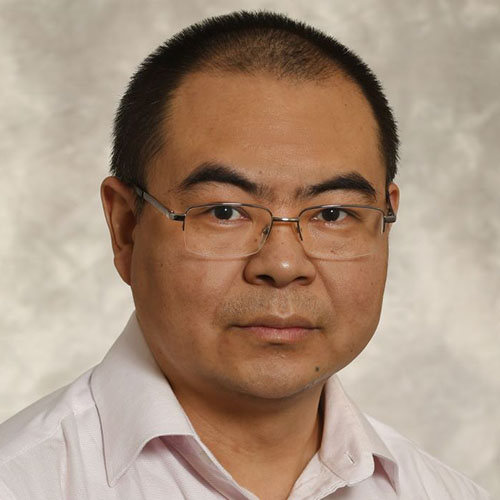
Shuangquan (Peter) Wang is an Assistant Professor of Computer Science at Salisbury University. He holds a PhD in Computer Science from the College of William & Mary (2020) and a PhD in Pattern Recognition and Intelligent Systems from Shanghai Jiao Tong University (2008), along with earlier degrees from Wuhan University of Technology and Wuhan Institute of Technology. His research focuses on mobile/wearable computing, activity recognition, smart health, and machine learning. He has over 10 years of experience in academia and industry, including roles at Philips Research East Asia and Nokia Research Center (Beijing). His work emphasizes wearable sensor-based health monitoring, such as fall detection, mastication analysis, and Parkinson’s disease monitoring. He leads the WISH Research Lab and serves as an Associate Editor for Elsevier's Smart Health Journal. Recent contributions include papers on salinity anomaly detection (2024), LLM-based user requirement analysis (2024), and socially acceptable food recognition (2022). His research trends emphasize interdisciplinary applications of machine learning in healthcare and sensor-driven human activity analysis. Professional service roles include coordinating Salisbury University’s Center for Applied Mathematics and Science (2021–2024) and chairing ACM/IEEE CHASE conferences. He has delivered invited talks on artificial intelligence and its societal impacts to diverse audiences, including the Institute of Retired Persons at Salisbury University. His lab, WISH Research Lab, explores innovative solutions in smart health and mobile computing, integrating wearable technologies with machine learning for real-world health applications.
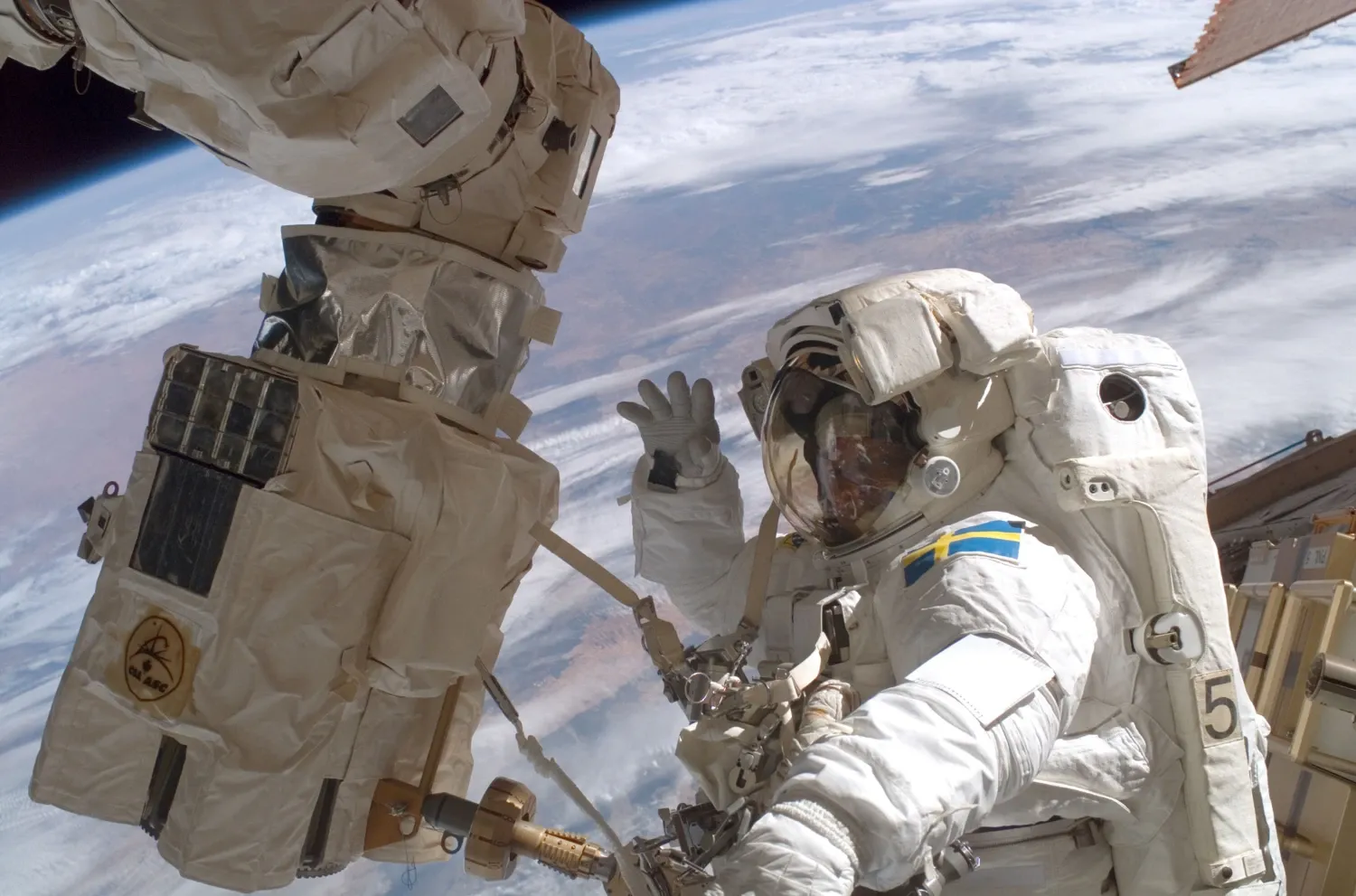
Rodrigo Fernandez Gonzalo is a Docent (Associate Professor) in Physiology and Principal Researcher at the Division of Clinical Physiology, Department of Laboratory Medicine, Karolinska Institutet. He leads the Space and Environmental Physiology research group focusing on skeletal muscle adaptation under various conditions including microgravity, aging, disease, and exercise. His research interests span skeletal muscle physiology, space physiology, and environmental physiology, with particular expertise in how skeletal muscle interacts with other physiological systems. His work employs diverse methodologies including human clinical studies, animal models, and cellular models to investigate functional, metabolic, morphological, molecular, and neural adaptations. Analysis of his recent publications reveals a strong focus on space physiology applications, particularly how microgravity affects skeletal muscle and immune systems, along with translational applications for clinical populations like those with cerebral palsy. His research integrates molecular analysis, imaging techniques, and physical performance outcomes to develop countermeasures for spaceflight effects. 4.5 MSEK funding from the Swedish National Space Agency (2020) Member of European Space Agency's Life Science Working Group (2022-2026) Member of Space Researchers Sweden (2021-) Dr. Fernandez Gonzalo serves as course responsible for Anatomy and Physiology in the nursing program (since 2018) and Advanced Human Physiology Research in the Master's programme in Translational Physiology and Pharmacology (since 2023). He also teaches Human Spaceflight at KTH and participates in the Erasmus Mundus Joint Master in Physiology and Medicine of Humans in Space and Extreme Environments. His laboratory utilizes facilities at Karolinska University Hospital and ANA Futura for human, animal, and cellular studies investigating space exposome effects.
Zhe Hou is a Senior Lecturer at the School of Information and Communication Technology , Griffith University, Australia. His academic journey includes a PhD in automated reasoning for separation logic from the Australian National University (2015) and prior research roles at Nanyang Technological University, Singapore (2015-2017). He joined Griffith University in 2017 and became permanent faculty in late 2019. Research Interests : Formal methods for software verification Automated reasoning with logical frameworks Blockchain technology and security Quantum computing verification Integration of LLMs with rigorous reasoning Sports analytics via model checking Recent Publications demonstrate expertise in neural-symbolic reasoning, blockchain security, quantum SAT solvers, and runtime verification frameworks. His work combines formal logic with machine learning for applications in cybersecurity and AI trustworthiness. Scientific Awards : ACM SIGSOFT Distinguished Paper Award (2025) Supervision Roles : Principal/Associate Supervisor for 6+ doctoral projects in blockchain security, AI verification, and network security. Professional Activities : Editor for Springer-Nature and Formal Aspects of Computing special issues, conference chair for ICFEM, ICECCS, and ISACE symposia.
José Morales Aznar is a Full Professor in the Department of Physical Activity and Sport Sciences and Sports Management at the Faculty of Psychology, Educational Sciences and Sports, Ramon Llull University (Blanquerna). His academic work focuses on the intersection of physical activity, sport sciences, and adapted physical education, with a particular emphasis on judo applications for diverse populations. Dr. Morales Aznar's research interests span Physical Activity, Sport Sciences, Martial Arts (particularly judo), Adapted Physical Activity for people with disabilities, Autism Spectrum Disorders, Intellectual Disabilities, Physical Education, Motor Skills, and Heart Rate Variability. His work demonstrates a strong commitment to applying sport science principles to improve quality of life across different demographic groups, especially those with special needs. Analysis of his recent publications reveals a clear trend toward adapted judo programs, particularly for individuals with autism spectrum disorders and intellectual disabilities. His research combines practical applications with theoretical frameworks to develop evidence-based approaches in adapted physical activity. The publications also show growing interest in technology integration in physical education and the physiological aspects of martial arts training. Dr. Morales Aznar is actively involved in multiple research projects including KATAUTISM (Judo program for autistic children), JUDODI (Effects of judo for adolescents with intellectual disabilities), JIDP (Judo for Intellectual Disability Project), SAFE (Health, Physical Activity and Sports), and AUTJUDO (Adapted Judo for Children with Autistic Spectrum Disorders). These projects demonstrate his leadership in developing and implementing specialized physical activity programs for vulnerable populations while securing significant research funding from various agencies including the EACEA Education, Audiovisual and Culture Executive Agency and Agència de Gestió d'Ajuts Universitaris i de Recerca.
Caroline Ketcham is a Professor of Exercise Science and the Associate Dean of Elon College, the College of Arts and Sciences at Elon University. Her research focuses on movement neuroscience, neurodiversity, concussions, and mental health, with expertise in neuromusculoskeletal control and rehabilitative strategies across diverse populations including children, elderly, neurological patients, and athletes. Education: PhD in Exercise Science/Motor Control, Arizona State University (2003) MS in Exercise Science/Motor Control, Arizona State University (1999) BA in Biology/Psychology, Colby College (1996) Her work spans motor control, concussion management, and mental wellness, with over 87 undergraduate mentees and 65+ publications. She co-edited Concussion in Athletics and Cultivating Capstones , and co-directs the Elon BrainCARE Research Institute, which advocates for concussion awareness and mental health. Recent research trends include concussion baseline testing as mental health screening, dual-task gait analysis, and global mentoring frameworks. Scientific awards highlight her contributions: Distinguished Scholar (2023), Ward Family Mentoring Award (2017), and multiple teaching distinctions. Scientific Awards: Distinguished Scholar Award (2023), Elon University Ward Family Excellence in Mentoring Award (2017), Elon University Elon College Service Award (2014), Elon University School of Education Excellence in Scholarship Award (2010), Elon University Teacher of the Year (2007), Texas A&M University She actively mentors students in concussion advocacy and neurodiverse movement research, with hundreds advised in health professions. Her labs focus on neuromuscular control and mental wellness initiatives.
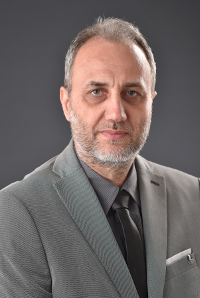
Miloš Racković serves as a full Professor in the Department of Mathematics and Informatics at the University of Novi Sad, Serbia. He maintains active academic engagement through the Laboratory for the development of information systems, with his office located in the Information technologies and systems office (DMI&DF) on the second floor, room 49. Contact is available via telephone (485)-2868 or email rackovic@dmi.uns.ac.rs, and his personal website (http://www.is.pmf.uns.ac.rs/rackovicm/) provides additional resources. His research spans foundational and applied computer science, with seminal contributions in fuzzy database systems including PFSQL query language development and prioritized fuzzy logic for relational databases and XML. He has pioneered deep learning methodologies through innovative classification techniques using negative and missing features in convolutional neural networks. Additional expertise includes high-performance computing implementations of Lattice Boltzmann methods using OpenCL, robotics (symbolic modeling and trajectory planning), and blockchain applications for Industry 4.0 production processes. His sports analytics work applies neural networks to basketball player and referee movement analysis. Analysis of his 2012-2025 publications reveals a strategic evolution toward interdisciplinary applications, particularly in industrial transformation (blockchain-enabled traceability) and sports analytics. His work consistently bridges theoretical computer science with practical implementations, demonstrating increasing focus on real-world problem solving while maintaining strong foundations in database theory and computational methods. Professor Racković leads the Laboratory for the development of information systems, which focuses on advancing information system methodologies through formal modeling extensions (including Petri net innovations) and practical implementations for uncertainty management. The laboratory's work spans from foundational research in fuzzy logic systems to applied projects in high-performance computing and blockchain integration, fostering innovation in information technology development.
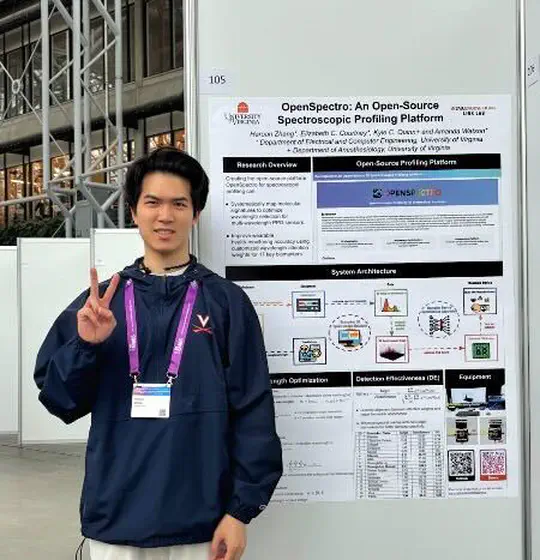
Amanda Watson is an Assistant Professor in Electrical and Computer Engineering at the University of Virginia, with joint appointments in Computer Science. She leads the Watson Research Lab within the UVA Link Lab, a multidisciplinary center for Cyber-Physical Systems (CPS) and Internet of Medical Things (IoMT) research. Her work bridges wearable technology with healthcare and athletic performance applications, focusing on noninvasive monitoring, physiological signal analysis, and safety-critical medical devices. She is also the cofounder and CEO of Luminosity Wearables, commercializing a noninvasive continuous glucose monitor. Education: PhD in Computer Science (2020) - College of William & Mary MSc in Computer Science (2016) - College of William & Mary Bachelors in Computer Science and Mathematics (2014) - Drury University Her research spans multiple domains including: Wearable spectroscopy for nutrition and skin health Machine learning for drug overdose and fall risk detection Biomechanical monitoring in sports medicine Wearable support for visual and neurological impairments IoMT device integration and analytics Recent publications (2024-2025) show strong emphasis on calibration-free physiological monitoring systems, with technical contributions in spectral analysis , multi-wavelength sensing , and rapid prototyping for healthcare wearables. Applications range from maternal health to gerontological social isolation detection. Lab and Team: The Watson Research Lab at UVA develops wearable solutions for clinical and athletic contexts, with ongoing collaborations in the PRECISE Center at University of Pennsylvania and LENS lab at William & Mary alumni network. She works with multidisciplinary teams including engineers, clinicians, and data scientists.
Ibrahim RADWAN is an Associate Professor in Machine Learning/AI and Robotics at the University of Canberra. His research focuses on advancing AI techniques in areas such as human pose estimation, affective computing, and healthcare technology. He leads projects addressing challenges in robotics, autonomous systems, and human behavior analysis. RADWAN’s work bridges theory and application, contributing to fields like sports science, medical diagnostics, and security through innovative machine learning approaches. Research Projects: Assistive Technologies for Young People Safety on Two-Wheelers AI-Based Methods for Driver Sentiment and Mood Prediction Robotics Applications in Organic Waste Management Research Interests: RADWAN’s expertise spans human pose reconstruction , nonverbal behavior analysis , and EEG-based healthcare diagnostics . He pioneers methods for real-world applications such as: 6G Extended Reality systems using wearable sensors Multimodal deception detection via motion analysis Affective computing for mood and emotion inference Publications: His recent work emphasizes trends in spatiotemporal data analysis, few-shot learning, and synthetic data applications in healthcare and robotics. Key contributions include novel architectures like CrossFormer for 3D pose estimation and Resanet for dense prediction tasks. Advising & Grants: RADWAN supervises PhD students and has secured grants for projects integrating AI with robotics and medical technology. His team collaborates on interdisciplinary challenges, including railway safety and surgical instrument tracking. Labs/Teams: Part of the AI and Robotics research group at the University of Canberra, contributing to cutting-edge solutions in autonomous systems and human-centered AI.
Alexander Refsum Jensenius is a Professor of Music Technology and Director of the RITMO Centre for Interdisciplinary Studies in Rhythm, Time and Motion at the University of Oslo. He also leads the fourMs Lab and co-founded the MishMash Centre for AI and Creativity. His work bridges musicology, psychology, and technology, focusing on embodied music cognition, human motion analysis, and creative applications of AI. Notably, he pioneered research on air guitar motion and human micromotion through projects like the Oslo Standstill Database . Educated at the University of Oslo (BA in Music and Mathematics, MA in Musicology) and Chalmers University of Technology (MSc in Applied IT), Jensenius holds a PhD in Music Technology from UiO. He has held visiting researcher roles at UC Berkeley, McGill University, and KTH. Leadership roles include Department of Musicology Head (2013–2016) and Steering Committee Chair for the International Conference on New Interfaces for Musical Expression (NIME, 2011–2022). Research interests span music-related body motion, AI in creative contexts, and open research practices. Key contributions include the Music Moves and Motion Capture MOOCs, the Musical Gestures Toolbox software, and monographs like Sound Actions and Sonic Design . His work emphasizes interdisciplinary collaboration, with projects addressing ventilation systems' acoustic properties and cell culture vibrational effects. Awards include the European Open Data Champion recognition. He advocates for open science and maintains extensive digital archives of research materials, emphasizing institutional web pages as critical research infrastructure.
Ambuj K. Singh is a Professor in the Department of Computer Science at the University of California, Santa Barbara . With over 278 publications since 1987, his work spans graph neural networks, social network dynamics, and interdisciplinary applications in neuroimaging and cheminformatics. Key collaborations with researchers like Sourav Medya, Arlei Silva, and Francesco Bullo Contributions to network design, opinion dynamics, and interpretable AI His research integrates machine learning with graph theory , addressing problems in community detection , influence limitation , and explanation generation . Recent work focuses on counterfactual explainers and molecular graph analysis . He has contributed to venues like KDD, NeurIPS, WWW, and ICLR, often exploring temporal networks and polarized embeddings .
Dr. Georgiana Ifrim is an Associate Professor at the School of Computer Science, University College Dublin , where she serves as Director of Graduate Research and Co-Lead of the SFI Centre for Research Training in Machine Learning (ML-Labs). She holds concurrent appointments as an SFI Funded Investigator at the Insight Centre for Data Analytics and VistaMilk SFI Research Centre . Her academic journey includes postdoctoral research at Insight Centre, Cork Constraint Computation Centre (4C), and Aarhus University's Bioinformatics Research Centre (BiRC). Education: BSc in Computer Science, University of Bucharest, Romania MSc and PhD in Informatics, Max-Planck Institute for Informatics, Germany Dr. Ifrim specializes in scalable predictive modeling for diverse applications including: Sequence learning (DNA analysis, time series) Real-time prediction for streaming data (news/social media, energy) Interpretable machine learning models Knowledge graph exploitation (WordNet/Yago, Naga) Wearable sensor data analysis (sports science, health monitoring) Energy price forecasting for sustainable systems Her recent publications focus on time series explainability (TSHAP, tsCaptum), multivariate analysis (scalable channel selection), and healthcare applications (fall detection, walking speed estimation). Key contributions include open-source tools like SEQL (sequence learner) and Twitter-Topics (event detection). Scientific Awards: Winner of SNOW@WWW14 Data Challenge As Director of Graduate Research, she oversees advanced academic training while leading funded projects at the intersection of machine learning , real-time analytics , and domain-specific applications in agriculture, healthcare, and digital journalism. Her research group maintains active GitHub repositories with open-source implementations.
Tomomi Kito is a Professor (non-tenure-track) at the Faculty of Science and Engineering, Graduate School of Creative Science and Engineering, Waseda University. She previously held positions as Associate Professor at Waseda University (2018-2023), Assistant Professor at University of Tsukuba (2015-2018), Senior Research Fellow at University of Oxford's Cabdyn Complexity Center (2013-2015), and Assistant Professor at The University of Tokyo (2012-2015). Dr. Kito earned her Ph.D. in Engineering from The University of Tokyo. Her academic journey includes research positions at prestigious institutions including University of Oxford's Saïd Business School (2008-2011) and The University of Tokyo's Research into Artifacts, Center for Engineering (2008). Dr. Kito's research focuses on the intersection of complex systems, supply chain management, and business strategy. Her work employs network science and agent-based modeling to understand the emergent properties of industrial ecosystems, particularly in the automotive sector. She investigates how firm strategies, product characteristics, and geographic factors shape supply network structures and their resilience. Her current research explores the heterogeneity of supply networks, corporate portfolio strategies, and urban transportation networks using big data analytics and network science approaches. Her extensive publication record demonstrates a consistent focus on understanding supply network complexity through empirical analysis of real-world data. Dr. Kito's work bridges theoretical network science with practical business applications, particularly in manufacturing and automotive industries. She has developed methodologies for analyzing industrial clusters, supply network resilience, and firm interdependencies using complex network theory. Dr. Kito has secured multiple research grants from Japanese funding agencies including the Japan Society for the Promotion of Science and Ministry of Education, Culture, Sports, Science and Technology. Her current projects include 'Modeling and empirical analysis of emergent principles of diversity and heterogeneity in social networks' and 'Development of a general-purpose dynamic model of supply networks and its verification by simulation.' She actively supervises graduate students through various seminars and thesis guidance in Strategic Management for Value Creation and Management Design at Waseda University's Graduate School of Creative Science and Engineering. Her teaching portfolio includes courses on Production Management, Global Production Systems, and Business Design.