Massachusetts Institute of TechnologyUnited States
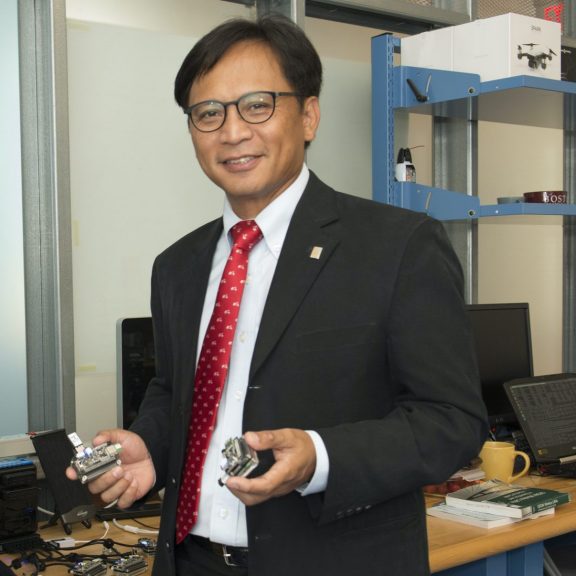
Moe Z. Win is the Robert R. Taylor Professor at the Massachusetts Institute of Technology (MIT), specializing in wireless communications, optical communications, and space communications systems. His research bridges theoretical and applied domains, including quantum sensing, network localization, and signal processing. B.S.E.E., Texas A&M (1987) M.S.E.E. & Ph.D., University of Southern California (1989, 1998) Recent work focuses on quantum-enhanced positioning, machine learning for localization, and next-generation (xG) non-terrestrial networks. He leads research at the Quantum neXus Laboratory (QX Lab), Wireless Information & Network Sciences Lab, and Laboratory for Information and Decision Systems. His career spans the Jet Propulsion Laboratory (1987-1995) and AT&T Research Laboratories (1998-2002). Key methodologies include soft information fusion, variational quantum sensing, and robust beam tracking for terahertz communications.
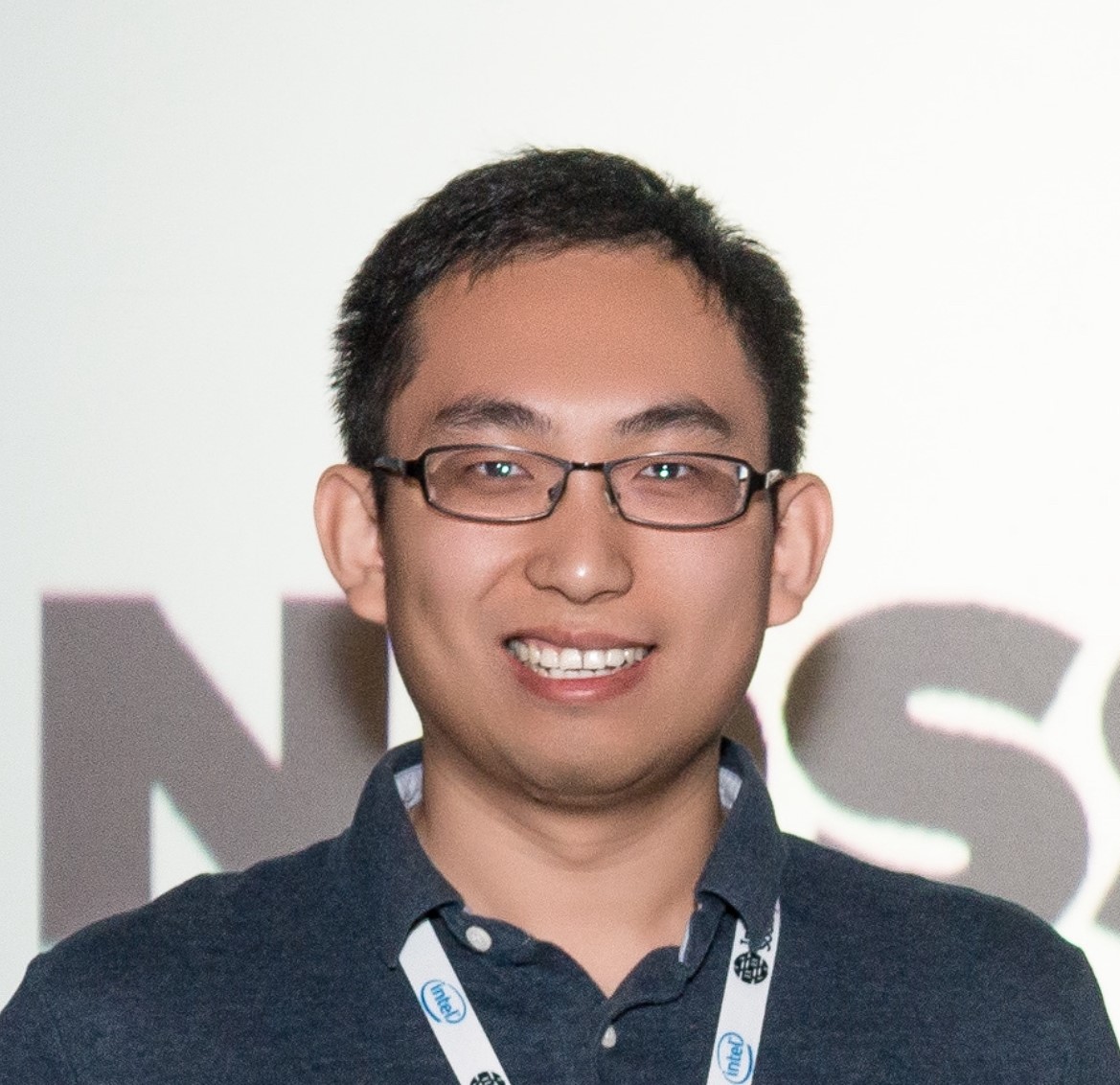
Qi Alfred Chen is an Assistant Professor in the Department of Computer Science at the University of California, Irvine (UCI), within the Donald Bren School of Information and Computer Sciences. He also holds affiliations with the Department of Electrical Engineering and Computer Science (EECS), the Institute of Transportation Studies at UC Irvine (ITS-Irvine), the Center for Embedded and Cyber-physical Systems (CECS), the Institute for Software Research (ISR), and the UC Irvine Cybersecurity Policy & Research Institute (CPRI). His research focuses on network and systems security, with particular emphasis on autonomous vehicle and IoT security. Dr. Chen received his Ph.D. from the University of Michigan in 2018. His educational background has prepared him for his current research in security of critical computer systems. His work bridges theoretical security principles with practical implementations in real-world systems. Chen's research interests center on network and systems security , with a major focus on smart systems and IoT security , particularly in transportation and autonomous vehicle systems . His work addresses security challenges through systematic problem analysis and mitigation, discovering and mitigating security problems in next-generation transportation systems, smartphone OSes, network protocols, DNS, GUI systems, and access control systems. His research has high impact in both academic and industry contexts, with over 10 top-tier conference papers, a DHS US-CERT alert, multiple CVEs, and coverage in major news media like Fortune and BBC News. His publication record shows a clear evolution from foundational work on network protocols and smartphone security toward increasingly sophisticated security analyses of autonomous vehicle systems and AI-powered transportation technologies. The research trajectory demonstrates growing technical sophistication and real-world impact, with recent work focusing on physical-world adversarial attacks against autonomous driving perception systems, LiDAR spoofing, and security of multi-sensor fusion in autonomous vehicles. NSF CAREER Award (2022) on securing the AI stack in emerging autonomous and connected CPSs Chancellor's Award for Excellence in Undergraduate Research Mentorship, UC Irvine (2021) 5th place nation-wide at National CCDC competition (2021, as faculty advisor) 1st place (Gold Medal) at CCDC Western Regional competition (2021) ProQuest Distinguished Dissertation Award, University of Michigan (2019) Dr. Chen has mentored numerous successful students, including PhD candidates and undergraduates who have gone on to positions at major tech companies like Meta, Uber, Amazon, and Intel. His research group has secured significant funding, including an NSF CAREER award, and has made substantial contributions to the field through high-impact publications and vulnerability disclosures. He is also the co-founder of the ISOC VehicleSec Symposium and has organized the AutoDriving CTF contest at DEF CON. Chen leads the AV & IoAT Security Research Group at UCI, focusing on security challenges in autonomous vehicles and the broader Internet of Autonomous Things. His team has developed numerous attack demonstrations and security analyses that have received significant media attention and influenced industry practices. The group maintains an active YouTube channel showcasing their security research.
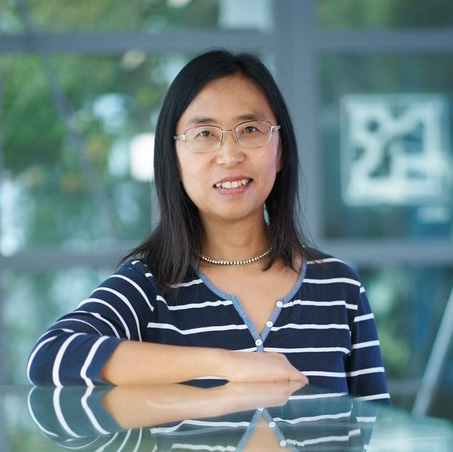
Xiaoming Liu is the Anil K. and Nandita Jain Endowed Professor of Engineering and MSU Foundation Professor in the Department of Computer Science and Engineering at Michigan State University . Holding a Ph.D. from Carnegie Mellon University (2004), he leads cutting-edge research in computer vision and machine learning. Research Interests : Computer Vision Pattern Recognition Image and Video Processing Machine Learning Medical Image Analysis Multimedia Retrieval Recent Research Trends : Focus on 3D object detection and depth estimation Development of robust biometric recognition systems Integration of radar-camera fusion for autonomous systems Advancements in self-supervised and multimodal learning Exploration of adversarial AI security Creation of interpretable forgery detection frameworks Teaching : Spring 2013: CSE891-006 Computer Vision Seminar Fall 2012-2015: CSE803 Computer Vision Spring 2014-2017: CSE 471 Media Processing and Multimedia Contact Information : Email: liuxm@cse.msu.edu Office: EB 3137, Michigan State University Phone: +1 (517) 355-2359
Michael P. Wellman is a Professor of Computer Science and Engineering at the University of Michigan, specializing in computational game theory and its applications to economics and finance. He has advised 28 PhD graduates and currently mentors 6 students, emphasizing independent research and tailored advising approaches. His work focuses on multi-agent systems, strategic interactions, and agent-based modeling of financial markets. He holds the endowed Lynn A. Conway Professorship and created the Morris Wellman Faculty Development Professorship. His research group meets weekly for progress reports, paper discussions, and practice presentations. Wellman encourages internships, teaching experience, and conference participation (e.g., ICAIF, AAMAS, EC) to foster career readiness. His scientific contributions span empirical game-theoretic analysis (EGTA), market manipulation detection, and cybersecurity strategies. He prioritizes student independence, collaborative problem-solving, and ethical considerations in AI-driven financial systems.
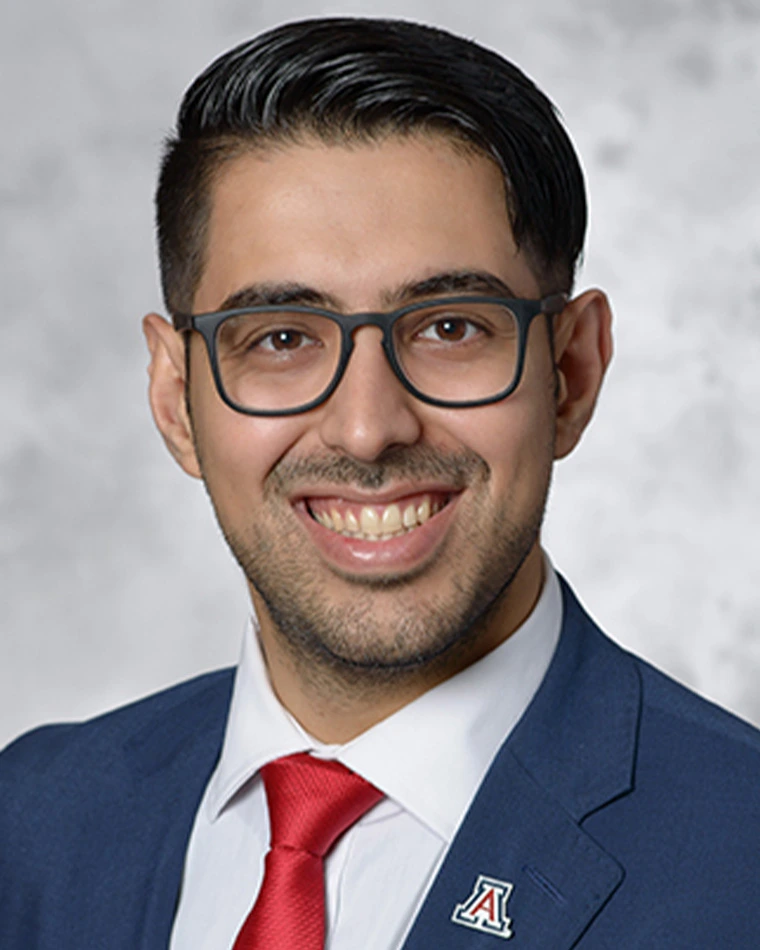
Soheil Salehi is a tenure-track Assistant Professor in the Department of Electrical and Computer Engineering at the University of Arizona, with a joint appointment in Systems and Industrial Engineering. He is the Director of the Privacy-preserving, Intelligent, and Secure Computing (PRISM) Lab, established in August 2022. Prior to this, he was an NSF-Sponsored Computing Innovation Fellow and Postdoctoral Research Fellow at the University of California, Davis. Ph.D., Electrical and Computer Engineering, University of Central Florida, 2020 M.S., Electrical and Computer Engineering, University of Central Florida, 2016 B.S., Isfahan University of Technology, Iran, 2014 Dr. Salehi's research focuses on the intersection of hardware, AI, and security. His work spans hardware and AI-enabled security in IoT , Generative AI for hardware design and security , neuromorphic and biologically-inspired AI hardware , emerging spin-based devices , reconfigurable architectures , low-power VLSI circuits , and digital twins and mixed reality for semiconductor workforce development . He also explores the application of Generative AI in personalized education . His recent publications, spanning 2023–2025, reveal a strong trend toward integrating AI and machine learning into hardware security and design. Key themes include automated secure IC design flows , AI-driven hardware obfuscation , firmware and side-channel attack analysis , security in neuromorphic and spiking neural networks , and educational frameworks using digital twins and generative models . His work appears in top venues like DAC, ICCAD, USENIX Security, IEEE TCAS-I, and ISCAS. Outstanding Reviewer Award, IEEE/ACM Design Automation Conference (DAC), 2023 Best Presentation of the Symposium Award, UC Davis Postdoctoral Research Symposium, 2021 UCF Excellence by a Graduate Teaching Assistant (University-Level), 2016 Nominated for 30-under-30 Award, UCF, 2020 Nominated for Postdoctoral Research Excellence Award, UC Davis, 2022 Dr. Salehi has secured significant research funding as PI and Co-PI, including a $300K NSF SaTC EAGER grant on Generative AI-based Personalized Cybersecurity Tutor, a $174,000 University of Arizona PIF Award, and multiple RII grants totaling over $198K. He has also received industry funding from CHEST. He actively mentors students and leads the PRISM Lab, which focuses on privacy-preserving and intelligent secure computing. His service includes roles as Technical Program Committee (TPC) Member and Session Chair at premier conferences such as DAC, ICCAD, CCS, NDSS, and GLSVLSI. The PRISM Lab, under his direction, conducts cutting-edge research in secure and intelligent hardware systems, with applications in IoT, edge computing, and workforce development. The lab emphasizes interdisciplinary collaboration and innovation in both research and education.
Anil K. Jain is a University Distinguished Professor at Michigan State University, where he has taught and conducted research for over 50 years. His work focuses on Pattern Recognition , Biometrics , and Machine Learning , with foundational contributions to fingerprint, face, and palmprint recognition. B.S., Indian Institute of Technology, Kanpur (1969) M.S. and Ph.D., The Ohio State University (1970, 1973) in Electrical Engineering His research spans Computer Vision , Deep Learning , and Biometric Security , addressing challenges in adversarial robustness , demographic bias , and generative models . Recent publications emphasize transformer-based architectures , domain adaptation , and contactless biometric systems . Scientific awards include: Inductee, National Academy of Engineering (2016) Inductee, The World Academy of Sciences (2019) BBVA Foundation Frontiers of Knowledge Award (2025) Fellowships: Guggenheim, Humboldt, Fulbright Doctor Honoris Causa: 3 universities He has authored seminal works like Introduction to Biometrics and Handbook of Face Recognition , and served as Editor-in-Chief of IEEE Transactions on Pattern Analysis and Machine Intelligence . His leadership in Forensic Science includes roles on the Defense Science Board and AAAS study teams.
Chaowei Xiao is an Assistant Professor at the University of Wisconsin-Madison (starting 2023), affiliated with the School of Computer, Data & Information Sciences. His research focuses on securing AI systems, particularly exploring robustness in trustworthy machine learning, autonomous systems, and large language models (LLMs). He holds a Ph.D. from the University of Michigan, Ann Arbor, and a B.S. from Tsinghua University. Before joining UW-Madison, he worked as a research scientist at NVIDIA (2020–2022) and at Arizona State University (2022–2023). His work bridges model and system perspectives to ensure practical robustness and provable guarantees in AI applications like autonomous driving, healthcare, and IoT. Key research areas include adversarial robustness, AI security, and ethical AI. Recent contributions include frameworks for detecting LLM hallucinations, mitigating jailbreak attacks, and securing multi-modal systems. His work on diffusion models for adversarial purification and physical-world attacks on autonomous driving systems has been widely recognized. Notable awards include the 2024 USENIX Security Distinguished Paper Award, ACM Gordon Bell Finalist (2024), and Schmidt Sciences AI2050 Fellowship. He has advised students like Xiaogeng Liu (NVIDIA Fellow) and secured grants from Amazon, Apple, and UW-Madison. His lab actively publishes at top venues like NeurIPS, ICML, and CVPR.
Miroslav Pajic serves as a Professor in the Department of Electrical and Computer Engineering at Duke University's Pratt School of Engineering. He also holds joint appointments as Associate Professor in the Thomas Lord Department of Mechanical Engineering and Materials Science and Associate Professor of Computer Science. As Director of Master's Studies, he oversees the graduate program in Electrical and Computer Engineering and teaches numerous courses spanning embedded systems, cyber-physical systems design, and robotics. Education: Ph.D. in Electrical and Computer Engineering from University of Pennsylvania (2012) Miroslav Pajic's research focuses on the design and analysis of cyber-physical systems (CPS) with varying levels of autonomy and human interaction. His work spans the intersection of embedded systems, artificial intelligence, machine learning, control theory, formal methods, and robotics. He specializes in developing high-assurance autonomous systems with applications in robotics, automotive systems, and medical devices, with particular emphasis on CPS security and resilient autonomy. His research addresses fundamental challenges in creating systems that can operate reliably in uncertain environments while maintaining security against potential cyber attacks. Analysis of Pajic's recent publications reveals a strong interdisciplinary research program bridging theoretical foundations with practical applications. His work spans secure sensor fusion for distributed autonomy, medical applications of CPS (particularly deep brain stimulation for neurological disorders), and innovative sensing technologies for autonomous vehicles. A significant portion of his research addresses security challenges in cyber-physical systems, including stealthy GPS attacks on UAVs and methods for attack-resilient state estimation. His publications increasingly integrate machine learning techniques with traditional control theory to create more adaptive and robust autonomous systems. Pajic actively mentors graduate students and leads research groups focused on cyber-physical systems security and high-assurance autonomy. His research is supported by multiple grants, including the NSF AI Institute for Edge Computing (Athena), which he co-leads. He has received funding from various sources to support his work on secure and resilient cyber-physical systems, medical device security, and autonomous vehicle technologies. Pajic collaborates extensively with medical researchers on applications of cyber-physical systems in healthcare, particularly in deep brain stimulation for neurological disorders. His work bridges the gap between theoretical control systems and practical implementations in safety-critical domains, with a growing emphasis on translating research into real-world applications that improve system security and reliability.
Prof. Ivan Martinovic is a Professor of Computer Science at the University of Oxford's Department of Computer Science, holding a Fellowship at the institution. He specializes in cyber-physical systems security, wireless network security, and behavioral biometrics. His research focuses on authentication mechanisms, intrusion detection, and trade-offs between security and performance in systems like satellite communications, EV charging infrastructure, and aviation networks. Education: PhD (TU Kaiserslautern); MSc (TU Darmstadt, Germany). Prior roles include postdoctoral research at UC Berkeley (2011) and UC Irvine (2009–2010), supported by a Carl-Zeiss Foundation Fellowship (2009–2011). He has also been an associate lecturer at TU Kaiserslautern. Research Interests: Cyber-physical systems security, wireless networks, behavioral biometrics (e.g., continuous authentication via physiological signals), robust communication protocols, and analysis of security vs. performance trade-offs in distributed systems. Technologies include software-defined radios, NFC/RFIDs, and EEG/eye-tracking devices. Scientific Awards: Carl-Zeiss Foundation Fellowship (2009–2011). Advising & Grants: No explicit student listings; however, his work involves interdisciplinary collaborations and has been funded by government and industrial grants. His research spans labs and teams focused on satellite cybersecurity, smart infrastructure security, and biometric systems. Labs/Teams: Engages with groups exploring satellite communication security, EV charging infrastructure vulnerabilities, and behavioral authentication systems, though specific lab names are not disclosed in the text.
University of Illinois Urbana-ChampaignUnited States
Gang Wang is an Associate Professor in the Department of Computer Science at the University of Illinois at Urbana-Champaign (UIUC), affiliated with the Siebel School of Computing and Data Science. He also holds affiliate roles in the Department of Electrical and Computer Engineering, the Informatics Program (School of Information Sciences), and the Coordinated Science Laboratory (CSL). He joined UIUC in 2019, previously serving as an Assistant Professor at Virginia Tech. Education: Ph.D. in Computer Science from UC Santa Barbara (2016), advised by Ben Y. Zhao and Heather Zheng; B.E. from Tsinghua University (2010). Awards include the NSF CAREER Award (2018), Amazon Research Award (2021), and multiple best paper awards in top conferences like USENIX Security and ACM CCS. Research focuses on Security and Privacy, Internet Measurement, and Data Mining. Key areas include email spoofing vulnerabilities, adversarial machine learning, and AI-driven security tools. Recent projects involve explainable AI for phishing detection, benchmark contamination in LLMs, and mitigating deepfake disinformation. Publications span top venues like USENIX Security, IEEE S&P, ACM CCS, and IMC. He collaborates with industry partners and researchers in HCI and AI. Current roles include Associate Director of the Capital One Illinois Center for Generative AI Safety (ASKS) and leadership in NSF-funded initiatives like the ACTION AI Institute.
Richard M. Stern is a Professor of Electrical and Computer Engineering at Carnegie Mellon University (CMU), holding courtesy appointments in the Language Technologies Institute and Department of Computer Science, and serving as an Artist Lecturer in the School of Music since 2007. His interdisciplinary work bridges engineering and music technology through the School of Music's programs. Education: Ph.D. in Electrical Engineering from Massachusetts Institute of Technology (MIT), 1976 Professor Stern's research spans sound, speech, hearing, and music, with core emphases on robust speech processing in variable acoustic environments, music information retrieval, automated accompaniment, and foundational contributions to binaural perception theory. His work integrates psychoacoustic principles with machine learning to address challenges in speech recognition and human-robot interaction. Recent publications (2022-2025) reveal intensified focus on deep learning for speech enhancement in reverberant/noisy conditions, human-robot interaction scenarios, and music tagging—highlighting innovations in beamforming, source separation, and temporal modulation modeling. Awards and Honors: Fellow of the IEEE Fellow of the Acoustical Society of America Fellow of the International Speech Communication Association (ISCA) ISCA Distinguished Lecturer Allen Newell Award for Research Excellence (1992) Lutron Award for Teaching Excellence (2018) Professor Stern has advised numerous graduate students in speech and audio research, though specific names are unlisted in source materials. His grant portfolio includes significant National Science Foundation and industry-funded projects in speech technology, with leadership roles in initiatives like Interspeech 2006. He actively collaborates with CMU's Language Technologies Institute and Music and Technology program. He maintains strong ties to CMU's interdisciplinary ecosystem through the Language Technologies Institute and School of Music's Music and Technology program, contributing to research that merges acoustic engineering with musical applications.
Jiro Katto is a Professor at Waseda University's School of Fundamental Science and Engineering, where he has been conducting research and teaching since 1999. He received his Ph.D. from the University of Tokyo and has established himself as a leading researcher in multimedia signal processing and computer networks. His academic journey includes positions as Associate Professor (1999-2004), Professor (2004-present), and Director at NEDO (2004-2008), along with research experience at NEC C&C Laboratories (1992-1999) and a Visiting Scholar position at Princeton University (1996-1997). Professor Katto's research interests focus on Multimedia Signal Processing and Computer Networks, with particular expertise in video compression, 5G network performance, and learned image compression techniques. His work bridges theoretical advancements with practical implementations, as evidenced by his extensive publications in top-tier conferences and journals. His research group has made significant contributions to point cloud compression, latency compensation in remote systems, and hardware-accelerated video encoding for UHD streaming. His publication record is impressive, with 276 papers cited 3,323 times in Scopus and 6,169 times in Google Scholar, reflecting his substantial impact in the field. His recent work shows a strong trend toward applying deep learning techniques to traditional signal processing problems, particularly in the areas of image and video compression, where his team has developed novel approaches to improve compression efficiency while reducing computational complexity. Electric Telecommunications Promotion Foundation Telecommunications System Technology Award (2023) Takayanagi Kenjiro Foundation Takayanagi Kenjiro Achievement Award (2020) Institute of Image Information and Television Engineers Fellow (2020) Institute of Electronics, Information and Communication Engineers Fellow (2015) IEICE Communications Society Activity Contribution Award (2006) IEICE Academic Encouragement Award (1995) SPIE VCIP 1991, Best Student Paper Award (1991) Professor Katto has served on numerous prestigious committees including IEEE ComSoC Tech News Editorial Board, IEEE Technical Program Committees for major conferences (Globecom, ICC, ICIP), and editorial boards for several academic journals. His leadership in the academic community extends to chairing conferences like IWAIT 2011 and serving as Editor-in-Chief for journals in his field. His research has practical applications in commercial 5G networks, video streaming services, and remote monitoring systems, demonstrating the real-world impact of his work.
Zhao Guoying is an Academy Professor at the Academy of Finland and holds a tenured Full Professorship at the University of Oulu, Finland. His research focuses on human behavior understanding, emotion AI, and computer vision. He has held visiting positions at institutions including Stanford University and Aalto University. He earned his PhD (2005) in Computer Science from the Chinese Academy of Sciences. His work has led to pioneering contributions in facial expression analysis, micro-expression recognition, and remote physiological signal measurement. Zhao has secured over €19.8 million in research grants as PI, including the prestigious Academy Professor Grant (2021-2026) and Profi-7 Hybrid Intelligence funding. He has supervised 22+ PhD students and 16+ postdocs, many of whom hold academic and industry leadership roles. His awards include IEEE Fellow (2022), IAPR Fellow (2020), and Finland’s Most Publishing AI Researcher (2017). His research interests span machine learning, affective computing, and feature representation. Notable contributions include the first systems for spontaneous micro-expression analysis, novel methods for face anti-spoofing, and remote health monitoring via video. He actively organizes conferences (e.g., Arctic AI Days) and chairs committees such as the Finnish AI Society board.
Christian Rossow is Faculty at CISPA – Helmholtz Center for Information Security in Dortmund, Germany, where he leads the System Security research group. He holds dual academic appointments as a professor in the Computer Science department at Saarland University and as an honorary professor at TU Dortmund University. His research spans systems, software, and network security, with a focus on cyber attacks, defenses, and privacy. Research Interests: His primary research areas include software and system security (e.g., exploitation techniques, compiler-assisted defenses, AI-assisted (in)security), network security (e.g., DDoS mitigation, attack attribution, traffic analysis), and cybercrime (e.g., malware analysis, data-driven studies). He emphasizes foundational research with practical applications. Publication Trends: His recent work (2023–2025) shows a strong focus on microarchitectural attacks (e.g., cache side-channels, prefetcher analysis), browser and web security (e.g., sandbox escapes, CSS fingerprinting), network protocol vulnerabilities (e.g., TCP spoofing, infinite loops), and applied cryptography (e.g., ISA extensions for key management). His research consistently targets top-tier venues like IEEE S&P, USENIX Security, ACM CCS, and NDSS. Distinguished Paper Award at IEEE EuroS&P 2021 Best Student Paper Award at MIT Spam Conference 2010 Advising and Grants: He actively supervises PhD students and postdoctoral researchers, with alumni placed in industry (NVIDIA, Crowdstrike, Continental) and academia. His research is supported by major grants including EU H2020 SISSDEN, BMBF-funded BOB, DFG-funded anonymous communication, and RAMSES. He regularly serves in leadership roles in the community, including PC Chair for RAID 2022/2023 and USENIX WOOT 2018, and Track Chair for ACM CCS 2026. Labs and Teams: He leads the System Security research group at CISPA, a world-leading institution for security and privacy. The group comprises talented full-time researchers and focuses on cutting-edge research with strong individual supervision and worldwide collaborations.
Prof. Dr.-Ing. habil. Michael Meurer is a Universitätsprofessor (University Professor) at RWTH Aachen University, holding the Chair of Navigation with a joint appointment at the German Aerospace Center (DLR). His work focuses on satellite navigation, particularly GNSS (Global Navigation Satellite Systems), with applications in low Earth orbit (LEO), safety-critical systems, and autonomous driving. Research Interests GNSS signal integrity and error analysis LEO-based augmentation systems Multi-antenna positioning techniques Spatial signal processing Navigation for autonomous systems Publications highlight his contributions to GNSS error modeling, spoofer detection, and resilient positioning systems. Recent work emphasizes LEO constellations, distributed antenna architectures, and signal integrity monitoring. Contact Email: michael.meurer@nav.rwth-aachen.de Address: Mies-van-der-Rohe-Str. 15, 52074 Aachen Phone: +49 8153 28 3065 Teaching includes courses on satellite navigation, safety-critical navigation systems, and multisensorial navigation architectures.