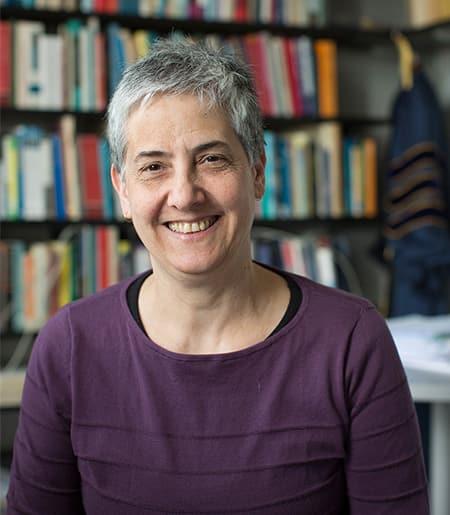
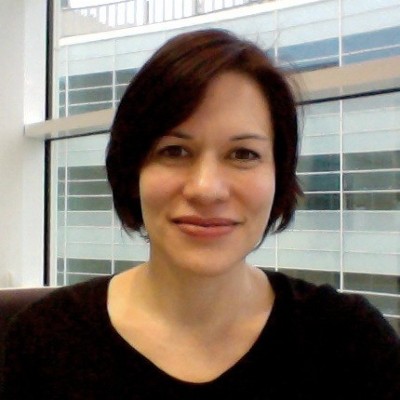
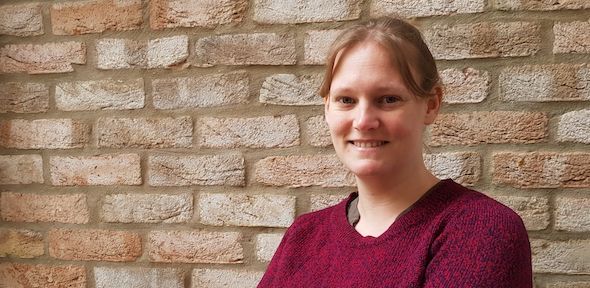
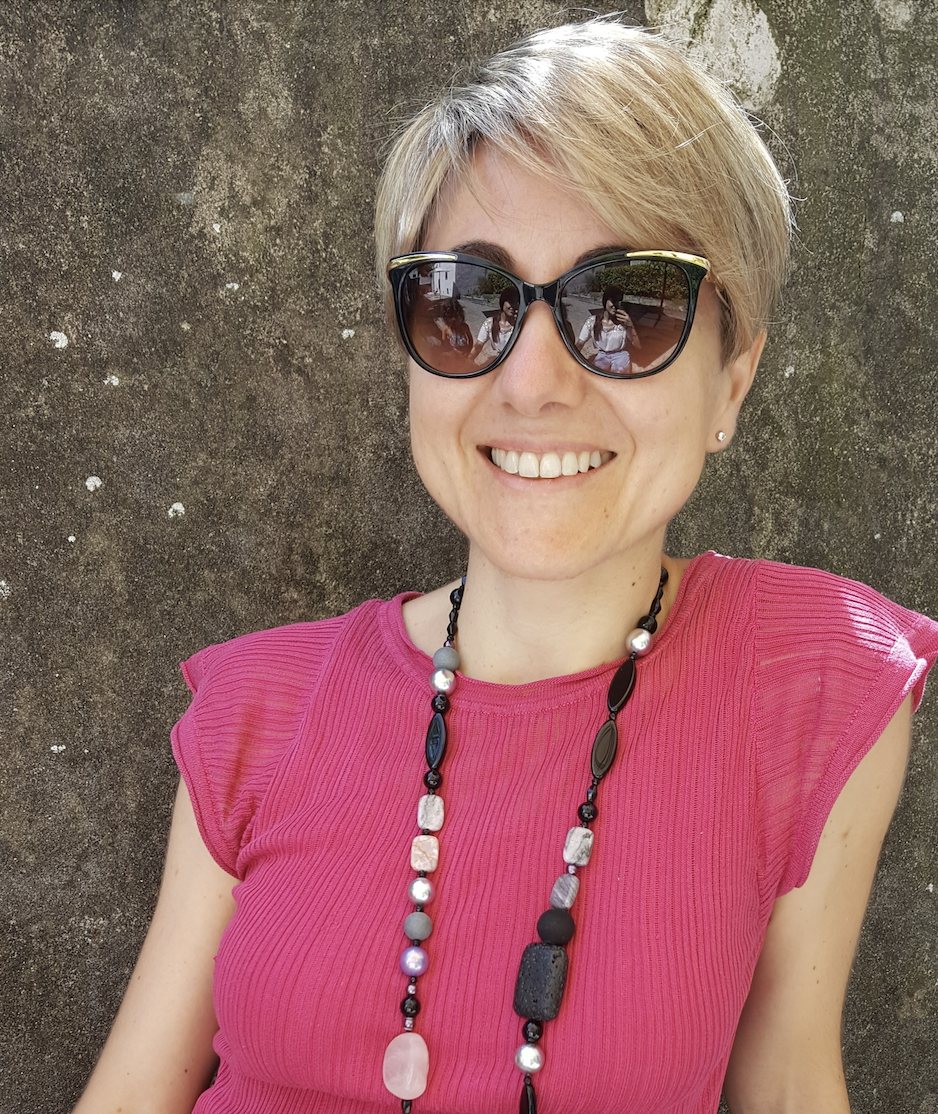
Liadh Kelly is an Assistant Professor in the Department of Computer Science at Maynooth University's Faculty of Science & Engineering. She supervises PhD students in applied artificial intelligence, focusing on intelligent search, ubiquitous computing, and multimodal information access. She is affiliated with the ADAPT SFI Research Centre, SFI Centre for Research Training in Foundations of Data Science, and Human Health Institute. BSc in Computer Science MSc (Research) in Computer Science PhD in Computer Science Her research explores context-sensitive retrieval and evaluation methodology in AI-driven systems. Key areas include ubiquitous computing for personal data analysis, deep learning classification for mental wellness indicators, and multimodal lifelogging integration. Recent publications focus on urban mental wellbeing classification , contextual cue analysis , and AI-driven health search systems . Articles address smart city applications , consumer health search , and cross-lingual medical retrieval . Professional roles include Doctoral Consortium Chair at ECIR 2023 and Programme Committee member for SIGIR and ICWSM conferences. She leads grants for 4-year PhD studentships with stipend and fee coverage.
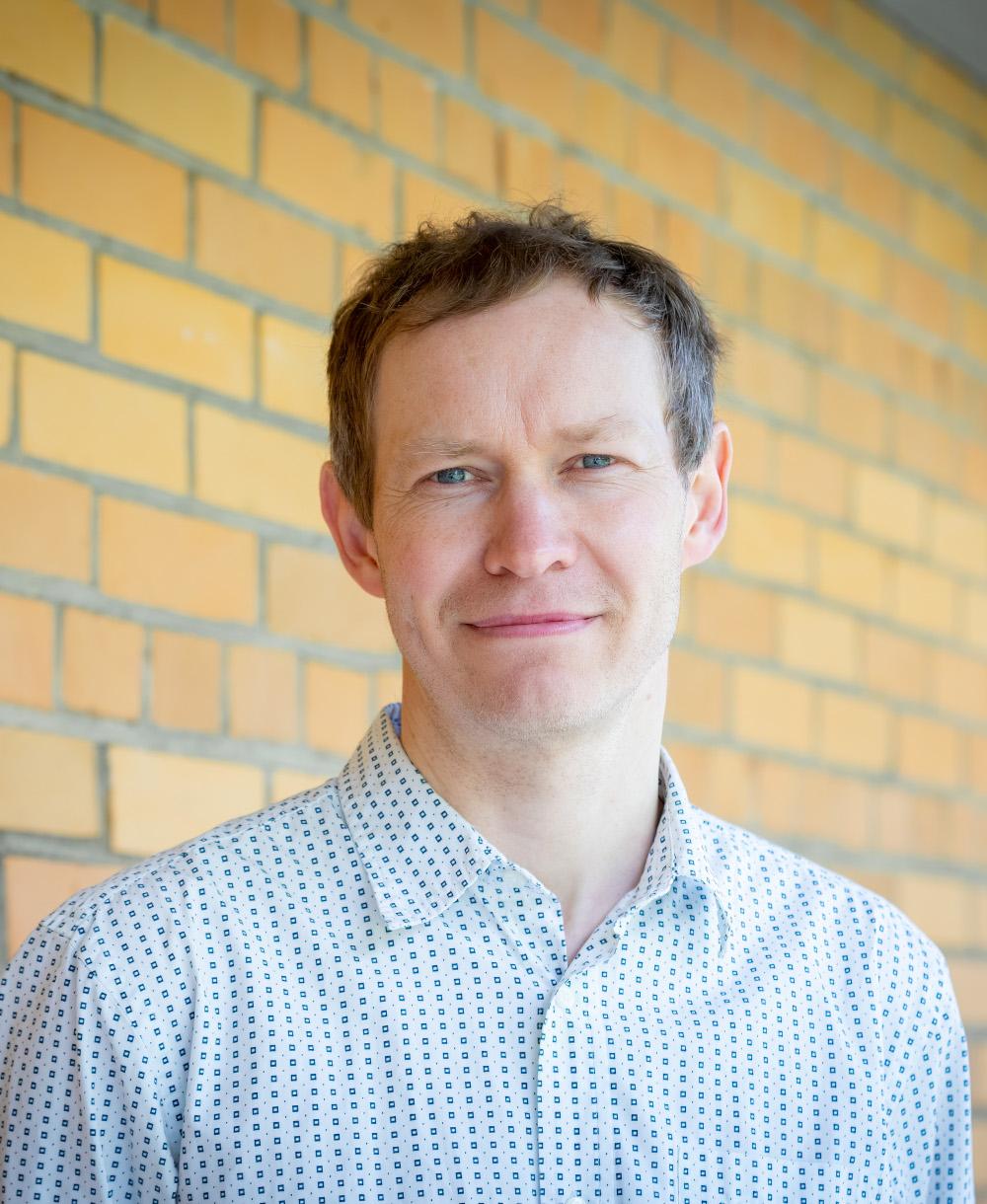
Professor Simon Robinson is a faculty member in the School of Mathematics and Computer Science at Swansea University, holding a position as a Professor of Computer Science. He serves as the Head of the Future Interaction Technologies (FIT) Lab and Director of the MSc year for the EPSRC Centre for Doctoral Training in Enhancing Human Interaction and Collaboration with Data-Driven Systems. His research focuses on devices and interactions designed for emergent users in low-connectivity regions, emphasizing participatory design and co-creation with underserved communities. Current projects include the EPSRC-funded UnMute initiative, which aims to empower marginalized language speakers through spoken language technologies. Key affiliations include leadership roles in the FIT Lab and the EPSRC CDT, alongside contributions to projects like Rethinking Public Technology in a Post-COVID Era, PV Interfaces, and Scaling the Rural Enterprise. His work spans ubiquitous computing, deformable devices, and inclusive interaction design for global south communities. Research interests center on Human-Computer Interaction (HCI), with a focus on low-resource settings. Recent work addresses speech technologies for unwritten languages, trust in human-robot interactions, and sustainable self-powered interfaces. His lab explores innovations like Light-In-Light-Out (Li-Lo) displays and community-driven smart materials (PV-Pix). Professor Robinson has supervised numerous PhD students across topics including AI ethics, predictive maintenance, and human-centric NLP. He teaches modules like Introduction to HCI and contributes to the Human-Centred Big Data and AI Dissertation program. His work integrates grants from EPSRC and collaborative projects with international partners, reflecting a commitment to socially impactful technology. Labs & Teams: Director of the FIT Lab, active in the EPSRC CDT, and collaborator in interdisciplinary teams focusing on rural technology, assistive AI, and sustainable interfaces.
Viktória Dabóczi is a lecturer in the Department of German Studies at the University of Siegen, Faculty I. She holds a doctorate from the University of Siegen (2016) and has been actively involved in teaching and research in German linguistics since 2012. Her current academic role as AOR aZ (Akademische Oberrätin auf Zeit) began in June 2025, indicating a senior academic position. She teaches courses such as Introduction to German Linguistics, Grammatical Variation, and Language Acquisition. Research Interests: Her work focuses on word classes, spoken language, grammar theory, language acquisition, and lexical change in German, often with comparative insights from Hungarian. She investigates how words are conceptualized in speech and writing, the evolution of discourse markers, and grammatical variation in contemporary usage. The analysis of her recent publications (2005–2025) reveals a consistent focus on theoretical and applied German linguistics, with increasing attention to sociolinguistic phenomena such as pandemic-related neologisms and ideological word formations. Her research bridges empirical analysis, cognitive linguistics, and language teaching, often in interdisciplinary or contrastive frameworks. Reviewed works on German morphology and grammar Contributed to international projects like EuroGr@mm and ProGr@mm Participated in interdisciplinary conferences on ellipsis and language processing Advising and Grants: While no formal students are listed, her editorial and collaborative roles suggest mentorship and academic leadership. She has been involved in long-term research projects, including EuroGr@mm (2004–2012), indicating sustained grant-supported activity. Her current role at Siegen reflects ongoing institutional support for her research and teaching. Labs and Teams: She has collaborated with researchers at Justus Liebig University of Giessen, University of Szeged, and IDS-Mannheim. Her work with the Diskursmonitor research group and participation in interdisciplinary conferences highlight her integration into active research networks in German linguistics.
Abigail C. Cohn is a Professor of Linguistics at Cornell University, affiliated with the College of Arts and Sciences and the Southeast Asia Program. Her research bridges phonetics, phonology, and sociolinguistics, with a focus on Austronesian languages of Indonesia and language shift dynamics. She investigates the interplay between abstract sound patterns (phonology) and their physical realization (phonetics), emphasizing laboratory phonology methods. Her work on Indonesian sociolinguistics examines how young Indonesians' shift to using Indonesian as a first language impacts local languages' structural integrity. Dr. Cohn's Fulbright Senior Research Scholarship (2012-2013) supported her project at Unika Atma Jaya on language contact in Indonesia, analyzing Sundanese-Indonesian interactions. She co-edited The Oxford Handbook of Laboratory Phonology and serves as co-editor-in-chief of Linguistics Vanguard . Her teaching spans foundational and advanced courses like Phonology I and II, guiding students in independent research and honors theses. Her research methodologies include experimental phonetics, sociolinguistic surveys, and corpus analysis. Current projects address language endangerment in majority-spoken languages and the role of multilingualism in structural language change. Awards: Fulbright Senior Research Scholar (2012-2013) Key Projects: Language Contact in Indonesia, Indonesian Language Shift Dynamics Editorial Roles: Co-Editor-in-Chief, Linguistics Vanguard ; Co-Editor, Oxford Handbook of Laboratory Phonology
Tanel Alumäe is an Associate Professor of Speech Processing at Tallinn University of Technology's School of Information Technologies, Department of Software Science. With over 15 years of academic experience, he has held various research and teaching positions at the university since 2006, progressing from Research Fellow to Tenured Associate Professor. His work focuses on speech and language technologies with a particular emphasis on Estonian language applications. PhD in Information and Communication Technology (2006), Tallinn University of Technology Research Master's Degree in Informatics (2002), Tallinn Technical University MSc studies at Tallinn Technical University (1999-2002) and Universität Erlangen-Nürnberg, Germany (1999-2000) Diploma in Computer and Systems Engineering (1994-1999), Tallinn Technical University Alumäe's research spans automatic speech recognition, speaker recognition, natural language processing, and computational linguistics with a focus on Estonian language technology. His work addresses challenges in multilingual speech processing, deep learning applications for speech technologies, and developing practical systems for real-world applications including broadcast media processing and accessibility solutions. He has made significant contributions to low-resource language processing and specialized applications for children's speech and emotion recognition. His recent publications demonstrate a strong focus on cutting-edge speech processing techniques including deepfake detection, multi-speaker systems, speech-to-speech translation, and applying large language models to speech applications. The research shows a consistent pattern of addressing both theoretical challenges in speech processing and practical implementations for Estonian language technology. Award 'Keeletegu 2019' from the Ministry of Education and Research Award 'Keeletegu 2011' from Estonian Ministry of Education and Research 3rd award at the Tallinn University of Technology contest for applied scientific projects (2011) Boris Tamm stipend (2007) First prize at the national contest of students' scientific works (2007) Ustus Agur stipend of Estonian Information Technology and Telecommunications Association (2005) Alumäe has supervised postdoctoral researchers including Rena Nemoto (2012-2015) on pronunciation modeling for speech recognition. He serves in editorial and review capacities for major journals including Nature, Computer Speech & Language, and IEEE Transactions. His administrative roles include Secretary of the Northern European Association for Language Technology Board and membership on the Department of Software Science Council at TalTech. His research group at Tallinn University of Technology actively participates in international challenges (IWSLT, Interspeech, Odyssey) and collaborates with institutions worldwide. The team has developed open-source platforms for Estonian speech transcription and created systems for automatic closed captioning of Estonian broadcasts, demonstrating strong practical applications of their research.
Dr. Jacek Kudera is a post-doctoral researcher in the Department of Phonetics at the University of Trier, coordinator of the LODinG project at the Trier Center for Digital Humanities, and adjunct faculty at WSB Merito University in Wrocław. His work bridges phonetics, Slavic linguistics, digital humanities, and forensic speech science. Education 2022 – PhD, Department of Language Science and Technology, Saarland University, Germany 2019 – MA (Linguistics), Department of Linguistics, Cognitive Science and Semiotics, Aarhus University, Denmark 2015 – Magister (Slavic Philology), Institute of Slavic Studies, University of Wrocław, Poland Research Interests His research focuses on phonetic and prosodic aspects of Slavic languages , cross-linguistic speech perception , forensic automatic speaker recognition , and human-robot interaction . He employs experimental methods such as eye-tracking, articulatory measurements (EMA), and large-scale digital corpora to investigate how speakers of closely related languages understand one another and how machines can replicate or support this process. Publication Trends Across more than 25 peer-reviewed articles (2014-2025), Kudera has consistently explored Slavic intercomprehension , speech technology evaluation , and digital humanities infrastructure . Recent work (2024-2025) targets voice cloning security , linked open data for linguistics , and mismatch conditions in forensic speaker recognition . Scientific Awards & Fellowships Visegrad Fellowship, University of Presov (2025) Erasmus+ Fellowships (Ostrava 2025, Zagreb 2014, Rijeka 2012-2013) NAWA Fellowship, Polish Academy of Sciences (2022) Nordlys Fellowship, University of Eastern Finland (2018-2019) CEEPUS & additional Central-European mobility grants (2014-2018) Projects & Funding Coordinator : “Mismatch conditions in machine speaker identification” (University of Trier Research Fund, 2024-2025) Coordinator : LODinG – Linked Open Data in the Humanities (Trier Center for Digital Humanities, ongoing) Coordinator : “Patterns: Linguistic Creativity and Variation” (Trier Center for Language and Communication, 2022-2024) Member : SFB 1102 “Information Density and Linguistic Encoding” (Saarland University, DFG, 2019-2022) Member : Digital Atlas of Dialects of Bosnia and Herzegovina (2017-2018) Member : CLARIN-PL & European Roadmap for Research Infrastructures (2014-2017) Labs & Teams He conducts research within the Phonetics Team at the University of Trier , collaborates closely with the Trier Center for Digital Humanities , and maintains affiliations with the Phonetics Group at Saarland University and the WSB Merito University in Wrocław.
Li Nguyen is an Assistant Professor of Linguistics and Multilingual Studies at Nanyang Technological University (NTU), Singapore . Their work bridges linguistics with computational approaches, focusing on language variation, contact phenomena, and multilingual NLP. Education: PhD in Linguistics (University of Cambridge), Master’s in General and Applied Linguistics (Australian National University) Research interests include: Language variation and change in multilingual/diasporic communities Computational sociolinguistics and NLP for low-resource varieties Syntax-pragmatic interface in bicultural contexts Code-switching and heritage language documentation Recent publications highlight collaborations on Vietnamese-English and other code-switched language pairs, with a focus on NLP applications and corpus-based analysis. Their work has gained recognition through grants like the NTU Start-up Grant and Cambridge Language Sciences funding . Scientific awards: Cambridge International Scholarship, Philological Society Fieldwork Grant Li Nguyen actively collaborates on projects involving sociolinguistically informed NLP and community-driven language documentation. They have contributed to the development of the CanVEC corpus for Vietnamese-English speech research.
Tetsunori Kobayashi is a Professor in the School of Fundamental Science and Engineering at Waseda University, Japan, where he has served since 1997. He is renowned for pioneering research in human–robot interaction, spoken language processing, and multimodal conversational systems, leading to over 230 refereed papers and an h-index of 35 (Google Scholar). Education: 1980 B.Eng. in Electrical Engineering, Waseda University 1982 M.Eng. and 1985 Dr.Eng. from Graduate School of Science and Engineering, Waseda University Research Interests: His work spans intelligent robotics , perceptual information processing , pattern recognition , image and audio processing , and conversational AI . He develops algorithms for real-time dialogue systems, multi-party conversation facilitation robots, and non-autoregressive speech recognition leveraging CTC and pre-trained language models. Recent Publication Trends: Since 2020 his group has advanced non-autoregressive end-to-end ASR (Mask-CTC, Intermpl, BECTRA), noise-robust attention , multi-look-ahead conversational ASR , and neural speaker diarization . They integrate BERT-style pre-training with CTC losses to accelerate inference while maintaining accuracy. Parallel work explores vision-and-language topics such as scene-graph generation, video semantic indexing, and personalized summarization for spoken news delivery. Scientific Awards: IEICE Fellow 2023 – for multi-modal multi-party conversation research IPSJ Fellow 2016 – for pioneering robot conversation studies JST Award for Academic Start-ups 2024 Best Paper Awards from IEICE, IEEE BTAS, ACM SIGGRAPH VRCAI, and several IPSJ workshop prizes Advising & Grants: He has mentored dozens of PhD and Master’s students who now lead in academia and industry. Major funded projects include JST CREST on conversational robotics, NEDO and JST-support for AI-based speech interfaces, and industry collaborations with NHK, OKI, and NEC. Labs & Teams: Kobayashi heads the Perceptual Computing Laboratory at Waseda, conducting interdisciplinary research with domestic and international partners such as MIT, ATR, and NHK Science & Technology Labs.
Susan E. Brennan is a Distinguished Professor in the Department of Psychology at Stony Brook University, with joint appointments in Computer Science and an affiliation in Linguistics. She holds a Ph.D. from Stanford University (1990) and has been a faculty member since 1990. Her research focuses on the cognitive science of language use, particularly interactive spoken dialogue, eye-tracking as a communication tool, and human-AI interaction. She is also involved in projects exploring how technology interfaces with communication, including speech and language systems. Her academic roles include serving as Director of Graduate Studies and Associate Chair in Psychology. Brennan’s work has been continuously supported by the NSF, totaling over $3.5M in grants. Notable awards include the Chancellor’s Award for Excellence in Scholarship (2003) and the Dean’s Award for Excellence in Service (2012). Research interests span the psychology of language, multimodal communication, and the neural basis of dialogue. She has published extensively on topics like common ground in conversation, coordination signals, and the role of gaze in collaborative tasks. Her lab integrates behavioral experiments, eye-tracking, and computational models to study real-world communication dynamics.
Eiling Yee is an Associate Professor in the Department of Psychological Sciences at the University of Connecticut. She holds a Ph.D. from Brown University (2005) and leads the Yee Lab, focusing on cognitive and neural representations of concepts. Her research explores semantic memory, spoken word recognition, and how perceptual experiences shape language processing. Research areas include the relationship between sensory input and conceptual processing, with emphasis on the anterior temporal lobe and angular gyrus roles in semantic networks. She employs neuroimaging and eyetracking methods to study abstract vs. concrete concepts, embodiment of knowledge, and lexical-semantic activation in aphasia. Her work bridges cognitive neuroscience, linguistics, and developmental psychology. Notable contributions include studies on manual experience shaping object representations, distributional semantics models, and autism-spectrum traits influencing embodied cognition. The lab's interdisciplinary approach addresses questions about how context and sensory experience shape meaning representation.
Dr. Margreet Vogelzang is a Lecturer in Psychology at Newcastle University and an affiliated researcher at Theoretical and Applied Linguistics within the Faculty of Modern and Medieval Languages and Linguistics at the University of Cambridge. Based at the English Faculty Building, 9 West Road, Cambridge, CB3 9DP, and affiliated with Trinity College at Cambridge, she maintains a dual institutional presence that reflects the interdisciplinary nature of her work. Her research program combines neuroscientific, psychological, linguistic, and statistical methodologies to investigate language and cognitive processing across the lifespan. She specializes in multilingual syntactic and semantic processing, employing both written and spoken language paradigms with offline (comprehension, judgments) and online (eye-tracking, EEG, fMRI) measures. Her work examines how hearing loss, socio-linguistic variables, and developmental conditions like autism spectrum disorder influence language processing mechanisms. Analysis of her recent publication record reveals three dominant research trajectories: (1) bilingualism effects on cognitive flexibility in autistic children, (2) neural and cognitive mechanisms of sentence processing in individuals with hearing loss, and (3) computational modeling of pronoun interpretation across diverse populations. These strands demonstrate her consistent focus on bridging theoretical linguistics with cognitive neuroscience to address practical questions about language processing variability. Dr. Vogelzang actively supervises several graduate students including Alexander Cairncross, Andromachi Tsoukala, and Chara Triantafyllidou, and serves as course contact for Li16: Psychology of language processing and learning at Cambridge. Her teaching portfolio includes psycholinguistics, neurolinguistics, cognitive science, and research methods, reflecting her methodological expertise across experimental and computational approaches.
Dr. Elisa Pellegrino is a senior Post-Doc in Phonetics at the Department of Computational Linguistics , affiliated with Zeppelin University and the Digital Society Initiative of the University of Zurich . Her research focuses on voice individualization, vocal accommodation, and the role of speaker-specific information in speech temporal variability. Role: Senior Post-Doc in Phonetics University: Zeppelin University School: Faculty of Arts and Social Sciences Department: Department of Computational Linguistics Email: elisa.pellegrino@uzh.ch Research Interests: Prosody and speech rhythm in native and second language acquisition Vocal accommodation in cross-dialectal interactions Speaker individuality and forensic phonetics Age-related speech temporal variability Speech disorders and Parkinson’s disease Applications of speech technology in linguistics and education
Tanel Alumäe is a Tenured Associate Professor of Speech Processing and Head of the Laboratory of Language Technology at Tallinn University of Technology (TalTech). He holds a PhD in Information and Communication Technology from TalTech (2006) and has conducted research at institutions like LIMSI/CNRS, Aalto University, and Raytheon BBN Technologies. His research focuses on speech processing, speaker and language recognition, and low-resource language technologies. Affiliations: Department of Software Science, School of Information Technologies, TalTech. Education: PhD in ICT (2006), MSc in Informatics (2002), Diploma in Computer & Systems Engineering (1999). Research interests include speech recognition, speaker diarization, spoken language translation, and combating DeepFake voices. He leads teams achieving top results in competitions like IARPA BABEL, NIST LRE, and Interspeech challenges. His work emphasizes open-source tools and equitable AI solutions. Key Awards: Best Student Paper at Odyssey 2024 and TSD 2018. Keeletegu Awards (2019, 2011) for contributions to Estonian language technology. Grants & Leadership: Managed the National Programme for Estonian Language Technology (2011–2017). Serves as Secretary of the Northern European Association for Language Technology (NEALT) and Area Chair for ICME, EACL, and Interspeech conferences. Labs & Teams: Directs the Laboratory of Language Technology, focusing on practical applications of speech and language technologies.
Megumi Kameyama was a Senior Research Scientist at the Artificial Intelligence Center (AIC) of SRI International. Her research focused on discourse semantics, computational models for information extraction, and mismatch resolution in machine translation. She contributed to projects like FASTUS, MIMI, and GEMINI, addressing challenges in spoken dialogue summarization and cross-lingual translation. Key projects included the NSF-funded Mismatch Resolution in Machine Translation (1996-1999), where she co-led efforts to develop logical and statistical approaches for resolving linguistic discrepancies between languages. Her work emphasized real-time systems and robust context modeling, particularly for Japanese-English translation and dialogue analysis. Dr. Kameyama maintained active involvement in software development, including MIMI for spoken dialogue extraction and FASTUS for text analysis. Her publications explored dialogue structure, context dependency, and system robustness in natural language processing. She passed away on January 23, 1999.
Afra Alishahi is a Full Professor at Tilburg University's Department of Cognitive Science and Artificial Intelligence within the Tilburg School of Humanities and Digital Sciences. Her research focuses on computational models of human language acquisition and grounded language learning, leveraging neural models to explore how language processing and acquisition occur. She has held roles including Assistant Professor at Tilburg University (since 2011) and Postdoctoral Fellow at Saarland University (2008-2011). Her work bridges computational linguistics, cognitive science, and artificial intelligence, with contributions to understanding language learning mechanisms through models that integrate visual, auditory, and linguistic data. Education: PhD (university unspecified), with prior academic roles in Iran and Germany. Awards: CoNLL 2017 Best Paper Award, 2023 Outstanding Paper Award, NWO Aspasia Grant (2015), and NWO Natural Artificial Intelligence Grant (2015). Her research has been supported by grants such as the Dutch National Research Agenda-funded project on interpreting deep learning models for text and sound. Research Interests: Grounded language learning, interaction effects in language acquisition, and neural model interpretability. Key areas include multi-modal learning (e.g., linking speech to visual scenes), computational modeling of child language learning, and probing neural networks for linguistic knowledge. She co-organized workshops like BlackboxNLP (2018-2020) and has authored over 60 publications, including influential works on phonology encoding in neural models and gender disambiguation in machine translation. Teaching: Courses include Cognitive Models of Language Learning , Computational Linguistics , and Language, Cognition & Computation . She advises master's theses and leads projects in data science and AI. Lab/Team: Leads research on computational modeling, collaboration with interdisciplinary teams (e.g., with Grzegorz Chrupała, Afsaneh Fazly), and involvement in initiatives like the Interpreting Deep Learning Models for Text and Sound project.