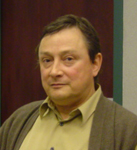
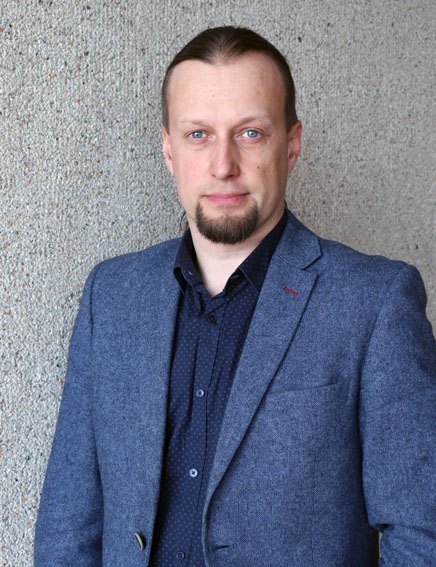
Jessie Ricketts is a Professor in the Department of Psychology at Royal Holloway, University of London. She leads the Language and Reading Acquisition (LARA) research lab, focusing on reading and spoken language development in children and adolescents. Current research emphasizes theory- and policy-driven questions Collaborates extensively with educators and non-academic partners Her work combines longitudinal and experimental methodologies to explore how language skills impact real-world learning. Recent projects include investigating dyslexia in adults, sleep's effect on adolescent cognition, and pandemic-related educational disruptions. She serves as a Subject Matter Expert for the Department for Education's teacher training initiatives and mentors doctoral researchers.
Dr. Chin-hui Lin is a Lecturer specializing in Chinese language education at Humboldt University of Berlin's Institute for Asian and African Studies, part of the Culture, Social and Educational Sciences Faculty. She teaches multiple Chinese language courses ranging from intermediate to advanced levels, including Modern Chinese II, IV, and specialized courses on contemporary Chinese society. Her office is located at Johannisstr. 10, Room 302, with regular office hours on Tuesdays from 2:00-3:00 PM conducted via Zoom. Her educational background includes: BA in Chinese Literature from National Tsinghua University (1999) MA in Teaching Chinese as a Foreign Language from National Taiwan Normal University (2003) PhD in Chinese Linguistics from Leiden University (2014) Dr. Lin's research focuses on innovative approaches to Chinese language pedagogy and linguistic analysis. She specializes in technology-supported language learning, curriculum design, and teacher training methodologies. Her linguistic research examines interactional linguistics, discourse analysis, pragmatics, and sociolinguistics within Mandarin Chinese, with particular attention to Taiwan Mandarin variants. Her work bridges theoretical linguistics with practical classroom applications, developing effective teaching strategies for German university contexts. Her recent publications demonstrate a clear trend toward addressing contemporary challenges in language education, particularly the shift to emergency remote teaching during the pandemic. She has systematically investigated both student and teacher perspectives on digital language instruction, while maintaining her foundational research on linguistic structures like utterance-final particles in Taiwan Mandarin. Her work consistently connects theoretical linguistic insights with practical pedagogical applications. Her notable scientific achievements include: Excellent Teaching Award from Leiden University's Faculty of Humanities (2012) Shortlisting for the Humboldt Award for Excellence in Teaching focused on digital teaching (2020) Nomination for contributions to digitally supported teaching concepts (2021) Dr. Lin has received recognition for her innovative approaches to language instruction, particularly her development of technology-enhanced learning environments and emergency remote teaching frameworks. While specific grant information isn't detailed in the provided materials, her award nominations suggest successful funding for digital teaching initiatives. She collaborates with colleagues like Prof. Dr. Henning Klöter on teaching innovations and research projects, including the Chinese Grammar Platform (ChinGram). She contributes to the academic community through her involvement in the Institute's research projects and teaching initiatives, particularly in developing digital teaching methodologies for Chinese language instruction at the university level.
Pushpak Bhattacharyya is a distinguished Professor in the Department of Computer Science and Engineering at the Indian Institute of Technology (IIT) Bombay. He holds the prestigious title of Abdul Kalam National Fellow and is a Fellow of the National Academy of Engineering (FNAE). His academic leadership extends to roles such as Professor Incharge of the IIT Bombay-Monash Australia Academy and Chairman of the MEITY Committee for Indian Language Standards. Professor Bhattacharyya's research spans multiple domains within computational linguistics and artificial intelligence. His work focuses on Natural Language Processing, Computational Linguistics, Machine Learning, Sarcasm Detection, Sentiment Analysis, Multilingual Processing, and Cognitive NLP. He has made significant contributions to Indian language technology, leading NITI Aayog's initiative on creating an Indian Language NLP stack and Virtual Agents. His recent publications reveal a strong focus on multilingual NLP for Indian languages, bias detection in language models, sarcasm and humblebragging detection, mental health applications of NLP, and code generation. His work bridges theoretical advances with practical applications in education, healthcare, and government services. The research demonstrates increasing integration of cognitive aspects with traditional NLP approaches and a growing emphasis on ethical AI considerations like bias detection and cultural competence. FNAE (Fellow of National Academy of Engineering) Abdul Kalam National Fellow Listed among top 10 Machine Learning Researchers in India Listed among most prolific NLP-ML researchers 2012-17 Professor Bhattacharyya has mentored numerous PhD and Masters students who have gone on to make significant contributions in academia and industry. His research has been supported by various grants from government agencies and industry partners, enabling large-scale projects in Indian language technology and NLP. He has led the development of comprehensive NLP resources for Indian languages and has been instrumental in establishing research collaborations between IIT Bombay and international institutions. He leads a vibrant research group at IIT Bombay focused on Natural Language Processing, with active projects in sarcasm detection, multilingual processing, cognitive NLP, and applications of NLP in healthcare and education. His team has developed several notable systems including those for Indian language translation, sarcasm detection, and mental health analysis through text.
Prof. Dr. Valentin Werner is an associate professor at the University of Bamberg , holding a chair in English Linguistics . His work bridges applied linguistics, corpus studies, and pop culture analysis, with a focus on language education and sociolinguistic variation. Expertise in learner Englishes, telecinematic language, and multimodal discourse Director of multiple DFG-funded projects including 'Young German Learner English' Recipient of Taylor & Francis Outstanding Research Monograph Award (2020) His recent research explores: Pop lyrics as pedagogical tools (2023-2024 projects) Political live blogs and hybrid news discourse (2025 publications) Country music authenticity and register analysis (2024 studies) Scientific awards include: Taylor & Francis Outstanding Research Monograph Prize (2020) Habilitationspreis by German Association for the Study of English (2022)
Tabitha Venable is an Instructor of American Sign Language (ASL) at the Department of Modern Languages & Classics, University of Alabama. She holds a BA in Deaf Studies, an MA in Sign Language Education, and an EdD in Deaf Studies, reflecting her expertise in ASL pedagogy and Deaf culture. Education: EdD in Deaf Studies (Lamar University), MA in Sign Language Education (Gallaudet University), BA in Deaf Studies (Gallaudet University). Her research focuses on language assessment tools, particularly for ASL and spoken language acquisition. She has published on ASL curriculum evaluation and normed checklists for language development. Her recent works analyze methodologies for assessing language proficiency in deaf and hearing communities, bridging educational technology and applied linguistics.
Tianmin Shu is an Assistant Professor in the Department of Computer Science at Johns Hopkins University's Whiting School of Engineering, with a secondary appointment in the Department of Cognitive Science. He directs the Social Cognitive AI (SCAI) Lab and is a member of the Data Science and AI Institute. Dr. Shu's educational background includes: PhD in Statistics, University of California, Los Angeles (2019) BS in Electronic Engineering, Fudan University (2014) Dr. Shu's research pioneers machine social intelligence to build human-centered AI systems. His work integrates: Embodied AI for physical-world human-robot collaboration Neurosymbolic methods for multimodal social reasoning Computational models of human social cognition Theory of Mind frameworks for mental state inference Continual learning for adaptive social agents Recent publications (2024-2025) reveal three dominant research thrusts: (1) Multimodal Theory of Mind systems like MMToM-QA for mental state reasoning, (2) Embodied assistance frameworks such as GOMA for goal-oriented human-robot alignment, and (3) Human feedback learning methods including pragmatic feature preferences. His work increasingly bridges language models with world models while exploring neural correlates of social cognition through fMRI studies. Dr. Shu's scientific contributions have been recognized with prestigious awards: Cognitive Science Society’s 2017 Computational Modeling Prize 2020 NeurIPS Best Paper Award (Cooperative AI Workshop) 2022 IROS Workshop Excellent Paper Award 2024 ACL Outstanding Paper Award (MMToM-QA) As director of the SCAI Lab, Dr. Shu leads research on socially intelligent systems through open-source platforms including VirtualHome 2 (multi-agent household simulator) and SimWorld (photorealistic interaction simulator). His lab develops computational frameworks that enable machines to perceive social dynamics, infer intentions, and provide context-aware assistance in complex environments.
Eleanor Chodroff is an SNF Assistant Professor in the Department of Computational Linguistics at the University of Zürich . She leads the Phonetics and Cognitive Science Lab (PaCSci Lab) within the broader Phonetics & Speech Sciences Group . Her research spans the phonetics–phonology interface , cross-talker and cross-linguistic phonetic variation , speech prosody , and morphophonology . A central theme involves leveraging large spoken corpora to advance linguistic theory, with applications in speech recognition and phonetic analysis . Former roles include Lecturer in Phonetics and Phonology at the University of York and postdoctoral researcher in the Prosody & Speech Dynamics Lab at Northwestern University . She holds a PhD in Cognitive Science from Johns Hopkins University and a BA in German and Linguistics from New York University . Recent collaborative projects include the CorpusPhon workshop (co-organized with Morgan Sonderegger), computational studies on temporal anticipation in speech , and methodological investigations of speaker heterogeneity in datasets like Common Voice. Her work intersects acoustic phonetics with machine learning frameworks, particularly in low-resource language contexts.
Dr. Srikanth Madikeri is a Lecturer and Senior Researcher at the University of Zurich's Department of Computational Linguistics. He holds a Ph.D. in Computer Science from IIT Madras (2013) and a Bachelor of Engineering from Anna University (2008). Before joining UZH, he spent 11 years at Idiap Research Institute as a Postdoctoral Researcher and Research Associate. His research focuses on low-resource speech technologies, including Automatic Speech Recognition (ASR), Speaker Diarization, Language Recognition, and Spoken Dialog Systems. He specializes in adapting models for challenging domains like air traffic control and criminal investigations. Recent publications demonstrate strong trends in multimodal systems, domain adaptation for ASR, and efficient data selection techniques. His work frequently integrates speech processing with NLP tasks and criminal network analysis. Awards: Best Paper Award in Signal Processing Track (NCC 2011) International Create Challenge 2017 Winner He teaches Speech Technology and Machine Learning for Computational Linguistics at UZH. Professional activities include serving as Area Chair for Interspeech (2021-2022) and developing open-source toolkits like pkwrap for LF-MMI training.
Hanny den Ouden serves as an Assistant Professor in the Language and Communication section of the Department of Languages, Literature and Communication at Utrecht University's Faculty of Humanities. She is actively involved in teaching undergraduate and graduate programs including Communication and Information Sciences (BA), Communication and Organization (MA), Dutch Language and Culture (BA), and Language and Cultural Studies (BA). Her office is located in the Transcomplex building at Utrecht University. Dr. den Ouden's research spans multiple dimensions of language and communication, with particular expertise in prosody analysis, text structure, and the application of linguistic principles to advertising, social media, and health contexts. Her work demonstrates a sophisticated understanding of how language functions in various communicative situations, from traditional advertising to digital customer interactions. She has made significant contributions to understanding conversational human voice in webcare, emotional responses to advertising, and narrative techniques in health communication. Her publication record reveals a clear progression from foundational linguistic research to increasingly applied communication studies. Early work focused on prosodic realization of text structure and discourse analysis, while more recent publications address practical applications in social media management, webcare interactions, and health communication. This trajectory reflects both theoretical depth and practical relevance across multiple communication domains. As a dedicated educator, Dr. den Ouden teaches courses including Communication and organizations: theory and practice, Corpora and tools in Dutch studies, Introduction to language and communication, and Patient communication. Her teaching appears closely aligned with her research interests, creating a cohesive academic profile that bridges theory and practice in language and communication studies.
Dr. Merel Scholman is an Assistant Professor at Utrecht University within the Department of Languages, Literature and Communication and affiliated with the Institute for Language Sciences . Her research focuses on how people use language to create meaning through discourse relations , investigating cognitive processing of coherence markers in written, spoken, and visual communication. PhD in Language Science and Technology from Saarland University (summa cum laude, 2019) Research Master in Linguistics from Utrecht University (cum laude, 2015) Visiting researcher at Lancaster University and University of Edinburgh Her work combines theoretical psycholinguistics with computational modeling , using quantitative empirical methods like corpus analysis and crowdsourcing experiments. Recent research examines cross-modal discourse signals across Nigerian Pidgin , English , and European languages , while methodological contributions explore annotation reliability and experimental design. Publications demonstrate expertise in discourse markers , coherence relations , and low-resource NLP , with applications to gesture synthesis , spoken language analysis, and educational tools . She received the Veni grant for her project on natural discourse structure signals across modalities. As an educator, she contributes to the Communication and Information Sciences (BA) and Linguistics (RMA) programs, teaching courses like Writing Style as a Choice . Her methodological innovations in crowdsourcing and annotation frameworks have shaped discourse analysis practices in computational linguistics.
Olga Volckaert-Legrier is a Lecturer in Psychology at the University of Toulouse Jean Jaurès, affiliated with the Cognition, Languages, Language, Ergonomics (CLLE) research unit. Her work bridges Developmental Psychology and Digital Communication , focusing on how adolescents' use of SMS and electronic communication impacts language acquisition, spelling skills, and learning processes. She has conducted extensive longitudinal studies on text messaging patterns and their implications for educational technology . Her research themes include: Adolescent digital writing practices Effects of SMS on cognitive production Learning disabilities and technology Comparative analysis across regions (e.g., French Guiana vs. Metropolitan France) Key publication trends highlight her expertise in language registers , textism usage , and the pragmatic functions of SMS . She has collaborated with institutions like the École Pratique des Hautes Études and participated in projects such as sms4science and ANR AdEN . Her work informs policies on digital educational tools and supports initiatives like the CREM ELN thematic groups .
Mark Steedman is a Professor of Cognitive Science at the School of Informatics , University of Edinburgh, and an Adjunct Professor in the Department of Computer and Information Science at the University of Pennsylvania. His research bridges Artificial Intelligence , Cognitive Science , and Computational Linguistics , with a focus on Combinatory Categorial Grammar (CCG) , Prosody and Intonation , and Temporal Semantics . He has led the Institute for Language, Cognition, and Computation and contributed to interdisciplinary research at the Human Communications Research Center and Centre for Speech Technology Research . Research Interests : Steedman's work explores the intersection of formal grammar, computational models, and cognitive processes. He investigates how CCG parsing can enhance semantic inference, how prosodic features improve speech processing, and the role of temporal semantics in language understanding. His projects often integrate language models with entailment graphs for question answering and dialogue systems. Scientific Awards : Fellow of the American Association of Artificial Intelligence (1993) Fellow of the Royal Society of Edinburgh (2002) Fellow of the British Academy (2002) Member of Academia Europaea (2006) Best Paper Awards at ACL 2023 and AACL/IJCNLP 2023 Influential Paper Award (IFAAMAS 2017) Recent Trends in Publications : His recent work emphasizes language models for semantic inference , entailment graphs in multilingual settings, and incremental parsing for brain-language interfaces. Papers address challenges in hallucination , cross-lingual transfer , and prosody-text alignment .
Benoit Favre is a Full Professor (PR, Section 27) at Aix-Marseille University and its engineering school Polytech Marseille since 2021. He leads the Data Science axis at the Laboratoire d'Informatique et Systèmes (LIS, CNRS UMR7020), encompassing research teams in NLP, machine learning, and multimodal processing. He completed his HDR (habilitation) in 2019 and serves as co-head of the multimodality group in the CNRS GdR on NLP. His research focuses on Natural Language Processing with machine learning, including semantic content analysis, multimodal system fusion, and technology evaluation in realistic applications. He teaches advanced machine learning for NLP at the Master IAAA program and organizes the ILCB Summer School. The 15 most recent publications highlight trends in Vision-Language Transformers , biomedical classification, historical domain adaptation, and cross-modal analysis. These works span from 2020 to 2024, with particular emphasis on multimodal representations, semantic parsing, and robust NLP systems. Scientific Awards : Best paper at TALN 2011 Ranked 1st in PERCOL consortium (REPERE 2013-2014) Ranked 1st in TAC 2008 and 2009 Benoit is also deeply engaged in community service, having organized major conferences like IEEE SLT 2010, SLAM 2013, and TALN 2014. He serves on scientific committees for selection of PhD grants and faculty positions. Office location: University library building (Luminy campus), second floor, office C207
Sophie Salffner is a researcher at SOAS University of London, affiliated with the School of Languages, Cultures and Linguistics. Her work focuses on African languages, particularly the endangered Ikaan (Ukaan) language spoken in Nigeria. Research Interests: Dr. Salffner's research spans phonology, tone systems, and cultural documentation in African languages. She has conducted extensive fieldwork in Nigeria, contributing to linguistic theory and methodological innovations in language documentation. Publication Trends: Her publications include studies on Ikaan's tonal grammar, phonetic field methods, and cultural projects. She emphasizes endangered language preservation and interdisciplinary approaches combining linguistics and technology. Labs & Collaborations: Dr. Salffner collaborates with the Centre for Endangered Languages, Cultures and Linguistics (LAC) at SOAS and has worked with researchers like Brian Sands and Mark Tzika on phonetic tools and African language classification.
Gediminas Navickas is a Lecturer at Vilnius University's Institute of Data Science and Digital Technologies (DMSTI) within the Faculty of Mathematics and Informatics, specializing in the Image and Signal Analysis Group. His work bridges academic research with practical applications in Lithuanian language technologies. His primary research focuses on automatic Lithuanian speech recognition, speech signal processing, speech synthesis methods and algorithms, and speech synthesis quality assessment. Navickas has made significant contributions to developing speech technologies specifically for the Lithuanian language, addressing the challenges of resource scarcity compared to more widely spoken languages. His work demonstrates strong interdisciplinary connections between computer science, linguistics, and cognitive science. Navickas's publication record reveals a consistent trajectory of innovation in speech technology, with recent work emphasizing cognitive approaches to evaluating synthetic speech, particularly examining differences in perception between blind and sighted users. His research has evolved from foundational work on neural network architectures for speech synthesis to comprehensive studies on speech corpus development and accessibility applications. He has been instrumental in major EU-funded projects including the LIEPA series (2013-present), which have developed comprehensive speech recognition and synthesis systems for Lithuanian. These projects have produced practical applications ranging from educational robots to voice-controlled mobile services and assistive technologies for the visually impaired. Member of Lithuanian Computer Society (LIKS) Council Member of IEEE organization Active participant in COST actions including UniDive and Multi3Generation Navickas regularly engages with the public through media appearances on LRT radio and television, where he explains complex speech technology concepts to general audiences. His science communication efforts demonstrate a commitment to making technical research accessible and relevant to Lithuanian society.