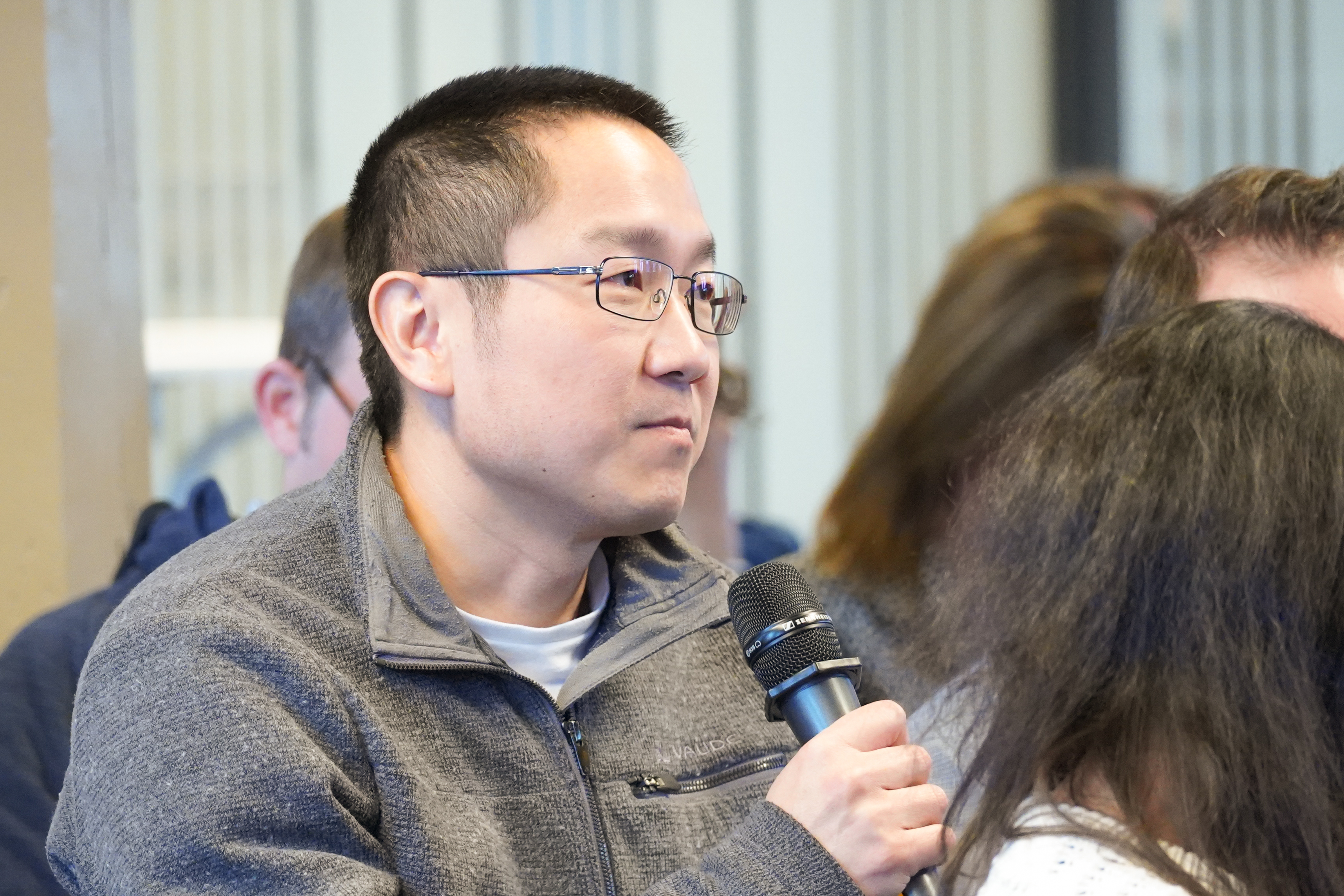
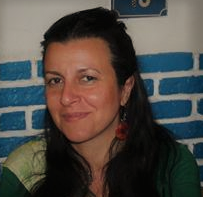
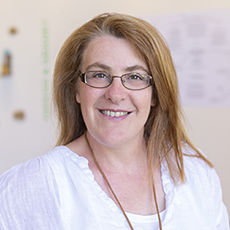
Dr. Antony Trotter is a Lecturer in Neuroimaging (Education) at King's College London, affiliated with the Department of Neuroimaging within the Institute of Psychiatry, Psychology & Neuroscience. His research focuses on interactions between action perception and production, emphasizing the motor brain's role in perceiving actions and individual differences affecting these processes. Key methodologies applied: skin conductance, ECG Teaching modules: Research methods and statistics in R 1/2, Psychology and Society His work explores emotional properties of written and spoken language, utilizing interdisciplinary approaches. Collaborators include Prof. Patti Adank (UCL) and Dr. Shalmali Joshi (University of Nottingham). Contact: antony.trotter@kcl.ac.uk
Isabel Lacruz is a Professor in the Department of Modern and Classical Language Studies at Kent State University. She holds a PhD in Experimental Psychology (Cognitive) from Kent State University and combines academic research with professional translation and community interpreting experience. Her work focuses on experimental studies of cognitive processes in translation, particularly post-editing of machine-translated text. Her research spans Translation Studies, Cognitive Psychology, and Machine Translation. She has contributed to empirical investigations of translation effort, literality, and post-editing efficiency, often employing methodologies like eye-tracking and pause analysis. Recent publications include edited volumes and peer-reviewed articles analyzing human-machine collaboration in translation workflows. Isabel Lacruz maintains active involvement in translation process research through editorial roles in the ATA Scholarly Monograph Series and collaborations with scholars like Michael Carl and Hiroshi Ogawa. Her office is located at 308-D Satterfield Hall, Kent State University.
Daria Bębeniec is a Senior Lecturer at the Department of English Linguistics and General Linguistics, Maria Curie-Skłodowska University (UMCS) , Faculty of Languages, Literatures and Cultures. Her research focuses on Cognitive Linguistics , Construction Grammar , and Corpus Linguistics , with specialization in polysemy, synonymy, and statistical analysis of linguistic data. Education: PhD thesis on directional prepositions (2010) Her research interests include the analysis of polysemous constructions in Polish (e.g., Complete Path), methodological standards in corpus-based cognitive semantics, and the intersection of legal linguistics with human rights frameworks. She has extensively contributed to Behavioral Profiles research, emphasizing data collection and annotation practices. Recent work trends highlight her expertise in corpus-driven analysis, particularly in Polish prepositions and path constructions. She also engages in interdisciplinary studies, such as her 2025 paper on legal definitions of religion. Email: daria.bebeniec@mail.umcs.pl
Xiaobin Chen is a Junior Professor at the University of Tübingen, affiliated with the Hector Institute for Empirical Educational Research within the Faculty of Humanities and the Department of Social Sciences. He leads research at the intersection of artificial intelligence and language education, with strong institutional support from the German Federal Ministry of Education and Research (BMBF). His work is deeply collaborative, involving partnerships with researchers across institutions and active participation in the LEAD Graduate School & Research Network. His research focuses on leveraging artificial intelligence and natural language processing to enhance second language learning. Key areas include Intelligent Computer-Assisted Language Learning (ICALL), automated language assessment, readability modeling, and the design of pedagogically sound AI tools such as conversational agents and interactive reading platforms. His work emphasizes aligning technological innovation with educational theory and classroom needs. The recent publications reflect a strong trajectory in AI-driven educational research, particularly in applying NLP to analyze learner language, develop intelligent tools, and assess language proficiency. Themes across the articles include individual differences in learning, human-AI collaboration, automated scoring, and the integration of AI into real-world educational settings, especially in EFL contexts. Xiaobin Chen leads two major BMBF-funded research projects: Aisla - Intelligent Language Assistant for Learning English in Everyday Situations (2021–2024) AI in Education: Pedagogically Oriented Language Knowledge Extraction and Readability-Controllable Natural Language Generation (2022–2025) These projects support his team’s development of innovative, theory-informed AI systems for language learning and assessment. He is associated with the KIBi Research Group , which focuses on integrating knowledge, interaction, and behavior in intelligent educational systems. The group develops and evaluates digital tools that adapt to learners’ needs, using data from interaction logs and linguistic analysis to drive personalization.
Sapountzaki Galini is an Assistant Professor at the Department of Special Education, University of Thessaly, specializing in Greek Sign Language (GSL). She has held this position since January 2012 and teaches courses on GSL linguistics and methodology. Her work focuses on language acquisition in deaf communities, educational accessibility, and technology-enhanced learning platforms for sign languages. Education: PhD in Linguistics (2005) from the University of Bristol Diploma in GSL Interpreting (1997) Bachelor’s in Philology (1994) from the Athens School of Philosophy Research Interests: Dr. Sapountzaki’s work bridges theoretical linguistics and applied education. She explores grammar structures in GSL, particularly tense/aspect markers, and advocates for bilingual education for deaf students. Her projects include developing e-learning platforms like SL-ReDu for GSL recognition and assessment, emphasizing 3D modeling and multimodal data fusion. She also examines the impact of language deprivation on deaf children and strategies for remote GSL instruction during crises like the pandemic. Grants & Advising: No specific grants listed, but her work is supported by projects like SYNENNOISI and DIANOIMA. She has advised on curricula for deaf education programs and collaborates with institutions like the Neuropsychology Laboratory and Pedagogical Institute. Her teaching spans special education teacher training and interpreter education. Labs/Teams: Collaborates with the Institute of Speech Processing (ISL) and the University of Thessaly’s Special Education Committee. Active in designing GSL video texts and accessibility tools for public schools.
Maria C. Hartman is a Senior Lecturer and Director of the Special Education: Deaf and Hard of Hearing Program at Teachers College, Columbia University, within the Department of Health Studies & Applied Educational Psychology in the Graduate School of Education, Health & Psychology. She has been a key figure in the program since 1992, progressing from Adjunct Instructor to Program Director, and remains actively engaged in research, teaching, and service. Research Interests: Her work centers on improving educational and developmental outcomes for deaf and hard-of-hearing children, particularly through listening and spoken language approaches. Key areas include early intervention, language and literacy development, inclusion practices, caregiver-child interactions, and teacher preparation. She emphasizes family-centered, evidence-based strategies to support children’s communication growth. Publication Trends: Her recent scholarly output shows a strong focus on qualitative and longitudinal studies exploring parental experiences, reading achievement, language environments (including LENA technology), and inclusion. Collaborative research is central to her work, often involving colleagues like Erika Smolen and Yuxi Wang, and targeting high-impact journals in deaf education, speech-language pathology, and special education. Scientific Contributions: While no formal awards are listed, her extensive publication record, leadership in federally funded grants, and invited presentations at major conferences (e.g., AERA, EHDI, AG Bell) reflect significant recognition in the field. Advising and Grants: Dr. Hartman co-directs a $1.25 million OSEP-funded interdisciplinary training grant (Columbia Collaborate) aimed at improving services for children with high-intensity needs. She mentors emerging educators through university-based induction models and professional development initiatives. Her leadership in curriculum and teacher training underscores her commitment to building a skilled workforce in deaf education. Labs and Teams: She is a Co-Investigator on multiple long-term research projects at Teachers College, including studies on language input, reading achievement, early intervention outcomes, and adoption experiences for children with hearing loss. These projects involve interdisciplinary teams of researchers, clinicians, and graduate students focused on generating actionable insights for practice.
Raina J. León is a faculty member in the Department of Teacher Education at Saint Mary's College of California's Kalmanovitz School of Education. Her work integrates educational technology, poetry, and social justice frameworks, with disciplinary expertise spanning multicultural pedagogy, digital storytelling, literacy development, and anti-racist education strategies. Her research focuses on transformative educational approaches including: Innovative technology integration in K-12 and teacher education Poetry as pedagogical tool for literacy and cultural expression Critical frameworks for addressing race, bullying, and health disparities 21st-century skill development through digital platforms Culturally responsive teaching methodologies Recent scholarly output demonstrates strong emphasis on educational technology implementation, poetry performance pedagogy, and equity-focused teacher training. Her presentations frequently address technology's role in educational transformation, cultural competency development, and narrative-based learning approaches.
Jessica Lena Montag serves as Associate Professor in the Department of Psychology at the University of Illinois, with concurrent appointments at the Beckman Institute for Advanced Science and Technology and the National Center for Supercomputing Applications (NCSA), plus affiliate status at the Center for Social & Behavioral Science. Her research investigates language acquisition and processing across developmental stages, specializing in child-directed speech patterns, picture book interactions with infants, bilingual language development, and computational modeling of vocabulary growth. Methodologically, she integrates naturalistic recording (using EAR technology), corpus linguistics, and cognitive experiments to examine how environmental exposure shapes linguistic competence. Recent publications (2022-2025) reveal consistent focus on early language exposure mechanisms, with emerging trends in digital survey methodologies for infant-caregiver interactions and computational approaches to vocabulary acquisition. Her work bridges psychological theory with advanced computational resources through NCSA collaborations. JSMF Scholar Award in Understanding Human Cognition (2018) Psychonomic Society Fellow (2024) Dr. Montag's interdisciplinary collaborations span cognitive science, linguistics, and computer science teams, particularly through Beckman Institute initiatives examining language processing in natural contexts. Her research leverages supercomputing infrastructure for large-scale language data analysis while maintaining developmental psychology foundations.
Philippe Blache is a senior researcher at the Laboratoire Parole & Langage (LPL), a joint research unit of the French National Centre for Scientific Research (CNRS) and Aix-Marseille University. With a career spanning several decades, he has established himself as a leading figure in computational linguistics, natural language processing, and conversation analysis. His work bridges theoretical linguistics with practical applications in language technology. His research focuses on several key areas: Natural language processing and computational linguistics Speech and conversational systems Multimodal interaction analysis Linguistic annotation and corpus development Cognitive modeling of language processing Blache's recent work (2020-2025) has centered on developing methods to evaluate spoken language features in conversational models, studying common ground instantiation through multimodal signals (including brain activity), and investigating how language models process complex linguistic phenomena. His research often involves creating and analyzing large multimodal corpora that capture not just verbal content but also nonverbal cues, prosody, gestures, and neuro-physiological signals. His publication record shows consistent high-quality output in top-tier venues, with numerous papers in LREC, COLING, and SIGDIAL proceedings. His work demonstrates a strong interdisciplinary approach, combining insights from linguistics, computer science, cognitive science, and neuroscience to advance our understanding of language processing. Among his notable contributions is the BrainKT corpus project, which represents an innovative approach to studying the cognitive and neural underpinnings of conversation through simultaneous recording of audio, video, and EEG signals during natural interactions. Blache has received recognition through his sustained research productivity and leadership in major projects. His collaborations span multiple institutions and disciplines, reflecting the interdisciplinary nature of his work and its broad relevance across fields studying human communication.
Anne Therese Frederiksen is an Assistant Professor in the Department of Communication, Arts, Sciences, and Disorders at Brooklyn College, City University of New York (CUNY) . Her work bridges psycholinguistics and sign-language linguistics, with a particular focus on how bilingualism in signed and spoken languages illuminates broader questions about language and cognition. Education: Ph.D. in Linguistics and Cognitive Science, University of California, San Diego (Mayberry Lab for Multimodal Language Development) Postdoctoral fellowships: UC Irvine Chancellor’s Postdoctoral Fellow (2019–2020) and NSF-funded postdoc under Dr. Judith Kroll (2020–2022) Research Interests: Frederiksen’s research centers on bimodal bilingualism —the simultaneous use of a signed and a spoken language—examining how this unique bilingual experience shapes cognitive control, referential cohesion, and discourse processing. She investigates American Sign Language (ASL) pronouns and spatial grammar, gesture–language interaction, and the developmental trajectories of both native and late learners of ASL. Publications at a glance: Since 2015 she has published nine peer-reviewed articles and numerous conference presentations. The corpus spans high-impact journals such as Language, Cognition and Neuroscience , Frontiers in Psychology , and Lingua . Collectively, the work traces a trajectory from foundational descriptions of reference tracking in novice ASL learners to sophisticated models of bilingual language control and the semantics-pragmatics interface in sign languages. Scientific Awards & Funding: National Science Foundation research grant (2020–2022) UC Irvine Chancellor’s Postdoctoral Fellowship (2019–2020) Advising & Collaborative Networks: While the supplied text does not list individual advisees, Frederiksen has collaborated closely with Prof. Judith Kroll (UC Irvine) and Prof. Rachel Mayberry (UC San Diego), indicating active mentoring of graduate students and postdocs within large, federally funded research teams. Labs & Research Groups: During her doctoral training she was a member of the Mayberry Lab for Multimodal Language Development at UC San Diego, and she maintains collaborative ties with language-science groups at UC Irvine and CUNY.
Professor Jeannette Littlemore is a leading scholar in Applied Linguistics at the University of Birmingham , specializing in metaphor and metonymy across language learning and cross-cultural communication. She co-chairs the International Organisation Researching and Applying Metaphor and leads a research group on figurative language. Her research focuses on: Metaphor/metonymy in emotional expression and understanding Figurative language in second language acquisition Cognitive and cultural factors in metaphor interpretation Applications to healthcare, climate activism, and workplace communication Recent publications explore topics like: Metaphor’s role in pandemic isolation experiences Figurative patterns in climate activism discourse Cognitive modeling of metaphor variation Emotion-color associations across cultures Selected scientific awards: ESRC grant (2016-2018): £537,225 Marie Curie Fellowship (2015-2017): €183,455 Spanish Ministry grants (2012-2014, 2014-2017): €50k-€73k British Council grant (2010): £2,820 She supervises PhD projects on figurative language pedagogy and cognitive linguistics, teaching modules in: Language Teaching Methodology Second Language Acquisition Cognitive Linguistics Psycholinguistics Her lab collaborates internationally on projects involving: Cross-cultural metaphor analysis Figurative communication in healthcare Iconicity in language
Michael White is a Professor in the Department of Linguistics at The Ohio State University, specializing in computational linguistics, natural language generation, and spoken language dialogue systems. He holds a Ph.D. in Computer Science from the University of Pennsylvania and has collaborated with interdisciplinary teams in both academia and industry, including roles at CoGenTex, Inc., and visiting positions at Facebook/Meta and Australian universities. His research emphasizes controllable and ethical AI, with a focus on neural language models and their applications in healthcare and conversational systems. Education: Ph.D. in Computer Science, University of Pennsylvania. Professional Background: Former Research Fellow at the University of Edinburgh School of Informatics, and founder of CoGenTex, Inc. Collaborations include researchers in Computer Science and Linguistics at Ohio State, such as Eric Fosler-Lussier and William Schuler. Research Interests: Neural language generation controllability, ethical AI alignment, discourse processing, and conversational systems. Recent projects include developing virtual patient simulators for medical education and exploring knowledge distillation to mitigate AI-generated harm. Articles Trends: Focused on advancing neural NLG techniques, improving dialogue system safety, and leveraging large language models for domain-specific tasks (e.g., healthcare, KBQA). Recent work addresses transparency, data efficiency, and ethical implications in AI. Scientific Awards: Lumley Interdisciplinary Research Award (2023), PRE Accelerator Award. Grants: Supported by interdisciplinary initiatives such as the virtual patient project collaboration with Eric Fosler-Lussier and Laura Wagner. Advising and Grants: Mentors students in computational linguistics and leads projects funded by Ohio State’s interdisciplinary programs. Current work involves neuro-symbolic approaches for patient preparation assistants and data-efficient conversational AI. Labs/Teams: Collaborates with the Ohio State Computational Linguistics Group and industry partners. Active in organizing workshops on discourse-driven NLG and ethical AI challenges.
Dr. Andreas van Cranenburgh is an Assistant Professor of Digital Humanities and Information Sciences at the University of Groningen, Faculty of Arts. His work focuses on computational linguistics, statistical parsing, and computational literary studies, with expertise in information science, language & linguistics, and artificial intelligence. He leads projects on historical text normalization, authorship attribution, and narrative analysis frameworks like the GOLEM Triple Store. His research integrates NLP techniques with literary analysis, addressing topics such as gender bias in literary prizes, coreference resolution in Dutch literature, and psycholinguistic applications in speech disorder detection. He collaborates on corpora like OpenBoek and Dutch Novels 1800-2000, advancing digital humanities infrastructure. Notable contributions include developing Dutchcoref systems for literary text processing, exploring machine learning approaches to literary quality, and advancing graph-based narrative representations. His work bridges computational methods with humanistic inquiry, impacting both academic research and cultural heritage preservation.
Ian Lane is an Associate Professor in the Computer Science and Engineering Department at the University of California, Santa Cruz's Baskin Engineering school, serving as Program Director for the Natural Language Processing Professional Master's Degree Program. He joined UCSC in Fall 2022 after an extensive career spanning academia and industry. His research centers on computational systems that understand spoken human language, spanning speech recognition, transcription, meaning interpretation, and contextually appropriate responses. Key research areas include: Natural Language Processing for real-world applications Conversational AI systems development Speech-to-speech translation technologies Multimodal interaction (audio-visual integration) Language technologies that learn through real-world interaction His recent publications demonstrate strong focus on hallucination detection in LLMs, tabular data understanding, explainable AI, and robust speech recognition systems. Current work emphasizes "in the wild" language technologies that adapt through user interaction. Dr. Lane has received recognition through impactful industry applications including Jibbigo (the first mobile speech translation app) and military translation systems deployed in Iraq and Afghanistan. He actively mentors students and collaborates across UCSC's Silicon Valley Campus programs including Games and Playable Media and Human-Computer Interaction. His vision includes integrating NLP with virtual environments for language learning and skill acquisition.
Fiona Farr is Professor of Applied Linguistics and TESOL at the University of Limerick's School of Modern Languages and Applied Linguistics, where she serves as Director of the Centre for Applied Language Studies. She holds adjunct positions including former Adjunct Professor at the University of Inland Norway (2022-2024) and active external examiner roles at Trinity College Dublin, University College Cork, University of Glasgow, and University of Malta. Her research spans applied corpus linguistics , language teacher development , and technology-enhanced language learning , with specific focus on spoken language corpora, intervarietal discourse analysis, Southern-Irish English, and teaching practice feedback mechanisms. She champions reflective practice frameworks and continuous professional development for language educators. Recent publications reveal a concentrated trend toward digital discourse analysis and blended teacher training models , particularly examining virtual workplace communication and hybrid feedback systems in TESOL contexts. Her work consistently bridges corpus linguistics methodologies with practical teacher education applications. Farr leads significant collaborative projects including Digilanguages (2016-2017), Shout4HE (2018-2021), and Interactional Variation Online (2021-2024), securing sustained research funding. She supervises graduate researchers in language education and corpus applications while directing the Centre for Applied Language Studies. Her editorial leadership includes co-editing the EUP Textbooks in TESOL Series and the Routledge Handbook of Language Learning and Technology (2nd ed. 2026), plus serving as Associate Editor for Second Language Teacher Education.