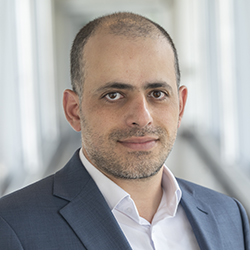
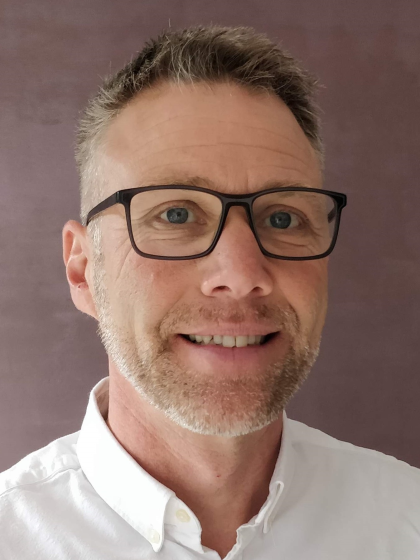
Weibin Yang, M.D., is a Clinical Professor in the Department of Physical Medicine & Rehabilitation at UT Southwestern Medical Center. He holds leadership roles including Chief of the Physical Medicine and Rehabilitation Service at the Department of Veterans Affairs North Texas Health Care System (since 2004) and previously served as Director of the Rehabilitation Medicine Section at the University of Illinois at Chicago (2003–2004). His career includes roles as Medical Director of Inpatient Rehabilitation at the University of Illinois Medical Center (2002–2004) and Chief Resident at Marianjoy Rehabilitation Hospital (2000–2001). Dr. Yang’s expertise aligns with his departmental focus, emphasizing clinical and rehabilitative care in neurology, spinal cord injury recovery, and stroke rehabilitation. His professional trajectory reflects extensive experience in academic medicine and veterans’ healthcare administration. No scientific awards, grants, or specific lab affiliations are listed in the provided information.
Maria del Pilar Sainz de Baranda Andujar is Professor in Physical Activity and Sport at the University of Murcia's Faculty of Sports Sciences. Her research designs school-based interventions improving spinal alignment and muscle flexibility through physical education/extracurricular programs. Work identifies musculoskeletal disorders in primary students and validates 17-minute daily protocols for sagittal spine correction. Collaborates on locomotor-system studies across developmental stages.
Raquel Vaquero Cristobal is an Assistant Professor at the University of Murcia (UMU) within the Faculty of Sports Sciences and the Department of Physical Activity and Sport. She holds a Doctorate from UCAM (2017) and has extensive academic credentials, including multiple prestigious awards and editorial roles. Educational Background: Licenciatura en Ciencias de la Actividad Física y el Deporte (UMU, 2011) Máster en Envejecimiento (UMU, 2012) Máster en Rendimiento Deportivo y Salud (UMH, 2014) Máster en Formación del Profesorado (UCAM, 2017) Research Focus: Her work centers on the effects of Pilates on anthropometry, body image, spinal alignment, and hamstring flexibility. She is affiliated with the Movement Sciences and Sport research group and has published over 137 articles in JCR/SCOPUS journals, edited 19 books, and led 5 special issues in academic journals. Awards and Recognition: 2023: Young Scientist Award in Sport (Fundación Séneca) 2014: Extraordinary Master’s Prize (UMH) 2011: Undergraduate Excellence Prize (UMU) 2013–2018: Research Sexenium (ANECA) Grants and Leadership: Principal Investigator of: 2022: State Research Project (Plan Estatal) 2021: Erasmus+ Sport Project 2020/2022: 2 Educational Innovation Projects (UMU) 2023: Industry Collaboration Contract Teaching and Editorial Roles: Teaches in Sports Science and Nutrition programs at UMU. Former Editor-in-Chief of *Cultura, Ciencia y Deporte* (Q3/Q1 ranked) and editorial board member of three journals. Holds ANECA certifications for university teaching roles.
Quinn H. Hogan, MD is a Professor in the Department of Anesthesiology at the Medical College of Wisconsin (MCW). His work bridges clinical practice and research, focusing on pain mechanisms and novel therapies. Dr. Hogan completed his BS at Stanford University, MD at Harvard Medical School, and residency/fellowship at MCW. Research Focus: Investigates disrupted sensory neuron function post-injury using advanced techniques like patch-clamp electrophysiology, single-unit recordings, and microfluorometry. Key areas include translating mechanistic discoveries into therapies via molecular manipulations, stem cell therapy, and electrical stimulation. Emphasizes valid behavioral testing to align animal models with human pain conditions. Publications Trends: Recent work highlights RNA interference applications (e.g., Piezo1 channel targeting), AAV-mediated gene therapy for pain, and endocannabinoid system modulation. Studies also address Fabry disease's neurobiological impacts and osteoarthritis pain mechanisms. Collaborative projects explore spinal cord stimulation neuroimaging and dorsal root ganglion therapies. Laboratory: The Hogan Lab combines physiological and molecular approaches to decode pain pathways. Current efforts prioritize translational research bridging basic science and clinical pain management, with a focus on sensory neuron-specific therapies.
Dr. Aditya Vedantam is an Associate Professor of Neurosurgery at the Medical College of Wisconsin (MCW), serving as Director of Minimally Invasive Surgery and Director of the Center for Cervical Myelopathy. He holds adjunct faculty positions in Biomedical Engineering, Radiology, and Orthopedics. His clinical expertise includes spine surgery, with a focus on minimally invasive techniques and complex spinal disorders. Education & Training: MD: Christian Medical College & Hospital, Vellore, India (2009) Postdoctoral Research Fellowship: MCW, Milwaukee, WI (2011–2013) Neurosurgery Residency: Baylor College of Medicine, Houston, TX (2013–2020) Fellowship: Minimally Invasive & Complex Spine Surgery, University of Miami (2020–2021) Research Interests: Dr. Vedantam’s research focuses on improving spinal care through advanced MRI techniques, biomechanical modeling, and neurorehabilitation. Key areas include: Finite element modeling of cervical spinal cord biomechanics Diffusion tensor imaging (DTI) for spinal cord assessment Virtual reality-based rehabilitation for hand function recovery Post-surgical recovery trajectories and outcome measures Publications: Over 50 peer-reviewed articles, with recent work emphasizing spinal cord biomechanics and clinical outcomes in degenerative cervical myelopathy. His studies bridge laboratory research and clinical practice to enhance patient care. Labs & Collaborations: Principal Investigator of the Vedantam Laboratory, collaborating with experts in biomedical engineering, neuroimaging, and neurology to advance spinal cord injury research and rehabilitation.
Thomas Klestil is a Professor at the Department for Health Sciences, Medicine and Research within the Faculty of Health and Medicine at the University for Continuing Education Krems. His research focuses on orthopedics, medical imaging, and the application of artificial intelligence in orthopedic diagnostics and treatment. With numerous publications spanning from 2019 to 2024, he has established himself as a significant contributor to advancements in orthopedic surgery and biomechanics. Institution: University for Continuing Education Krems Faculty: Faculty of Health and Medicine Department: Department for Health Sciences, Medicine and Research Position: Professor Professor Klestil's research interests center around orthopedics, medical imaging, artificial intelligence applications in medicine, biomechanics, and regenerative medicine. His work particularly focuses on osteochondral defects, bone fractures, and innovative surgical techniques. He has made significant contributions to understanding knee alignment, spinal deformities, and the biomechanics of joint implants. His research bridges clinical orthopedics with advanced computational methods, particularly deep learning applications for radiographic analysis. His publication record demonstrates a clear trajectory toward integrating artificial intelligence with traditional orthopedic practices. Recent works show increasing sophistication in using deep learning for automated measurement of anatomical features from radiographic images, including knee alignment, spine deformities, and pelvic structures. His research also extends to biodegradable implants for pediatric fractures, obesity impacts on elderly populations, and biotribological testing of cartilage and implants. Professor Klestil has served as Principal Investigator for significant research projects including 'Bioresorbable Intramedullary Nailing of Forearm Fractures' (2021-2024), demonstrating his leadership in translational orthopedic research. His collaborative approach is evident in the diverse team compositions across his publications, working with researchers from various disciplines including computer science, biomechanics, and clinical medicine. His laboratory work appears to focus on biomechanical testing of orthopedic materials and structures, with particular emphasis on cartilage mechanics, implant interfaces, and surgical technique optimization. The integration of computational methods with traditional biomechanical testing represents a distinctive feature of his research approach.
**Dr. Stefan Nehrer** is a **Professor and Dean of the Faculty of Health and Medicine** at the University for Continuing Education Krems. His research focuses on regenerative medicine, orthopedics, and the application of artificial intelligence (AI) in medical diagnostics. Key areas of expertise include cartilage repair, osteoarthritis therapy, and tissue engineering. He leads projects such as ‘Artificial Intelligence in Orthopedic Radiography Analysis’ and ‘Minced Cartilage in Regenerative Medicine.’ **Research Projects**: Assessing biomechanical biomarkers for knee osteoarthritis (2024–2027) Nutrition and movement for osteoarthritis self-efficacy (2022–2025) AI-driven analysis of radiographic images for knee and spinal conditions **Publications**: His work spans journals like *Biomacromolecules*, *Macromolecular Bioscience*, and *Journal of the Mechanical Behavior of Biomedical Materials*, with a focus on 3D bioprinting, biomaterials, and AI applications. Recent studies explore silk fibroin hydrogels for meniscus regeneration and deep learning for Cobb angle measurements. **Awards & Recognition**: While no specific awards are listed, his contributions to regenerative medicine and AI in healthcare highlight significant scholarly impact. **Grants & Funding**: Projects funded by Austrian federal programs and industry collaborations, such as ‘Additive Manufacturing for Partial Implants’ (2022–2024). **Labs/Teams**: His work integrates interdisciplinary teams in biomedical engineering, orthopedics, and AI, with a focus on translating research into clinical practice.
Dr. Saman Shabani is an Assistant Professor of Neurosurgery at the Medical College of Wisconsin (MCW), serving as Director of Spinal Oncology Surgery, Adult Spinal Deformity Surgery, and the Spine Fellowship Program. He completed his MD at Stony Brook University (2014), Neurosurgery Residency at MCW (2021), and a Complex & Minimally Invasive Spine Surgery Fellowship at UCSF (2022). Specializing in spinal oncology, adult spinal deformity, and acute/chronic spinal cord injury, he has published over 50 peer-reviewed articles and secured multiple grants. Notable awards include the Charlie Kuntz Scholar Award (2022) and Golden Key Honor Society (2010). Education: BS in Psychobiology, UCLA (2010) MD, Stony Brook University School of Medicine (2014) Neurological Surgery Residency, MCW (2014–2021) Fellowship in Complex Spine Surgery, UCSF (2021–2022) Research Interests: Dr. Shabani focuses on advancing surgical techniques for spinal deformities and tumors, optimizing patient outcomes through machine learning, and improving diagnostic imaging practices. His work emphasizes minimally invasive approaches, awake spinal surgery protocols, and MRI-based spinal research. Publications: His articles span topics like BMI’s impact on surgical outcomes, minimally invasive thoracic disc management, and spinal oncology case studies. Recent work explores racial disparities in postoperative opioid prescriptions and sleep disturbances in cervical myelopathy patients. Awards & Grants: Charlie Kuntz Scholar Award (2022) Young Surgeon Grant (2022) Mayfield Based Science Research Award (2017) Golden Key Honor Society (2010) Labs/Teams: Leads the spinal oncology and deformity teams at MCW, collaborating on AO Spine surveys and multicenter studies. Active in developing educational algorithms for awake spinal surgery and robotic-assisted techniques.
Mohammad Abedin-Nasab is an Associate Professor in Biomedical Engineering and Affiliate Faculty in Mechanical Engineering at Rowan University's Henry M. Rowan College of Engineering. He holds a Ph.D. and M.S. in Mechanical Engineering from Sharif University of Technology, where he also completed post-doctoral work. His B.S. in Mechanical Engineering is from KNT University of Technology. Research focuses on surgical robotics and image-guided surgery, particularly for orthopedic applications. Current projects include developing robotic systems for long-bone fracture surgery. Key research areas span biomedical engineering, robotics, and digital health technologies. Recent publications demonstrate innovation in parallel mechanism design, haptic feedback systems, and surgical navigation techniques. Awards include the 2024 Edison Patent Award, 2025 NJ Innovate 100 recognition, and Rowan University's Faculty Innovation & Entrepreneurship Award (2024) and Teaching Excellence Award (2022).
Simon McMullan is an Associate Professor in the Faculty of Medicine & Health Sciences at Macquarie University, Sydney. He holds a PhD in Physiology (2002, University of Bristol) and a BSc (Hons) in Physiology (1998, University of Manchester). His research focuses on autonomic nervous system circuits regulating blood pressure and respiration, with implications for conditions like sleep apnea, hypertension, and affective disorders. He leads projects on neural control of airway protection, optogenetic therapies for sleep disorders, and cardiovascular connectivity. Education: PhD (Physiology), University of Bristol, UK (2002) BSc (Hons) Physiology, University of Manchester, UK (1998) His research integrates viral tracing, optogenetics, and electrophysiology to study brain circuits. He has supervised 1 Honours, 9 MRes, and 8 PhD students, many of whom received awards. Notable achievements include the 2018 Australian Neuroscience Society Paxinos-Watson Prize. Labs/Teams: Leader of the Neurobiology of Vital Systems research node at Macquarie Medical School Data Horizons Research Centre, collaborating with global teams on projects like DeepSlice and neural circuit mapping.
Michalis Efstathiou is an Associate Lecturer at the University of Nicosia's Department of Health Sciences since 2013. He holds a BSc in Physiotherapy from the Technological Educational Institute of Athens (2008), an MSc in Advancing Practice (Manual Therapy) from the University of Birmingham (2010), and is a PhD candidate at the University of Thessaly. His research focuses on neurorehabilitation, exercise physiology, and the efficacy of nutritional interventions in neurological disorders like Parkinson's disease. He has published in peer-reviewed journals and presented at international conferences, contributing to evidence-based physiotherapy practices. Active in professional organizations, he serves as President of the Scientific Committee of the Cyprus Physiotherapy Society and Treasurer (2016-2018). His academic work aligns with UN Sustainable Development Goals related to quality education and good health. Education background includes: Bachelor's: Physiotherapy, ATEI Athens (2008) Master's: Advancing Practice in Manual Therapy, University of Birmingham (2010) PhD Candidate: Physiotherapy, University of Thessaly Research interests emphasize neurology, sports medicine, and manual therapy techniques. He has conducted systematic reviews on exercise interventions for chronic conditions and published on topics like proprioception in athletes and pain management strategies. His work bridges clinical practice with cutting-edge research, particularly in optimizing functional outcomes for patients with musculoskeletal and neurological disorders.
Nathanael Heckmann, M.D., is a Clinical Assistant Professor in the Department of Orthopaedic Surgery at the Keck School of Medicine of USC . His clinical expertise focuses on hip and knee arthroplasty , including minimally invasive surgery , robotic-assisted techniques , and complication management for infections and implant failures. Dr. Heckmann's research centers on clinical outcomes following hip and knee arthroplasty , particularly the interplay between spinal degeneration and hip diseases and infection diagnosis/treatment . He has published over 100 papers, with recent studies analyzing thromboprophylaxis strategies , outcomes in diabetic patients , and implant infection predictors . His recent publications highlight trends in hip and knee prosthetic infections , anticoagulant safety , and health disparities in arthroplasty care. While no formal scientific awards are listed, his work addresses critical clinical questions in orthopaedic surgery and health policy .
Alan H. Daniels, MD, is a Board-Certified Spine Surgeon and Full Professor of Orthopaedics at The Alpert Medical School of Brown University. He serves as the Chief of Spine at The Miriam Hospital and Rhode Island Hospital and co-directs the Brown Spine Surgery Fellowship . With expertise in adult spinal deformity and complex spinal disorders, Dr. Daniels performs over 400 spine surgeries annually, focusing on scoliosis, kyphosis, degenerative disease, trauma, and tumors, particularly in revision cases. His research emphasizes spinal biomechanics , outcomes optimization in deformity surgery, and complication prevention . He has published over 600 peer-reviewed articles, 550 presentations, and co-edited 4 orthopedic textbooks. A member of the American Academy of Orthopedic Surgeons , Lumbar Spine Research Society , and Scoliosis Research Society , he has received prestigious awards including the SRS Whitecloud , Russell A Hibbs , and John H Moe Awards . Scientific Awards: SRS Whitecloud Award Russell A Hibbs Award John H Moe Award Dr. Daniels' clinical practice and research bridge surgical innovation with multidisciplinary collaboration, ensuring advancements in spinal care and patient safety.
MYEONGSUN YOON is an Associate Professor in the Department of Educational Psychology at Texas A&M University. She holds a Ph.D. in Quantitative Psychology from Arizona State University (2007), an M.A. from the same university (2004), and a B.A. in Psychology from Seoul National University (2000). Her research focuses on quantitative methods, measurement invariance, structural equation modeling, and educational assessment. Key projects include validity studies of educational tools and interventions targeting language acquisition and STEM persistence. She has served on editorial boards for journals like Psychological Assessment and Journal of School Psychology . Her work addresses cross-cultural adaptations of educational instruments and methodological advancements in multilevel and longitudinal data analysis. Research interests emphasize psychometric rigor in educational measurement, particularly in ensuring cultural and contextual validity across diverse populations. She has led/co-led research projects funded by agencies such as the National Science Foundation and the U.S. Department of Education. Notable publications include studies on factorial invariance, STEM identity development, and the impact of teacher-student relationships on engagement. Her advising record includes mentoring over 10 doctoral students, many of whom have contributed to studies on acculturative stress, measurement equivalence, and educational interventions. Grants she has secured include initiatives to improve experiential learning through alignment with student learning styles and a validation study for the Workplace Health Achievement Index.
Prof. Han Houdijk is a Professor of Clinical Movement Sciences at the University of Groningen's Faculty of Medical Sciences, affiliated with the Center for Human Movement Sciences. His research focuses on biomechanics, assistive technology, and rehabilitation engineering, particularly in prosthetics, exoskeletons, and wheelchair innovation. He holds leadership roles in organizations like ISPO-NL and serves as an associate editor for IEEE TNSRE. His work bridges clinical and technological advancements, contributing to Paralympic athlete performance and stroke rehabilitation. Key areas include gait analysis, musculoskeletal modeling, and ergonomic design. Recent studies emphasize exoskeleton design for surgeons, wheelchair propulsion efficiency, and post-stroke gait rehabilitation. Prof. Houdijk collaborates internationally, with publications in journals like Journal of Bionic Engineering and Clinical Biomechanics . His research aligns with UN Sustainable Development Goals, particularly in health and well-being. He actively engages in media discussions on cutting-edge prosthetics and assistive technologies. His lab affiliations include SMART Movements and Robotics and Image-guided Surgery (ROBOTICS), fostering interdisciplinary innovation.