Julie Gough is a Professor of Biomaterials and Tissue Engineering at the University of Manchester's School of Materials. She leads research in mechanically sensitive connective tissues, including bone, cartilage, and intervertebral discs, focusing on biomaterial-cell interactions and scaffold development. She holds roles as Deputy Director of the EPSRC CDT in Advanced Biomedical Materials and Co-Director of the Advanced Materials in Medicine initiative. Education: BSc Cell and Immunobiology (1993), MSc Molecular Pathology and Toxicology (1994), PhD Biomaterials (1998) Career: Lecturer (2002-2006), Senior Lecturer (2006-2010), Reader (2010-2014), Professor (2014-present) Research interests include hydrogel design, cell-biomaterial interfaces, and bioprinting for tissue repair. She has published over 100 papers and collaborates with academia and industry. Her lab moved to the Henry Royce Institute in 2021, leveraging advanced materials research facilities. Key projects include NIHR Manchester Biomedical Research Centre (Co-Investigator), Advanced Materials for Regenerative Medicine (Co-Lead), and nerve conduit translation. Awards include the Royal Academy of Engineering/Leverhulme Trust Senior Research Fellowship (2012-2013).
Professor Yannis Pollalis serves as Department Chair in the Department of Economics at the University of Piraeus' School of Economics, Business and International Studies. He has held this professorship since 1999 after serving as Professor of Strategic Information Systems at Syracuse University's School of Information Studies (1993-1999). He founded and directs both the M.Sc. Program in Economic & Business Strategy (2001) and the Research & Training Center in Digital Transformation & Strategic Leadership (iLEADS Lab, 2017). PhD in Business Strategy & Management Information Systems, University of Pittsburgh MBA in Finance & Operations Management, University of Scranton BSc in Economics, University of Piraeus His research spans Business Strategy, Digital Transformation, and e-Government Systems, with significant contributions to Lean Management in public utilities and healthcare. His work demonstrates consistent focus on applying data analytics to solve public sector challenges while bridging strategic theory and practical implementation across Greek governmental and private institutions. His publication trends reveal deepening specialization in digital governance since 2020, particularly analyzing e-government maturity models, citizen perspectives, and strategic implementation gaps in Greek and European contexts. Earlier work established foundations in strategic information systems, lean transformation frameworks, and healthcare management. Teaching Excellence Awards Editorial Board: International Journal for Information Management Editorial Board: Journal of Marketing & Operations Management Research Pollalis actively advises Greek public sector entities as Vice-Chairman of the Hellenic Development Bank and previously chaired the Committee for New Development Law 4887/2022. His research has received funding from The Onassis Public Benefit Foundation, NATO's Science & Research Program, and the European Network for SMEs Research. He has authored 18 books covering strategic management, e-business, and marketing. He leads the iLEADS Lab research team focused on digital transformation frameworks and strategic leadership development, with significant impact on Greek public sector modernization initiatives.
Andrea Vernengo is Associate Professor of Chemical Engineering at Rowan University, directing the PhD training program in chemical engineering and sustainability. Her research develops temperature-responsive hydrogels for spinal disc regeneration and stem cell therapies. Vernengo's work bridges biomaterials science with regenerative medicine applications. Education includes a PhD in Chemical Engineering from Drexel University and BS from University of Maryland. Research focuses on: Injectable thermogels for minimally invasive disc repair Mesenchymal stem cell expansion and secretome production 3D bioprinted tissue models for cancer research Recent publications demonstrate innovations in combinatorial hydrogel systems for ovine disc repair and iPSC-derived tendon regeneration. Article clusters cover biomaterials development (50%), regenerative applications (30%), and engineering education (20%). Leads Rowan REACTS training program for underrepresented PhD students. Collaborates with European partners on functional biomaterials through Horizon Europe grants.
Josep M. Font-Llagunes is a Full Professor of Mechanical Engineering at the Polytechnic University of Catalonia (UPC), where he leads the Biomechanical Engineering Lab (BIOMEC) within the Research Centre for Biomedical Engineering (CREB). His work bridges engineering and clinical rehabilitation, focusing on robotics, biomechanics, and computational modeling for human movement disorders. His research interests include rehabilitation robotics, biomechanics of human movement, multibody system dynamics, gait analysis, wearable exoskeletons, and neuromuscular rehabilitation. He employs advanced computational techniques to model human motion and optimize assistive devices, with a strong emphasis on clinical translation. The trends in his recent publications highlight a focus on predictive simulation of human movement, clinical evaluation of exoskeletons, musculoskeletal modeling, and upper limb assessment in neuromuscular diseases. His work integrates biomechanical modeling with wearable sensor technology and virtual reality to enhance rehabilitation outcomes. Agustín de Betancourt y Molina Medal by the Royal Academy of Engineering (2017) OpenSim Outstanding Researcher Award (2018) He actively mentors students and collaborates on numerous research projects involving PhD candidates and postdoctoral researchers. His lab conducts clinical trials and develops novel computational protocols for prosthetic alignment, exoskeleton control, and muscle force estimation. The Biomechanical Engineering Lab (BIOMEC) at UPC is a key hub for innovation in rehabilitation technology, focusing on personalized, evidence-based solutions for gait and upper limb rehabilitation.
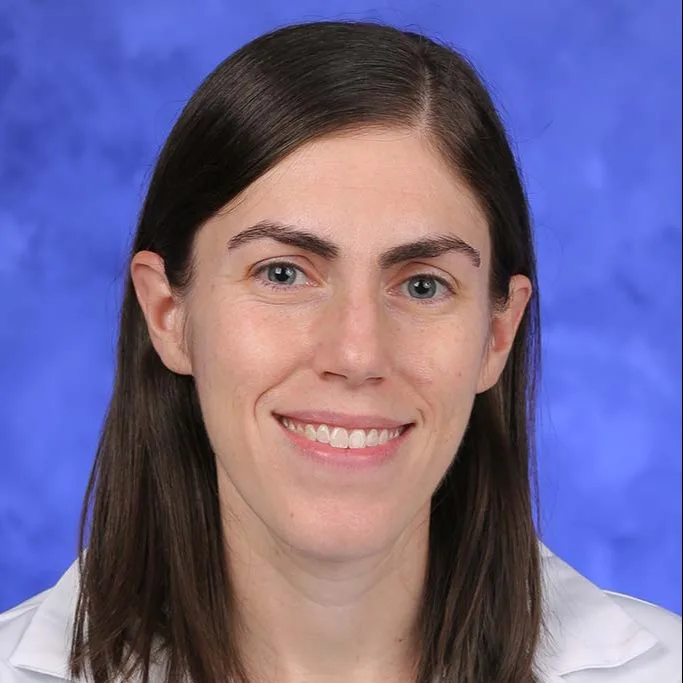
Rae Bacharach, DO is an Assistant Professor in the Department of Neurology at Penn State College of Medicine, specializing in the Division of Neuroimmunology. She serves as Program Director for the Neurology Residency program at Penn State Health Milton S. Hershey Medical Center in Hershey, Pennsylvania. Assistant Professor, Department of Neurology Program Director, Neurology Residency Division of Neuroimmunology Penn State College of Medicine Dr. Bacharach received her medical degree from the University of New England College of Osteopathic Medicine in 2014, followed by an internship in Preliminary Medicine (2015), Neurology Residency (2018), and a Fellowship in Neuro-immunology/Multiple Sclerosis at the University of Utah Medical Center (2019). She is board-certified in neurology by the American Board of Psychiatry and Neurology (2018). Her research portfolio demonstrates consistent scholarly activity in neuroimmunological disorders, with publications spanning from 2016 to 2023. Her work primarily focuses on complex neurological conditions with autoimmune components, particularly multiple sclerosis and related disorders. The publications reveal a clinical research approach emphasizing single-center experiences with detailed case analyses and longitudinal studies of rare neurological conditions. Dr. Bacharach is deeply committed to medical education at all levels, with particular emphasis on neurology clerkship for medical students and residency training. She completed the Junior Faculty Development Program at Penn State College of Medicine (2020-2021), focusing on curriculum design for neurology residents in multiple sclerosis. Additionally, she serves as a Senior Contributor to the Neurology Minute daily podcast for the American Academy of Neurology, extending her educational impact beyond her institution. Her clinical practice at the Penn State Neuroscience Institute encompasses multiple sclerosis, neuromyelitis optica, transverse myelitis, neuroimmunological diseases, and neurosarcoidosis, reflecting the alignment between her clinical expertise and research interests.
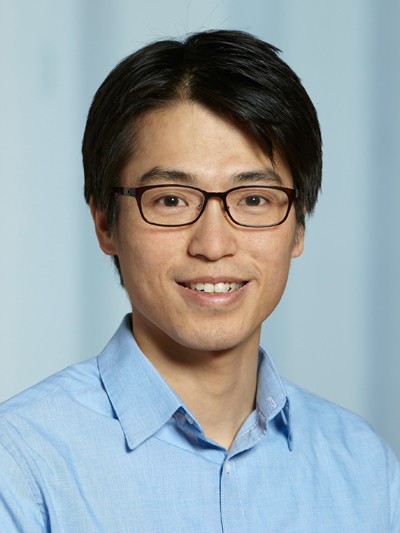
Prof. Taekwang Jang is an Associate Professor at the Department of Information Technology and Electrical Engineering, ETH Zürich. He leads the Energy Efficient Circuits and IoT Systems Group, focusing on analog and mixed-signal circuits for energy-constrained applications such as wireless sensor nodes and biomedical electronics. His research includes sensor interfaces, energy harvesters, power converters, and communication systems. He holds 15 patents and has authored over 80 peer-reviewed publications. Key awards include the 2024 IEEE Solid-State Circuits Society New Frontier Award and the SNSF Starting Grant. Educations: B.S. and M.S. in Electrical Engineering, KAIST (2006, 2008) Ph.D. in Electrical Engineering, University of Michigan (2017) Affiliations: Chair of IEEE Solid-State Circuits Society, Switzerland Chapter Associate Editor for Journal of Solid-State Circuits (JSSC) Research Interests: His work spans energy-efficient integrated circuits, biomedical interfaces, and IoT systems. Notable contributions include low-power keyword spotting ICs, ultra-low-noise amplifiers, and neural stimulation systems. He emphasizes practical applications in healthcare and wearable devices. Awards: 2024 IEEE Solid-State Circuits Society Distinguished Lecturer 2022 IEEE ISSCC Jan Van Vessem Award 2009 IEEE CAS Guillemin-Cauer Best Paper Award Advising & Grants: Supervises a team of researchers and has secured grants including the SNSF Starting Grant. His lab collaborates with institutions like the Competence Center for Rehabilitation Engineering and Science. Labs & Teams: Leads the Energy-Efficient Circuits and Intelligent Systems group at ETH Zurich, focusing on interdisciplinary projects at the intersection of circuits, systems, and biomedical engineering.
Professor Ian Loram is a leading academic in neuromuscular control and human movement science at Manchester Metropolitan University's Institute for Biomedical Research into Human Movement and Health (IRM). He holds roles as Academic Director of IRM and Academic Lead of the Biomechanics and Motor Control Research Group. His research focuses on sensorimotor control, postural stability, and applications of deep learning in medical imaging. Key contributions include studies on neuromuscular disorders, balance control mechanisms, and automated analysis of muscle function using ultrasound and neural networks. Education: PhD from University of Birmingham (2003) Awards: Leverhulme Early Career Fellowship (2004-2005) Grants: EPSRC Grants EP/F068514/1, EP/F069022/1, and EP/F06974X/1 ("Intermittent Control of Man and Machine") His research interests span neuromuscular control, biomechanics, postural dynamics, and clinical applications of imaging technologies . Recent work emphasizes automated analysis of muscle structure via ultrasound and deep learning, with clinical relevance to conditions like spinal muscular atrophy and cervical dystonia. Publications highlight interdisciplinary approaches, integrating control theory, neurophysiology, and computational methods to understand human movement. His lab develops tools for objective assessment of trunk control in children with cerebral palsy and explores the role of intermittent control in motor learning and balance. Labs/Teams: Biomechanics and Motor Control Research Group Healthcare Science Research Institute
Dr Michael Mansfield is an Assistant Professor in Musculoskeletal Physiotherapy at the University of Birmingham, School of Sport, Exercise and Rehabilitation Sciences. He holds a PhD in Health Sciences from the University of East Anglia and is a Fellow of Advance HE (FHEA), with over 20 years of clinical and academic experience across NHS, independent, and academic sectors. Education: PhD in Health Sciences, University of East Anglia, 2024 MSc in Advanced Neuromusculoskeletal Physiotherapy (MACP Approved), University of Hertfordshire, 2012 BSc (Hons) in Physiotherapy, University of Hertfordshire, 2006 Fellowship, Advance Higher Education (FHEA) His research centers on improving outcomes in musculoskeletal and orthopaedic care, with expertise in evidence synthesis, psychophysical methods (including quantitative sensory testing), and mixed methods. He leads the ALIGN (Arthroplasty & Orthopaedics Interdisciplinary Group for Evidence & Outcomes) research network and serves as Co-Editor-in-Chief of Pain and Rehabilitation , the journal of the Physiotherapy Pain Association. His work investigates pain phenotypes, psychosocial influences on recovery, health inequalities, and rehabilitation equity, particularly in spinal and joint conditions. The most recent articles reflect a strong trend in systematic reviews and meta-analyses focused on predicting pain recurrence, psychosocial predictors of musculoskeletal pain, and methodological investigations into pain modulation mechanisms. His publications span high-impact journals such as BMJ Open , PLoS ONE , and European Journal of Pain , demonstrating a consistent interdisciplinary and evidence-based approach. Scientific Awards and Recognitions: Fellow of Advance Higher Education (FHEA) Awards from the Musculoskeletal Association of Chartered Physiotherapists for excellence in research and education Awards from the Chartered Society of Physiotherapy for excellence in research and education Michael Mansfield actively contributes to doctoral supervision and research leadership. He leads physiotherapy education programs and collaborates with health technology partners on knowledge exchange. He is also a Visiting Research Associate at the Bannister Laboratory, King’s College London, and serves on the editorial board of Pain and Rehabilitation . His professional affiliations include full membership in the Chartered Society of Physiotherapy (MCSP), the Musculoskeletal Association of Chartered Physiotherapists (MMACP), and registration with the Health and Care Professions Council (HCPC). Research Labs and Teams: Academic Lead, ALIGN (Arthroplasty & Orthopaedics Interdisciplinary Group for Evidence & Outcomes) Visiting Research Associate, Bannister Laboratory, Wolfson Centre for Age-Related Diseases, King’s College London Collaborator with health technology partners on knowledge exchange and consultancy projects
Courtney Dumont is an Associate Professor in the Biomedical Engineering department at the College of Engineering , University of Miami. Her research focuses on neural stem cells and tissue-engineered microenvironments to repair nervous system injuries. Education: Not explicitly detailed in the text. Dr. Dumont’s recent publications highlight a multidisciplinary approach combining nanotechnology , biomaterials , and gene therapy to address neurological injuries. Her work spans spinal cord repair , anti-inflammatory strategies , and innovative treatments for SARS-CoV-2 . Key trends in her research include precision nanoparticle delivery systems , engineered scaffolds for cell transplantation , and modulating oxidative stress and inflammation to enhance regeneration. These studies emphasize the integration of biomaterial design with cell and gene therapies for clinical translation. Her lab, the NeuSTEM Research Group , develops multichannel bridges and hydrogel substrates to improve axon regeneration , myelination , and neuronal integration in rodent models.
Brian Smith is a Chair and Professor of Integrated Marketing Communications at the University of Mississippi , where he focuses on the intersection of public relations, social media, and strategic communication. His work emphasizes crisis communication, digital engagement, and the evolving role of practitioners in integrated environments. Education B.A. in Humanities, Brigham Young University (2001) M.A. in International Relations, Brigham Young University (2001) Ph.D. in Communications, University of Maryland-College Park (2009) Brian’s research spans social media dynamics, influencer marketing, and communication integration. He investigates how organizations navigate crises through digital interactivity, develops frameworks for empowering marginalized populations, and explores AI’s impact on communication practices. His recent publications highlight trends in digital advocacy , strategic empowerment , and technology-driven communication . Articles from 2025 examine citizen science approaches, AI ethics, and interviewer protocols for vulnerable groups, while earlier works establish theoretical foundations for integrated communication and PR’s expanding role. As a faculty member, Brian contributes to advancing public relations education and practice through empirical studies on relationship management, brand ambassador dynamics, and social media’s transformative potential.
Ilkka Helenius is a Professor of Orthopedics and Traumatology at the University of Helsinki, affiliated with the Department of Surgery Pediatric Surgery Unit. He serves as a Supervisor in the doctoral program and holds a docentship at the Children's Clinic. Current roles: Professor, Doctoral Supervisor, Research Leader Key affiliations: University of Helsinki, Children's Clinic, Clinicum His research focuses on pediatric orthopedics with emphasis on spinal surgery, fracture management, and surgical outcomes. Recent work explores: Implant failure in scoliosis treatment Knee joint examination protocols Medial epicondyle fracture treatments Neuromuscular scoliosis surgical aspects Scientific recognition includes: Behrooz Akbarnia Award for Best Paper (2018) Russell Hibbs Award for clinical science presentation (2005) Paras suullinen esitelmä award (2014) He has directed doctoral research on: Tommi Yrjälä : Pediatric spinal surgery techniques Eetu Suominen : Spinal fusion outcomes Venla Soini : Neuromuscular scoliosis interventions Antti Saarinen : Early-onset scoliosis safety metrics Active in clinical research since 1996, Helenius has published 205+ works and received €30,000 in funding from the Finnish Financial Services Association for his project I.Helenius_HY grant Science impact research (2023-2025). His work spans surgical innovation, clinical guidelines, and patient safety improvements in pediatric orthopedics.
Christopher P. Ames, MD is a Professor of Clinical Neurological Surgery and Orthopaedic Surgery at the University of California, San Francisco (UCSF) School of Medicine . He serves as Director of Spinal Deformity & Spine Tumor Surgery, Co-Director of the UCSF Spine Center, and Founder of the International Spine Biomarker and Tissue Bank. His clinical practice focuses on spinal tumors (chordoma, chondrosarcoma, giant cell tumors) and complex spinal deformities (scoliosis, kyphosis, ankylosing spondylitis). Board Certified: American Board of Neurological Surgery Education: MD (UCLA), Residency (UCSD), Spine Fellowship (Barrow Neurological Institute) Ames pioneered transpedicular approaches for cervical tumors and custom implant technologies for spinal alignment. His research spans biomechanics , AI decision support tools , and biomarker discovery for surgical risk in aging patients. Key publications include classifications for cervical osteotomies and frailty indices . His scientific awards include: 5x SRS Hibbs Award, 2x SRS Goldstein Award, 2x SRS Whitecloud Award. He has directed over 300 international surgical courses and serves as Spine Section Lead Editor for Operative Neurosurgery . Ames leads the UCSF Spinal Biomechanics Laboratory and the Neurospinal Disorders Program , integrating multicenter collaborations (Scoli-RISK-1 Study, AO Foundation) to advance precision surgery and outcomes research .
James Bilzon is a Professor of Human and Applied Physiology at the University of Bath's Department for Health. He joined in 2008 following a 13-year career in the Ministry of Defence, including roles at the Institute of Naval Medicine and the Army Recruiting & Training Division. He served as Head of the Department for Health from 2011–2017, leading its growth and achieving 5th place in the 2014 REF assessment. Currently, he directs the DisAbility Sport & Health (DASH) Research Group and co-directs the EPSRC-funded Centre for the Analysis of Motion, Entertainment Research and Applications (CAMERA). His research focuses on exercise rehabilitation, chronic diseases (e.g., osteoarthritis, cardiometabolic conditions), and assistive technologies for special populations like spinal cord injury and amputees. Education: PhD (Loughborough University, 2004), MSc (Loughborough University, 1995), BSc (Manchester Metropolitan University, 1994). Research interests include occupational physiology, exercise rehabilitation, and the efficacy of healthcare technologies. He leads projects funded by EPSRC, NIHR, Arthritis Research UK, and the Ministry of Defence. Notable grants include the 'MSKI Prevent' initiative and work on firefighter heat stress monitors. He holds honorary roles like Honorary Civilian Consultant Advisor (HCCA) to the MOD and is a Fellow of the Society of Sport & Exercise Medicine Malaysia. Recent publications explore knee osteoarthritis biomechanics, biomarkers in trauma-exposed populations, and the development of mobile health apps. He supervises doctoral students and collaborates internationally on studies like the ADVANCE cohort. His work aligns with UN Sustainable Development Goals related to health and well-being.
Dr. Joseph Welch is an Assistant Professor in Respiratory Physiology at the School of Sport, Exercise and Rehabilitation Sciences, University of Birmingham , UK, a position he assumed in September 2022. His research focuses on the neural control of breathing, respiratory mechanics, diaphragm fatigue, and exercise physiology. Education: PhD in Kinesiology, University of British Columbia, Canada MRes in Sport and Exercise, University of Derby, UK BSc (Hons) in Sport and Exercise Science, University of Derby, UK Dr. Welch's research investigates how breathing adapts to physiological stressors such as exercise, disease, and hypoxia; how it interacts with other body systems; and its impact on human health and performance. His work spans both healthy individuals and clinical populations, including spinal cord injury. He is particularly known for his studies on respiratory motor plasticity induced by acute intermittent hypoxia and its therapeutic applications. His research aligns with the Rehabilitation and Motor Control theme and the Integrative Physiology of Exercise and Neuroscience and Brain Health groups. The recent publications indicate a strong focus on respiratory neuroplasticity, ventilatory control, and the therapeutic potential of hypoxia. His work integrates human and animal models, clinical populations, and advanced physiological assessments, reflecting a multidisciplinary approach to understanding breathing regulation and rehabilitation. Scientific Awards: Inaugural Review Prize 2023: The exercise hyperpnoea dilemma: A 21st-century perspective Dr. Welch actively supervises postgraduate research at both master’s and doctoral levels and teaches courses including Human Physiology & Exercise, Control of Human Movement, and Applied Exercise Physiology. He has collaborated extensively with leading researchers such as Professor Gordon Mitchell and Professor Bill Sheel. His laboratory work includes neurophysiological assessments and respiratory function testing, contributing to translational research in rehabilitation.
Asst. Prof. Ata Elvan is a faculty member at Dokuz Eylul University's Faculty of Health Sciences, Department of Physiotherapy and Rehabilitation. He holds a Ph.D. in Physiotherapy (2017), M.S. in Physiotherapy (2013), and B.S. in Physiotherapy (2010, Hacettepe University). His academic roles include teaching courses such as Basics of Physiotherapy, Kinesiology, Exercise Physiology, and Research Design. Ph.D. - Physiotherapy, Dokuz Eylul University (2017) M.S. - Physiotherapy, Dokuz Eylul University (2013) B.S. - Physiotherapy, Hacettepe University (2010) Dr. Elvan's research focuses on Physiotherapy, Kinesiology, Exercise Physiology, Gait Analysis, and Balance Control . His work explores musculoskeletal biomechanics, postural stability, dual-task interference, and the impact of environmental factors like water immersion or menstrual cycle phases on movement patterns. Key trends in his publications (2016–2025) include: Biomechanical analysis of gait and plantar pressure Neurological and hormonal influences on postural control Rehabilitation strategies for chronic neck pain and spinal deformities Technological applications (e.g., virtual reality, mobile devices) in physiotherapy He has contributed to understanding musculoskeletal disorders through studies on foot posture assessment, kinesiology principles, and orthotic interventions , though no formal scientific awards are documented in available sources.