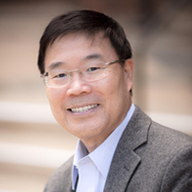
Zhi-Xun Shen is the Paul Pigott Professor in Physical Sciences at Stanford University, holding dual appointments in the Physics and Applied Physics Departments. He is a senior fellow at the Precourt Institute for Energy and serves on advisory boards for the Knight-Hennessy Scholars and Stanford Science Fellows programs. His research focuses on condensed matter and materials physics, particularly the electronic structures of superconductors, topological insulators, and novel materials. Dr. Shen pioneered advanced spectroscopic techniques, including photon-based imaging and scattering methods, and has authored over 600 publications with significant citation impact. His honors include the Kamerlingh Onnes Prize (2000), E.O. Lawrence Award (2010), and Oliver E. Buckley Prize (2011). He co-founded PrimeNano Inc., commercializing technologies from his lab, such as microwave impedance microscopy. His work bridges fundamental physics with energy-related applications, emphasizing the interplay between electronic structure and material properties. Dr. Shen’s research group explores cutting-edge topics like topological surface states, electron-phonon interactions, and superconductivity mechanisms. His inventions, such as non-resonance microwave imaging, have found applications in materials characterization. He remains active in advancing instrumentation and fostering interdisciplinary collaborations through his academic and industry roles.
Prof. Dr. Malte Oppermann is a full Professor at the University of Basel , leading the Ultrafast Chiral Dynamics Laboratory within the Department of Chemistry. His group specializes in developing cutting-edge time-resolved spectroscopic techniques to probe molecular transformations on femtosecond to microsecond timescales, focusing on chirality and structural dynamics in complex systems. Research Focus: Ultrafast Chiral Spectroscopy : Using circularly polarized laser pulses to resolve structural changes in chiral systems. Molecular Motors & Protein Dynamics : Capturing conformational changes in synthetic motors and proteins in native environments. Photoactive Materials : Investigating light-energy conversion mechanisms in chiral photochemical systems. His research bridges physics and chemistry, employing state-of-the-art laser technology and collaborating internationally across synthesis, spectroscopy, and theory. Publications & Impact: Prof. Oppermann’s work (2011–2025) spans ultrafast spectroscopy , chiral dynamics , nanomaterials , and biomolecular photophysics . Key themes include spin-crossover dynamics, DNA photodamage, and plasmonic nanoparticles, with techniques like transient X-ray absorption and deep-UV circular dichroism. Team & Opportunities: The group actively recruits MSc/PhD students and postdocs in physics, chemistry, and materials science. Interested candidates are encouraged to contact Prof. Oppermann directly.
Dmitri N. Basov is the Higgins Professor of Physics at Columbia University, with a joint appointment as Professor of Physics at the University of California, San Diego. His research focuses on quantum materials, utilizing nano-optical techniques to investigate electronic phenomena and polaritonic systems. He leads the Basov Group at Columbia and has pioneered methods for imaging quantum materials at nanoscale resolutions. PhD in Physics, Lebedev Physics Institute (1991) Professor, Columbia University (2016–present) Professor, UC San Diego (2001–present) Postdoctoral Research, McMaster University (1992–1996) His work spans plasmonics , terahertz spectroscopy , and van der Waals heterostructures , with recent emphasis on polariton dynamics, superconductivity modulation, and moiré-driven electronic states. He employs cutting-edge tools like quantum scanning near-field optical microscopy (q-SNOM) and resonant inelastic X-ray scattering. Besides leading major grants such as the Gordon and Betty Moore Investigator award and Vannevar Bush Fellowship, Basov has received accolades like the National Academy of Sciences membership (2020), Ken Button Prize (2019), and Frank Isakson Prize (2012). His team explores novel quantum phases in 2D and topological materials.
Nuh Gedik is the Donner Professor of Physics at MIT, leading the Gedik Research Group. His work focuses on quantum materials, employing advanced optical and electron spectroscopies. He joined MIT in 2008 as an Assistant Professor, earned his B.S. from Bogazici University (1998), and Ph.D. from UC Berkeley (2004) before postdoctoral work at Caltech. His awards include NSF CAREER, DOE Early Career, Sloan Fellowship, and APS Fellow recognition. Research interests include ultrafast dynamics in topological insulators, charge density waves, and light-induced phenomena. Key techniques include time-resolved ARPES, ultrafast electron diffraction, and terahertz spectroscopy. His group explores hidden orders in quantum materials and develops novel measurement tools. Recent work includes metastable magnetization control in FePS₃ and Floquet-Bloch states in graphene. Affiliated with the MIT Center for Quantum Engineering and Institute for Soldier Nanotechnologies.
Angela Kou is an Assistant Professor in the Department of Physics at the University of Illinois at Urbana-Champaign, specializing in the intersection of quantum information science and condensed matter physics. Her laboratory develops novel superconducting circuit elements and qubits, while also utilizing superconducting circuits to investigate topological materials with potential applications in quantum computing. She actively seeks postdoctoral researchers and graduate students to explore superconducting qubit engineering and quantum material sensing. Her research integrates quantum information , topological materials , and superconducting circuit design . Recent publications demonstrate expertise in fluxonium qubit control , quantum dot Josephson junctions , and parafermion zero modes in exotic heterostructures. She contributes to advancing cryogen-free dilution refrigerator technology for scanning probe microscopy applications. Current research trends focus on quantum coherence optimization , phase-slip qubit operation , and vibration mitigation in cryogenic systems. Her work receives support from the Air Force Office of Scientific Research, Army Research Office, IBM-Illinois Discovery Accelerator Institute, and the National Science Foundation. Collaborations span multiple institutions, with key partnerships at Stanford University and SLAC National Accelerator Laboratory. Her technical contributions include microwave impedance microscopy , scanning single-electron transistor measurements , and vibration analysis for quantum device stability.
Yu He is an Assistant Professor of Applied Physics and Physics at Yale University, affiliated with the Department of Physics. His research focuses on condensed matter physics and experimental techniques such as angle-resolved photoemission spectroscopy (ARPES) and x-ray scattering to study correlated electronic systems and quantum materials. Prior to Yale, he completed a Miller Research Fellowship at UC Berkeley (2019) after earning his Ph.D. in Applied Physics from Stanford University. Key research areas include metal-to-insulator transitions, superconductivity, 2D magnetism, and solid-state quantum simulation. He has contributed to advancements in material characterization techniques, including high-resolution ARPES using tabletop lasers. His work integrates crystal synthesis, electric transport measurements, and surface decoration to explore material properties. Education: B.S. in Physics from University of Science and Technology of China (USTC); M.S. in Electrical Engineering and Ph.D. in Applied Physics from Stanford University. Research Interests: Experimental condensed matter physics, quantum materials, superconductivity, and light-matter interaction studies. His current projects aim to dissect microscopic degrees of freedom (electronic, lattice, spin) in novel materials using cutting-edge spectroscopic methods. The lab employs complementary techniques like electric transport measurements and crystal growth to characterize material properties comprehensively. Awards: Miller Research Fellow, UC Berkeley (2019) Advising & Grants: No student advisees listed. Research supported by Yale University and prior fellowships. Labs & Teams: Leads a research group at Yale focused on experimental condensed matter physics, collaborating on projects involving advanced material characterization and quantum material discovery.
Turan Birol is an Associate Professor in the Department of Chemical Engineering and Materials Science at the University of Minnesota, with a secondary appointment in the School of Physics. He leads the Theoretical Materials Physics Group , focusing on computational materials design to discover exotic condensed matter phenomena. Education: PhD in Physics (Cornell University), Postdoc (Rutgers University) Research Areas: Ferroelectricity, Charge Density Waves, Multiferroics, Strongly Correlated Systems, Kagome Metals His work combines Density Functional Theory with Dynamical Mean Field Theory to study materials like perovskites, layered antiperovskites, and 2D/3D compounds. Recent projects include Office of Naval Research -funded ferroelectric design and NSF Discovery File -featured transparent conductors. Scientific contributions include 15+ recent articles on topics spanning structural chirality in superconductors, strain-tuned magnetism, and catalytic resonance theory. Former advisees include PhD graduates in Physics and Materials Science.
Eric Collet is a University Professor and Head of Department at the Institute of Physics of Rennes (IPR), a joint research unit of CNRS and Université de Rennes. His work centers on ultrafast photoinduced phase transitions, spin-crossover materials, and the control of functional materials using light and THz excitation. He leads a dynamic research team and is deeply involved in international collaborations, particularly through the IM-LED International Laboratory with Japan. University: University of Rennes School: Institute of Physics of Rennes Department: Department of Materials and Light Academic Rank: Professor Email: eric.collet@univ-rennes.fr Professor Collet's research explores the ultrafast dynamics of molecular and condensed matter systems, especially those exhibiting multistability and photoresponsiveness. His work combines femtosecond optical and X-ray techniques to probe structural and electronic changes at atomic scales. Key areas include spin-crossover phenomena, photomagnetism, ferroelasticity, and nonlinear phononics. He investigates how light can trigger cooperative responses in materials, leading to persistent phase transitions with applications in photonics and memory devices. The recent publications of Eric Collet reveal a strong focus on ultrafast structural dynamics, photoinduced charge and spin transitions, and the coupling of electronic states with lattice distortions. His team frequently employs advanced X-ray methods at large-scale facilities like ESRF and LCLS. The research spans from fundamental quantum dynamics to applied materials science, with recurring themes in symmetry breaking, cooperative switching, and room-temperature photoresponse in molecular systems. Scientific awards and recognitions include: CNRS Silver Medal (2020) Louis Ancel Prize, French Physical Society Hot Paper selection in PCCP (2019) Very Important Paper recognition in Eur. J. Inorg. Chem. (2019) News & Views feature in Nature Chemistry (2020) Eric Collet actively mentors PhD students and postdoctoral researchers, and has supervised numerous publications in top journals. He has led major scientific initiatives such as the UCM2018 symposium and JMC2021 conference. His research is supported by grants from ANR, CNRS, and the Institut Universitaire de France. He collaborates extensively with institutions in France, Japan, and beyond. His research is conducted primarily within the Department of Materials and Light at the Institute of Physics of Rennes. He co-directs the IM-LED International Laboratory with Prof. Shin-ichi Ohkoshi (University of Tokyo) and collaborates with groups in Bordeaux, Lebanon, and Japan. His lab specializes in time-resolved X-ray diffraction, ultrafast spectroscopy, and nonlinear optical control of materials.
Maiken H. Mikkelsen is the James N. and Elizabeth H. Barton Associate Professor in the Department of Electrical and Computer Engineering at Duke University, with a joint appointment in the Department of Physics . Her research focuses on quantum nanophotonics , plasmonics , and light-matter interactions in nanoscale materials, aiming to advance optoelectronics, quantum science, and biomedical diagnostics. Education B.S. in Physics, University of Copenhagen (2004) Ph.D. in Physics, University of California, Santa Barbara (2009) Postdoctoral Fellowship, University of California, Berkeley Her work explores nanophotonic engineering for quantum optics , spintronics , and ultrafast optoelectronics , with recent studies on nonlinear metasurfaces and plasmonic enhancement of immunoassays for point-of-care diagnostics. Publications highlight 2D semiconductor emission control , ultrafast single-photon sources , and metasurface-based photodetectors . Scientific Awards Maria Goeppert Mayer Award (2017) NSF CAREER Award (2015) Moore Inventor Fellow (2021) ONR/Air Force/Army Young Investigator Awards (2015-2017) Cottrell Scholar (2016) Stansell Family Distinguished Research Award (2021) She advises graduate students in Duke’s Electrical & Computer Engineering and Physics programs and leads the Mikkelsen Lab , which emphasizes ultrafast spectroscopy and quantum material development . The lab has graduated PhD students like Eunso Shin and Hengming Li (2025).
Zhi-Pei Liang is the Franklin W. Woeltge Professor in the Department of Electrical and Computer Engineering at the University of Illinois at Urbana-Champaign, with joint appointments in the Department of Bioengineering, Beckman Institute for Advanced Science and Technology, and Coordinated Science Laboratory. His research spans biomedical engineering, medical imaging, and signal processing with a focus on advancing magnetic resonance imaging and spectroscopy technologies. His educational background includes a Ph.D. in Biomedical Engineering from Case Western Reserve University (1989) and a B.S. in Electrical Engineering from South-China University of Technology (1982), followed by postdoctoral training at UIUC (1989-1991). Professor Liang's research interests center on magnetic resonance imaging and spectroscopy , with particular emphasis on ultrafast imaging techniques , model-based reconstruction methods , and the integration of physics-based modeling with machine learning . His pioneering work on SPICE (SPectroscopic Imaging by exploiting spatiospectral CorrElation) has revolutionized high-resolution metabolic brain imaging by enabling label-free molecular imaging through the marriage of spin physics and machine learning. His research spans pattern recognition, parameter estimation, image formation theory, and algorithms for medical imaging applications. Analysis of his recent publications reveals a strong focus on high-resolution metabolic imaging , particularly using SPICE methodology to map brain metabolism with unprecedented detail. His work bridges fundamental physics of magnetic resonance with advanced computational methods to overcome traditional limitations in imaging speed and resolution. Current research directions include J-resolved spectroscopic imaging, deuterium-based metabolic mapping, and multimodal integration of PET and MRSI for studying neurological disorders. Elected to International Academy of Medical and Biological Engineering (2012) Gold Medal, International Society for Magnetic Resonance in Medicine (2022) Technical Achievement Award, IEEE Engineering in Medicine and Biology Society (2014) Fellow, National Academy of Inventors (2021) Author of influential book 'Principles of Magnetic Resonance Imaging' (1999) President of IEEE Engineering in Medicine and Biology Society (2011-2012) Professor Liang has advised numerous students and postdocs in biomedical imaging research and has received multiple teaching honors including the Ronald W. Pratt Outstanding Teaching Award (2005) and multiple listings among UIUC's Excellent Teachers. His research has been supported by various grants from NIH, NSF, and other funding agencies. He leads the SPICE (Spectroscopic Imaging by exploiting spatiospectral Correlation) research group which focuses on developing novel imaging techniques that combine physics-based modeling with machine learning for ultrafast metabolic imaging. His laboratory, part of the Beckman Institute's Integrative Imaging Theme, collaborates extensively with clinical researchers at Carle Illinois College of Medicine and other institutions to translate advanced imaging techniques into clinical applications for neurological disorders, cancer, and metabolic diseases. Current projects focus on high-resolution mapping of brain metabolism in Alzheimer's disease, stroke, and brain tumors using novel MR spectroscopic imaging techniques.
Xiaoqing Pan is a Professor and Henry Samueli Endowed Chair in Engineering at the University of California, Irvine, with dual appointments in the Department of Materials Science and Engineering and the Department of Physics and Astronomy. He serves as Director of the Irvine Materials Research Institute (IMRI) and the Center for Complex and Active Materials (NSF MRSEC). A renowned electron microscopy expert, Pan has developed advanced transmission electron microscopy (TEM) techniques for atomic-scale material characterization. Ph.D., Universität des Saarlandes, Germany (1991) His research focuses on atomic-scale structure-property relationships in oxide heterostructures, ferroelectrics, nanocatalysts, and 2D functional materials. Pan leads development of novel 4D-STEM and momentum-resolved vibrational electron microscopy methods to study single-atom catalysts and complex oxides. With over 400 high-impact publications in Nature , Science , and Nature Materials , his work has been recognized by major fellowships and awards from the American Ceramic Society, American Physical Society, and National Science Foundation. Pan's recent work includes: Atomic-scale analysis of grain boundary phonon anisotropy Advances in FeSe/SrTiO 3 interface electron-phonon coupling Plastic waste upcycling through carbon intermediate interception Control of metal-support interactions in photocatalysts Strain engineering in high-entropy oxide films His laboratory at UCI represents the forefront of materials characterization technology development.
Pia Vogel is a Professor in the Department of Biological Sciences at Southern Methodist University (SMU), where she leads research on nucleotide-binding proteins using Electron Spin Resonance spectroscopy and molecular modeling. Her work focuses on elucidating structural mechanisms in ATP synthase, multidrug resistance transporters, and calcium channels with biomedical applications in cancer therapy and neurodegenerative diseases. Education: Ph.D., University of Kaiserlautern Dr. Vogel's research program investigates three interconnected domains: the rotary mechanics of FoF1-ATP synthase (particularly the external stalk subunit b-dimer), the structural basis of multidrug resistance in P-glycoprotein and MRPs, and ATP-regulated calcium release via ryanodine receptors. Her laboratory employs site-specific spin labeling, ESR spectroscopy, and computational modeling to resolve protein dynamics and interactions at molecular resolution, contributing to understanding energy transduction in ATP synthase and mechanisms of drug resistance. Analysis of her 15 most recent publications (2020-2025) reveals a dominant focus on developing and characterizing P-glycoprotein and BCRP inhibitors to overcome chemotherapy resistance in cancer. These studies integrate computational screening, ATPase assays, and cell-based models to evaluate inhibitor efficacy, with emerging applications in Alzheimer's research through amyloid-β transport studies. The work demonstrates consistent methodological synergy between biophysical characterization and therapeutic development. Dr. Vogel maintains an active research group supported by sustained funding, evidenced by continuous publication output and laboratory infrastructure. Her team employs multidisciplinary approaches spanning biophysics, biochemistry, and computational biology to address fundamental questions in membrane protein function. Her laboratory facilities in DLSB 221 include specialized Electron Spin Resonance instrumentation and dual Linux computing clusters for molecular dynamics simulations. The research environment supports collaborative projects extending her work into cancer therapeutics and neurodegenerative disease mechanisms through partnerships with clinical and computational researchers.
Anne-Sophie Chauvin is a Senior Lecturer and Researcher at École Polytechnique Fédérale de Lausanne (EPFL), School of Basic Sciences, within the Institute of Chemical Sciences and Engineering and the Supramolecular Chemistry Laboratory. She actively engages in supramolecular and inorganic chemistry, focusing on f-element (lanthanides and actinides) coordination polymers and luminescent bioprobes for biological and technological applications, including invisible inks and dye-sensitized solar cells. PhD in Bioinorganic Chemistry from University Paris V-René Descartes (thesis on Nitrile Hydratase mimetics) Postdoctoral work at University of Geneva on chiral alcohol configuration analysis Habilitation à Diriger des Recherches (HDR) from University René Descartes (2006) Her research spans Lanthanide and Actinide Chemistry , Luminescence , Coordination Polymers , Metallacages , and Photovoltaic Materials . Recent publications emphasize catalytic spiro stereocenter formation, actinide coordination polymers, and photoredox-enabled biomolecule functionalization. She has supervised PhD students including Andrei Andreichenko , Julien Andrès , Steve Comby , and Aurélien Willauer . Recognitions include Fellowship of the Royal Society of Chemistry (FRSC) and membership in the Swiss Chemical Society (SCS). Current roles include teaching General and Analytical Chemistry to first-year Pharmacy and Biology students at the University of Lausanne (UNIL), overseeing practical sessions, and serving on the EPFL School of Basic Sciences Faculty Council.
David Hsieh is the Donald A. Glaser Professor of Physics at the California Institute of Technology and has served as Executive Officer for Physics since 2023. He earned his B.S. from Stanford University (2003) and Ph.D. from Princeton University (2009). His academic career at Caltech progressed from Assistant Professor (2012-18) to Professor (2018-22) and Glaser Professor (2022-). Research Focus: Novel quantum electronic phases in solids, nonlinear optical spectroscopy, angle-resolved photoemission spectroscopy, time-resolved optical spectroscopy Dr. Hsieh’s recent publications span quantum materials, magnetic order, and ultrafast optical phenomena, with a particular emphasis on exciton dynamics and topological band structures. His work has been recognized through the prestigious Moore Experimental Physics Investigator award (2022). Scientific Awards Moore Experimental Physics Investigator The Hsieh Group develops advanced laser-based techniques to investigate and control quantum phases of matter, focusing on materials like Sr3Ir2O7, Ca2RuO4, and EuTiO3.
Prof. Stefan Eisebitt is a Director at the Max-Born-Institut für Nichtlineare Optik und Kurzzeitspektroskopie and holds a Professorship in Experimental Physics at the Technische Universität Berlin. His research focuses on ultrafast magnetization dynamics, nanoscale structure analysis, and novel imaging techniques using coherent XUV/X-ray spectroscopy. He leads the Transient Electronic Structure and Nanoscience group and is involved in cutting-edge projects involving femtosecond laser-driven X-ray sources and spintronic materials. Education and Career: He obtained his Diplom (1992) and Ph.D. (1996) from Cologne University, followed by postdoctoral research at the University of British Columbia and Forschungszentrum Jülich. He became a Privatdozent at Humboldt-Universität Berlin (2005) and held professorships at TU Berlin (2008–2015) and Lund University (2012–2015) before his current role since 2015. He leads the Functional Nanomaterials joint research group between Helmholtz-Zentrum Berlin and TU Berlin. Research Interests: His work spans transient electronic structure, ultrafast optical manipulation of magnetization, nanoscale material characterization, and advanced coherent imaging methods. Key techniques include XUV/X-ray spectroscopy, laser-driven plasma sources, and femtosecond time-resolved studies. Professional Roles: He chairs the Physikalische Gesellschaft zu Berlin and the Elettra Scientific Advisory Council. He has held leadership roles in the European XFEL Scientific Advisory Committee and the Komitee für Forschung mit Synchrotronstrahlung (KFS). His lab develops state-of-the-art setups for ultrafast X-ray scattering and holography.