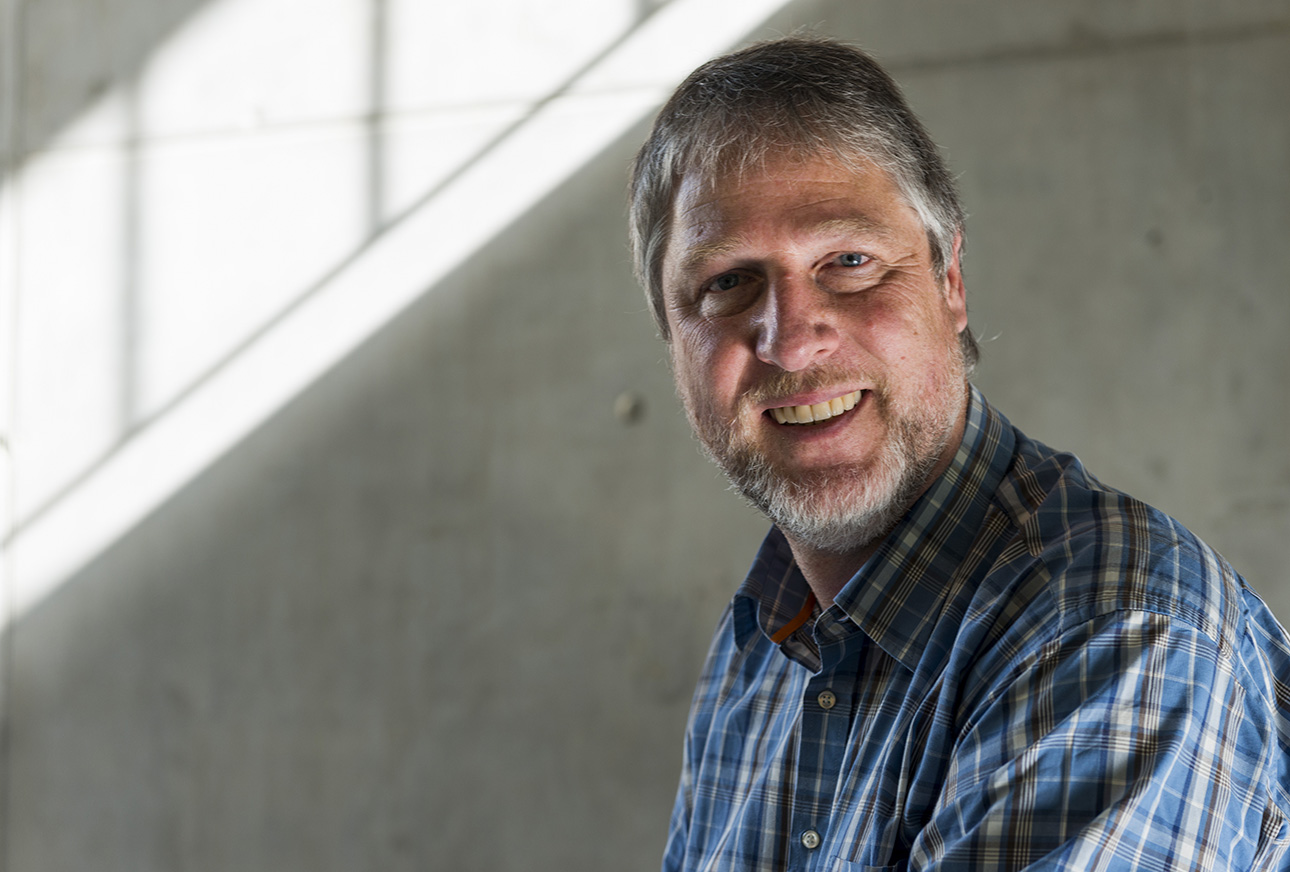
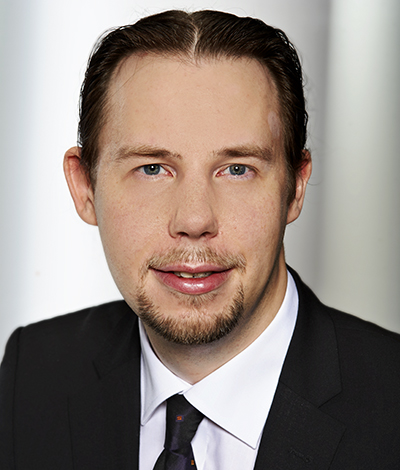
Professor Bernd Möbius is a leading academic in Phonetics and Phonology at the Department of Language Science and Technology, Saarland University. His research bridges phonetic theory with speech technology applications, focusing on text-to-speech systems, prosody modeling, and computational simulations of speech processes. Current research projects: DFG SFB 1102, C1: Information density and phonetic structure predictability DFG SFB 1102, C4: Slavic intercomprehension and surprisal theory (INCOMSLAV) Research Themes: Key areas include text-to-speech synthesis, speech prosody analysis, experimental methods in speech production/perception, information density in phonetics, and cross-linguistic studies of Slavic-Germanic languages. Scientific Contributions: Recent work explores Parkinson-induced dysarthria detection, breath noise acoustics, surprisal-driven speech behaviors, multilingual BERT models for idiomaticity, and perceptual consequences of acoustic adjustments.
Prof. Matthias Nießner is a Professor at the Technical University of Munich , where he leads the Visual Computing Lab . Prior to this, he held a Visiting Assistant Professor position at Stanford University . His work bridges computer vision , graphics , and machine learning , focusing on 3D reconstruction , semantic scene understanding , and AI-driven video synthesis . Prof. Nießner has published over 150 works in top venues like SIGGRAPH , CVPR , and ECCV , with several receiving best paper awards (SIGCHI’14, HPG’15, SPG’18, SIGGRAPH’16 Emerging Tech). His research has garnered international media attention, including features in the New York Times , Wall Street Journal , and MIT Technological Review , as well as TV demonstrations (e.g., Jimmy Kimmel Live for Face2Face technology). Awards : TUM-IAS Rudolph Moessbauer Fellowship (2017–ongoing) Google Faculty Award (2017) Nvidia Professor Partnership Award (2018) ERC Starting Grant (2018, €1.5M) Eurographics Young Researcher Award (2019) Research Trends : 3D Gaussian Splatting for real-time rendering Neural Radiance Fields (NeRF) with mesh supervision Audio-driven facial animation via diffusion models Latent space diffusion for 3D scenes Self-supervised and zero-shot methods for 3D and image analysis As a co-founder and director of Synthesia Inc. , he drives democratization of synthetic media. His YouTube channel has over 5 million views, reflecting his impact beyond academia.
Prof. Marianne Pouplier is a Professor at the Institute of Phonetics and Speech Processing (IPS) at Ludwig Maximilian University of Munich. Her research focuses on speech production mechanisms, particularly coarticulation, phonetic universals, and language-specific variations. She investigates articulatory timing, speech errors, and cross-linguistic differences in consonant clusters using advanced methodologies like real-time MRI and electromagnetic articulography. Her work bridges theoretical models (e.g., Articulatory Phonology) with empirical data, emphasizing the interplay between phonological representation and motor execution. Key contributions include studies on nasal coarticulation, larynx dynamics, and the role of articulatory effort in speech production. Selected publications highlight her expertise in analyzing speech motor control through interdisciplinary approaches. She collaborates internationally, contributing to projects like the Bavarian Archive for Speech Signals (BAS). No awards or grants are explicitly listed, but her extensive publication record underscores her scholarly impact.
Bistra Andreeva is a full Professor of Phonetics and Phonology at Saarland University, Department of Language Science and Technology. She is also a principal investigator of the DFG-funded project “Judeo-Spanish in Bulgaria: a contact language between archaism and innovation” (2022-2025) and leads or co-leads several other externally funded projects on prosody, information structure, and language contact. She teaches and has taught at Saarland University, Sofia University “St. Kliment Ohridski”, and other European universities. Education & Academic Background Habilitation (kumulative Habilitationsschrift): “Contrastive Prosody: Bulgarian vs. German”, Saarland University, 2016. PhD (Dr. phil.): “Zur Phonetik und Phonologie der Intonation der Sofioter-Varietät des Bulgarischen”, Saarland University, 2007. Research Interests Andreeva’s research focuses on the phonetics and phonology of intonation and rhythm, cross-language and individual differences in the production and perception of syllabic prominence, the relation between intonation and information structure, minority languages (especially Judeo-Spanish in Bulgaria), and the interaction between information density and prosodic structure. Her methodological expertise includes experimental phonetics, corpus-based studies, and acoustic analysis. Major Projects SFB 1102 C1: “Information Density and the Predictability of Phonetic Structure” (DFG, 2014-2026) JuSpa: “Judeo-Spanish in Bulgaria: a contact language between archaism and innovation” (DFG, 2022-2025) Prosodic aspects of Bulgarian compared to other languages with lexical stress (Bulgarian National Science Fund, 2019-2024) Prosodic manifestations of focus in French and English from a Bulgarian point of view (DAAD & Sofia University, 2021-2023) Scientific Awards & Recognition While no major named prizes are listed, Andreeva’s work has been continuously supported by competitive grants from the German Research Foundation (DFG), DAAD, and Bulgarian National Science Fund. Her publications appear in top-tier journals and conference proceedings (Journal of the Acoustical Society of America, Interspeech, Speech Prosody, International Congress of Phonetic Sciences). Teaching & Supervision She offers a broad spectrum of courses including Experimental Phonetics, Prosody, Phonetics & Phonology of Slavic Languages, Introduction to Instrumental Phonetics, and seminars on language contact. She has supervised numerous BA, MA, and PhD theses and regularly teaches at the PhD School of Sofia University. Labs & Teams She is affiliated with the Phonetics Laboratory at Saarland University and collaborates closely with the Institute for Bulgarian Language (Bulgarian Academy of Sciences), working in interdisciplinary teams involving phoneticians, computational linguists, and field linguists.
Max Planck Institute of Colloids and InterfacesGermany
Shrikanth (Shri) Narayanan is University Professor and Niki & C. L. Max Nikias Chair in Engineering at the University of Southern California (USC), with appointments spanning Electrical & Computer Engineering, Computer Science, Linguistics, Psychology, Neuroscience, Pediatrics, and Otolaryngology-Head & Neck Surgery. He serves as Research Director of the Information Sciences Institute and Director of the Ming Hsieh Institute. PhD in Electrical Engineering (UCLA, 1995) Engineer and MS in Electrical Engineering (UCLA, 1992 and 1990) BE in Electrical Engineering (Anna University, India, 1988) His interdisciplinary research focuses on human-centered signal processing and machine intelligence , addressing societal challenges in health, education, defense, and media arts. Key areas include: Behavioral signal processing Affective computing Multimodal signal processing Computational speech science Biomedical applications Scientific Awards : IEEE James L. Flanagan Speech and Audio Processing Award (2025) Edward J. McCluskey Technical Achievement Award (2024) ISCA Medal for Scientific Achievement (2023) Claude Shannon-Harry Nyquist Technical Achievement Award (2023) ACM ICMI Sustained Accomplishment Award (2020) USC Distinguished Faculty Service Award With over 1,000 publications and 19 patents , his work has been commercialized through startups like Behavioral Signals Technologies and Lyssn . He leads transformative university initiatives and has served in editorial roles for top journals including Computer Speech and Language and IEEE Transactions on Affective Computing .
Gerd Bruder is an Associate Professor at the University of Central Florida , affiliated with the Department of Computer Science . He previously held positions as a Research Associate Professor at UCF's Institute for Simulation and Training (2016-2022), Post-Doc at University of Hamburg (2014-2016), and Post-Doc at University of Würzburg (2011-2014). Habilitation : Computer Science, University of Hamburg (2017) Ph.D. : Computer Science, University of Münster (2011) M.Sc. : Computer Science (minor in Mathematics), University of Münster (2009) Research Interests : Gerd Bruder's work focuses on Extended Reality (XR) systems, spanning Virtual Reality (VR) , Augmented Reality (AR) , and Mixed Reality (MR) . Key areas include human factors , digital twins , 3D user interfaces , and perceptual modeling , with applications in healthcare, military operations, architecture, and smart environments. Recent Publications highlight innovations in XR locomotion , trust calibration with autonomous agents, spatial cognition , and haptic-visual integration . His 2025 articles address task-switching efficiency in XR and collaborative mixed reality design. Scientific Awards : Best Paper at ACM VRST 2023 2021 TechConnect Innovation Award Best Demo at ACM SUI 2021 Multiple Best Paper Awards (2016-2023) Best Poster & Demo Awards (2015-2020) Patents include systems for medical simulation , smart environment interruption management , and adaptive AR interfaces . His work bridges academic research and practical applications across VR, AR, and MR domains.
Prof. Torsten Wolfgang Kuhlen serves as a Universitätsprofessor at RWTH Aachen University, leading the Teaching and Research Area for Virtual Reality and Immersive Visualization within the Department of Computer Science. He is affiliated with Chair of Computer Science 12 (High Performance Computing), the Visual Computing Institute, and remains an integral part of the RWTH IT Center where his research group operates one of the world's largest Virtual Reality laboratories including the 30 sqm aixCAVE visualization chamber. The group maintains strong connections with Computational Science & Engineering Division, National High Performance Computing Center for Computational Engineering Science (NHR4CES), and VR in Science and Industry Network NRW e.V. Prof. Kuhlen's research spans virtual reality, immersive visualization, and multimodal 3D user interfaces with applications across simulation science, production technology, neuroscience, and medicine. His work combines basic research on advanced methods and algorithms with interdisciplinary collaborations involving RWTH Aachen institutes, Forschungszentrum Jülich, and industry partners. Recent publications demonstrate strong focus on audiovisual perception, immersive analytics, collaborative virtual environments, and practical VR applications in education and manufacturing. His research group has produced significant work on listening effort in virtual environments, immersive authoring techniques, and VR applications for scientific visualization. Notable projects include VRScenarioBuilder for automated vehicle testing and applications in monitoring additive manufacturing processes. The group actively participates in major conferences including IEEE VIS and EuroVis, with several award-winning contributions. Prof. Kuhlen has advised PhD students including Martin Bellgardt who recently completed his doctoral degree on "Increasing Immersion in Machine Learning Pipelines for Mechanical Engineering". The research group maintains state-of-the-art VR infrastructure including the aixCAVE facility which is open to all RWTH research groups.
Dr. phil. André Fiebig is a Permanent Research Associate and PostDoc at the Institute of Fluid Mechanics and Technical Acoustics (ISTA) within Faculty V - Transportation and Mechanical Systems at Technical University of Berlin. From January 2019 to December 2024, he served as a Visiting Professor responsible for the field of psychoacoustics, funded by the HEAD Genuit Foundation. Since January 2025, he has been leading the 'Psychoacoustics and Noise Effects' working group at the Department of Technical Acoustics. His research spans multiple areas within psychoacoustics and soundscape studies, including fundamentals and modeling of psychoacoustic sensation variables, binaural psychoacoustics, assessment of ambient noise and soundscapes, and psychoacoustic evaluation of sound insulation measures. His work also addresses cognitive stimulus integration of auditory sensations, auditory recreation, acoustic quality of stay, characterization of quiet areas, and measuring sound-induced emotions. Analysis of his recent publications reveals a strong focus on urban soundscapes, noise-conscious behavior in transportation, and the development of methodological frameworks for soundscape assessment. His work often integrates psychoacoustic principles with environmental considerations, particularly examining the relationship between sound environments and human health. Recent research shows increasing emphasis on cross-cultural studies of noise perception and the development of standardized assessment methodologies. Dr. Fiebig is involved in the EARS (Education and Applied Research on Soundscapes) initiative and has contributed to numerous collaborative research projects examining the intersection of urban planning, environmental acoustics, and human perception. His work frequently appears in major acoustics conferences and journals, demonstrating his active role in advancing the field of psychoacoustics and soundscape research. His laboratory work focuses on psychoacoustic testing methodologies, soundscape assessment techniques, and the development of evaluation instruments for noise protection measures. The 'Psychoacoustics and Noise Effects' working group under his leadership conducts research on both theoretical aspects of sound perception and practical applications for urban noise management.
Dr. Stefanie Jannedy is a senior researcher at the Leibniz-Zentrum Allgemeine Sprachwissenschaft (ZAS) in Berlin, where she has been employed since 2008. She is a Principal Investigator of the DFG project C02 "Variation in Situated Interaction" within the Collaborative Research Center 1412 (CRC 1412) on "Register: Language-Users' Knowledge of Situational-Functional Variation." As a member of the Laboratory Phonology Group, her work focuses on sociophonetic aspects of language variation. Dr. Jannedy's research centers on language register, phonetic variation, and sociolinguistic patterns in speech. Her work particularly examines how situational contexts influence phonetic detail in speech production, with a focus on intra-individual variation. She has developed innovative experimental methods, including smartphone applications like "Plapper" for self-recording speech data in controlled conditions. Her research spans formal and informal speech contexts, examining speech rate, vowel dispersion, filler particles, and other phonetic features that vary systematically across different communicative situations. Analysis of her publication record shows a strong focus on register variation, particularly how speakers systematically adjust their speech across different social contexts. Her work combines experimental methods with corpus-based approaches to investigate fine phonetic detail in relation to situational factors. Recent publications demonstrate increasing interdisciplinary connections between phonetics, sociolinguistics, and cognitive science in understanding register knowledge. Dr. Jannedy has advised several students including Schüppenhauer, Gediminas, Witt, Johannes, and Hong, Nhung-Le. Her research is primarily supported through the CRC 1412 framework, which represents a major collaborative effort in register studies. Her laboratory work involves experimental setups that simulate tele-conference interactions to systematically manipulate social contexts while measuring subtle phonetic differences. This methodological innovation allows for controlled examination of register variation that would be difficult to capture in naturalistic settings.
Tim Schweisfurth is a Full Professor in Organizational Design and Collaboration Engineering at the School of Management Sciences and Technology, Hamburg University of Technology (TUHH), Germany. He previously served as an Associate Professor in High-Tech Business at the University of Twente and in Technology and Innovation Management at the University of Southern Denmark. He received his PhD from TUHH and his venia legendi from the Technical University of Munich (TUM). His research focuses on innovation and entrepreneurship, with key themes including digital and technology-driven innovation, idea generation and evaluation, and distributed and collaborative innovation. His work has been published in leading journals such as Research Policy , Strategic Management Journal , Organization Science , and Creativity and Innovation Management . His recent publications reflect a strong trend in understanding how organizational structures, digital platforms, and user involvement influence innovation outcomes. Topics include internal crowdfunding, idea evaluation biases, user innovation, and Industry 4.0 adoption in SMEs, indicating a deep engagement with both theoretical and applied aspects of innovation management. Editor-in-Chief, Creativity and Innovation Management Advisory Editor, Research Policy He has collaborated with major companies such as Siemens, Osram, Audi, Panasonic, and EWE in both research and consulting. He has advised on innovation strategies and digital transformation, contributing to real-world applications of his research. His work has not explicitly mentioned grants, but his extensive industry collaborations suggest strong project funding and engagement. He leads the research group on Organizational Design and Collaboration Engineering at TUHH, which investigates collaborative innovation, digital platforms, and employee-driven innovation. The team engages in both empirical and theoretical research, often using large datasets and field experiments to understand innovation dynamics in organizations.
Rhenish Friedrich Wilhelm University of BonnGermany
Prof. Robert Fuchs holds the Frommann Professorship of Applied English Linguistics at the University of Bonn, leading the Chair of Bonn Applied English Linguistics (BAEL) within the Department of English, American and Celtic Studies. His research focuses on World Englishes, corpus linguistics, sociolinguistics, and the impact of artificial intelligence on linguistic analysis. He actively supervises PhD students in topics aligned with his research group's interests, emphasizing empirical work and data science. Recent research explores language change in varieties like Hong Kong English, Trinidadian prosody, and intensifier usage across cultures. Fuchs frequently presents at international conferences, including ISLE, ICAME, and Sociolinguistics Symposium, and publishes extensively in journals like World Englishes and Language and Speech . His teaching includes advanced courses on corpus linguistics and language in culture, with a focus on climate change discourse analysis. He maintains an active academic presence through ResearchGate, Academia.edu, and LinkedIn. Research Interests: Fuchs investigates sociolinguistic variation, AI applications in linguistics, and the structural features of postcolonial Englishes. His work addresses topics such as vowel mergers in Hong Kong English, lexical stress perception in Indian English, and the role of gender in language use. He also explores diachronic changes in aspects like stative progressives and the perfect-past alternation across Asian Englishes. Advising & Grants: Fuchs oversees PhD student recruitment through research associate positions and self-funded scholarships, prioritizing applicants with strong empirical and analytical skills. His funded projects include studies on pandemic discourse (DisCOVIndUK) and linguistic trends in Caribbean English. His lab, BAEL, collaborates internationally, with ongoing work on Trinidadian prosody and Northeast Indian linguistic ecology. Labs/Teams: The Bonn Applied English Linguistics (BAEL) group, part of the University of Bonn's IAAK institute, focuses on cutting-edge research in global Englishes and computational linguistics, hosting international workshops and fostering interdisciplinary collaboration.
Felicitas Kleber is Professor of Speech Science in the Department of Language Science and Technology at Saarland University (Universität des Saarlandes). Her research profile demonstrates extensive expertise in experimental phonetics and laboratory phonology with a particular focus on German dialects and sound change phenomena. She maintains active research collaborations, most notably with J. Harrington and Ulrich Reubold, resulting in numerous high-impact publications in leading linguistics and phonetics journals. Her research interests span experimental phonetics and laboratory phonology with specific expertise in speech production and perception , sound change processes, German dialectology , phonological acquisition , and prosody and intonation analysis. Her work frequently examines the acoustic, perceptual, and articulatory dimensions of speech, particularly focusing on vowel and consonant quantity phenomena in German varieties. Analysis of her publication record reveals consistent methodological rigor with emphasis on acoustic analysis, perception experiments, and longitudinal studies. Her research often investigates sound changes in progress, particularly examining vowel fronting phenomena in both German and English varieties, and the relationship between speech production and perception mechanisms. Much of her work employs apparent-time analyses to track diachronic changes through synchronic variation across age groups. Professor Kleber serves as an Associate editor for the Journal of the Acoustical Society of America, reflecting her standing in the field. She has secured significant research funding including the DFG-funded project "Typology of vowel and consonant quantity in South German varieties: acoustic, auditory, and articulatory analyses of adult and child speakers" (2016-2024) and the DAAD-supported "Form and function of prosodic structure in Hungarian and German" (2015-2016). Her research methodology typically combines acoustic analysis with perception experiments and sometimes articulatory measurements to provide comprehensive insights into phonetic phenomena.
Univ.-Prof. Dr. Michaela Sambanis is a Professor of English Didactics at the Institute of English Philology within the Department of Philosophy and Humanities at Freie Universität Berlin. She has held this position since 2011 and previously served as the managing director of the Institute from Winter semester 2017/2018 to October 2019. Her academic journey includes research work at the Transfer Center for Neuroscience and Learning at the University of Ulm (2008-2011), completion of her habilitation in 2006, and her promotion in 2001. Professor Sambanis's research centers on the innovative intersection of educational neuroscience and language teaching methodology. Her work pioneers the field of Positive Foreign Language Didactics, connecting positive psychology with language education. She investigates embodied cognition approaches, particularly movement-based learning, and explores theater methods and arts integration in language instruction. Her research also addresses teacher well-being and health, multilingualism in educational settings, and the application of neuroscience findings to practical classroom situations. The k2teach project represents her current focus on teaching-learning labs in English teacher education. Her scholarly output demonstrates a consistent trajectory toward integrating neuroscience with language pedagogy, with recent publications increasingly addressing mental health, digital transformation in education, and positive psychology applications. The evolution of her work shows a progression from practical teaching methods to increasingly sophisticated neurodidactic frameworks that bridge scientific evidence with classroom practice. Professor Sambanis serves on multiple scientific advisory boards including the Goethe Institut in Munich, the Transfer Center for Neuroscience and Learning at the University of Ulm, and the Schlözer Program for Teacher Education. She is also the founding chair of the cross-state E&M Berlin-Brandenburg section and a member of the German Society for Foreign Language Research (DGFF). Her editorial work includes the SELT book series on English Language Teaching. Her teaching responsibilities include supervising master's theses in English teaching, and she has developed numerous teaching-learning laboratories that connect theoretical knowledge with practical application in teacher education. Her work demonstrates a strong commitment to evidence-based foreign language didactics that incorporates insights from neuroscience, psychology, and educational research.
Dr. Tyll Robin Lemke is a researcher at Saarland University in the Department of Modern German Linguistics (Neuere deutsche Sprachwissenschaft). He serves as a scientific staff member in Project B3 of the Collaborative Research Center SFB 1102. His academic focus includes experimental linguistics, syntax, and psycholinguistics, with specialized expertise in ellipsis phenomena and fragment analysis. Lemke's research explores the cognitive underpinnings of language production and comprehension, particularly investigating how predictability, context, and information theory shape linguistic structures. His work employs diverse methodologies including corpus analysis, psycholinguistic experiments, computational modeling, and gamified experimental paradigms to examine ellipsis, fragments, and syntactic phenomena in German. Analysis of Lemke's recent publications reveals consistent themes: the role of predictability in language production, constraints on ellipsis resolution, information-theoretic approaches to language efficiency, and experimental validation of syntactic theories. His research bridges theoretical linguistics with cognitive science through innovative experimental designs. In the upcoming 2025/26 winter semester, Lemke is teaching courses on Experimental Linguistics and Ellipsis in Theory and Experiment. He maintains an active research program within the SFB 1102 collaborative framework and regularly presents at international linguistics conferences.
Max Planck Institute for Comparative Public Law and International LawGermany
Jannika Jahn is a Senior Research Fellow at the Max Planck Institute for Comparative Public Law and International Law in Heidelberg, where she has been working since 2020. She also serves as an Associate Fellow at Maastricht University's Globalization and Law Network and as Associate Editor at Verfassungsblog for International Law and Human Rights Protection. Her work focuses on the intersection of international law, human rights, and environmental protection, with particular expertise in business and human rights law and climate litigation. Jannika Jahn received her LL.B. in English and German Law from University College London and the University of Cologne, where she completed her first state's exam. She earned her doctorate (summa cum laude) from the University of Heidelberg with a dissertation on "The media publicity of the judiciary and its limits." Her doctoral work was conducted at the Max Planck Institute for Comparative Law and Public International Law. Jahn's research spans European and international human rights law, business and human rights law, international environmental law (particularly climate law), comparative constitutional law and theory, and interdisciplinary legal analysis. She examines how national courts can serve as guarantors of global climate protection and investigates the role of judicial independence in multi-level governance systems. Her work on supply chain regulation explores how to create effective human rights due diligence frameworks for multinational corporations. Her scholarly output demonstrates a clear trajectory from foundational work on judicial independence and media coverage of courts toward increasingly focused research on climate litigation and business and human rights. Recent publications highlight her expertise in analyzing how constitutional courts worldwide are becoming key actors in climate governance and how supply chain legislation can be designed to effectively protect human rights across global value chains. Jahn has received several prestigious honors for her academic work, including: Ruprecht-Karls-Preis awarded by the Stiftung Universität Heidelberg for the best legal doctoral thesis in 2020 Scholarship for the doctoral thesis by Friedrich-Ebert-Stiftung Scholarship for law studies by Studienstiftung des Deutschen Volkes Scholarship for LL.B. studies by Alexander-Lüderitz-Stiftung As a Senior Research Fellow, Jahn leads her habilitation project and a business and human rights project at the Max Planck Institute. She has served as a legal expert for the Consultative Council of European Judges (CCJE) of the Council of Europe regarding judicial independence and freedom of expression of judges. Her advisory work extends to policy development, as evidenced by her contributions to the German Supply Chain Act. She regularly presents her research at international conferences and teaches courses on European human rights protection, climate change challenges, and comparative constitutional law. At the Max Planck Institute, Jahn is actively involved in research teams focused on business and human rights and climate litigation. She participates in the Institute's Gender Equality initiatives as the Gender Equality Officer and contributes to interdisciplinary discussions on current challenges in international law through the Institute's research colloquia and workshops.