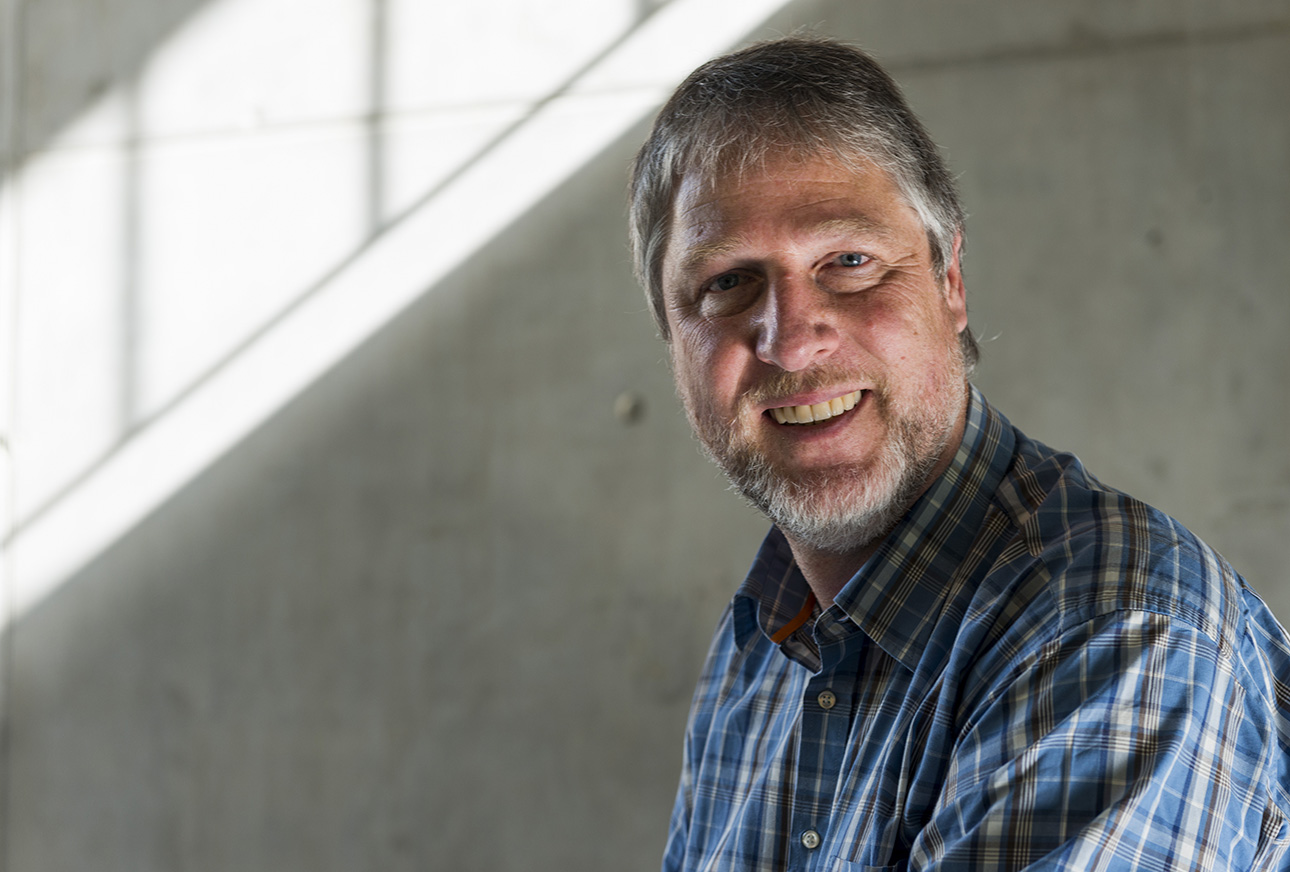
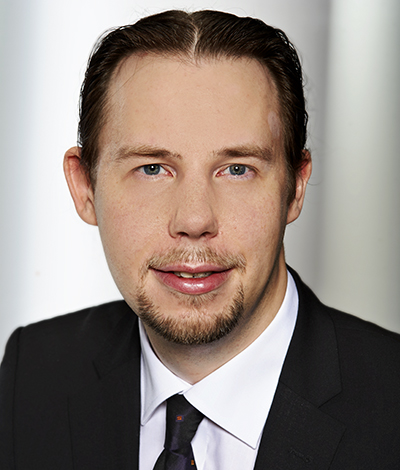
Professor Bernd Möbius is a leading academic in Phonetics and Phonology at the Department of Language Science and Technology, Saarland University. His research bridges phonetic theory with speech technology applications, focusing on text-to-speech systems, prosody modeling, and computational simulations of speech processes. Current research projects: DFG SFB 1102, C1: Information density and phonetic structure predictability DFG SFB 1102, C4: Slavic intercomprehension and surprisal theory (INCOMSLAV) Research Themes: Key areas include text-to-speech synthesis, speech prosody analysis, experimental methods in speech production/perception, information density in phonetics, and cross-linguistic studies of Slavic-Germanic languages. Scientific Contributions: Recent work explores Parkinson-induced dysarthria detection, breath noise acoustics, surprisal-driven speech behaviors, multilingual BERT models for idiomaticity, and perceptual consequences of acoustic adjustments.
Bistra Andreeva is a full Professor of Phonetics and Phonology at Saarland University, Department of Language Science and Technology. She is also a principal investigator of the DFG-funded project “Judeo-Spanish in Bulgaria: a contact language between archaism and innovation” (2022-2025) and leads or co-leads several other externally funded projects on prosody, information structure, and language contact. She teaches and has taught at Saarland University, Sofia University “St. Kliment Ohridski”, and other European universities. Education & Academic Background Habilitation (kumulative Habilitationsschrift): “Contrastive Prosody: Bulgarian vs. German”, Saarland University, 2016. PhD (Dr. phil.): “Zur Phonetik und Phonologie der Intonation der Sofioter-Varietät des Bulgarischen”, Saarland University, 2007. Research Interests Andreeva’s research focuses on the phonetics and phonology of intonation and rhythm, cross-language and individual differences in the production and perception of syllabic prominence, the relation between intonation and information structure, minority languages (especially Judeo-Spanish in Bulgaria), and the interaction between information density and prosodic structure. Her methodological expertise includes experimental phonetics, corpus-based studies, and acoustic analysis. Major Projects SFB 1102 C1: “Information Density and the Predictability of Phonetic Structure” (DFG, 2014-2026) JuSpa: “Judeo-Spanish in Bulgaria: a contact language between archaism and innovation” (DFG, 2022-2025) Prosodic aspects of Bulgarian compared to other languages with lexical stress (Bulgarian National Science Fund, 2019-2024) Prosodic manifestations of focus in French and English from a Bulgarian point of view (DAAD & Sofia University, 2021-2023) Scientific Awards & Recognition While no major named prizes are listed, Andreeva’s work has been continuously supported by competitive grants from the German Research Foundation (DFG), DAAD, and Bulgarian National Science Fund. Her publications appear in top-tier journals and conference proceedings (Journal of the Acoustical Society of America, Interspeech, Speech Prosody, International Congress of Phonetic Sciences). Teaching & Supervision She offers a broad spectrum of courses including Experimental Phonetics, Prosody, Phonetics & Phonology of Slavic Languages, Introduction to Instrumental Phonetics, and seminars on language contact. She has supervised numerous BA, MA, and PhD theses and regularly teaches at the PhD School of Sofia University. Labs & Teams She is affiliated with the Phonetics Laboratory at Saarland University and collaborates closely with the Institute for Bulgarian Language (Bulgarian Academy of Sciences), working in interdisciplinary teams involving phoneticians, computational linguists, and field linguists.
Prof. Marianne Pouplier is a Professor at the Institute of Phonetics and Speech Processing (IPS) at Ludwig Maximilian University of Munich. Her research focuses on speech production mechanisms, particularly coarticulation, phonetic universals, and language-specific variations. She investigates articulatory timing, speech errors, and cross-linguistic differences in consonant clusters using advanced methodologies like real-time MRI and electromagnetic articulography. Her work bridges theoretical models (e.g., Articulatory Phonology) with empirical data, emphasizing the interplay between phonological representation and motor execution. Key contributions include studies on nasal coarticulation, larynx dynamics, and the role of articulatory effort in speech production. Selected publications highlight her expertise in analyzing speech motor control through interdisciplinary approaches. She collaborates internationally, contributing to projects like the Bavarian Archive for Speech Signals (BAS). No awards or grants are explicitly listed, but her extensive publication record underscores her scholarly impact.
Gerd Bruder is an Associate Professor at the University of Central Florida , affiliated with the Department of Computer Science . He previously held positions as a Research Associate Professor at UCF's Institute for Simulation and Training (2016-2022), Post-Doc at University of Hamburg (2014-2016), and Post-Doc at University of Würzburg (2011-2014). Habilitation : Computer Science, University of Hamburg (2017) Ph.D. : Computer Science, University of Münster (2011) M.Sc. : Computer Science (minor in Mathematics), University of Münster (2009) Research Interests : Gerd Bruder's work focuses on Extended Reality (XR) systems, spanning Virtual Reality (VR) , Augmented Reality (AR) , and Mixed Reality (MR) . Key areas include human factors , digital twins , 3D user interfaces , and perceptual modeling , with applications in healthcare, military operations, architecture, and smart environments. Recent Publications highlight innovations in XR locomotion , trust calibration with autonomous agents, spatial cognition , and haptic-visual integration . His 2025 articles address task-switching efficiency in XR and collaborative mixed reality design. Scientific Awards : Best Paper at ACM VRST 2023 2021 TechConnect Innovation Award Best Demo at ACM SUI 2021 Multiple Best Paper Awards (2016-2023) Best Poster & Demo Awards (2015-2020) Patents include systems for medical simulation , smart environment interruption management , and adaptive AR interfaces . His work bridges academic research and practical applications across VR, AR, and MR domains.
Prof. Torsten Wolfgang Kuhlen serves as a Universitätsprofessor at RWTH Aachen University, leading the Teaching and Research Area for Virtual Reality and Immersive Visualization within the Department of Computer Science. He is affiliated with Chair of Computer Science 12 (High Performance Computing), the Visual Computing Institute, and remains an integral part of the RWTH IT Center where his research group operates one of the world's largest Virtual Reality laboratories including the 30 sqm aixCAVE visualization chamber. The group maintains strong connections with Computational Science & Engineering Division, National High Performance Computing Center for Computational Engineering Science (NHR4CES), and VR in Science and Industry Network NRW e.V. Prof. Kuhlen's research spans virtual reality, immersive visualization, and multimodal 3D user interfaces with applications across simulation science, production technology, neuroscience, and medicine. His work combines basic research on advanced methods and algorithms with interdisciplinary collaborations involving RWTH Aachen institutes, Forschungszentrum Jülich, and industry partners. Recent publications demonstrate strong focus on audiovisual perception, immersive analytics, collaborative virtual environments, and practical VR applications in education and manufacturing. His research group has produced significant work on listening effort in virtual environments, immersive authoring techniques, and VR applications for scientific visualization. Notable projects include VRScenarioBuilder for automated vehicle testing and applications in monitoring additive manufacturing processes. The group actively participates in major conferences including IEEE VIS and EuroVis, with several award-winning contributions. Prof. Kuhlen has advised PhD students including Martin Bellgardt who recently completed his doctoral degree on "Increasing Immersion in Machine Learning Pipelines for Mechanical Engineering". The research group maintains state-of-the-art VR infrastructure including the aixCAVE facility which is open to all RWTH research groups.
Dr. phil. André Fiebig is a Permanent Research Associate and PostDoc at the Institute of Fluid Mechanics and Technical Acoustics (ISTA) within Faculty V - Transportation and Mechanical Systems at Technical University of Berlin. From January 2019 to December 2024, he served as a Visiting Professor responsible for the field of psychoacoustics, funded by the HEAD Genuit Foundation. Since January 2025, he has been leading the 'Psychoacoustics and Noise Effects' working group at the Department of Technical Acoustics. His research spans multiple areas within psychoacoustics and soundscape studies, including fundamentals and modeling of psychoacoustic sensation variables, binaural psychoacoustics, assessment of ambient noise and soundscapes, and psychoacoustic evaluation of sound insulation measures. His work also addresses cognitive stimulus integration of auditory sensations, auditory recreation, acoustic quality of stay, characterization of quiet areas, and measuring sound-induced emotions. Analysis of his recent publications reveals a strong focus on urban soundscapes, noise-conscious behavior in transportation, and the development of methodological frameworks for soundscape assessment. His work often integrates psychoacoustic principles with environmental considerations, particularly examining the relationship between sound environments and human health. Recent research shows increasing emphasis on cross-cultural studies of noise perception and the development of standardized assessment methodologies. Dr. Fiebig is involved in the EARS (Education and Applied Research on Soundscapes) initiative and has contributed to numerous collaborative research projects examining the intersection of urban planning, environmental acoustics, and human perception. His work frequently appears in major acoustics conferences and journals, demonstrating his active role in advancing the field of psychoacoustics and soundscape research. His laboratory work focuses on psychoacoustic testing methodologies, soundscape assessment techniques, and the development of evaluation instruments for noise protection measures. The 'Psychoacoustics and Noise Effects' working group under his leadership conducts research on both theoretical aspects of sound perception and practical applications for urban noise management.
Rhenish Friedrich Wilhelm University of BonnGermany
Prof. Robert Fuchs holds the Frommann Professorship of Applied English Linguistics at the University of Bonn, leading the Chair of Bonn Applied English Linguistics (BAEL) within the Department of English, American and Celtic Studies. His research focuses on World Englishes, corpus linguistics, sociolinguistics, and the impact of artificial intelligence on linguistic analysis. He actively supervises PhD students in topics aligned with his research group's interests, emphasizing empirical work and data science. Recent research explores language change in varieties like Hong Kong English, Trinidadian prosody, and intensifier usage across cultures. Fuchs frequently presents at international conferences, including ISLE, ICAME, and Sociolinguistics Symposium, and publishes extensively in journals like World Englishes and Language and Speech . His teaching includes advanced courses on corpus linguistics and language in culture, with a focus on climate change discourse analysis. He maintains an active academic presence through ResearchGate, Academia.edu, and LinkedIn. Research Interests: Fuchs investigates sociolinguistic variation, AI applications in linguistics, and the structural features of postcolonial Englishes. His work addresses topics such as vowel mergers in Hong Kong English, lexical stress perception in Indian English, and the role of gender in language use. He also explores diachronic changes in aspects like stative progressives and the perfect-past alternation across Asian Englishes. Advising & Grants: Fuchs oversees PhD student recruitment through research associate positions and self-funded scholarships, prioritizing applicants with strong empirical and analytical skills. His funded projects include studies on pandemic discourse (DisCOVIndUK) and linguistic trends in Caribbean English. His lab, BAEL, collaborates internationally, with ongoing work on Trinidadian prosody and Northeast Indian linguistic ecology. Labs/Teams: The Bonn Applied English Linguistics (BAEL) group, part of the University of Bonn's IAAK institute, focuses on cutting-edge research in global Englishes and computational linguistics, hosting international workshops and fostering interdisciplinary collaboration.
Felicitas Kleber is Professor of Speech Science in the Department of Language Science and Technology at Saarland University (Universität des Saarlandes). Her research profile demonstrates extensive expertise in experimental phonetics and laboratory phonology with a particular focus on German dialects and sound change phenomena. She maintains active research collaborations, most notably with J. Harrington and Ulrich Reubold, resulting in numerous high-impact publications in leading linguistics and phonetics journals. Her research interests span experimental phonetics and laboratory phonology with specific expertise in speech production and perception , sound change processes, German dialectology , phonological acquisition , and prosody and intonation analysis. Her work frequently examines the acoustic, perceptual, and articulatory dimensions of speech, particularly focusing on vowel and consonant quantity phenomena in German varieties. Analysis of her publication record reveals consistent methodological rigor with emphasis on acoustic analysis, perception experiments, and longitudinal studies. Her research often investigates sound changes in progress, particularly examining vowel fronting phenomena in both German and English varieties, and the relationship between speech production and perception mechanisms. Much of her work employs apparent-time analyses to track diachronic changes through synchronic variation across age groups. Professor Kleber serves as an Associate editor for the Journal of the Acoustical Society of America, reflecting her standing in the field. She has secured significant research funding including the DFG-funded project "Typology of vowel and consonant quantity in South German varieties: acoustic, auditory, and articulatory analyses of adult and child speakers" (2016-2024) and the DAAD-supported "Form and function of prosodic structure in Hungarian and German" (2015-2016). Her research methodology typically combines acoustic analysis with perception experiments and sometimes articulatory measurements to provide comprehensive insights into phonetic phenomena.
Univ.-Prof. Dr. Michaela Sambanis is a Professor of English Didactics at the Institute of English Philology within the Department of Philosophy and Humanities at Freie Universität Berlin. She has held this position since 2011 and previously served as the managing director of the Institute from Winter semester 2017/2018 to October 2019. Her academic journey includes research work at the Transfer Center for Neuroscience and Learning at the University of Ulm (2008-2011), completion of her habilitation in 2006, and her promotion in 2001. Professor Sambanis's research centers on the innovative intersection of educational neuroscience and language teaching methodology. Her work pioneers the field of Positive Foreign Language Didactics, connecting positive psychology with language education. She investigates embodied cognition approaches, particularly movement-based learning, and explores theater methods and arts integration in language instruction. Her research also addresses teacher well-being and health, multilingualism in educational settings, and the application of neuroscience findings to practical classroom situations. The k2teach project represents her current focus on teaching-learning labs in English teacher education. Her scholarly output demonstrates a consistent trajectory toward integrating neuroscience with language pedagogy, with recent publications increasingly addressing mental health, digital transformation in education, and positive psychology applications. The evolution of her work shows a progression from practical teaching methods to increasingly sophisticated neurodidactic frameworks that bridge scientific evidence with classroom practice. Professor Sambanis serves on multiple scientific advisory boards including the Goethe Institut in Munich, the Transfer Center for Neuroscience and Learning at the University of Ulm, and the Schlözer Program for Teacher Education. She is also the founding chair of the cross-state E&M Berlin-Brandenburg section and a member of the German Society for Foreign Language Research (DGFF). Her editorial work includes the SELT book series on English Language Teaching. Her teaching responsibilities include supervising master's theses in English teaching, and she has developed numerous teaching-learning laboratories that connect theoretical knowledge with practical application in teacher education. Her work demonstrates a strong commitment to evidence-based foreign language didactics that incorporates insights from neuroscience, psychology, and educational research.
Felicitas Kleber is a Professor of Speech Science at the Department of Language Science and Technology, Saarland University. Her research focuses on experimental phonetics and laboratory phonology, emphasizing the interplay between speech production and perception in sound change processes. Research Areas : experimental phonetics, laboratory phonology, coarticulation dynamics, prosody and intonation, diachronic sound change, German dialects. Projects : Directed DFG-funded research on vowel/consonant quantity typology in Southern German varieties (2016–2024); DAAD-funded study on prosodic structure in Hungarian and German (2015–2016). Collaborations : Key partnerships with Jonathan Harrington (phonetics), Ulrich Reubold (acoustic analysis), and interdisciplinary teams in computational linguistics and sociophonetics. She serves as Associate Editor for the Journal of the Acoustical Society of America , integrating cognitive and social dimensions into sound change models.
Dr. Behrooz Mahmoodi-Bakhtiari is an Associate Professor and Head of the Department of Performing Arts at the University of Tehran, Iran. Born in 1974 in Tehran, he earned his PhD in Linguistics from Allameh Tabatabaee University in 2003. His work bridges linguistics and performing arts, with a focus on Persian language pedagogy and cultural studies. His research encompasses Iranian linguistics, dialectology, teaching Persian as a foreign language, Iranian dramatic literature, and discourse analysis of drama. He employs linguistic and semiotic approaches to analyze drama and film, contributing to interdisciplinary academic dialogues. Mahmoodi-Bakhtiari has published extensively in these areas and contributed to major reference works, including the Encyclopedia Iranica , Encyclopedia of Language and Linguistics , Encyclopedia of Islam (Third Edition) , and The Great Islamic Encyclopedia . His publications span linguistics, medical education, neuroscience, and literature, reflecting a broad interdisciplinary scope. He welcomes international academic collaborations and can be contacted via email for scholarly exchanges.
Prof. Dr. Angelika Braun is a full Professor of Phonetics at the University of Trier since October 2009, with a career spanning forensic phonetics, sociophonetics, and cross-cultural speech analysis. She previously held roles at the Bundeskriminalamt (Wiesbaden/Düsseldorf) and Philipps-Universität Marburg, where she habilitated in Phonetics and Speech Processing (2000). Her work bridges academic research with forensic practice. Research Focus: Her Sociophonetics (language and emotions, gender-specific speech) Forensic Phonetics (speaker identification, voice analysis) Contrastive and Hawaiian Phonetics Speech prosody and toxin effects (smoking, alcohol) Intercultural dubbing studies Academic Contributions: Over 15 recent articles explore voice quality, emotional speech, forensic age estimation, and cross-cultural dubbing effects. Key conferences include Interspeech, International Congress of Phonetic Sciences, and ISCA. Her work appears in journals like Forensic Linguistics and The Phonetician . Scientific Honors: Fellow of the American Academy of Forensic Sciences (AAFS) Founder Member and former Chairperson of the International Association for Forensic Phonetics (IAFP) Life-Member of the International Phonetic Association (IPA) Leadership roles in ISPhS and GAL Practical Impact: Developed the Almeida-Braun Transcription System for dialect analysis and contributed to forensic audio enhancement protocols (e.g., Rodney King case). Serves as reviewer for Language and Speech , Forensic Linguistics , and JIPA . Collaborates on longitudinal studies of vocal aging and speaker identification.
Mieke Cardol serves as an applied research professor in 'Disability Studies; Diversity in Participation' at the Research Centre Innovations in Care, Rotterdam University of Applied Sciences. Her work bridges academic research with practical healthcare applications, focusing on systemic barriers to inclusion and innovative solutions for marginalized populations. Dr. Cardol earned her PhD from the University of Amsterdam in 2001 with a dissertation titled 'Autonomy and participation in medical rehabilitation,' building on her foundational career as an occupational therapist in rehabilitation medicine. This clinical background informs her participatory research methodology. Her research program critically examines societal structures through the lens of Disability Studies, with core emphases on social participation, relational autonomy, and inclusive design across healthcare, education, and community settings. She challenges deficit-based models by centering lived experiences of people with disabilities, particularly in aging, youth transitions, and creative expression contexts. Analysis of her 14 most recent publications reveals a methodological commitment to participatory approaches like photovoice and narrative inquiry, with recurring themes of citizenship, ethical care practices, and co-creation of tools such as the 'My Path' instrument. Her work spans neurodiversity, cerebral palsy, mental health, and inclusive arts, consistently advocating for policy shifts toward genuine societal belonging. Dr. Cardol actively supervises master's students, honours candidates, interns, and PhD researchers while leading multiple collaborative projects including 'ST-RAW Academic Collaborative Centre' for youth care access, 'Diversity in Career Trajectories' for disability-inclusive employment, and 'Citizenship and aging with CP.' Her grant portfolio demonstrates strong partnerships with disability organizations and government bodies. She leads the 'Disability Studies; Diversity in Participation' research group, which operates as a nexus for transdisciplinary collaboration with Disability Studies in the Netherlands, BOSK/VGR disability associations, Platform EMG parent networks, Horizon/Cardea child welfare organizations, Rotterdam municipality, Yulius/Pameijer care providers, Rijndam rehabilitation centers, UWV Rotterdam, and Ghent University. This ecosystem enables real-world testing of inclusive frameworks while training future healthcare professionals.
Max Planck Institute for Human Cognitive and Brain SciencesGermany
Daniela Sammler is an Adjunct Professor at Goethe University Frankfurt and Research Group Leader of the Neurocognition of Music and Language research group at the Max Planck Institute for Empirical Aesthetics in Frankfurt/Main. She has established herself as a leading researcher at the intersection of music cognition, language processing, and neuroscience, with a particular focus on prosody, syntax, and the neural mechanisms underlying both speech and musical processing. Education 2025: Adjunct Professor, Goethe University Frankfurt/M. 2022: Venia Legendi, Goethe University Frankfurt/M. 2018: Habilitation and Venia Legendi, University of Leipzig (Topic: Intonation in speech and music) 2004-2008: Dr. rer. nat. in Psychology, University of Leipzig and MPI for Human Cognitive and Brain Sciences, Leipzig (Topic: Syntax in language and music) 1997-2004: Psychology studies at University of Leipzig and Université Louis Pasteur, Strasbourg (Diploma from Leipzig) Research Interests Daniela Sammler's research focuses on the neurocognitive foundations of music and language processing , with particular emphasis on how prosody, melody, and syntax are represented and processed in the brain. Her work explores the common neural mechanisms underlying speech and music, investigating how the brain processes intonation patterns in both domains. She has made significant contributions to understanding the dorsal and ventral pathways for prosody and the neuroanatomical overlap of syntax processing in music and language. Her research employs a variety of methodologies including fMRI, EEG, intracranial ERP studies, and behavioral experiments with both healthy participants and patient populations. She has conducted groundbreaking work on amusia and language disorders , prosodic structure building , and the neural bases of musical joint action . Analysis of her recent publications reveals a growing focus on interpersonal musical interaction, interbrain synchrony, and the cognitive mechanisms underlying collaborative music-making. Scientific Awards Gold Medal for outstanding achievements in the preservation of historic monuments in Europe (2012) Otto Hahn Medal of the Max Planck Society (2010) Otto Hahn Award of the Max Planck Society (2010) Poster Award, Organization of Human Brain Mapping (2010) Research Leadership and Grants Since 2020, Dr. Sammler has led the Neurocognition of Music and Language research group at the Max Planck Institute for Empirical Aesthetics. Prior to this, she headed the Otto Hahn Group Neural Bases of Intonation in Speech and Music at the MPI for Human Cognitive and Brain Sciences from 2013-2020, which was funded through her Otto Hahn Award. Her research has been supported by prestigious grants from the Max Planck Society and other funding bodies, enabling her to establish cutting-edge research programs at the intersection of music, language, and neuroscience. She currently leads multiple research projects including "Neural Networks for Real-Time Joint Music Performance: Piano duos in the MR-scanner" and "Cognitive drivers of interbrain synchrony during musical interaction," which investigate the complex cognitive and neural processes underlying musical collaboration. Her research group has also explored how vocal tone carries information about emotional state and speaker intention through prosody. Research Environment Dr. Sammler's research group operates within the Department of Music at the Max Planck Institute for Empirical Aesthetics in Frankfurt. Her lab employs state-of-the-art neuroimaging techniques including fMRI, EEG, and intracranial recordings to investigate the neural substrates of music and language processing. The research environment fosters interdisciplinary collaboration between neuroscientists, linguists, musicologists, and cognitive scientists, creating a rich intellectual space for exploring the complex relationships between music and language.
Max Planck Institute for Empirical AestheticsGermany
Dr. Johanna Rimmele is a Researcher at the Max Planck Institute for Empirical Aesthetics in Frankfurt, Germany. She holds a PhD in Psychology from the University of Leipzig (2012) and has conducted postdoctoral research at institutions including the Albert Einstein College of Medicine, New York University, and the University Medical Center Hamburg-Eppendorf. Her work focuses on auditory perception, temporal processing, and the neural basis of speech perception. She has received several awards, including the 8th Dissertation Competition in Psychology and the Sign UP! Careerbuilding grant. Her research explores how temporal structure in speech influences neural processing, particularly through the lens of cortical oscillations. She investigates neuroplasticity in sensory deprivation (e.g., blindness) and the interplay between auditory perception and motor systems. Rimmele has authored over 20 peer-reviewed articles and co-edited a book on brain oscillations in human communication. She is affiliated with the CLaME research group and actively contributes to interdisciplinary studies on music, language, and neural mechanisms. Education: PhD in Psychology, University of Leipzig (2008–2012) Visiting Researcher, Albert Einstein College of Medicine (2006–2011) Diploma in Psychology (minor Philosophy), University of Leipzig (2002–2008) Awards & Grants: 8th Dissertation Competition, German Society for Psychology (2013) Sign UP! Careerbuilding MPG Grant (2016/2017) ERASMUS MUNDUS Stipendium (2011–2012) Key Research Themes: Rimmele’s projects address speech-specific neural processing, the role of delta/theta oscillations in speech segmentation, and how rhythmic speech production influences perception. Her work on neuroplasticity in blind individuals highlights cross-modal reorganization of brain networks.